


Garmin SmartCharts Tops 2026 FLYING Magazine Editors' Choice Awards
FLYING Magazine's 2026 Editors' Choice Awards honor Garmin SmartCharts as best avionics, alongside Cirrus SR G7+ and Lightspeed Zulu 4 among top GA innovations.
The gist
Garmin SmartCharts earns highest score in FLYING Magazine's 2026 Editors’ Choice Awards for revolutionizing instrument pilot workflow.
Continuing coverage
All Flight Training →- Part 141 Flight Schools Require Approved Airports for Cross-Country Flights to Count
- Texas Cadet Sebastian Vargas Becomes 200th Private Pilot Funded by Ray Foundation Through CAP
- Cirrus Launches TRAC10 Training Aircraft for Professional Flight Schools
- Cirrus Unveils TRAC10 Trainer Designed to Revolutionize Professional Flight Schools
- Student Pilot Safely Lands Cessna 150 After Instructor's Mid-Air Jump in Argentina
FLYING Magazine has revealed its 2026 Editors’ Choice Award winners, highlighting the most innovative and practical advancements in general aviation. Garmin’s SmartCharts took the crown in the Avionics and Cockpit Technology category with a groundbreaking near-perfect score of 94.2 out of 100. The product stands out by integrating dynamic, data-driven charts directly into navigation displays, addressing longstanding navigational challenges faced by instrument-rated pilots.
Garmin SmartCharts replaces traditional static terminal procedure charts with an interactive overlay that precisely aligns with the moving map. This digital integration provides pilots with a consolidated view of approach paths, minimum altitudes, airport layouts, SID/STAR routes, and graphical NOTAMs. Senior AVweb editor Matt Ryan emphasized its impact as a significant cockpit-workflow enhancement, while FLYING’s technical editor Meg Godlewski awarded it a perfect score for its excellent support to digital pilots.
Besides SmartCharts, the 2026 awards recognized the Cirrus SR Series G7+ as the standout piston and light sport aircraft with a 90.3 rating. More than a quarter-century since its first introduction, the Cirrus SR’s latest generation integrates advanced safety features such as Safe Return Emergency Autoland and Garmin Perspective Touch+ avionics, alongside a comprehensive suite of safety technologies unmatched in its class. Editors praised its accessibility for new pilots and its leadership status among single-engine piston airplanes.
In the pilot gear category, the Lightspeed Zulu 4 headset earned top marks, scoring 90.7 points. Reviewers applauded its advancements in noise reduction, audio clarity, and comfort for extended flight durations. Its Bluetooth 5.0 capabilities with multi-device connectivity and lighter clamping force contribute to its reputation as a premium active noise reduction headset suited for a broad range of general aviation aircraft.
The training and flight education segment spotlighted AviatorPro, which scored 91.6. This digital ground-school platform differentiates itself by using short, adaptive lessons complemented by 3D interactive content and personalized progress tracking. FLYING’s editorial panel highlighted its ability to make complex aeronautical material accessible, engaging, and tailored to individual learning needs, particularly benefiting student pilots and flight schools.
The Editors’ Choice Awards are determined solely by FLYING Magazine’s editorial panel, which includes editors from its aviation portfolio such as AVweb, The Aviation Consumer, and Plane + Pilot. Judging criteria encompass real-world utility, innovation, quality of execution, and relevance to general aviation pilots. The 2026 awards represent the last group of honorees before FLYING’s centennial in 2027, underscoring the publication’s long-standing influence on the GA community.
The recognition of Garmin SmartCharts, Cirrus SR G7+, Lightspeed Zulu 4, and AviatorPro illustrates a continued emphasis on enhancing pilot safety, operational efficiency, and educational effectiveness across the general aviation spectrum. Each award-winning product addresses distinct pilot needs through advanced technology and thoughtful execution, reflecting evolving trends in avionics, aircraft design, pilot equipment, and flight training.
Frequently asked questions
- What criteria does FLYING Magazine use to select its Editors’ Choice Award winners?
- Winners are chosen by FLYING’s editorial panel based on real-world utility, quality of execution, innovation, and relevance to general aviation pilots.
- What makes Garmin SmartCharts stand out among avionics products?
- It integrates dynamic, interactive charts directly into the moving map, providing instrument pilots consolidated route, approach, NOTAM, and airport data in a single view.
- What innovative safety feature does the Cirrus SR Series G7+ introduce?
- The G7+ integrates Safe Return Emergency Autoland and advanced avionics technologies, enhancing automation and safety beyond other piston singles.
Read more
All Aviation Safety →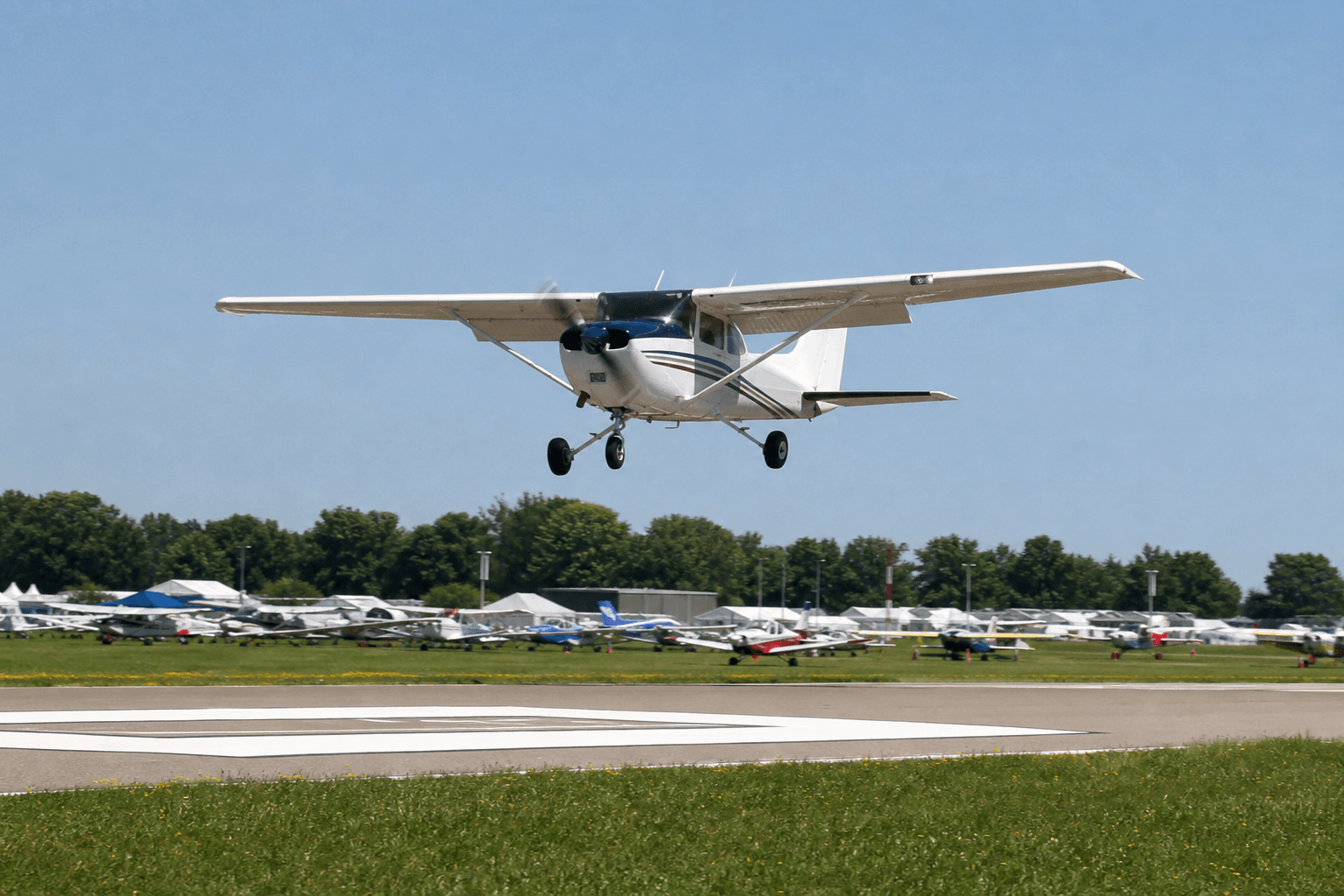
FAA Activates 2026 Oshkosh Flight Procedures for EAA AirVenture Operations
The FAA's special flight procedures for EAA AirVenture Oshkosh 2026 are now in effect. The 32-page notice applies through noon CDT July 27 and covers operations at Wittman Regional Airport and several surrounding airports. Take a look, below. 2026 OSH NOTICE FINAL2_Reviewed Download A few points below serve only as a quick, high level refresher and are by no means comprehensive, nor are they an official guide. It should go without saying that anyone flying the Oshkosh flight procedures should read and rely on the complete FAA notice , carry it in the aircraft and check current NOTAMs, TFRs and ATIS information. Arrival Basics Most VFR traffic will use the Fisk arrival, beginning at a transition point assigned by ATC. Traffic will then proceed toward Ripon and follow the railroad tracks to Fisk. Pilots should obtain the Arrival ATIS on 125.9 no later than 60 miles from Oshkosh. They should then monitor Fisk Approach on 120.7. The standard arrival profile is 90 knots at 1,800 feet MSL, while faster aircraft may use 135 knots at 2,300 feet when needed for safety. Aircraft should remain at least one-half mile behind similar traffic and avoid overtaking, side-by-side flight or S-turns. At Fisk, controllers assign the runway, route to the airport and tower frequency. Pilots may be asked to fly a short approach or land on a designated runway dot, and the notice repeatedly reminds crews to maintain a safe airspeed and go around when an approach does not look right. Closures And Planning Wittman Regional is closed to arrivals each night from 8 p.m. until 7 a.m. and to departures from 8 p.m. until 6 a.m. The airport also closes during airshows, TFRs and certain special activities. Nonscheduled IFR arrivals and some IFR departures require reservations during designated periods, while separate procedures apply to turbine and warbird aircraft, seaplanes, helicopters, ultralights, rotorcraft and approved no-radio vintage aircraft. Fond du Lac, Appleton and Green Bay are among the recommended alternates when Oshkosh closes, parking fills or the arrival becomes unavailable. Pilots should arrive with enough fuel for holding, a possible go-around and a diversion. The full FAA Oshkosh flight procedures notice remains the controlling reference for the applicable routes, frequencies, altitudes and contingencies. Have fun, and fly safe!

Disguised ICE Agents Abandon Attempted Detention at Las Vegas Airport After Being Filmed
Two ICE agents who were disguised as regular airline passengers, one even sporting a fake moustache, attempted to detain a 57-year-old Vietnamese man at Las Vegas Harry Reid International Airport (LAS) and failed, leaving their target bewildered when they suddenly scurried off. The cause for their sudden change of heart? It appears they realized they were being filmed by concerned onlookers. The video of the incident, which occurred on July 13, has since gone viral on social media. The footage shows the plainclothes ICE agents not displaying any visible ID and concealing their faces with a mask and large hood. Esta no es una escena de la mafia rusa en los años 90, es EEUU, donde la Gestapo de Trump, se disfraza (literal hasta con bigote falso) de civil y secuestra a un hombre asiático en pleno aeropuerto. Cuando los mercenarios del ICE se dan cuenta de que le están grabado, huyen… pic.twitter.com/UmCr5K6Z5q — Daniel Mayakovski (@DaniMayakovski) July 17, 2026 Concerned onlookers went to intervene, not realizing that the two ‘passengers’ were, in fact, federal law enforcement officers. At that moment, a TSA officer stepped in to hold back passersby, although by that point, it was too late. With the man being held down prone on the floor, the two officers suddenly stopped attempting to detain him and walked away from the scene, leaving the ‘detainee’ bewildered by what had just happened. Police from the Las Vegas Metropolitan Police Department were called, and officers found the man with one handcuff still attached to his wrist. They determined that the incident was an ICE detention gone wrong, but without any active warrants out for the man, he was let go. The man ended up catching his booked flight to Los Angeles, but upon landing, more ICE agents were waiting for his flight to arrive. In a post on X, the agency identified the man as Phu Nguyen, originally from Vietnam but with Australian citizenship. Nguyen arrived in the United States in 2015 but overstayed his visa. He is now in ICE detention. ICE Los Angeles arrested Phu Nguyen, 57, of Vietnam, at LAX, July 14. Nguyen overstayed his visa and, despite attempts by agitators to help him evade ICE officers at Las Vegas airport, was taken into custody as soon as he landed in Los Angeles. pic.twitter.com/UQ9lR0hEcK — ICE Los Angeles (@EROLosAngeles) July 15, 2026 In a statement, a spokesperson for the LVMPD said its officers had been called to the incident by concerned onlookers. A statement from the police department added: “During the investigation, our officers learned Immigration and Customs Enforcement (ICE) agents had attempted to detain the individual but walked away from the arrest. ICE has gone on to say that its officers were ‘forced’ to abandon the detention attempt because of ‘anti-ICE agitators.’ There is, however, no evidence that the onlookers had any idea that the two agents were from ICE, given their lack of identification. "To de-escalate the situation and for officer safety, officers did not proceed with the arrest at the Las Vegas Airport and chose to instead arrest him at his flight the following day, departing the Los Angeles International Airport on July 14," a statement from the Department of Homeland Security explained.
Navy Clears Blue Angels Pilot After Controversial Low-Altitude Florida Beach Flyby
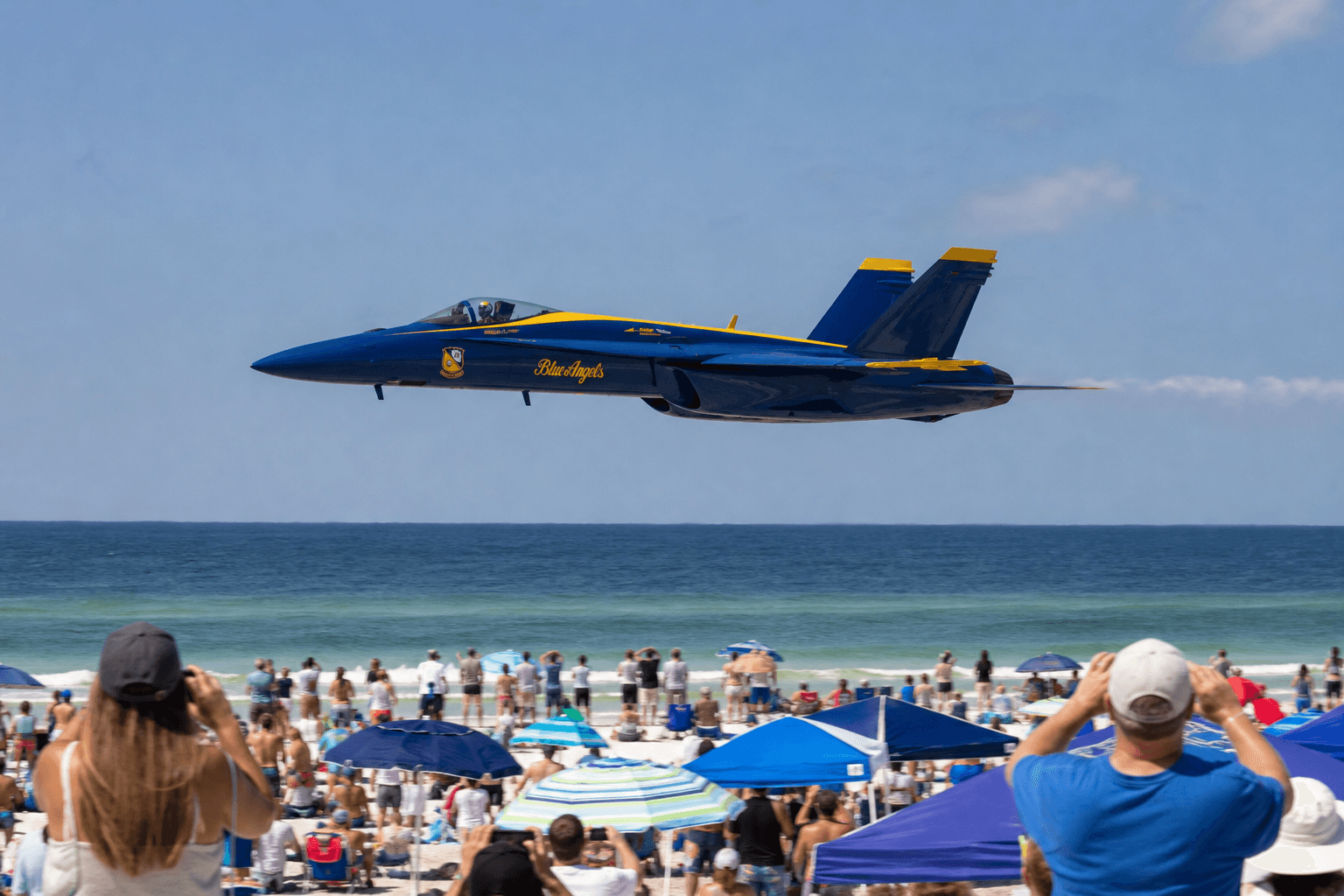
A video showing an extremely low pass over a beach near the home of the US Navy aerial demonstration team, the Blue Angels, has gone viral with controversy over dangers it presented to bystanders. The altitude of the fighter jet has been estimated around 40 feet (12 meters), well below the typical minimum safe altitude of 1,000 feet (305 meters) normally expected for any aircraft, military or civilian plane.

Beechcraft King Air E90 crashes onto hangar roof after fuel exhaustion during go-around
Investigation into New Century accident finds pilots took off despite prohibitive indication from wing-tank gauges. US investigators have determined that fuel exhaustion resulted in a Beechcraft King Air E90's crashing onto the roof of a Kansas hangar during a go-around last year. The type's flight manual prohibits take-off if the fuel gauge indications are within a yellow caution band, indicating zero to 260lb (118kg). Both the flight instructor and pilot-under-instruction on board testified to the National Transportation Safety Board that the right- and left-hand wing tanks were registering within this band. Despite this observation, they proceeded with the flight. The instructor believed there was 300lb of fuel in the left tank and 250lb in the right, while the pilot thought each tank had 150-200lb. Neither visually checked the tanks, according to the pilot under instruction's testimony, while the instructor stated he was unaware whether the King Air had minimum fuel requirements for take-off. The inquiry could not determine how much fuel was on board when the aircraft departed Butler, Missouri, for New Century airport — a flight of about 16min — where it turned onto the base leg for final approach to runway 18. But the aircraft slowed to below Vmc, the minimum control speed, and this led the pilot to increase power. The aircraft began yawing to the left and the instructor, suspecting the left engine had flamed out from fuel starvation, took control, retracting the landing-gear and flaps. He rolled the aircraft to the right but did not feather the left-hand propeller, believing the engine was still generating limited thrust. In spite of the instructor's actions, the aircraft continued turning left. Although it was heading for a hangar the instructor thought the aircraft was accelerating sufficiently to clear the structure, and did not turn back towards the runway. "The airplane impacted the hangar and came to rest on the roof," says the inquiry, adding that the E90 (N1UC) was badly damaged. Both pilots survived the 16 June 2025 accident. Examination of the left and right wing tanks, which were not breached, showed they respectively contained 3floz (90ml) and 30floz of fuel. The inquiry says this was "likely insufficient" to perform a go-around and re-enter the pattern on a single engine.
The Daily Touch & Go
The day's best aviation news in your inbox. Free, no spam.