

Image: ALAN RADECKI · Public domain · via Wikimedia Commons
US Navy Admiral Advocates Doubling B-21 Raider Fleet to 200 Bombers for Pacific Defense
Admiral Samuel Paparo urges expanding the Air Force B-21 Raider fleet from 100 to 200 to strengthen joint US military operations amid rising Chinese threats.
The gist
US Navy leader pushes to double B-21 bomber fleet to enhance joint combat capabilities against advanced Pacific threats.
Continuing coverage
All B-21 Raider →- USAF Requests $1.7B to Upgrade B-1 and B-2 as B-21 Raider Production Ramps Up
- USAF Commits $2B to Prepare Ellsworth AFB as First Operational B-21 Raider Base
- USAF's 65-Year-Old KC-135 Stratotankers To Support B-21 Raiders Into 2040s
- Doubling B-21 Raider Production Faces Major Hurdles Despite $10 Billion Funding Boost
- B-21 Raider Outperforms B-2, B-52, and B-1B Bombers Across All Key Metrics
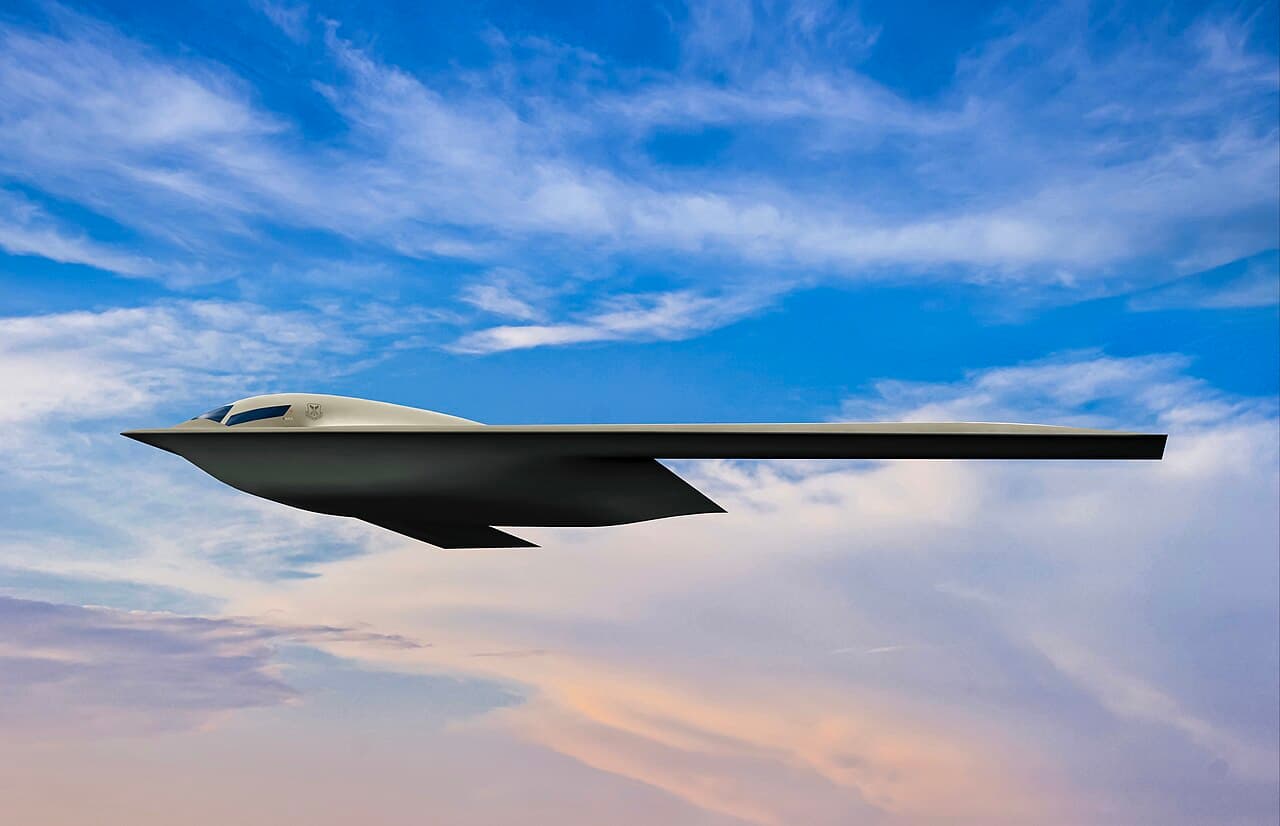
The commander of US Navy Pacific Command, Admiral Samuel Paparo, has voiced strong support for the US Air Force to significantly increase its procurement of the Northrop Grumman B-21 Raider stealth bomber. Originally planned at 100 aircraft, Air Force and congressional advocates have already proposed raising the fleet size to between 145 and 185. Now, the Navy is championing a goal of 200 aircraft to bolster joint operational capabilities against growing regional threats in the Indo-Pacific.
China's rapid advancements in hypersonic missile technology and stealth fighter development have intensified threats against US carrier strike groups operating in the Pacific Ocean. An expanded B-21 fleet would enhance the ability of both the Air Force and Navy to conduct integrated missions by providing a powerful, stealthy platform capable of penetrating contested airspace. The bomber serves as a critical deterrent while offering unchallenged strike options if conflict arises.
The B-21 Raider stands apart as a sixth-generation stealth bomber, representing a significant leap beyond its predecessor, the B-2 Spirit. It incorporates innovative multispectral stealth features, including radar-absorbent materials co-cured with its composite skin rather than mere surface coatings. The smaller size of the B-21, coupled with fewer engines, improves stealth, reliability, and operational readiness compared to earlier models.
This streamlined design allows the B-21 to operate from conventional fighter airbases worldwide and withstand exposure to harsh weather conditions without the 'white glove' maintenance that limited the B-2. This capability is especially valuable in the Pacific, where dispersed and austere airfields are common. The plane's enhanced ruggedness and dependability make it a versatile asset for naval support missions in the region.
The bomber’s Pacific mission echoes the daring legacy of the World War II Doolittle Raid, where US Army Air Corps B-25s launched from Navy carriers to strike Japan directly after Pearl Harbor. Today’s strategic environment includes challenges from Chinese Chengdu J-20 stealth fighters and improved anti-ship missile arsenals deployed around island chokepoints. In this context, the B-21 is envisioned as a transformative asset to enable deep, surprise strikes comparable in impact to those historical operations.
China has developed advanced integrated air defense and long-range ballistic missile systems such as the DF-21D and DF-26, designed to saturate and outrange US Navy ships. The B-21’s stealth capabilities and avionics allow it to detect, penetrate, and coordinate attacks on these 'carrier killer' missile sites while sharing targeting data with fleet units. This integration greatly expands the strike capacity of US joint forces beyond the bomber’s own 20,000-pound payload.
Acting as a command node within a complex 'kill web,' the B-21 can direct Navy surface ships and submarines to engage enemy targets using their long-range weapons, including Tomahawk cruise missiles and SM-6 interceptors. Its operational radius of over 6,000 nautical miles provides unprecedented reach and persistence, supporting long-duration missions deep inside contested airspace while maintaining stealth.
Furthermore, the B-21 enhances the defensive sensor network of carrier strike groups by combining passive and active electronic surveillance. Operating from above, it minimizes the exposure of naval radars by detecting threats beyond the horizon and guiding friendly assets accordingly. This capability bolsters situational awareness and threat response in the face of dense anti-access/area-denial environments in the South China Sea and beyond.
With these capabilities, a robust fleet of 200 B-21 Raiders would be a cornerstone of US joint force power projection against peer competitors in the Pacific. The Navy's advocacy to expand the program reflects both operational necessity and a strategic shift towards integrated, stealth-enabled combat methods designed to counterbalance evolving threats and maintain regional stability.
Frequently asked questions
- Why does the US Navy want to increase the number of B-21 Raiders to 200?
- Admiral Paparo supports expanding the B-21 fleet to 200 aircraft to enhance joint US military capabilities in the Pacific in response to increased Chinese missile and stealth fighter threats.
- What makes the B-21 Raider more suitable for Pacific operations than the B-2 Spirit?
- The B-21 is smaller, more rugged, requires less specialized maintenance, and can operate from standard fighter airbases in all weather, unlike the B-2, which was vulnerable to weather-related malfunctions.
- How does the B-21 improve joint operations between the US Air Force and Navy?
- The B-21 can penetrate advanced enemy defenses stealthily, act as a command and control node sharing targeting data, and enable Navy ships and submarines to strike enemies beyond the range of threat systems.
Read more
All Military/Defense →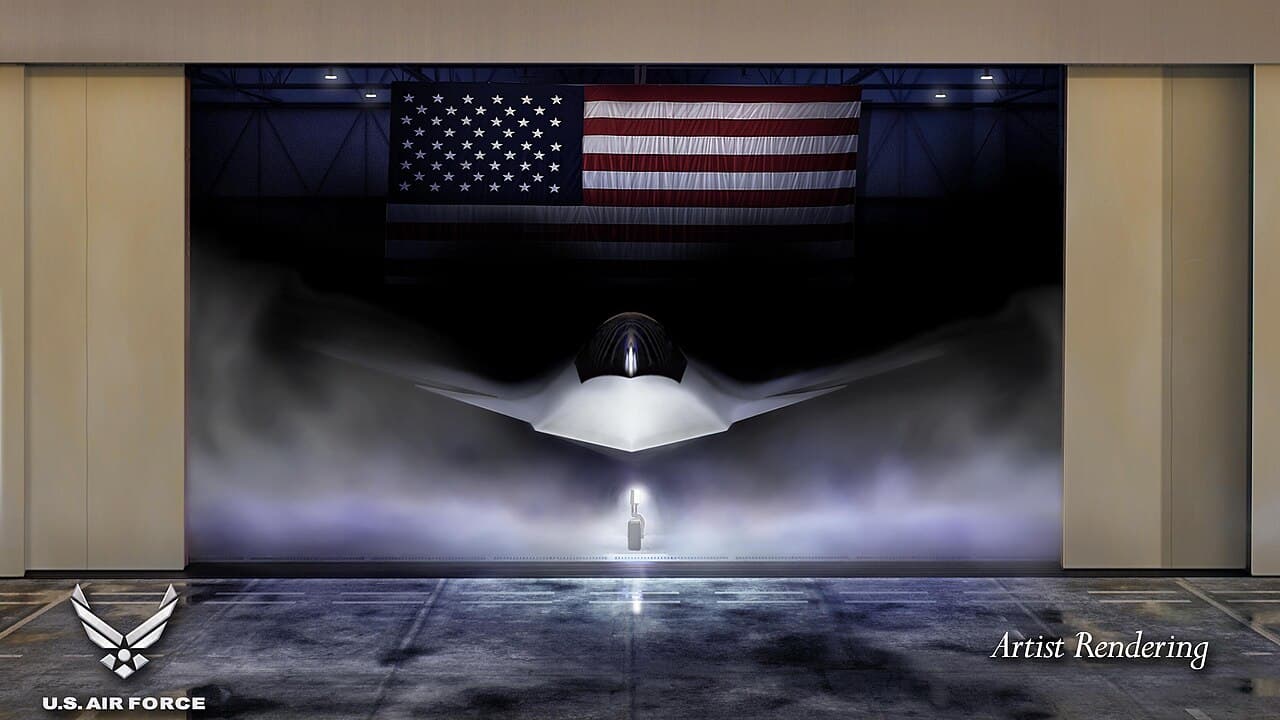
US F-47 Sixth-Gen Fighter Faces $300M Price Tag and Limited Fleet Size
The race to build the first sixth-generation fighter jet is well underway, with the United States and the People's Republic of China competing to be the first to produce a fully combat-capable example. While the People's Liberation Army Air Force made headlines in late 2024 by test-flying two different prototypes, the US program has been quietly testing new designs since 2019. When Boeing was awarded the contract for the F-47 Next Generation Air Dominance in early 2025, the program jumped into the spotlight.
Boeing to Introduce MQ-28 Ghost Bat for UK Collaborative Combat Aircraft Program
Australian-developed CCA aimed at future operational requirement. Boeing will be promoting its MQ-28 Ghost Bat at the Farnborough air show, in anticipation of a future UK requirement for an operational collaborative combat aircraft (CCA). "We definitely see some applicability in terms of its capability, and certainly in terms of its maturity to the UK armed forces," says Thom Breckenridge, managing director of Boeing Defence UK. "BD UK could be an important partner in sustainment and potentially other pieces, when we think payload or otherwise," he said during a pre-show briefing on 13 July. The UK's recently published Defence Investment Plan (DIP) details a CCA demonstration activity which will see a UK system flown before 2030, describing such a platform as an " autonomous fighter jet ". It did not, however, provide any firm detail about a possible future acquisition. "We are very enthusiastic about the platform and the capability, and certainly see applicability for MQ-28 in the UK," Breckenridge says of the Australian-developed Ghost Bat. "The maturity of the platform relative to competitors sets it apart, in addition to the unique capability and the way it was developed," he claims. Boeing also will use the 20-24 July event to promote its T-7A Red Hawk, which is among several likely competitors for the Royal Air Force's (RAF's) future jet trainer requirement. "We think it's the best answer for the UK's JTS [jet training system] competition," says Boeing Defence UK fixed-wing director Ben Kelsey. "It brings not just an aircraft but a ground-based training system, and synthetic alongside live training, in a way that we think answers the UK's needs better than any other solution." The process of selecting a replacement for BAE Systems' Hawk T2 remains at an early stage, with the DIP outlining an initial £360 million ($482 million) through the rest of this decade towards a fleet recapitalisation that also will provide new aircraft for the RAF's Red Arrows aerobatic display team. "We are thinking about how we position that [proposal] best for the UK," Kelsey says, referring to a letter of intent signed last November under which BAE would perform final assembly of the T-7 if it is selected for RAF service. "We will be looking with interest at the RFP [request for proposals] as that evolves over the next few months," he says, with Boeing committed to "bringing as much [work] as possible into UK suppliers". Boeing Defence UK will in December mark the 30th anniversary of its formation, with the company having grown from an initial six employees to a current total of 2,000. Its personnel are located at multiple military sites, among them Lossiemouth, Waddington, Wattisham, along with Bristol and Gosport. Its main activities include delivering comprehensive support for the RAF CH-47 Chinook and British Army AH-64E Apache helicopters, and for the RAF's P-8A Poseidon maritime patrol aircraft. It also delivers pilot and maintainer training for the air force's fleet of C-17 strategic transports, using a facility in Farnborough. "We are in places where the RAF or the army are, and we are working alongside them every day," Breckenridge notes. The company is also supporting the ongoing introduction of the E-7A Wedgetail airborne early warning and control system, with the first of three 737NG-based examples having been undergoing testing since May at RAF Lossiemouth in Scotland. The RAF’s first of three E-7A Wedgetails arrived at its Lossiemouth base in May. Source: Crown Copyright "We are looking forward to seeing E-7 go through flight trials over the coming months and then get into service in due course, as well as seeing the next couple of aircraft get finished," Kelsey says. "We have got some work ahead of us with the RAF as we go through that final testing stage, but we have got a dedicated, focused team who certainly see the need to get that capability completed and handed over. "The need to get E-7 into service is clear, and we are very focussed on that. But we are very focussed also on making sure that the product is safe and to the quality level that we'd expect, so that it delivers as we know it can, as a world-beating capability."

Germany's first Quadriga programme Eurofighter completes maiden flight
New aircraft is one of 58 on order for Berlin. Airbus Defence & Space has flown its first Tranche 4 Eurofighter to have been produced for the German air force as part of Berlin's Project Quadriga acquisition. Conducted from the company's Manching final assembly site near Munich on 14 July, the milestone sortie involved a single-seat example with the service registration 34+02. "During the production flight acceptance test, Airbus test pilot Stefan Auer tested the fighter jet to its limits for more than an hour to evaluate basic flight characteristics, engine performance, flight control system, hydraulics and electrical systems," the company says. "The flight also assessed cockpit instruments and navigation systems; everything worked flawlessly," it adds. Placed in 2020, Germany's initial Quadriga order covers the delivery of 30 single- and eight two-seat Eurofighters. A first delivery will be made later this year, following the receipt of "upcoming type certification", with shipments to run through 2030. Berlin last year also signed a Tranche 5 contract for another 20 Eurofighters, with those jets to be delivered by 2034.
US concerns rise as Canada debates Gripen jets alongside F-35A purchases
Is the United States worried about Canada building Swedish Saab JAS 39 Gripen fighter jets in Canada? Sort of. In this article, we will explain why the Gripen is no competitor to the F-35A and why the US doesn't really care if Canada acquires the Gripen so long as it's in addition to the F-35A. We will also explore why the US cares if Canada significantly reduces its planned purchase of 88 F-35A fighter jets.
The Daily Touch & Go
The day's best aviation news in your inbox. Free, no spam.