

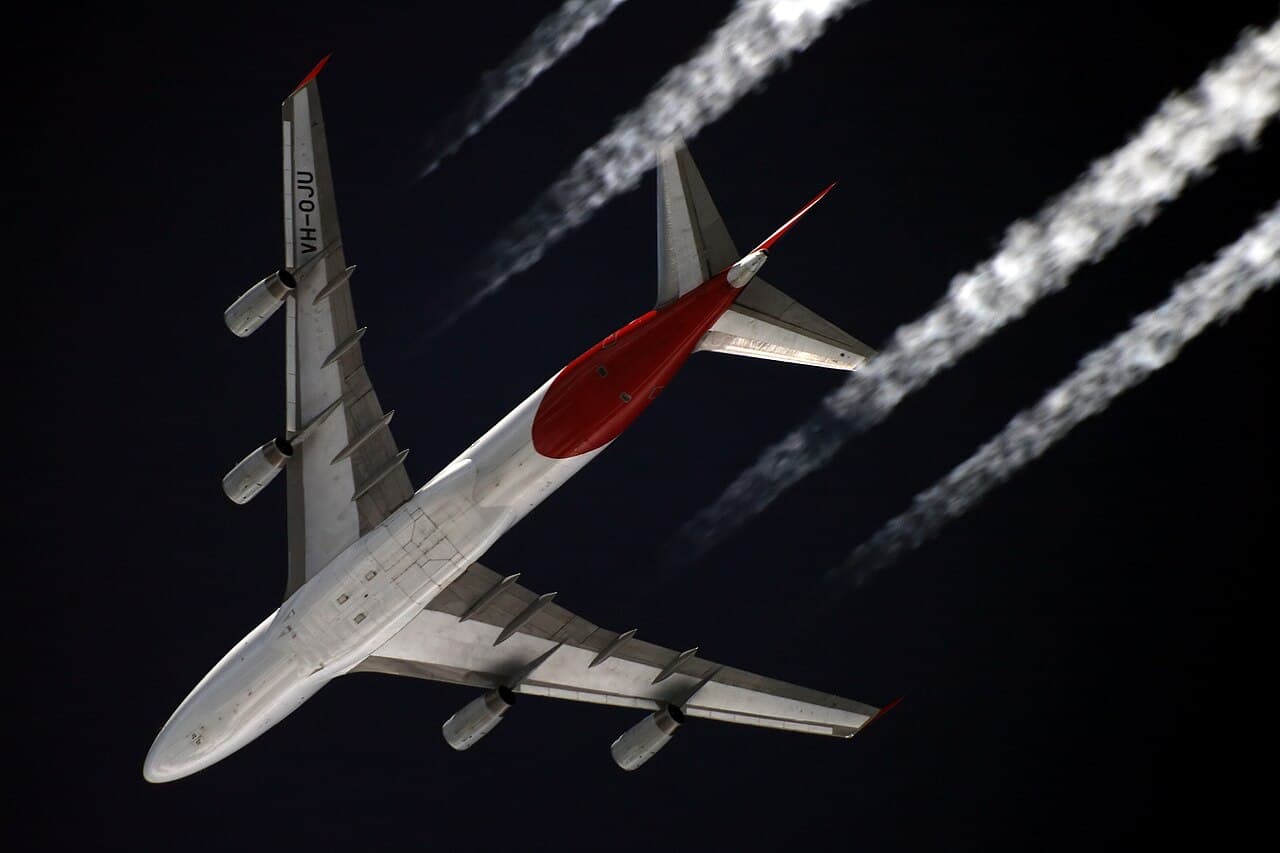
Image: Sergey Kustov · CC BY-SA 3.0 · via Wikimedia Commons
Trump Secretly Flew on C-32A After Exiting Air Force One via Catering Truck in Turkey
During his NATO summit departure, Trump boarded old Air Force One but discreetly transferred by catering truck to a different plane amid assassination threat concerns.
The gist
Trump used a covert escape involving a catering truck and a separate plane to leave Turkey, while the old Air Force One flew empty as a decoy.
Continuing coverage
All Donald Trump →- Trump to Reveal $22 Billion Overhaul Plan for Washington Dulles Airport
- American Airlines updates West Palm Beach airport name and code to honor Donald Trump
- United Airlines Lets Passengers Switch Away from Trump-Named Palm Beach Airport Without Fees
- Trump switches from new VC-25B Air Force One mid-trip amid security concerns
- Trump's $400M Qatari-Gifted Boeing 747-8 Faces Uncertain Future at Miami Presidential Library
At the conclusion of the NATO summit in Turkey on July 8, 2026, a elaborate and covert operation enabled Donald Trump to quietly depart Ankara under heightened security measures. Though publicly seen boarding the familiar old Air Force One jet—a Boeing 747-200 series known as the VC-25A—Trump did not actually fly on that plane. Instead, he slipped away via an airport catering truck, which transported him to a nearby Boeing C-32A aircraft, a modified 757 used frequently for executive transport.
This unusual move came in response to intelligence regarding an alleged Iranian assassination attempt against Trump. To reduce risk and obscure his movements, the operation concealed which aircraft the president used for departure. The newly gifted Qatar Boeing 747-8, Trump’s official Air Force One at the time, had transported him to Turkey earlier, but its recent arrival meant it lacked the full safety outfitting of the older jet. To confuse potential adversaries and safeguard Trump, multiple planes were employed to mask his actual route.
Video footage reveals the Turkish catering truck driving from the rear of the VC-25A to the C-32A parked nearby. The truck pulled alongside the rear door of both aircraft, facilitating discreet movement. White House aides and the press remained unaware during the flight; aides and journalists were on board the old Air Force One, instructed to keep window shades closed. Meanwhile, Trump flew on the C-32A using the callsign Reach 18, overtaking the VC-25A en route to RAF Mildenhall in the United Kingdom, where he landed before the decoy aircraft.
Once on the ground at RAF Mildenhall, Trump was transferred back on board the VC-25A to emerge for photo and media appearances, maintaining the illusion he had flown on the classic Air Force One jet. This carefully choreographed deception included Defense Secretary Pete Hegseth, who was reported flying on the same C-32A as Trump. The older plane, without the president aboard, used the callsign Air Force One to mislead observers.
The operation drew parallels to a similar tactic executed during former President Bill Clinton’s tenure in 2000, when a decoy executive jet was used during overseas travel for security purposes. The presence of multiple aircraft and ground vehicles in close proximity, notably the catering truck with unusual timing and positioning, raised questions but was not initially linked to the covert transport.
When questioned later about the mandatory window shades on the prior flight, Trump provided a cryptic response implying heightened danger, although the press and aides had not been informed of the true nature of the transportation arrangement. This moment added an ironic twist to the saga, illuminating the complexities of presidential travel security under threat conditions.
This episode underscores the intricate and sometimes secretive logistics of protecting a president abroad amid credible threats. Utilizing multiple aircraft and decoys, along with discreet ground transfers, is a notable example of layered security in presidential aviation. It also highlights the operational agility required to maintain both safety and public appearances, especially when newer equipment has not been fully integrated or proven in such roles.
As the geopolitical risks persist, such covert measures in presidential transport could become more common. Details of the operation reveal the lengths officials will go to manage threat levels while sustaining public perceptions, employing a combination of traditional aircraft and unconventional tactics, such as an airport catering truck serving as a discreet transport mechanism.
Frequently asked questions
- Which planes were involved in President Trump's departure from Turkey?
- Trump flew into Turkey on the new Qatar-gifted Boeing 747-8 Air Force One, then secretly transferred from the old VC-25A Air Force One via catering truck to a Boeing C-32A for departure.
- Why did President Trump not fly on the Air Force One plane he boarded?
- Due to an alleged Iranian assassination threat, Trump exited the old Air Force One via a catering truck to fly secretly on a different plane, with the VC-25A taking off as a decoy without him onboard.
- How was the secrecy of the presidential departure maintained during the flight?
- White House aides and reporters were onboard the VC-25A with window shades down, unaware Trump was on the separate C-32A, which flew under a different callsign until landing at RAF Mildenhall.
Read more
All Aviation Safety →
Alaska Airlines Flight Returns to Gate After Passenger Threats in Miami
Alaska Airlines flight 305 returned to the gate in Miami after flight attendants reported passenger threats, including one customer allegedly threatening to take over the aircraft. The pilots stopped departure, placed the cockpit under lockdown protocol, requested law enforcement, and returned to gate E6 while the incident continued to develop.
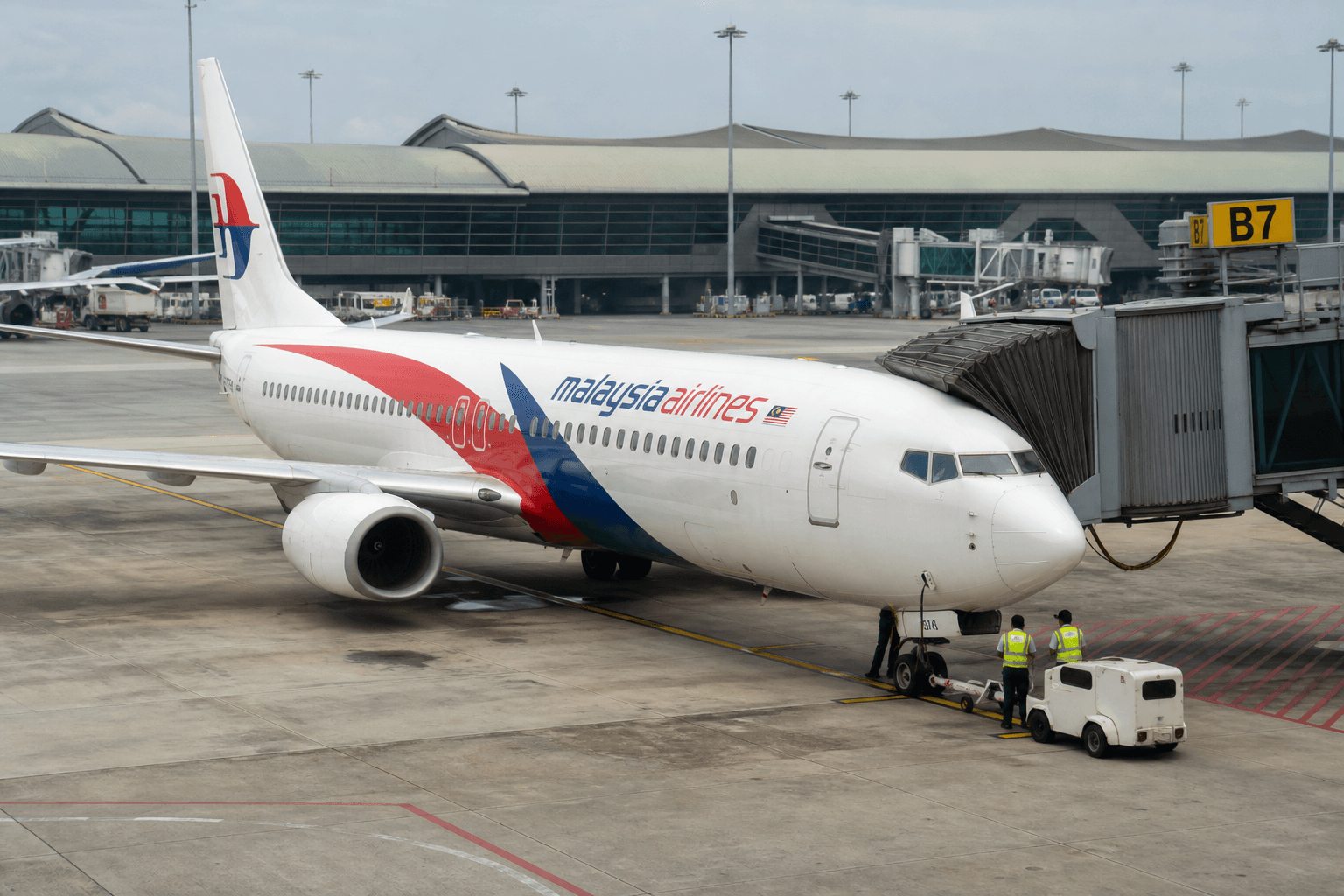
Malaysia Orders 30-Day Drug Testing for All Pilots and Cabin Crew After Smuggling Arrest
A Malaysia Airlines pilot was recently arrested in Indonesia after they were found to be smuggling drugs into the country. With the event having serious safety and reputational ramifications for not just the airline but, indeed, the commercial aviation sector in Malaysia as a whole, authorities are working hard to ensure that the incident is not repeated. Most recently, mandatory drug testing is being rolled out.
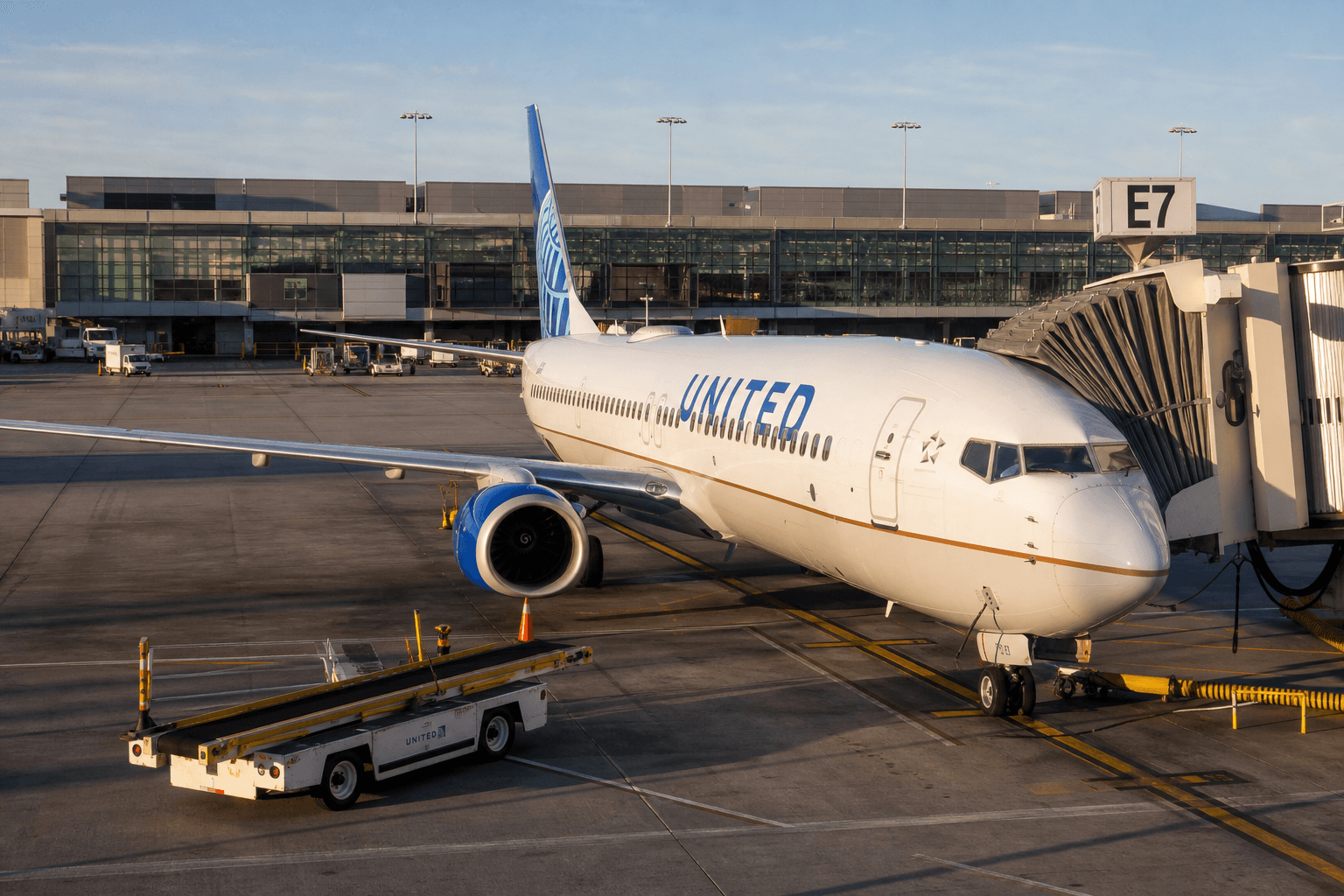
United Airlines Sued for Alleged Collusion Leading to ICE Detention of Passenger at Phoenix Airport
What should have been the end of a happy weekend celebrating a friend’s wedding in Arizona turned into a living nightmare when Patience Gore, a Zimbabwian national, was detained by three undercover ICE agents at the Phoenix Sky Harbor Airport (PHX) and subjected to two weeks of ‘degrading confinement’ in immigration custody before a court ordered her release. Gore is now accusing United Airlines of colluding with Immigration and Customs Enforcement (ICE) after one of the carrier’s gate agents in Phoenix repeatedly made announcements for Patience to go to the gate where the ICE agents were lying in wait. United Airlines is said to have colluded with ICE in detaining Patience Gore at Phoenix Sky Harbor Airport. The incident occurred late on Sunday, March 15, when Patience and her partner arrived at Phoenix Sky Harbor to fly home to Maryland after a busy weekend celebrating a friend’s wedding. They were booked on United flight UA-483 to Washington Dulles, and had checked in, dropped off their luggage, and obtained their boarding passes without any issues. The couple then went through TSA security and waited in the departures concourse for their delayed flight to be ready to board. During this time, Patience heard a voice over the airport’s intercom system repeatedly imploring: “Passenger Patience Gore, please come to the gate.” Patience couldn’t work out why she would be needed at the gate, as she and her partner had checked in with plenty of time to spare, and they both had their boarding passes. During bag drop, no issues had been raised by the United agents, but Patience dutifully made her way to Gate E7. On her arrival, the United gate agent repeatedly referred to Patience’s boarding pass. At this point, three male undercover ICE agents who weren’t wearing any visible identification or badges suddenly surrounded Patience and made it clear that she wasn’t free to go. Patience was eventually led out of the airport and transported to a detention facility in Florence, Arizona, where she was held for three days before being transferred to the Eloy Detention Center. There, she was forced to sleep on a mattress placed directly on the floor, subjected to repeated lockdowns, and denied a change of clothes or basic personal necessities, a lawsuit filed against United alleges. She was detained for two weeks before a court ordered her release after concluding that she had been previously granted a withholding of removal and that her removal to Zimbabwe is unlikely to occur in the near future. The detention did, however, mean that Patience missed a round of IVF treatment that she was scheduled to undergo at home. A replacement cycle did not result in pregnancy. In a new lawsuit filed in an Arizona district court, Patience makes it clear that United is banned from communicating with law enforcement, including ICE, and, where necessary, sharing data about its passengers. The lawsuit does, however, claim United “retained control over how it exercised its own passenger announcement authority and used that authority in a manner that created the appearance of legitimate airline business when no airline-related issue was identified.” Patience alleges that the presence of the ICE agents at the gate, along with the repeated announcements and the fact that the gate agents quickly lost interest in Patience once they had identified her from her boarding pass, shows that she was being called to the gate solely for the purpose of her detention. United is being sued for negligence because of the misleading use of passenger announcements and false imprisonment. Patience is requesting damages and punitive damages, with the total claim to be more than $75,000. United Airlines did not immediately respond to a request for comment.
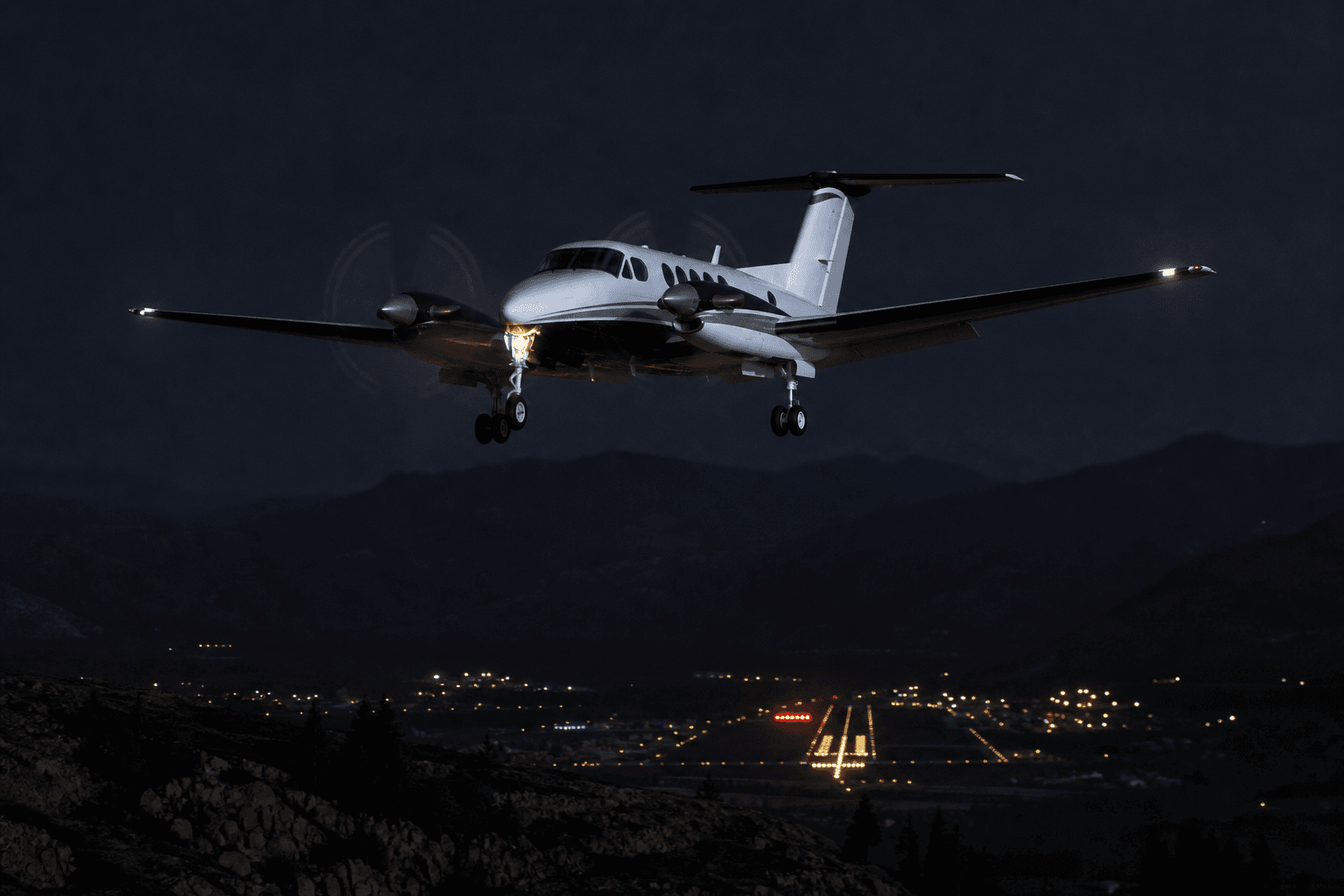
King Air ambulance crashes in New Mexico amid military GPS jamming during night visual approach
Military exercise taking place when descending aircraft struck mountain ridge during visual approach in darkness. US investigators have yet to determine why a Beechcraft C90 King Air ambulance fatally crashed into high terrain during a night visual approach in New Mexico, at a time when military jamming was taking place in the area. The National Transportation Safety Board stresses that it is still probing the 14 May accident, which left no survivors from two pilots and two nurses on board. But the aircraft had been attempting to descend from 12,000ft towards Sierra Blanca regional airport, near Ruidoso, which lies at an elevation of about 6,800ft. Although the aircraft's crew had initially intended an area navigation approach – which requires satellite-based positioning – to runway 24, they opted to switch to an ILS approach owing to the loss of GPS navigation capability. But neither the area navigation nor the ILS approach procedure was authorised if no local altimeter setting had been received, and NOTAM information stated that Sierra Blanca airport's automated weather system was out of service. The aircraft had been directed to fly northwest in preparation for a vectored approach. While about 27nm northeast of Sierra Blanca airport, however, the crew informed the area controller that they had "a visual on Ruidoso" and could "go visual". This meant turning southwest and descending over the Capitan mountains – which rise to some 10,200ft – in darkness and zero moonlight, just after midnight. Nearly 5min after commencing the descent, the aircraft had reached the mountain ridge and – according to its Spidertracks flight-tracking equipment which provided GPS-generated altitude data – was flying at 9,400ft. The aircraft subsequently began climbing but, about 45s later, it collided with terrain at about 9,950ft. Complicating the inquiry is the fact that military GPS jamming activity was taking place near the White Sands missile range, and the Albuquerque area control centre had issued a NOTAM warning that it could interfere with GPS navigation and ADS-B. This has generated speculation in various media channels that the King Air's GPS equipment might have been providing false information to the crew. But amid these suggestions, the National Transportation Safety Board insisted on 5 August that it has "not yet determined the probable cause or any contributing factors". It points out that it validates and analyses "all available evidence" before reaching conclusions. There is evidence that GPS and ADS-B data from the flight was affected. The crew reported losing GPS capability shortly after departure, and requested headings. While Spidertracks GPS-based data was generated for the whole flight, there was only a partial ADS-B record owing to the reporting frequency substantially reducing for much of it. The Spidertracks data typically indicated altitudes 600ft higher than the ADS-B data. As area centre controllers sought to vector the aircraft they requested that the military jamming exercise cease temporarily. ADS-B reporting frequency returned to normal shortly afterwards. Jamming was permitted to resume when the aircraft's pilots confirmed they would make a visual approach to Sierra Blanca airport, and began their descent. Investigators state that at least three other aircraft in the vicinity reported a loss of GPS around the same time as the King Air. Generation Jets had been operating the 47-year old aircraft (N249CP), working with its partner Trans Aero MedEvac which provided the medical support personnel.
The Daily Touch & Go
The day's best aviation news in your inbox. Free, no spam.