

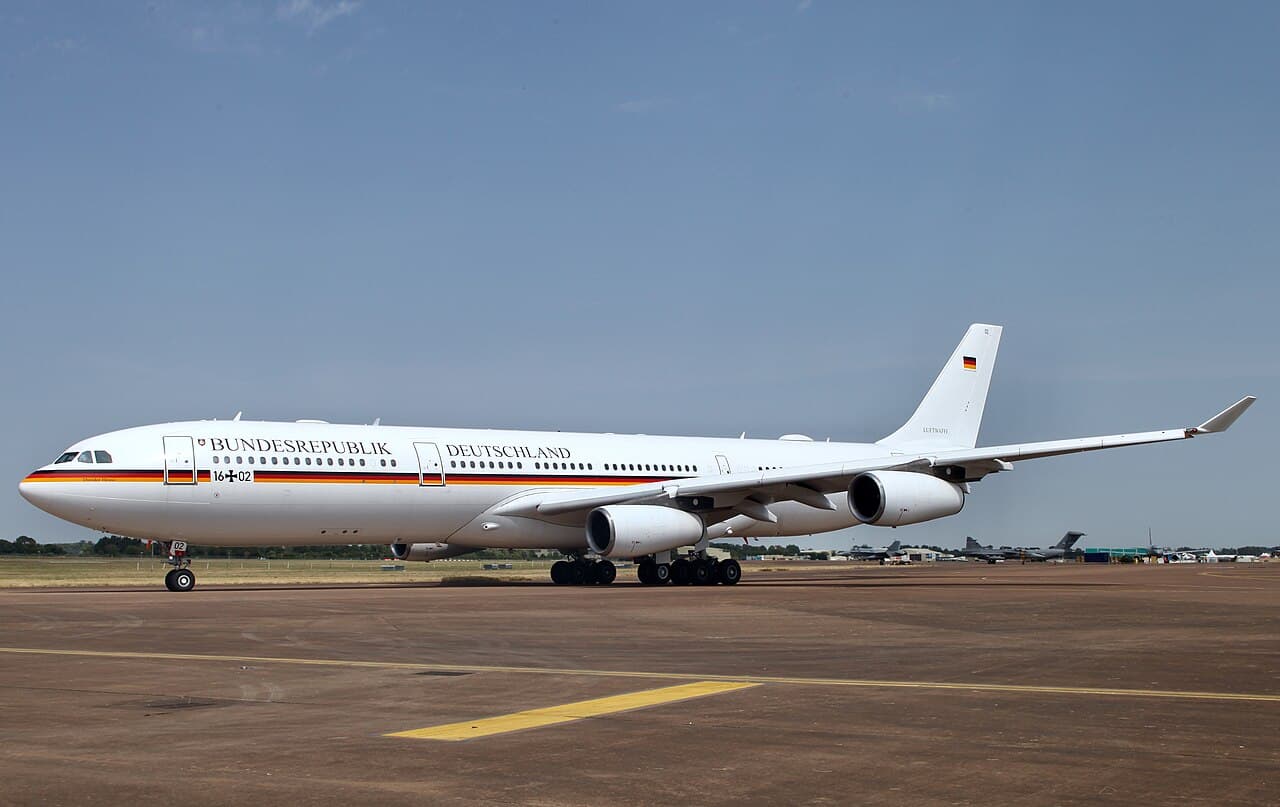
Image: Colin Cooke Photo · CC BY-SA 2.0 · via Wikimedia Commons
Rolls-Royce Estimates Up to Seven Years to Develop Engine for Stretched Airbus A350-2000
Airbus's plan for an extended A350-2000 variant hinges on Rolls-Royce developing a new UltraFan engine, projected to take six to seven years for certification and deployment.
The gist
Rolls-Royce warns Airbus that its A350-2000 will require up to seven years for a newly developed engine, delaying the widebody's entry against rivals like the Boeing 777X.
Continuing coverage
All Airbus →- Airbus Sees Premium Cabin Growth Driving US Domestic Aviation Through 2045
- Legacy 1960s Boeing 737 Design Caps Economy Seat Width at 17 Inches
- Airbus fixed A380 wing cracks by replacing carbon composite parts with aluminum to avoid fleet grounding
- flynas expands Airbus fleet with 25 new A330-900 and A321neo jets
- Airbus A350-1000ULR embarks on nonstop Toulouse to Melbourne test flight
Airbus is advancing plans to potentially launch a stretched variant of its A350 widebody, designated the A350-2000, though engine maker Rolls-Royce has indicated a significant development timeline ahead. According to the Rolls-Royce CEO, a new powerplant tailored for the larger A350 model could take between six and seven years to develop and certify, if an Airbus launch decision is made in early 2027. This prospective engine development schedule reflects the complexity of aligning next-generation propulsion technology with Airbus's ambitions for the platform.
This announcement comes amid Airbus's shifting outlook following a sluggish start to 2026. Having seen a 52% drop in core profits in the first quarter partly due to supply chain constraints, Airbus is keen to fortify its position in the widebody market. The company has established goals to double profits by 2029 and has reaffirmed a production ramp-up plan for its A350 series, targeting 12 deliveries a month by 2028. Against this backdrop of renewed growth, Airbus's exploration of the A350-2000 signifies its strategic effort to sustain long-term competitiveness.
The planned A350-2000 stretch aims to confront Boeing's emerging 777X, which is anticipated to enter service in the near term. To effectively compete, the new Airbus variant requires a powerplant offering a substantial fuel efficiency advantage, projected between 10% and 25% over current engines. Rolls-Royce's UltraFan engine, a breakthrough design currently under development, is pivotal to achieving this leap in performance. This technology features a novel power gearbox enabling a large, slow-rotating fan coupled with a fast core, aiming to optimize thermal efficiency and reduce fuel burn.
Rolls-Royce’s cautious stance toward the engine development reflects lessons learned from the costly challenges faced with the Trent 1000 engine on Boeing’s 787. The UltraFan engine will not be a minor upgrade to the existing Trent XWB line powering current A350s but a fundamentally new design integrating sustainable aviation fuels and improved durability. The company emphasizes meticulous engineering and testing to avoid setbacks and ensure financial and operational viability of the new powerplant over its development horizon.
The timeline Rolls-Royce proposes means that even with a 2027 project start, the earliest certification and readiness for the A350-2000’s new engine would likely be 2033 or 2034. This places Airbus several years behind Boeing, whose 777X is set to be operational by 2027. As a result, the A350-2000 will enter a market where Boeing's latest offering is already proven, underscoring the pressure on Airbus and Rolls-Royce to deliver a truly game-changing aircraft and engine pairing without defects or delays.
Airbus’s decision process regarding the A350-2000 is expected to take approximately 12 months, reflecting the high stakes and required strategic clarity. The program’s viability is bolstered by Airbus’s substantial aircraft backlog exceeding 9,200 units, which will sustain production lines well into the future. Moreover, the natural fleet replacement cycle for large long-haul aircraft points to emerging demand once widebody superjumbos like the A380 approach retirement stages in the next decade.
One major driver behind the A350-2000 concept is the impending retirement of Emirates’s fleet of 116 Airbus A380 superjumbos, scheduled primarily between 2030 and 2040. Emirates, the largest A380 operator with customized infrastructure and pilot training, has not found a suitable A380 successor as Airbus declined to launch a new A380neo. The A350-2000 could thus fill a strategic role for Emirates by leveraging some fleet commonality while bridging the capacity gap left by the phased-out A380s.
Rolls-Royce’s UltraFan engine development also aims to align with sustainability goals by targeting certification for full-time operation on 100% Sustainable Aviation Fuel (SAF). This environmental sensitivity factors heavily in Airbus and Rolls-Royce’s technology roadmap. The UltraFan’s anticipated efficiency improvements and green credentials make the stretched A350-2000 potentially attractive not only for legacy carriers but for airlines prioritizing future emissions regulations and market competitiveness.
In summary, Airbus’s stretched A350-2000 project hinges on a critical partnership with Rolls-Royce to deliver a next-generation UltraFan engine within a protracted but vital development window. While this schedule delays Airbus’s capability to immediately confront Boeing’s entrant, it charts a path toward the airframers’ long-term strategy in widebody twin-aisle markets as older models retire and airlines demand more efficient, sustainable aircraft.
Frequently asked questions
- How long will Rolls-Royce need to develop the engine for the Airbus A350-2000?
- Rolls-Royce estimates that engine development and certification for the A350-2000 will take six to seven years from an early 2027 start.
- What engine technology will power the Airbus A350-2000?
- The A350-2000 will use Rolls-Royce's UltraFan engine, which features a new power gearbox design for improved fuel efficiency and sustainable fuel compatibility.
- Why is the A350-2000 important for airlines like Emirates?
- With Emirates retiring its Airbus A380 fleet between 2030 and 2040, the A350-2000 offers a potential replacement that leverages Airbus flight deck commonality and suits the large widebody capacity needs.
Read more
All General Aviation →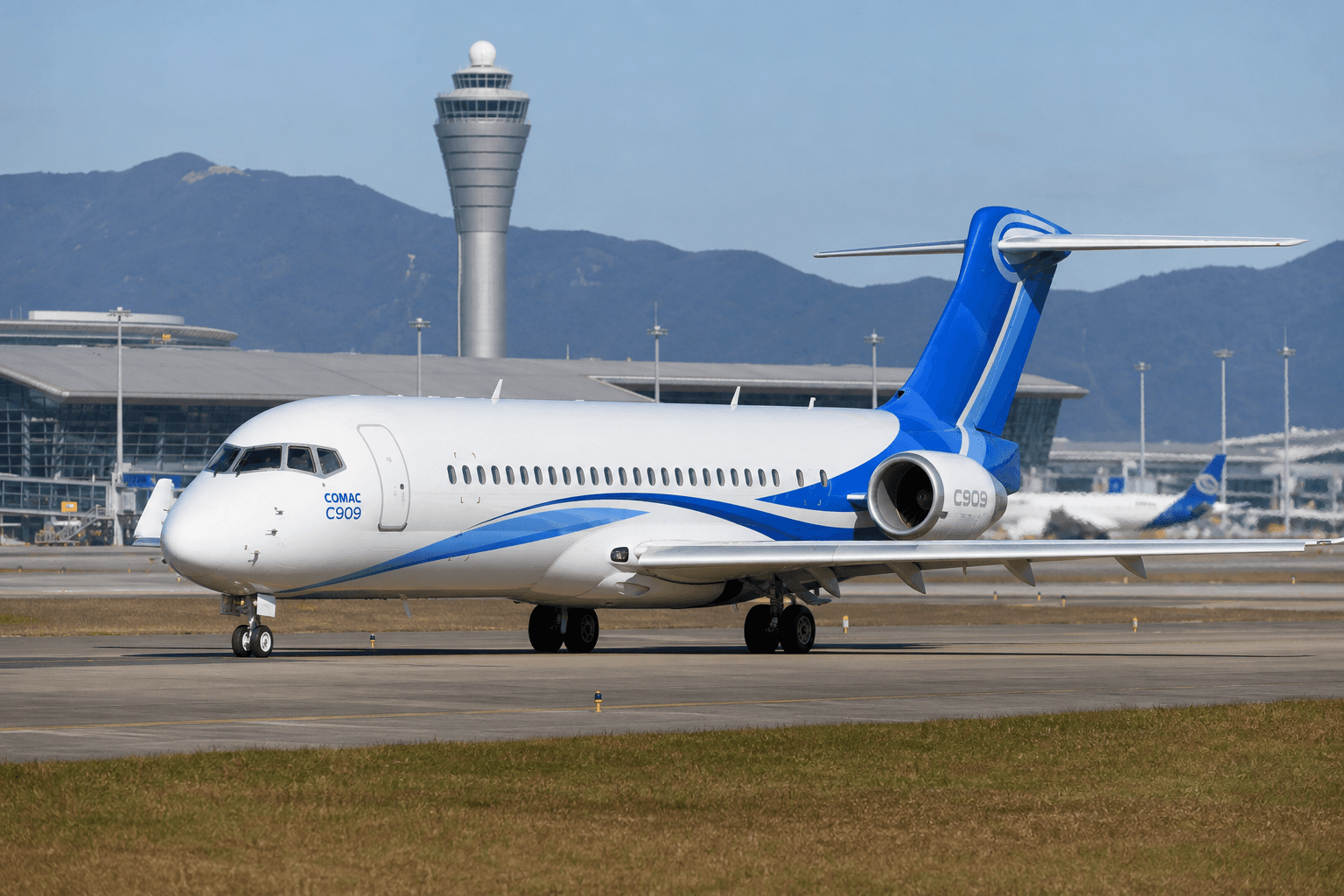
Air Cambodia places landmark order for 20 COMAC C909 jets at Farnborough
At the 2026 Farnborough International Airshow, Commercial Aircraft Corporation of China (COMAC) achieved a historic international breakthrough by securing a firm order from Air Cambodia for 20 C909 regional jets. The deal marks Air Cambodia as the inaugural foreign flag carrier to formally purchase and commit to operating the Chinese-built regional jet platform. The C909 […]

AOPA Board Advances Bylaws Update and CEO Search With Member Engagement Initiatives
By Luke Wippler, Chairman, AOPA At our AOPA Annual Member Meeting in May, we reaffirmed the Board of Trustees' commitment to strengthening AOPA through greater transparency, member engagement, responsiveness, and continued advocacy for general aviation.
Riyadh Air eyes firm order up to 30 more Boeing 787s amid rapid expansion
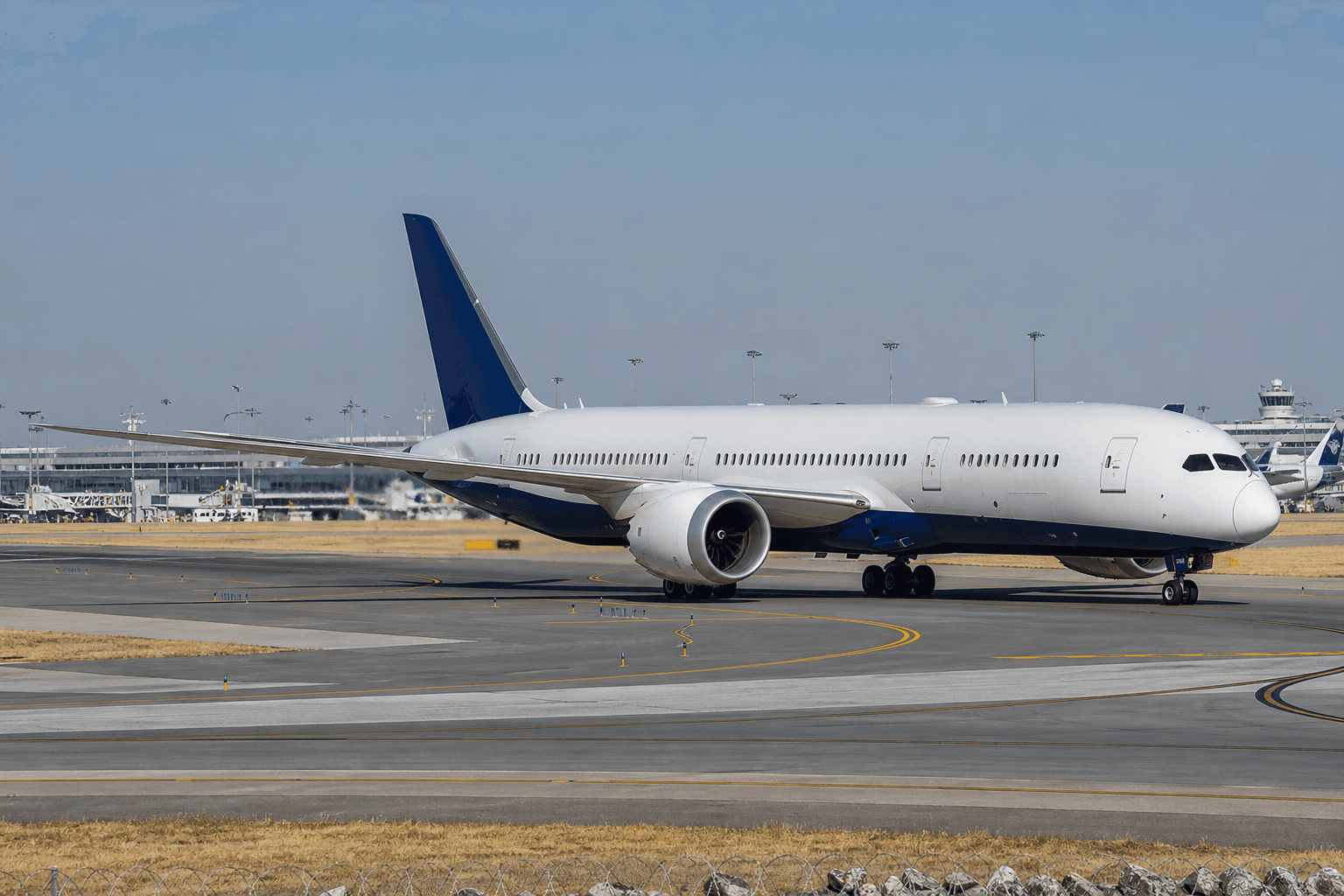
Riyadh Air is considering placing an order for as many as 30 additional Boeing 787 Dreamliners as the Saudi startup airline begins expanding beyond its small launch fleet. The airline is studying an order for between 25 and 30 aircraft, according to industry sources cited by Reuters . An announcement could come as early as the Farnborough International Airshow, which begins July 20, 2026, although the sources cautioned that discussions were continuing. Riyadh Air and Boeing did not comment on the report. The potential deal would involve converting most of Riyadh Air's existing options rather than placing an entirely new order. Riyadh Air agreed in 2023 to buy 39 Boeing 787-9s, with options for another 33 aircraft. Exercising 25 to 30 of those options would lift its firm Dreamliner commitment to between 64 and 69 aircraft, while leaving as many as eight options unconverted. The airline began revenue service in June 2026 , launching its first flight to London Heathrow with a Boeing 787-9. Chief Executive Tony Douglas said at the time that deliveries would grow the fleet to eight aircraft by the end of July and allow Riyadh Air to serve 22 destinations by March 2027. Riyadh Air is owned by Saudi Arabia's Public Investment Fund and was established in 2023 as the kingdom's second national airline alongside Saudia. It plans to serve more than 100 destinations by 2030 as Saudi Arabia invests heavily in aviation and tourism. The airline has also built a large Airbus order book. Riyadh Air ordered 60 Airbus A321neo-family aircraft in 2024 and signed a firm agreement for 25 A350-1000 widebody jets at the Paris Air Show in June 2025. That agreement included options for another 25 A350-1000s. Reuters reported that Riyadh Air is also considering converting some of those Airbus purchase rights into firm orders, although no figure was disclosed. The carrier currently lists a planned fleet of as many as 182 aircraft, including firm orders and purchase options for the Boeing 787-9 and Airbus A350-1000 and A321neo. Riyadh Air has configured its 787-9s with 290 seats across business, premium economy and economy cabins. The aircraft will form the backbone of its initial long-haul operation, while the larger A350-1000 will add capacity as the airline expands its international network.
Philippine Airlines Set to Order Boeing 787-10 and Airbus A350-1000 at Farnborough Airshow
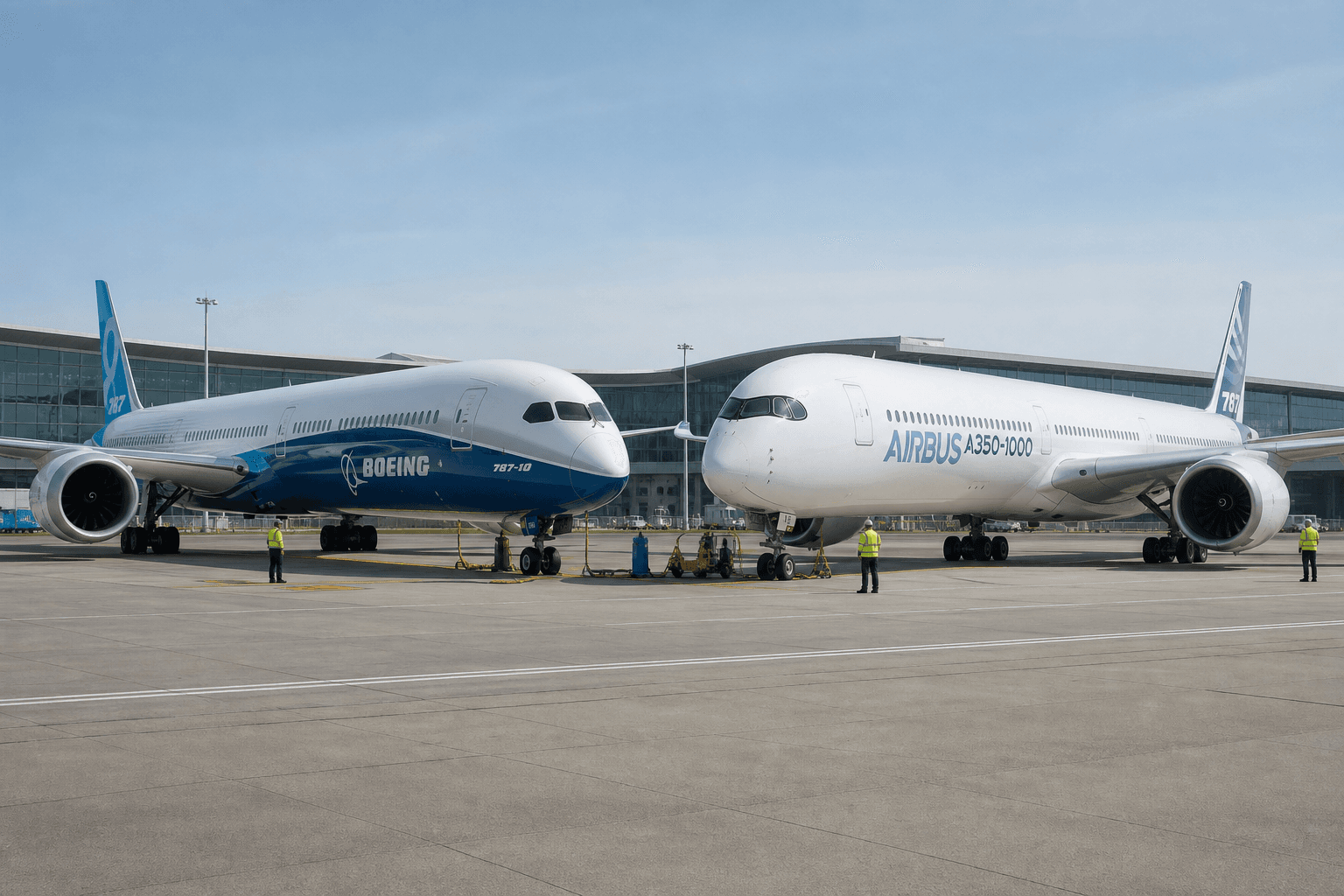
Both Airbus and Boeing are set to win widebody orders from Philippine Airlines (PAL) at this year's Farnborough Airshow, according to Reuters. On July 10, 2026, Reuters reported that the 85-year-old carrier is on the cusp of agreeing to purchase 15 Boeing 787-10 Dreamliners and nine Airbus A350-1000 aircraft. Philippine Airlines already operates Airbus' A350-1000 after receiving its first in December 2025 and its second in June 2026. According to ch-aviation data, the carrier is awaiting seven more. While Philippine Airlines has a long history of flying Boeing aircraft, including its current 777-300ERs, the carrier has never previously operated Boeing's 787-10 Dreamliner. Philippine Airlines A similar order in May 2026 saw the Lufthansa Group buy 10 Airbus A350-900s and 10 Boeing 787-9 Dreamliners. Lufthansa valued the deal at $7.7 billion at list prices. Farnborough Airshow 2026 is just over a week away and normally becomes a hive of activity for new orders from global airlines. In July 2024, flynas ordered 75 A320neo family aircraft and 15 A330-900s while Qatar Airways signed off on 20 Boeing 777-9s. Virgin Atlantic also placed a firm order for seven A330neo aircraft. AeroTime will be on the ground at Farnborough Airshow 2026 to bring you the latest breaking news and industry unveilings. RELATED Norwegian changes profile logo to British Airways after losing World Cup bet
The Daily Touch & Go
The day's best aviation news in your inbox. Free, no spam.