

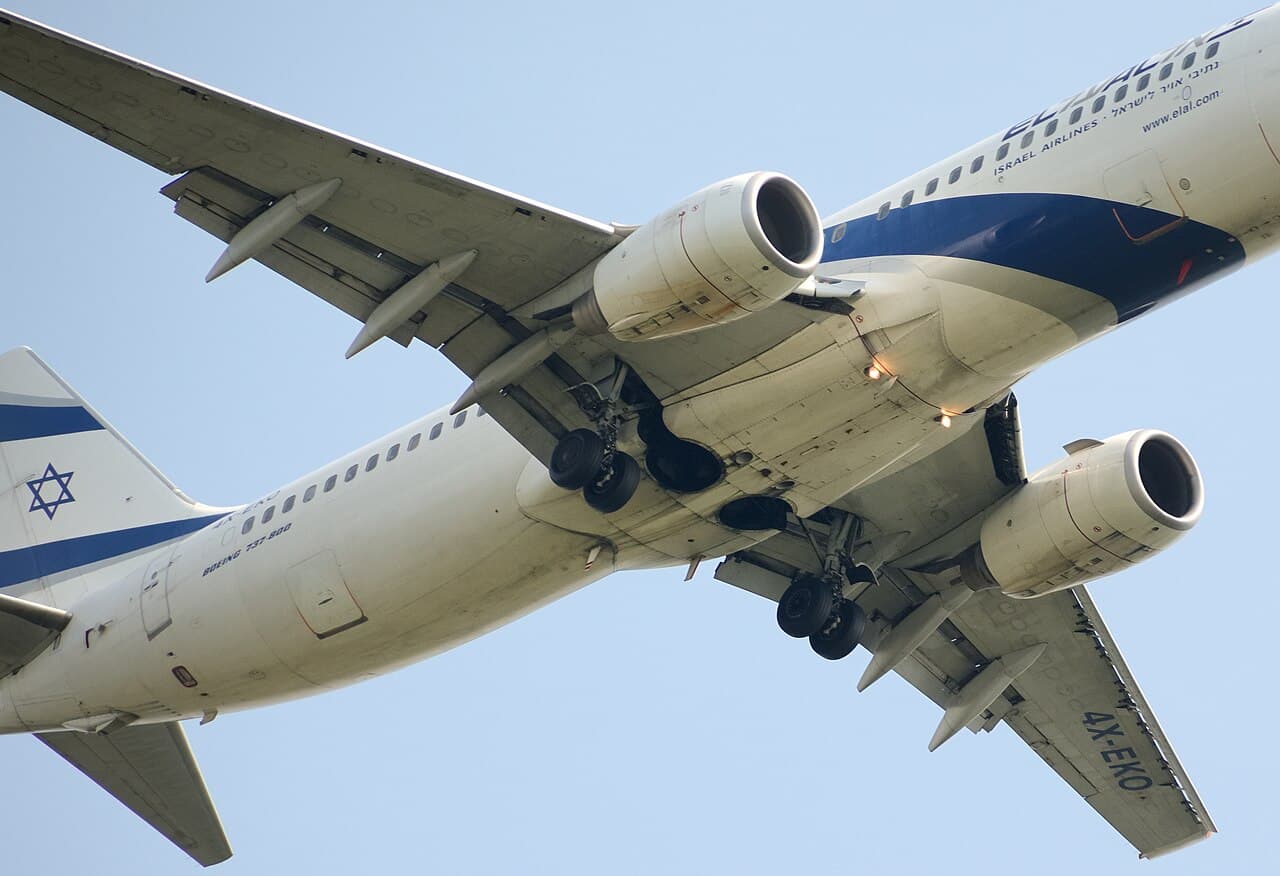
Image: Peter Haas · CC BY-SA 3.0 · via Wikimedia Commons
Legacy 1960s Boeing 737 Design Caps Economy Seat Width at 17 Inches
Boeing 737 economy seats remain narrower than Airbus A320's due to original 1960s fuselage design choices reused across decades.
The gist
The Boeing 737's original narrow fuselage design limits economy seats to 17 inches wide, unlike Airbus A320's 18 inches.
Continuing coverage
All Boeing →- Boeing's 737 MAX 7 Set for FAA Certification This Month, Boosting Southwest's Fleet Plans
- Boeing Ends Production of Boeing 777-300ER After Nearly Two Decades
- Boeing 777-9 Endures Over 63,000 Flight Cycles in Rigorous Fatigue Testing
- Boeing's Data-Driven Upgrade Set to Extend C-17 Globemaster Service Through 2075
- FAA Signals Imminent Certification for Boeing 737 MAX 7, MAX 10, and 777X Jets
The Boeing 737, one of the most ubiquitous narrowbody aircraft globally, is renowned for its operational efficiency and versatility across short- and medium-haul routes. However, a distinctive feature noticed by passengers is the narrower economy seat width compared to its direct competitor, the Airbus A320. Seats in the 737 cabin typically measure about 17 inches wide, while those on the A320 generally offer roughly an 18-inch width.
This limitation traces back to fundamental design decisions made during the 737's initial development in the 1960s. Boeing's strategy then involved reusing design elements from earlier jetliners, notably the Boeing 707 and 727, to speed development and reduce costs. This approach meant the 737 adopted the same fuselage cross-section elements, which inherently constrained cabin width and, consequently, seat width.
The original Boeing 737-100 debuted in 1968 as a short-haul twinjet designed to serve smaller airports and shorter routes with capacities around 100 to 120 passengers. Despite advancements leading to current variants like the 737 MAX series, which can seat over 200 passengers and fly longer distances, the core fuselage cross-section has remained largely unchanged. This continuity preserves the legacy cabin dimensions that limit seat width.
The 737 shares a similar fuselage 'Section 41' design—a forward nose and cockpit area—with both the 707 and 727 models. While the upper-lobe of the fuselage was also carried over, the lower-lobe sections vary among the types. These design carryovers enabled Boeing to capitalize on proven engineering but came with a trade-off on cabin space.
In contrast, Airbus engineered the A320 with a slightly wider cross-section enabling economy seats near 18 inches wide. Widebody aircraft from both manufacturers exhibit greater cabin widths, providing more space per seat; for example, Boeing widebodies like the 777 and 787 typically feature seats approximating 17 inches but also include configurations with more seats per row and narrower aisles to maximize capacity.
While a 17-inch economy seat width is considered tight by modern standards, it was common for 1960s-era jets. Airlines value passenger comfort but also must balance operational economics, as wider aircraft fuselages increase weight and aerodynamic drag, impacting fuel efficiency. Boeing’s retention of the original 737 fuselage size helps keep aircraft weight and costs lower, offering economic advantages despite the narrower seating.
The 737 MAX series introduced modernized engines, wing designs, and interior updates such as the Boeing Sky Interior, yet the historic cross-section remains. This design ceiling means passengers will continue to experience narrower economy seats aboard future 737 models compared to Airbus A320 family jets.
Overall, the Boeing 737's enduring fuselage design, rooted in its 1960s origins and shared with earlier Boeing jets, directly influences passenger seat widths decades later. Though the aircraft continues to evolve technologically and operationally, fundamental cabin dimensions have stayed constant, preserving the 17-inch economy seat width as a signature characteristic.
Frequently asked questions
- Why are Boeing 737 economy seats narrower than Airbus A320 seats?
- Because the Boeing 737 uses a fuselage cross-section design dating back to its 1960s origins, limiting economy seat width to around 17 inches, whereas the A320 was designed with a wider cabin for roughly 18-inch seats.
- Has Boeing changed the 737 fuselage design in newer models like the 737 MAX?
- No, the 737 MAX retains the original 1960s fuselage cross-section from the 737-100, preserving the narrower cabin dimensions despite other modern updates.
Read more
All Airlines →
Airbus Sees Premium Cabin Growth Driving US Domestic Aviation Through 2045
Commercial aviation has spent decades chasing passenger growth, but Airbus believes the next major shift will be driven by something entirely different. Rather than simply carrying more people, airlines are increasingly competing to offer a better experience, with premium cabins becoming one of the industry's most valuable assets.
Boeing's 737 MAX 7 Set for FAA Certification This Month, Boosting Southwest's Fleet Plans
A Southwest Airlines flight attendant has been arrested by ICE agents for allegedly overstaying his visa. Lorenzo Thompson was arrested by federal immigration authorities earlier on July 14 in Nashville . Thompson is a Jamaican citizen and entered the US on April 17, 2021, on a visa that expired in October later that year.
Boeing Ends Production of Boeing 777-300ER After Nearly Two Decades
In 2004, the airline sector was revolutionized by the Boeing 777-300ER (extended range) variant of the 777 family. It was first flown commercially by Air France, and at the time, Boeing claimed it was "the most technologically advanced airplane in the industry" , surpassing previous 777-200 and 777-200ER variants, and raising the bar in terms of comfort and range. The 777-300ER featured updated systems, and at the time, it was equipped with the most powerful commercial jet engine available, the General Electric GE90-115B turbofan.

Boeing 777-9 Endures Over 63,000 Flight Cycles in Rigorous Fatigue Testing
From Boeing: Photo: A close up of the wing of the 777-9 currently undergoing fatigue testing. (Patrick Rodwell photo) The test rig's hydraulics hummed and whirred like a roller coaster up its first big hill. A massive wing rose and fell in a steady cadence — like a physical therapist testing a shoulder joint — […]
The Daily Touch & Go
The day's best aviation news in your inbox. Free, no spam.