


Image: PJSC "UAC" · CC BY-SA 4.0 · via Wikimedia Commons
United Engine begins serial delivery of PD-8 engines for Yakovlev SJ-100
Russian manufacturer United Engine has started supplying serial-produced PD-8 engines for the import-substituted Yakovlev SJ-100 regional jet, following its type certification in June.
The gist
United Engine delivers the first serial PD-8 engines for the Yakovlev SJ-100, advancing Russian aerospace self-reliance.
Russia’s United Engine has commenced serial deliveries of the Aviadvigatel PD-8 engines to power the Yakovlev SJ-100 regional aircraft. The PD-8 engine is designed as a domestically produced alternative to the original powerplant of the Superjet 100 (SSJ100), supporting Russia’s drive for import substitution in civil aviation. The company’s Saturn division head, Ilya Konyukhov, confirmed that the first two engines for the SJ-100 have been handed over, marking a significant milestone in the program.
The PD-8 engine achieved type certification in June, an essential regulatory step that precedes full operational approval of the Yakovlev SJ-100 equipped with the new powerplant. Certification of the SJ-100 airframe itself is still underway, with authorities currently conducting the necessary evaluations to approve the import-substituted version of the regional jet. United Engine continues its efforts alongside certification bodies to complete this process.
Saturn reflects the collaboration of thousands of professionals, including designers, technologists, and scientists across United Engine’s enterprises and affiliated industries, attributing the engine’s development success to this extensive teamwork. The PD-8’s design has benefitted from targeted efforts to reduce engine weight and improve fuel efficiency relative to previous powerplants used on the SSJ100, addressing both performance and operational cost goals.
This engine development project has presented a formidable industrial challenge, engaging multiple sectors of the Russian aerospace industry to achieve a modern powerplant suitable for regional aircraft. Konyukhov characterized the development as a comprehensive undertaking that tested the full capabilities of the industry, yet emphasized that the challenges were successfully overcome through integrated efforts.
United Engine’s progress with the PD-8 aligns with broader Russian goals articulated by first deputy prime minister Denis Manturov, who highlighted the significance of cultivating a modern civil aviation fleet. Manturov focused on platforms such as the Ilyushin Il-114-300, Yakovlev MC-21, Tupolev Tu-214, and the SJ-100 as key components enabling Russia’s technological sovereignty and aviation autonomy.
These aircraft programs, including the PD-8-powered SJ-100, are intended to support flexible route planning across various distances and to enhance regional air service within Russia. Manturov pointed to the start of practical deliveries of the Il-114-300 and the scaling up of Tu-214 serial production as complementary milestones within this aerospace modernization agenda.
Certification efforts for the MC-21 and SJ-100 aircraft are noted to be in advanced stages, indicating that the introduction of new-generation, domestically produced aircraft is imminent. The PD-8 engine’s serial production and delivery represent a tangible step toward realizing an aviation sector less dependent on foreign technology and supply chains.
The strategic emphasis on such programs reflects a key element in Russia's wider policy objectives: ensuring the resilience and independence of its civil aviation industry amidst geopolitical and economic pressures. The successful operation and certification of the PD-8 engine will play a pivotal role in establishing indigenous capability for regional jets and sustaining the viability of Russia’s domestic aircraft production.
The ongoing development and delivery of the PD-8 powered SJ-100 will enable Russia to maintain and potentially expand its regional aviation capacities, securing critical transport links and supporting economic integration across remote and regional areas. This progression also demonstrates the Russian aerospace industry's ability to respond to supply constraints and reconstitute its technological base through homegrown solutions.
Frequently asked questions
- What is the PD-8 engine used for?
- The PD-8 is an Aviadvigatel engine produced by United Engine, developed as an import-substituted powerplant for the Yakovlev SJ-100 regional jet.
- Has the PD-8 engine received certification?
- Yes, the PD-8 engine obtained its type certificate in June, which is an important step towards the full certification of the SJ-100 with this engine.
- What broader aviation programs accompany the PD-8 and SJ-100 development?
- Programs including the Ilyushin Il-114-300, Yakovlev MC-21, and Tupolev Tu-214 aim to build a modern civil fleet supporting Russian technological sovereignty alongside the PD-8 powered SJ-100.
Read more
All Regulatory →
New Radar at Newark Debuts as DOT Seeks $10B More for Air Traffic Control Upgrades
U.S. Transportation Secretary Sean Duffy and FAA Administrator Bryan Bedford on Monday inaugurated a new surface movement radar (SMR) at Newark Liberty International Airport (KEWR). But the officials are seeking at least $10 billion more for further air traffic control (ATC) upgrades. Duffy has previously requested $19 billion in addition to the $12.5 billion allocated by Congress to the effort in 2025. In July, the Modern Skies Coalition, a group of aviation stakeholders led by the Aircraft Owners and Pilots Association (AOPA), called on Congress to allocate another $20 billion. On Monday, though, Duffy said the Transportation Department (DOT) "would love $20 [billion], but we'll take $10 [billion]." "Hopefully, by the end of this year we'll get it," he told a crowd of reporters at the airport's remote control tower. Duffy and Bedford reiterated that the multibillion-dollar ATC modernization effort should be complete by the end of 2028. The former said that the effort is "actually saving money" that has allowed DOT to begin developing Strategic Management of Airspace, Routes, and Trajectories (SMART)—an AI-powered software that could predict airspace conditions months in advance. The DOT plans to begin testing a "portion" of SMART in September and fully deploy the system by the spring, Duffy said. The goal is for it to come online with infrastructure upgrades such as the new surface movement radar at Newark Airport. Duffy said the $10 billion that he requested Monday will cover the software's development. But he said a "second $10 billion" would be required for building the "actual bricks and mortar" for new ATC towers and facilities, such as terminal radar approach control (TRACON) sites. "[President Donald Trump] has leaned in and has been a great advocate for getting us the money," Duffy said. "He wants updates on how we're doing and how quickly we can go." Bedford was also adamant about securing additional funding. In tandem with infrastructure upgrades and controller hiring, he said SMART will be indispensable in meeting future demand on the National Airspace System (NAS). He said the FAA projects the annual number of passengers flying through the NAS will double from 1 to 2 billion over the next two decades. "We have to have a modern, cloud-based, cybersecure, infinite data capacity system, with modern software," Bedford said. However, it is unclear if $10 billion will be enough to cover that. In July, the Modern Skies Coalition estimated that a new common automation platform (CAP)—designed to combine en route and terminal data—would alone cost $10 billion. ATC Modernization Continues Apace Duffy said the new SMR at Newark Airport replaces a system that is about 30 years old. Bedford said replacement parts are no longer made for the old system. The SMR tracks vehicles on airport runways, taxiways, and ramps and is designed to give controllers better visibility of the ground and aircraft on final approach. "If they can't see out of the tower and see what's happening on the tarmac, they can actually use this radar to actually see on the screens where everything is," Duffy said. Added Kathryn Garcia, executive director of the Port Authority of New York and New Jersey, "this technology will help the controllers who operate this airspace manage their work more efficiently." Bedford said the SMR, built by Saab in upstate New York, was the fifth of 53 planned deployments to the nation's 44 busiest airports. Four more, he said, are deployed at three other sites. Garcia said new SMRs will also be installed at LaGuardia Airport (KLGA) and John F. Kennedy International Airport (KJFK) in 2027 or '28. Duffy said radar outages at Newark last year were influential in Congress' decision to allocate the initial $12.5 billion for ATC upgrades. Two 90-second outages left controllers without radar and communications, prompting several to take mental health leave. The DOT replaced copper wiring that carried telecommunications data from a facility on Long Island, New York, to the Philadelphia TRACON—where ATCs oversee Newark airspace—to help prevent future outages. Bedford on Monday said the airport has seen a "great recovery of reliable operations" since last year but that there is "more to do for sure." That work continues apace. For example, Duffy said that about 60 percent of copper telecommunications wiring has been upgraded to newer systems. That figure was about 50 percent in April. Out of 220 planned surface awareness initiative (SAI) installations, Duffy said that 96 are complete versus 54 in April. Of more than 1,500 radio site conversions, 363 are complete compared to about 250 in April. In addition, Duffy said the agency has installed 151 out of 450 new voice switches and converted from paper to electronic flight strips at 19 of 89 planned towers. He said the effort spans all 50 states and is "one of the largest projects in America right now." At the same time, Bedford said the FAA has hired 4,000 new controllers since the ATC modernization push began. About 1,000 of them are "close to being certified," about 1,500 are training at facilities, and another 600 are at the FAA Academy in Oklahoma City. "It's no secret that the FAA is understaffed at its critical terminal facilities and towers," Bedford said. "So we are moving with urgency to clog the staffing gaps." Getting SMARTer Duffy and Bedford praised the speed of the modernization effort thus far. But Bedford said the program will "not be successful" unless SMART is rolled out in tandem. Duffy said the DOT will "slow-roll different aspects" of SMART rather than introduce the whole system at once. He said the agency has demonstrated it to Congress and plans to do so for Trump. "If there's paths through the weather that we can safely take, we can deploy those for our airlines and increase the through capacity," Duffy said. The secretary said the idea of SMART is not to "outsource" airspace management to AI but rather to give controllers another tool in their toolkit. "We can't control the weather, but we can control the decisions that we make to keep airspace open, or only close airspace when we absolutely have to," said Bedford. "The primary mission of the air traffic organization is to keep things separated. None of that's changing…It's going to create more safe capacity to stop the traffic jams on the airports and get flights moving." FLYING readers can track progress on ATC modernization using the FAA's Modern Skies portal .
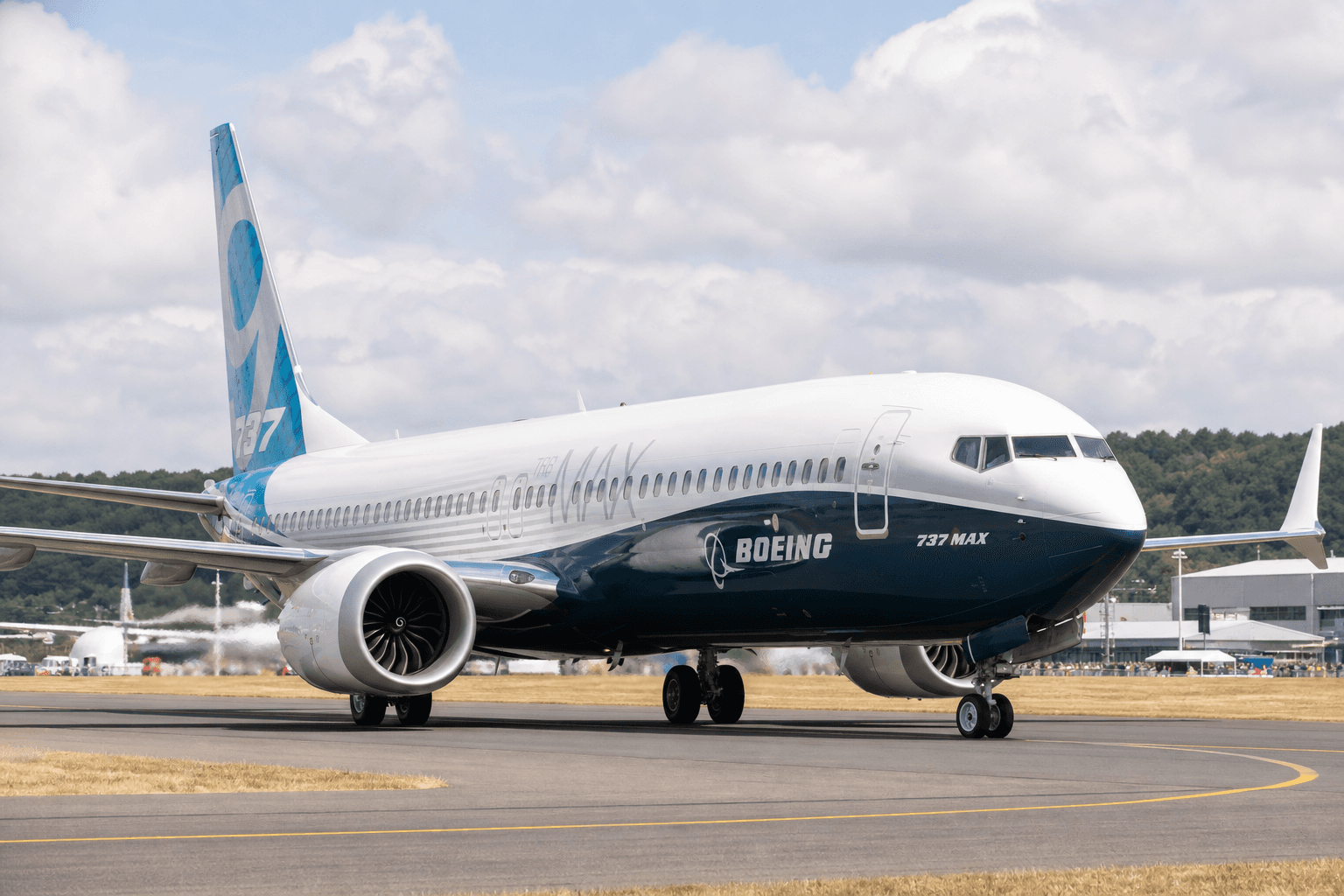
Boeing's July Orders Highlight Significant Deals with Uganda and AerCap
Both deals among those unveiled during Farnborough air show. Uganda Airlines' agreement for four Boeing 787 and four 737 Max jets, plus a batch of 15 787s for lessor AerCap, featured among 38 Boeing aircraft ordered during July. Both deals, and a 737 Max pair for Luxair, were revealed during the Farnborough air show. Boeing's order total for the month also included a single 777X for an unidentified customer, and agreements for 12 further Max aircraft. The airframer has recorded strong activity for the 737 Max 10 – still to secure certification – with more than 130 orders for the variant so far this year. Boeing has taken more than 1,500 orders for the Max 10, and it represents over 30% of the Max backlog of 4,345. Eight 737 Max jets were cancelled in July, leaving the airframer with overall net orders for 438 aircraft over the first seven months of this year. Boeing delivered 53 aircraft in the month, comprising 10 787s, three 767s – including two KC-46 tanker airframes – and a 777F, along with 39 737s.

FlightAware sues Kalshi over unauthorized use of flight cancellation data in betting markets
Flight-tracking company FlightAware has sued prediction-market operator Kalshi, accusing the service of using its data and trademark without permission to settle wagers on US flight cancellations. The lawsuit, filed in US District Court for the Southern District of New York, alleges Kalshi used FlightAware data in prediction markets that allow users to wager money on how many flights will be canceled in a given period of time. FlightAware is seeking a temporary restraining order and permanent injunction to stop Kalshi from using its data and brand in connection with the markets. The dispute flared up in July 2026, when Kalshi disclosed plans for contracts tied to the percentage of flights canceled at airports during specified periods. Kalshi said in a filing with the Commodity Futures Trading Commission (CFTC) that FlightAware data would be used to determine the outcome of the contracts, with US Department of Transportation data serving as a backup. FlightAware immediately objected to the plan. RTX, FlightAware's parent company, said at the time that FlightAware was not involved with any prediction markets and that no company was authorized to use data collected through its network for that purpose. Kalshi initially paused plans for the flight-cancellation contracts following the objections, but later offered cancellation markets using FlightAware information, according to the lawsuit and published reports. FlightAware alleges it repeatedly sent cease-and-desist demands to Kalshi but that the company continued using its data and referring to FlightAware on its website. Kalshi later added a disclaimer stating that FlightAware was not affiliated with or endorsing the markets. The lawsuit also raises a broader concern about allowing people to profit from disruptions to air travel. FlightAware argues that markets tied to flight cancellations could create incentives for people to interfere with airline or airport operations to influence the outcome of a contract. The issue surfaced after Kalshi first proposed the contracts in July, when critics questioned whether someone could deliberately cause disruptions at an airport and then profit from cancellation bets. Kalshi operates a federally regulated prediction market where users trade contracts based on whether future events will occur. The company has expanded rapidly into areas including politics, economics and sports. Prediction markets are overseen in the US at the federal level by the CFTC, but Kalshi has also faced challenges from states that argue some of its contracts amount to gambling that should be regulated under state law.
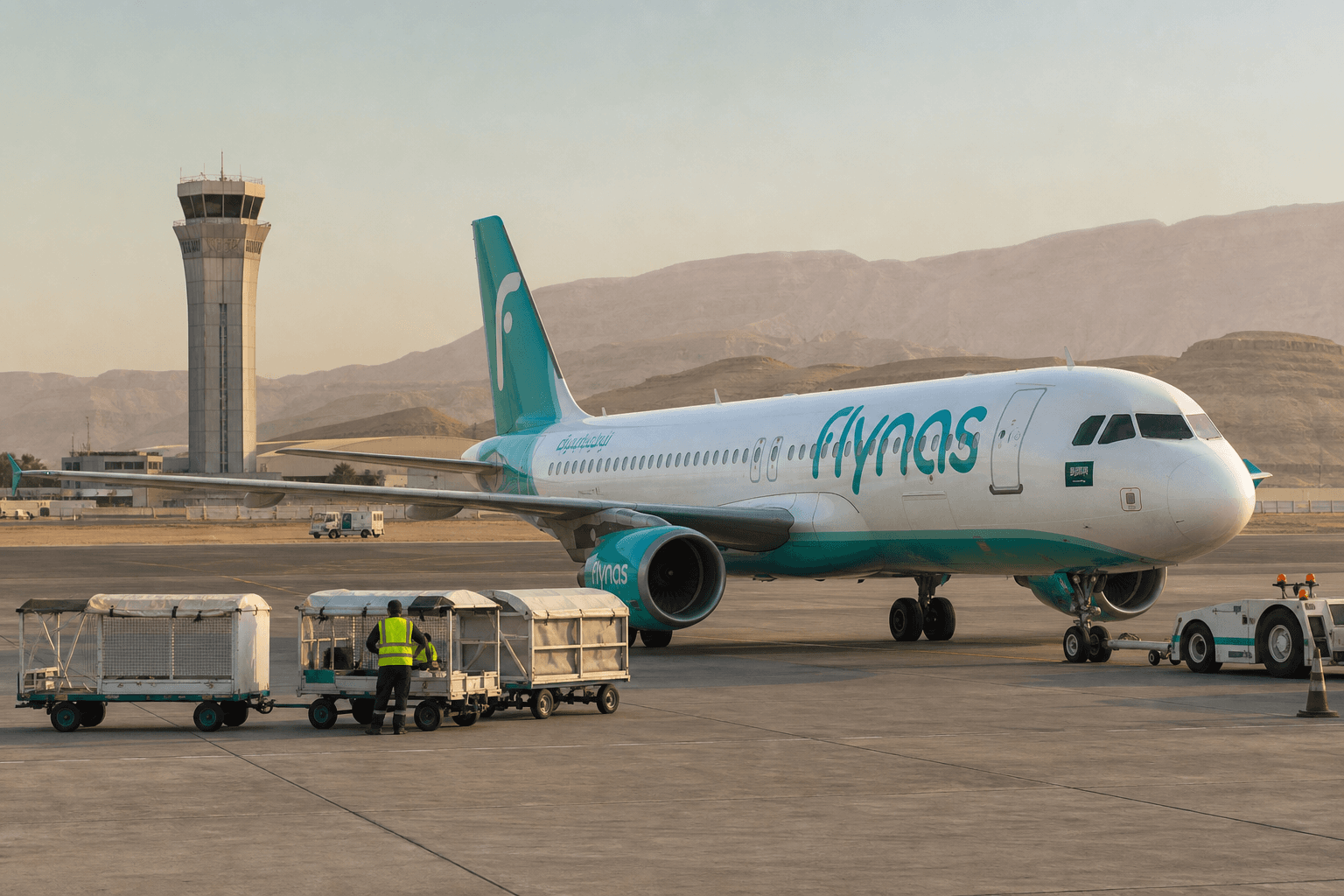
Jazeera Airways posts KD8.6 million profit despite Middle East turbulence in H1 2026
Kuwaiti airline turns in net profit for first half of the year despite Middle East disruption. Kuwaiti budget carrier Jazeera Airways' managed to limit the slip in half-year net profit to 10%, as a stronger relative performance in the second quarter helped offset the crisis-hit first. The airline turned in a net surplus of KD8.6 million ($27.8 million) for the six months to 30 June, down on last year's interim of KD9.6 million. Jazeera had suffered from the Kuwaiti regulator's suspension of flights in late February – and the subsequent rise in fuel costs – as the Iranian conflict unfolded. The carrier took mitigating steps counter the impact, using Qaisumah airport and Dammam airport in Saudi Arabia to maintain flight continuity up to April and May. It has also deferred a dividend payment, and sought "waivers" from aircraft and engine lessors to ease costs. Despite the adverse geopolitical situation, Jazeera's second quarter strongly improved on the same period last year – although the rebound partly reflected the fact that last year's second quarter had itself been affected by two weeks of conflict between Israel and Iran. Jazeera's revenues for the three months rose 45% to reach KD70.7 million and, although fuel costs were up 46% to KD17.4 million, the airline's net profit doubled to KD9.6 million.
The Daily Touch & Go
The day's best aviation news in your inbox. Free, no spam.