

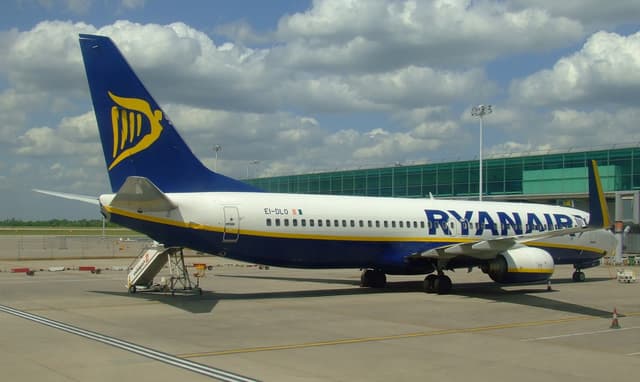
Image: Thomas Nugent · CC BY-SA 2.0 · via Wikimedia Commons
Ryanair Signs Five-Year AI and Cloud Partnership with Google to Boost Operations
Ryanair has partnered with Google Cloud to deploy AI-driven tools and cloud services supporting its growth to 300 million passengers annually by 2034.
The gist
Ryanair teams with Google Cloud on a five-year deal to harness AI and cloud tech for operational efficiency and resilience.
Continuing coverage
All Aviation Technology →- Simple Flying enhances Flight Tracker with cleaner interface and new features for easier live flight viewing
- New Radar at Newark Debuts as DOT Seeks $10B More for Air Traffic Control Upgrades
- Boeing 777-9 challenges Airbus A350-1000 dominance in long-haul widebody market
- Retired Delta pilot urges airline to replace Amazon Wi-Fi with Starlink for better service
- EAA AirVenture Oshkosh 2026 to Showcase Cutting-Edge Aviation Technology and Historic Warbirds
Europe's largest airline, Ryanair, has entered a significant five-year partnership with Google Cloud aimed at enhancing its operational efficiency and infrastructure resilience through advanced data and AI technologies. Announced on August 12, 2026, this collaboration is designed to bolster Ryanair's ambitious plan to increase its annual passenger numbers to 300 million by 2034. The deal introduces Google Workspace and Google Cloud services to Ryanair's 35,000-strong workforce, marking a pivotal step in the airline's technology and growth strategy.
Central to the partnership is the deployment of Gemini Enterprise, Google Cloud's agentic AI platform. Gemini Enterprise is engineered to integrate company data, automate complex workflows, and create custom AI agents tailored for Ryanair’s operational needs. Its daily use is expected to transform work patterns by automating decision-making processes and optimizing flight crew logistics, thereby increasing overall corporate productivity across the airline's extensive network.
The agreement also establishes a dual-cloud strategy for Ryanair, enhancing the resilience of its digital infrastructure. This approach provides an added layer of security and operational stability as the airline scales up. Ryanair CEO Eddie Wilson emphasized the criticality of robust infrastructure to support the airline’s growth and noted that the collaboration with Google Cloud and implementation of Gemini Enterprise and Google Workspace are key to sustaining operational efficiency.
From Google Cloud's perspective, the partnership aligns with aviation's demands for precision and reliability. Maureen Costello, Vice President for UK, Ireland, and Sub-Saharan Africa at Google Cloud, pointed out Ryanair’s leadership in operational execution and expressed enthusiasm for enabling the airline’s AI transformation. She highlighted that generative AI and modern collaboration tools can help reduce operational costs and redefine passenger experiences at scale.
Operationally, Google Workspace will furnish Ryanair employees with modern collaboration platforms to streamline daily communication and teamwork. Meanwhile, the broader Google Cloud services will underpin data management and AI functions, helping Ryanair manage its increasingly complex operations as it expands. Automating flight crew logistics, which often involve dynamic scheduling and rapid adjustments, will be critical to maintaining punctuality and efficiency.
The use of AI agents to analyze operational data rapidly facilitates improved decision-making and faster handling of routine processes. This automation frees human teams to concentrate on higher-value tasks, contributing to better efficiency overall. The dual-cloud setup further ensures that key systems remain operational and protected against disruptions, a vital requirement in the aviation sector where reliability directly impacts safety and customer satisfaction.
Ryanair's renowned low-cost, high-efficiency business model stands to benefit substantially from the integration of advanced AI and cloud computing. The new tools will enable the airline to process larger volumes of data with enhanced speed and precision, respond nimbly to operational changes, and maintain cost discipline amid expansion.
This partnership signals a clear intensification of Ryanair's commitment to embedding digital innovation at the heart of its operations. By equipping thousands of employees with Google’s AI and collaborative cloud platforms, Ryanair expects to sustain its operational edge and agility as passenger numbers rise. The enhanced infrastructure and AI capabilities are anticipated to underpin smoother, more resilient operations across Ryanair's European route network for years ahead.
Frequently asked questions
- What technologies are included in Ryanair's partnership with Google Cloud?
- The partnership includes Google Workspace for collaboration and Google Cloud services, especially Gemini Enterprise, a generative AI platform to automate workflows and optimize operations.
- How will AI be used to improve Ryanair's operations?
- AI tools like Gemini Enterprise will automate decision-making, optimize flight crew logistics, speed routine processes, and increase overall productivity by allowing staff to focus on higher-value tasks.
- What is Ryanair's passenger capacity goal related to this deal?
- Ryanair aims to carry 300 million passengers annually by 2034, and the partnership with Google Cloud supports the growth and infrastructure resilience needed for this target.
Read more
All Cargo →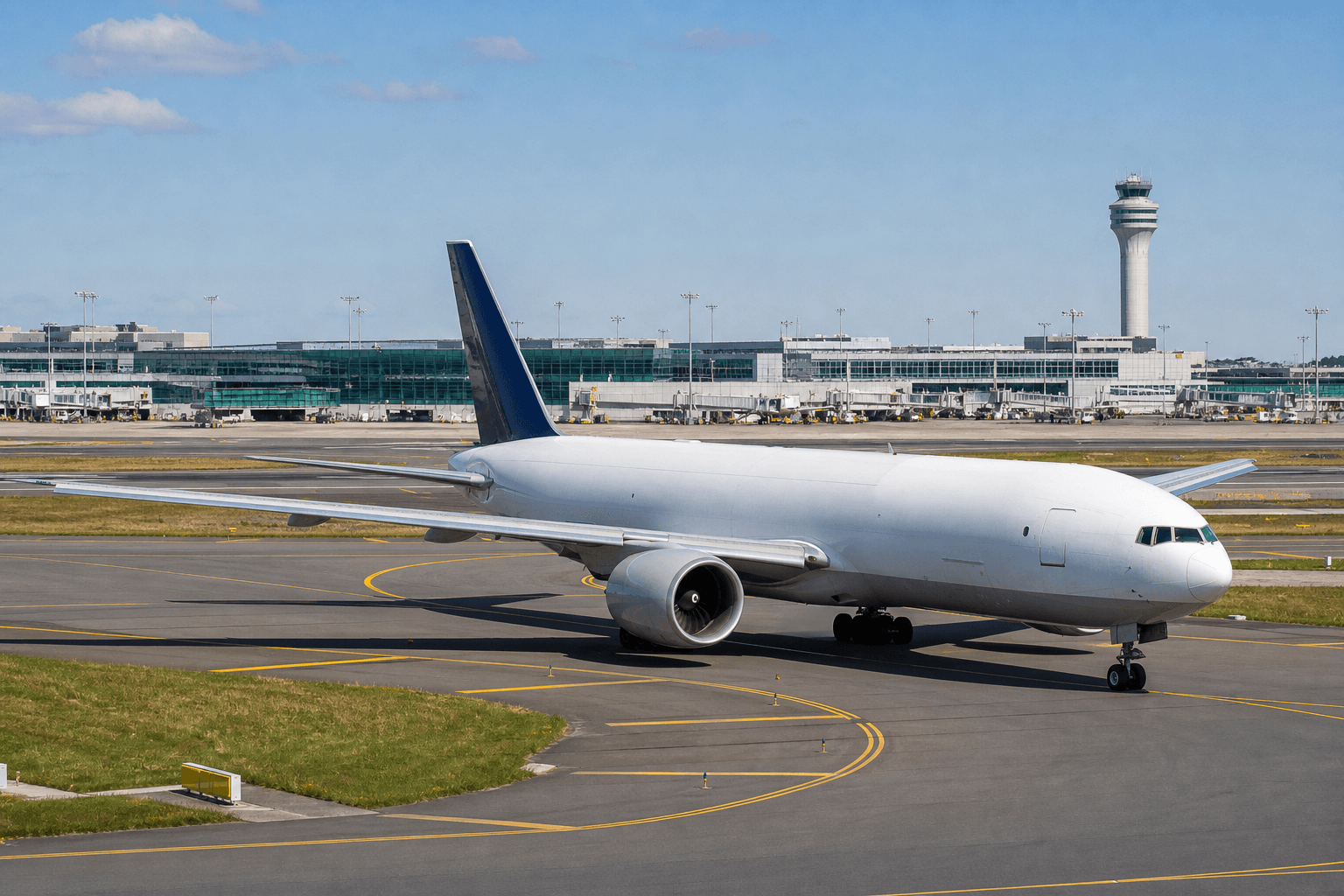
DAE Signs Deal to Acquire and Lease Four Boeing 777F Freighters to Saudia
Dubai Aerospace Enterprise has signed a major agreement with Saudia. The deal, announced on 10 August 2026, covers four new Boeing 777F aircraft. It also includes long-term leases for these planes. ezstandalone.cmd.push(function () { ezstandalone.showAds(119); }); Deliveries will run from October 2026 to May 2027.This purchase-and-leaseback deal strengthens Saudia’s cargo operations. It helps the Saudi flag carrier serve more markets worldwide. What the Agreement Involves DAE will purchase the four Boeing 777F freighters. Then it will lease them back to Saudia under long-term contracts. This structure is common in aviation. It gives airlines access to new aircraft while spreading costs. ezstandalone.cmd.push(function () { ezstandalone.showAds(127); }); The Boeing 777F is a long-range, widebody freighter. It offers strong payload capacity of about 102 tonnes. It also delivers good operational efficiency and high reliability. Leading cargo operators around the world already use this aircraft type. Firoz Tarapore, CEO of DAE , commented on the deal. “We are pleased to announce a purchase-leaseback agreement for four Boeing 777F aircraft with Saudia,” he said. ezstandalone.cmd.push(function () { ezstandalone.showAds(128); }); “This transaction reflects our continued commitment to supporting our airline customers with high-quality, in-demand aircraft.” He added that the planes will support Saudia’s growing cargo work. They will also help the airline reach key markets on its global network. Tarapore wished Saudia continued success. ezstandalone.cmd.push(function () { ezstandalone.showAds(129); }); Why This Matters for Saudia Saudia aims to expand its dedicated freighter fleet. The carrier wants to meet rising global demand for air cargo. These four new aircraft will boost capacity. They will improve connectivity between key international destinations. Saudi Arabia continues to position itself as a major logistics hub. Extra freighter capacity supports that national goal. The aircraft can carry a wide range of cargo across long distances. This makes them ideal for expanding routes. Earlier in 2026, Saudia Group announced an order for four Boeing 777Fs with the manufacturer. The DAE agreement aligns with that plan. It ensures the planes arrive on a clear schedule between late 2026 and mid-2027. ezstandalone.cmd.push(function () { ezstandalone.showAds(130); }); About Dubai Aerospace Enterprise DAE is a global aviation services company based in Dubai. It owns, manages, or has commitments for more than 1,000 aircraft. This fleet includes over 250 Boeing planes. The company serves more than 200 airline customers in over 85 countries. DAE plans to grow its portfolio further to meet market demand. Its fleet value stands at around $35 billion. The lessor operates through offices in several cities, including Dubai, Dublin, London, and Singapore. This latest deal shows DAE’s focus on high-demand freighter aircraft. Cargo traffic remains strong in many regions. Lessors that supply modern freighters can support airline growth effectively. ezstandalone.cmd.push(function () { ezstandalone.showAds(131); }); Looking Ahead The first aircraft should arrive in October 2026. The remaining three will follow by May 2027. Once in service, they will join Saudia’s existing freighter fleet. That fleet already includes other 777Fs, 747-400Fs, and converted Airbus models. No financial details of the transaction were released. Still, the strategic value is clear for both parties. Saudia gains modern capacity. DAE expands its portfolio with sought-after assets on long-term leases. The partnership highlights ongoing cooperation between Dubai’s aviation sector and Saudi carriers. Both regions continue to invest heavily in air transport and logistics. This agreement is one more step in that direction. ezstandalone.cmd.push(function () { ezstandalone.showAds(132); }); As deliveries approach, industry watchers will track how quickly the new freighters enter commercial service. They are expected to play a key role in Saudia’s cargo expansion plans over the coming years.
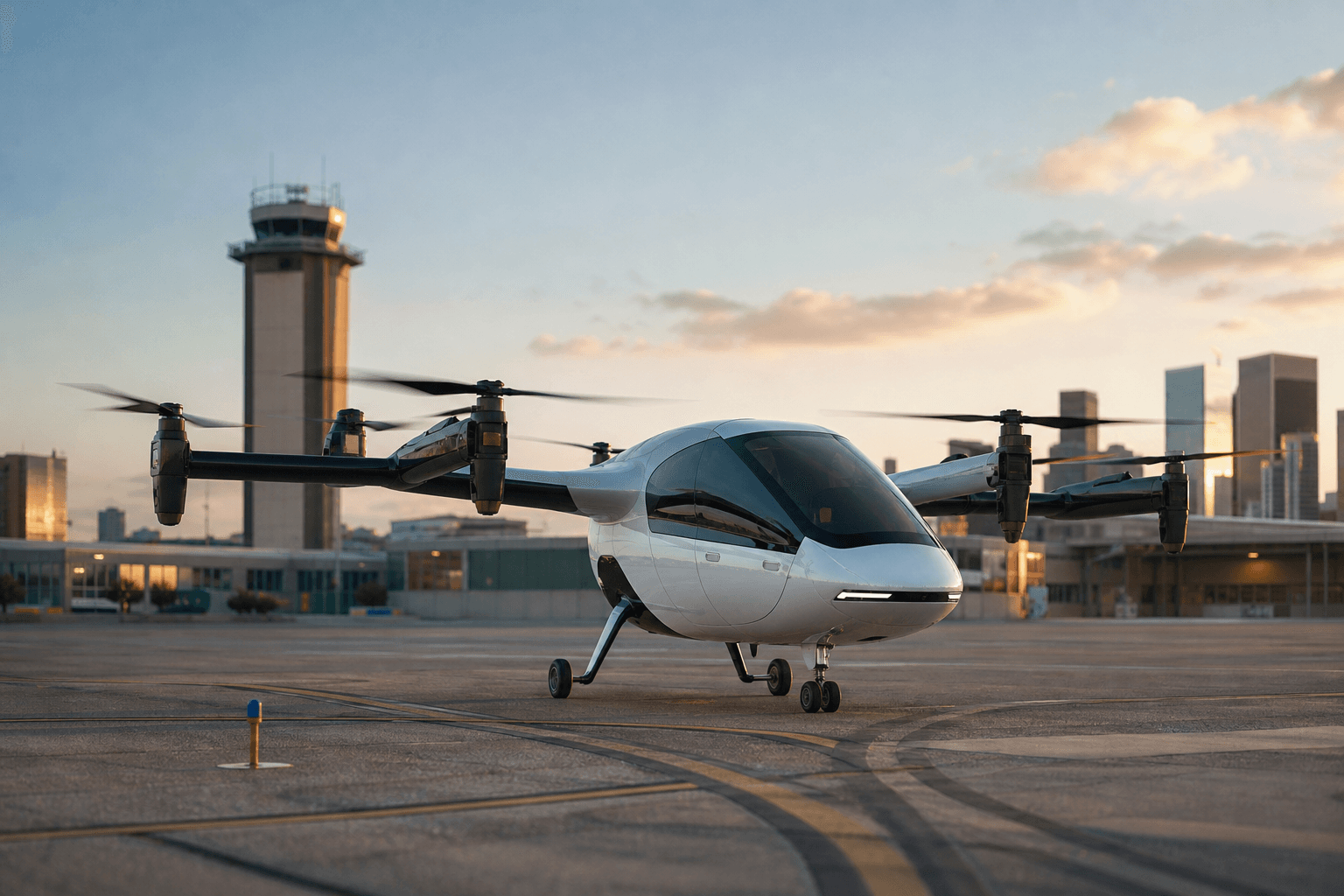
FAA Forecasts 24,600 Advanced Air Mobility Flights in First Year of Service
The FAA is projecting advanced air mobility (AAM) operations could generate 24,600 departures during their first full year of service in the U.S., according to the agency's latest Aerospace Forecast. The forecast covers airport shuttles, commuter air taxis, cargo feeders and medical transport operations. Operations Could Ramp Quickly The FAA estimates the nation’s initial AAM fleet will consist of seven aircraft with operations in two markets. By year three, the forecast ramps up to 80 aircraft across 15 markets, producing 334,800 annual departures. By Year 6, the FAA expects 367 aircraft will fly in 32 markets and will generate about 1.6 million annual departures. That would be roughly 4,400 flights per day. The forecast does not assign a specific calendar year to the start of commercial AAM service. The FAA said the timing remains uncertain and will depend on factors outside the scope of its demand study. Joby Aviation, Archer Aviation and Beta Technologies are among the manufacturers the agency identified as planning operations in the 2026-2027 timeframe. Several companies are beginning limited operations this year under the Department of Transportation’s Electric Vertical Takeoff and Landing and Advanced Air Mobility Integration Pilot Program ( eIPP ). "These partnerships will help us better understand how to safely and efficiently integrate these aircraft into the National Airspace System," FAA Deputy Administrator Chris Rocheleau said when the projects were announced in March. "The program will provide valuable operational experience that will inform the standards needed to enable safe Advanced Air Mobility operations." Airport Shuttles Expected First Airport shuttle service is expected to account for the largest initial share of AAM operations. The FAA also said it anticipates cargo feeder service in sparsely populated western areas and island communities, along with commuter air taxi and medical transportation operations. To determine the fleet required to meet the projected demand, the FAA assumed aircraft used for airport shuttle, cargo and commuter air taxi service would average 28 trips per day, based on two trips per hour during a 14-hour operating day. Medical transport aircraft were projected to average 2.5 trips per day. The FAA said expected production capacity announced by manufacturers indicates aircraft availability should not constrain the projected fleet growth.
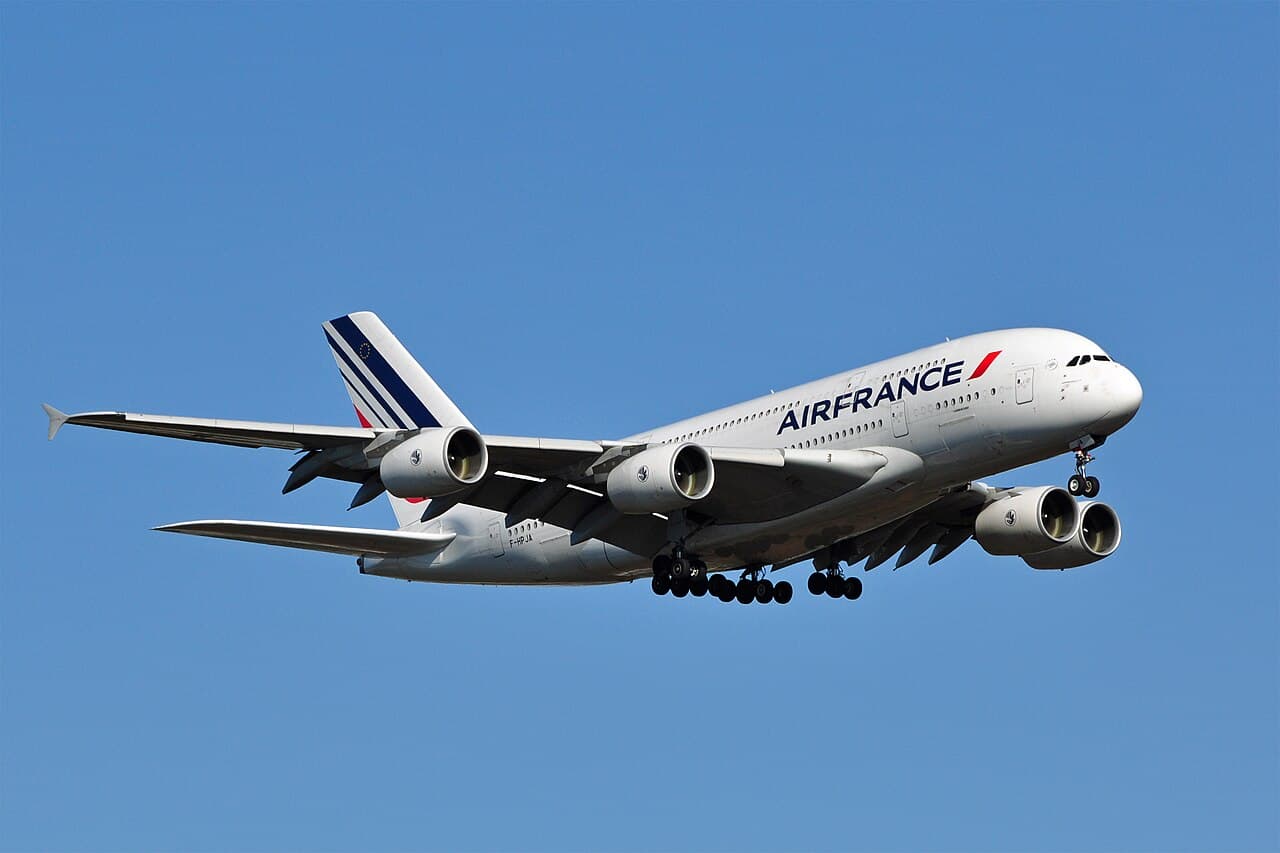
Emirates and Arsenal Extend Partnership With Upcycled Aircraft Crest Sculpture
Emirates and Arsenal have extended one of football's longest-running sponsorships through 2033, deepening a partnership that began in 2006 and has since become one of the sport's most recognizable relationships. Under the renewed agreement, Emirates will continue as Arsenal's front-of-shirt, training kit, and stadium naming rights partner, extending what is already the Premier League's longest-standing front-of-shirt deal. The renewal, announced August 6, 2026, follows Arsenal's recent Premier League title win and builds on established initiatives such as the Emirates Cup and the Global Gooners program, which brings international supporters to North London. Emirates and @Arsenal . Now open until 2033. Two decades of memories, and the best are yet to come. pic.twitter.com/LjmO6imbls — Emirates (@emirates) August 6, 2026 Arsenal Chief Executive Richard Garlick called the timing meaningful, noting that Emirates has been part of the club's journey through its major milestones over the past two decades. Sir Tim Clark, President of Emirates Airline, said the partnership has grown into something that extends well beyond a typical sponsorship, built around a shared goal of connecting fans to the club they support. To mark the extension, Arsenal and Emirates are running a series of anniversary activities, including a short film featuring former Arsenal defender Per Mertesacker, reflecting on two decades of shared history between the club, the airline, and their supporters. Aircraft parts become a football icon Building on that renewed partnership, Emirates and Arsenal unveiled a new piece of artwork on August 9, 2026: a 2.4-meter illuminated sculpture called The Aircrafted Arsenal Crest, built entirely from upcycled components taken from Emirates' Airbus A380 and Boeing 777 aircraft. The installation, revealed at Emirates Stadium, reimagines Arsenal's famous cannon and shield emblem using retired aviation parts. Adding another iconic touch to our home @Emirates pic.twitter.com/PTBYtJQqku — Arsenal (@Arsenal) August 9, 2026 A main landing gear wheel hub from an A380 forms the center of the cannon's wheel, while a section of titanium bleed air duct has been reshaped into its barrel. Lightweight composite floor panels were built up to give the cannon its three-dimensional shape. The surrounding shield is made from sheets of Boeing 777 aluminum fuselage skin, with aircraft cargo tracks forming its outer edge and internal structure, and repurposed cargo floor panels and roller components used throughout. The Arsenal lettering across the crest was individually shaped from aircraft windows and fitted with warm white lighting, with additional lighting beneath the sculpture's black tile base. Nothing goes to waste when it's built to last. Reforged from retired aircraft parts, the Arsenal crest is ready for its next chapter with Emirates. pic.twitter.com/qPwpDtvrtY — Emirates (@emirates) August 9, 2026 Built by Emirates Engineering in Dubai The sculpture was designed and built over 34 days by a 15-person team of engineers, designers, mechanics, technicians, and painters from Emirates Engineering's Aircraft Material Upcycling division in Dubai. Components were selected for their strength and shape before being cleaned, cut, curved, machined, riveted, and assembled into the final piece. The crest was then painted to match Arsenal's official colors, fitted with lighting, and flown from Dubai to London aboard an Emirates SkyCargo freighter ahead of its installation at Emirates Stadium. Emirates said the project was designed to connect Arsenal's industrial origins, and the cannon symbol that has appeared in every version of the club's emblem since 1905, with the airline's own background in engineering and aviation. Unveiled ahead of the Emirates Cup The crest was formally unveiled by Sir Tim Clark and Arsenal Chief Executive Richard Garlick ahead of the club's match against Borussia Dortmund at the Emirates Cup. Clark said the sculpture reflects both the anniversary of the partnership and the precision and craftsmanship that define aviation and elite sport alike, while giving retired aircraft materials new purpose. Following its unveiling, the crest will be permanently displayed in Emirates' hospitality space at Emirates Stadium. RELATED American makes first US commercial airport delivery of synthetic jet fuel
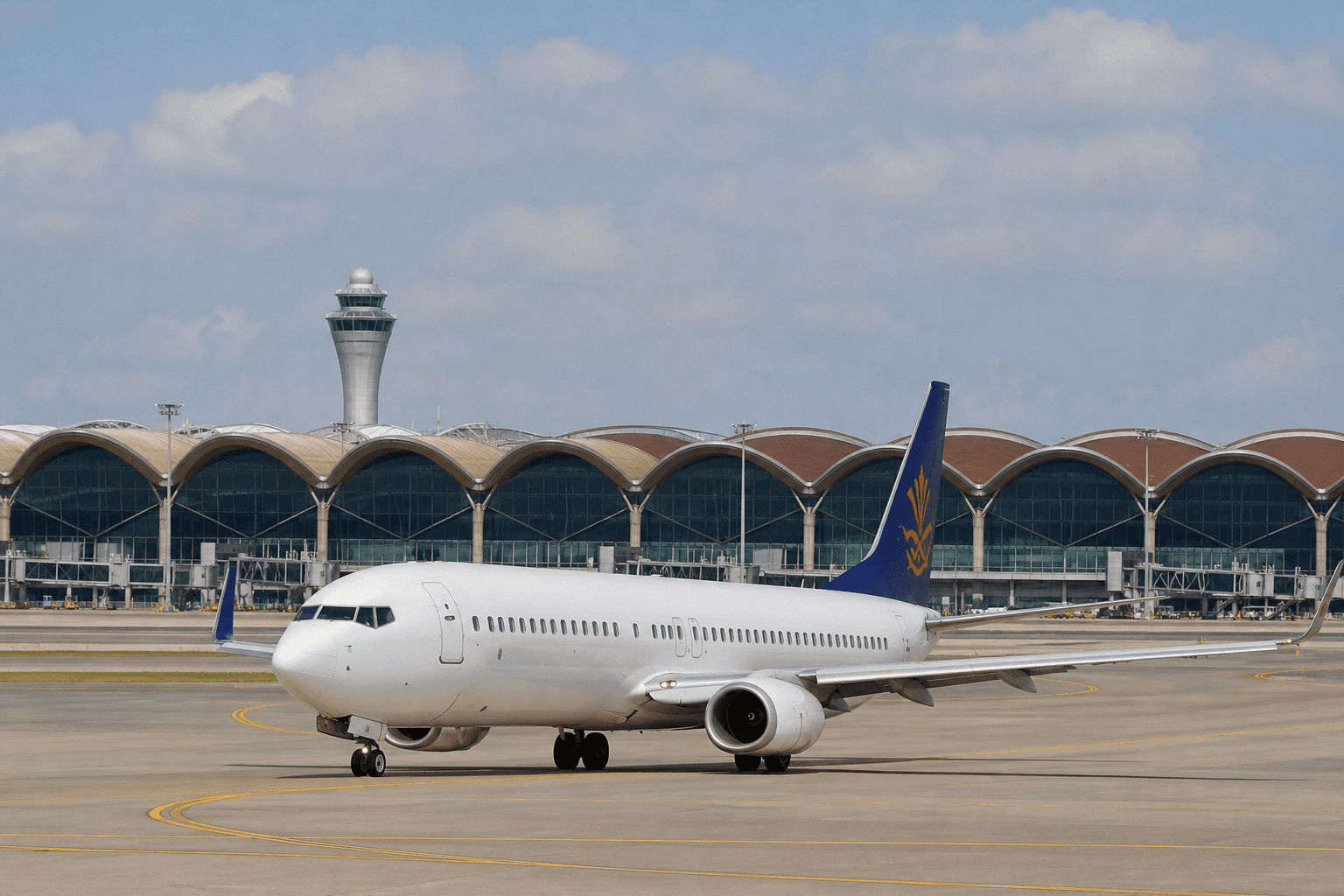
Cambodia and US Enhance Aviation Partnership with $3.2B Boeing Deal and Airport Investment
Cambodia and the United States are planning on further expanding their aviation partnership. The move builds on Air Cambodia’s plan to invest roughly US$3.2 billion in Boeing aircraft. ezstandalone.cmd.push(function () { ezstandalone.showAds(119); }); Officials from Cambodia’s civil aviation authorities recently met with representatives from the US Embassy to discuss the initiative. The talks focused on several key areas. These included aircraft procurement, airport investment, air cargo development, and logistics support. As a result, the partnership aims to boost connectivity and economic growth in the region. ezstandalone.cmd.push(function () { ezstandalone.showAds(127); }); Air Cambodia’s Boeing Fleet Expansion Air Cambodia previously announced an order for 10 Boeing 737-8 jets . The carrier also holds options for another 10 aircraft of the same type. First deliveries are expected in 2031. This marks the airline’s first order with Boeing and the first time a Cambodian carrier will operate Boeing aircraft. The 737-8 offers strong range and efficiency. It can carry up to 178 passengers in a two-class layout and fly about 3,500 nautical miles. Moreover, it uses around 20% less fuel than older models. ezstandalone.cmd.push(function () { ezstandalone.showAds(128); }); Air Cambodia plans to use the jets for fleet renewal and network growth. The airline currently flies a mix of Airbus A320-family aircraft and ATR 72 turboprops on routes across Southeast Asia, China, India, Japan, and beyond. CEO Dr. David Zhan has highlighted the benefits. The investment will support new direct services across North and Southeast Asia. It will also create jobs and training opportunities in Cambodia. ezstandalone.cmd.push(function () { ezstandalone.showAds(129); }); Investment in Techo International Airport Discussions also covered a proposed US$100 million investment from the US International Development Finance Corporation (DFC). The funding would support Techo International Airport, Cambodia’s new main gateway near Phnom Penh. The airport opened in 2025 and represents one of the country’s largest infrastructure projects. Furthermore, plans call for developing an air cargo and logistics hub at the site. This step should strengthen Cambodia’s role in regional trade. It will help handle rising demand for passenger and freight traffic while improving links to global markets. Photo Credit: Techno International Airport Progress on the Cape Town Convention Cambodia is also moving forward with approval of the Cape Town Convention. This international treaty creates a clear legal framework for aircraft financing and leasing. ezstandalone.cmd.push(function () { ezstandalone.showAds(130); }); Accession should lower costs for airlines and give greater confidence to lessors and investors. In addition, it aligns Cambodia with many other countries that have already joined the agreement. Broader Benefits for Cambodia and the Region These steps reflect closer US-Cambodia cooperation in aviation. The Boeing order supports American manufacturing jobs while modernising Cambodia’s flag carrier. At the same time, airport and cargo investments will drive tourism, trade, and local employment. Air Cambodia continues to expand its role as the national flag carrier. The airline, formerly known as Cambodia Angkor Air, focuses on both domestic and international services. With new aircraft and improved infrastructure, it is well positioned for future growth. ezstandalone.cmd.push(function () { ezstandalone.showAds(131); }); Overall, the partnership signals long-term commitment. Cambodia gains modern aircraft, stronger airport facilities, and better access to financing. The United States deepens commercial and diplomatic ties in Southeast Asia. As deliveries approach and projects advance, the aviation sector in Cambodia looks set for significant progress in the years ahead.
The Daily Touch & Go
The day's best aviation news in your inbox. Free, no spam.