

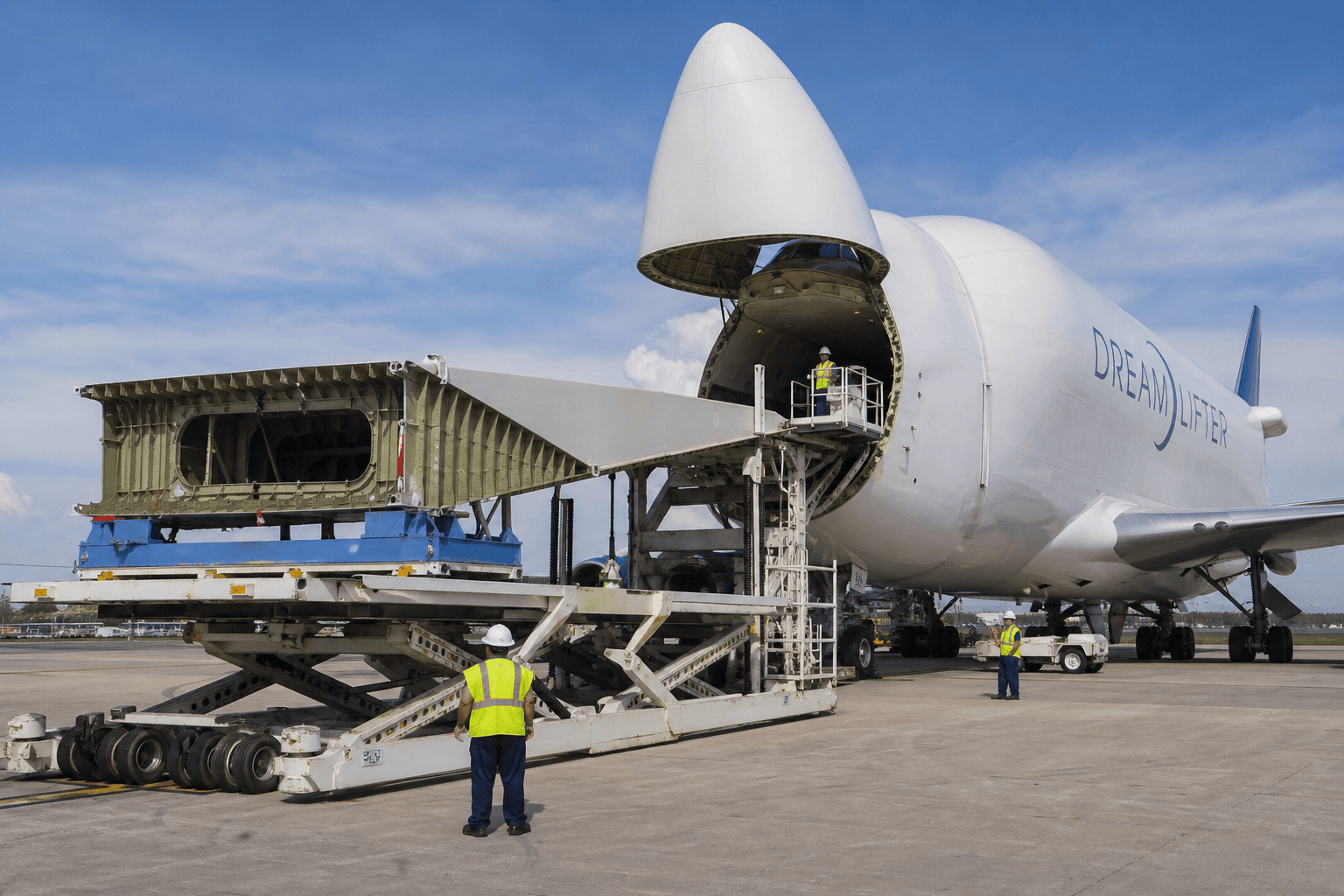
Illustration: The Touch & Go
Nine Countries Collaborate Globally to Supply Boeing 787 Dreamliner Structural Parts
The Boeing 787 Dreamliner is assembled in the US but built from structural components supplied by nine countries across four continents, representing a major multinational industrial collaboration.
The gist
Boeing sources critical 787 structural components from nine countries worldwide, reflecting a complex global supply chain.
Continuing coverage
All Boeing →- Boeing's MQ-28 Ghost Bat Joins US Air Force in Landmark Indo-Pacific Exercise
- Boeing launches 737 Max assembly at new Everett North Line to boost production
- Boeing updates B777X range and capacity quietly, boosting performance outlook
- Boeing's 737 MAX 7 Nears FAA Approval More Than a Decade After Launch
- Boeing advances new St Louis factory for sixth-generation combat jet production
The Boeing 787 Dreamliner’s final assembly takes place in the United States, specifically in Everett, Washington and North Charleston, South Carolina, but the aircraft’s structure is fabricated across nine countries spanning four continents. This intricate global supply chain involves more than 50 major companies shipping major fuselage sections, wings, and tail components to the US for integration. The international collaboration marks the most distributed design and production effort Boeing has undertaken for a commercial airliner, reflecting strategic partnerships and risk-sharing arrangements that began with the 787 program launch in 2004.
Japan stands as the largest international contributor, supplying about 35% of the 787 airframe. Three prominent Japanese heavy industry companies share this workload. Mitsubishi Heavy Industries produces the wing boxes—key structural components that bear aerodynamic loads and house the wing fuel tanks—at its Nagoya facility. Kawasaki Heavy Industries manufactures forward fuselage sections 43 and 44, the main landing gear wheel well, and the wing’s fixed trailing edge. Subaru Corporation, formerly Fuji Heavy Industries, fabricates the center wing box that links the two wings through the fuselage, bearing the primary bending loads.
These Japanese companies are not merely traditional subcontractors; they are risk-sharing partners that contributed development funding in return for guaranteed production work, allowing Boeing to tap Japanese engineering expertise and manufacturing capacity while limiting its own upfront costs. This arrangement also leveraged the strong relationship with major Japanese 787 customers like ANA and Japan Airlines. Wing boxes are shipped via the Dreamlifter — a modified Boeing 747-400 cargo plane — from Nagoya to Boeing’s US final assembly lines. Early production challenges included the discovery of hairline cracks in wing fasteners on about 40 aircraft, prompting manufacturing process adjustments.
Italy’s contribution comes from Leonardo (formerly Alenia Aeronautica), which manufactures the center fuselage sections and horizontal stabilizer at its plants in Grottaglie and Foggia. The Grottaglie plant produces large composite barrel sections forming the aircraft’s midsection, where the wings meet the fuselage and most of the passenger cabin is located. Foggia produces the horizontal stabilizer that controls pitch attitude in flight. Both components are made using single-piece carbon fiber lay-up and cure cycles, reducing weight and minimizing fasteners compared to traditional aluminum construction.
These composite fuselage barrels are shipped by sea over a two-week journey from southern Italy to North Charleston. Leonardo faced a significant quality issue in 2023, when Boeing identified that an incorrect titanium alloy was used for fuselage frame and floor beam fittings in over 450 Dreamliners, posing a potential long-term durability concern. This was part of broader supplier quality challenges that contributed to 787 delivery delays between 2021 and 2023, raising scrutiny over Boeing’s cross-border quality management.
South Korea supplies key aft fuselage sections, raked wingtips, and flap support fairings, primarily through Korean Air Aerospace Division and Korea Aerospace Industries operating in the Busan-Sacheon region. Korean Air’s aerospace arm, an uncommon airline-owned aerospace manufacturer, developed innovative out-of-autoclave curing processes for composites, cutting production costs substantially. The South Korean government’s support and industrial strategy were pivotal in transforming the nation’s aerospace sector from military to commercial aerostructure manufacturing, with Korean Air’s supplier role extending across multiple Boeing and Airbus programs.
In the US, Boeing minimized the portion of 787 structural manufacturing it retained in-house compared to previous programs. Final assembly also includes production of the forward fuselage sections and vertical fin. This approach underscores Boeing’s reliance on a distributed international supply chain where major structural components are built by specialized partners, then shipped for integration into the finished aircraft. The 787 program’s multinational production model has shaped subsequent aerospace supply chains by demonstrating how collaboration and risk-sharing across borders can facilitate production of complex composite aircraft structures.
Frequently asked questions
- Which countries supply major structural components for the Boeing 787 Dreamliner?
- Nine countries supply critical 787 structural parts, including the United States, Japan, Italy, South Korea, and others across four continents.
- What role does Japan play in Boeing 787 manufacturing?
- Japan supplies about 35% of the 787 airframe through Mitsubishi, Kawasaki, and Subaru, producing wing boxes, forward fuselage sections, and the center wing box as risk-sharing partners.
- How are the 787's large composite fuselage sections transported to the US?
- Composite fuselage barrel sections made in Italy are shipped by sea to North Charleston, South Carolina, taking approximately two weeks for delivery to Boeing’s final assembly line.
Read more
All Airlines →
Survey Mistakes Starbucks on Delta as Best Coffee, Misjudges Amex Lounges
A new Point.me survey names Delta's Starbucks the best airline coffee and Amex Centurion the best lounge network. But popularity isn't quality: Alaska and United serve better coffee, Chase offers stronger lounge design, Capital One has better food—and British Airways has no business ranking among the best inflight meals.
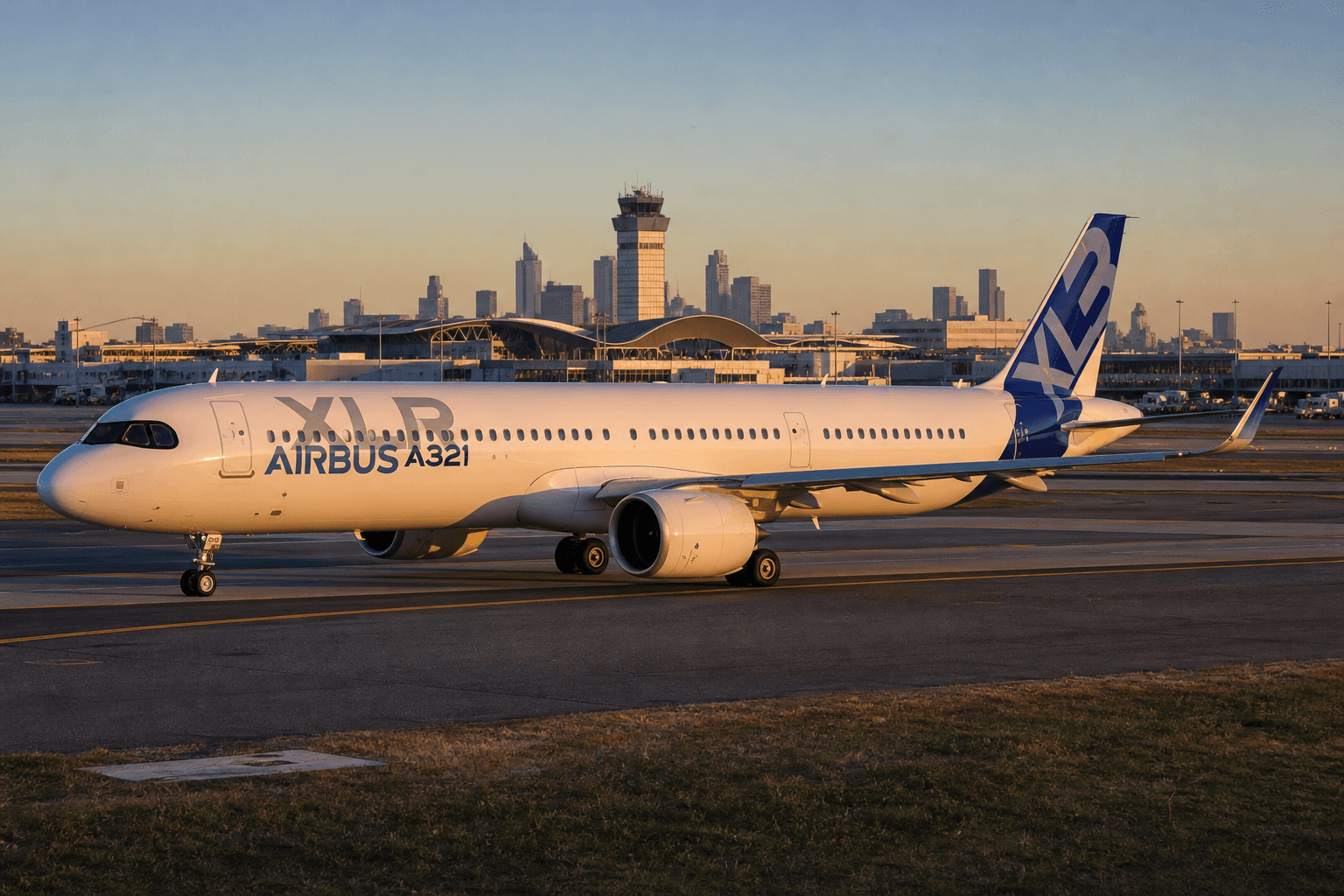
American Airlines Teases Five New International Routes to Europe and Latin America
American Airlines posted photo clues teasing five new international routes. The destinations appear to be Naples, Munich, Copenhagen, Quito and Santiago—the remaining questions are which U.S. gateways will serve them and what aircraft American will use.
Rakuten Offers 100% Rebate on Surfshark Plan to Buy Bilt or Amex Points for 1 Cent Each
Rakuten is offering 100% back on a $113.13 Surfshark purchase, which can be taken as 11,313 Bilt (for anyone with Bilt status) or Amex points—effectively one cent each. New Rakuten members can earn another 5,000 points, bringing the total to 16,313.
Delta Air Lines Lets Basic Economy Passengers Keep Full-Size Carry-Ons, Bucking Industry Trend
After top legacy airlines unbundled their economy cabins to create basic economy, the industry expected a race to the absolute bottom of passenger discomfort. For the most part, that expectation has become a reality across the domestic aviation market, turning the simple act of boarding an aircraft into a host of gate-enforcement checks and surprise baggage penalties. A glaring anomaly persists at the nation's most profitable legacy airline even as the rest of the industry moves in the same direction.
The Daily Touch & Go
The day's best aviation news in your inbox. Free, no spam.