

Image: Sergey Kustov · CC BY-SA 3.0 · via Wikimedia Commons
LATAM A320 aborts takeoff at São Paulo as American and Delta jets cross runway amid fog
A LATAM Airlines A320 aborted takeoff after beginning acceleration despite canceled clearance to let American and Delta widebodies cross a São Paulo runway in foggy conditions.
The gist
A LATAM A320 nearly collided during takeoff as American and Delta jets crossed its runway in heavy fog at São Paulo airport.
Continuing coverage
All Delta Air Lines →- Delta Orders 16 High-Cabin Airbus A330-900neos With 56 Delta One Suites Each
- American Airlines Struggles to Match Delta and United in Profitability Despite Market Size
- Delta Air Lines Ends Narita Hub Following 2008 Northwest Merger, Shifting Asia Strategy
- Delta CEO Ed Bastian Often Chooses Economy to Hear Real Passenger Experience
- Delta Confirms Seattle-Singapore A350 Flights Marking Asia Expansion
A LATAM Airlines Airbus A320 flight scheduled to depart São Paulo/Guarulhos International Airport (GRU) on August 15 had to abort its takeoff when conflicting taxiing traffic crossed its runway. Despite being informed that its takeoff clearance was revoked, the LATAM crew began accelerating on runway 10L. Air traffic controllers urgently reiterated the cancellation, prompting the aircraft to abort the takeoff safely. This prevented a potentially severe incident involving two widebody jets from American Airlines and Delta Air Lines crossing the same runway.
The incident occurred in low visibility conditions as dense fog engulfed the runway early that Saturday morning. Flight data reveals LATAM flight LA8019 was departing for Mendoza, Argentina, with an official departure time of 8:00 AM local. However, delays stemming from the aborted takeoff pushed the actual departure to 8:46 AM, resulting in a 46-minute delay.
The sequence of events began with the LATAM A320 cleared for takeoff on runway 10L. Shortly thereafter, that clearance was revoked to allow two inbound widebodies—an American Airlines Boeing 787-8 from Miami and a Delta Air Lines Airbus A330-900 from New York—to cross 10L on their way to gates after landing on adjacent runway 10R. Though the LATAM pilots acknowledged the takeoff cancellation, they initiated their roll anyway and reached approximately 70 knots (129 km/h) before being ordered to abort.
Air traffic control’s quick response was critical in avoiding a runway incursion. Controllers repeated the cancellation order, which LATAM complied with, halting the takeoff safely. Subsequent communication between ATC and the LATAM flight crew was reportedly strict, as the pilots received a rebuke for attempting the takeoff despite clear instructions.
After stopping, the LATAM A320 held its position until cleared to taxi off the runway. It then rejoined the departure queue and took off on the second attempt. The flight made partial recovery during the climb and transit phases, arriving in Mendoza 32 minutes behind schedule, having flown approximately 3 hours 46 minutes against a block time of four hours.
The two widebody aircraft involved in crossing the runway had recently landed within minutes of each other, with the American Boeing 787-8 touching down at 8:18 AM and the Delta A330-900 at 8:22 AM. These arrivals underscore the busy operational environment at São Paulo with multiple large aircraft movements occurring simultaneously, particularly under challenging weather conditions.
Current investigations into the incident have been initiated by Brazil’s Aeronautical Accidents Investigation and Prevention Center (CENIPA), which is analyzing data relating to the near-miss. The event echoes concerns about runway incursions that historically have led to accidents, notably the 1977 Tenerife disaster where fog and miscommunications played tragic roles.
LATAM Airlines has confirmed its cooperation with authorities, emphasizing that the aborted takeoff was carried out safely after ATC intervention. The airline and air force agencies are examining procedural adherence to prevent any recurrence in São Paulo’s complex and high-traffic airport operations.
This episode highlights the operational challenges faced by controllers and flight crews when managing dense fog conditions alongside busy runway crossings at major international hubs. Effective communication and strict adherence to ATC instructions remain central to preventing runway incursions, especially as traffic levels grow on intersecting runways.
Frequently asked questions
- What caused the LATAM A320 to abort its takeoff at São Paulo airport?
- The LATAM A320 had to abort takeoff because air traffic control canceled its takeoff clearance to allow two other aircraft to cross the runway, but the LATAM crew had already begun accelerating before stopping on ATC's repeated instruction.
- Which other aircraft were involved in the runway crossing during the incident?
- An American Airlines Boeing 787-8 arriving from Miami and a Delta Air Lines Airbus A330-900 arriving from New York crossed runway 10L, prompting the LATAM flight to abort takeoff.
- What are the current steps being taken in response to the runway incident at São Paulo?
- Brazil’s Aeronautical Accidents Investigation and Prevention Center (CENIPA) is preparing to analyze data from the event to investigate the near runway incursion and develop safety recommendations. LATAM Airlines is cooperating with the authorities.
Read more
All Airports →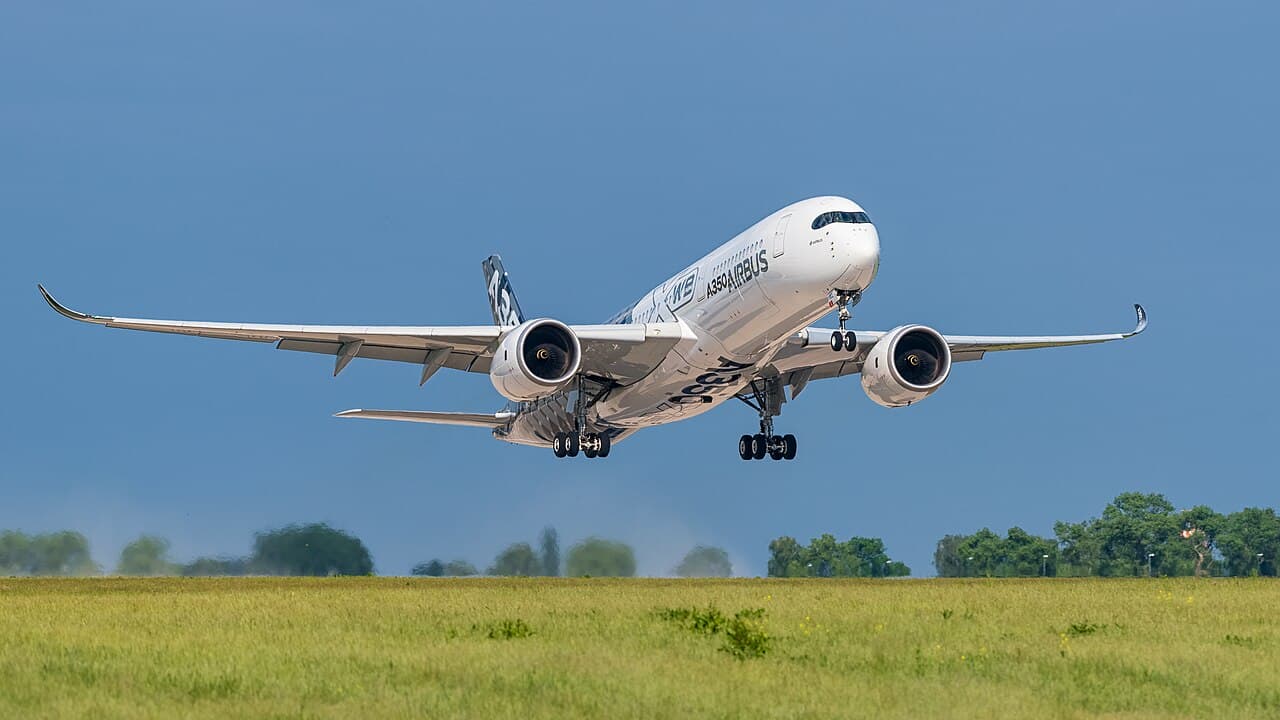
Delta Confirms Seattle-Singapore A350 Flights Marking Asia Expansion
We know that Delta has huge growth aspirations across the Pacific, particularly to Asia. It's an area where Delta has increasingly fallen behind United in recent years, but Delta now hopes to not only catch up, but even beat United. We'll see what comes of that, and in particular, find out just how costly that growth is . While this shouldn't come as much of a surprise, Delta executives are now publicly confirming plans to return to Singapore, a destination that hasn't been served by the airline since 2019, when that was an intra-Asia tag flight from Japan. We're also learning out of which airport that service will likely operate… Delta is eyeing Singapore for further Asia expansion As Delta executives view it, the airline is pretty maxed out in terms of its European potential, and in the long run, they see the most long haul growth potential in Asia, the Middle East, and Africa. So, what kind of expansion should we expect? So far, Delta has launched flights to Hong Kong (HKG) , and has announced plans to fly to Manila (MNL) and Tokyo Narita (NRT) ; Riyadh (RUH) flights are also launching soon ( we'll see how that goes ), and that's technically Asia, but not a Pacific flight Delta also wants to connect its Los Angeles (LAX) and New York (JFK) hubs to Seoul Incheon (ICN), which is the hub of joint venture partner Korean Air, as Delta loves routing Asia traffic through there We've also known that Delta plans to once again fly to Singapore (SIN), and we're learning more about what that will look like Delta is planning flights from Seattle to Singapore Sean Cudahy reports that Delta Chief Commercial Officer Joe Esposito has just explicitly confirmed that the airline is returning to Singapore. That's not really a surprise, since we've known that was in the cards. But what's perhaps most interesting is the hub out of which the service will operate — Esposito ruled out that the service could operate out of Los Angeles, so it's pretty clear that the airline will operate this service out of Seattle (SEA). That also matches previous reporting from JonNYC . https://t.co/1g4M2p9AfD https://t.co/py2VGgPQz9 — JonNYC (@xJonNYC) June 7, 2026 Now, we'll see with what timeline this service actually launches. My guess is that we're looking at a fall 2027 service start, at best. At 8,070 miles, this will be Delta's third longest flight, after its routes to South Africa, which are from Atlanta (ATL) to Cape Town (CPT) and Johannesburg (JNB). One certainly wonders if this Singapore route could be operated by Delta's new Airbus A350-1000s , which will feature an all-new passenger experience . While the plane has great range and per seat economics, the only thing I'd say is that it's "a lot of plane" for a new market, in terms of the overall capacity (even with the very premium layout). In the Seattle to Singapore market, Delta would only be competing head-to-head against Singapore Airlines. Meanwhile in the Los Angeles to Singapore market, Delta would've had competition from both Singapore Airlines and United Airlines. Delta is hugely growing its presence in Asia My take on Delta's Asia expansion plans It's fantastic to see Delta looking to grow its presence in Asia. Point-to-point flying to Asia is a market that United has basically had cornered in recent years, and competition is good for consumers. It's amazing to think for how many years Delta basically squandered its Asia advantage. Keep in mind that back in the day, Northwest had a robust Asia network, and after the merger with Delta, we saw that network decreased slowly but steadily, as Delta instead focused on routing everything through Seoul Incheon, and into the Korean Air network. So I'm happy to see a reversal of that strategy. I also have to say that given Delta's hubris, it's kind of fun to see the airline having to increasingly play "catch up," rather than coming in as the dominant carrier. And I think that very much sums up what's going on in Asia. The most basic structural disadvantage that Delta has is that United has a fortress hub in San Francisco (SFO), which is where a large part of its Asia network flies from. That's fantastic for connectivity, not to mention San Francisco is a very strong market for Asia traffic. Delta, meanwhile, is taking a split hub approach, flying out of both Los Angeles and Seattle. Obviously Delta is trying to make the best of its situation, but there's no denying that this is an uphill battle: Both Delta's Los Angeles and Seattle hubs are roughly half the size of United's San Francisco hub, so the connectivity and local loyalty just aren't there in the same way Delta is in second place in Seattle, which isn't great from a loyalty revenue perspective, given that Alaska continues to be the dominant carrier for the local community Los Angeles is a market that's really hard to win, and if Delta can actually turn it into a profitable hub where it has a significant market share advantage, it'll be the first airline to succeed at that in the long run Compared to United, Delta just doesn't have the breadth or depth of network that United has; for example, one flight a day to Hong Kong is great, but United's four flights per day are better It also has to be emphasized that in terms of actually transporting passengers profitably (or at less of a loss), United does a better job at that than Delta, despite its lower overall profitability. Comparing passenger revenue per air seat mile to cost per air seat mile, United is at 16.18 cents vs. 16.46 cents, while Delta is at 17.37 cents vs. 19.31 cents. Delta is trying to less reliant on Seoul Incheon & Korean Air Bottom line Delta is growing quite a bit in Asia at the moment. The airline has already launched flights to Hong Kong, with flights now on sale to Manila and Tokyo Narita. On top of that, Delta has officially confirmed it plans to fly to Singapore in the near future, with the service likely to be out of Seattle rather than Los Angeles. It's great for passengers to see more competition across the Pacific, as Delta sure is making up for a lack of effort for years. However, the airline will also have quite the disadvantage compared to United for a long time… What do you make of Delta's plans to fly to Singapore?

American Airlines Bans Bare Feet Onboard As Stated in Contract of Carriage
American Airlines' Contract of Carriage already bars passengers from flying barefoot or wearing offensive clothing, but some travelers still need the reminder. Also JetBlue's first class seat moving toward installation, why airport food costs so much, Houston Intercontinental's renovated Executive Club, and American's latest "premium" service gaps.

US Citizen Detained by ICE at Delta Gate Due to Mistaken Identity
A U.S. citizen boarding a Delta flight from Atlanta to Las Vegas says ICE agents handcuffed him at the aircraft door after mistaking him for a British man with the same name and birthdate. Delta says it does not control law enforcement decisions, while ICE says the encounter was targeted and private. Airport data sharing can now turn domestic passengers into easy targets before officers verify they have the right person.
Delta Resumes Seattle-Narita Flights to Rival Alaska's Tokyo Expansion
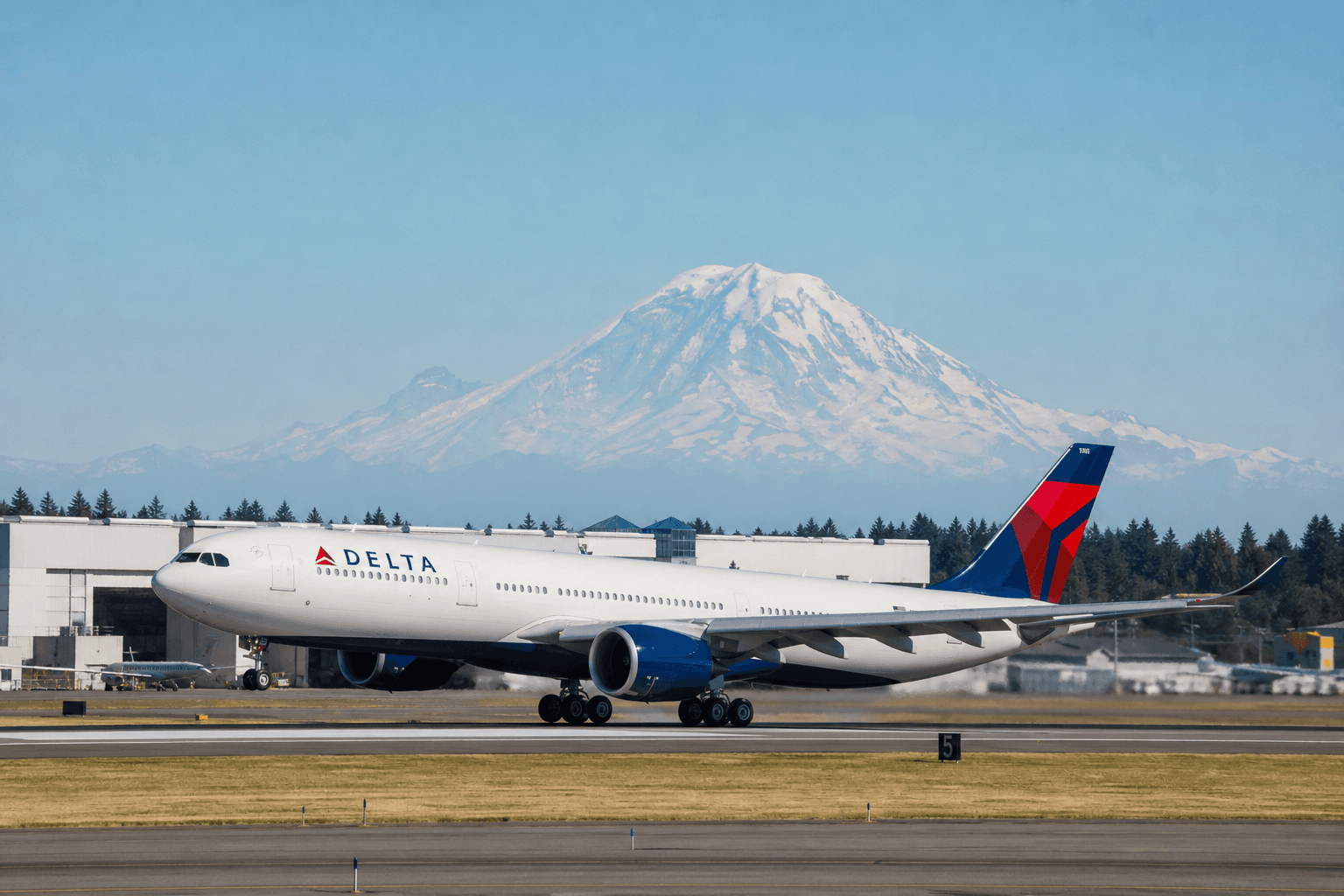
Alaska Airlines, fresh off a merger with Hawaiian, is depending on long-haul flying for its gowth. Delta Air Lines plans to resume service between Seattle and Tokyo's Narita airport, putting it in direct competition with Alaska Airlines on a route critical to its post-merger growth plans. The Atlanta-based carrier stopped flights between the two airports in 2020, serving only Tokyo's Haneda airport from Seattle as well as from Atlanta, Detroit, and Minneapolis in the subsequent years. The returning daily, non-stop service will start in March using Airbus A330-900neo aircraft. "Japan is one of the most important and popular markets in Delta’s global network," says Delta vice-president of network planning, Jeff Arinder. "By launching flights to both Haneda and Narita airports, we will increase access to Tokyo and expand our seating capacity." Long-haul flying from Seattle is key to Alaska's strategy after acquiring Hawaiian Airlines in 2024 and will account for all of its growth in the second half of 2026, executives say. Flights to Tokyo on Hawaiian's former fleet were the first to launch by the combined carrier in 2025. "On the Incheon and Narita markets, what I’m seeing is year-over-year, significantly higher booked load factors," Alaska executive vice-president and chief commercial officer Andrew Harrison said on the company's earnings call in July. Once the route resumes, Delta will offer three daily departures to Tokyo: one to Narita and two to Haneda, which could present significant pressure on Alaska.
The Daily Touch & Go
The day's best aviation news in your inbox. Free, no spam.