


Image: Łukasz Golowanow & Maciek Hypś · CC BY 2.5 · via Wikimedia Commons
Wreckage of missing K2 Airways 737-400 freighter found off Pakistan coast
Pakistani navy and maritime agencies have located debris of a missing K2 Airways Boeing 737-400 freighter lost during a flight from Sharjah to Karachi.
The gist
Search teams recover wreckage of K2 Airways 737-400 freighter lost over Arabian Sea en route to Karachi.
Continuing coverage
All Search And Rescue →- Vietnam Airlines deploys A350 with rescue teams and aid to earthquake-hit Venezuela
- Malaysia Extends MH370 Search with Ocean Infinity Through Mid-2027
- US Coast Guard MH-60 Jayhawk Crashes Near Sitka, Alaska During Training Flight
- Airbus boosts C295 output as Spain receives first search-and-rescue model
Pakistani search and rescue officials have discovered debris from a K2 Airways Boeing 737-400 freighter that disappeared in July while flying from Sharjah in the UAE to Karachi, Pakistan. The aircraft lost contact over the Arabian Sea on 7 July, prompting a wide-scale search operation. The wreckage was found approximately 53 nautical miles south of Ormara's coastal region, a key development in the investigation into the aircraft’s fate.
The Pakistan Navy and the Maritime Security Agency led the efforts to locate and identify the debris, according to the Pakistan airports authority. This joint operation successfully retrieved parts of the aircraft, confirming the worst fears about the freighter’s disappearance. K2 Airways has confirmed the aircraft had five crew members onboard: two pilots, two engineers, and a loadmaster.
Communications with the aircraft ended abruptly shortly after the crew reported issues. At 21:18 local time, the freighter notified air traffic control in Karachi of a navigational system malfunction. Radar data subsequently showed a rapid descent and a sudden change in course, with contact lost three minutes later at 21:21, roughly 155 nautical miles west of Karachi.
Flight tracking data indicates the Boeing 737-400 was cruising at about 35,000 feet around 1 hour and 20 minutes after departure when it deviated from its path and began descending rapidly over the Arabian Sea. The circumstances suggest a sudden loss of control or critical systems failure, but details remain under investigation by Pakistani civil aviation authorities.
K2 Airways, a relatively new airline established in 2018, operates a small fleet with this particular aircraft registered as AP-BOI. The twinjet was originally delivered in 1999 and previously served with Aeroflot and Garuda Indonesia before conversion to a freighter. The airline took delivery of its first aircraft in Karachi in July 2024, making this freighter one of the company's earlier acquisitions.
The airline has not disclosed specifics about the cargo carried during the ill-fated flight, including whether hazardous materials were onboard. K2 Airways has pledged full cooperation with Pakistani authorities as investigations continue into the cause of the incident. No official confirmation has yet been released regarding the fate of the crew.
This discovery marks a critical step forward in the search and recovery mission after days of uncertainty. Authorities continue to collect debris and will seek to analyze recovered components to better understand the accident’s sequence and contributing factors. The loss of the K2 Airways 737-400 freighter is a reminder of the challenges in maintaining safe operations over busy but remote international air routes.
Read more
All Military/Defense →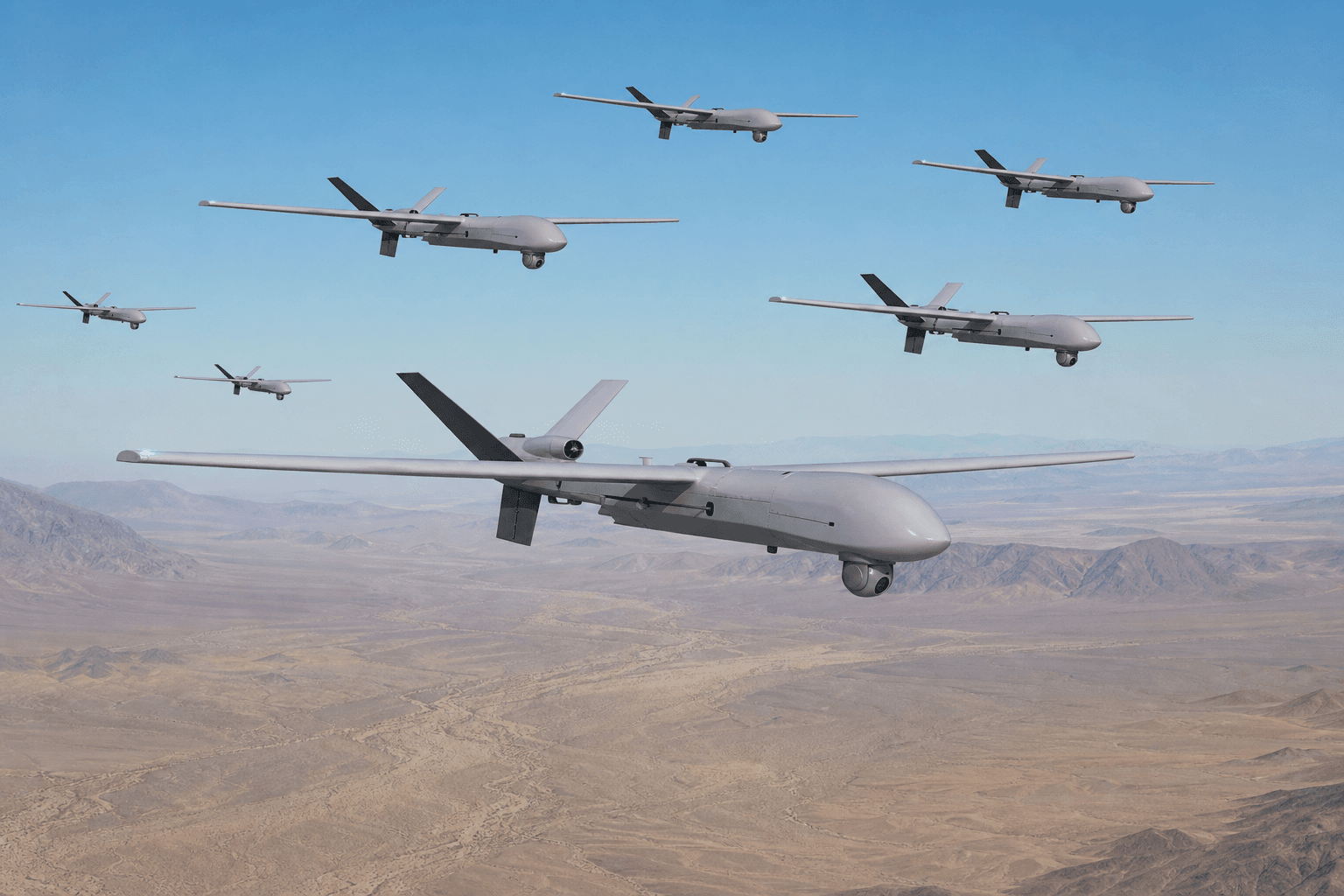
US Defense Innovation Unit seeks low-cost attritable drone to replace MQ-9A Reaper
The “Massed Modular Aircraft” tender envisions an uncrewed system that can be produced in large enough quantities at a low enough cost to be considered attritable in combat. The US military’s Defense Innovation Unit (DIU) has released a solicitation for a new low-cost, high-volume uncrewed aircraft that can perform the missions of the General Atomics MQ-9A Reaper. Dubbed the “Massed Modular Aircraft”, the programme envisons a modular UAS that can provide what the DIU describes as a “risk-tolerant option” in the air domain. “The joint force’s reliance on low-density, high-value ‘exquisite’ (>$30 million) manned and unmanned aircraft is unsustainable against adversaries utilising layered defences enabled by increasingly low-cost antiaircraft capabilities,” the DIU says. “This drives the joint force into unacceptable compromises: either operate safely outside a threat zone – negatively impacting mission effectiveness – or manoeuvre inside a threat engagement zone with increased levels of attrition.” At least 24 US MQ-9As were lost in combat during the heaviest fighting of the US-Israeli air campaign over Iran throughout February, March and April. USAF chief of staff General Kenneth Wilsbach has described the uncrewed strike and reconnaissance platform as the “most valuable player” of the air war. “We get a lot of utility out of them and don't put our folks at risk," Wilsbach said during congressional testimony in May. However, the campaign revealed some limitations of the Reaper platform, namely that it is vulnerable to modern air defences (at least in the manner employed by the Pentagon) and neither easy nor cheap to replace when lost. In fact, General Atomics shuttered the MQ-9A production line in 2025 due to a lack of new US orders. The company is currently assembling MQ-9B SkyGuardians at a sticker price of around $30 million. The new MMA concept aims to address both issues by focusing on a design that can be produced at high rates for a much lower cost. Rather than improving survivability, the aircraft will instead be built with high rates of attrition in mind. “By deploying large groups of risk-tolerant MMA, the joint force can overwhelm enemy defences even while experiencing numerous MMA losses,” the DIU says. Although no specific target is provided regarding production volume, the tender notes the goal is to field “many aircraft at once” to ensure a “persistent, overwhelming [and] credible threat despite inevitable attrition.” Specific technical attributes listed in the MMA solicitation include a payload capacity of at least 1,270kg (2,800lb), an unrefuelled combat radius of at least 2,300nm (4,260km) while carrying payload, and the ability to self-deploy one-way at least an 8,000nm. MMA designs must also offer the ability to be outfitted with a variety of sensor payloads, including full-motion video, in order to fully replicate the mission set of the MQ-9A. General Atomics is offering the MQ-9B options to the US Air Force as an MQ-9A successor. The new B-variant is on contract with the UK, Canada, Poland, Belgium, Denmark, India, Taiwan, Germany, Japan and US Special Operations Command. Source: General Atomics Interestingly, autonomy is listed in the tender only as a secondary attribute with the ability to operate with a “one-to-many operator-to-UAS control ratio”. The MQ-9A is a remotely piloted aircraft with one pilot flying one vehicle. Other secondary attributes include a true airspeed of at least 200kt, the ability to operate from a runway of 6,000ft or shorter, 25kW of onboard power generation and 5kW of cooling. Design submissions are due by 23 July, with companies required to deliver a full-scale prototype for flight testing within 21 months of receiving an award. Although DIU prototyping contracts do not guarantee a subsequent deal for rate production, the agency seems inclined to move forward with operational fielding of the MMA. The tender notes the DIU is targeting 2031 for initial operating capability, defined as 20 mission-ready aircraft delivered to an operational unit and able to be deployed. General Atomics has pushed back on the notion that all of the MQ-9A’s capabilities can be replicated at a fraction of the cost. The company’s senior communications director, C. Mark Brinkley, previously described that idea as a “wonderful dream” and counters that the MQ-9 series remains “the best value for dollars out there today”. “General Atomics sells real airplanes, at scale, all around the world,” Brinkley said in May. “We are offering the US Air Force modular options for MQ-9B, at a price that reflects the [Department of War’s] requirements and can be delivered today, not someday.” Between the remaining spare parts in storage and a number of company-owned Reapers, General Atomics says it could produce between five and ten MQ-9As to offset the Pentagon’s recent combat losses . Although bearing a similar name, the MQ-9B is essentially a new aircraft, one designed to comply with civil aviation regulations. It boasts a larger 24m (79ft) wingspan, significantly improved 40h of flight endurance and automatic take-off and landing. The MQ-9B is also available in a maritime-configured SeaGuardian variant.
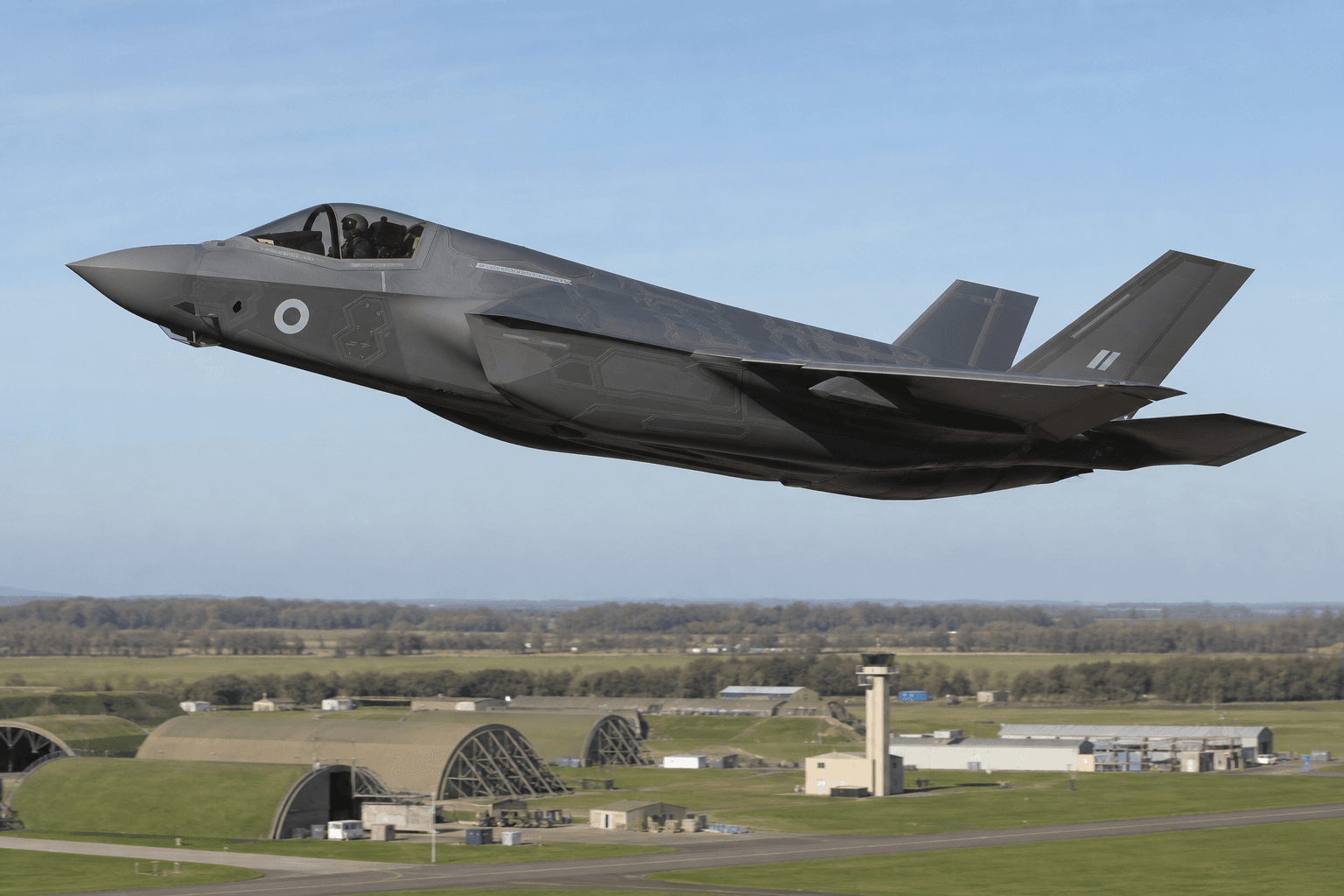
UK confirms purchase of 12 F-35As to restore RAF nuclear strike role
The UK's Defence Investment Plan, published on June 30, 2026, confirms funding for 12 Lockheed Martin F-35A fighters…
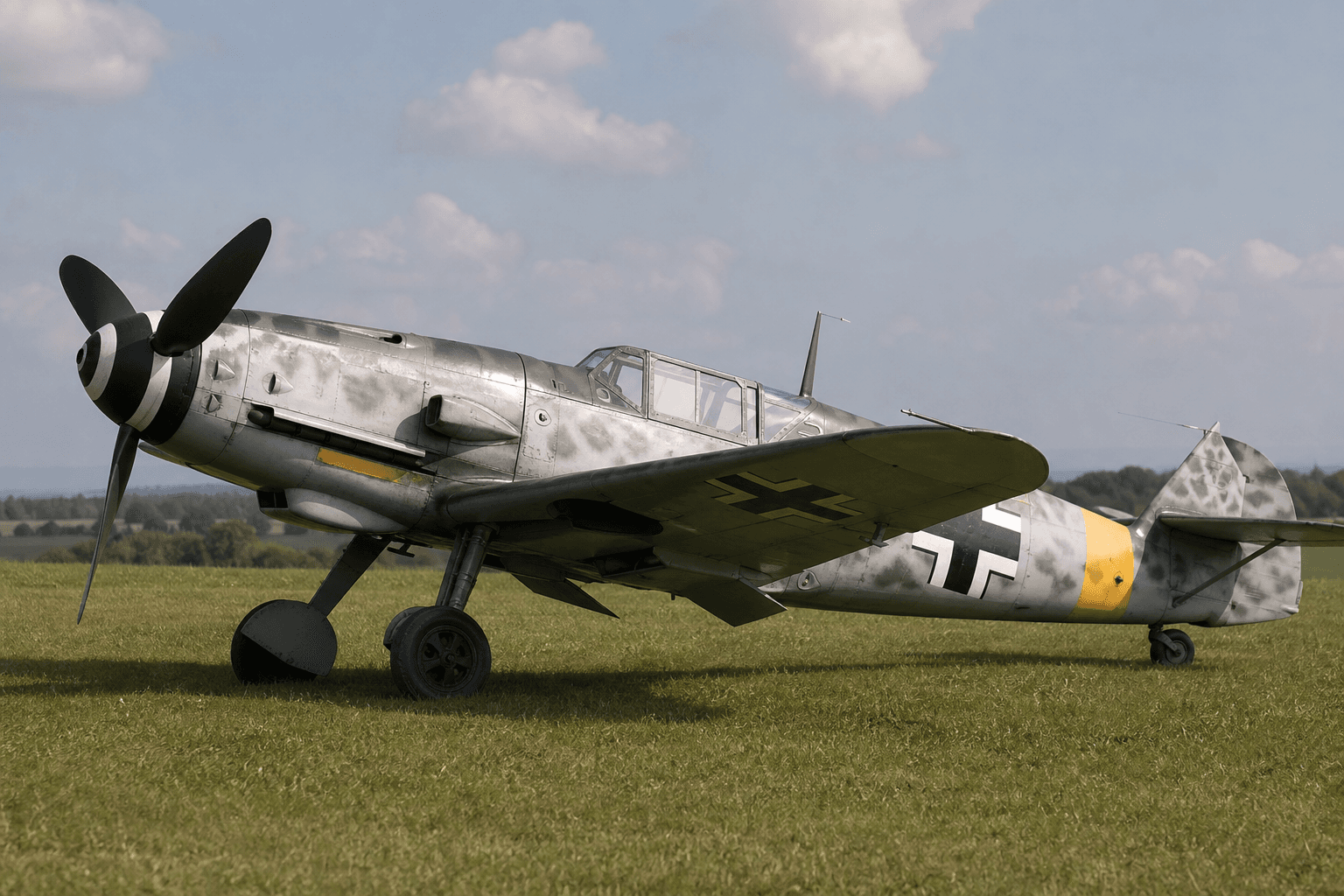
Rare WWII Messerschmitt 109 E1 and Buchon Fighter Offered at Auction
Two exceptionally rare World War Two aircraft of the German Luftwaffe are up for auction from an Australian…
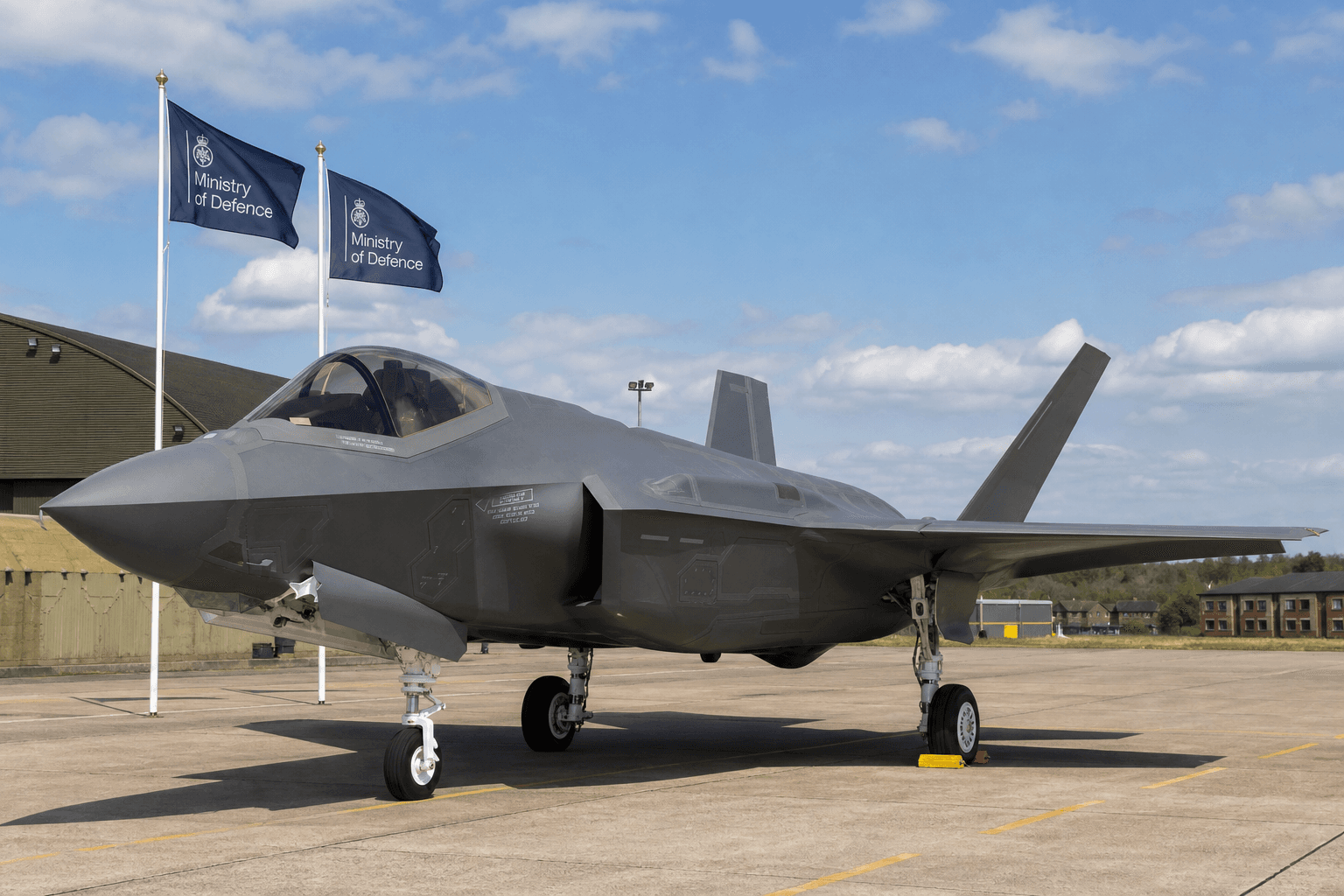
UK Defence Investment Plan boosts Global Combat Air Programme and unmanned systems, trims older fleets
Military expenditure rises, but MoD also announces “hard but necessary decisions”. The UK Ministry of Defence (MoD) has published its long-awaited Defence Investment Plan (DIP), committing fresh funding to the Global Combat Air Programme (GCAP) and confirming a previously announced plan to buy 12 Lockheed Martin F-35As, but also detailing a series of new platform…
The Daily Touch & Go
The day's best aviation news in your inbox. Free, no spam.