

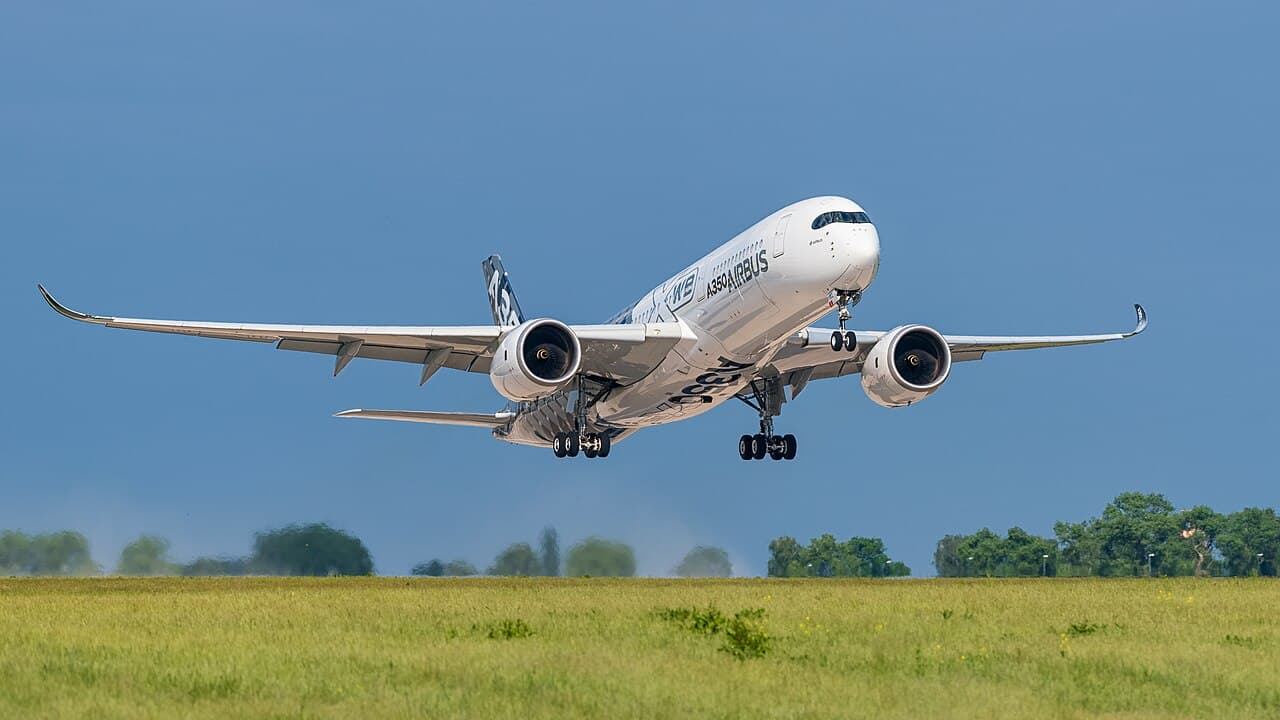
Image: Julian Herzog ( Website ) · CC BY 4.0 · via Wikimedia Commons
Cathay Pacific to Operate 11 Ultra-Long Airbus A350 Routes of 14+ Hours in 2026
Cathay Pacific's extensive Airbus A350 fleet will fly 11 ultra-long-haul routes exceeding 14 hours block time, including a record 17-hour flight to Dallas.
The gist
Cathay Pacific’s 11 ultra-long A350 routes include a 17-hour daily flight linking Hong Kong and Dallas, highlighting its transpacific network strength.
Continuing coverage
All Ultra-Long-Haul →- Inside the Airbus A350's Concealed Crew Rest Compartment Beneath the Flight Deck
- Qatar Airways Sued After Teen Dies from Allergic Reaction on Doha-New York Flight
- Airbus to perform ultra-long 22-hour test flight of A350-1000ULR to Australia
- Qantas Uses Perth–Rome Route as Real-World Test Ahead of Project Sunrise Ultra-Long-Haul Flights
- United Airlines' San Francisco to Adelaide Route Launches with Low Initial Load Factor
Hong Kong-based Cathay Pacific operates one of the world's largest Airbus A350 fleets, with 48 aircraft split between 30 A350-900s and 18 larger A350-1000s. This fleet is central to its ultra-long-haul services out of Hong Kong International Airport (HKG), enabling nonstop flights across vast distances primarily to North America and Europe.
Data from aviation analytics firm Cirium reveals that between July and December 2026, Cathay Pacific will operate 11 Airbus A350 routes with scheduled block times of 14 hours and 40 minutes or longer. Dominating these are transpacific flights to the United States and Canada, which make up eight of the 11 ultra-long routes. The remaining three destinations are in Europe.
The longest scheduled Cathay A350 route and indeed the carrier’s longest any-service route is between Hong Kong and Dallas/Fort Worth International Airport (DFW). Covering approximately 7,060 nautical miles, the return leg from Dallas to Hong Kong is slated at 17 hours and 15 minutes on block time. This route currently flies daily on the larger A350-1000, with a planned switch to the A350-900 during the winter season. Dallas service, launched in April 2025 at four weekly flights, expanded to daily operations in October 2025.
Other leading transpacific destinations feature prominently on this list. Los Angeles International Airport (LAX) ranks second with a longest return leg block time of 16 hours and 15 minutes, serviced up to three times daily from winter 2026 using the A350-900. New York’s JFK receives two daily flights, evenly split between A350-900 and A350-1000 aircraft, clocking 16 hours and 10 minutes on the longest leg.
Chicago O'Hare (ORD) and Boston Logan (BOS) follow closely with longhaul block times of 16 and nearly 16 hours respectively, both served daily. Interestingly, while westbound legs typically endure longer block times due to prevailing headwinds over the Pacific, the Hong Kong to Boston leg displays a longer outbound versus inbound flight time, deviating from the usual trend.
Cathay’s extensive North American network also includes Toronto Pearson Airport (YYZ) and Vancouver International Airport (YVR) in Canada. Toronto ranks sixth with up to three daily A350 flights around 15 hours 50 minutes long, while Vancouver rounds out the top 11 longest routes with a 14 hour 40 minute block time on two daily flights.
On the European front, Cathay maintains A350 service to London Heathrow (LHR), Madrid Barajas (MAD), and Manchester (MAN). Manchester represents the longest European route at 15 hours block time daily using the A350-900. Madrid’s route is just under 15 hours and sees up to daily A350 flights. London Heathrow, a key hub, boasts up to three daily flights operated by a mix of A350 variants, with block times near 15 hours.
Cathay’s A350-900s and A350-1000s are configured with three classes: business, premium economy, and economy. Business class features Safran Cirrus III reverse-herringbone seats in a 1-2-1 layout for full lie-flat beds and direct aisle access. The A350-1000 seats up to 334 passengers while the A350-900 accommodates 280. Premium economy offers a 2-4-2 seat layout with an ample 40-inch pitch, and economy features a 3-3-3 configuration with a 32-inch pitch. Notably, the A350-900 business cabin splits into a main and smaller mini cabin, whereas the A350-1000 maintains a single business cabin space.
Frequently asked questions
- Which Cathay Pacific route is the longest using the Airbus A350?
- The longest Cathay Pacific Airbus A350 route is the daily Hong Kong to Dallas/Fort Worth flight, with a return block time of 17 hours and 15 minutes.
- How many ultra-long-haul Airbus A350 routes will Cathay Pacific operate in late 2026?
- Cathay Pacific plans to operate 11 Airbus A350 routes with block times of 14 hours and 40 minutes or longer from July to December 2026.
- What Airbus A350 models does Cathay Pacific use on its ultra-long-haul flights?
- Cathay Pacific operates both A350-900 and larger A350-1000 models for its ultra-long-haul flights, with some routes switching between variants seasonally.
Read more
All Airports →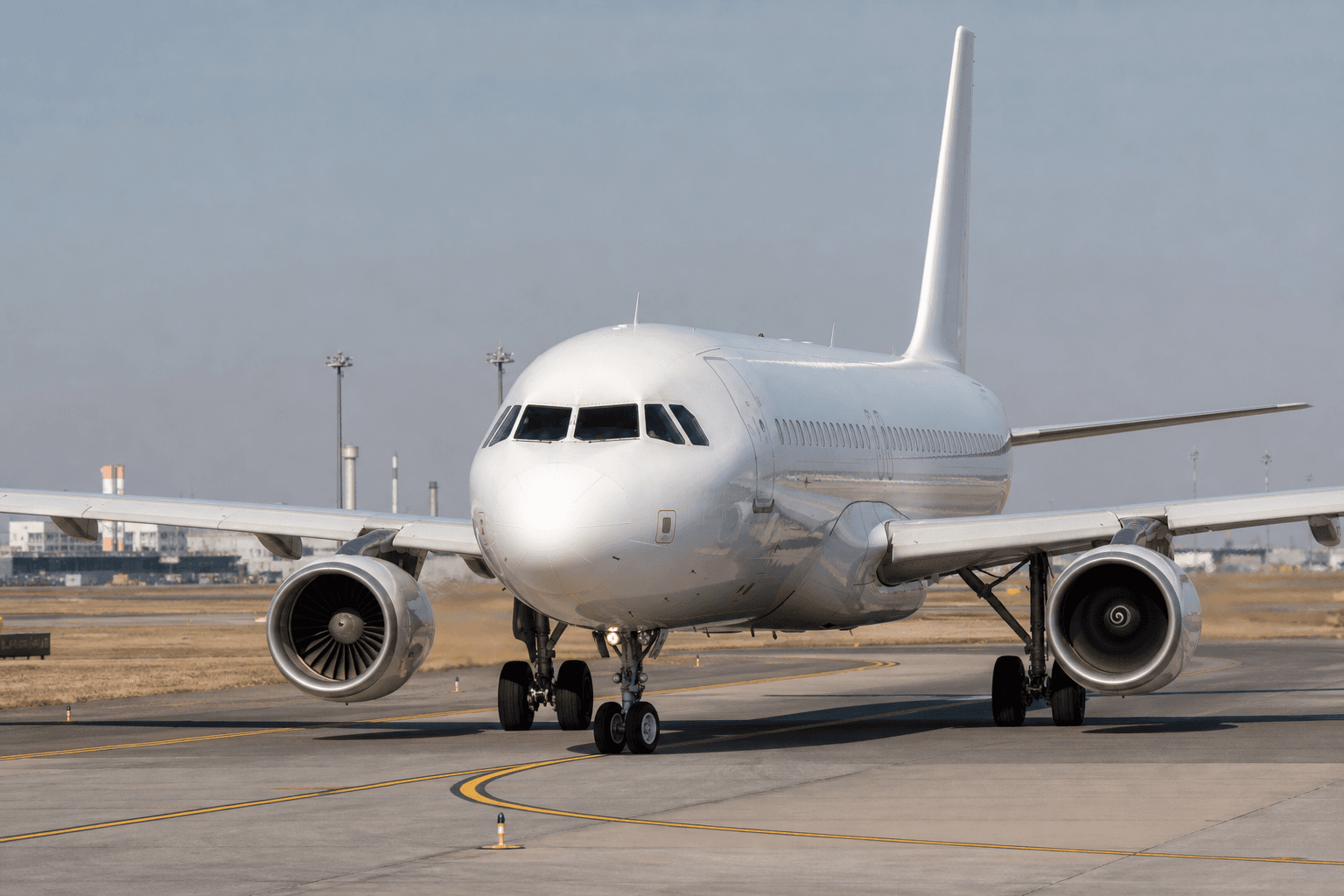
Airbus A320 Pilots Routinely Shut Down One Engine During Taxi to Cut Fuel Use
Passengers looking out of a terminal window or the cabin window of a modern Airbus A320 might occasionally notice a quiet, unexpected sight as the aircraft maneuvers toward the terminal or pushes back from the gate. A completely stationary fan blade can often be seen, while the opposite engine hums with operational power. This guide explores the engineering, operational logic, and hidden systems behind single-engine taxi procedures on the A320 family and why this even happens in the first place.

United Airlines Retracts Free Rebooking Policy for Flights Avoiding Donald J. Trump Airport
United Airlines has backtracked on an apparent policy that allowed passengers who no longer wanted to fly to Donald J. Trump International Airport in West Palm Beach to rebook for free on a flight to an alternative nearby airport. A couple of days ago, a leaked internal memo sent to United’s reservation agents suggested that the airline was aware that some passengers were uncomfortable with flying to the newly renamed airport, which was previously known as Palm Beach International Airport (PBI). If passengers contacted United’s reservation line because they no longer wanted to fly to Donald J. Trump Airport due to the name change, agents were instructed to say: “I understand that you'd rather not fly to this airport anymore. We can look at nearby airports like Fort Lauderdale or Miami instead. Is that an acceptable alternative?" The memo added that agents could use their “empowerment to offer acceptable alternatives” without needing to get approval from a manager. Flight changes could be made for free, which, in itself, was an unusual move. After the story was broken by Live and Let’s Fly , it quickly went viral, and it didn’t take long for United to start reviewing the memo. Now, the airline says the “message was poorly worded and not accurate.” That’s right, United isn’t denying the memo was shared with agents, or that anyone who read the message would think that passengers could rebook onto flights to alternative airports to deliberately avoid the DJT airport. Instead, United is simply saying that the meaning of the memo was different than what you or I believed it to mean. United Airlines is, however, making its position very clear: “United customers are able to make changes to a ticket without a fee for many reasons. However, our policy doesn't allow for changes because of an airport's name or three-letter code." The name change from Palm Beach International Airport to Donald J. Trump Airport officially took effect on July 9, just a few months after Florida Governor Ron DeSantis signed a new law that allows the state to name major commercial airports. Before the airport could be renamed, however, Palm Beach County had to enter into a licensing agreement with the President because he had trademarked his name. The board of commissioners approved the licensing agreement 4-3 in a highly contested vote. Public backlash to the renaming has been fierce, and many people have openly vowed to boycott the airport. United's online booking tool still doesn't accurately reflect the name and airport code change. At the time of publication, a dummy booking allowed us to search for flights from PBI, which is now officially known by the airport code DJT. When you click on any given flight for additional information, the flight is shown as operating from West Palm Beach, FL, US (PBI) and not from Donald J. Trump Airport (DJT). For those in the know, customers can search for flights to and from DJT via United's website, with the online booking tool correctly recognizing the airport code, but it then directs users to a results page that shows PBI.
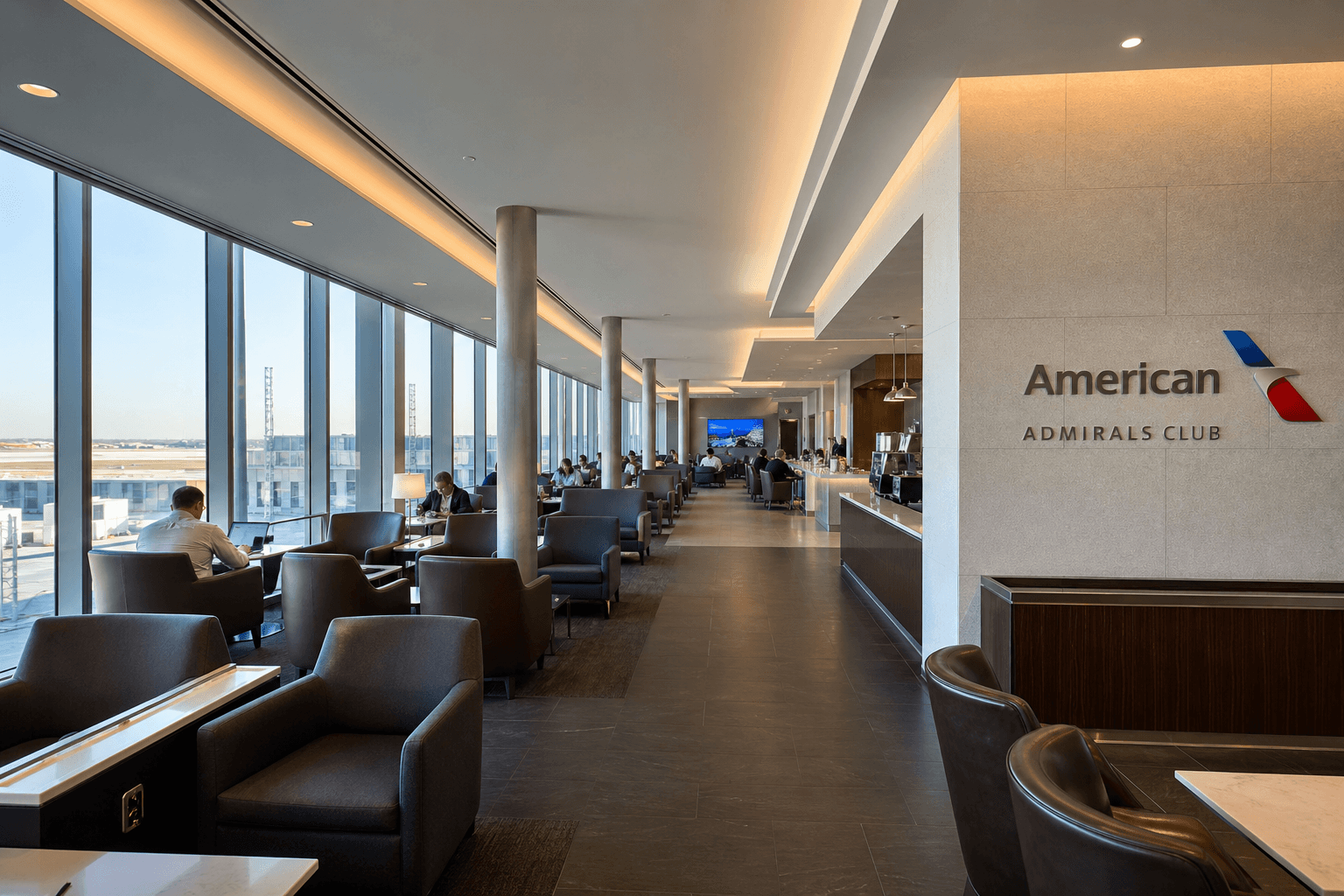
American Airlines Unveils New 37,000 Sq Ft Admirals Club and Grab-and-Go at Dallas-Fort Worth
American Airlines is building a 37,000 square foot Admirals Club lounge (terminal C) and a 'Provisions' grab 'n go (terminal F) at the Dallas – Fort Worth airport.

Smart Strategies to Avoid Fees When Exchanging Foreign Currency Abroad
Figuring out how you should pay for purchases when traveling abroad can be tricky, assuming a foreign currency is involved. There are many considerations, like how widely accepted credit cards are, how much you anticipate spending, how likely you are to return to that country, etc. While I don't think there's an absolute right strategy of how to go about paying for foreign purchases and exchanging money, I do think there's a wrong strategy. In this post, I'd like to share some general tips for paying for purchases abroad, and then I of course welcome tips anyone else may have. Below are some of my top recommendations for making purchases abroad as efficiently as possible. In no particular order… Use credit cards with no foreign transaction fees Whenever possible, I make purchases abroad with credit cards. Admittedly credit card acceptance differs significantly around the globe, though it has come a long way over the years. Why do I pay with credit cards whenever possible? There are all kinds of excellent credit cards with no foreign transaction fees , so they allow you to get a fair exchange rate on your purchase Paying by credit card gives you great purchase protection (in case you need to dispute a charge), minimizes the risk of cash being stolen, allows you to pay exactly what you owe, etc. Credit cards are incredibly rewarding nowadays , especially for purchases that you might make abroad; for example, there are lots of credit cards offering bonus points on dining and travel, which may make up a lot of your spending abroad Just remember that you'll want to avoid dynamic currency conversion when paying by credit card. In other words, when you pay by credit card and are given the option of making a purchase in your home currency or the local currency, always pay in the local currency. If you choose to pay in your home currency, you'll typically be charged a huge fee. Nowadays you can pay with credit cards in so many places Withdraw money from bank ATMs at your destination I always withdraw some cash in local currency at my destination, even if I'm in a country where credit cards are widely accepted. Cash comes in handy on every trip at some point or another. I always get cash in the same way — I find an ATM upon arrival at my destination, ideally from a local bank, and I use the ATM card associated with my US checking account. This is both the most convenient and best value option: There's often a fee of a few dollars per ATM transaction, though that pales in comparison to the fees you'd be charged at currency exchange places Assuming you decline dynamic currency conversion, you should get a rate that's very close to the actual exchange rate between currencies Let me emphasize that lots of banks will reimburse for these ATM fees with certain types of accounts, so if you travel internationally with any frequency, there's value in opening such an account; not only will you find this with accounts that have big minimums (like Chase Private Client and Citigold), but you'll also find this with more basic accounts with some institutions, like with Charles Schwab One challenge can be deciding just how much money you want to convert. After all, you're typically being charged a fee per transaction, so how do you decide at the beginning of a trip how much cash you should get? Since my bank reimburses me for ATM fees, I usually only take out cash in fairly small increments. This way I don't end my trip with lots of extra cash, and minimize the risk of cash being stolen. If you don't have waived ATM fees, you may prefer to just take out more cash at once. Use ATM and avoid dynamic currency conversion Exchange money at your local bank before leaving home Some people feel more comfortable if they can get cash in a foreign currency before even starting their trip. Personally this isn't something I've ever done, and I don't really get the point of it. ATMs are readily available on arrival, and personally I want to minimize the amount of cash I'm traveling with, since it's just another thing that can be stolen. However, if getting cash before your trip puts you at ease, just go to your local bank, and they should be able to get you foreign currency at a reasonable exchange rate. There's typically a small fee to do this, but then you'll get the fair conversion rate, rather than some inflated exchange rate. You'll want to do this well ahead of your departure, because in some cases the cash may need to be shipped to your bank, so won't be available immediately. This is more effort than I'm willing to put in, but to each their own… You can always get foreign currency at your local bank Don't use currency exchange places Broadly speaking, currency exchange places are massive scams, whether we're talking about ones at airports or in cities. You see these all over the place, and they allow you to exchange cash in one currency for cash in another currency. This entire business model essentially relies on consumers not being savvy, since the markup is typically 5-10%, or sometimes even more than that. The marketing around these is also often deceiving. You'll see that they sometimes advertise "no commission," but that doesn't mean you're getting the fair market exchange rate. Only use any sort of currency exchange place as an absolute last resort (in other words, if you immediately need cash in local currency, and literally have no other option). The only exception to this rule is in countries where the official exchange rate is very different than the black market exchange rate. Admittedly that comes with its own risks, but in countries like Argentina or Uzbekistan, you could come out ahead by exchanging money in more traditional ways. Avoid airport currency exchange places How to get rid of foreign currency at the end of your trip What should you do at the end of the trip if you still have some foreign currency remaining? There's no right or wrong answer, though here's my general approach: If the currency is for a destination I travel to often (for example, if I have Euro), I'll just keep the cash in my travel wallet, and save it for the next trip If the currency is for a destination I don't travel to often, I might settle part of my hotel bill or expenses on my last day with cash rather than credit card One other popular option is that you can generally go to a local Starbucks (if there is one at your destination) and load your foreign currency onto an existing gift card in your home denomination, and it will be exchanged at a pretty fair rate Starbucks can be surprisingly useful for getting rid of foreign currency Bottom line I have a pretty simply strategy when it comes to paying for purchases abroad. I use a credit card whenever possible, and decline dynamic currency conversion. Then I use a local bank's ATM to withdraw cash (from my account that waives withdrawal fees), and also decline dynamic currency conversion, if it's offered. To the experienced traveler, I'm sure this advice is pretty obvious. However, it always amazes me how many people I see using foreign currency exchange booths, where you typically get a horrible exchange rate. I'm also surprised by how many people accept dynamic currency conversion, throwing money out the window. What's your strategy for navigating foreign currency exchange?
The Daily Touch & Go
The day's best aviation news in your inbox. Free, no spam.