

Illustration: The Touch & Go
Airbus A320 Pilots Routinely Shut Down One Engine During Taxi to Cut Fuel Use
Airbus has made single-engine taxiing a standard procedure on the A320 to reduce fuel burn and emissions during ground operations at airports.
The gist
Single-engine taxiing on Airbus A320 jets is now standard, saving fuel and lowering emissions during ground movements.
Continuing coverage
All Airbus A320 →- Frontier Airlines to Install Starlink Wi-Fi Across Entire Fleet by Early 2027
- British Airways A320 Disabled on Gatwick Runway Triggers Fuel Emergencies and Diversions
- British Airways A320 Nose Gear Failure Blocks Gatwick Runway Causing 14 Flight Diversions
- Aer Lingus cuts three US routes and trims fleet amid rising transatlantic rivalry
- SpiceJet Struggles to Rebuild Amid Fleet Groundings and Financial Strains
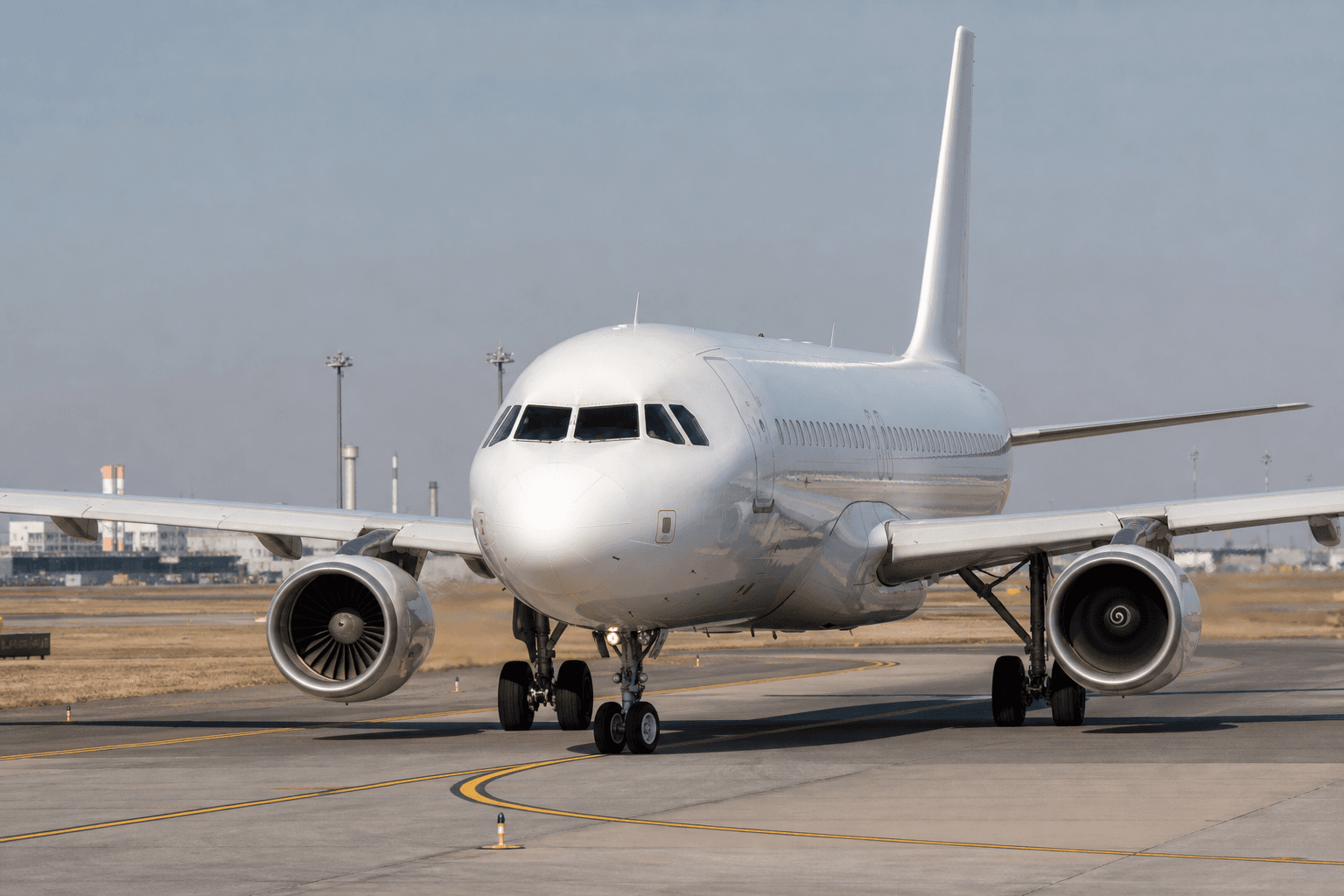
On modern Airbus A320 family aircraft, it is increasingly common to see one engine completely shut down during taxi operations, a deliberate procedure adopted to cut fuel consumption on the ground. By operating only one engine while maneuvering on the taxiways from runway to gate or vice versa, airlines achieve meaningful reductions in fuel use and emissions at airports. Airbus has formally incorporated the single-engine taxi procedure as a standard operating method for crews.
This approach was initially an optional cost-saving tactic used mainly by ultra-low-cost carriers or during periods of airport congestion but has evolved into an industry-wide recommended practice. Airbus moved single-engine taxiing from supplementary guidance to the main standard operating procedures in its Flight Crew Operating Manual, fundamentally adjusting the manufacturer’s baseline for ground operations on the A320 family.
The rationale behind taxiing on a single engine centers on fuel efficiency. Aircraft engines like the CFM56 powerplants on the A320 are optimized for cruise flight and operate inefficiently at idle thrust levels typical on the ground. Running both engines at idle during taxi wastes substantial amounts of fuel, so shutting one down reduces this fuel burnout almost by half. Quantitatively, this corresponds to approximately 8.8 pounds (four kilograms) of jet fuel saved per minute of single-engine taxi time.
From a performance perspective, the A320’s engines produce ample thrust to propel the plane on the ground with just one engine running. The CFM56-5B generates 27,000 pounds (120 kilonewtons) of thrust at idle, enough to keep the aircraft moving at typical taxi speeds of 15 to 20 knots without difficulty. Pilots often need to apply brakes during single-engine taxi because idle thrust from just one engine is still sufficient to accelerate the aircraft on flat surfaces.
A technical hurdle emerged due to system demands such as electrical power, hydraulic pressure, and air conditioning usually supported by both engines and the auxiliary power unit (APU). The APU itself burns fuel, partially offsetting savings from single-engine taxi. However, a modification called Single Engine Taxi Without APU (SETWA) enables aircraft to operate the taxi without the APU running by powering fire detection and cabin systems solely through battery buses, amplifying fuel savings and carbon footprint improvement.
After landing, pilots cannot immediately shut down an engine because of thermal stress risks, notably rotor bow—a damage caused by rapid temperature changes in hot engine turbines. Instead, they follow regulated cooldown procedures before shutting down the second engine. This careful thermal management combined with coordinated systems design and operational changes has allowed single-engine taxi to become a safe, routine practice enhancing airport environmental sustainability.
This shift is part of broader efforts across the aviation industry to mitigate ground-level emissions and reduce operating costs. While cruise emissions remain the largest contributor to an aircraft’s environmental impact, cutting fuel use during ground operations adds up to significant savings when aggregated over thousands of flights. Single-engine taxiing is proving an effective lever, especially for short-haul carriers with significant ground time.
Airbus’s endorsement and standardization of this practice set a precedent followed by airlines worldwide, integrating single-engine taxi into their standard operating manuals. It reflects a growing trend of scrutinizing every phase of flight and ground handling for efficiency gains, reaffirming the aviation sector’s commitment to reducing its environmental footprint through operational innovation rather than waiting solely on technological leaps.
Introducing the SETWA upgrade further optimizes these benefits by allowing the APU to stay off during taxi, eliminating additional fuel consumption otherwise needed to maintain aircraft systems. This multi-layered approach to taxi operations demonstrates how careful systems engineering and operational policy changes can dovetail to produce tangible environmental and economic benefits for modern airliners.
Frequently asked questions
- Why do Airbus A320 pilots shut down one engine during taxi?
- To reduce fuel burn and emissions on the ground since both engines idling wastes significant fuel, the A320 taxis on one engine to save around 8.8 pounds of fuel per minute.
- How can a single engine move the large A320 aircraft on the ground safely?
- The CFM56 engines produce high idle thrust, about 27,000 pounds, enough for the aircraft to taxi at 15-20 knots with one engine running, sometimes requiring pilots to brake to control speed.
- What upgrades support safe single-engine taxiing without running the APU?
- The Single Engine Taxi Without APU (SETWA) modification powers fire detection and cabin systems via batteries, allowing safe taxi with the APU off, maximizing fuel savings and lowering emissions.
Read more
All Airports →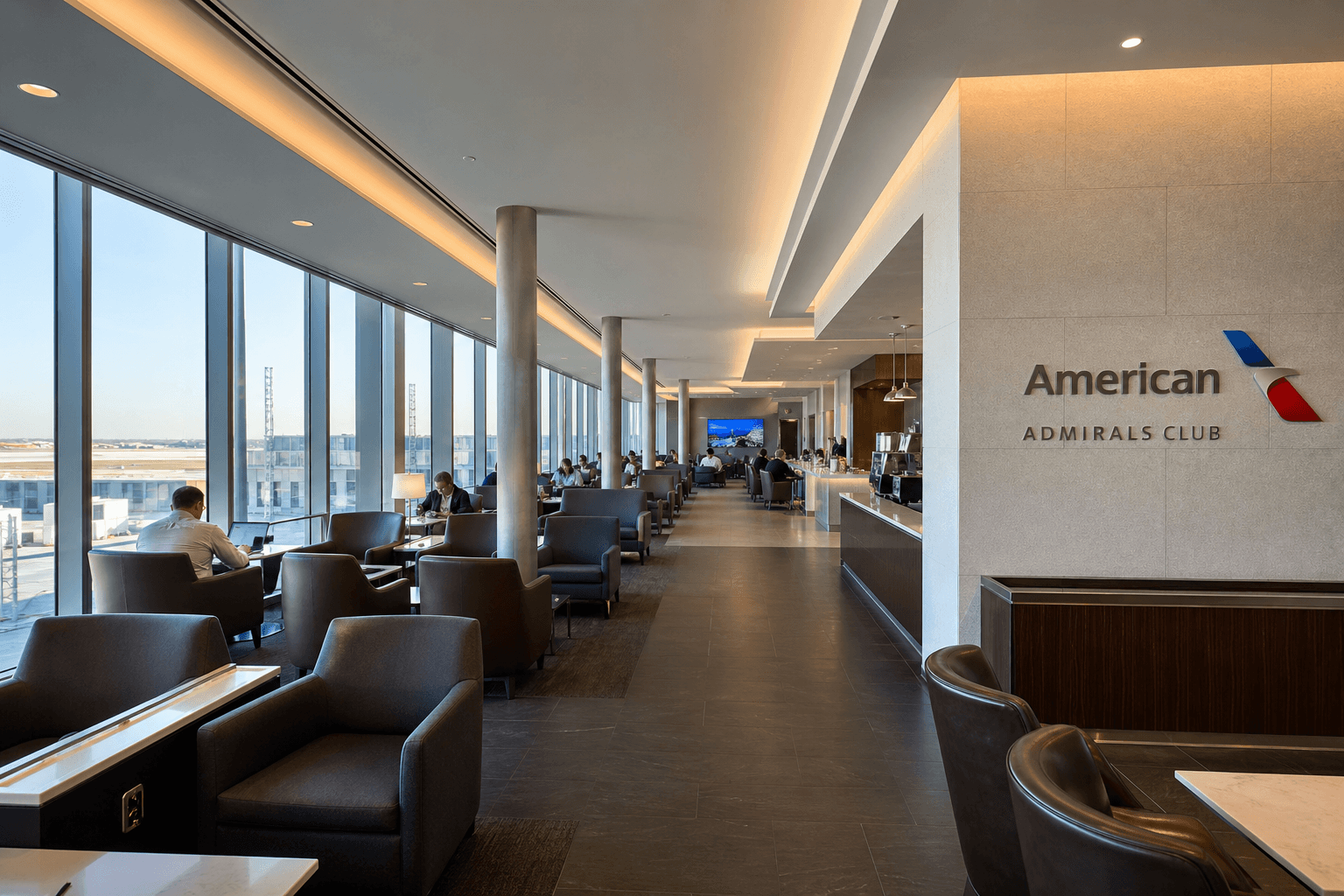
American Airlines Unveils New 37,000 Sq Ft Admirals Club and Grab-and-Go at Dallas-Fort Worth
American Airlines is building a 37,000 square foot Admirals Club lounge (terminal C) and a 'Provisions' grab 'n go (terminal F) at the Dallas – Fort Worth airport.

Smart Strategies to Avoid Fees When Exchanging Foreign Currency Abroad
Figuring out how you should pay for purchases when traveling abroad can be tricky, assuming a foreign currency is involved. There are many considerations, like how widely accepted credit cards are, how much you anticipate spending, how likely you are to return to that country, etc. While I don't think there's an absolute right strategy of how to go about paying for foreign purchases and exchanging money, I do think there's a wrong strategy. In this post, I'd like to share some general tips for paying for purchases abroad, and then I of course welcome tips anyone else may have. Below are some of my top recommendations for making purchases abroad as efficiently as possible. In no particular order… Use credit cards with no foreign transaction fees Whenever possible, I make purchases abroad with credit cards. Admittedly credit card acceptance differs significantly around the globe, though it has come a long way over the years. Why do I pay with credit cards whenever possible? There are all kinds of excellent credit cards with no foreign transaction fees , so they allow you to get a fair exchange rate on your purchase Paying by credit card gives you great purchase protection (in case you need to dispute a charge), minimizes the risk of cash being stolen, allows you to pay exactly what you owe, etc. Credit cards are incredibly rewarding nowadays , especially for purchases that you might make abroad; for example, there are lots of credit cards offering bonus points on dining and travel, which may make up a lot of your spending abroad Just remember that you'll want to avoid dynamic currency conversion when paying by credit card. In other words, when you pay by credit card and are given the option of making a purchase in your home currency or the local currency, always pay in the local currency. If you choose to pay in your home currency, you'll typically be charged a huge fee. Nowadays you can pay with credit cards in so many places Withdraw money from bank ATMs at your destination I always withdraw some cash in local currency at my destination, even if I'm in a country where credit cards are widely accepted. Cash comes in handy on every trip at some point or another. I always get cash in the same way — I find an ATM upon arrival at my destination, ideally from a local bank, and I use the ATM card associated with my US checking account. This is both the most convenient and best value option: There's often a fee of a few dollars per ATM transaction, though that pales in comparison to the fees you'd be charged at currency exchange places Assuming you decline dynamic currency conversion, you should get a rate that's very close to the actual exchange rate between currencies Let me emphasize that lots of banks will reimburse for these ATM fees with certain types of accounts, so if you travel internationally with any frequency, there's value in opening such an account; not only will you find this with accounts that have big minimums (like Chase Private Client and Citigold), but you'll also find this with more basic accounts with some institutions, like with Charles Schwab One challenge can be deciding just how much money you want to convert. After all, you're typically being charged a fee per transaction, so how do you decide at the beginning of a trip how much cash you should get? Since my bank reimburses me for ATM fees, I usually only take out cash in fairly small increments. This way I don't end my trip with lots of extra cash, and minimize the risk of cash being stolen. If you don't have waived ATM fees, you may prefer to just take out more cash at once. Use ATM and avoid dynamic currency conversion Exchange money at your local bank before leaving home Some people feel more comfortable if they can get cash in a foreign currency before even starting their trip. Personally this isn't something I've ever done, and I don't really get the point of it. ATMs are readily available on arrival, and personally I want to minimize the amount of cash I'm traveling with, since it's just another thing that can be stolen. However, if getting cash before your trip puts you at ease, just go to your local bank, and they should be able to get you foreign currency at a reasonable exchange rate. There's typically a small fee to do this, but then you'll get the fair conversion rate, rather than some inflated exchange rate. You'll want to do this well ahead of your departure, because in some cases the cash may need to be shipped to your bank, so won't be available immediately. This is more effort than I'm willing to put in, but to each their own… You can always get foreign currency at your local bank Don't use currency exchange places Broadly speaking, currency exchange places are massive scams, whether we're talking about ones at airports or in cities. You see these all over the place, and they allow you to exchange cash in one currency for cash in another currency. This entire business model essentially relies on consumers not being savvy, since the markup is typically 5-10%, or sometimes even more than that. The marketing around these is also often deceiving. You'll see that they sometimes advertise "no commission," but that doesn't mean you're getting the fair market exchange rate. Only use any sort of currency exchange place as an absolute last resort (in other words, if you immediately need cash in local currency, and literally have no other option). The only exception to this rule is in countries where the official exchange rate is very different than the black market exchange rate. Admittedly that comes with its own risks, but in countries like Argentina or Uzbekistan, you could come out ahead by exchanging money in more traditional ways. Avoid airport currency exchange places How to get rid of foreign currency at the end of your trip What should you do at the end of the trip if you still have some foreign currency remaining? There's no right or wrong answer, though here's my general approach: If the currency is for a destination I travel to often (for example, if I have Euro), I'll just keep the cash in my travel wallet, and save it for the next trip If the currency is for a destination I don't travel to often, I might settle part of my hotel bill or expenses on my last day with cash rather than credit card One other popular option is that you can generally go to a local Starbucks (if there is one at your destination) and load your foreign currency onto an existing gift card in your home denomination, and it will be exchanged at a pretty fair rate Starbucks can be surprisingly useful for getting rid of foreign currency Bottom line I have a pretty simply strategy when it comes to paying for purchases abroad. I use a credit card whenever possible, and decline dynamic currency conversion. Then I use a local bank's ATM to withdraw cash (from my account that waives withdrawal fees), and also decline dynamic currency conversion, if it's offered. To the experienced traveler, I'm sure this advice is pretty obvious. However, it always amazes me how many people I see using foreign currency exchange booths, where you typically get a horrible exchange rate. I'm also surprised by how many people accept dynamic currency conversion, throwing money out the window. What's your strategy for navigating foreign currency exchange?
NBAA Engages Aviation Community with Events at 2026 AirVenture in Oshkosh
NBAA will be front-and-center at the Experimental Aircraft Association's AirVenture, taking place July 20-26 at Wittman Regional Airport (OSH) in Oshkosh, WI - connecting with industry stakeholders and showcasing all that the association has to offer members.
![17-Hour Flights: Cathay Pacific's 11 New Ultra-Long Airbus A350 Routes Revealed [Map]](/_next/image?url=https%3A%2F%2Favoibnodqwjxlpbhunuu.supabase.co%2Fstorage%2Fv1%2Fobject%2Fpublic%2Fstory-images%2Fwikimedia%2F17-hour-flights-cathay-pacific-s-11-new-ultra-long-airbus-a350-routes-revealed-m-e30bad67.jpg&w=3840&q=75)
Cathay Pacific to Operate 11 Ultra-Long Airbus A350 Routes of 14+ Hours in 2026
Hong Kong flag carrier Cathay Pacific operates the world's third-largest Airbus A350 fleet, with 48 A350s in its fleet split between 30 A350-900s and 18 of the larger A350-1000 model. The widebody twinjet is a crucial part of the carrier's ultra-long-haul network out of Hong Kong International Airport (HKG).
The Daily Touch & Go
The day's best aviation news in your inbox. Free, no spam.