

Illustration: The Touch & Go
United Airlines Captain's Cabin Chat Builds Passenger Loyalty Beyond Upgrades
A United captain's engaging pre-flight talk on weather and humor strengthens customer loyalty more than complimentary upgrades.
The gist
United Airlines pilots connecting with passengers before flights can transform loyalty and enhance the travel experience.
Flight attendants are well known for their dual roles of ensuring safety and delivering customer service, but airline pilots generally have far less direct interaction with passengers. Typically confined behind the locked cockpit door, pilots rarely step into the cabin to engage with travelers. However, when they do, it can create powerful moments of connection and significantly boost passenger morale and loyalty.
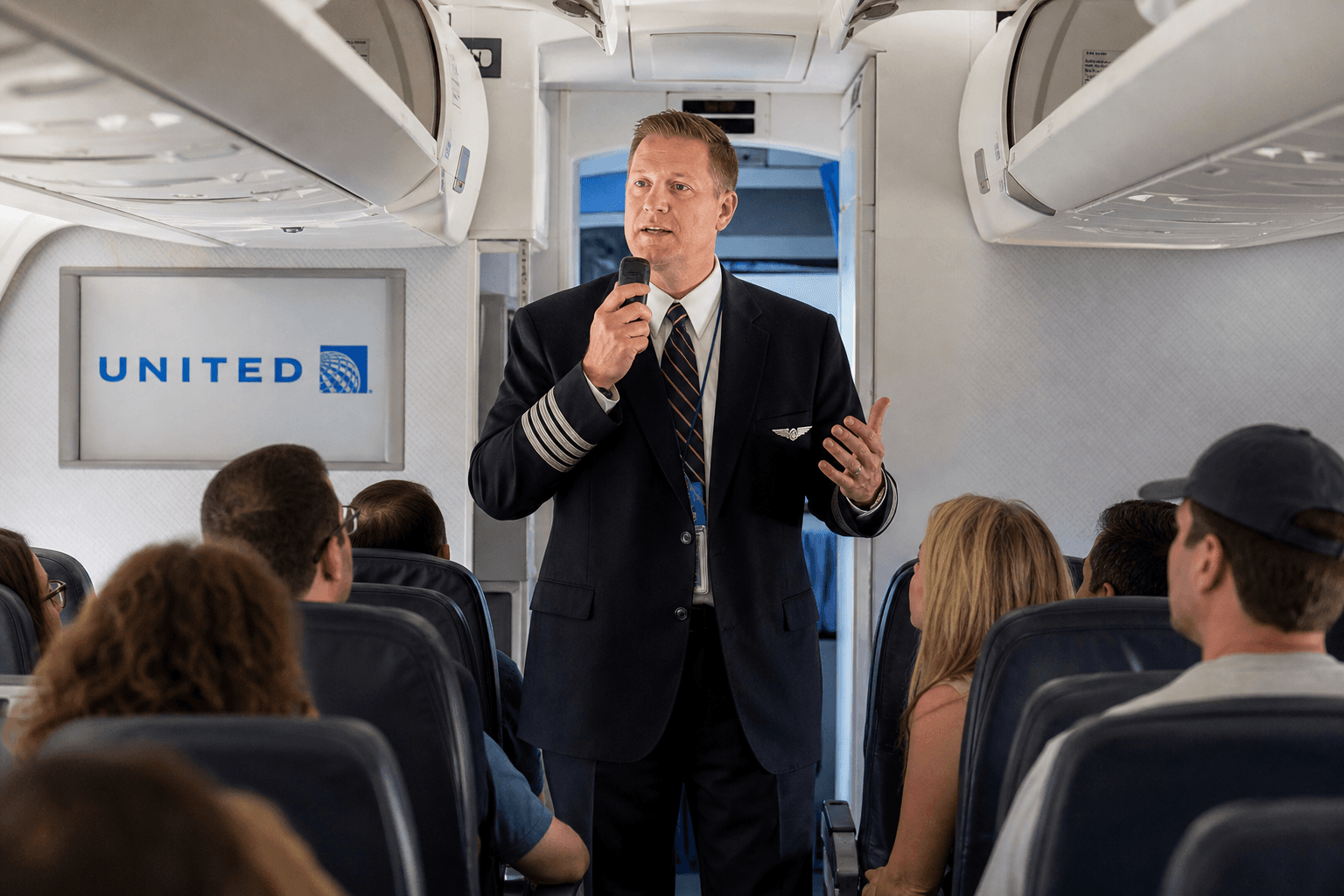
One United Airlines flight stood out when the captain took the unusual step of addressing passengers before departure. He provided an informative weather briefing and lightheartedly joked about taking a passenger vote to divert the destination from Washington, D.C. to Hawaii. This gesture resonated strongly with travelers and even outweighed the impact of a complimentary first-class upgrade for one loyal customer.
The esteem commanded by a flight captain combined with their authoritative presence can have a distinct effect on how passengers perceive operational updates and disruptions. For example, American Airlines and Delta pilots who personally come into the cabin during delays to explain causes, apologize, and answer questions have received positive feedback. Similarly, Delta pilots who distribute handwritten notes of appreciation have cultivated goodwill and a friendlier atmosphere.
United has gone further to create memorable passenger experiences through pilots’ individual gestures. Notable acts have included a captain providing a two-million-mile flyer with his personal flight plan, ordering pizzas for a medical diversion flight's passengers and crew, and a pilot performing violin before Christmas departures. These moments demonstrate how pilots can exceed safety duties to humanize the airline brand.
Pilots do have windows of opportunity to engage when not operating the aircraft, primarily on the ground before takeoff or after landing. Even though cruise phases involve minimal manual flying and lower workloads, the flight deck door remains locked and sterile cockpit rules prevent non-essential activities below 10,000 feet. Therefore, pre-departure boarding periods or gate delays provide the best chances for pilots to interact with customers.
Despite the clear benefits to the airline and passenger experience, pilots seldom initiate these interactions. Factors include risk of miscommunication, lack of formal incentives, and an airline culture traditionally separating flight deck operations from customer-facing roles. Moreover, not all pilots possess the inclination or skillset for public engagement, underscoring the need for voluntary and rewarded participation.
United Airlines CEO Scott Kirby has encouraged pilots to leave the cockpit and connect with passengers at the gate, advocating for stronger communication. Tools such as trading cards have been introduced to lower barriers, giving passengers reasons to approach pilots, who in turn can more easily engage and offer recognitions for loyal flyers or milestone achievements.
Research from carriers like Delta has shown that when pilots engage during disruptions, net promoter scores improve significantly compared to similar delays without pilot communication. American Airlines estimates that even a single point rise in NPS can translate to $50 million to $100 million in additional revenue. This financial impact incentivizes airlines to empower pilots with modest recovery budgets and branded materials to enhance interaction with travelers.
Ultimately, encouraging pilot-passenger communication on the ground can break down cultural divides within airlines, deepen customer loyalty, and improve the overall flight experience. While safety remains paramount in flight, when allowed and supported to do so, pilots stepping into the cabin can provide moments of authenticity and trust that resonate far beyond the routine service touchpoints.
Frequently asked questions
- Why do United Airlines pilots rarely interact with passengers?
- Pilots typically stay behind locked cockpit doors for safety and sterile cockpit rules, have no direct incentives to engage, and may be cautious due to potential risks in public communication.
- What benefits result from pilots interacting with passengers before flights?
- Such interactions improve passenger morale, build loyalty, enhance net promoter scores during disruptions, and can translate into significant revenue increases for airlines.
- How has United Airlines encouraged pilot-passenger engagement?
- United CEO Scott Kirby promotes pilots leaving the cockpit to communicate with passengers at gates, supported by tools like pilot trading cards and modest recovery budgets for goodwill gestures.
Read more
All Airlines →
American, United, and Southwest Match Exact $523 Fare from Chicago to Denver Half the Time
American, United and Southwest all offered the same $523 Chicago–Denver fare, reviving suspicions of price-fixing. Identical fares occur about half the time: ATPCO and near-instant competitor monitoring let airlines match prices without an illegal agreement—though carriers have sometimes tried to cross that line.
Airlines Should Charge Extra For Quality First Class Meals as Standards Decline
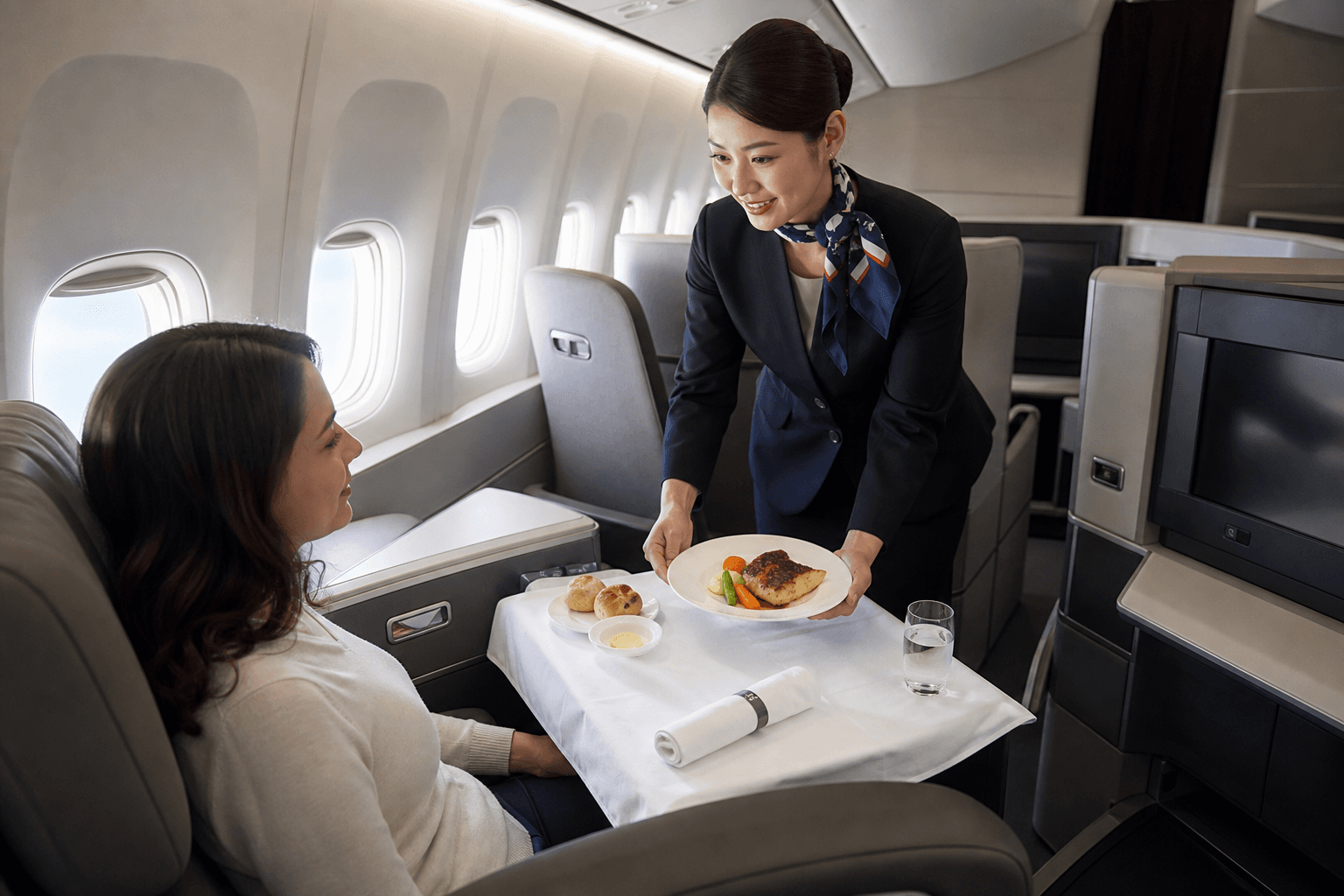
Domestic first class meals have been cut so far that airlines may be missing a revenue opportunity: sell premium pre-order meals passengers would actually want, instead of pretending today's bundled food is still a premium experience.
United Airlines Flight Attendant Union Leader Helped Revise Canada Entry Rules for Crew with DUI
The Association of Flight Attendants (AFA-CWA) is by far the largest crew member union in the United States, representing around 55,000 flight attendants at nearly two dozen airlines across the country. The jewel in AFA’s crown, though, is United Airlines, whose flight attendants make up more than half of the union’s total membership. Leading AFA’s United membership, therefore, could definitely be considered one of the more important jobs within the union, and the baton has recently been taken over by Scott Pejas, a veteran United Airlines flight attendant who first joined the carrier back in 1996. Scott initially started working out of United’s Los Angeles base before transferring to Chicago O’Hare in 1999, where he has remained ever since. Despite taking on the mammoth task of being the representative of around 30,000 flight attendants, Scott plans to continue flying as a crew member while holding the role of Master Executive Council President. Thankfully, Scott takes on the role at a relatively good time. United’s flight attendants have only recently ratified a new five-year collective bargaining agreement that locks in pay rises over the coming years, along with a slew of other contract improvements that were hotly contested over several years. During this long bargaining process, it’s fair to say that the leaders of United’s MEC and its negotiating committee took some flak from frontline employees, but Scott and the other elected officials aren’t newbies to union work. In fact, Scott was first elected as Chicago’s local executive council leader in 2016, and it’s during this time that he was involved in what the union describes as one of his ‘most notable’ pieces of work: changing the wording of United’s Canada admissibility policy. For years, United had a policy in which flight attendants must be able to legally operate to any destination within the airline’s network. That generally means that crew members can’t have criminal convictions that would bar them from entering a country without first obtaining a visa or undergoing other background checks. This was particularly an issue for flight attendants with past DUI convictions because Canada has some of the strictest DUI laws in the world. A DUI conviction in the United States within the last five years makes someone automatically inadmissible for entry to Canada, including pilots and flight attendants. In other words, flight attendants with a DUI conviction faced the risk of being terminated because they wouldn’t be allowed to enter Canada. Scott, however, was involved in changing this policy, meaning that inadmissibility to Canada no longer means United’s flight attendants have to hang up their wings. Veteran crew members who are ‘lineholders’ simply bid for trips that avoid Canada, while the situation is slightly more complicated for newer flight attendants who are on ‘reserve.’ If they get assigned a trip that involves a stopover in Canada, they would be assigned what is referred to as a ‘missed trip.’ That might ultimately lead to disciplinary action at some point down the road, but they can, at least, continue to work for United even though they aren’t legally allowed to enter Canada. United has a similar policy for its pilots, but not all airlines allow this kind of flexibility. Inadmissibility to Canada can still lead to termination at other airlines. This is one of those lesser-known policy changes where unions would likely say they have brought about a positive outcome for their members… something that might not have happened if it wasnt for the union.
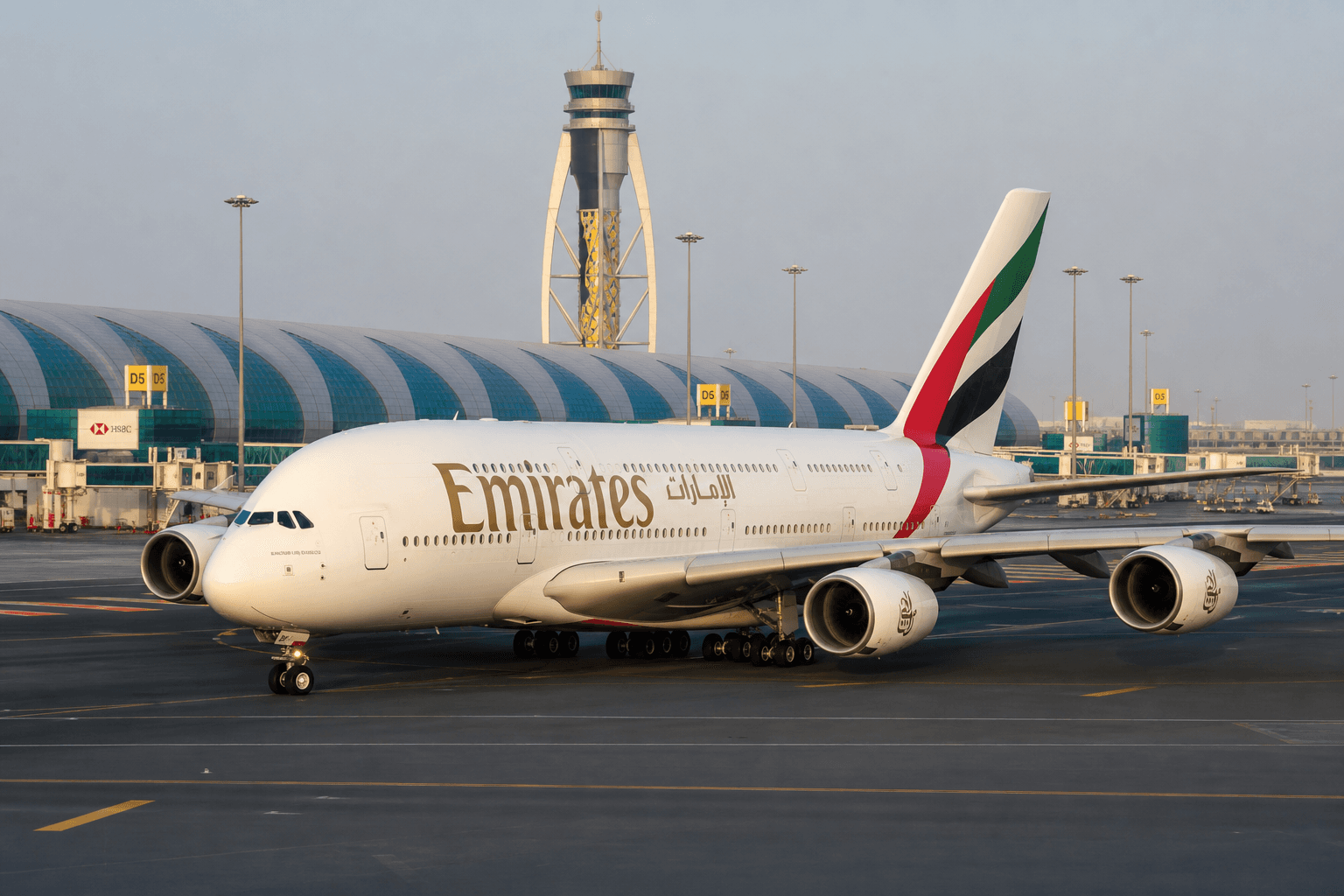
Emirates A380 Delivers Unique Passenger Experience Through Iconic Design
For many travelers, the Airbus A380 has become more than just another aircraft type. So in this video, we take a look at the real benefits of flying on Emirates' Airbus A380, how the aircraft's unique design shapes the passenger experience, and why so many frequent flyers continue to choose it over other modern widebody aircraft.
The Daily Touch & Go
The day's best aviation news in your inbox. Free, no spam.