

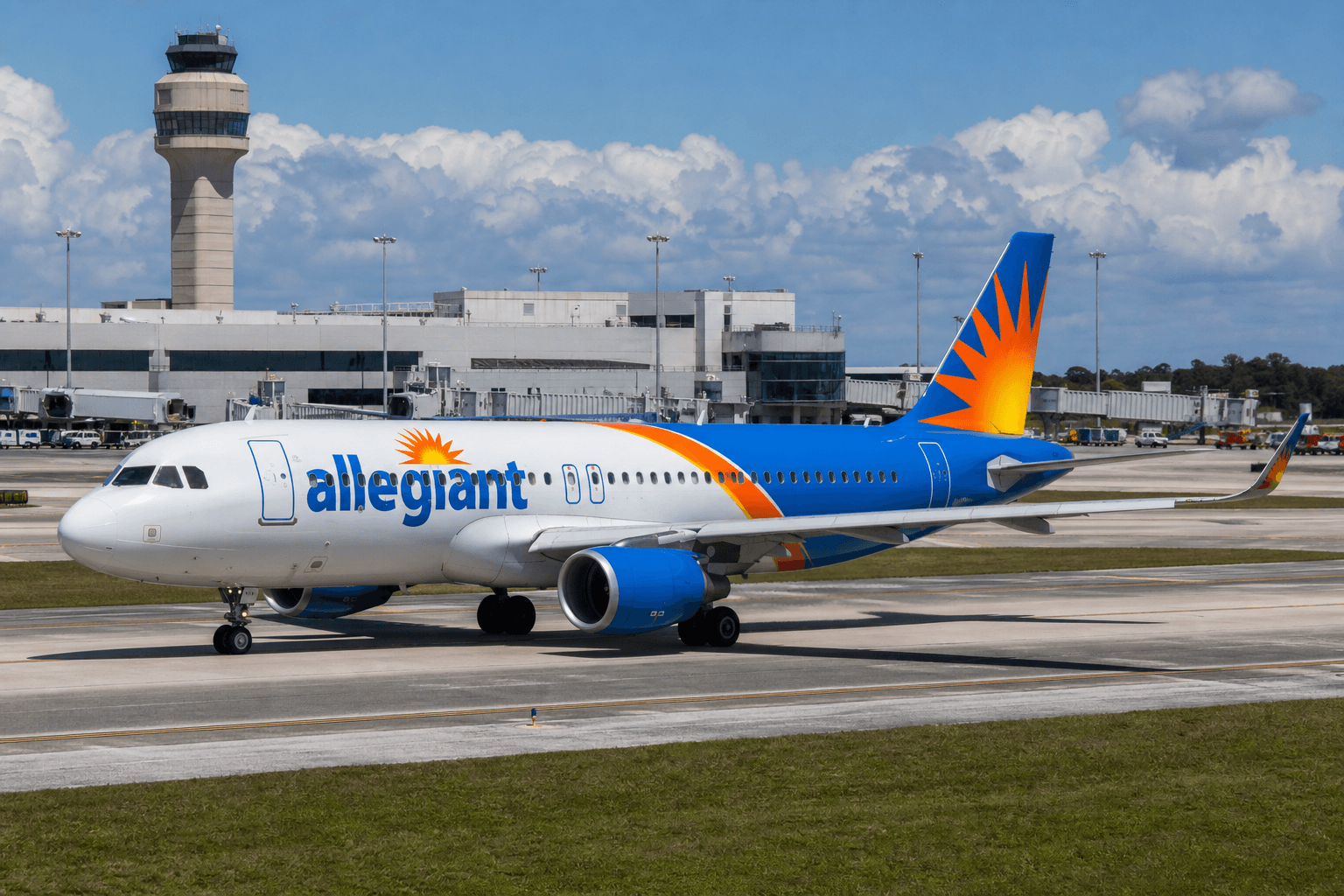
Illustration: The Touch & Go
Allegiant Air Announces Seven New East Coast to Florida Routes
Allegiant Air will launch seven new nonstop flights from US East Coast cities to multiple Florida airports, expanding its leisure-focused network.
The gist
Allegiant Air expands with seven new nonstop routes connecting East Coast cities to popular Florida destinations.
Continuing coverage
All Florida →Allegiant Air, the Las Vegas-based ultra-low-cost carrier, is expanding its route network with seven new nonstop flights linking cities on the US East Coast directly to Florida airports. These new connections target leisure travelers, aligning with Allegiant's longstanding focus on smaller and medium-sized cities underserved by other carriers. The routes will connect airports including Orlando, Punta Gorda, Sanford, St. Petersburg, and Fort Lauderdale.
The announced routes, revealed by aviation analyst Ishrion Aviation, are designed to tap into Florida’s status as America’s most popular vacation destination. Allegiant’s strategy centers on providing low-cost service to secondary airports in Florida, appealing to cost-conscious travelers and filling gaps left by other airlines. While the airline has not yet disclosed official start dates for these flights, the planned expansions underscore its effort to grow steadily in key leisure markets.
The seven new routes offer a mix of city pairs with varying distances, such as Cincinnati (CVG) to Orlando (MCO) covering 756 miles, Boston (BOS) to Punta Gorda (PGD) spanning 1,232 miles, and Providence (PVD) to Fort Lauderdale (FLL) at 1,188 miles. A majority of these city pairs will be exclusive to Allegiant, with no existing nonstop competitors, giving the airline monopoly status on these routes.
Competition does exist on a couple of the routes, particularly Cincinnati to Orlando, where Allegiant will face Delta Air Lines, Frontier Airlines, and Southwest Airlines. Additionally, flights from Providence to Fort Lauderdale will compete with JetBlue and seasonal service from Southwest. This competitive landscape may drive fare reductions and give leisure travelers more affordable options to Florida’s warm-weather destinations.
Allegiant’s business model focuses heavily on no-frills point-to-point flights, avoiding major hubs to maintain cost efficiency. It charges additional fees for extras such as checked and carry-on bags as well as seat assignments. However, in August 2026, the airline began offering complimentary nonalcoholic beverages, marking a shift toward added passenger amenities while alcoholic drinks and snacks remain available for purchase.
This route expansion coincides with Allegiant’s upcoming introduction of a first-class cabin on select aircraft and routes, scheduled for spring 2027. The new premium product, Allegiant First, will add eight upgraded seats at the front of the plane. This service will complement the existing Allegiant Extra tier rather than replace it, indicating the airline's intent to broaden its appeal with tiered options for passengers.
Allegiant previously acquired Sun Country Airlines in a $1.5 billion deal completed in May 2026, maintaining Sun Country’s base in Minneapolis-Saint Paul but planning to integrate all operations under Allegiant’s brand. This acquisition and the route additions reflect the airline’s ambitions to expand its footprint and diversify its low-cost offerings.
Florida remains a magnet for leisure travelers due to its year-round warm climate and variety of tourist attractions. By connecting underserved origin cities directly to multiple Florida airports, Allegiant is positioning itself to capture greater market share within the competitive domestic leisure travel sector. These moves align with broader industry trends of low-cost carriers targeting secondary airports and niche markets to stimulate demand.
The launch of these routes will add to Allegiant’s growing presence in Florida while enhancing travel options from New England and the Midwest. The airline's competitive pricing and newly introduced passenger comforts suggest it aims to balance affordability with an improved flying experience, a notable evolution for the carrier since its founding in 1997.
Frequently asked questions
- What new routes is Allegiant Air launching to Florida?
- Allegiant is launching seven new nonstop routes from US East Coast cities including Cincinnati, Boston, Providence, and Portsmouth to Florida airports like Orlando, Punta Gorda, Sanford, St. Petersburg, and Fort Lauderdale.
- Will Allegiant face competition on these new routes?
- Most new routes will be monopolies for Allegiant, but Cincinnati to Orlando will compete with Delta, Frontier, and Southwest, while Providence to Fort Lauderdale will face JetBlue and seasonal Southwest service.
- What customer experience changes is Allegiant introducing?
- Starting in 2026, Allegiant added complimentary nonalcoholic beverages and plans to launch a first-class cabin with eight premium seats in spring 2027, adding a higher-tier option alongside the existing Allegiant Extra offering.
Read more
All Airlines →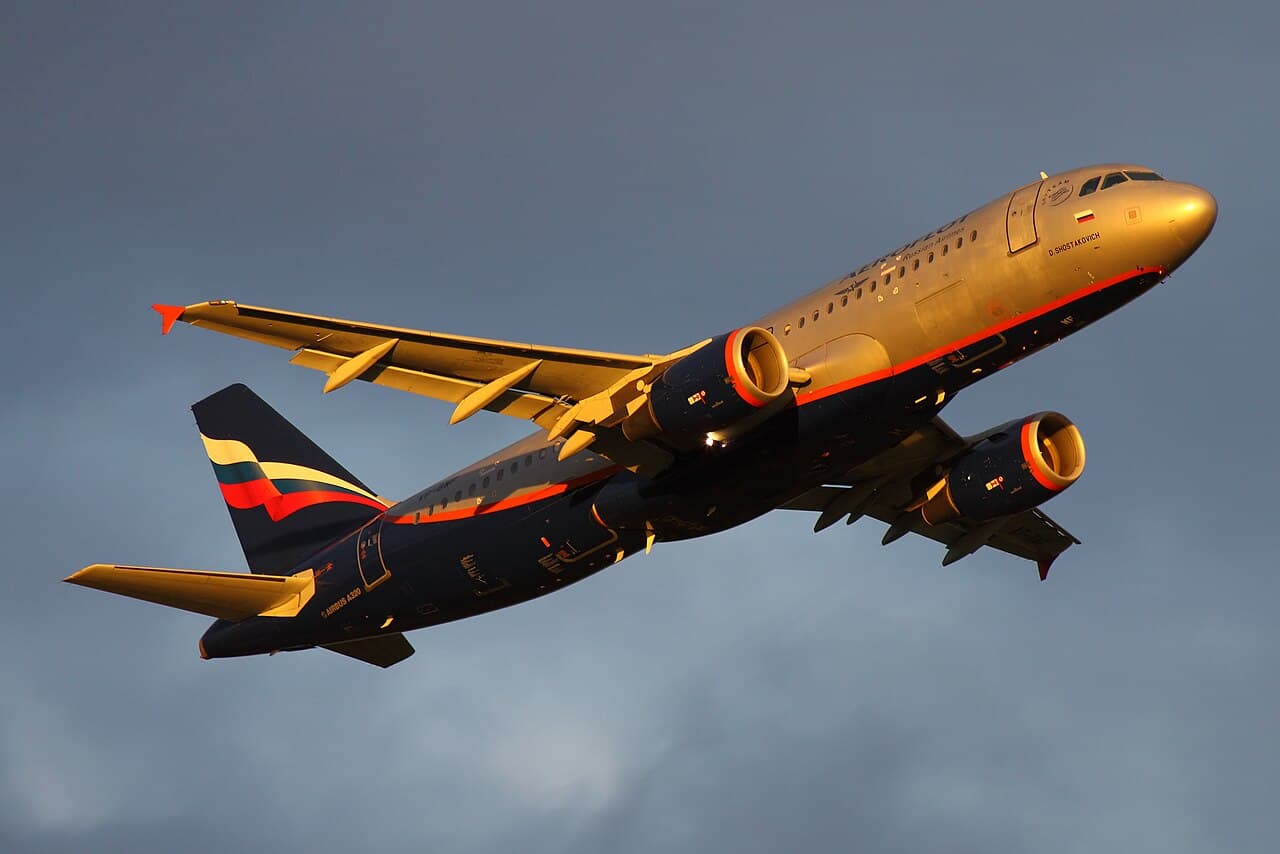
Air Arabia to launch Saudi venture Air Arabia DMM from King Fahd Airport in Q3 2026
Budget carrier and investment partners granted rights last year to establish operator in Dammam. Middle Eastern budget carrier Air Arabia is expecting to commence operations with its new Saudi Arabian venture in the third quarter of this year. Air Arabia is a 49% shareholder in a joint venture, Air Arabia DMM, which was granted rights last year to establish a Saudi airline and operate from Dammam's King Fahd airport. The carrier subsequently embarked on a recruitment drive for Airbus A320-family pilots for the planned operation. In its half-year financial statement, for the six months to 30 June, Air Arabia says its "latest hub in Dammam is expected to start operations [in quarter three] this year". Air Arabia and its partners in the venture have previously indicated plans to build a fleet of 45 aircraft and serve over 80 routes. At least two initial aircraft – registered HZ-DMMA and -DMMB – have already arrived at Dammam, photographs circulating on social media indicate. Air Arabia stayed profitable over the first six months, even though its net figure halved to Dhs374 million ($102 million) after falling by 77% to Dhs96 million in the second quarter. It attributes the weaker performance to the Middle East conflict, and effects such as the related airspace closures, operating restrictions, and high fuel prices. But it states that its average load factor of more than 80% illustrates "continued resilience in demand" across its network. "Throughout this period, we remained focused on maintaining network connectivity, adapting our operations to rapidly evolving circumstances, and exercising disciplined cost management while preserving operational efficiency," says chair Sheikh Abdullah bin Mohammad Al Thani. Air Arabia introduced another six aircraft to its all-Airbus fleet, bringing the total to 96 – including 10 A320neo and six A321neo jets. Sixty of these are based in Sharjah, with 12 in Abu Dhabi, 10 in Morocco, and the remaining 14 across Egypt, Pakistan and Ras Al Khaimah.
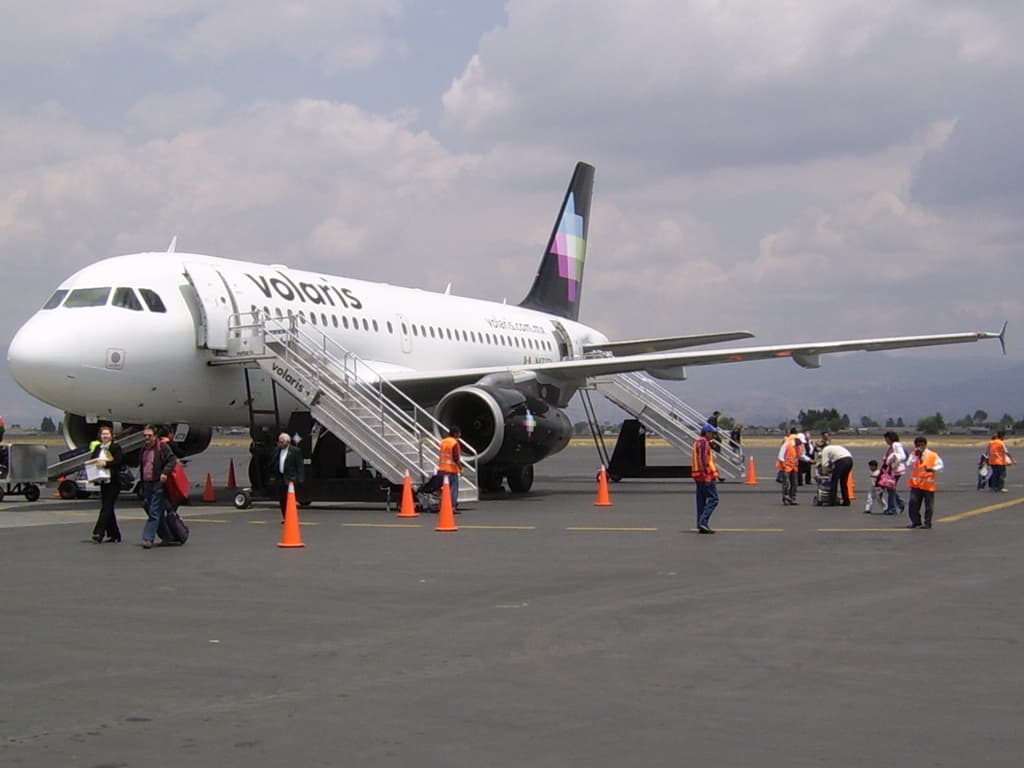
Global airlines announce fleet expansion and new routes in August 2026
Top airline news stories for August 11, 2026 (click the link for the full details): airBaltic to reorganize Breeze Airways expands internationally Trinitiy Airways is born Pegasus Airlines expands in Europe with a major acquisition Riyadh Air expands in Asia American Airlines restores a seasonal route to South America Volaris adds 8 new routes
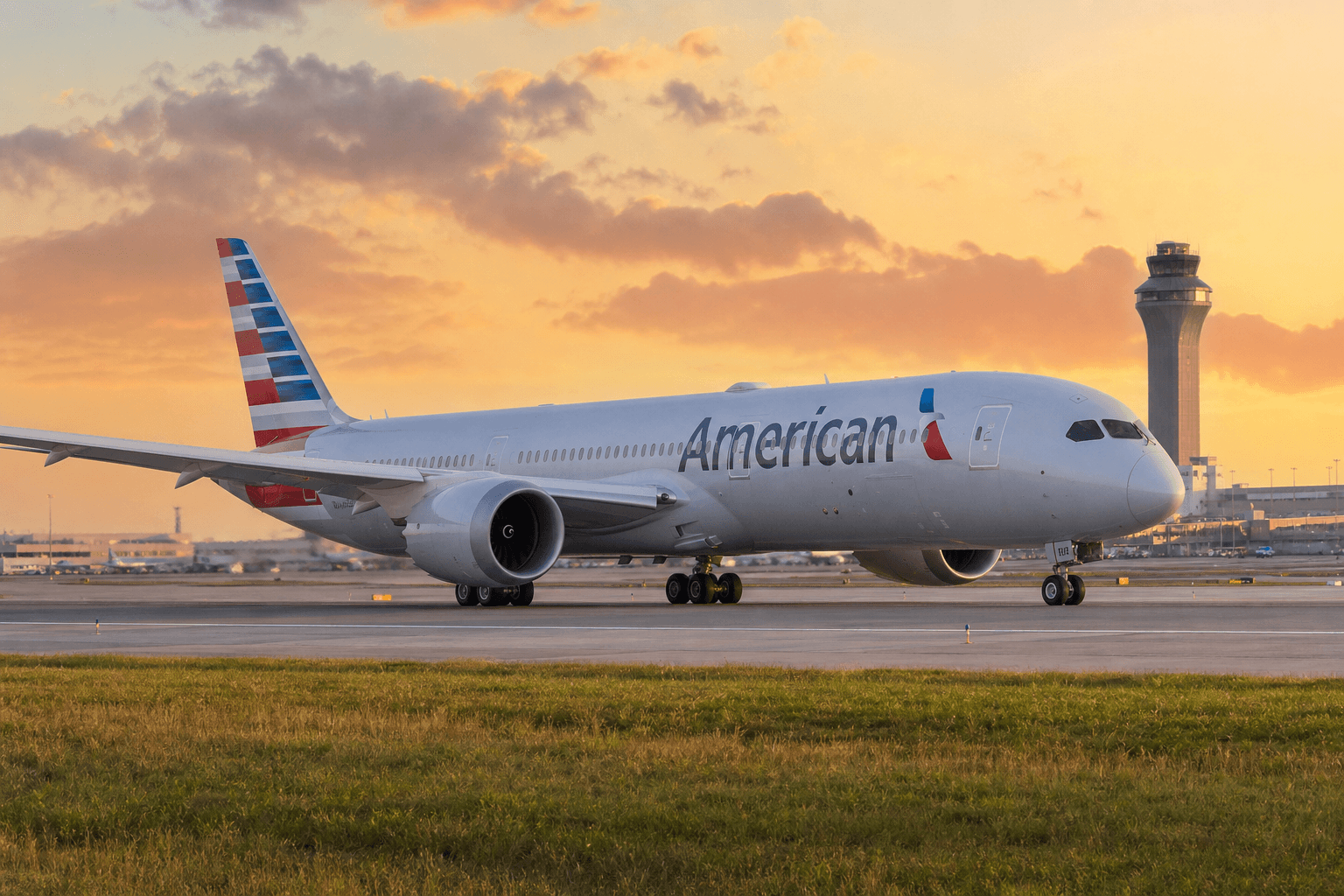
American Airlines Struggles to Match Delta and United in Profitability Despite Market Size
American Airlines was founded in 1930 through a merger of 80 airlines. It wouldn't be until 2013 that American as we know it today was born through a merger with US Airways. With over 223 million passengers carried in 2025, the oneworld carrier remains one of the world's largest airlines alongside its largest competitors, Delta Air Lines and United Airlines . Despite this, American is lagging behind on one key metric: profitability. A gap the Dallas-based airline is desperately looking to close over the coming years.
American Airlines' Sun Belt Strategy Reflects Constraints More Than Choice, Experts Say
Insiders argue American Airlines has reversed disastrous sales and distribution mistake while still running the same old strategy that left it weak in major markets. That critique is partly right, but incomplete: American's Sun Belt focus was less a fresh strategic choice than the result of years of retreat from competition, premature aircraft retirements, slot and gate constraints, and a long-running failure to value the markets that drive loyalty and credit card spend.
The Daily Touch & Go
The day's best aviation news in your inbox. Free, no spam.