

Image: Wikimedia Commons · CC BY-SA 3.0 · via Wikimedia Commons
Spirit Airlines' $250M Dania Beach Campus Faces $88M Bankruptcy Bid
Spirit Airlines' recently built 11-acre corporate campus near Fort Lauderdale is now up for sale with a stalking horse bid valuing it at just $88 million amid bankruptcy proceedings.
The gist
Spirit’s new $250 million headquarters in Dania Beach is being offered in bankruptcy at just $88 million, a steep markdown reflecting its financial struggles.
Continuing coverage
All Florida →Spirit Airlines’ nearly new corporate campus in Dania Beach, Florida, is headed for sale through bankruptcy court with a first official bid valuing the property far below its original cost. An affiliate of Boston-based Hill City Capital has submitted a stalking horse bid of $88 million cash for the 11-acre site, which was completed in April 2024 at a reported investment of $250 million. The bid represents about 35% of the initial investment, underscoring the financial pressures bearing down on the defunct ultra-low-cost carrier.
The sprawling Spirit Central campus encompasses six stories and approximately 180,000 square feet of office space designed to house more than 1,000 corporate employees. The facility also boasts a 108,000-square-foot training center featuring eight full-flight simulator bays, classrooms, and cabin-training equipment essential for pilot and crew training. Adjacent is a 13,000-square-foot fueling station area with a café, commercial kitchen, coffee bar, lounges, and a fitness center, enhancing workplace amenities for Spirit team members.
One unique feature of the campus is The Landing, a residential complex comprising 200 two-bedroom apartments capable of housing 400 visiting employees. The apartments include access to a pool, gym, and meeting spaces, reflecting Spirit’s integrated approach to employee facilities. The development also offers 998 garage parking spaces plus 125 surface spaces, further underscoring its large-scale design tailored to meet various operational needs.
Despite the property’s modern design and comprehensive amenities, the simulators themselves are excluded from the sale. Additionally, The Landing sits on a long-term ground lease rather than Spirit-owned land, which could factor into bidder considerations. Prospective buyers may opt to bid on all or parts of the campus, including the possibility of future development on an adjacent site that could support another 180,000-square-foot building.
The bankruptcy court has approved bidding procedures designed to encourage competition while protecting the stalking horse bidder. If another party offers a bid, it must surpass the initial $88 million by the sum of a 3% breakup fee, a reimbursement of up to $500,000 for documented expenses, and an additional 2% of the stalking horse bid value, roughly $92.9 million in total. Qualifying bidders must provide a 10% deposit, complete due diligence, and cannot condition offers on financing.
Spirit Airlines’ financial troubles have been long documented. Since the pandemic, costs ballooned more than 40%, and the carrier lost its ultra-low-cost focus, moving closer to a low-fare airline model similar to rivals like Frontier Airlines. While Spirit originally unveiled its campus in April 2024 as a symbol of growth and investment, the bankruptcy filing and asset sale starkly contrast that optimistic vision.
Separately, Broward County considered acquiring parts of the campus—including the headquarters, parking garage, and training building—for up to $100 million to serve as a government center. However, zoning complications rendered that plan unfeasible. Hill City Capital, the stalking horse bidder, has notable aviation investment experience, having previously partnered in the take-private acquisition of Atlas Air Worldwide with Apollo and J.F. Lehman.
The sale hearing is scheduled for September 16, 2026, when the court will evaluate bids and potentially approve a purchase. The reduced valuation of Spirit Central highlights the broader challenges facing airlines that invested heavily during and after the pandemic amid changing market dynamics and operational cost pressures.
Frequently asked questions
- What is the current bid amount for Spirit Airlines’ new corporate campus?
- An affiliate of Hill City Capital has placed a stalking horse bid for $88 million cash for the Spirit Airlines 11-acre corporate campus near Fort Lauderdale.
- What facilities are included in the Spirit Central campus sale?
- The sale includes the six-story corporate offices, a large training center with flight simulators, a fueling station with amenities, and a residential complex on leased land, but the simulators themselves are excluded.
- Why is the sale price of the campus significantly lower than its original cost?
- The $88 million bid represents about 35% of the original $250 million investment, reflecting Spirit Airlines’ bankruptcy status and the specialized, distressed nature of the property's assets.
Read more
All Flight Training →
United Flight Attendants Can Now Use Secret Crew Bunks During Non-Rev Travel
A few weeks ago, it emerged that flight attendants at United Airlines who are using their ‘non-rev’ staff travel privileges might soon be able to occupy one of the most comfortable flat beds on board the Chicago-based carrier’s international widebody aircraft fleet. And, no, we don’t mean a Polaris Business Class seat. We’re referring to something far more comfortable and spacious… the secret crew bunks, or what is officially called the ‘Overhead Flight Attendant Rest’ or OFAR on Boeing 777s and 787 Dreamliners. The idea behind the policy is that non-rev flight attendants who have been left with a jumpseat because every seat is otherwise occupied by a fare-paying passenger will now be able to get some rest during a long-haul flight – something that is almost otherwise impossible if you’re stuck on a pull-down jumpseat. While some other U.S. airlines, including non-unionized Delta Air Lines, have allowed their non-rev jumpseating flight attendants to use crew bunks for several years, the opportunity has only now been opened up to United Airlines flight attendants following an agreement between the carrier and the Association of Flight Attendants (AFA-CWA) as part of the successful conclusion of very lengthy contract negotiations. But there was a delay in actually implementing the benefit because the union needed to lock down a policy to make it as fair as possible. Thankfully, that policy has now been agreed. Here’s how it will work: The crew bunks (or crew rest seats on aircraft without bunks) will only be offered to flight attendants who have been assigned a jumpseat. If a non-rev passenger has been assigned any type of passenger seat, that’s where they have to stay. The bunks will only be available for use by United Airlines flight attendants. If a flight attendant for another airline is jumpseating, then they can’t use the crew bunks, even if they are trained on that aircraft type. Dependent on the aircraft type and the number of crew actually working the flight, there may or may not be a spare bunk that can be used. And no, flight attendants can’t share bunks. If there is more than one non-rev jumpseater, then use of the bunks will go in seniority order. The bunks can only be occupied when the aircraft is at an altitude of at least 15,000 feet on Boeing 787s and 25,000 feet on Boeing 777s. For taxi, takeoff, ascent, descent, and landing, non-rev crew have to be in their jumpseat. Non-rev flight attendants need to be careful not to disturb the working crew when they are taking their assigned breaks. United Airlines managers, even those who have gone through flight attendant training, aren’t allowed to occupy the bunks as part of this policy. Even when there aren’t enough crew rest seats or bunks available for non-rev flight attendants when the working crew is taking their breaks, that doesn’t mean they can’t still be used. A non-rev traveler could use the bunks during the first and second meal service, and then sit on their jumpseat during the assigned crew breaks. Every flight attendant who works on widebody aircraft will have their favorite bunk, so you can probably imagine there being some type of coordination with the international purser over which bunks the non-rev travelers are allowed to occupy, so as not to annoy the working crew. The bunks of the Boeing 777-300 are generally regarded as one of the best OFAR facilities, with every bunk being equal in the amount of space available and the threat of noise disturbance from the cabin. In contrast, the Boeing 787 has some bunks that are slightly more private, and one bunk that is slightly roomier… but additional space comes at the expense of peace as it is located right above the galley area. While not a concern for United’s flight attendants, one of the most hated crew bunks are one the Airbus A380, and, specifically, a module that was built in the cabin on the main deck. These bunks are not only pretty cramped, but they also carry every bit of sound from within the cabin.
2007 Diamond DA40-FP Offers Reliable Composite Flight Training and Cross-Country Capability
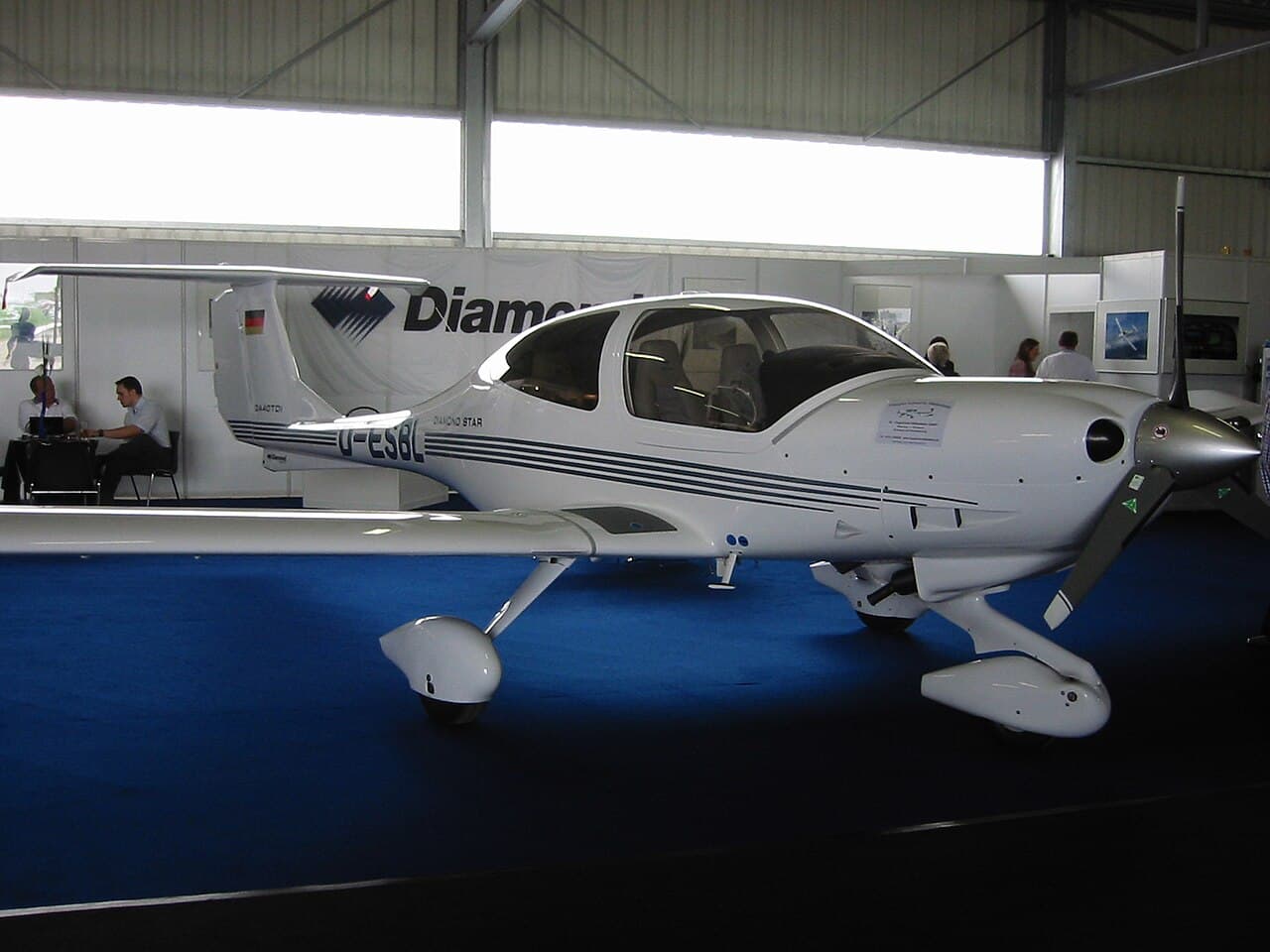
Every day, the team at Aircraft For Sale chooses an airplane that catches our attention because it is unique, a good deal, or has other qualities we find interesting. You can read Aircraft For Sale: Today's Top Pick at FLYINGMag.com daily. Today's Top Pick is a 2007 Diamond DA40. Standing out in the aviation landscape with its aerodynamically efficient composite construction, the Diamond DA40 has cultivated a stellar reputation as a highly capable and forgiving platform. This 2007 Diamond DA40-FP Diamond Star presents an exceptional opportunity for first-time aircraft owners or flight schools looking to acquire a reliable, economical cross-country machine. The airframe boasts 5,870 hours total time since new (TTSN) and a clean pedigree with no known damage history and completely intact logbooks. Sitting in the pilot's seat reveals an advanced instrument layout centered around a fully integrated Garmin G1000 flight deck, offering phenomenal situational awareness for IFR operations. The dual 10-inch primary and multi-function displays are supported by dual Garmin GIA 63 integrated radio modules, a GRS 77 solid-state AHRS, and a GTX 335R transponder. While configured as a non-WAAS setup without an autopilot, the panel provides an exceptional environment for building genuine stick-and-rudder instrument proficiency. The cockpit is outfitted with several thoughtful utilitarian touches designed for comfort and practicality. The installation of a larger factory-style bubble canopy provides significantly increased headroom, making it ideal for taller pilots or demanding flight school operations. Further cabin refinements include a four-way baggage compartment system, canopy vent window scoops, dual USB power ports, and a convenience package featuring integral cupholders and large-capacity side pockets. 2007 Diamond DA40 [Credit: Aerista] Moving beyond the sleek composite lines, the nose section houses a proven and dependable Lycoming IO-360 powerplant that consistently delivers economical operation and predictable performance. Providing a respectable 829-pound useful load, this aircraft is further enhanced by several valuable upgrades, including a Power Flow tuned exhaust system that maximizes efficiency and a Plane-Power heavy-duty alternator. A pre-installed EZ Heat engine pre-heater ensures the powerplant is protected during cold-weather operations. Underscoring its readiness for immediate flightline duty, the aircraft is backed by a fresh annual inspection recently completed in January 2026. This thorough checkup guarantees mechanical integrity and dispatch reliability right out of the gate, with the ELT inspection not due until May 2027. Listed at $224,900 , this Colorado-based 2007 Diamond DA40-FP Diamond Star provides an affordable and highly attractive pathway into modern composite aircraft ownership. If you're exploring ownership options, FLYING Finance can help get you airborne. Use our airplane loan calculator to estimate your monthly payments, or connect with an aviation finance expert at flyingfinance.com . FLYING Magazine: Diamond's DA40 NG Just Might Be What the General Aviation Market Is Clamoring For FLYING Magazine: Diamond Offers a Year's 'Free Flying' for DA40 Buyers FLYING Magazine: UNSW School of Aviation Expands Diamond Fleet Plane + Pilot : Rediscovering the Diamond DA40 Plane + Pilot : Diamond DA40 XL: Polishing the Diamond Star Plane + Pilot : Diamond Aircraft to Build Electric DA40 Model The Aviation Consumer: Used Aircraft Guide: Diamond DA40 Star The Aviation Consumer : Diamond DA40 Star
Cathay Pacific unites Hong Kong and mainland students in groundbreaking aviation youth program
Cathay brought together 80 students from Hong Kong and the Chinese mainland on July 15, 2026, for a joint aviation education program in Chengdu, the first time the airline's I Can Fly initiative has combined participants from both regions into one cohort. The program, called I Can Fly Youth Academy, is part of Cathay Pacific's broader I Can Fly initiative, which the airline has run since 2003. Since then, more than 8,800 students have gone through the program, with a number of them going on to build careers in aviation. This year's edition, developed in partnership with the China Soong Ching Ling Foundation, also coincides with Cathay's 80th anniversary. A trip spanning three cities Cathay said that rather than staying in one place, the students will move through Chengdu, Hong Kong, and Adelaide over the course of the program, with each stop built around a different side of the aviation industry. In Chengdu, students are visiting aviation facilities and training institutions, including the AVIC Chengdu Aviation Theme Education Base, the Civil Aviation Flight University of China, and the University of Electronic Science and Technology of China, getting a look at how the aviation sector and its talent pipeline have developed on the mainland. From there, the group heads to Hong Kong, where the focus shifts to how a major international aviation hub actually runs. Visits are planned to Cathay City, the Civil Aviation Department, and Hong Kong Aircraft Engineering Company, covering everything from flight operations and engineering to cabin service. Students who stand out during the program will get an additional opportunity: a trip to Adelaide, Australia, where they'll get international exposure and the chance to meet working aviation professionals. Building connections through aviation The launch ceremony in Chengdu drew a mix of officials and representatives, including China Soong Ching Ling Foundation Secretary-General Chen Hongqu, government officials from Sichuan, and Cathay's Chief Customer and Commercial Officer Lavinia Lau. Lau described the program as central to how the airline approaches youth development, noting that Cathay has watched participants use it over the years to broaden their horizons and pursue new paths. She said extending the academy to Chengdu, and bringing students from both regions together for the first time, marked a meaningful step for the program. Chen echoed that sentiment, framing the collaboration as a way to give young people in Hong Kong and the mainland more chances for cross-cultural exchange through hands-on experience. Part of a broader push The I Can Fly Youth Academy is one piece of a larger set of youth-focused programs Cathay runs, alongside initiatives like Cathay Young Explorers, its Cadet Pilot Training Programme, and the Cathay Hackathon. Together, the airline says, these programs are meant to support aviation education and talent development across Hong Kong and the mainland. The academy also fits into a wider community commitment Cathay has set for the year: an aim to reach 80,000 people in 2026 through programs centered on youth development, sports, and arts and culture. RELATED Cathay Pacific marks first batch of cadet pilots from in-house training program
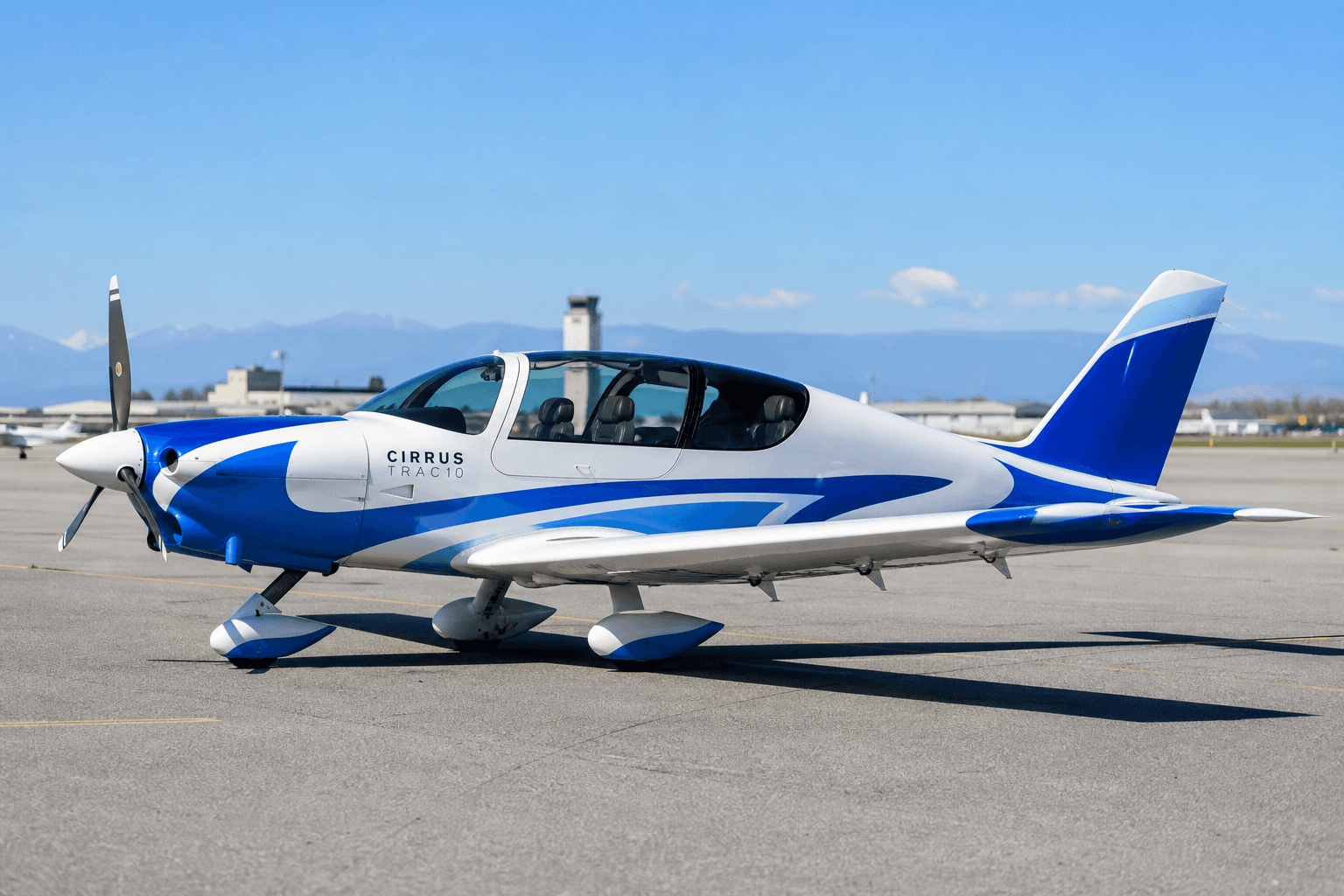
Cirrus Launches TRAC10, a Three-Seat Turboprop Trainer Focused on Flight School Needs
Cirrus announced July 6 the forthcoming arrival of a three-seat trainer with a Rotax engine and a mission to fill flight school lines with what Pat Waddick, president of innovation and operations, called a "complete reimagining of the modern training aircraft."
The Daily Touch & Go
The day's best aviation news in your inbox. Free, no spam.