


Snowbirds Perform at Barrie Airshow Despite Low Cloud Disruptions
The annual Barrie Airshow in Ontario featured the Canadian Forces Snowbirds flying over Kempenfelt Bay despite weather-related schedule changes, including no parachute jumpers.
The gist
The Snowbirds dazzled at the Barrie Airshow even as low clouds caused performance adjustments.
Each summer, aviation enthusiasts gather at the Barrie Airshow in Ontario to witness a variety of impressive aerial displays. This year's event was held along the scenic shores of Kempenfelt Bay, part of Lake Simcoe, attracting local crowds eager to see military and civilian aircraft performances. Among the highlights was the acclaimed Canadian Forces Snowbirds aerobatic team, known for their precise flying and dramatic formations.
However, inclement weather influenced the flow of the program. The presence of low cloud cover created challenges for the pilots and organizers alike, resulting in adjustments to the planned schedule. Notably, the usual opening act involving parachute jumpers was canceled due to the safety risks posed by limited visibility and cloud height. This change impacted the traditional rhythm and excitement at the start of the show.
Despite these weather hurdles, the Snowbirds took to the skies and delivered a captivating demonstration of their skills. The team performed multiple passes and coordinated maneuvers above Kempenfelt Bay, thrilling spectators with their signature smoke trails and synchronized flight patterns. The performance underscored the Snowbirds' adaptability and commitment to maintaining safety while engaging the public.
The Barrie Airshow has become an annual highlight in Ontario's aviation calendar, showcasing a range of aircraft from historic warbirds to modern military jets. The event typically draws aviation fans and families to the lakeside setting, offering entertainment from ground exhibits and static displays in addition to aerial acts. This year, the presence of the Snowbirds was a significant draw, reinforcing their role as ambassadors of Canadian military aviation.
Organizers had anticipated the parachute jumpers to provide a dramatic introduction, but the weather constraints meant that safety protocols took precedence. The decision to omit this element of the show reflects ongoing attentiveness to operational risks in public aviation events. Fans adapted to the change with enthusiasm for the subsequent performances, particularly the Snowbirds' showcase.
Photographs and video footage from the event capture the variety of aircraft seen and the energy of the audience despite the weather. These elements contribute to the enduring appeal of the Barrie Airshow as a venue that celebrates aviation culture and community, blending excitement with safe practice.
Looking at the broader picture, the Barrie Airshow exemplifies the challenges air show organizers face when balancing spectacle with meteorological realities in an outdoor environment. The event persists as a platform to inspire interest in aviation and honor skilled military pilots like the Snowbirds, who engage civilian audiences across Canada and beyond.
Plans for future shows will likely continue to integrate flexible scheduling to accommodate weather constraints, preserving the safety of performers and spectators alike. Meanwhile, aviation enthusiasts can appreciate the Barrie Airshow's ability to deliver impressive flying displays, including the hallmark Snowbirds performance, even when conditions are less than ideal.
Read more
All Military/Defense →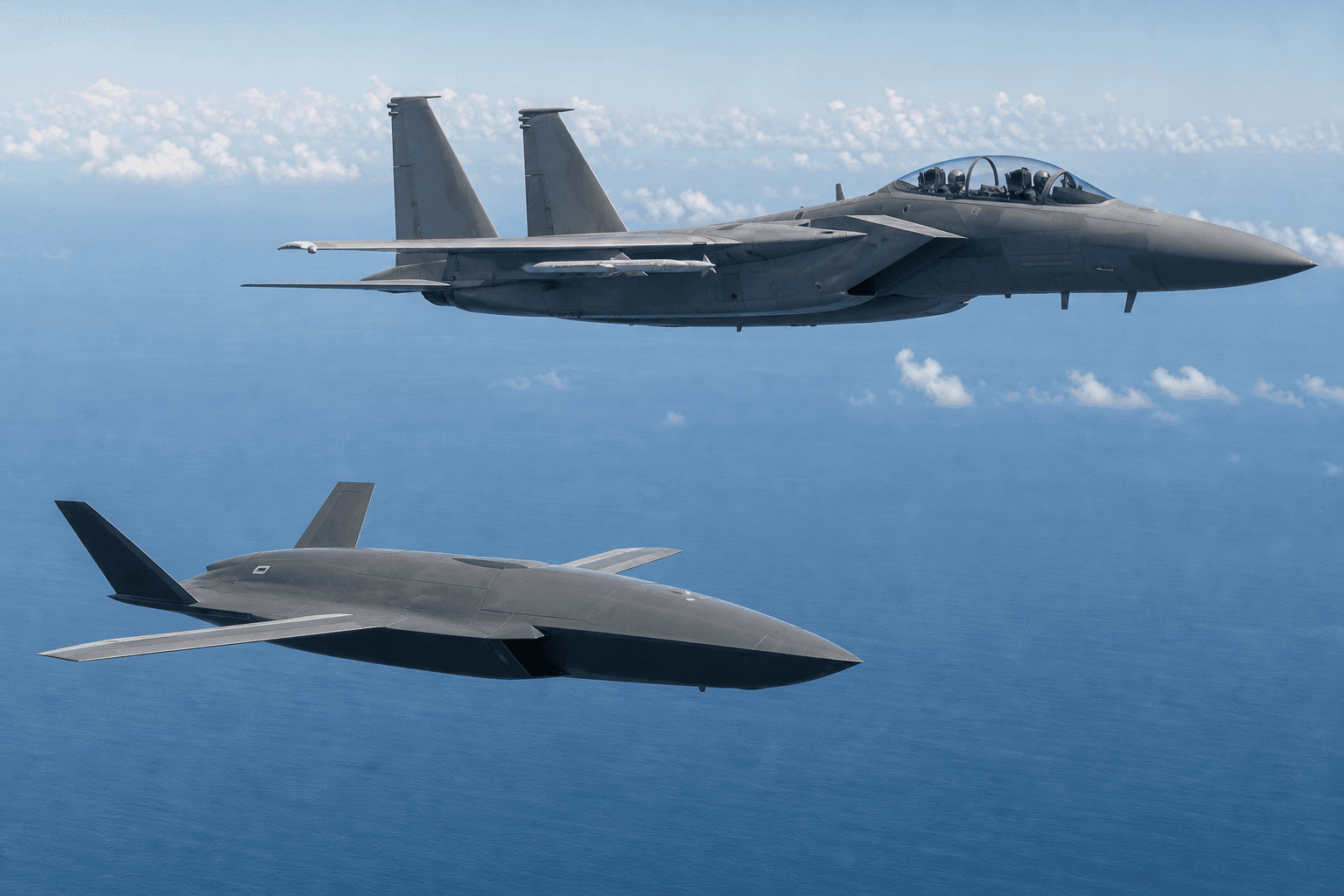
Boeing's MQ-28 Ghost Bat Joins US Air Force in Landmark Indo-Pacific Exercise
- MQ-28 Ghost Bat is first collaborative combat aircraft (CCA) to be integrated into multinational, joint force Exercise Valiant Shield 2026
China's Datangshan Aviation Museum Closes for Major Relocation to Changchun
For years, the China Aviation Museum at Datangshan, on the northern outskirts of Beijing, ranked among the world’s greatest destinations for aviation enthusiasts. Home to hundreds of military and civil aircraft, it was a museum unlike any other, combining an extraordinary outdoor collection with a vast underground hangar carved into the side of a mountain. Sadly, however, visitors hoping to experience this remarkable museum will have to wait. The museum closed in late 2025, with its priceless collection now being relocated to a new site, meaning one of aviation’s great pilgrimage destinations is temporarily no more. One of the World’s Greatest Aviation Museums Opened in 1989 to mark the 40th anniversary of the People’s Liberation Army Air Force (PLAAF), the China Aviation Museum quickly became the country’s national aviation museum and one of the largest collections of aircraft anywhere in the world. Located on the site of the former Shahezhen Air Base, around 40km (25 miles) north of central Beijing, the museum occupied more than 700,000 square metres and displayed well over 300 aircraft representing the history of Chinese military and civil aviation. Perhaps its most distinctive feature was the enormous underground exhibition hall. Originally constructed as a hardened aircraft shelter during the Cold War, this huge tunnel bored deep into Datangshan Mountain became home to dozens of historic aircraft, creating one of the most unique museum settings anywhere in the world. Outside, visitors could spend hours wandering among rows of fighters, bombers, transports and helicopters representing almost every type ever flown by the Chinese Air Force. A Treasure Trove for Airliner Enthusiasts Former Orbis DC-8 at Datangshan. Photo: Peter Garwood Although much of the museum focused on military aviation, Datangshan held an equally fascinating collection of classic airliners. Many had once flown with the Civil Aviation Administration of China (CAAC), the state airline that eventually evolved into today’s Chinese airline industry. Others had been acquired from overseas operators or preserved because of their historical importance. Among the highlights were: Hawker Siddeley Trident British Aerospace BAe 146 Douglas DC-8 (formerly operated by ORBIS International) Airbus A310 Vickers Viscount Tupolev Tu-124 Ilyushin Il-18 (including Chairman Mao Zedong’s former VIP aircraft) Lisunov Li-2 Antonov An-24 Convair 240 For enthusiasts interested in classic jetliners, this was one of the few places in the world where British, Soviet, American and Chinese aircraft stood side by side. Alongside these were dozens of rare military aircraft, including early MiGs, indigenous Chinese fighters, experimental prototypes and aircraft captured or obtained from countries around the world. The collection also featured everything from a Lockheed F-104 Starfighter and Northrop F-5 to a Martin RB-57D Canberra and even a Lockheed D-21 reconnaissance drone. Why Has the Museum Closed? A line-up of Migs. Photo: allen In October 2025, the museum closed to visitors as preparations began to relocate the collection. Although no detailed official public announcement has been issued explaining the full plans, multiple aviation and travel sources report that much, if not all, of the collection is expected to move to a brand-new aviation museum in Changchun, in Jilin Province, northeastern China. The relocation is believed to be one of the largest museum moves ever undertaken in the aviation world. Moving more than 300 historic aircraft is an enormous logistical undertaking. Many of the exhibits are too large to transport by road without extensive dismantling, while others are unique or fragile museum pieces requiring specialist conservation work. When Will It Reopen? At the time of writing, the new museum has not yet opened. Reports from visitors and aviation museums monitoring the relocation suggest that the new facility is unlikely to welcome visitors before mid-2027 at the earliest. While work is believed to be progressing, no confirmed opening date has been announced publicly. This means anyone planning an aviation-focused trip to Beijing should be aware that Datangshan is currently unavailable, despite older travel guides and websites continuing to list normal opening hours. A Museum Worth Waiting For Curtiss-Wright C-46. Photo: Erwin Although its closure is disappointing, there is every reason to be optimistic. The Datangshan museum had become increasingly difficult to maintain, particularly its enormous outdoor displays, and relocating the collection offers the opportunity to conserve many historically important aircraft while presenting them in a more modern setting. For enthusiasts, the hope is that the new museum will preserve not only China’s remarkable military aviation heritage but also its unique collection of classic Western airliners—aircraft such as the Trident, BAe 146, DC-8, Airbus A310 and Vickers Viscount that are becoming increasingly rare elsewhere in the world. Until then, the China Aviation Museum remains one of aviation’s great “missing” museums. It may be closed, but its remarkable collection still promises to become one of the world’s essential destinations for aircraft enthusiasts once its new home finally opens its doors.
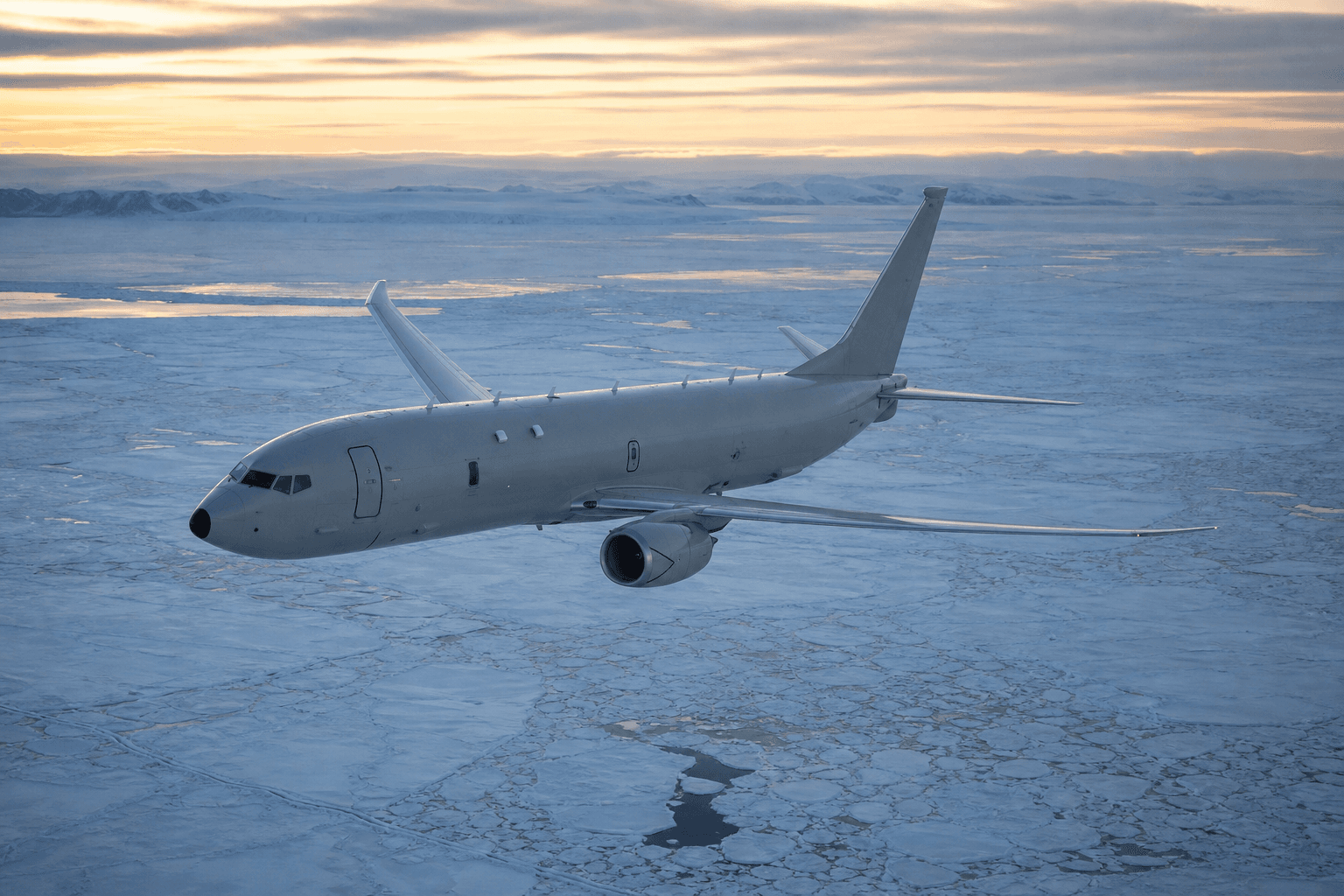
Denmark to acquire Boeing P-8A Poseidon aircraft and join NATO MQ-4C Triton drone purchase
Denmark announced plans to acquire two Boeing P-8A Poseidon maritime patrol aircraft on July 7, 2026, in a decision aimed at strengthening "surveillance and sovereignty enforcement" in the Arctic and North Atlantic. The announcement was made on the same day Denmark joined three other NATO allies in launching the purchase of up to five Northrop Grumman MQ-4C Triton uncrewed surveillance aircraft for the alliance. Two Poseidons for the Arctic and North Atlantic The Danish Ministry of Defense said a preliminary decision had been made to acquire two P-8A Poseidon aircraft, following a recommendation from the country's Chief of Defence. The acquisition falls under Sub-agreement 2 on the Arctic and North Atlantic of Denmark's 2024-2033 defense agreement, which called for building a maritime patrol aircraft capability in cooperation with a NATO ally. (Credit: Boeing) "With maritime patrol aircraft, Denmark's ability to enforce sovereignty and conduct surveillance in the region is strengthened markedly," Danish Defense Minister Jeppe Bruus said, adding that the purchase was "a clear signal that we take our shared task in NATO seriously." Chief of Defence General Michael Wiggers Hyldgaard said Denmark must be able to defend all parts of the kingdom, including the Arctic and North Atlantic, and pointed to the country's obligation to deliver on NATO capability targets for anti-submarine warfare. The Danish Defence Command has begun exploring cooperation options with NATO allies, which could include a joint unit based at a shared air station covering acquisition, implementation, operations, maintenance and training. Norway, which operates five P-8As from Evenes Air Station, is seen as the most natural partner. The decision follows the US State Department's approval, on December 29, 2025, of a possible sale of up to three P-8A Poseidons to Denmark in a package valued at an estimated $1.8 billion. The P-8A, a militarized derivative of the Boeing 737-800, is equipped for anti-submarine and anti-surface warfare and can carry torpedoes, mines, depth charges and anti-ship missiles. It is operated by, among others, the US Navy, the United Kingdom, Norway, Australia and Germany. Denmark also joins NATO Triton buy (Credit: Northrop Grumman) Denmark, Finland, Germany and Norway also announced the procurement of up to five MQ-4C Triton high-altitude, long-endurance uncrewed aircraft at the NATO Summit Defence Industry Forum in Ankara, Turkey. The aircraft will enhance NATO's own Intelligence, Surveillance and Reconnaissance (ISR) Force and complement the alliance's existing Alliance Ground Surveillance (AGS) fleet of RQ-4D Phoenix drones, which operates from Sigonella Air Base in Italy. Designed for maritime surveillance, the Triton can sustain 24-hour flights at altitudes above 15 kilometers. According to NATO, the type's long-range sensors will improve the allies' ability to detect threats early, protect sea lines of communication, and support operations in demanding regions such as the Arctic and the High North. For Denmark, the Triton commitment complements the P-8A acquisition, as the two platforms were designed to operate as a team. The US Navy pairs the uncrewed aircraft with its Poseidon fleet under its Maritime Patrol and Reconnaissance Force, a model also adopted by Australia, which received its first Triton in 2024 . A transatlantic industrial consortium is being formed to deliver the capability. While Northrop Grumman will build the aircraft, Airbus Defence and Space and other European companies will provide the ground segment, data management services, command and control, infrastructure and mission support. The two announcements came as NATO was also expected to confirm the selection of the Saab GlobalEye as the replacement for its E-3A Sentry AWACS fleet during the Ankara summit, held on July 7 and 8, 2026.
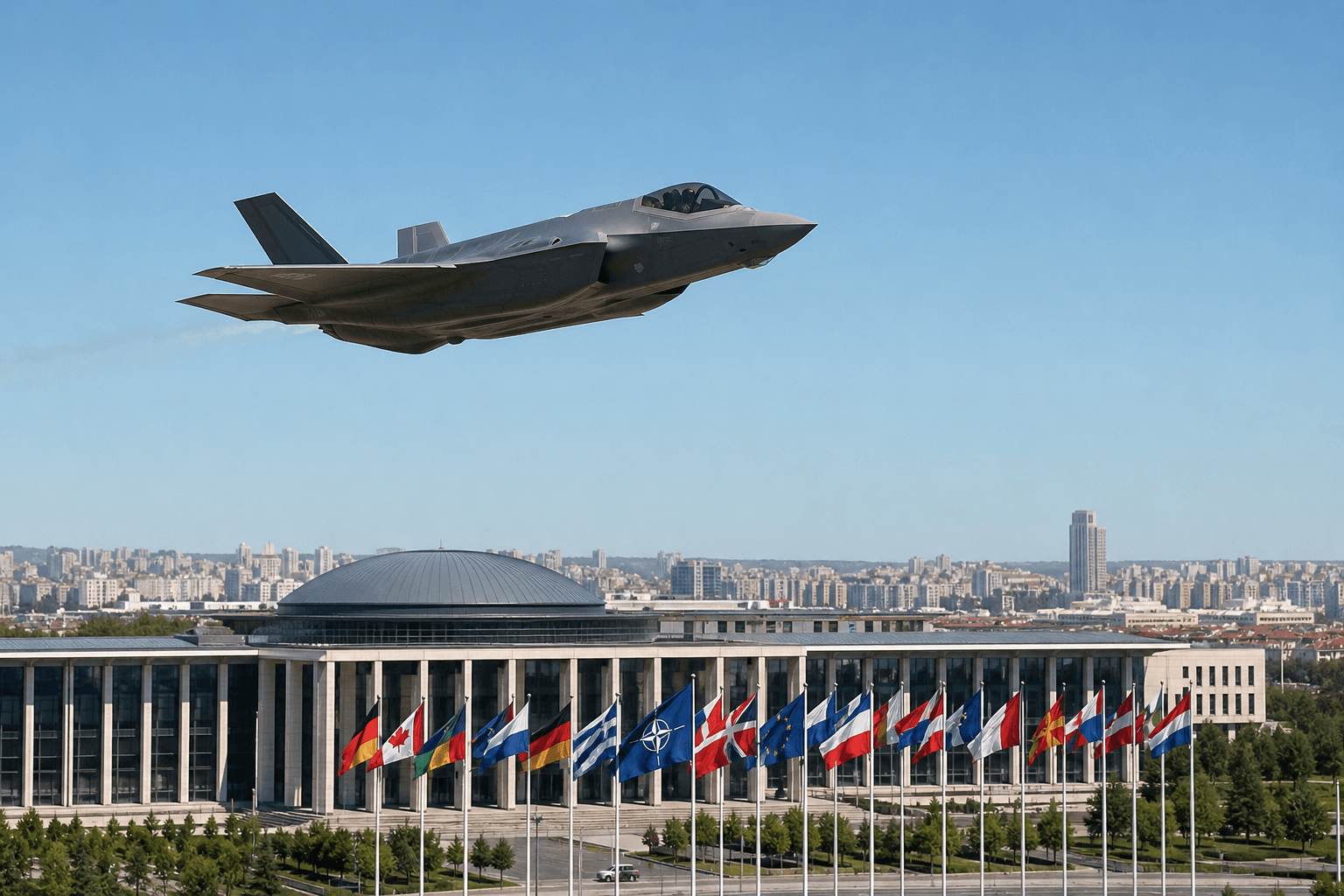
Trump signals lifting Turkey sanctions and reconsiders F-35 sales amid S-400 dispute
US President Donald Trump said he will lift sanctions on Turkey and make a decision on selling the country F-35 fighter jets, a step that could move Ankara closer to regaining access to the stealth fighter program it was removed from in 2019. One possible solution under discussion would involve Turkey sending its Russian-made S-400 air defense system to a third country, but no deal has been reached. Trump made the comments on July 7, 2026, as he met Turkish President Recep Tayyip Erdogan during a NATO summit in Ankara. "We're going to be taking the sanctions off," Trump told reporters when asked about the measures imposed under the Countering America's Adversaries Through Sanctions Act. Trump also said he would make a decision on a possible F-35 sale to Turkey. "It's a decision we're going to make," Trump said, according to Reuters . The comments mark one of the clearest signs yet that the Trump administration wants to move Turkey back toward the F-35 after years of US opposition. But the aircraft still cannot be transferred to Turkey while Ankara keeps the S-400 system. Turkey was removed from the Lockheed Martin F-35 program in 2019 after it bought the S-400 from Russia. The US said the Russian system created an unacceptable security risk because it could expose sensitive F-35 capabilities, including the aircraft's stealth characteristics. Washington imposed CAATSA sanctions on Turkey in 2020 over the S-400 purchase. The US Congress also passed restrictions in the Fiscal Year 2020 National Defense Authorization Act that block F-35 transfers to Turkey unless the US government certifies that Turkey no longer possesses the S-400 system Reuters reported that transferring the S-400 to a third country has gained traction as a possible way to resolve the issue. But such a transfer could face resistance from Russia, which often places end-user restrictions on major arms exports. Turkey had been a partner in the F-35 program before its removal and had planned to buy the aircraft for its air force. Turkish companies also made components for the aircraft before Washington moved to unwind Ankara's role. A bipartisan group of US lawmakers has urged congressional leaders to block any F-35 sale to Turkey while the country still holds the S-400. Lawmakers have argued that Turkey's possession of the Russian system remains incompatible with receiving the US-made stealth fighter. Israel has also raised concerns about a possible F-35 sale to Turkey, according to Axios. Israel operates the F-35I Adir and has long sought to preserve its military edge in the region. While Ankara has spent years trying to regain access to the F-35, Turkey has also moved ahead with plans to buy Eurofighter Typhoons and is developing the Turkish Aerospace KAAN, its own domestic fifth-generation fighter program. The Trump administration recently moved forward with a proposed $700 million sale of General Electric F110 engines to Turkey for the KAAN program. That sale signaled a broader effort to improve defense ties with Ankara ahead of the NATO summit.
The Daily Touch & Go
The day's best aviation news in your inbox. Free, no spam.