

Illustration: The Touch & Go
Secret Service Warned Trump Against Flying New Air Force One Over Defense Gaps
Security officials reportedly advised former President Trump to avoid the newly retrofitted Air Force One due to missing critical defense systems during overseas travel.
The gist
The new Air Force One lacks full defense upgrades, prompting Secret Service to urge Trump to use older jets for secure overseas flights.
Continuing coverage
All Air Force One →- Trump's Interim Boeing 747-8 Air Force One Flies First International Mission to Turkey NATO Summit
- Trump Flies Older Air Force One to U.K., Sidelines New VC-25B Bridge Aircraft Temporarily
- EAA AirVenture Oshkosh 2026 to Showcase Cutting-Edge Aviation Technology and Historic Warbirds
- Trump's $400M Qatari-Gifted Boeing 747-8 Faces Uncertain Future at Miami Presidential Library
- VC-25A Air Force One Retires After 35 Years as New 747-8 'Bridge' Model Prepares for Service
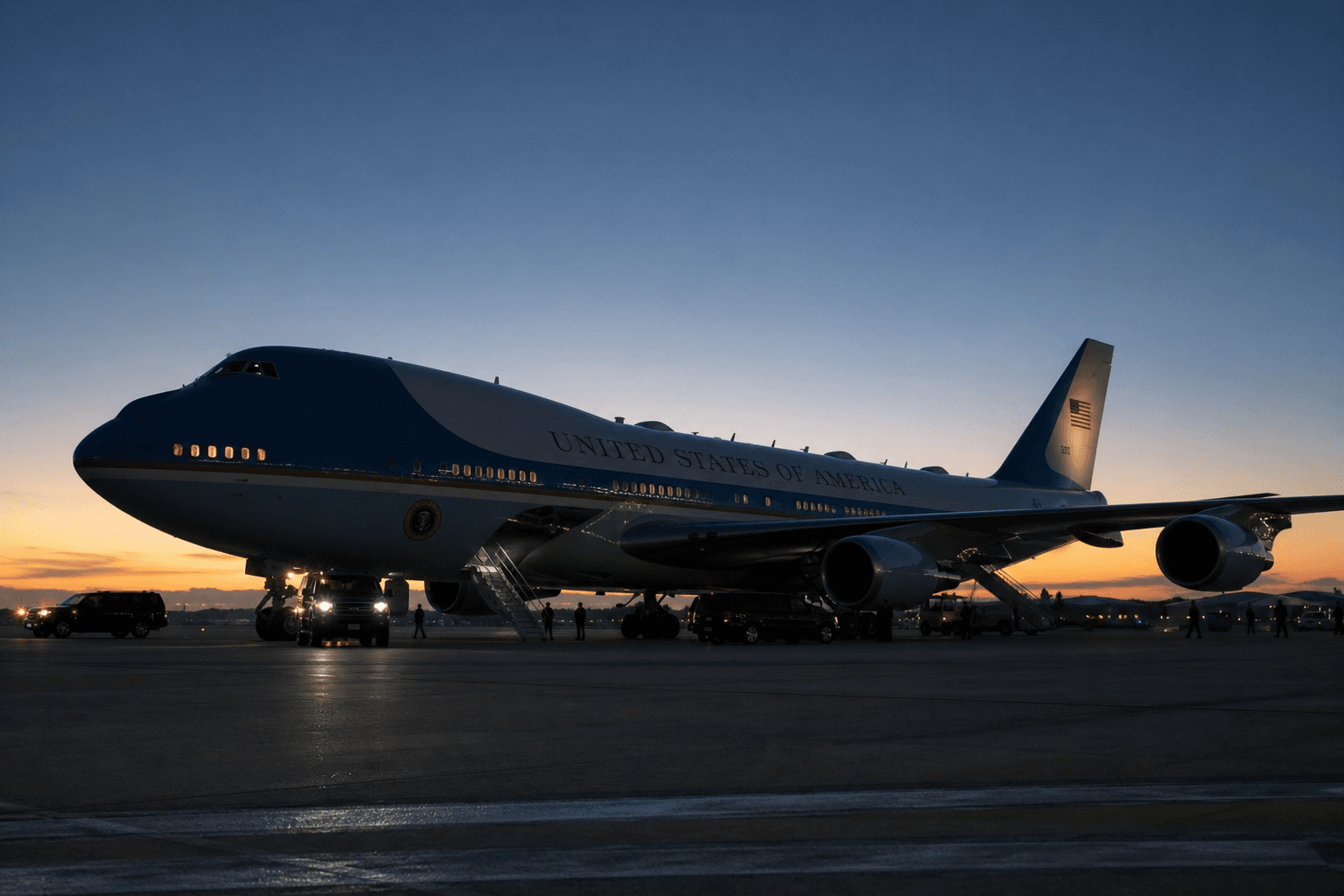
Former President Donald Trump reportedly faced internal security concerns over his newly acquired Air Force One aircraft earlier this week. Sources indicate that the Secret Service urged him to board one of the original VC-25A Boeing 747s instead of the recently retrofitted ex-Qatari 747-8 during his return leg from the NATO summit in Turkey. Trump publicly cited nostalgic reasons for switching planes, but officials have disclosed that protection gaps played a significant role in the decision.
The new aircraft, referred to as the VC-25B bridge, was gifted by the Qatari government last year and subsequently converted for presidential service. Despite this, it did not initially meet the U.S. Air Force's stringent security criteria for presidential transport. An extensive retrofit led by L3Harris and overseen by the Air Force aimed to bring it up to standard, focusing on installing advanced technology and security layers.
However, multiple officials revealed the new VC-25B lacks some vital security modifications found on the original VC-25A planes, including advanced antimissile systems and essential counterdefense capabilities. These security deficits become especially critical when the aircraft operates in high-risk regions or conflict zones, putting not only the President but also accompanying administration members and journalists at increased risk.
After the NATO event, when the VC-25B visited RAF Mildenhall in the UK, Trump himself flew separately aboard an older VC-25A. He claimed the new plane’s presence was intended to allow military personnel to tour it, a statement that drew skepticism among experts and journalists familiar with the aircraft’s defense status. Analysts and former officials speculated that true reasons behind the plane swap were due to safety concerns amid rising tensions in the region.
The retrofit project began after the Defense Department accepted the plane in 2025, with estimates projecting up to four years and costs exceeding $1 billion to fully convert the 13-year-old airframe into a secure presidential transport. Time constraints and budget pressures, coupled with Boeing’s delays on the official Air Force One replacements, likely contributed to a less comprehensive upgrade than initially envisioned.
Transparency on security upgrades has been limited. Lawmakers including Senator Tammy Duckworth expressed apprehension that the rush to complete the airplane overhaul might have sacrificed operational security. Meanwhile, Air Force representatives acknowledged that some security and communication features common to the VC-25A were omitted or traded off during the retrofit, but would not discuss details publicly.
White House Communications Director Steven Cheung defended the new Air Force One’s safety, stating it is equipped with state-of-the-art security protocols to protect the President and his staff from threats. Nonetheless, commentators like former Air Force Secretary Frank Kendall admitted there wasn’t sufficient time to fully equip the aircraft with the established defense systems, and he voiced surprise at its use in overseas environments without full capability.
This episode highlights the complexities involved in updating vital presidential transport infrastructure under political and schedule pressures. The incomplete retrofit of the VC-25B underscores ongoing challenges faced by the Department of Defense and the White House in ensuring the unparalleled security requirements of Air Force One are maintained without compromise.
Frequently asked questions
- Why did the Secret Service advise Trump to avoid the new Air Force One during his trip?
- The Secret Service reportedly warned that the new Air Force One lacked critical defense systems that the original VC-25A jets possess, raising security concerns for overseas flights.
- What defense systems are missing from the new Air Force One compared to the original jets?
- The new VC-25B aircraft lacks advanced antimissile capabilities and other vital security modifications installed on the original VC-25A Air Force One airplanes.
- Who was responsible for retrofitting the ex-Qatari 747-8 into the new Air Force One?
- The retrofit was performed by L3Harris and supervised by the U.S. Air Force after the Defense Department accepted the aircraft last year.
Read more
All Military/Defense →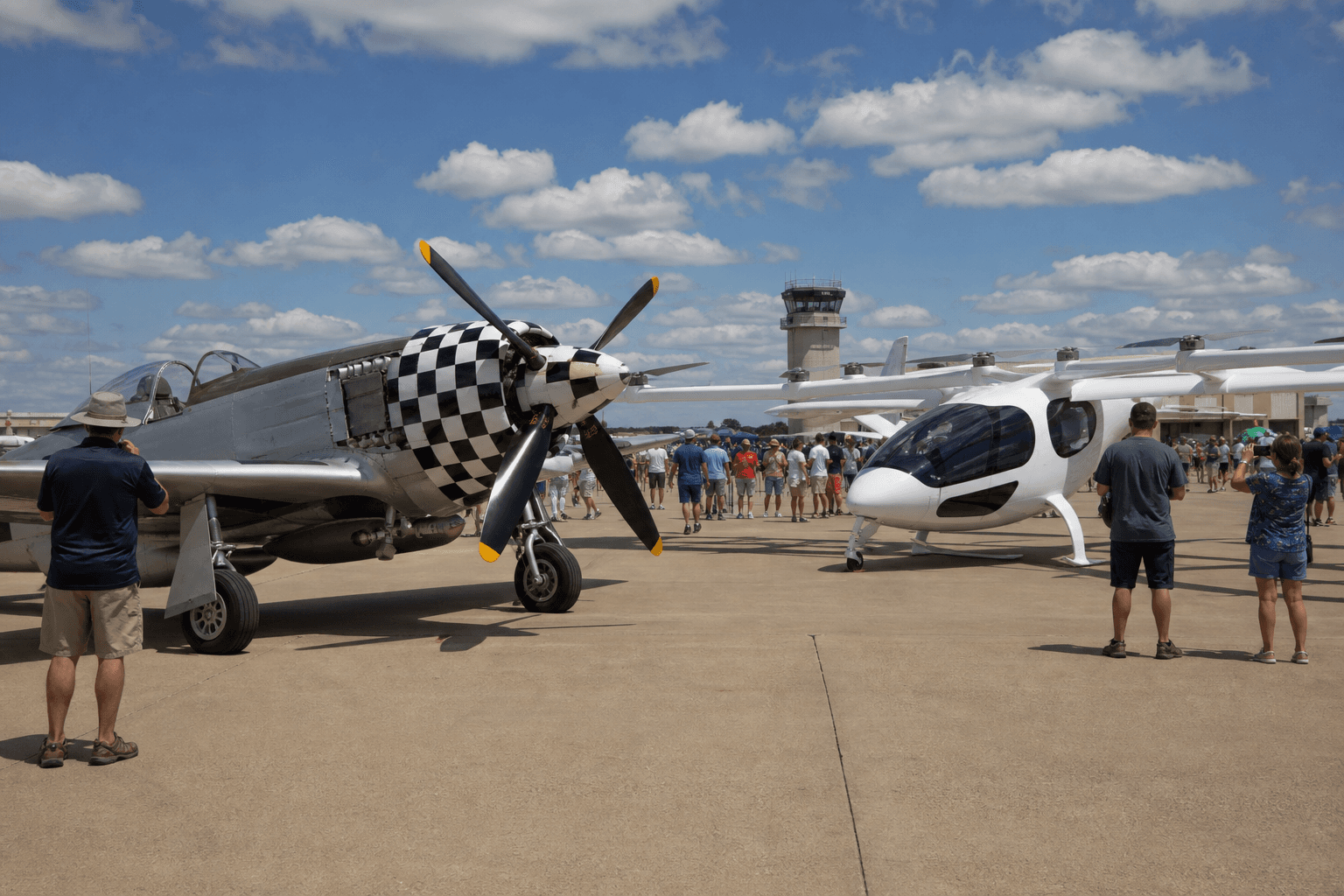
EAA AirVenture Oshkosh 2026 to Showcase Cutting-Edge Aviation Technology and Historic Warbirds
What to expect at EAA AirVenture Oshkosh 2026 and an interview with the Manager of Onsite Learning at the Smithsonian's National Air & Space Museum. Also, how L3Harris converted the Qatari-gifted 747 into Air Force One, the Cirrus TRAC10, window seat lawsuits, a rule change to allow supersonic flight over the United States, and an update on Boom Supersonic's strategy for its self-developed Symphony engine. Image by Linda and Lily. Guest Dick Knapinski is Director of Communications for the Experimental Aircraft Association ( EAA ). He has served in that capacity since 2010 and has been with the organization since 1992. Dick serves as the liaison between the media and EAA throughout the year, particularly during EAA AirVenture Oshkosh , the world’s largest fly-in convention. The event runs July 20-26, 2026. Dick Knapinski Boeing Plaza will be packed with aircraft to celebrate the aviation technology theme. Currently planned innovation displays for July 21 include BETA Technologies, Bye Aerospace, Jetson, American Drone, MagniX, Zipline, Embry-Riddle Aeronautical University, Airhart Aeronautics, Merlin Labs, Amazon Delivery, and Starlight Productions. In addition to the displays on Boeing Plaza, Bye Aerospace, Jetson, BETA Technologies, American Drone, and ScaleWings plan to fly during the afternoon air show. Drone delivery company Wing will display the latest developments in its operations at Twilight Flight Fest. Learn more about the AirVenture Airshows and performers , Aircraft Anniversaries & Gatherings , Authors Corner , AviationTech , KidVenture , and the Fly-In Theater . Rare warbird static/flying displays will include the B-29 “Doc,” as well as a rare Consolidated PB4Y and the CAF’s B-24 Liberator on static display at Boeing Plaza. Vicky Benzing will fly her P-51 “Plum Crazy,” and Bernie Vasquez will demo a Republic P-47 Thunderbolt in afternoon shows. The Aviation Gateway Park will spotlight helicopters, advanced vertical lift platforms, and eVTOL aircraft through static displays and interactive exhibits. Before joining EAA, Dick built a broadcasting career in Wisconsin, including stints as Program Director at WNBI Radio, News Director at WMGV Radio, and Station Manager at WLFM-FM/Wisconsin Public Radio. He also spent years as a sportswriter for the Appleton Post-Crescent. Dick holds a private pilot certificate and remains active as a writer and spokesperson for EAA. Aviation News How was the new Air Force One prepared for flight? The two permanent VC-25 replacements were selected in 2015, and the $3.9 billion fixed-price contract was signed in February 2018. Boeing began physical refurbishment work in February 2020 on two 747-8I airframes originally built for the bankrupt Russian carrier Transaero. Boeing has already reported $2.5 billion in losses on the program. The current delivery target for the first jet is between 2027 and 2028, with the second jet to follow later. The ex-Qatari 747-8 “bridge” aircraft was gifted to the U.S. Air Force in May 2025 and entered service on July 1, 2026. L3Harris did the conversion in about 10 months. The quick conversion was accomplished due to several factors: Pre-staged employees operated on a 24/7, three-shift structure. (Boeing has worked a normal single-shift industrial pace, with no incentive to surge, staff once costs started ballooning.) The bridge aircraft came with a luxury interior. (Boeing's jets had incomplete interiors – basically shells.) Missing VC-25 elements. Reports (unconfirmed by the government) include no evidence of defensive countermeasures and a lack of EMP hardening. L3Harris didn’t out-engineer Boeing. They ran a 24/7 surge crew on a plane that already had a finished VIP interior, targeted a much narrower requirement (“executive airlift” vs. full presidential command-post survivability), and the government has not been forthcoming about which hardened-aircraft features (EMP shielding, missile countermeasures, full secure comms suite) were omitted. See also: Trump wants the $400M Qatari-gifted new Air Force One to be the centerpiece of his presidential library. But there's a problem . Cirrus launches TRAC10, a new light aircraft for the flight training market Purpose-designed for flight schools and to be powered by a turbocharged Rotax 916 iSc FADEC engine, the plane has a three-seat interior, a Garmin flight deck, and the Cirrus Airframe Parachute System. Cirrus says they have 100 orders from 13 flight schools. United Airlines must face lawsuit over ‘window seats’ that lack windows Not every "window seat" has a window. Sometimes it has a wall. That's just the way it is. But last August, some passengers filed class actions against United Airlines and Delta Air Lines, claiming that the carriers failed to properly disclose the lack of a window during the booking process. United claimed that “window seat” described the seat’s location and did not contractually promise that the seat would, in fact, have a window. In San Francisco, U.S. District Judge James Donato rejected the airlines' request to dismiss the suit. New Rule Clears Way for Quiet Supersonic Flights By way of history: The FAA issued 14 CFR § 91.817 in April 1973, prohibiting civil aircraft from flying at speeds exceeding Mach 1 over land in the United States. The ban came as a result of early Air Force and NASA-controlled boom tests over cities, concerns over the Boeing 2707 SST program, and the impending arrival of the Concorde. NASA’s X-59 QueSST is flying specifically to gather community-response data on its “quiet boom” design. In a Notice of Proposed Rulemaking ( Proposed rule: Enabling Supersonic Overland Flight ), the FAA is looking to replace the blanket Mach-1 ban with a noise-based standard. Supersonic flight over land would be permitted if the boom signature falls under a certain loudness threshold. The NPRM states, "Manufacturers have demonstrated it is possible to fly supersonic aircraft without sonic booms reaching the surface by using sonic boom abatement techniques, making complete prohibition on civil supersonic flight outside of test areas no longer appropriate and an unnecessary restraint on the growth of the U.S. aviation sector." The NPRM shifts the regulatory trigger from speed to noise. Right now, § 91.817 just bans anything faster than Mach 1 over land. The proposed rule keeps that structure but adds an exception: an operator may exceed Mach 1 if it can demonstrate that the sonic boom’s overpressure at the surface does not exceed 0.11 pounds per square foot (psf). This NPRM only covers en-route/overland boom noise. A separate rule on takeoff/landing noise is expected later this year, with both rules targeted for finalization by mid-2027. The comment period ends August 17, 2026, at 11:59 PM EDT. Boom Supersonic Q2 2026 Update The FAA proposal to change from speed regulation to noise regulation is something Boom Supersonic and others have been seeking. In the Boom Supersonic Q2 2026 Update video, Blake Scholl reveals Boom's strategy for the Symphony engine. The company intends to market a variant of the engine for behind-the-meter power generation that AI companies can utilize for power. In large part, the engine OEMs wouldn’t develop an engine for the Overture because the huge development cost couldn’t be covered by the expected engine volume. So when Boom announced it was developing its own engine, the business case was unclear. But by focusing on the ground power generation market, Boom can spread development costs over a greater number of engines. Also, that revenue stream would generate cash flow for the Overture program. National Air and Space Museum Celebrates 50 Years With Opening of Five New Galleries Hillel attended the Smithsonian's National Air & Space Museum media preview of the opening of the five galleries. Last episode, we listene
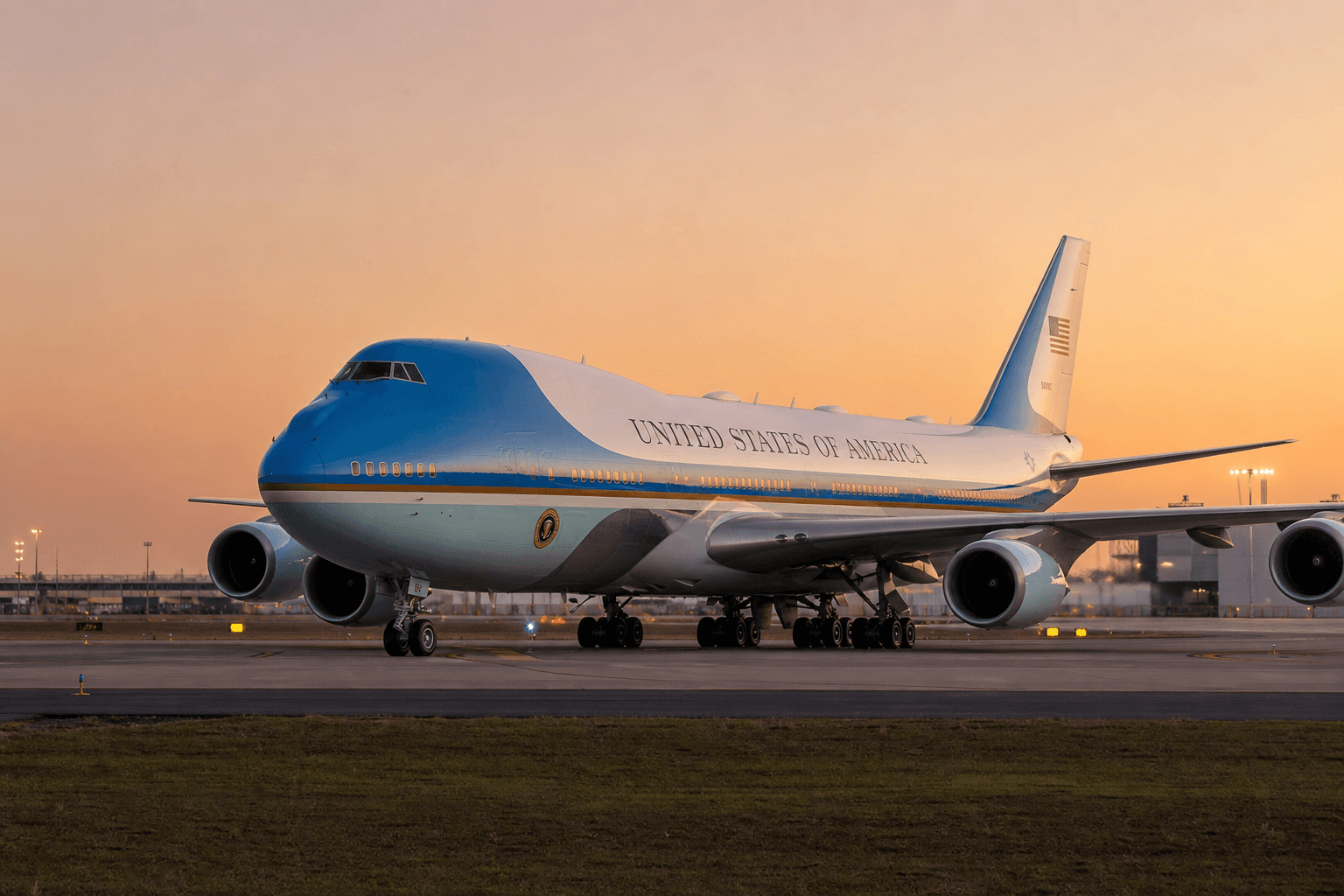
Trump's $400M Qatari-Gifted Boeing 747-8 Faces Uncertain Future at Miami Presidential Library
Trump's $400M Boeing 747-8 Air Force One faces legal, political, and logistical hurdles that could block its Miami presidential library future.
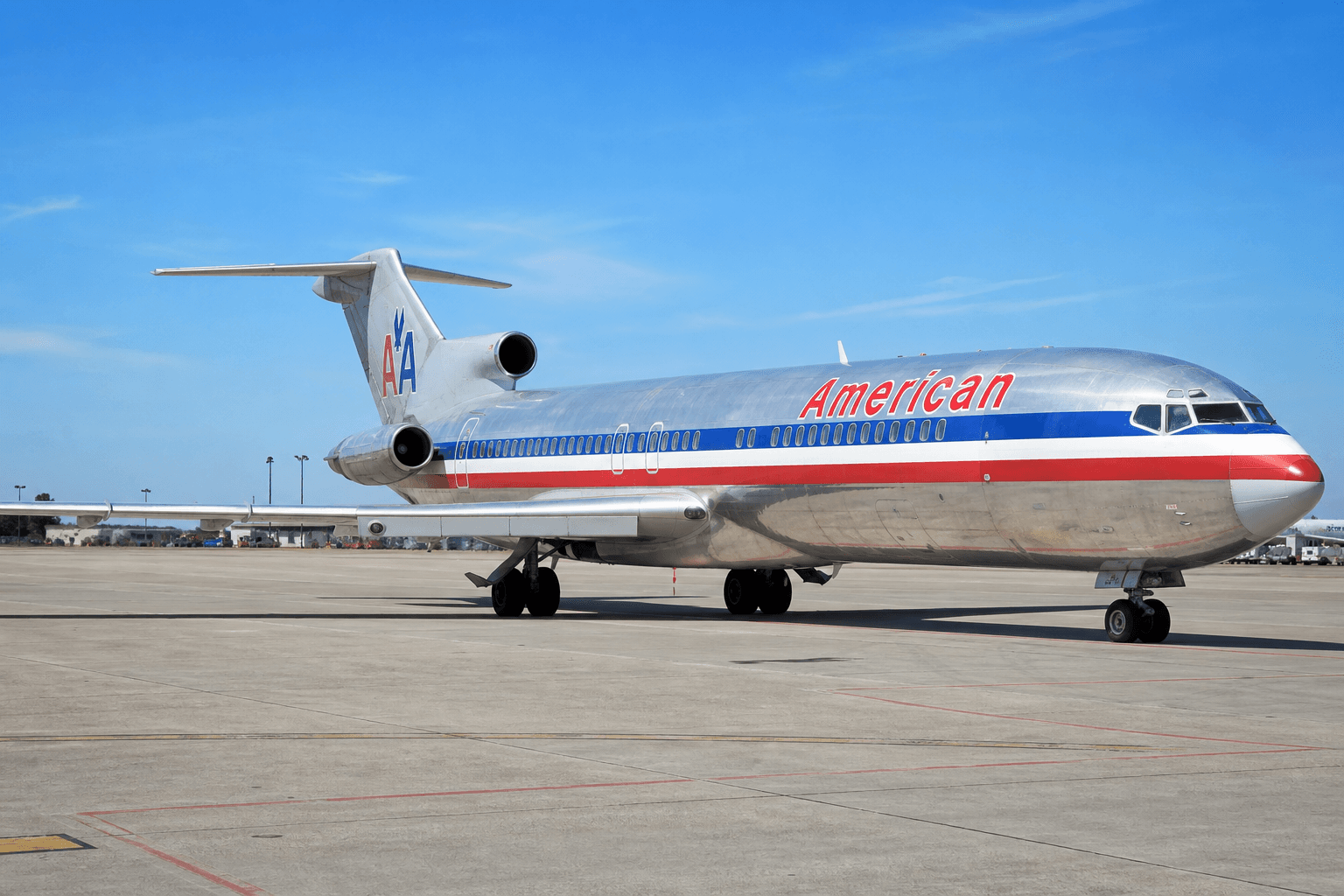
Only Around 30 Boeing 727 Jets Remain Operational Worldwide in 2026
This month we are taking an in-depth look at the Boeing 727 – its heritage, what made it so successful and unique, and what its legacy is today. To get the most out of this, make sure you check out our Airport Spotting Premium membership , which gives you access to so much more content. This month's member magazine is a Boeing 727 Special , featuring lots of articles on the aircraft and its life. Find out more about Premium Membership here Boeing’s Famous TriJet – the 727 RuthAS, CC BY 3.0 <https://creativecommons.org/licenses/by/3.0>, via Wikimedia Commons The Boeing 727 was one of the defining airliners of the Jet Age. Conceived during the early 1960s as a short- to medium-haul jet capable of serving smaller airports, it combined excellent runway performance with the speed and comfort of a pure jet. Its distinctive tri-jet layout, T-tail and built-in rear airstairs allowed it to operate from airports with limited infrastructure, making it particularly attractive to airlines expanding their domestic and regional networks. The prototype first flew in February 1963, entering airline service the following year with launch customers United Air Lines and Eastern Air Lines. Over a 22-year production run, Boeing built 1,832 examples, making the 727 the world’s best-selling jet airliner until it was overtaken by the Boeing 737. Major operators included American Airlines, Delta Air Lines, United Air Lines, Eastern Air Lines, Northwest, Braniff and Lufthansa, while hundreds more flew with carriers across Europe, Asia, Africa and Latin America. By the 1990s, however, the 727’s three-engine design had become its greatest disadvantage. New-generation twinjets such as the Boeing 737 and Airbus A320 offered lower fuel consumption, reduced maintenance costs and improved reliability, making the ageing trijet increasingly uneconomical. Most passenger examples were retired or converted into freighters before eventually giving way to newer cargo aircraft. Today, only a small number remain airworthy, serving specialist cargo, charter and government roles in a handful of countries. Active Boeing 727s Today Sadly very few Boeing 727s remain active today, and none are flying passengers on commercial flights. However, if you know where to look you can still catch the sight of one flying cargo or on other special missions. Here's a list of all known active Boeing 727s in 2026: Registration Con No Line No Model Series Operator Base 5Y-GMA 21930 1508 727 2Q9F Safe Air Company Nairobi-Wilson, Kenya 9S-AVN 22933 1827 727 2S2F Serve Air Cargo Kinshasa, Democratic Republic of Congo 9S-AVS 22931 1825 727 2S2FRE Serve Air Cargo Kinshasa, Democratic Republic of Congo 9S-AVV 22935 1829 727 2S2F Serve Air Cargo Kinshasa, Democratic Republic of Congo 9S-CDC 18934 0222 727 30 Government of Democratic Congo Kinshasa, Democratic Republic of Congo 9T-TCK 19806 0547 727 22C Democratic Republic of Congo Air Force Kinshasa, Democratic Republic of Congo 9T-TCR 22759 1789 727 260F Democratic Republic of Congo Air Force Kinshasa, Democratic Republic of Congo CX-CLC 22983 1806 727 264F Air Class Montevideo-Carrasco, Uruguay EX-27015 21459 1329 727 212F 3C Cargo Kenya? GN-403 22676 1754 727 264 Guardia Nacional de Mexico Mexico City, Mexico G-OSRA 22938 1832 727 2S2FRE 2Excel Aviation London Southend, UK G-OSRB 22929 1823 727 2S2FRE 2Excel Aviation London Southend, UK HK-5239 22460 1746 727 223F Aerosucre Colombia Bogota Eldorado, Colombia HP-1937UCG 21345 1673 727 2A1F Uni World Air Cargo San Bernardino/Norton International, CA HP-1939UCG 22552 1773 727 225F Uni World Air Cargo Panama City-Tocumen, Panama HZ-SKI 21460 1340 727 212RE Precision Air Riyadh-King Khaled Int’l, Saudi Arabia N215WE 22936 1830 727 2S2FRE IFL Group Inc Pontiac-Oakland County International, MI N216WE 22937 1831 727 2S2FRE IFL Group Inc Pontiac-Oakland County International, MI N289MT 22467 1765 727 223 Raytheon Aircraft Company Stored? N726US 22469 1769 727 223F USA Jet Airlines Detroit-Willow Run, MI N727US 22470 1771 727 223F USA Jet Airlines Detroit-Willow Run, MI VP-BAP 19260 0412 727 21RE Leasing Company Kingman, CA VQ-BNF 22825 1805 727 2N6RE Corporate Stored? XC-MPF 22664 1780 727 264 Guardia Nacional de Mexico Mexico City, Mexico XC-NPF 22663 1778 727 264 Guardia Nacional de Mexico Mexico City, Mexico Oldest Surviving 727 Thankfully the Boeing 727 prototype still survives. You can find it at the Museum of Flight at Seattle’s Boeing Field, preserved in the colours of United Airlines, which flew it for many years. Download Our Boeing 727 Special Featuring many articles on the Boeing 727, our July edition includes a look at its development, the American Airlines 727 fleet, the story of how a 727 flew to downtown Chicago for preservation, 2Excel's oil dispersant 727 fleet, and the surviving FedEx 727s, it's a wonderful collector's item for the enthusiast. Available exclusively to Airport Spotting Premium Members. You can join today from as little as £5 per month. Join Here

Soviet-era carrier Kiev becomes Chinese naval museum and stunt show venue
Quietly nestled away in a bay on the outskirts of Beijing is a relic of the furious Cold War arms race now repurposed as a tourist destination. Serving as a kind of seaside resort and naval aviation museum wrapped in the same package, the former Soviet aircraft carrier Kiev offers guest rooms where visitors can stay overnight and even has jet ski shows with a theme akin to the post-apocalyptic 'Waterworld' movie.
The Daily Touch & Go
The day's best aviation news in your inbox. Free, no spam.