

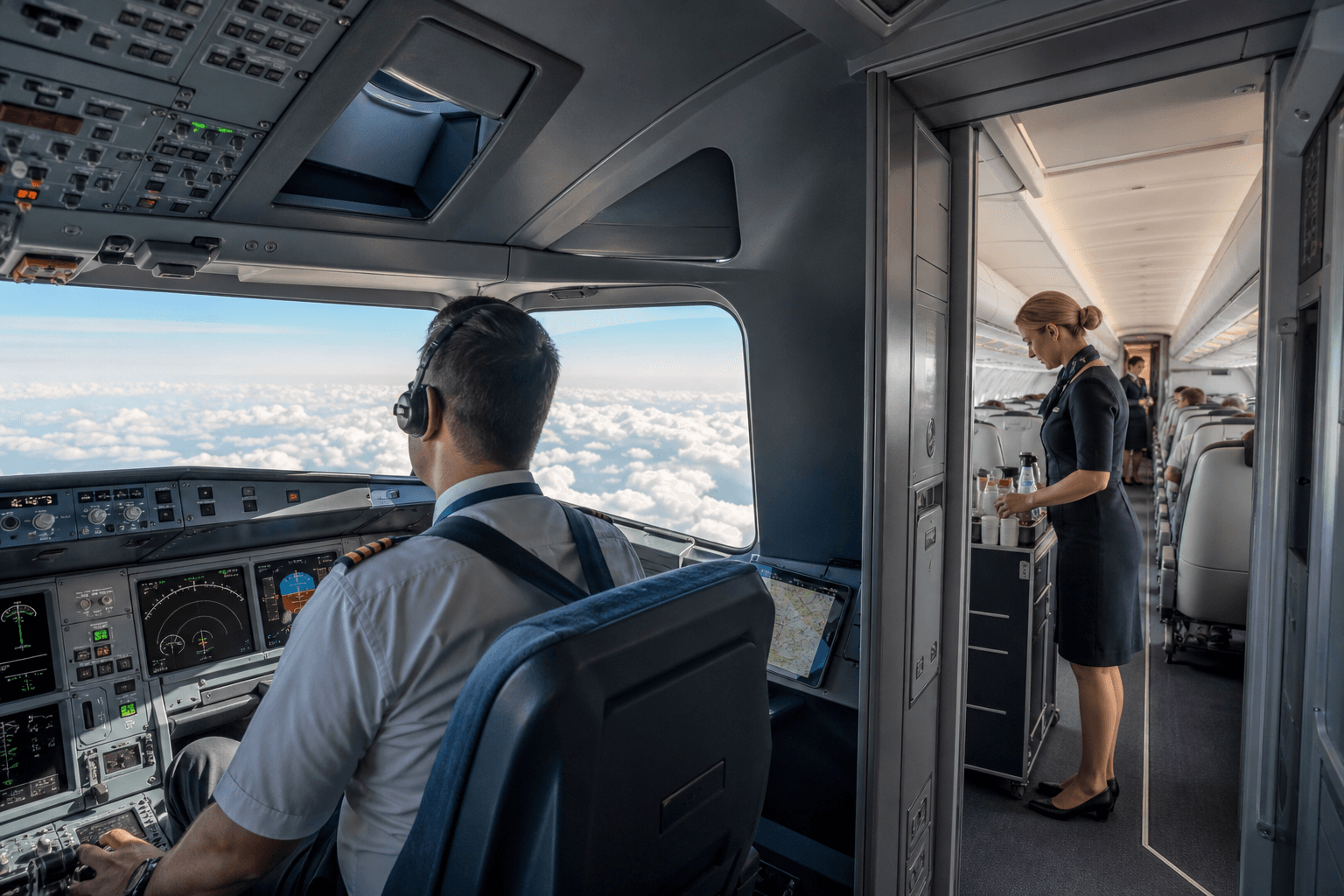
Illustration: The Touch & Go
FAA proposes to block state meal and rest break laws for airline crews
The FAA seeks to clarify that federal flightcrew duty and rest rules override state and local meal and rest break laws after court rulings allowed California flight attendants to sue airlines under state labor rules.
The gist
The FAA aims to preempt state meal and rest break laws for airline pilots and flight attendants to preserve consistent federal standards and operational safety.
Continuing coverage
All Flight Attendants →- FAA seeks to block state meal and rest break rules for flight crews nationwide
- Flight Attendant Numbers Determined by Safety Standards, Not Passenger Service
- Southwest Airlines Honors Two Flight Attendants on Its 55th Anniversary
- Flight Attendants Explore Diverse Career Paths Beyond Airlines
- Horizon Air Flight Attendants Authorize Strike Amid Contract Negotiation Deadlock
The Federal Aviation Administration (FAA) announced a proposed rulemaking on July 6, 2026, to prevent U.S. states and local governments from enforcing their own meal and rest break requirements on airline pilots and flight attendants. This move follows recent court cases in California where flight attendants successfully pursued claims against airlines based on state labor laws. The FAA is seeking to make clear that federal aviation regulations regarding crew duty and rest periods take precedence over any conflicting state or local labor laws.
The crux of the issue lies in whether airline flightcrew members should be subject to the same state labor mandates that apply to other workers for meal and rest breaks. Unlike typical employees, pilots and flight attendants must remain ready to perform safety-critical tasks at all times during their duty period, including when in-flight. Some state laws require workers to be completely relieved from duties during their breaks, a standard that the FAA argues is not always practical or safe for airline crew.
According to the FAA, this distinction justifies federal preemption of state and local break laws for airline crews. The agency explains that flight attendants and pilots must be available to handle emergencies, such as medical events, unruly passengers, evacuations, or other safety issues that can arise at any moment. Imposing strict state break requirements could compromise this readiness and affect the safe operation of flights.
The proposed rule would amend Parts 117 and 121 of the Federal Aviation Regulations, which govern flightcrew duty/rest limitations and domestic airline operations respectively. The FAA asserts that these regulations, alongside the Airline Deregulation Act of 1978, preempt state and local laws that significantly impact airline prices, routes, or services. The agency cites recent legal challenges, specifically the Bernstein v. Virgin America and Wilson v. SkyWest Airlines cases involving California-based flight attendants, as motivations for this clarification.
In the Bernstein case, flight attendants sued Virgin America for allegedly violating California’s meal and rest break laws. Virgin America argued federal law preempted state regulations, but the Ninth Circuit Court ruled in favor of the flight attendants. Similarly, in the Wilson case, a federal district court ruled that California’s break requirements applied to SkyWest Airlines flight attendants. These outcomes created uncertainty about the interplay of federal aviation regulations and state labor laws.
California, which mandates a 30-minute meal break for employees working over five hours and a second meal break after ten hours, is one of 21 jurisdictions with such requirements for private-sector workers. Seven states, including California, Colorado, and Washington, have both meal and rest break mandates. The FAA warns that applying varying state rules to airline crews could force airlines to alter operations, such as adding crew members, blocking passenger seats, or changing service, which could ultimately influence flight prices, routes, and schedules.
The FAA clarified that the proposed rule would not restrict airlines from allowing crew members to eat, drink, or use restrooms during duty periods. Instead, it would ensure that airlines maintain responsibility for managing these needs while keeping crews available for safety duties. The agency also noted that some flight attendants’ rest periods are covered under collective bargaining agreements or airline policies, with California revising its labor code in 2023 to exempt certain crews under such agreements from standard break requirements.
Public comments on the FAA’s proposed rule are open until September 4, 2026. This regulatory move is a critical step towards harmonizing airline crew labor standards under federal oversight, preserving operational consistency and safety across the nation’s airlines amidst differing state labor laws.
Read more
All Aviation Safety →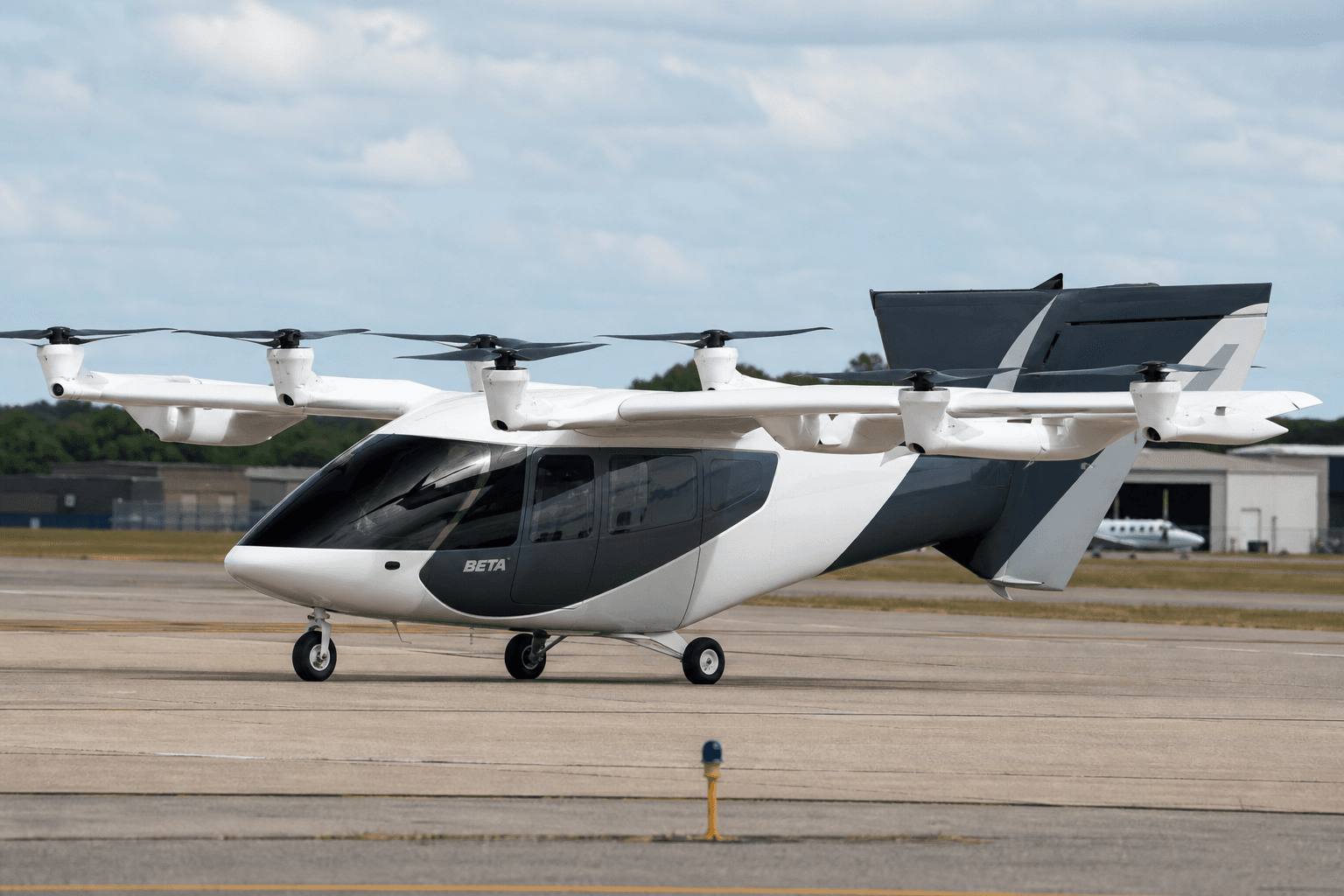
FAA and DOT Launch Multi-State Trials for Electric and Autonomous Aircraft Integration
The FAA and U.S. Transportation Department's (DOT) highly anticipated trials of precertified electric air taxis, autonomous cargo drones, and other novel aviation technologies—expected to span at least three years and 26 states —are officially underway. The first operational flights under the agencies' eVTOL (electric vertical takeoff and landing) Integration Pilot Program (eIPP) comprised deliveries of manufactured organs in Maryland and Virginia, conducted using Beta Technologies' all-electric Alia CX300 aircraft. Beta aims to certify and commercially launch the model—which has a demonstrated range of 337 nm and intended top speed of 153 knots—within the next few years. Beta said Friday that its Alia family of aircraft—which also includes the eVTOL A250—have flown more than 160,000 nm across the U.S., Europe, Japan, and New Zealand. Nearly all of that flying was conducted under the company's market survey ticket. But the eIPP will permit Beta and other manufacturers' precertified aircraft to conduct operations that were previously not allowed, potentially including cargo and passenger flights for revenue. The flights will also generate data on how these activities can be safely integrated alongside regular air traffic. The FAA is not funding them, but it could use those insights to create future requirements governing how the new entrants are certified and regulated. The FAA in March announced the eight lead eIPP participants, each led by a state or local transportation agency. After that, participants began negotiating with the agency toward other transaction agreements (OTAs) that set specific requirements, such as for data reporting and the number of flight hours and demonstrations required. A Beta spokesperson said the recent Alia campaign was conducted under one of these OTAs, which means the eIPP has officially begun. Kristen Costello, who leads government and regulatory affairs for Beta, told FLYING earlier this year that the eIPP will allow the company, which does much of its flying abroad, to become more familiar with the U.S. operating environment. It expects to generate operational data on a larger scale than it has been able to previously. "It's not, 'Does the airplane work?'" founder and CEO Kyle Clark told FLYING in April. "It's, 'Does the airplane work every single day in IMC, with real operational payloads? Charge at the right rate? Does the training work? Do the service and reliability meet the standards that our customers expect?'" First eIPP Flights Beta said the inaugural campaign covered about 275 nm and comprised "routine operations" between four airports—Virginia Tech/Montgomery Executive Airport (KBCB) in Blacksburg; Charlottesville-Albemarle Airport (KCHO) in Virginia; Frederick Municipal Airport (KFDK) in Maryland; and Martin State Airport (KMTN) in Baltimore County, Maryland. The activities were conducted in partnership with the Pennsylvania Department of Transportation (PennDOT), Virginia Department of Aviation, and Maryland Aviation Administration. The manufactured organs are being developed by United Therapeutics, Beta's first investor and customer. Beta has already begun training the company's pilots to fly Alia. Per a recent Securities and Exchange Commission filing , United Therapeutics, which ordered an unspecified number of aircraft, pays Beta about $5 million annually in aircraft development costs. Beta has indicated that organ delivery will be one of Alia's first missions. It plans to test medical logistics throughout the eIPP and deliver the manufactured organs commercially once they become available. The company said Friday that United Therapeutics' subsidiary, United Bioelectronics, has advised it on aircraft autonomy, structures, and the deployment of electric charging infrastructure across 123 locations. "United Therapeutics contracted Beta to build an electric aircraft capable of delivering lifesaving cargo, and today we delivered on that agreement," Clark said in a statement. "Our long-term partnership with United Therapeutics has shaped Beta and our mission to build the aircraft, infrastructure, and operational ecosystem." United Therapeutics CEO Martine Rothblatt said in a statement that achieving the company's mission of saving millions of lives by delivering an unlimited supply of organs will require thousands of flights per day. The idea with Beta's Alia is to reduce the cost, improve the reliability, and lower the carbon footprint of those operations. But the Alia flights are only the beginning. PennDOT is leading a consortium of 18 states called the "Multistate Collaborative eIPP (MSCE) National Integration Complex." According to Anthony McCloskey, director of PennDOT's bureau of aviation, the group comprises three operators and four OEMs, three of which are Beta, Electra, and Pivotal. Electra plans to demonstrate 50-to-500-mile links between Atlantic City in New Jersey and locations such as Philadelphia International Airport (KPHL). Per a news release shared by Pivotal, Republic Airways is one of the other operators. The manufacturer of personal eVTOL aircraft said one goal of the consortium is to fly aircraft across state lines, within "heartland" regions that may lack reliable air service. The DOT said the PennDOT-led project will aim to "revitalize regional flights across the country, including routes similar to those supported through the Essential Air Service program." More to Come The FAA in 2024 published a special federal aviation regulation that set initial pilot training and operational requirements for eVTOL and other powered-lift aircraft. But they will expire after a decade, and regulators are working to develop permanent rules. The eIPP was established via a June 2025 White House executive order to help guide regulators as they complete that arduous task. It brings together state and local governments, manufacturers, operators, airports, and other partners at a scale not seen previously. Beta was selected for seven of the eight eIPP projects. But the program will also include electric air taxis from Archer Aviation, Joby Aviation, and Wisk Aero, hybrid-electric regional aircraft such as Electra's EL9, and autonomous cargo aircraft such as Elroy Air's Chaparral. Additional activities will be performed using Reliable Robotics' aircraft autonomy system and Ampaire's hybrid-electric powertrain, both of which are designed for retrofits. "Each eIPP project will showcase the broad public benefits of this technology—from moving people and cargo to supporting lifesaving emergency response—and the data we gather will help shape policies for safe, scalable operations nationwide,” said Chris Rocheleau, FAA deputy administrator, in a statement. As the eIPP progresses, it will touch an increasing number of states and incorporate more complex aircraft and operations. Beta has said it will initially conduct cargo operations using the conventional takeoff and landing CX300 before moving to passenger operations with the vertical takeoff A250. Wisk earlier this year told FLYING it plans to use helicopters and other aircraft before bringing its autonomous Generation 6 air taxi into the fold. Electra similarly will begin activities with its EL2 demonstrator before advancing to its flagship EL9 Ultra Short. Clark in June predicted that within three years, uncrewed, autonomous operations will become routine in several of the eIPP states.
FAA recommends airlines ensure cockpit-voice recorder audio is preserved after incidents
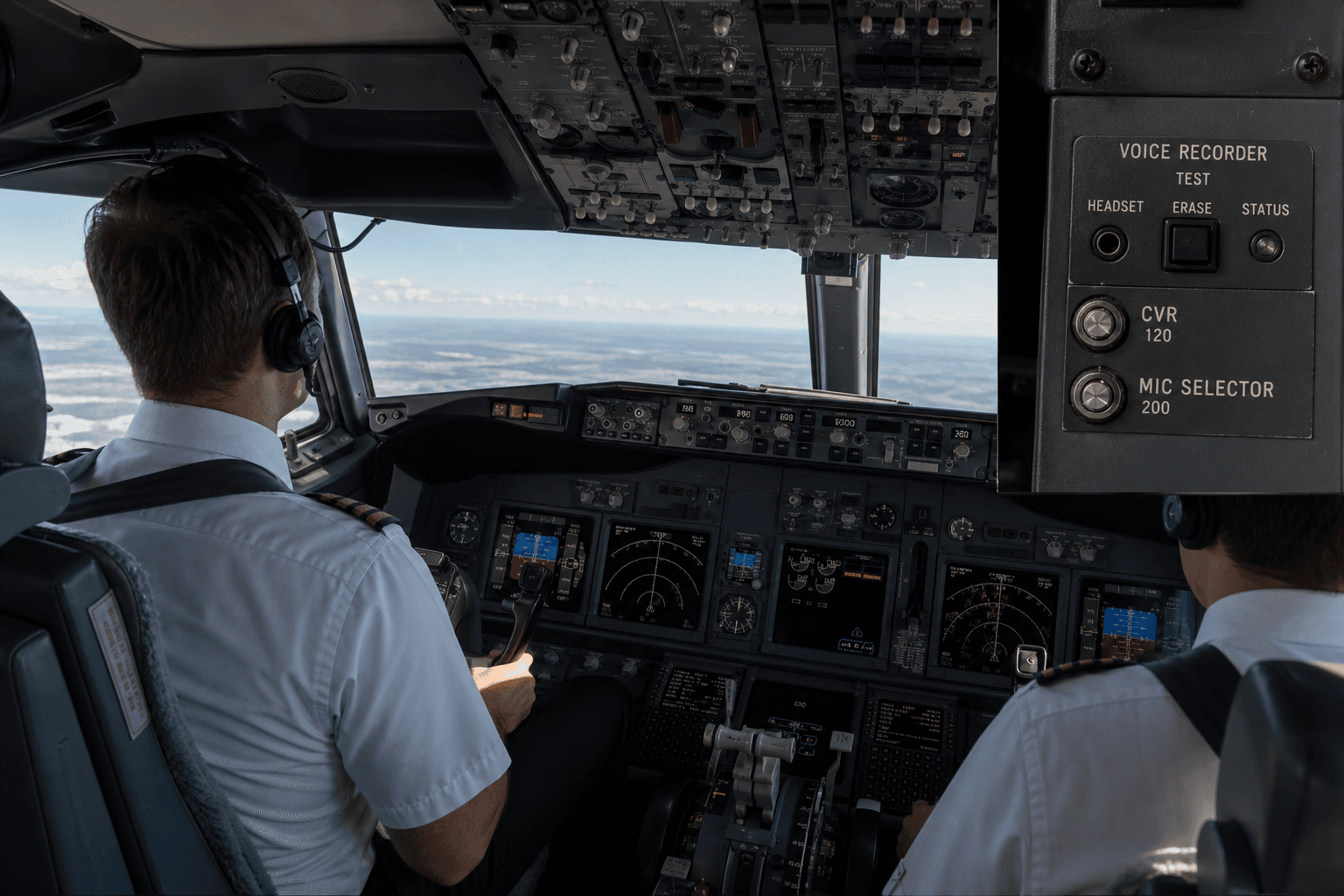
US regulator issues voluntary recommendations after the NTSB had urged it to mandate the action. The US Federal Aviation Administration (FAA) is recommending that airlines take steps to ensure cockpit-voice recorders (CVRs) retain relevant audio following safety incidents. On 1 July, the agency issued guidance calling on aircraft operators to confirm that their employee manuals instruct pilots and other workers to pull CVR circuit breakers following such events to preserve audio that would otherwise be overwritten. But the FAA’s guidance is “voluntary only” rather than mandating the action. It has been introduced in response to a 2025 recommendation from the National Transportation Safety Board (NTSB), which said many of its investigations have suffered from missing CVR audio and that airlines have “inconsistent” procedures. The NTSB had wanted operators to be forced to comply. “The FAA recommends that each operator who has a CVR installed confirm that company manuals contain instructions that the CVR circuit breaker be pulled after a reportable event,” the FAA says in a new Safety Alert for Operators. “The instruction that the CVR circuit breaker is pulled could be included in flight operation manuals, maintenance manuals and dispatch manuals, increasing the likelihood that the task is accomplished,” it adds. The NTSB has since the early 2000s flagged the problem of being unable to access CVR audio needed for investigations. However, many existing recorders retain only the prior few hours of audio, after which it is overwritten. Pilots can preserve audio by pulling the circuit breakers, and some airlines have already recommended that action, including Alaska Airlines, according to the NTSB. But in many cases flightcrew have not done so, such as with Alaska flight 1282, a Boeing 737 Max 9 that suffered an in-flight door-plug blow-out on 21 January 2024. From that aircraft, the NTSB recovered CVR audio starting 1h 20min after the incident, rendering the recording useless, according to its accident report. Its report recommended the FAA require airlines to instruct pilots to pull the breakers, calling the issue a “long-standing concern”. It cites previous similar cases, including two 2023 runway incidents and a 2017 Air Canada event. “Despite existing guidance on preserving CVR data, operators still lack effective measures to safeguard CVR recordings after accidents and reportable events,” the NTSB says. The agency declines to comment about the FAA’s guidance, saying it is still reviewing the document. The NTSB can classify recommendations as closed if it deems FAA action sufficient. Southwest Airlines says its pilot manuals already call for the CVR breakers to be pulled.
FAA Makes Control Tower Operator Partnership Hiring Path for Contract Towers Permanent
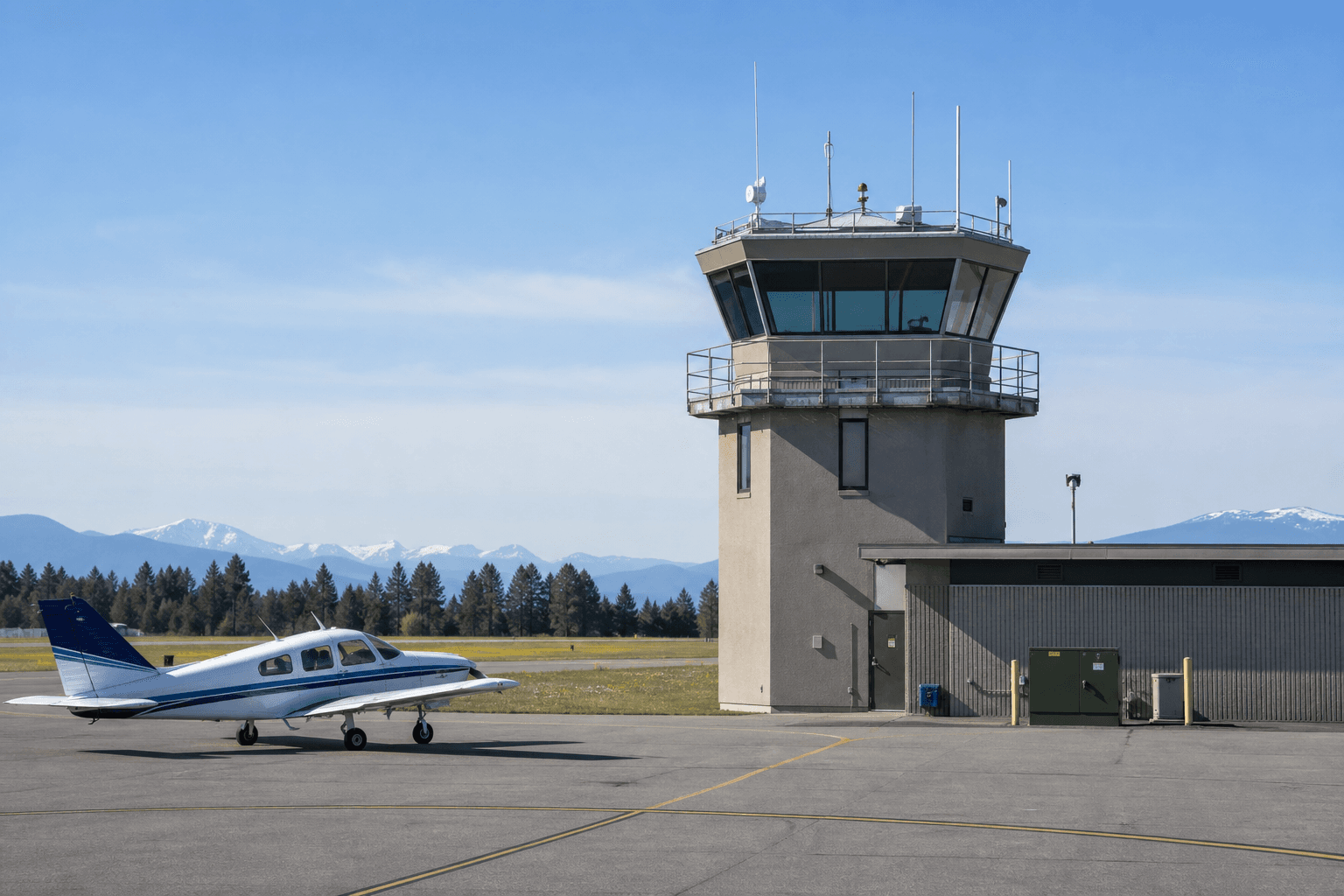
The FAA has made permanent a newer hiring pathway for Federal Contract Tower controllers, adding graduates from FAA-approved Control Tower Operator Partnership schools to the list of candidates eligible for hire by FCT companies. The change appears in FAA Order JO 7210.3EE Change 3 , effective July 9, 2026. The order sets FAA policy for facility operation and administration. Contract towers are FAA-funded air traffic control towers staffed by private companies, and many serve smaller airports with substantial general aviation activity. CTO-P Added To Eligibility Rule The revised eligibility language allows FCT companies to hire applicants who graduate from an FAA-approved CTO-P school. It also keeps the existing path for applicants who have a valid Enhanced Air Traffic Collegiate Training Initiative tower endorsement letter. Developmental controllers hired through those paths still must complete required facility training before controlling traffic independently. "This change will assist FAA Contract Tower (FCT) companies by allowing the FCTs to hire graduates from an FAA-approved Control Tower Partnership ( CTO-P ) school," the FAA said in its explanation of changes. "This change also clarifies the language for eligibility for FCT hire from an E-CTI school." Before the CTO-P path was added, FCT companies generally hired from a smaller pool of controllers who already had a previous control tower operator certificate or an FAA Air Traffic Safety Oversight credential with a tower rating. FAA had also added the Enhanced AT-CTI route through an earlier notice. Staffing Context The change moves the CTO-P pathway from a temporary FAA notice into the standing rulebook for FCT hiring. According to the FAA's briefing material, the CTO-P program is intended to prepare candidates for developmental controller jobs through classroom work and simulation training aligned with FAA Academy standards. The Department of Transportation Office of Inspector General said in a March 24 report that the FCT program includes 266 contract towers in 46 states and territories. The report said contract towers account for about half of the control towers in the National Airspace System and handled more than 18 million tower operations in calendar year 2024. "While FAA took steps to expand the controller hiring pool at contract towers, FCT contractors continue to face challenges in maintaining adequate staffing levels," the DOT Office of Inspector General said in the report. "Based on our analysis of contractor MAFR data, as of April 2025, the FCT Program remained understaffed by 276 controllers, or roughly 18 percent of their workforce." The OIG report also said all four FCT contractors told auditors they had not hired any Enhanced AT-CTI graduates as of July 2025. The report cited attrition, wage rates, remote locations and high cost-of-living areas among the factors affecting contract tower staffing.
FAA Proposes Replacing 53-Year-Old Ban on Supersonic Flight Over U.S. Land With Noise-Based Rules
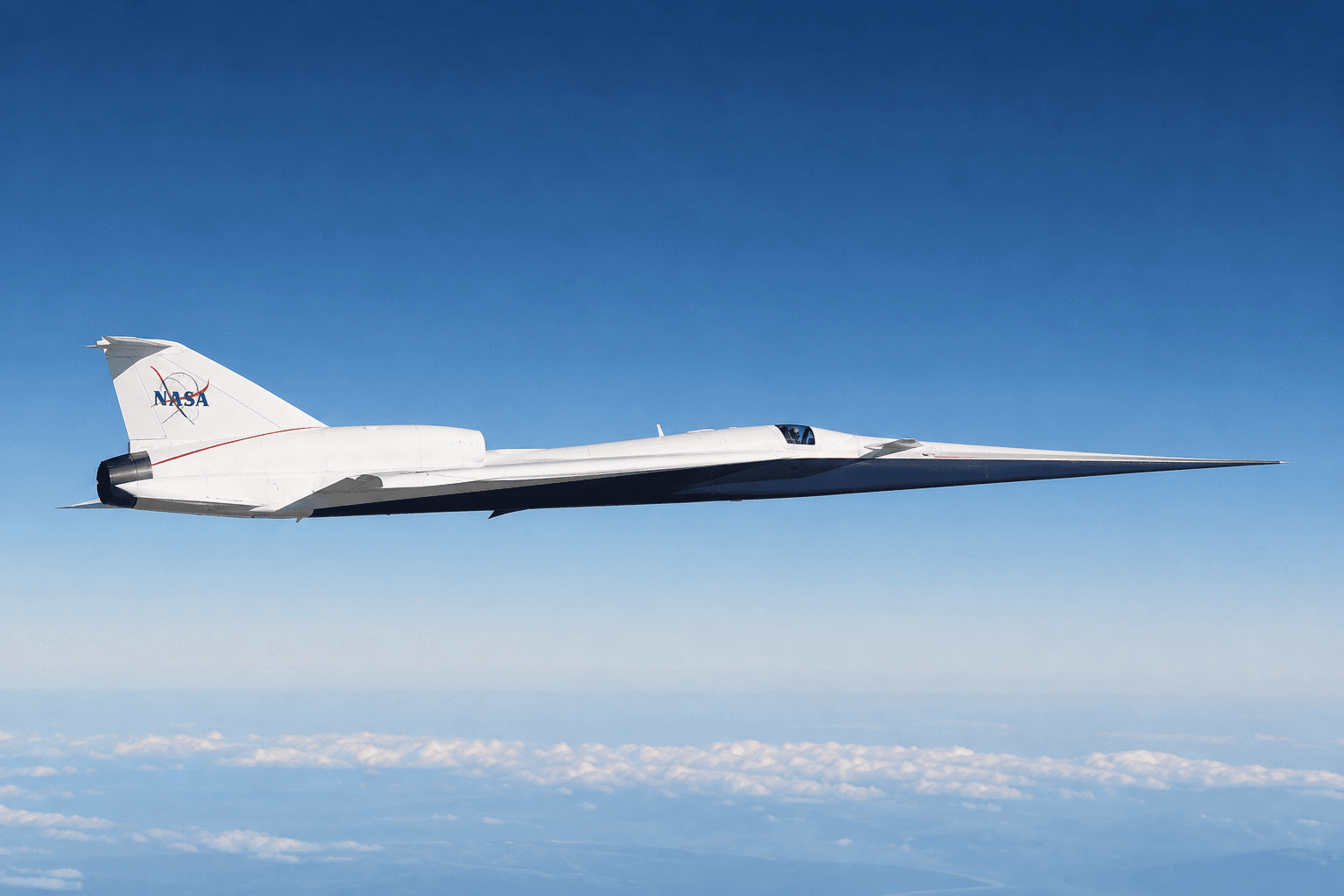
Global Aviation Round-Up from Aircraft Value Intelligence (AVN) A computer rendering of what the United Airlines supersonic aircraft will look like in the future. (Boom Supersonic) Editor's Note: To watch a video version of this article, click here . For 53 years, one federal regulation has stood between Americans and the return of supersonic air travel over the continental United States. That rule, adopted during the Nixon administration, prohibits civilian aircraft from exceeding the speed of sound over land. Now the Federal Aviation Administration (FAA) is preparing to rewrite it. On July 2, the agency published a Notice of Proposed Rulemaking in the Federal Register that would replace the existing speed-based restriction with a performance standard centered on noise. The proposal follows an announcement by the Department of Transportation on June 30 and represents the most significant shift in U.S. supersonic policy in decades. The change reflects a different way of thinking about the problem. Instead of asking whether an aircraft breaks the sound barrier, regulators are asking whether people on the ground are disturbed when it does. That distinction could reshape the future of commercial aviation. For many travelers, supersonic passenger service is synonymous with the Concorde, the sleek Anglo-French jet that cut transatlantic flight times in half. Its future unraveled after the fatal Air France crash near Paris in 2000. Although Concorde briefly returned to service, passenger demand weakened, operating costs climbed, and the aircraft was retired in 2003. Since then, commercial supersonic travel has largely disappeared. Today’s aircraft designers believe the technology has advanced enough to make another attempt. The original U.S. ban grew out of public frustration during the 1960s, when military testing produced frequent sonic booms over populated areas. Residents complained of rattling walls, cracked plaster, broken windows and sudden explosions of noise that interrupted everyday life. Thousands of complaints poured into government offices, convincing regulators that the public cost outweighed the benefit of faster travel. The FAA responded by banning routine civilian supersonic flight over land. With few exceptions, commercial aircraft have remained below Mach 1 across the continental U.S. ever since. Engineering, however, has changed dramatically over the past half-century. Instead of allowing powerful shock waves to merge into the classic sonic boom, engineers have learned how to shape an aircraft so those pressure waves remain dispersed. The resulting sound reaching the ground is significantly weaker than the ear-splitting boom associated with earlier generations of supersonic aircraft. The FAA’s proposal reflects those advances. Under the draft rule, future aircraft would have to meet a strict ground-level overpressure limit of 0.11 pounds per square foot. While the measurement is technical, the practical goal is straightforward: produce a sound that resembles a soft thump rather than the explosive crack historically associated with breaking the sound barrier. NASA’s Supersonic Experiment The proposed rule arrives as NASA continues work on one of its most ambitious experimental aircraft. The X-59 Quiet SuperSonic Technology (QueSST) demonstrator hardly resembles a conventional jet. Its unusually long, narrow nose and carefully sculpted airframe were designed with a single objective: reducing the intensity of sonic booms before they reach people on the ground. The aircraft recently completed another important step in its flight-test program, reaching Mach 1.4 at roughly 55,000 feet. Engineers view the milestone as another indication that the research program is progressing as expected. The most important testing, however, won’t focus on speed alone. NASA plans to fly the X-59 over selected U.S. communities while researchers gather feedback from residents who experience its sound signature. Beyond measuring decibel levels, scientists want to understand how people actually react. Does the sound surprise them? Is it annoying? Or is it mild enough to blend into the background of everyday life? Those public-response studies could prove pivotal. If communities consistently report that the aircraft produces little more than a brief, unobtrusive noise, regulators would have stronger evidence that quiet supersonic operations can safely coexist with populated areas. The research is expected to influence not only future FAA decisions but also international standards governing commercial supersonic aviation. The stakes extend well beyond NASA. Several aerospace manufacturers are investing heavily in next-generation supersonic airliners designed to shorten travel times between major cities. Because of the current U.S. ban, most development plans have centered on transoceanic routes where aircraft can legally accelerate beyond Mach 1. A new regulatory framework would dramatically broaden those possibilities. Flights that now consume most of a business day could eventually take only a few hours. A traveler leaving New York in the morning could conduct afternoon meetings in Los Angeles and return home that evening. Commercial service remains years away, but for the first time in decades, the regulatory landscape appears to be moving in the same direction as the technology. The proposal also provides something the aerospace industry values almost as much as technical innovation: regulatory certainty. Designing, certifying and manufacturing an entirely new generation of commercial aircraft requires billions of dollars and years of development. A clearer path through the approval process reduces investment risk, giving manufacturers and their financial backers greater confidence that quiet supersonic flight could become a viable commercial business rather than an engineering experiment. John Persinos is the editor-in-chief of Aircraft Value Intelligence .
The Daily Touch & Go
The day's best aviation news in your inbox. Free, no spam.