

Illustration: The Touch & Go
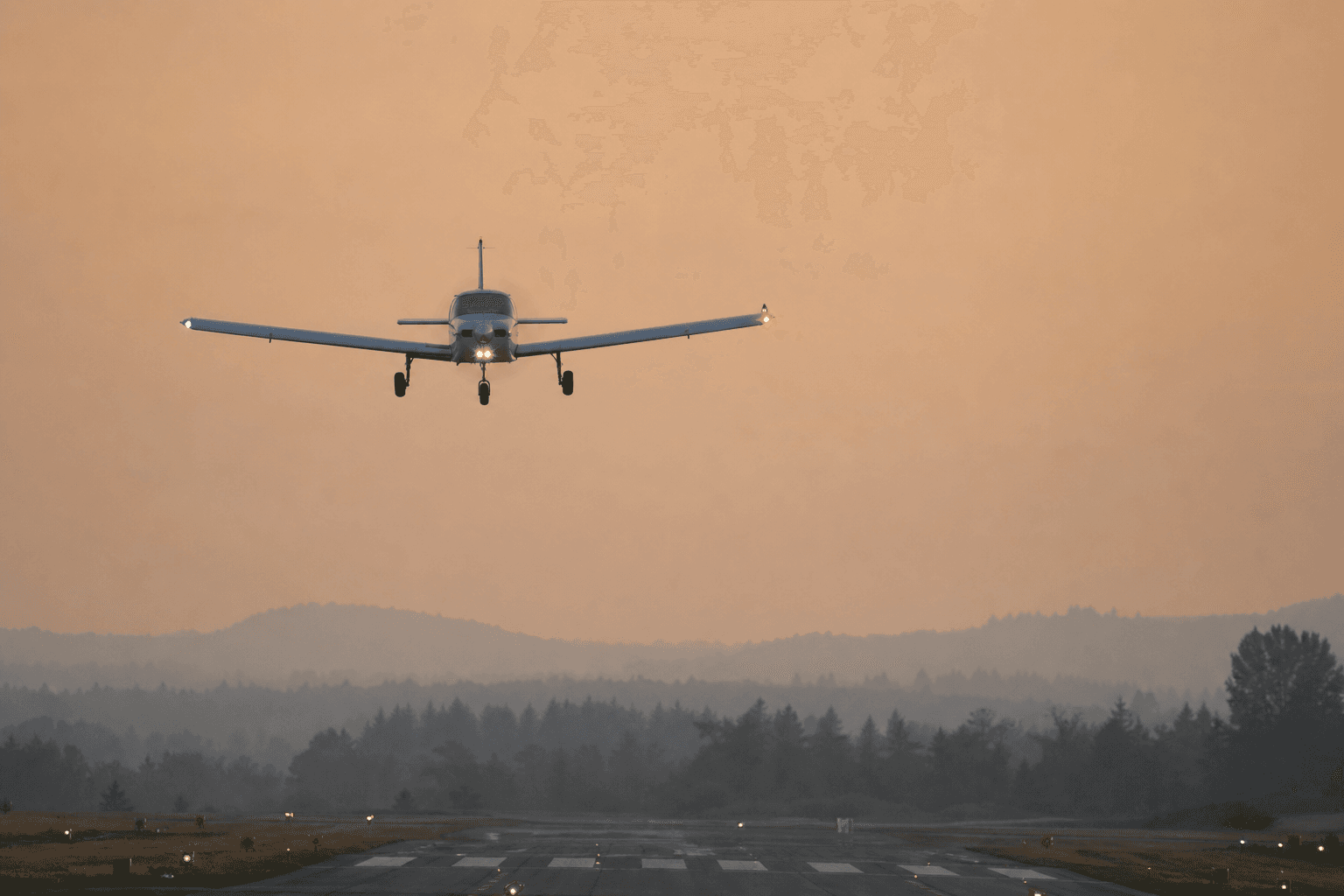
Wildfire smoke reduces visibility near Oshkosh ahead of AirVenture arrivals
Canadian wildfire smoke has lowered visibility and air quality in Wisconsin, complicating conditions for pilots arriving at EAA AirVenture Oshkosh starting July 16, 2026.
The gist
Smoke from Canadian wildfires is sharply reducing visibility near Oshkosh, creating challenges for aircraft arriving at AirVenture 2026.
Continuing coverage
All Eaa Airventure →- FAA Activates 2026 Oshkosh Flight Procedures for EAA AirVenture Operations
- Flying Bulls DC-6 returns to US for first time in 68 years with North American tour
- Pilots Gear Up for Structured Arrivals at Oshkosh AirVenture with Key Preparation Tips
- uAvionix and ForeFlight Launch SkyPlay Panel Avionics Platform at Oshkosh
- Boeing Plaza Hosts Historic and Modern Aircraft at Oshkosh AirVenture 2026
Wildfire smoke originating from Canada has significantly degraded visibility in northeast Wisconsin, impacting pilots preparing for EAA AirVenture Oshkosh arrivals. The National Weather Service reported that smoky conditions could persist through July 17, coinciding with the initial wave of aircraft flying into Wittman Regional Airport. At times on July 16, visibility near Oshkosh dropped to approximately one mile due to haze and smoke, although conditions improved later in the day.
Air traffic control emphasized the challenges posed by fluctuating visibility, warning that what might begin as a visual approach could rapidly become unsafe. This is particularly concerning given the already high congestion in the Oshkosh airspace during the peak arrival period. The Green Bay office of the National Weather Service forecast visibility reductions potentially dropping below one mile in some areas, coupled with a statewide air-quality advisory classifying pollution levels as hazardous.
Due to the hazardous air quality and restricted visibility, air traffic controllers urged pilots to exercise conservative judgment when making flight decisions. Controllers also advised against attempting navigation through thunderstorms forecast south of Oshkosh on July 17. Pilots encountering smoke during visual flight rules (VFR) flights are warned not to expect spontaneous instrument flight rules (IFR) clearances at preferred destination airports amid the influx of air traffic.
During AirVenture, IFR arrivals at Oshkosh and surrounding airports require prior reservation owing to extraordinary traffic levels. Consequently, pilots forced to divert due to deteriorating visibility may be redirected to alternate airports such as Fond du Lac, Appleton, or Green Bay. The FAA implemented special AirVenture flight procedures starting at noon on July 16, continuing through noon on July 27, to manage the anticipated traffic volume and conditions.
Despite the challenges, there were no announced revisions to the Fisk VFR arrival procedures, the FAA’s published AirVenture guidelines, or the mass-arrival schedule as of July 16. Scheduled mass arrivals beginning July 18 include a morning wave of up to 70 Mooneys, followed by as many as 130 Bonanzas in the early afternoon, and 90 Cessnas later that day. Sunday’s arrivals include 50 Cirrus aircraft and 70 Cherokees. EAA indicated that these times remain subject to change based on weather and other operational factors.
The arrival procedures require most VFR aircraft to navigate through Ripon and Fisk before receiving runway assignments from controllers. Since the system relies heavily on pilots maintaining visual contact with landmarks and other aircraft, reduced visibility due to smoke is a significant operational concern. Additionally, Wittman Regional Airport is closed to arrivals overnight between 8 p.m. and 7 a.m. during the special procedure period.
Wildfire activity across Canada, particularly in Ontario, Manitoba, and Saskatchewan, along with fires in northern Minnesota, contribute to the widespread smoke affecting the Midwest region. This smoke has been transported across the Great Lakes and northeastern U.S., producing unhealthy air quality and diminished visibility recorded in states including Wisconsin, Minnesota, Michigan, and Illinois.
Forecasts suggest an improvement in conditions around Oshkosh as winds are expected to shift over the coming weekend. However, the National Weather Service indicates that the smoke situation remains contingent on wind direction, posing the potential for returning haze during AirVenture if firefighting efforts are not successful. The event runs from July 20 through July 26, 2026, with thousands of aircraft anticipated at Wittman Regional Airport and nearby fields.
Frequently asked questions
- How has Canadian wildfire smoke affected arrivals at EAA AirVenture Oshkosh 2026?
- Smoke from Canadian wildfires has reduced visibility to as low as one mile, complicating visual approaches and raising safety concerns for the large volume of arriving aircraft at Oshkosh.
- What precautions should pilots take when flying into Oshkosh during AirVenture given the smoke conditions?
- Pilots are advised to obtain complete weather briefings, prepare for possible diversions to alternate airports, and not assume an immediate IFR clearance if VFR flight becomes unsafe due to reduced visibility.
Read more
All Regulatory →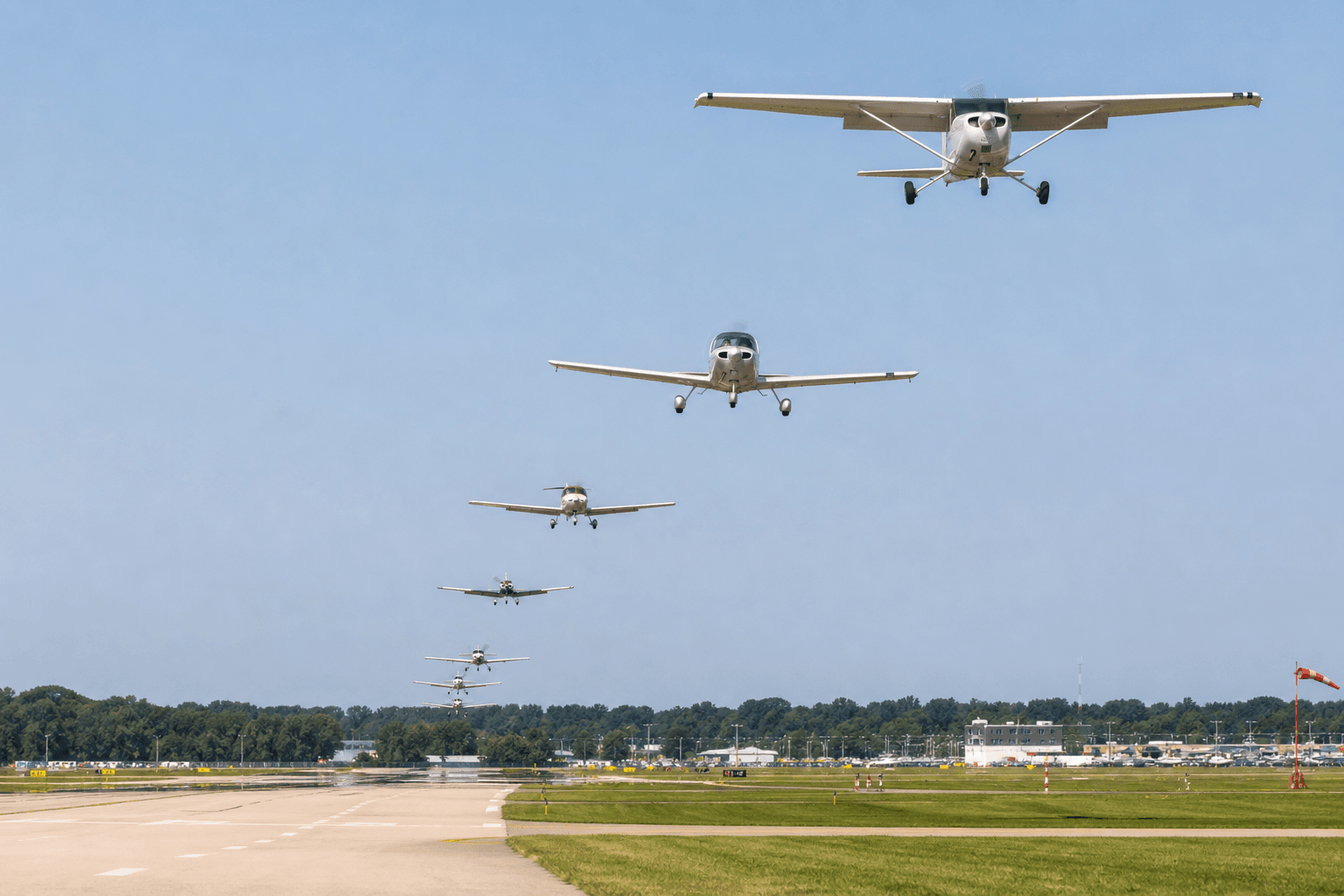
Pilots Gear Up for Structured Arrivals at Oshkosh AirVenture with Key Preparation Tips
Each year during the week of EAA AirVenture, Wittman Regional (KOSH) in Oshkosh, Wisconsin, transforms from a quaint general aviation airport into one of the nation's busiest landing spots. Last year alone saw more than 16,000 aircraft operations at KOSH during the 11-day period leading up to and during the event, meaning each hour roughly 108 aircraft either took off or landed while the airport was open. While that sort of activity generates over $250 million of economic impact for Oshkosh and the surrounding Fox Valley region, for pilots that traffic can mean controlled chaos in the best of times and total disorder in the worst. In a guest blog post for ForeFlight, Plane + Pilot editor in chief Cayla McLeod, who is an 11-year AirVenture veteran, offered some pro tips that every pilot needs to know when venturing out to GA's ultimate fly-in event on July 20-26. Among that advice for safely navigating the arrival procedures, ensuring proper preparation remains at the top. Because flying into Oshkosh requires highly structured visual procedures, committing the NOTAM to memory—and having it handy in the cockpit—should be treated as a requirement. The Experimental Aircraft Association has produced a number of videos detailing the proper techniques and arrival process for those flying in. These sorts of tools are invaluable pieces of information to review for first-time attendees and Oshkosh veterans alike. Another pointer is to carry ample fuel. Extended flight times can easily occur due to heavy traffic volume, weather delays, holding patterns, and go-arounds. The FAA recommends having sufficient fuel to accommodate unexpected delays or to divert to another airport if needed, and pilots who attempt to use a "minimum fuel" excuse can expect to be turned away. It's also important to remember that the high-paced nature of the arrival doesn't end once landed. After landing, pilots are expected to safely and expeditiously vacate the runway into the grass to clear the way for the continuous stream of aircraft touching down immediately behind them. Having a diagram of the airport handy in the cockpit can be a big help in keeping pilots organized as they navigate the hustle and bustle on the ground. Flying into Oshkosh is an important moment for any pilot, and although it can be a stressful process, by controlling what you can and exercising total attention to detail the reward once touching down is unlike any other felt in aviation.
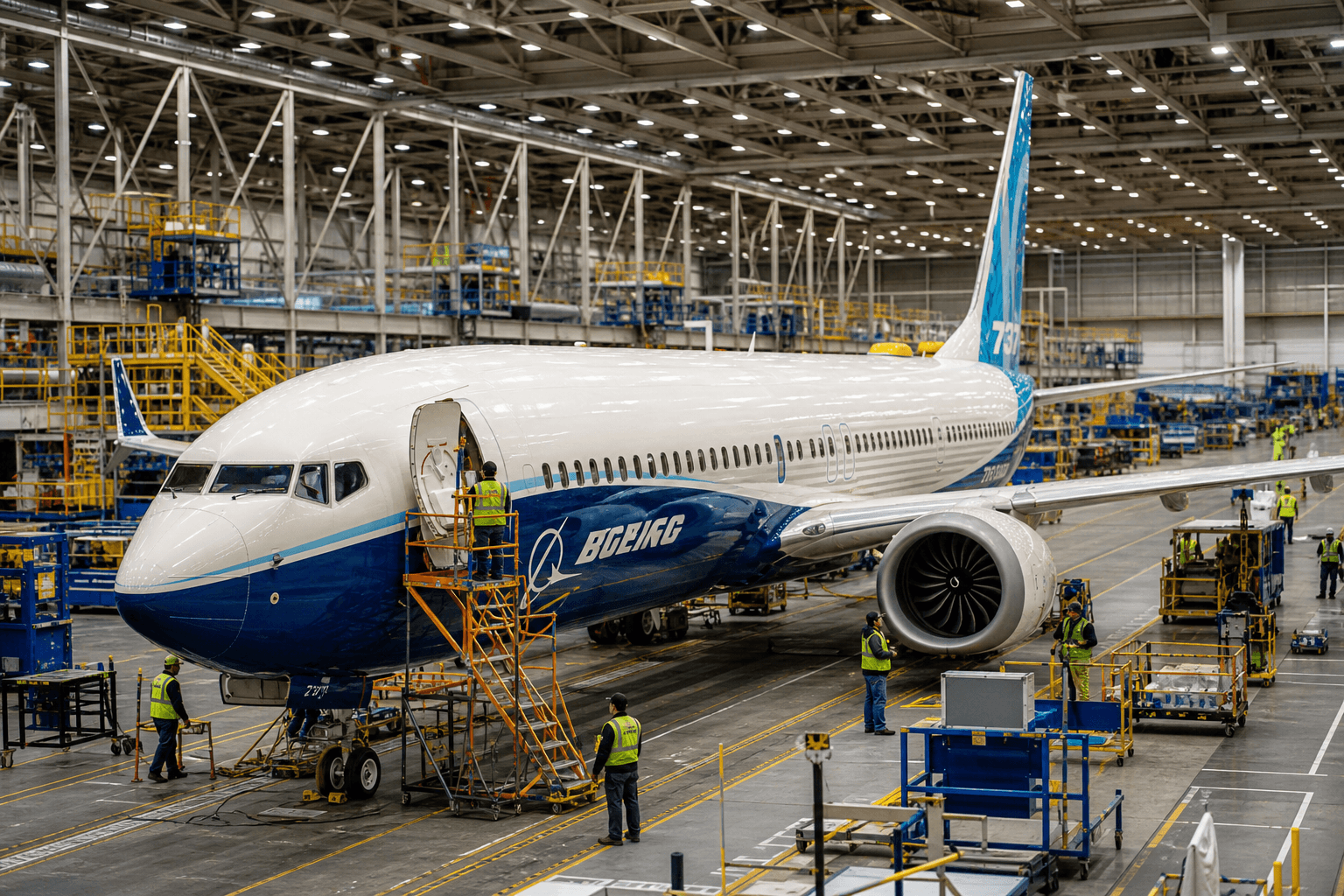
Boeing launches fourth 737 MAX final assembly line at Everett facility
Boeing has opened a fourth 737 MAX final assembly line at its factory in Everett, Washington, marking the first time in more than 50 years that the 737 has been built outside Renton. Production began on the first aircraft on July 6, 2026, with Boeing formally marking the opening of the new North Line four days later. The line occupies space in the Everett factory that was originally built for widebody aircraft, including the 747. The first 737 moving through the line is a 737 MAX 10. Boeing did not publicly identified the customer for that airplane. The new line is designed around the same production process used at Boeing's three existing 737 lines in Renton, about 40 miles south of Everett. Boeing said that should allow teams at both sites to share procedures and production improvements. The North Line will not immediately result in a sharp increase in monthly output. Boeing plans to use the first aircraft for low-rate initial production, giving workers time to test the line, complete regulatory and compliance work and make changes before output increases. The company is currently raising 737 production from 42 to 47 aircraft a month. Once the Renton lines stabilize at that level, the Everett line is expected to provide the additional capacity needed to reach 52 aircraft a month and potentially higher rates later. Boeing has more than 4,000 737 MAX aircraft in its backlog, enough to keep the program busy into the 2030s at current production rates. The added line gives the manufacturer more room to work through those orders while reducing its dependence on three assembly lines at a single site. The Everett line will also handle aircraft that require more time than Boeing's standard production flow. Boeing said that could include jets with more complex interiors or additional work that would otherwise slow one of the Renton lines. Boeing first announced the Everett expansion in January 2023. The factory had available space after the end of 747 production and the consolidation of 787 final assembly in South Carolina. Everett continues to build the 767 and 777 families. The opening comes as Boeing works to rebuild 737 output following years of production interruptions and increased regulatory scrutiny. The Federal Aviation Administration (FAA) imposed limits on 737 production after a door plug separated from an Alaska Airlines 737 MAX 9 shortly after takeoff in January 2024. Boeing has since been increasing output in stages while working with the FAA and suppliers. Boeing said it will not move to higher production rates until the manufacturing system is stable and meeting its quality targets. The company built the first 737 near Seattle before moving the program to Renton in 1970.
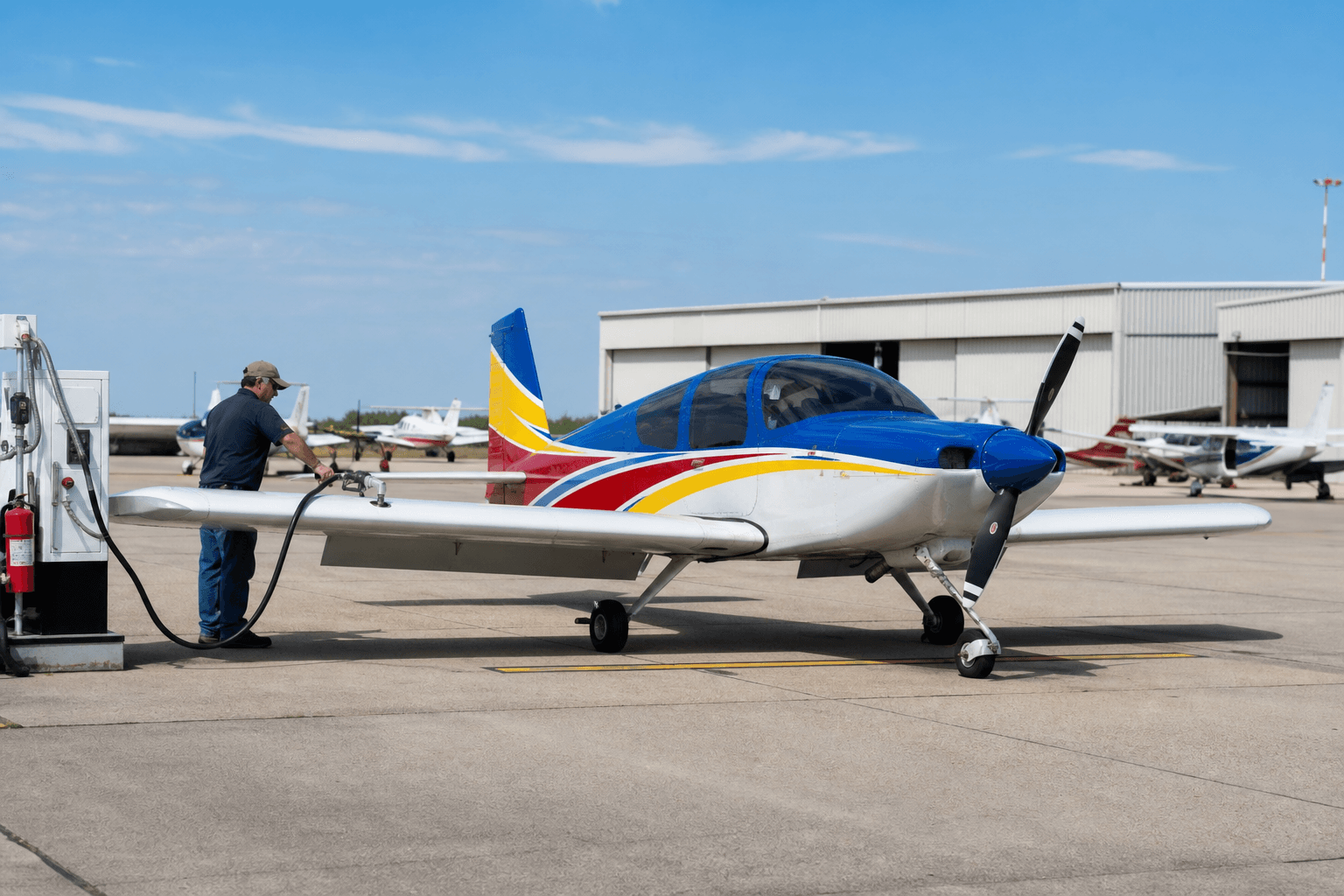
FAA Broadens Eligibility for Swift Fuels 100R Unleaded Avgas to Over 1,600 Aircraft Models
On Tuesday, Swift Fuels announced that the Federal Aviation Administration (FAA) has significantly expanded the list of piston aircraft eligible to operate on its 100R unleaded aviation gasoline, adding more than 1,200 engine models and 1,600 airframe models through updates to the fuel’s Supplemental Type Certificate (STC). According to the company, the expanded Approved Model List (AML) includes engines from more than 80 manufacturers, including approximately 395 Lycoming models, 195 Continental models, 95 Curtiss-Wright models, and 95 Pratt & Whitney models. The airframe expansion covers more than 1,600 aircraft models, including approximately 118 Cessna aircraft, 101 Beechcraft models, 98 Piper aircraft, along with aircraft from Mooney, Grumman, Stinson, WACO, Fairchild and others. The expanded approvals represent another step in the FAA’s effort to support the industry’s transition away from leaded 100LL avgas by the end of the decade. Swift said the newly approved aircraft represent about 56% of current U.S. 100LL consumption and mark the first phase of its broader certification plan. The company expects additional approvals for higher-performance engine and airframe combinations during Phase II and Phase III of the program through 2028. The company noted that 100R is currently the only commercially available 100-octane unleaded avgas that both operates under FAA-approved STCs for eligible aircraft and complies with ASTM International’s D8603 production specification. Pilots must obtain a Swift Fuels STC before using 100R in eligible aircraft. Owners who previously purchased the company’s UL94 STC will automatically receive a 100R STC through Swift’s “Forever STC” program at no additional cost. Swift said 100R has been sold commercially for nearly two years at five U.S. and five European airports and that distribution is now expanding. The company expects the initial transition from UL94 to 100R at participating airports to begin this summer, with locations in 29 states, including California, Colorado, Arizona, Florida, Minnesota, Utah and Wisconsin. International availability has also expanded to airports in Canada, Australia, Germany, France, Austria, the United Kingdom and the Netherlands. The company said work continues with the FAA and engine manufacturers to certify the remaining high-performance piston fleet, with additional approvals expected through 2027 and early 2028. The FAA first approved Swift’s original 100R STC in September 2024. Press_Release_-_FAA_AML_Expansion_-_Final-1 Download
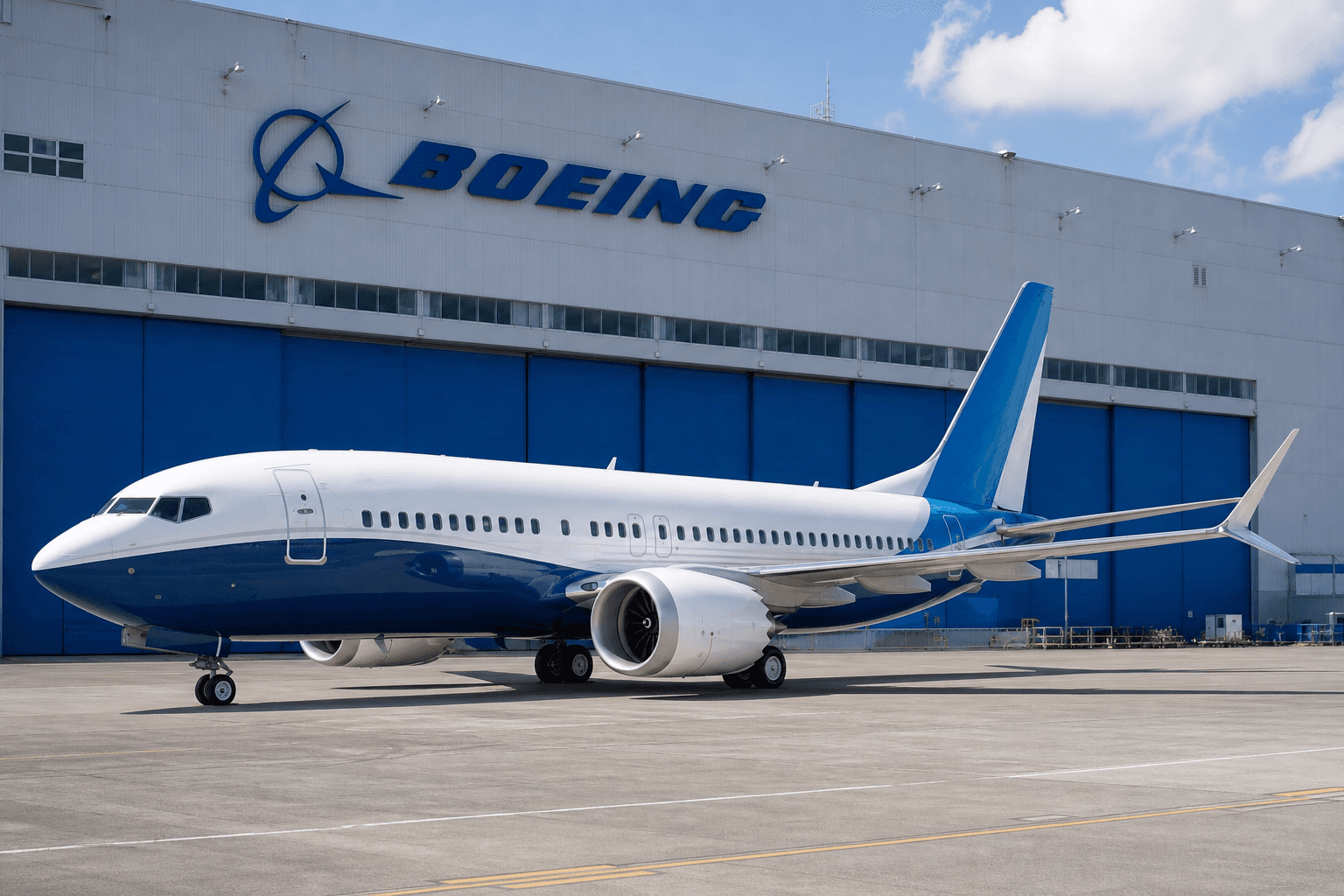
Boeing 737 MAX Surpasses 7,200 Orders, Becoming Company's Best-Selling Aircraft
As the Boeing 737 MAX series nears the final stages of certification for its highly anticipated MAX 10 and MAX 7 variants, the order book has filled up to epic proportions. With the backlog that accumulated after the first quarter of 2026, Boeing is slated to deliver 7,206 airframes of all variants, which makes it the best-selling aircraft in the historic plane maker's history.
The Daily Touch & Go
The day's best aviation news in your inbox. Free, no spam.