

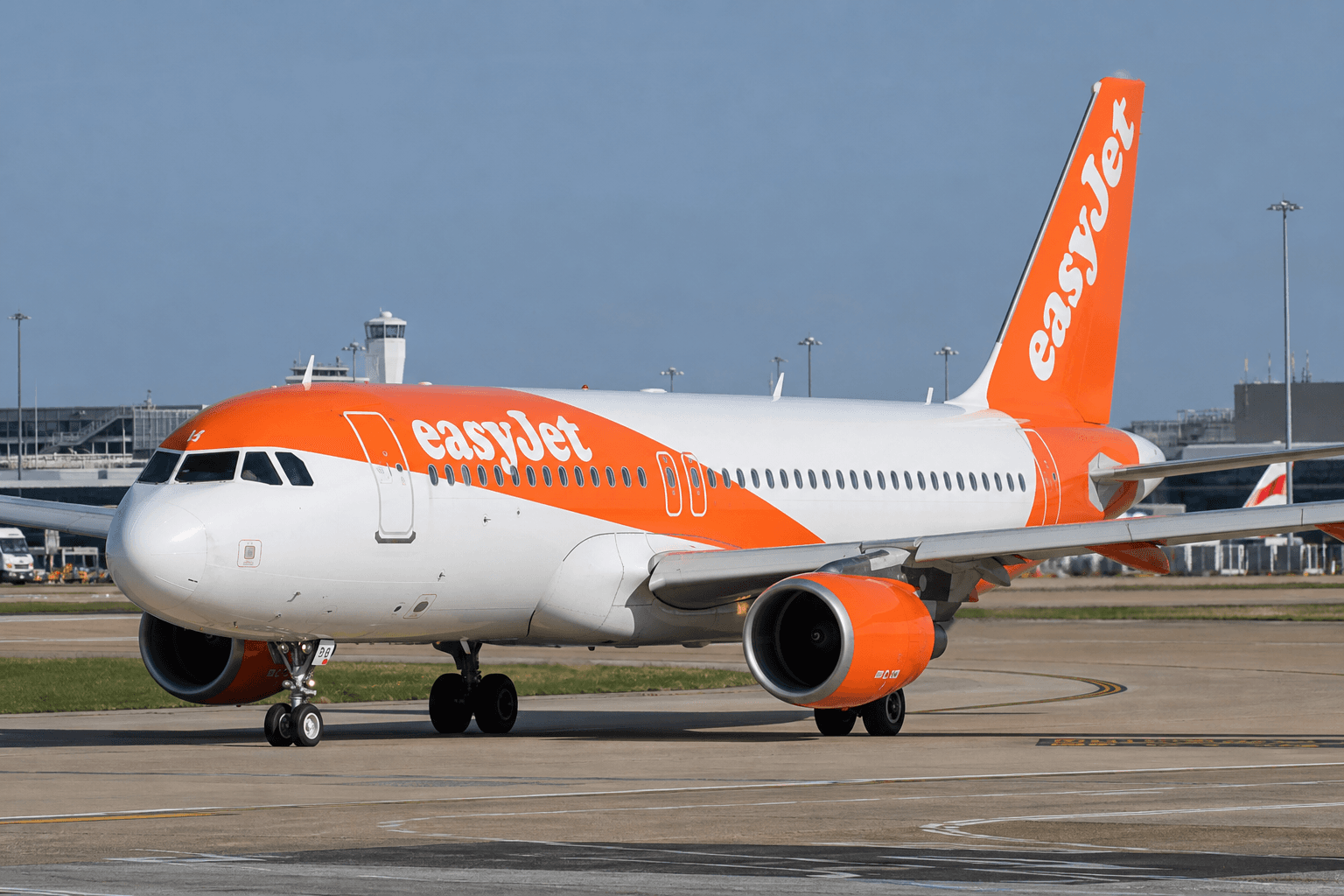
Illustration: The Touch & Go
EasyJet takeover sparks fleet flexibility debate among European low-cost carriers
EasyJet faces multi-billion-dollar acquisition bids amid analysis advocating for a flexible fleet model using ACMI wet leasing to boost profitability and optimize seasonal capacity.
The gist
EasyJet's possible takeover highlights a strategic shift toward flexible fleets via ACMI leasing to reduce winter idle costs and boost profits.
Continuing coverage
All Low-Cost Carriers →- Frontier to Launch Starlink High-Speed WiFi Across Fleet in Early 2027
- Vueling to Launch Boeing 737 MAX 8-200 on Mediterranean and European Routes in December 2026
- Wizz Air Opens New Year-Round London Gatwick Route to Chișinău Enhancing UK Connectivity
- Apollo Global Management Tops Castlelake with $7.26B EasyJet Takeover Bid
- EasyJet Accepts $7.3 Billion Takeover Bid from Castlelake
EasyJet has attracted intense interest from US investment firms after receiving competing acquisition proposals valued in the billions. Initially, Castlelake appeared close to finalizing its takeover bid for the European low-cost carrier (LCC), only for a rival offer from Apollo Global Management to emerge, reportedly outbidding Castlelake and intensifying the race. The final outcome remains unsettled as Castlelake considers responding with a higher offer.
Behind the acquisition interest lies an analysis pointing to easyJet's fleet management as a critical inefficiency harming profitability. Currently owning a large portion of its 356-aircraft fleet year-round, easyJet shoulders significant capital tied to planes underutilized outside peak summer months. This seasonal mismatch drives heavy fixed costs during winter's demand trough, constraining returns.
Data from easyJet’s fiscal year 2025 illustrate this pronounced seasonality: a loss before tax of £394 million occurred during lower-demand winter months, contrasted by a £1.059 billion profit in the busy summer half. This cyclicality highlights the risk of maintaining a fleet sized for peak demand year-round, as overcapacity in off-peak periods drags on financial performance.
An alternative fleet strategy gaining attention involves rightsizing the permanent owned fleet to align with winter baseline demand and supplementing surge capacity through ACMI wet leases during peak seasons. This approach converts fixed capital expenditures into variable operating costs, improving flexibility and capital efficiency.
Analysts from Avia Solutions Group estimate that easyJet could divest up to 73 aircraft from its owned fleet, potentially unlocking approximately $2.3 billion in gross proceeds. This capital release combined with ACMI-driven scalability could increase net profits by an estimated $250 million by better matching supply with seasonal demand fluctuations.
The concept of integrating short-term wet leasing—covering aircraft, crew, maintenance, and insurance—introduces agility to fleet management. Airlines adopting this model reduce year-round fixed costs tied to underused assets, accommodate volatile market dynamics, and avoid long-term asset risks inherent to ownership or long-leases.
If easyJet or its new owners pursue this flexible fleet model, it may trigger a broader reevaluation among European LCCs about fleet ownership versus operational leasing strategies. Competitors retaining traditional high capital expenditure and peak-ready fleets could face mounting shareholder pressure as seasonality intensifies across European aviation markets.
This developing situation marks a potential turning point for Europe's low-cost carriers, with easyJet's possible takeover acting as a catalyst. Strategic fleet flexibility through ACMI leasing represents a shift away from conventional aircraft investment models and towards a portfolio approach balancing operational and financial risk in a seasonal industry.
Currently, neither easyJet nor its potential suitors have made commitments to adopt this lease-structured fleet approach. Nevertheless, the ongoing bidding and associated strategic analyses underscore fleet management as a crucial factor in the airline’s future competitiveness and financial stability.
Frequently asked questions
- What is the proposed change to easyJet's fleet management strategy?
- The proposal suggests easyJet reduce its owned fleet to cover only winter demand and use ACMI wet leases to flexibly increase capacity during peak summer months, improving cost efficiency.
- How much capital could easyJet potentially unlock by divesting aircraft?
- EasyJet could potentially divest 73 owned aircraft, generating about $2.3 billion in gross disposal proceeds before costs, taxes, and other expenses.
- Why is fleet seasonality a problem for easyJet?
- EasyJet's fleet is sized for peak summer demand year-round, resulting in underutilized aircraft in winter, causing high fixed costs and impacting profitability negatively during off-peak periods.
Read more
All MRO/Maintenance →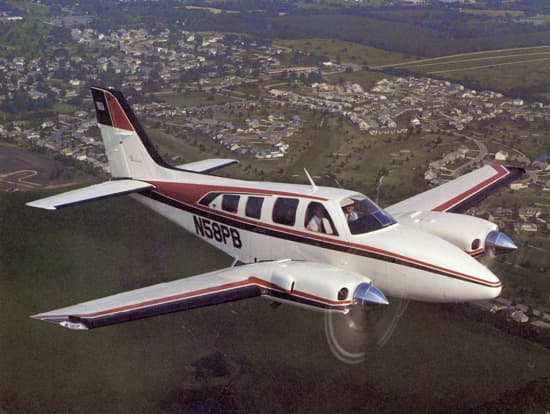
1969 Beechcraft Baron 55 Offers Versatile Multi-Engine Flight at $139K
Every day, the team at Aircraft For Sale chooses an airplane that catches our attention because it is unique, a good deal, or has other qualities we find interesting. You can read Aircraft For Sale: Today's Top Pick at FLYINGMag.com daily. Today's Top Pick is a 1969 Beechcraft Baron 55. Renowned for harmonizing performance with rugged reliability, the Beechcraft Baron series remains a premier choice for pilots stepping up to a multi-engine aircraft. This 1969 Baron 55 provides a robust platform for owners seeking serious cross-country utility and the peace of mind of a second engine. Based at the Spirit of St. Louis Airport (KSUS) in Missouri, the airframe has logged 5,006 total hours. With a generous useful load of 1,640 pounds and passenger capacity for up to six, it is ready to haul family or business associates in comfort. Providing the necessary thrust is a pair of 260 hp Continental IO-470-L engines. While they are higher time at approximately 1,800 and 2,300 hours, respectively, since major overhaul, they benefit from bottom overhauls 1,100 hours ago and top overhauls roughly 900 hours ago. The owner reports they run clean and cool, burning just 20 gph total while running lean of peak for a 170-knot cruise. For extra speed, they can be pushed to yield 185 knots at 26 gph. The aircraft also features de-ice boots, wet props, and wet windshield for protection against inadvertent icing encounters. Behind the yoke, the instrument panel has been thoroughly modernized to reduce pilot workload in the modern environment. The avionics suite is anchored by an Aspen Evolution 1000 Pro Max primary flight display alongside a Garmin GNS 430W GPS/nav/comm. Perhaps the most impressive upgrade is the Garmin GFC 600 digital autopilot with a coupled go-around feature, which the current owner notes provides the feel of flying a much larger, sophisticated airplane. Engine parameters are easily monitored via dual Electronics International CGR-30P digital engine monitors. 1969 Beechcraft Baron 55 [Credit: Ian Williamson] Readying the aircraft for its next chapter, the seller recently completed a meticulous annual inspection. Ensuring extended worry-free operation, the next annual is not due until July 2027, the static check is valid until November 2026, and the wing spar Airworthiness Directive (AD) is not due for another 320 flight hours. Offered at $139,000 , this Missouri-based Beechcraft Baron 55 stands as an accessible entry point into the world of multi-engine cross-country travel. If you're exploring ownership options, FLYING Finance can help get you airborne. Use our airplane loan calculator to estimate your monthly payments, or connect with an aviation finance expert at flyingfinance.com . FLYING Magazine: Half a Century of Beechcraft Barons FLYING Magazine: We Fly: Beechcraft Baron G58 FLYING Magazine: Beechcraft Baron: A Retrospective Look FLYING Magazine: New Interiors for Beechcraft Barons, Bonanzas Plane + Pilot : Beech Baron 58 AVweb: Beech Baron 55 The Aviation Consumer: Beech Baron 55
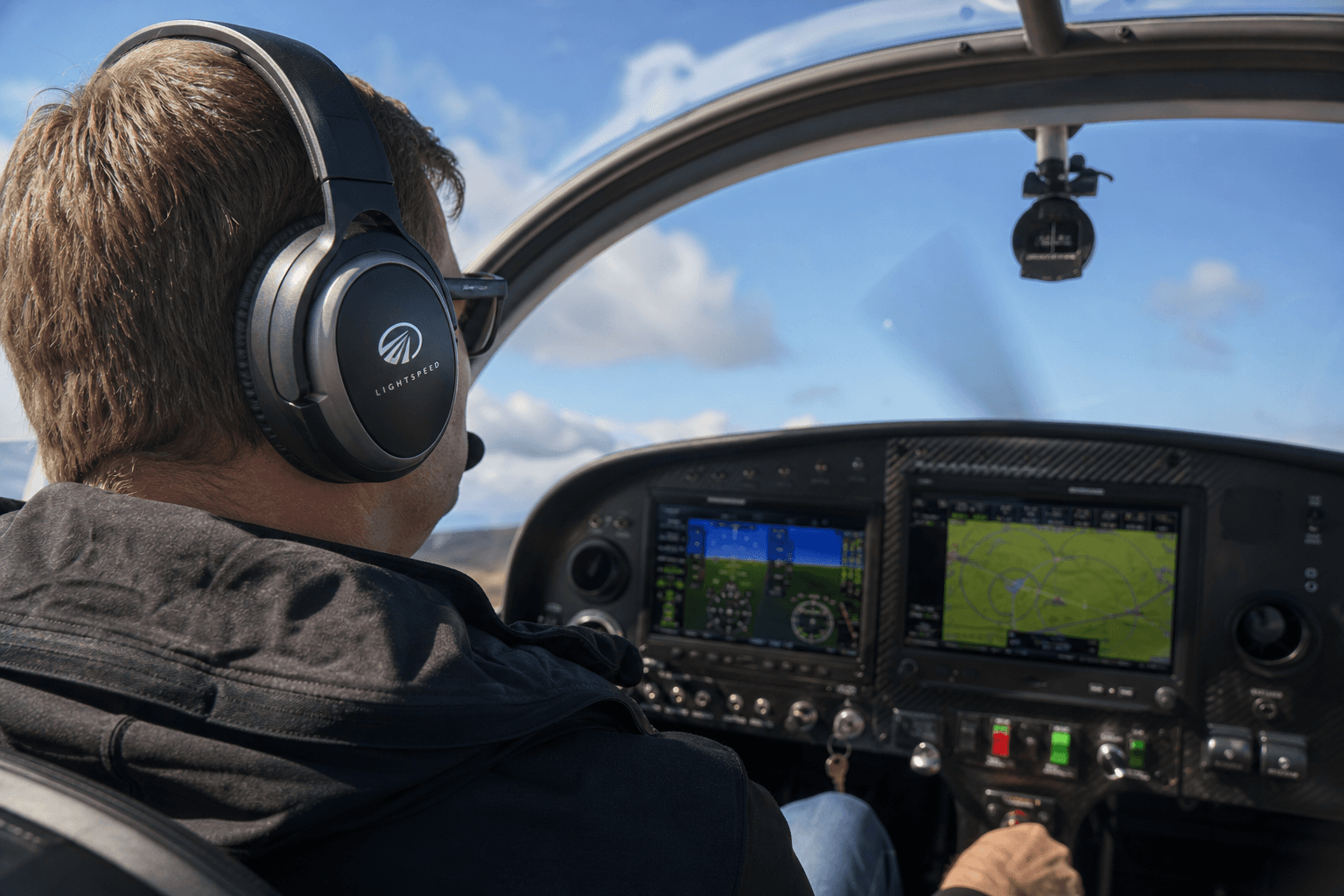
Lightspeed and Rotax Introduce Engine-Optimized Audio Profile for Delta Zulu Headsets
Lightspeed Aviation and BRP-Rotax announced a Rotax-specific Active Noise Reduction and audio profile for the Lightspeed Delta Zulu headset on Wednesday. The setting is designed around the specific acoustic characteristics and cockpit configurations associated with Rotax 912 iS/c, 915 iS/c and 916 iS aircraft engines. Rotax-Tailored Audio Pilots will select either the Rotax setting or Lightspeed's existing Signature ANR and audio profile through the Lightspeed app. Lightspeed said the new option adjusts the headset's acoustic performance to match frequency characteristics associated with the supported Rotax platforms in order to provide clearer communication and enhanced cockpit comfort. "At BRP-Rotax, we focus on the entire ownership and flight experience, not only the engine itself," Marc Becker, head of aircraft business at BRP-Rotax, said. "This collaboration with Lightspeed Aviation is a smart addition to Rotax Care and brings real value to Rotax-powered pilots using the Lightspeed Delta Zulu — a cockpit audio experience tuned to the sound characteristics of Rotax engines." Lightspeed began working with Rotax on the profile about a year ago, according to a company presentation. The companies said the project represents the first aviation headset profile developed to optimize acoustic performance for a particular engine platform. Rotax Care and Firmware Update Lightspeed Delta Zulu headsets will also come with qualifying Rotax Care enrollments. The optional program extends warranty coverage for eligible Rotax four-stroke aircraft engines by three years beyond the standard warranty, or until the engine reaches time between overhaul, whichever comes first. Delta Zulu headsets distributed through the Rotax Care program will begin arriving with the new profile installed in August. Current Delta Zulu owners are expected to receive access through a firmware update later this fall.
Air New Zealand unveils cabin upgrades for Boeing 777-300ER fleet
Air New Zealand has released the first details of a major cabin upgrade coming to its Boeing 777-300ER aircraft, part of a broader effort to bring a more polished, consistent experience to travelers flying to and from New Zealand. Announced July 15, 2026, the upgrade program will replace the Business Premier and Economy interiors across the airline's 777-300ER fleet, aligning the onboard experience more closely with the retrofitted cabins already flying on its Boeing 787-9 Dreamliners. Chief Customer & Digital Officer Jeremy O'Brien said the investment is designed to keep the airline's product competitive both now and in the years ahead, while also addressing the rising maintenance and production costs tied to aging cabin interiors. #image_title "Our current Business Premier and Economy cabins have served us exceptionally well since we welcomed the first 777-300ER into our fleet in late 2010, however the time is right to raise the bar once again," O'Brien said. He added that the upgrades, paired with the airline's retrofitted Dreamliners, would give the international fleet a more unified look and feel, one that matches the standard of service the airline is known for. O'Brien also pointed to the practical upside of the investment, noting that the 777-300ER remains central to Air New Zealand's international network. Refreshing the interiors, he said, allows those aircraft to stay in service longer while easing the maintenance demands that come with an older cabin. What's changing in Business Premier The redesigned Business Premier cabin will introduce Collins Elevation seats, giving travelers more personal space and privacy in a forward-facing, reverse herringbone layout. According to O'Brien, the new seats bring similar functionality to what's already rolling out across the airline's 787-9 fleet, marking a shift toward a more modern, private flying experience. #image_title Highlights of the new Business Premier cabin include: 44 seats, unchanged from the current layout A 43-inch pitch with seats that convert into a lie-flat bed Doors on every seat for added privacy Sliding privacy dividers on center seats 18-inch inflight entertainment screens with Bluetooth audio connectivity USB A and USB C ports What's changing in Economy Economy passengers will also see a significant refresh, with new ergonomically designed seats from ZIM and upgraded entertainment screens throughout the cabin. #image_title Key features of the new Economy cabin include: 246 seats, two more than the current configuration Economy Stretch seating with a 35-inch pitch Standard Economy seating with a 31- to 32-inch pitch 13-inch inflight entertainment screens with Bluetooth audio connectivity USB C ports Premium Economy will remain unchanged for now, having already gone through its own refresh over the past year, which included new seat covers and cabin curtains. Timeline and seating changes The first Boeing 777-300ER is scheduled to enter the retrofit process in March 2027, with the updated aircraft expected back in service by May 2027. The airline said that the overall layout of passenger accommodation will hold steady at 342 seats, with only minor adjustments to make room for the new Business Premier product. Two Premium Economy seats will be removed, bringing that cabin to 52 seats total, while two Economy seats will be added, bringing that cabin to 246 seats, including 16 Skycouch rows. RELATED Air New Zealand to sell Skynest sleep pods for economy travelers starting May
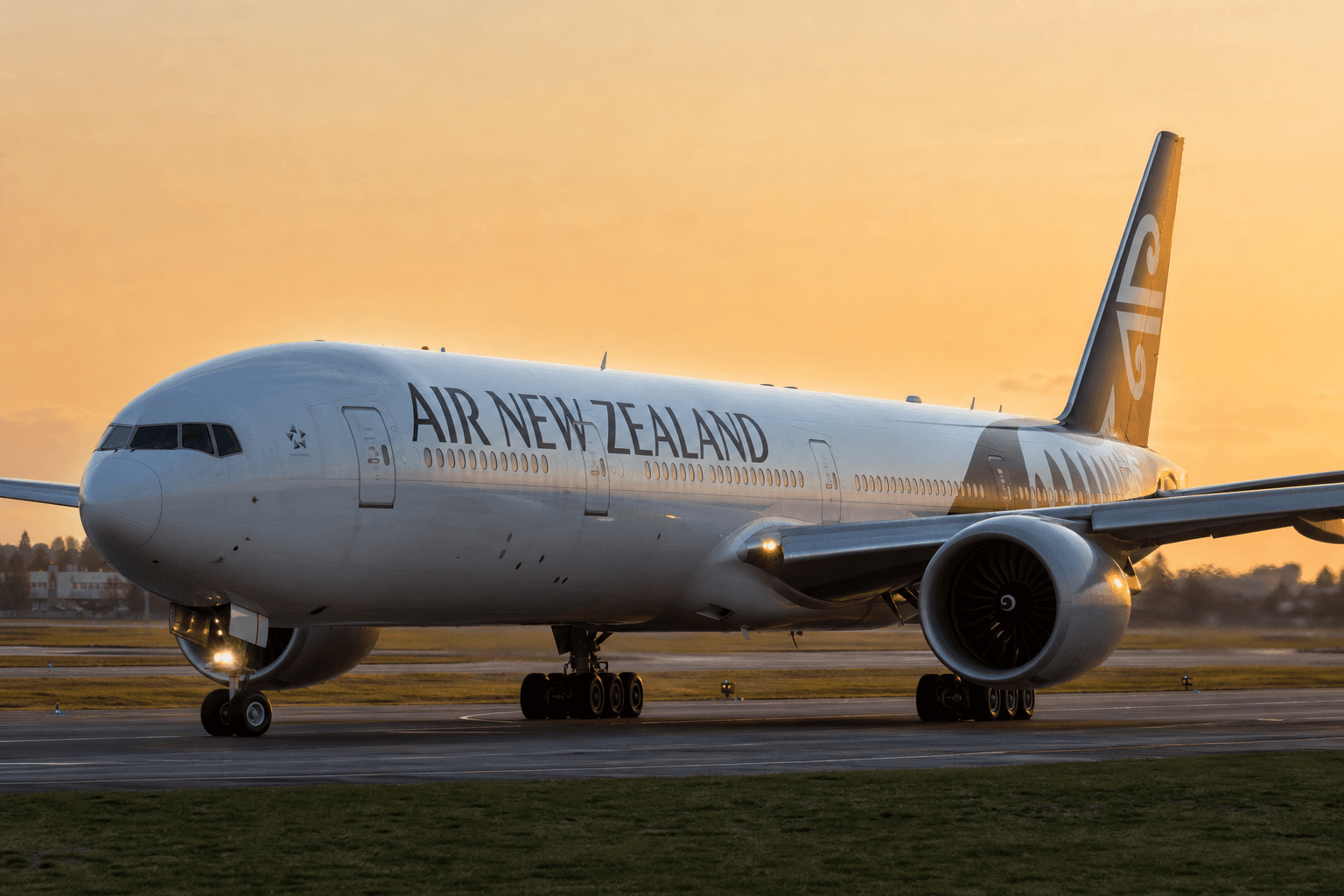
Air New Zealand to Retrofit Boeing 777 Fleet with New Business Class Seats in 2027
Air New Zealand has just unveiled plans to retrofit its entire Boeing 777 with new business class seats starting in 2027. However, these won't be the same new business class seats that are currently being installed on the Boeing 787 fleet… and that's probably a good thing? Air New Zealand plans reverse herringbone seats for 777s Air New Zealand intends to introduce a new business class product on its entire fleet of seven Boeing 777-300ERs (that excludes the ex-Cathay Pacific frames). Specifically, the airline will be installing reverse herringbone seats with doors on these aircraft, based on the Collins Aerospace Elevation platform. The cabin will feature 44 seats (just as it does now), with seats having 43″ of pitch. All seats will have direct aisle access and privacy doors, and center seats will have sliding privacy dividers between them. Seat back entertainment will consist of 18″ monitors with bluetooth audio. The seats will also have USB-A and USB-C charging, but no wireless charging. Air New Zealand's plan is to reconfigure the first aircraft with these interiors as of March 2027, with hopes of having the plane in service by May 2027. Of course when we're talking about aircraft interiors, it's especially important to emphasize that delays are common, and even likely. As before, the planes will feature 342 seats, with the same number of business class seats. However, we're going to see two premium economy seats removed and two economy seats added, as obviously a little more space was needed to make room for these seats. New Air New Zealand 777 business class cabin New Air New Zealand 777 business class cabin Here's what's Air New Zealand Chief Customer & Digital Officer, Jeremy O'Brien, had to say about this project: "Our current Business Premier and Economy cabins have served us exceptionally well since we welcomed the first 777-300ER into our fleet in late 2010, however the time is right to raise the bar once again. Alongside our retrofitted 787-9 Dreamliners, these upgrades will deliver a more consistent experience across Air New Zealand's international fleet, with a design and production standard that matches the world-class Kiwi service we're proud to provide onboard. Our Boeing 777-300ER aircraft continue to play a key role in our international network, and upgrading the interiors means we can keep these aircraft flying for longer, while reducing the maintenance demands that come with an older cabin product." New Air New Zealand 777 business class seat This looks great, even if the inconsistency is odd Air New Zealand's new 777 business class is long overdue, and customers should be very happy about this. There's nothing cutting edge about it, but it puts the product in the category of being very competitive. That's a massive contrast to the current herringbone seats you have on these planes, which I'd argue are among the worst business class seats (at least purpose-built long haul ones) flying nowadays. Now, from a consistency standpoint, I do find it strange how Air New Zealand is currently installing two different new business class seats on two different fleet types. In some cases that's necessary due to cabin width, but clearly that's not the case here, since the 777 cabin is actually wider than the 787 cabin. Ironically, I think Air New Zealand's new off the shelf business class on the 777 is a superior product to the custom product on the 787 , which doesn't even have doors. New Air New Zealand 787 business class cabin New Air New Zealand 787 business class seat Bottom line Air New Zealand will be installing a new business class product on its Boeing 777 fleet, which is long overdue. The airline will be installing a familiar reverse herringbone product with doors, which represents a major upgrade over the carrier's current herringbone seats on these planes. The only thing I can't make sense of is why the airline is installing a different product than on the Boeing 787 fleet. Admittedly I actually think this product is better than the new 787 product. Regardless, it's nice to see Air New Zealand's entire long haul fleet get a refresh. What do you make of Air New Zealand's new 777 business class?
The Daily Touch & Go
The day's best aviation news in your inbox. Free, no spam.