

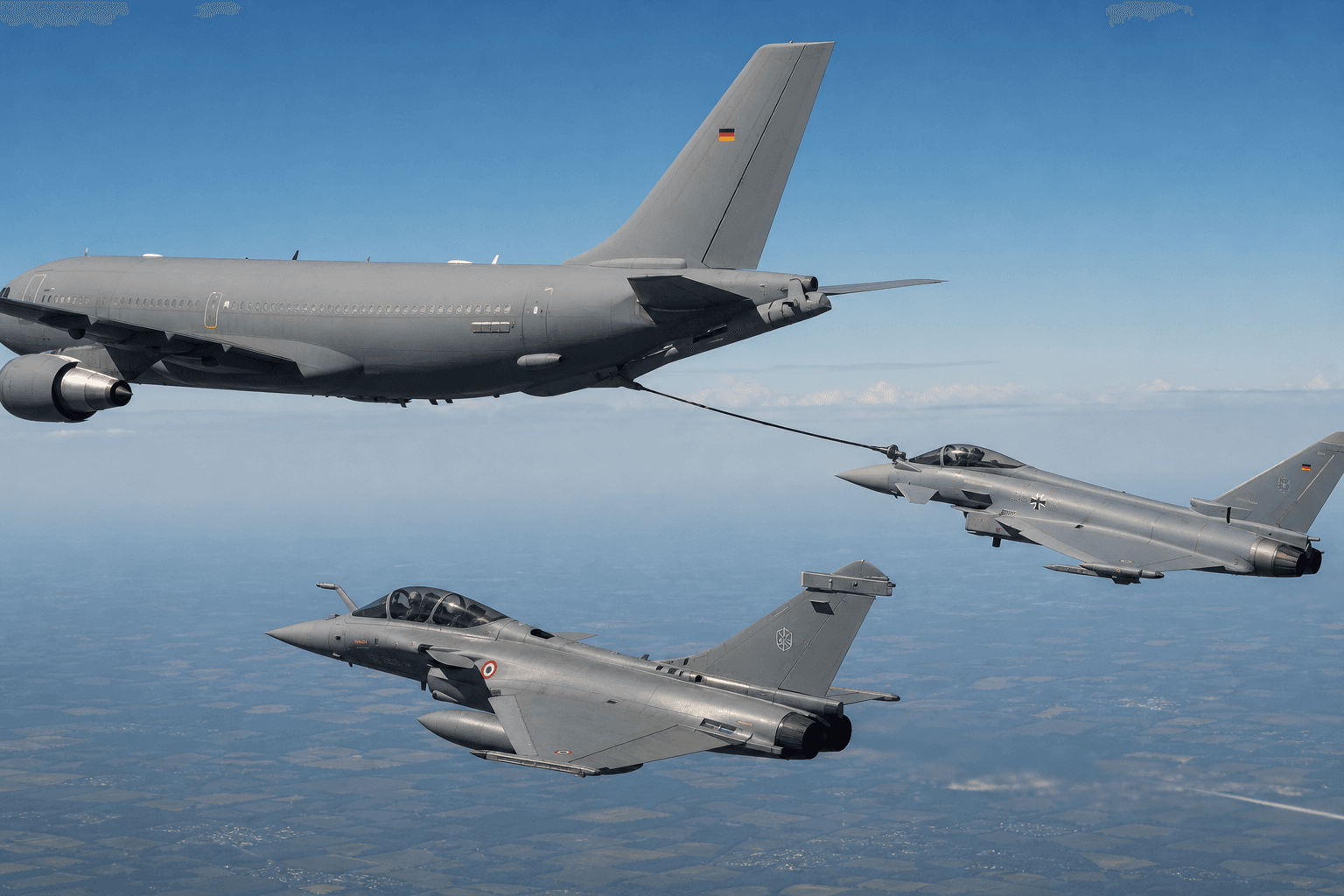
Illustration: The Touch & Go
France and Germany pivot defense strategy after joint fighter jet project collapse
Following the failure of their joint sixth-generation fighter jet program, France and Germany are enhancing cooperation in nuclear deterrence and defense through new initiatives.
The gist
France and Germany shift focus to new defense collaborations after their joint fighter jet program fails.
Continuing coverage
All Fighter Jets →- USAF Plans 267 F-15EX Fighters to Complement Growing F-35 Fleet as 'Missile Trucks'
- How the F-22's F119 Engine Overcame Long-Standing Fighter Jet Engine Trade-Offs
- Cathay Pacific A350 Intercepted by NATO Jets After Radio Silence Over Europe
- Saab inks $2.5B deal to deliver 16 Gripen E fighters to Ukraine by 2030
- US Marine F-35B Pilots Leaving for Airlines Offering Pay Nearly Double
France and Germany have explicitly redirected their defense collaboration following the collapse of their joint fighter jet project. French President Emmanuel Macron and German Chancellor Friedrich Merz convened near Cologne on July 17, 2026, intentionally choosing Augustusburg Castle in Bruehl for its historic Franco-German symbolism. The two leaders held their annual government consultations there, focusing on deepening ties in areas including nuclear deterrence. This setting, where Charles de Gaulle and Konrad Adenauer forged the original Franco-German friendship treaty in 1962, underscored the renewed commitment to cooperation despite recent setbacks.
Alongside these consultations, the Franco-German Defense and Security Council met at the Noervenich Luftwaffe air base, highlighting the urgency of European defense cooperation. In a demonstration of cooperative military capability, two French Rafale fighters, capable of nuclear armament, were deployed to Noervenich on July 16, 2026. Additionally, a German Eurofighter was refueled mid-air by a French aircraft, emphasizing operational interoperability between the nations’ air forces. These moves reflect growing concerns regarding Russia's regional posture and uncertainty over the reliability of American security assurances in Europe.
The current negotiations aim to transcend mere symbolic gestures and establish concrete collaborative projects, specifically aiming to compensate for the collapse of the Future Combat Air System (FCAS). FCAS was intended to be Europe’s flagship sixth-generation combat air initiative, launched by Macron and Merkel in 2017 with an estimated budget of around €100 billion. The program was designed around a manned New Generation Fighter linked via a ‘combat cloud’ network integrating drones, satellites, and other assets. Despite early progress, including a 2019 arms export treaty promoting mutual trust, deeper industrial disagreements ultimately prevented its success.
The core challenge that doomed FCAS was a bitter dispute over industrial leadership shared between Airbus, representing Germany and Spain, and France's Dassault Aviation. The tension escalated publicly in February 2026 when Chancellor Merz questioned whether a single aircraft could meet divergent national requirements. Specifically, France’s need for a nuclear-capable, carrier-compatible platform contrasted with Germany’s lack of such nuclear demands. Subsequent mediation efforts failed, and by April 2026, the program’s futility was acknowledged in EU forums, even as Macron initially resisted declaring it dead.
Dassault’s insistence on a leading role clashed with Airbus’s vision of an equal partnership, a stalemate unbroken by direct appeals including from Merz. Germany’s national aviation strategy, revealed in June 2026 at the ILA Berlin air show, enshrined Airbus as co-leader in its future combat aircraft endeavors. Spain, initially a partner in FCAS, had already begun funding its own exploratory study with Airbus and Indra, signaling divergent strategic interests. Belgium, an observer to FCAS, decisively abandoned the project and announced plans to acquire additional F-35A fighters.
Consequently, the two countries have formally split their paths regarding sixth-generation fighters. France has assigned Dassault sole responsibility for its new fighter, partly funded by over €4 billion investment in the Rafale F5 upgrade. Germany, led by Airbus with Spain still engaged, is developing an independent program. There are also ongoing discussions with Sweden's Saab as Germany seeks cooperative industrial partners. Both nations aim to field their respective new fighters in the early 2040s, marking a clear departure from the original unified vision.
Despite this division, both countries intend to maintain collaboration on the combat cloud technology that was a central component of FCAS’s concept. At the July 2026 council meeting, this advanced digital architecture—the integration of communications and data among aircraft and related systems—remained a focal point. This continuing cooperation suggests a strategic recognition that certain elements of modern defense, particularly networked warfare capabilities, benefit from joint development even as aircraft platforms diverge.
Frequently asked questions
- What caused the collapse of the Franco-German FCAS fighter jet program?
- The program failed due to industrial disputes between Airbus and Dassault, disagreements over leadership roles, and divergent national aircraft requirements including nuclear capability needs.
- How are France and Germany proceeding with their combat aircraft development after FCAS ended?
- France is independently developing its new fighter through Dassault, while Germany leads its own program with Airbus and Spain, aiming for early 2040s service entries.
- What defense cooperation efforts continue between France and Germany despite the fighter jet split?
- They continue to collaborate on the development of the combat cloud architecture, integrating networked air combat capabilities across platforms and systems.
Read more
All Military/Defense →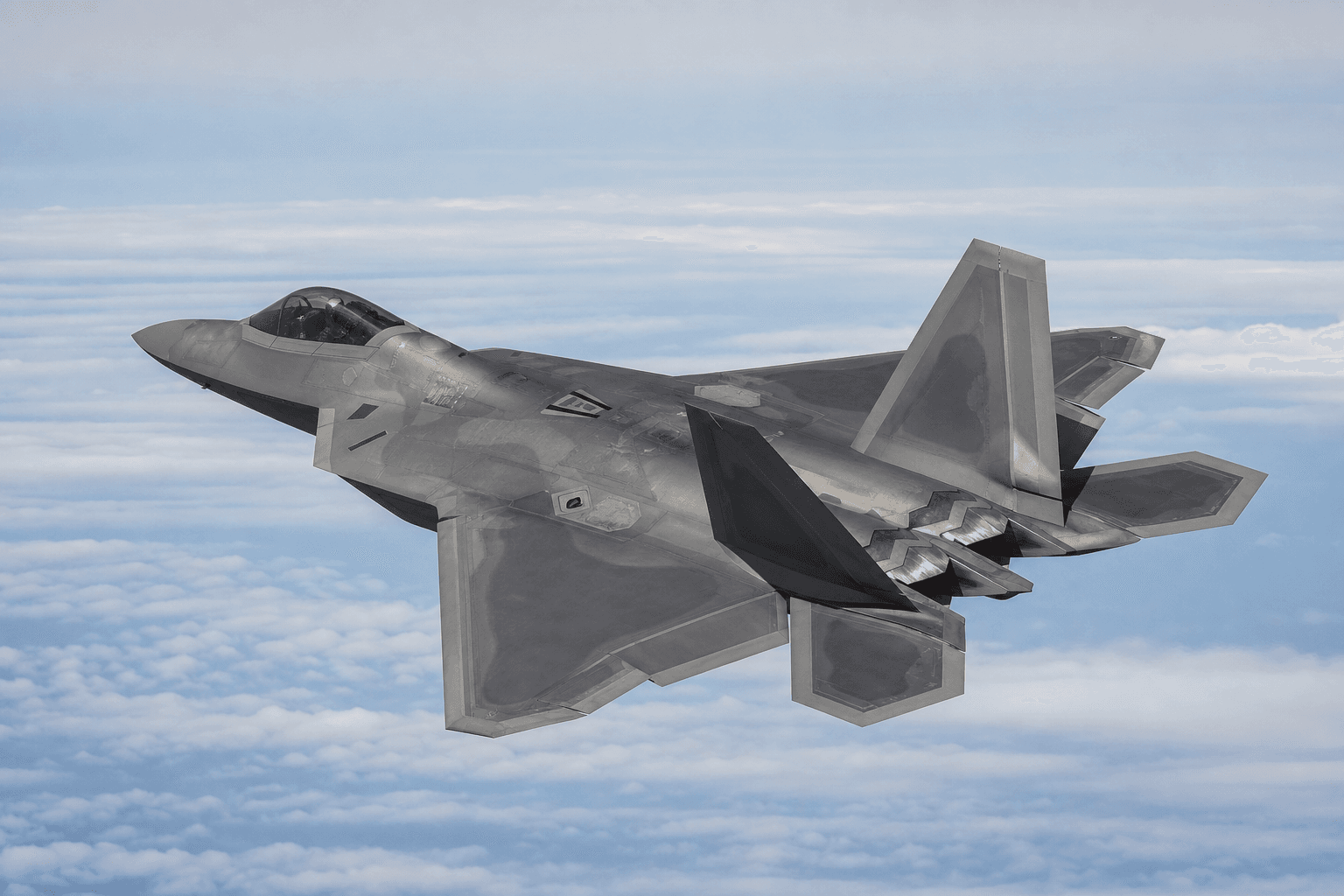
How the F-22's F119 Engine Overcame Long-Standing Fighter Jet Engine Trade-Offs
The Lockheed Martin F-22 Raptor was built as a generational leap over the existing F-15 Eagle. The F-15 Eagle was designed as an air superiority fighter , but by the 1980s, the Air Force felt it might not have the "unfair" advantage that they wanted, as the Soviet Union developed the Su-27 and MiG-29. The F-22 was initially designed as a late Cold War effort to overmatch any fighter jets the Soviets could field.
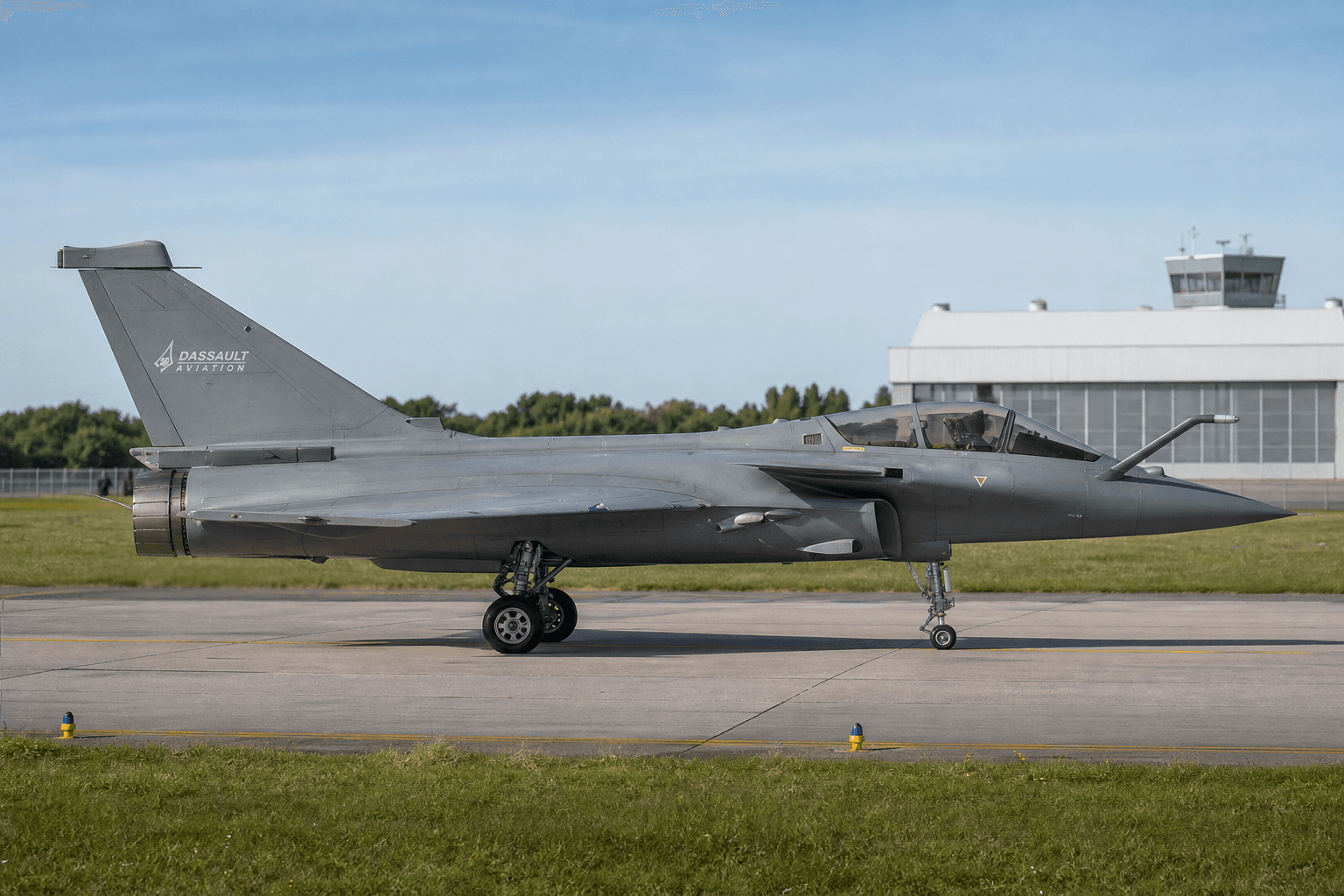
Europe's FCAS fighter program collapses amid industrial disputes and divergent military goals
Where next for Europe’s future combat aircraft plans? Perhaps the most surprising thing about the collapse of the European Future Combat Air System (FCAS) programme was that it took so long to fall apart. Even from the outset you did not need to be an expert in business dynamics or industrial politics to see that the relationship between lead protagonists Airbus and Dassault Aviation was likely to be strained at best. French airframer Dassault is, like it or not, a fiercely independent entity with a chief executive in Eric Trappier for whom the adjective 'pugnacious' is tailor-made. Dassault thought it was to be fully in charge, the architect as the company phrased it, of the New Generation Fighter (NGF), the manned platform at the heart of FCAS. But faced with what it felt was the steady encroachment of Airbus onto its turf, tensions inevitably ratcheted up. Indeed, it was always going to be a challenge to yoke Dassault to a wider pan-European construct, particularly when it lacks the collaborative spirit that, thanks to its origins, is part of the Airbus DNA. There also seemed to be an inherent issue with what the three countries funding FCAS wanted to achieve with the NGF – France sought a replacement for the Rafale, including the naval version, while Germany and Spain targeted an air dominance fighter as a Eurofighter successor. Remember too that France and Dassault have history here: originally part of the Future European Fighter Aircraft programme – the precursor to the Eurofighter – the pair left, to develop the Rafale independently, due to disagreements over design authority and operational requirements. Sound familiar? But with the dust now settling on the inherently fissiparous FCAS project, the question becomes: what next? Can France and Dassault proceed once more in splendid isolation? At a technological level, almost certainly, after all, whatever criticism can be laid at the airframer's door, it does not lack for design and manufacturing nous. However, the stumbling block may be the eye-watering sums needed to bring a sixth-generation fighter into service. German industry, with some Spanish contribution, has already announced the ' Team Gen 6 ' grouping that it says is willing to work with any interested party to advance the interests of European sovereignty. Mind you, it is unclear who else is available. At this stage, ushering Germany and Spain into the Global Combat Air Programme being progressed by Italy, Japan and the UK – seemingly harmoniously so far – seems challenging, if not outright impossible. That leaves Sweden, which is still mulling options for a successor to its current Saab Gripen E. Mind you, with relations between Paris and Stockholm ever-closer – notably, France is acquiring at least two Saab GlobalEye surveillance jets – perhaps a different marriage of convenience could be contemplated? Equally, perhaps the real lesson from the debacle is that agility is key: many of the capabilities envisioned for the broader FCAS project – the system of systems concept – are already being tested or deployed by adversaries. Whichever direction Europe's new divorcees take – remarriage or remaining single – the watchword for a future fighter, now more than ever, is the need for speed.
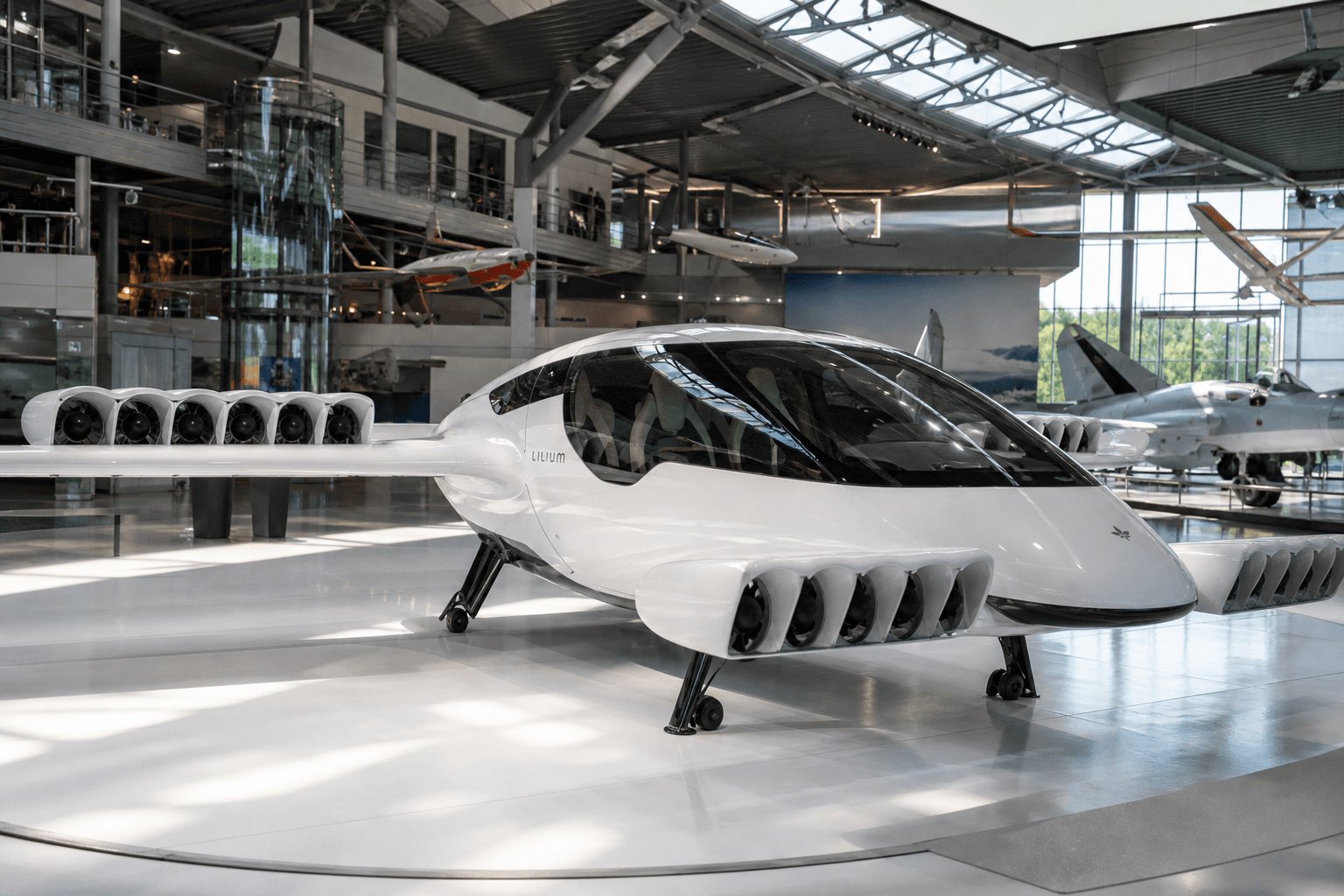
Historic Lilium Phoenix eVTOL prototypes preserved in German aviation museums
The lighter side of Flight International . Museum pieces With a growing list of advanced air mobility ventures giving up the ghost well before their experimental designs reach the market, history risks losing a physical record of their visions. However, thanks to the efforts of Robert Gardemin, the original test aircraft of one of the electric vertical take-off and landing (eVTOL) sector's pioneers have been saved. German developer Lilium filed for insolvency in October 2024. With no buyer found for the company's assets, Gardemin launched a successful crowdfunding campaign to raise €10,000 ($11,600) to rescue the so-called Phoenix scaled prototypes, which he describes as representing "years of dedicated work by over 1,000 people and one of the most ambitious electric aviation programmes ever developed in Germany". The uncrewed test aircraft had been heading for the scrapheap after completing early flight testing in Spain, with one – Phoenix 2 – notching almost 200 flight hours. According to an update from Gardemin on LinkedIn, the prototypes have been transferred to the Deutsches Technikmuseum in Berlin and Luftfahrtmuseum Wernigerode in Saxony Anhalt, where they will be reassembled for display, ensuring that "an important chapter in the emergence of eVTOL technology is not erased but made accessible to the public for generations to come". Joyce’s choices Alan Joyce was a working class lad from Dublin, the son of a cleaner and a factory worker, who through a love of numbers – mathematics, then management science – found himself working for and then running airlines, including, at the age of 42, Qantas. Now, almost three years after he quit as chief executive of the Australian flag-carrier, Joyce has penned a memoir, Riding the Jet Stream . He says he had two motivations – one professional, one personal. He needed to "set the record straight" about his 15-year stint at Qantas, including the grounding of the fleet in 2011, the industrial battles, and steering the business through the pandemic. Former Qantas CEO shares his experiences. Source: BillyPix "I wanted to tell it as it actually unfolded, in the room, under pressure, with every decision carrying enormous consequences for tens of thousands of people," he explains. The other was "more personal", he says. "I wanted to encourage young leaders to learn from my successes and failures, because I think that's where the real lessons sit." He also writes about what it was like to be "one of the few openly gay CEOs in corporate Australia" and how he used his platform for "something bigger than the bottom line, including the campaign for marriage equality". Riding the Jet Stream is available from Hardie Grant Books. Chipmunk at 80 Published to commemorate the 80th anniversary of the de Havilland Canada DHC-1’s first flight, Chipmunk at 80 includes “first-hand stories from pilots, engineers and custodians”, along with over 200 photographs, including rare archive shots. Written by Ben Griffiths and Ian Black, Volume 1 is a fitting tribute to an iconic type much loved by generations of military pilots, air cadets and total aviation people everywhere. Available to order now via chipmunkat80.carrd.co for £37.99. Bristol where-port A confused Doug Brown references a recent picture from The Sun newspaper, illustrating a story about Bristol airport's ambition to introduce long-haul flights. "I couldn't work out why Lulsgate had big X marks on the runway, and a massive displaced threshold I don't remember from landing my Hamble Cherokee there, until I spotted the Brabazon hangars to the right of the shot," he says. The picture was of a Bristol airport, but not the Bristol airport, BRS in Lulsgate Bottom. Instead, it was the former Filton airfield, famous birthplace of Concorde and now largely a housing estate, with the main Brabazon hangar repurposed to a music arena. Yuckspeak We can also coordinate any speaking moments with members of the leadership team = We can arrange an interview. Copa mechanism We are warned to avoid mangling metaphors, but surely there is an exception for Copa Airlines boss Pedro Heilbron's splendid summation of the Panamanian carrier's risk strategy: "We never roll the dice without a parachute." From yuckspeak to tales of yore, send your offcuts to murdo.morrison@flightglobal.com From the archive 1926 Gentleman’s way The Chairman, in thanking Mr. Upson for his talk, said that, having tested most of the methods of getting up into the air, he considered the airship the only gentleman’s way of travelling. His own experience in English airships was that one sat in comfort, there was no noise, one rang a bell for anything one wanted to eat or drink, one gazed quietly out on the scenery, and one could talk. Most of all, however, he would like to know from Mr. Upson when this airship was going to be finished. They had all talked about airships for such a long time, and what he wanted was to see the airship in the air. Mr. Upson said he was very sorry that the one question as to when the airship would be finished was the one that he was afraid he was unable to answer. 1951 ‘The Big Show’ Every evening, Pierre Clostermann recorded the story of his life with the R.A.F., and by the end of the war his jottings filled three large notebooks. They have now been published as "The Big Show", so that “Free Frenchmen might be reminded of their own hopes and loyalties” in those darker years and so that the tales of their sons’ deeds might give some consolation to the families of his fallen friends. Not one of these pages can be passed over lightly. The breathless concentration as the judder of a Spitfire’s cannon answers the anxious thumb at the gun-button, heart-beats quickening at the telephone’s urgent tinkle, the proud yet pitiful show of bravado as the lone pilot returns without his comrades – all those undying moments of a fighter pilot’s life are here. 1976 Amateur aerobatics There is no legislation to prevent an untutored pilot from attempting aerobatics, or to prevent an unqualified tutor from doing aerobatic coaching. This is a curious anomaly. A pilot may not take a passenger at night without being suitably trained and tested, yet he can legally roll his unsuspecting victim upside-down with no formal training at all. It is questionable as to which is more hazardous. Aviation legislation can be meticulous on seemingly petty points – it is only recently that the CAA has proposed making shoulder harnesses mandatory for the front seats of light aircraft – but appears sometimes to turn a blind eye to others. So there is little to prevent a pilot from picking up a few tips from an aerobatic pundit and then going up to try some manoeuvre himself. 2001 After the attacks With the backlog of passengers stranded by the events of 11 September now cleared, the slump in passenger confidence will leave the airlines having to fly, in some cases, near-empty aircraft. With little hope of securing finance from investors, the only solution is a direct injection of Federal cash. Assuming there are no more terrorist attacks, passengers may return, slowly. But airlines will have to cope with the cost of implementing new security measures. Israeli airline El Al is arguably the safest to fly on, but the cost of implementing El Al-style security measures, from pressurised, double armoured doors to the flightdeck, to individually interviewing each passenger, would be crippling. That is why the USA must step in and fund new security measures directly.
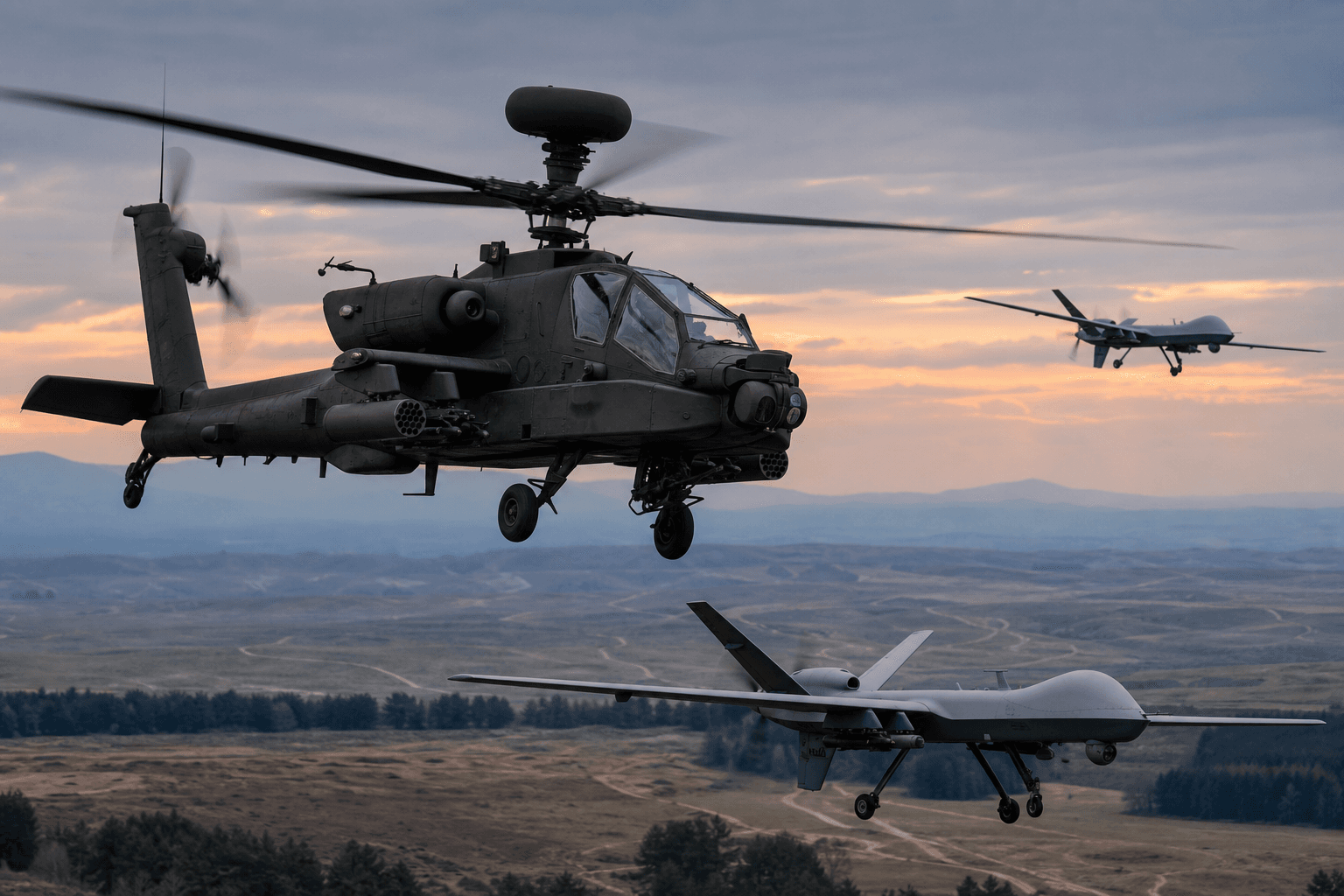
UK to retire Wildcat helicopters in 2027, relies on drones and Apaches until 2030
The rapid proliferation of low-cost uncrewed aerial systems like man-portable drones in the 21st century has made piloted helicopters highly vulnerable on the modern battlefield. Since the Russian invasion of Ukraine in 2022, the ongoing conflict has illustrated the potency of exceptionally low-cost drones against conventional rotary-wing combat airframes. The United Kingdom has taken notice, and the Ministry of Defence has decided to retire the Wildcat AH1 helicopters starting next year in favor of similar tactical drones.
The Daily Touch & Go
The day's best aviation news in your inbox. Free, no spam.