

Illustration: The Touch & Go
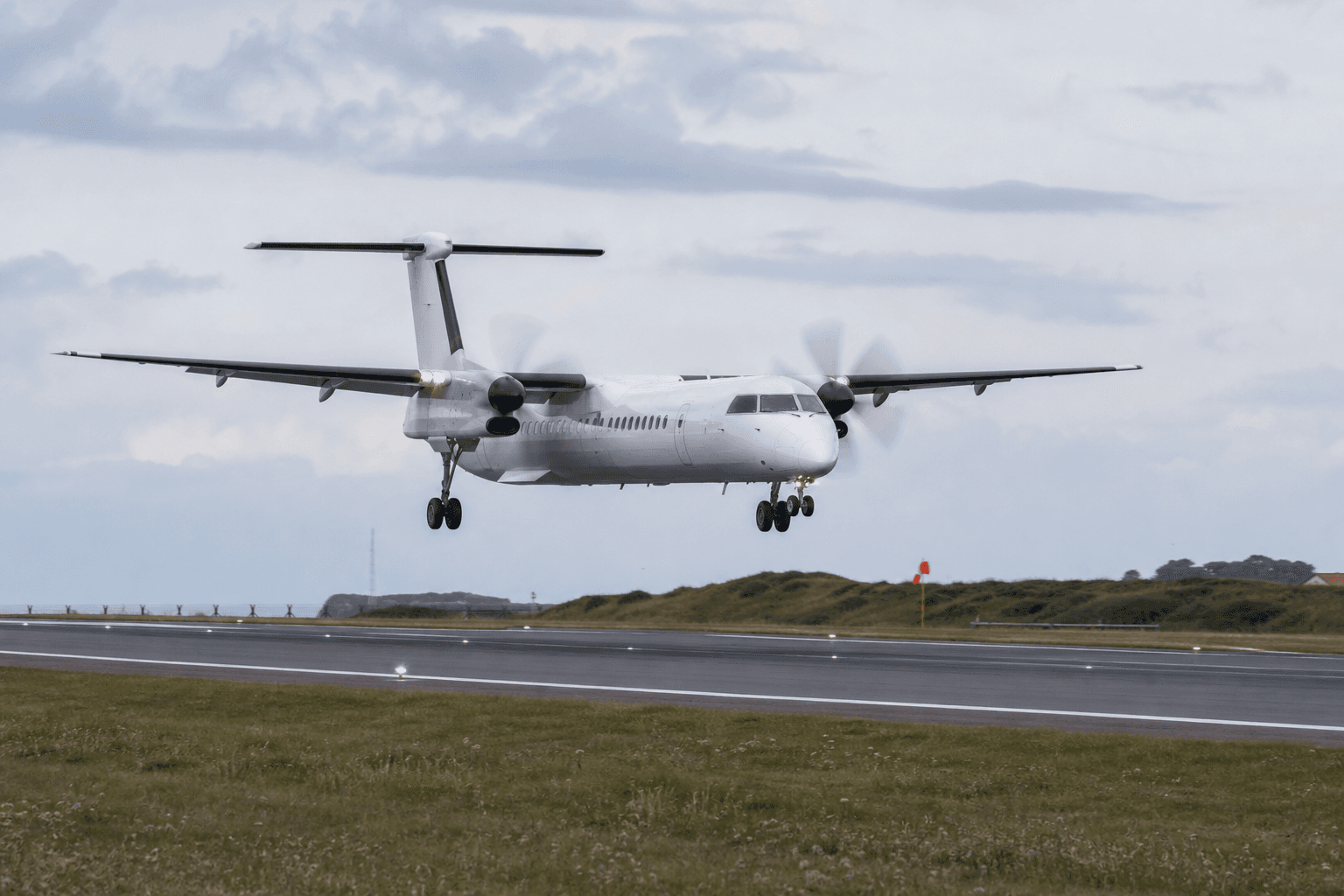
Dash 8-400 at Guernsey floated long before overrun due to pilot errors
A Dash 8-400 wet-leased by Aurigny from Luxwing floated excessively during landing at Guernsey, leading to an overrun driven by crew misjudgment and poor cockpit communication.
The gist
Dash 8-400 crew at Guernsey overran after floating too far during landing, hampered by crew inexperience and failure to initiate go-around.
A De Havilland Dash 8-400, operated by Luxwing under wet-lease to Aurigny, landed at Guernsey airport on 23 April 2024 only to overrun the runway after floating for nearly two-thirds of its length before touchdown. Three pilots were on board: a captain conducting line-training for a new first officer, and a second first officer serving as safety pilot. The incident draws attention to cockpit dynamics and decision-making under pressure, according to the UK Air Accidents Investigation Branch (AAIB).
The aircraft approached runway 27 and passed the threshold before the captain initiated the flare, attempting a gentle touchdown that inadvertently caused the plane to float about 620 meters down the 1,463-meter runway. The gently downward sloped runway (approximately 1%) contributed to the sensation of floating, but the crew underestimated how far the aircraft had travelled without touching down. For approximately 10 seconds, the Dash 8-400 maintained an altitude below 10 feet at 120 knots ground speed.
Testimony revealed that neither the first officer undergoing training nor the safety pilot realized the prolonged float distance, resulting in no warnings or calls for a go-around. The captain himself reported uncertainty about how far along the runway they had floated. After a brief bounce upon main gear touchdown, manual braking was applied, but peak brake pressure was not reached until 10 seconds later. Throttle levers were reduced to enable aerodynamic propeller braking.
The aircraft's nose gear touched down roughly 520 meters from the runway’s end. It continued at about 25 knots ground speed before veering off the paved surface and stopping approximately 30 meters beyond the runway boundary. Despite all pilots acknowledging that the runway slope impaired visual perspective, the AAIB highlighted that the crew should have realized the extended time over the runway exceeded normal expectations, particularly given the runway's relatively short landing distance.
The inquiry pointed out the crew’s awareness that runway length was critical to their approach strategy, motivating the captain to remain the handling pilot during this wet-lease operation. The failure to initiate a go-around after missing the touchdown zone was therefore a significant lapse. The report also discussed the impact of junior pilots' inexperience and the hierarchical cockpit environment that may have suppressed challenges to the captain’s decisions.
Following the overrun, the captain attempted to taxi the aircraft off the rough ground back to the runway but was unsuccessful. Air traffic control directed the crew to remain stationary. The AAIB noted that the crew delayed shutting down the engines for about six minutes, conducting shutdown procedures without reference to checklists. This lapse raised concerns about potential overlooked systems or safety considerations, although no damage or injuries occurred, and all 68 occupants were safe.
Aurigny responded by requiring cockpit observation of crews operating wet-leased aircraft by one of its own training captains during the introduction of new wet-lease arrangements. This mandate aims to improve oversight and reduce risks linked to unfamiliar crew combinations. The incident highlights both human factors and operational challenges involved in wet-lease arrangements on short runways like Guernsey's runway 27.
Read more
All Aviation Safety →
NASA Awards $30M for AI and Sustainable Aviation Technology Research at Universities
NASA on Thursday announced about $30 million in funding for four university aeronautics projects, including a Stanford University effort to develop machine-learning-enabled aircraft avionics. The multiyear awards are part of NASA's University Leadership Initiative, which pairs university researchers and students with partners from industry and government. Learning-Enabled Avionics Stanford researcher Somil Bansal will lead the four-year avionics project. The team plans to develop a system that uses machine learning to control aircraft communications, navigation and other electronics while continuously reinforcing safety during operation. NASA said the research could help establish a framework for eventually integrating AI-enabled avionics into the national airspace. "With these four new awards , the University Innovation project is leaning in on NASA's aeronautics mission priorities," said Andrew Provenza, project manager at NASA's Glenn Research Center. Other Projects The University of Minnesota will spend four years developing a fuel-flexible propulsion system designed to operate as a conventional turbofan during takeoff and subsonic flight before transitioning to ramjet operation. NASA says the proposed system could cruise at Mach 4. A second Stanford team will develop high-fidelity simulations for planning lower-noise flight paths for future small aircraft operating over populated urban areas. Virginia Tech received a three-year award for research into aircraft design and certification. Its project will combine model-based systems engineering, multidisciplinary design and analysis tools and uncertainty modeling to incorporate certification considerations earlier in aircraft development. NASA said the approach is intended to reduce the need for costly redesigns later in the development cycle. The four awards mark the ninth round of funding under the University Leadership Initiative.
Cessna 150 collides with Pennsylvania State Police helicopter near Carlisle Airport, killing pilot
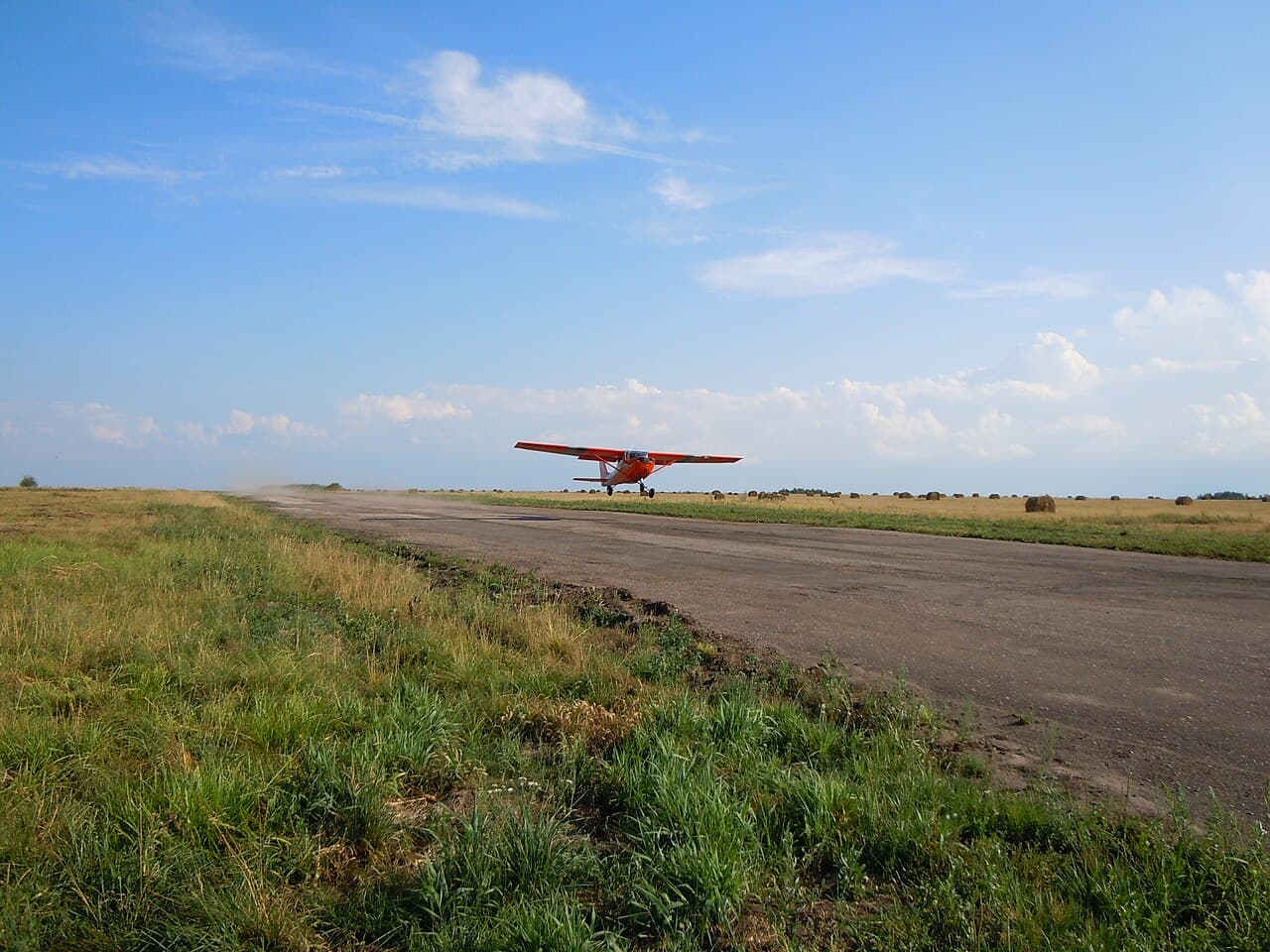
A Cessna 150 pilot was killed when his airplane collided with a hovering Pennsylvania State Police helicopter while the Cessna was attempting to land at Carlisle Airport in Pennsylvania. Video posted on X shows the Cessna approaching the runway at low altitude as the Bell 407 hovers several feet above a grassy area beside it. The airplane veers sharply to the right and strikes the helicopter from behind, sending both aircraft to the ground in a cloud of debris. The crash occurred at about 18:52 local time on August 19, 2026, according to the Pennsylvania State Police and Federal Aviation Administration (FAA). The Cumberland County Coroner's Office identified the Cessna pilot as 57-year-old Paul Sokoloski of Hershey. He was the only person aboard the airplane. Sokoloski was an emergency medicine physician affiliated with Penn State Health. He worked in emergency departments at Penn State Health Hampden Medical Center, Holy Spirit Medical Center and Lancaster Medical Center, according to his profile on the health system's website. The helicopter was conducting a routine training exercise when the collision occurred. Its two pilots, Corporal Bryce Corman and Trooper Jason Mills, are members of the Pennsylvania State Police aviation unit. The impact tore away the helicopter's rotor blades and tail boom. The aircraft rolled onto its side and partially onto its roof, trapping both troopers inside. Corman pushed out a window and helped Mills escape. Both were taken to Penn State Health Milton S. Hershey Medical Center, where hospital officials said they were in stable condition with minor injuries. "When I say it was a very violent crash, that plane was cut into a lot of pieces," Pennsylvania State Police Acting Commissioner George Bivens said during a news conference. Bivens said the Cessna approached from behind the helicopter while lined up with Runway 28 before veering right at the last moment. "The pilots would not have been able to even see that airplane approaching them," he said. Carlisle Airport is an uncontrolled field that does not have an air traffic control tower. Rotor wash from the hovering helicopter is one possible factor investigators may consider. The video shows the Cessna's right wing dropping shortly before impact, but it does not establish why the airplane veered sharply. FAA guidance warns that helicopters hovering close to the ground can produce high-velocity outwash vortices extending approximately three rotor diameters. The agency advises pilots of small airplanes to remain outside that area. The same guidance notes that helicopter wake turbulence can drift toward a nearby runway. Other factors, including visibility, aircraft spacing, radio communications and a possible last-second avoidance maneuver, have not been ruled in or out. The National Transportation Safety Board (NTSB) is leading the investigation, with assistance from the FAA and Pennsylvania State Police. No cause has been determined.
Cessna 150 Collides with Pennsylvania State Police Bell 407 Helicopter at Carlisle Airport
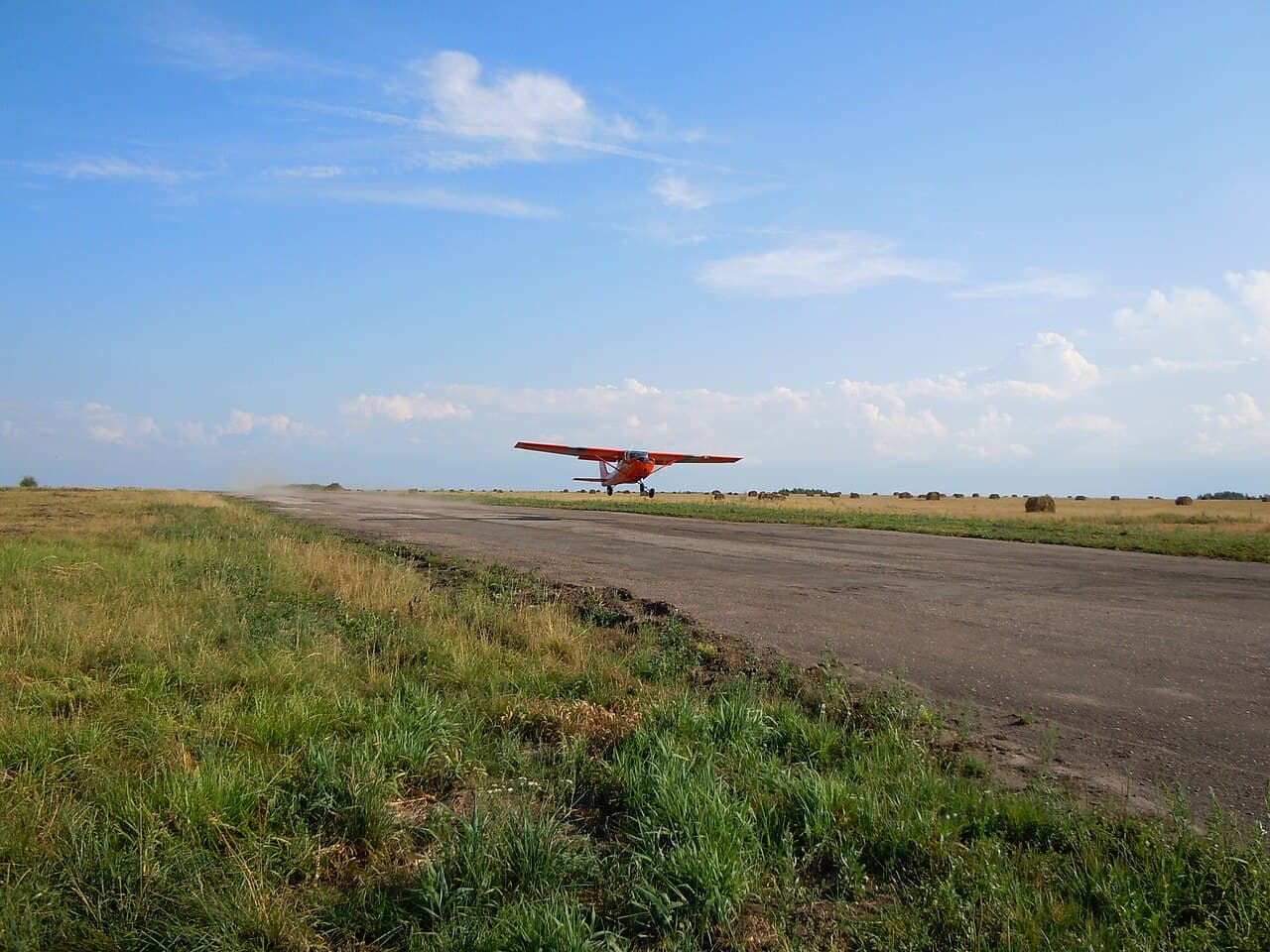
The pilot of a Cessna 150 was killed and two State Police troopers were hurt when the small plane collided with a police Bell 407 helicopter at Carlisle Airport, Pennsylvania, on Wednesday evening. Early reports suggest that the helicopter had been conducting routine training and was hovering a few feet above a grass area when the Cessna struck it from behind.
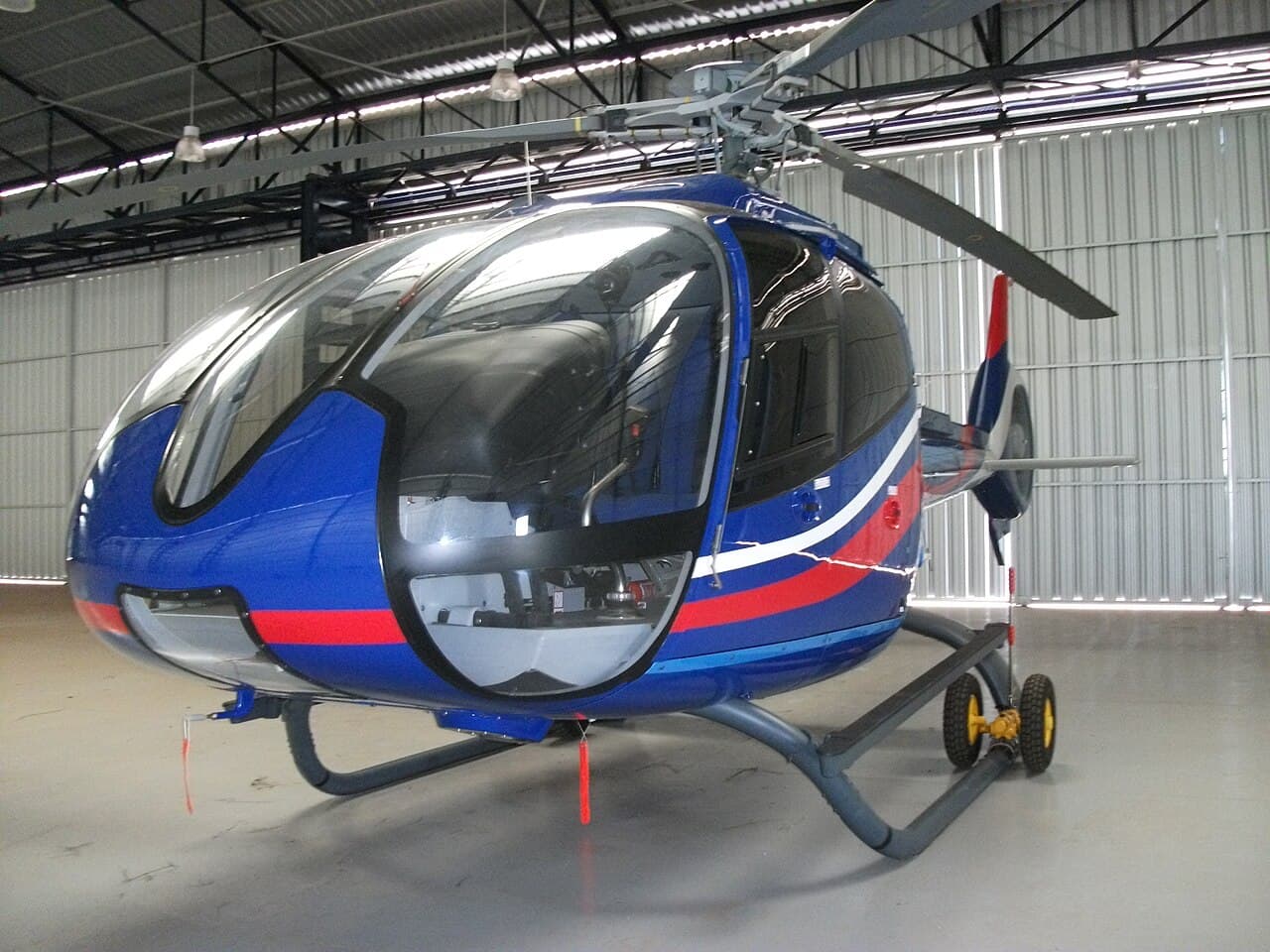
Seven perish in Eurocopter EC130 crash on Kenya safari flight near Mount Ololokwe
Five Americans were among seven people killed when a tourist helicopter crashed in a remote area of northern Kenya on August 19, 2026. The Eurocopter EC130 B4, registered 5Y-GYM, was carrying six passengers and one pilot when it crashed near Kirish, close to Mount Ololokwe in Samburu County. The Kenya Civil Aviation Authority (KCAA) said the accident occurred at approximately 09:13 local time while the helicopter was flying from Loisaba Conservancy to the Ewaso Nyiro area. The aircraft was operated by Lady Lori Helicopters and was carrying guests of luxury safari company &Beyond. "We can confirm that on the morning of August 19, an aircraft registered as 5Y-GYM, carrying &Beyond guests, crashed near Kirish, close to Mt. Ololokwe in Samburu County, Kenya," the company said in a statement. The US State Department confirmed that five US citizens were among those killed. "We can confirm the deaths of five US citizens in a helicopter crash in Samburu County, Kenya," a State Department spokesperson said. "The US Embassy is in touch with local authorities and is providing consular assistance." Lady Lori Helicopters identified the aircraft as 5Y-GYM and said it was operating the charter flight from Suyian Conservancy to Ololokwe. "Lady Lori Helicopters is deeply saddened to confirm that one of our aircraft, registered 5Y-GYM, was involved in an accident," the company said. "Our deepest sympathies are with the guests, crew, their families and loved ones, and all those affected by this tragic accident." The six passengers included Michele Sensi-Contugi, director of Ecuador's National Intelligence Center; his wife, Stephany Hollihan Vasconez, a dual US-Ecuadorian citizen; and José Alberto Suárez, a senior Telemundo executive based in Florida. The Kenya Red Cross joined a multiagency response at the crash site. The remote and mountainous terrain complicated efforts to reach the wreckage. Kenya's Air Accident Investigation Department is leading the crash investigation. The EC130 B4 is a seven-seat, single-engine helicopter developed by Eurocopter, now part of Airbus Helicopters. The type is widely used for sightseeing and charter flights because of its large cabin, low external noise and unobstructed views. Mount Ololokwe, also known as Ol Donyo Sabache, rises above the Samburu region and is a popular destination for hiking and wildlife tourism. Loisaba Conservancy and the Ewaso Nyiro River are also part of Kenya's northern safari circuit.
The Daily Touch & Go
The day's best aviation news in your inbox. Free, no spam.