


Image: PJSC "UAC" · CC BY-SA 4.0 · via Wikimedia Commons
United Airlines expands Denver training center adding 40 new CAE flight simulators
United completes phase one of a major expansion at its Denver Flight Training Center, now operating 86 simulators to train up to 860 pilots daily.
The gist
United Airlines bolsters its Denver Flight Training Center with 40 new CAE simulators, enhancing pilot training capacity and creating over 300 jobs.
United Airlines has completed the first phase of an extensive expansion at its Denver Flight Training Center, adding 40 new flight simulators supplied by CAE. This upgrade includes a mix of full-motion flight simulators and fixed training devices, bringing the facility’s total to 52 full-motion simulators and 34 fixed devices. The Denver campus, located in the city’s Central Park neighborhood, is now the world’s largest pilot training center by simulator count and training space.
Spread across 22 acres with eight buildings, the nearly 700,000 square-foot training center operates around the clock for 362 days a year. United said the facility can train up to 860 pilots per day and conduct more than 32,000 training events annually. This makes it a crucial hub for maintaining and expanding the airline’s pilot workforce, supporting nearly 18,000 active pilots alongside newly hired flight crews.
The training center serves as United’s sole pilot training facility. New pilots complete their initial qualifications here, while all United pilots return periodically for recurrent training, typically every nine months, to maintain certification and ensure ongoing proficiency. The scale and scope of the operation reflect United’s commitment to pilot training excellence and safety.
United invested more than $145 million in the latest expansion, which began in 2022 and includes a new 150,000-square-foot building opened in 2024. This new building was designed specifically to accommodate additional simulators, classrooms, and support functions. The investment has also created more than 300 new jobs in the Denver area, employing roughly 1,600 people at the training center in roles such as flight instruction, evaluation, scheduling, and flight standards.
CAE, a longtime United partner of over 40 years, provided the new simulators and technology. CAE’s President and CEO Matthew Bromberg emphasized the importance of collaboration, noting the training technology and expertise provided will help United prepare pilots on a large scale with high reliability. The CAE simulators installed include advanced full-motion capabilities, providing realistic training environments for a variety of aircraft types operated by United.
The Denver Flight Training Center has a history dating back to its original construction between 1966 and 1968 at the former Stapleton Airport complex. It has been a cornerstone of United’s pilot training operations for decades, evolving significantly with each modernization effort. Since 2016, United has injected $370 million into the campus, continually expanding capacity and upgrading infrastructure.
Looking toward the future, United is preparing a second training facility near Denver International Airport (DEN). In July 2026, Denver City Council approved rezoning for two parcels United purchased in 2023, enabling construction to begin in 2027. The new site is planned to complement the Central Park campus and become operational by 2030, further supporting United’s expanding pilot training requirements.
This expansion aligns with United’s broader pilot growth strategy. Since 2021, the airline has hired more than 9,500 pilots, with roughly 700 new pilots joining in early 2026 alone and additional hires expected before year-end. United supports pilot development through multiple initiatives, including its Aviate career program, the United Aviate Academy in Goodyear, Arizona, and a dedicated transition pathway for military aviators.
The pilot transition from military to civilian aviation has been substantial; nearly 600 military pilots have joined United since 2024, with another 500 anticipated by the end of 2027. These comprehensive training facilities ensure that United can maintain the high standards and operational readiness demanded by its growing and diverse pilot workforce.
Frequently asked questions
- How many flight simulators does United Airlines now operate at its Denver Flight Training Center?
- United Airlines operates 52 full-motion flight simulators and 34 fixed training devices at its Denver Flight Training Center after the recent expansion.
- What is the daily pilot training capacity of United’s Denver Flight Training Center?
- The expanded Denver Flight Training Center can train up to 860 pilots per day and conducts more than 32,000 training events annually.
- What future expansion plans does United have for pilot training facilities in Denver?
- United is planning a new pilot training facility near Denver International Airport with construction starting in 2027, expected to open by 2030 to complement the existing campus.
Read more
All Military/Defense →
Flight School Reveals Risks of Multiple Airports in One City Through Real-World Training
The rule at the flight school was that the applicants would have at least two mock check rides in house before they paid $500 or more to a DPE for the real thing. I was designated the check airman for a particular private pilot applicant. His CFI asked me to put the applicant through his paces, showing no mercy, to find the soft spots in his training. I accepted the assignment. The applicant was instructed to create a cross-country VFR flight plan for the mock ride using the weather that was available that morning. He had been told the plan had to be detailed. I wanted to see a door-to-door navlog, complete with time to climb and individual legs, estimated time en route, etc., because you are going to be flying with people you care about, and perhaps someday you will be the person administering the instruction. READ MORE: Teaching Someone to Fly by Osmosis Doesn't Work READ MORE: Restoring Right Stuff Can Build Student Pilot Confidence I am a big believer in encouraging commercial-level performance from day one of training because it's easier to aim high than to have to clean a client up later. The applicant ate this up. His CFI instructed him to create a VFR navlog for a flight from Crest Airpark (S36) south of Seattle to Spokane, Washington. It would have been straightforward, except that there are three major airports in Spokane—Fairchild Air Force Base (KSKA), Spokane International (KGEG), and Felts Field (KSFF). The applicant planned for KGEG because he had flown there on a family vacation. Unfortunately, the DPE asked the applicants to plan for KSFF. What we had here was either a failure to communicate or expectation bias. The learner’s confusion presented a teachable moment. Airports are often named for the largest city within the region, and when there is more than one large airport in the vicinity, it can be confusing. Visit a website like AirNav.com and drop "Seattle" into the search box, and you will get no fewer than 14 responses. Two of them are seaplane bases, nine are heliports, and three are used by airplanes—King County International-Boeing Field (KBFI), Seattle-Tacoma International (KSEA), and Seattle Paine Field International (KPAE). Telling a student pilot—or anyone else unfamiliar with the Seattle area—to "plan a flight to Seattle" will likely result in confusion, especially if they intend to fly into Boeing Field or Sea-Tac. The airports are 5 nm apart, which doesn't give a pilot a lot of time to correct a mistake during approach. The FAA (or its precursor, the Civil Aeronautics Administration) figured this out decades ago and decided to split the alphabet when it came to identifying the automatic terminal information system at these airports. The designation Alpha to Mike belongs to Sea-Tac. November to Zulu belongs to KBFI. The pilots accessing the ATIS for "Seattle" have a better chance of getting the correct information when they know the alphabet split. Runway Alignment Adding to the confusion of airport identification is that runways are usually aligned into the prevailing winds. To some extent all airports can look alike from the air, especially for a low-time or unfamiliar pilot. According to instructors I know from Wisconsin, before GPS and the magenta line became ubiquitous in the aircraft, it was not terribly uncommon for student pilots to get confused when they attempted to fly to either Wittman Regional Airport (KOSH) in Oshkosh or Fond du Lac County Airport (KFLD), which is 13 miles to the south. Both airports have runways aligned 18/36 and 09/27. I was skeptical when I heard this as KOSH is towered, and KFLD is not, and the runways are smaller—18/26 (5,941 by 100 feet) and 09/27 (3,604 by 75). However it's been a long time since I was a student pilot. Instructors who take their learners to the airports—sometimes on the same day—point out the differences such as the crosswind runways at KOSH—05/23 (3,424 by 75) and 13/31 (3,061 by 75)—which, so say the CFIs, are sometimes mistaken for taxiways. Aviation professionals can get confused as well. In 2004 a corporate pilot who thought he was ostensibly lined up for Runway 31 at KBFI in VFR conditions was, in reality, lined up for Runway 34 at Renton Municipal Airport (KRNT). The airports are 4 nm apart, basically side by side with a greenbelt and a freeway between them. Approaching from the south, as this pilot was, you see KBFI first and a moment or two later KRNT—unless you are slightly to the east, in which case you notice the lake off the north end of the runway at Renton and fixate on that until the runway comes into view. Since it was afternoon, the flat light made it challenging to see details on the ground. The pilot was talking to Boeing tower. So was I, as I was at the end of an IFR approach operating in VFR conditions, preparing to configure the aircraft for landing. I was ahead of him in my mighty Cessna 172, and keeping my speed up as requested. The controller must have noticed the corporate jet was slightly off course, because the controller asked him to verify which airport he wanted to go to. When the jet pilot replied he was lined up on Boeing, the controller replied he wasn't, then asked if he saw the red-and-white Cessna ahead of him and slightly to his left in the 11 o'clock position. At this point my copilot started to frantically look over her shoulder to make sure we weren't about to get run over—we weren't. Boeing tower then asked me to rock my wings, which I did, with the enthusiasm of a pilot over FISK inbound to Oshkosh. The jet replied he had us in sight, and was instructed to follow us in. We were assigned the little runway. We were down and clear when the jet landed on the big runway. The jet parked at the FBO next door to the flight school. Shortly after landing, the pilot came over and thanked us for the help—he explained he got confused because he knew Boeing had a facility in Renton. "Here too," I replied, pointing across the runway at the ginormous buildings with "BOEING" on them. Tips for Avoiding Airport Confusion When planning a flight, always double-check the airport identifier. Don't rely on the name of the city because this can be misleading. Mexico Memorial Airport (KMYJ), for example, is in Missouri. Look up the details of the airport in the FAA Chart Supplement for the most pertinent information including runway length, alignment, and lighting systems. This is particularly critical at night when ground clutter can make it difficult to discern an empty parking lot with light stands from runway approach lights. Check reliable online airport information pages, as they often have details about nuances of the airport—for example, "do not mistake automobile track west of the airport for the runway." Pay special attention to communication frequencies, and when making radio calls to nontowered airports, begin and end each transmission with the name of the facility you are talking to.
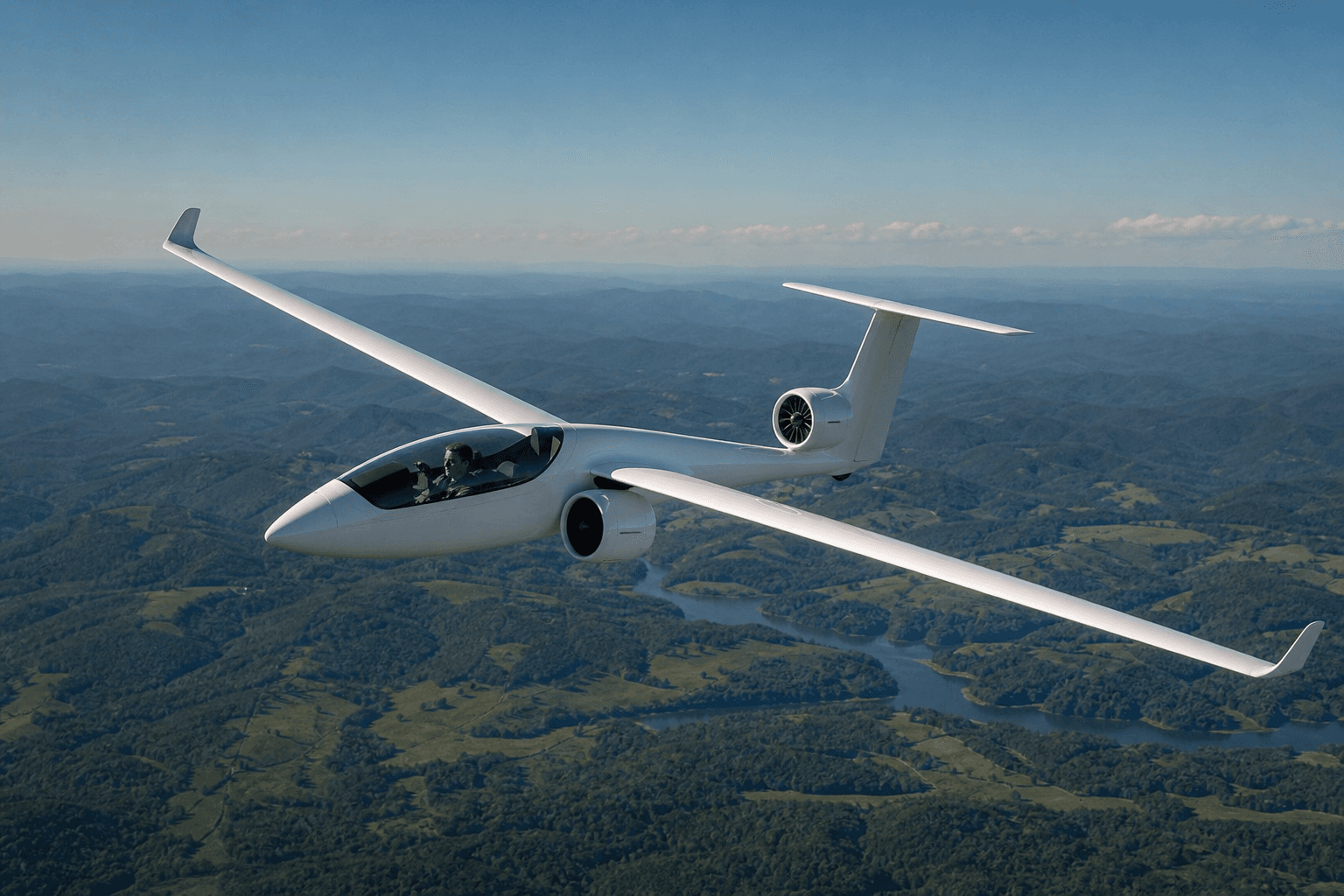
Whisper Aero's Ultra-Quiet Electric Engines Power First Piloted Flights in Tennessee
An electric aircraft engine designed to reduce operational noise to a whisper is now powering piloted aircraft. Whisper Aero on Wednesday revealed that its "ultra-quiet" eQ250 electric ducted fan propulsion system is being put to the test in Tennessee under an FAA special airworthiness certification. The company said it installed a pair of eQ250s on a modified Aériane Swift 3 glider, with which test pilot Zac Majors conducted three flights spanning 130 minutes, or about 43 minutes on average. Majors said the aircraft, which the company refers to as the Whisper Powered Swift, produced more thrust and was quieter than the standard propeller version of the glider, "but still great handling." "[I] could really do whatever I wanted with it," Majors said in a statement. "Look forward to flying it again." Fortunately for him, the campaign is only just beginning. Whisper plans to continue testing the Swift in Tennessee before advancing to flight tests and evaluations with "government customers" later this year. The company is under contract with the U.S. Air Force to develop a new family of quiet, efficient, autonomous aircraft for contested logistics, with initial testing planned for 2027. How It Works The eQ250 is the flagship product of Whisper's electric quiet (eQ) engine series. According to the company, it produces up to 85 pounds of static thrust for fixed-wing aircraft. It can also power Group 3 uncrewed aircraft systems (UAS)—which have maximum weight of 1,320 pounds and speed under 250 knots—or larger drone platforms. The specialized electric ducted fans are 10 inches in diameter and produce about 20 dB less noise than "comparable quiet propulsion systems," while also being 20 percent more efficient, according to Whisper's website . For short takeoff and landing (STOL) aircraft, the eQ250 is designed to enable coefficients of lift as high as 14. The propulsion system is intended to unlock short-to-medium-range regional air mobility services using small airports. The idea is similar to Electra's concept for "direct aviation," which involves the company's "ultra-short" takeoff and landing EL9. The goal is to replace trips that would take about 90 minutes driving with air service that takes closer to 20 minutes. Whisper said the Swift's 26:1 lift-to-drag ratio made it ideal for evaluating handling qualities and the propulsion system's performance, integration, and acoustics. Video: Whisper Aero The glider's eQ250s are powered by five Epic 1.0 Energy modules from Whisper partner Electric Power Systems (EPS). According to EPS, they provide 60 minutes of usable flight time with 30 minutes of reserve for trainer, eVTOL (electric vertical takeoff and landing), and "thin-haul" aircraft, which are used for very short trips with a handful of passengers. Whisper said the aircraft "completed its planned objectives," which included validating its propulsion integration, battery, control, and other systems. At full throttle at 100 feet agl, Whisper said the engines were quieter than the airframe itself. Ian Villa, co-founder and chief operating officer, told The Air Current that the glider can generate substantial noise without engines. Flown during the early morning, the aircraft produced about 52 dB(A) of noise compared to 34 dB(A) background noise, Whisper said. "The ability to fly within the soundscapes of even rural environments…will be critical for flights of FAA MOSAIC aircraft," the company added. The Modernization of Special Airworthiness Certification (MOSAIC) took effect in phases over the past few months and permits electric propulsion systems in the light-sport aircraft (LSA) category. More to Come Whisper said the test campaign "reduces risk" for the eQ250's larger civil and defense applications. The company is developing its JetFoil integration for STOL and VTOL aircraft, designed to enable runway independence. The JetFoil distributes ducted fan engines across the entire leading edge of the wing and would enable near-vertical takeoffs with 50 feet of ground roll. Whisper claims it will do so using half the thrust of tilt-rotor VTOL aircraft while offering more range and double the payload. Villa earlier this year told FLYING that Whisper is in talks with government customers to build and fly JetFoil-equipped prototypes, the idea being that they could be transitioned to commercial manufacturers who could bring them to market. For example, one could swap the de Havilland Twin Otter's high wing for a JetFoil and hybrid-electric powertrain. Whisper said the testing will further support its Collaborative Logistics Aircraft (CLA) program with the U.S. Air Force. The CLA concept is similar to the service's Collaborative Combat Aircraft (CCA) framework, which pairs crewed fighter jets with uncrewed "loyal wingmen." Instead, CLA aircraft would carry between 500 and 3,000 pounds of cargo and operate from austere or degraded runways. Whisper is studying two CLA concepts that incorporate 12 and 30 eQ250 engines on the leading edge of the wing, using the JetFoil integration. According to the company, at 250 knots, the CLA aircraft would generate reduced noise and heat signatures compared to models they could replace. Whisper in May 2025 said that initial CLA flight testing would begin in 2027 at White Sands Missile Range in New Mexico. The company has also shared concepts for a regional Whisper Jet and more robust 100-seat model, both based around its ducted fan and eQ technology.
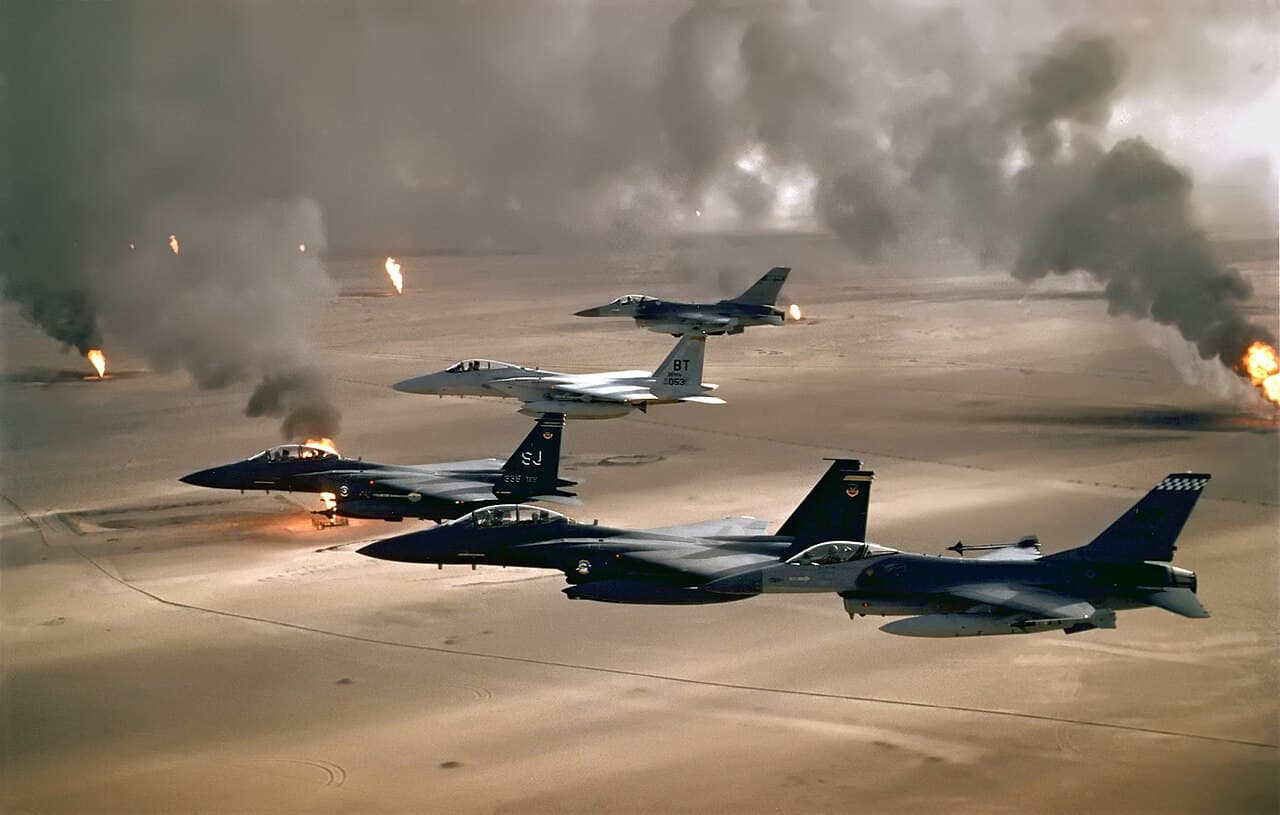
Six U.S. Combat Aircraft Lost and Crew Rescues Highlight Operation Epic Fury's Tough Toll
Since Operation Epic Fury was launched on February 28, 2026, 42 American aircraft have been lost in combat. Of those, 24 were MQ-9 Reaper drones and one an exceptionally rare MQ-4C Triton drone. The remaining were crewed aircraft, with four shot down and two destroyed on the ground by enemy fire.
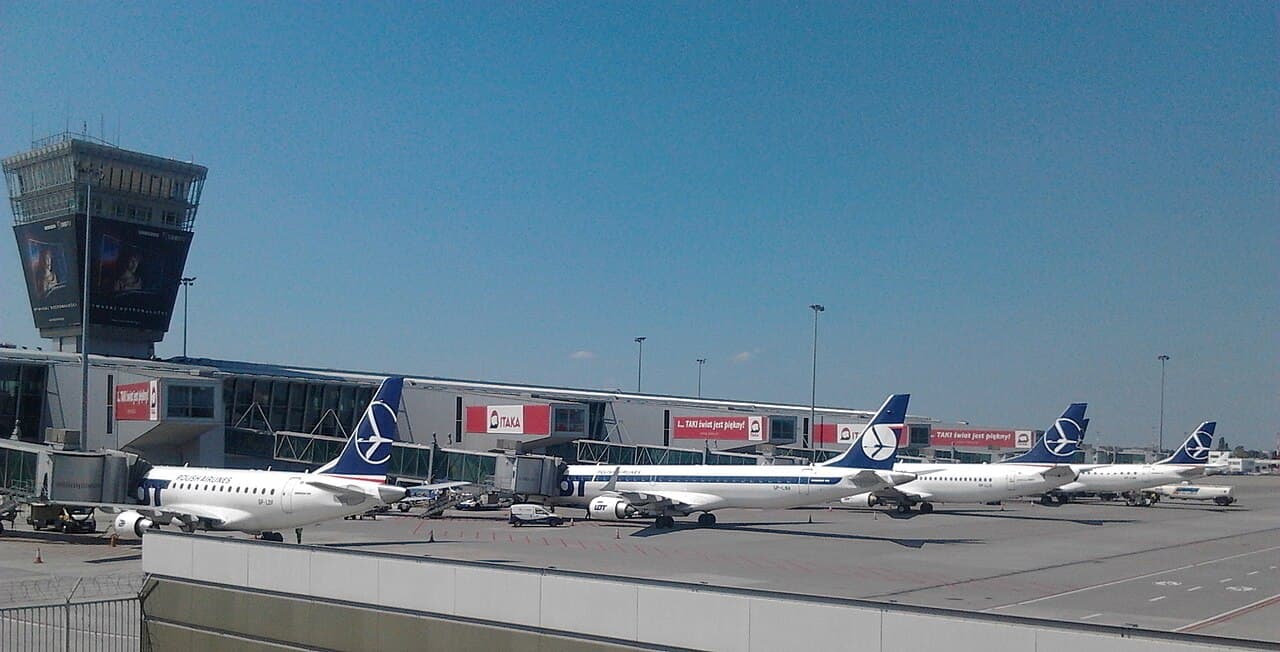
US Military Pilots Weigh Retirement Benefits Versus Airline Pay After Service
The aviators of the US Armed Forces face a crossroads when they come to the end of their minimum active-duty service commitments. All the branches of the Department of Defense have their own core of professional aircrew. In the US Air Force and Army, the contracts to be a professional flyer come with a ten-year commitment. Meanwhile, the US Navy and the Marines have a slightly shorter minimum duty at eight years.
The Daily Touch & Go
The day's best aviation news in your inbox. Free, no spam.