

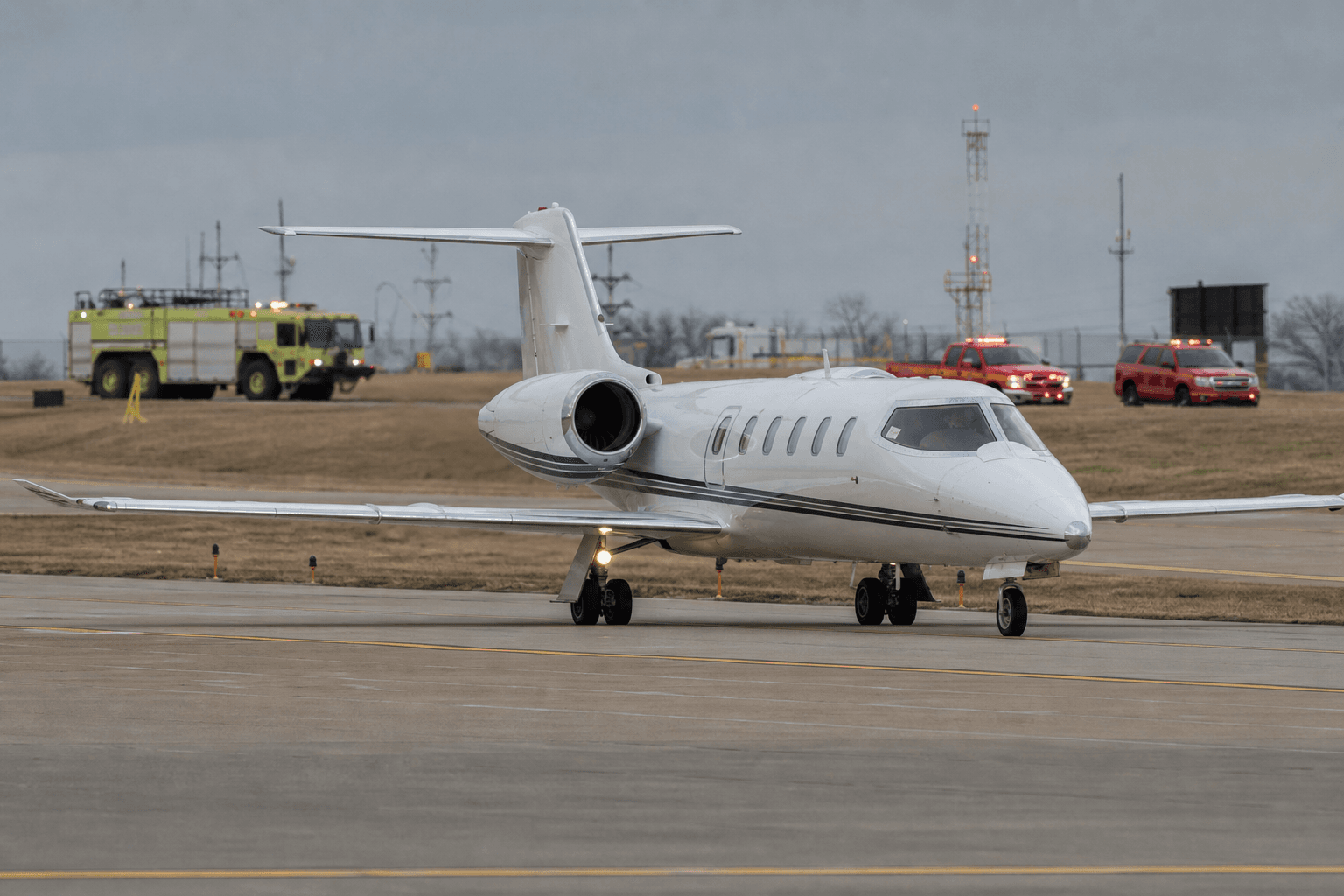
Illustration: The Touch & Go
NTSB Publishes New Video and Reports on Deadly Philadelphia Learjet 55 Crash
Surveillance footage and detailed investigation data released by NTSB shed light on the January 2025 Philadelphia Learjet 55 accident, which claimed eight lives and injured dozens.
The gist
NTSB unveils new images and data from the fatal Learjet 55 crash in Philadelphia, revealing final flight moments and investigative findings.
Continuing coverage
All Ntsb →- Seven Passengers Sue Delta After Low-Speed Collision with Japan Airlines 787 at Seattle
- Engine debris caused cabin decompression on Ryanair 737-800, NTSB reveals
- NTSB and Ryanair Disagree Over Cause of Malta Air Boeing 737 Window Blowout Incident
- Bahamas grounds Flamingo Air after fatal Cessna 402 crash near North Andros
- NTSB to Investigate Ryanair Flight Window Blowout in Greek Airspace
The National Transportation Safety Board has released an extensive new set of investigative materials concerning the Learjet 55 crash that occurred in Philadelphia in January 2025. The newly published data includes surveillance videos depicting the aircraft during its final moments, operational records, and technical reports that deepen understanding of the tragic event. This supplemental release expands the agency's public docket to 59 items as of August 18, 2026.
Among the most notable items are doorbell-camera and drive-thru surveillance videos that capture the last seconds before the Learjet 55 impacted near Cottman Avenue and Roosevelt Mall. Additional footage includes scenes from Miami-Opa Locka Executive Airport and Northeast Philadelphia Airport, showing preflight preparations and taxiing procedures undertaken by the crew. These visual records provide investigators and the public a clearer perspective on the aircraft's condition and crew activities immediately preceding the accident.
The Learjet 55, operated by Jet Rescue Air Ambulance, departed Northeast Philadelphia Airport shortly after 6 p.m. on January 31, 2025, on a medical evacuation flight destined for Tijuana, Mexico. Onboard were a pediatric patient, her mother, and four crew members. Tragically, the aircraft was airborne for only about 22 seconds before crashing, killing everyone aboard as well as two people on the ground, with at least 24 others injured.
The NTSB’s docket now contains a comprehensive array of investigative documents, including operational factors reports, accident flight risk assessments, pilot training records, flight-time data, aircraft weight and balance sheets, and maintenance and airworthiness files. The collection also features a checklist recovered from the wreckage, insights from the cockpit voice recorder, ground proximity warning system data, and FAA ADS-B tracking information. Together, these materials aim to support a rigorous analysis of what might have contributed to the accident.
Despite the volume of new information, the NTSB has not yet assigned probable cause or outlined contributing factors to the crash. The agency emphasizes that these materials are factual evidence released to the public and do not represent final conclusions. The formal investigative process remains ongoing, with a final report anticipated once all evidence has been thoroughly examined.
The level of detail provided in these new releases illustrates the complexity of accident investigations involving air ambulance operations. Such inquiries typically analyze a combination of human factors, aircraft performance, environmental conditions, and procedural compliance. Understanding these dimensions is critical in preventing similar tragedies in the future, particularly when transporting vulnerable patients under time-sensitive conditions.
This latest disclosure by the NTSB marks a significant step in transparency, allowing the aviation community and the public to engage with substantial investigatory content as the inquiry continues. The additional video footage and technical data help reconstruct the sequence of events leading up to the fatal crash and are essential in building a complete safety narrative.
Frequently asked questions
- What new evidence has the NTSB released about the Philadelphia Learjet 55 crash?
- The NTSB released surveillance videos showing the Learjet before and during its final seconds, operational and maintenance reports, as well as cockpit voice recorder and aircraft performance data.
- Who was on board the Learjet 55 during the fatal Philadelphia accident?
- The aircraft carried a pediatric patient, her mother, and four crewmembers during a medical evacuation flight from Philadelphia to Tijuana.
- Has the NTSB determined the cause of the Learjet 55 crash yet?
- No, the NTSB has not assigned probable cause or determined contributing factors; the investigation remains open and ongoing.
Read more
All Aviation Safety →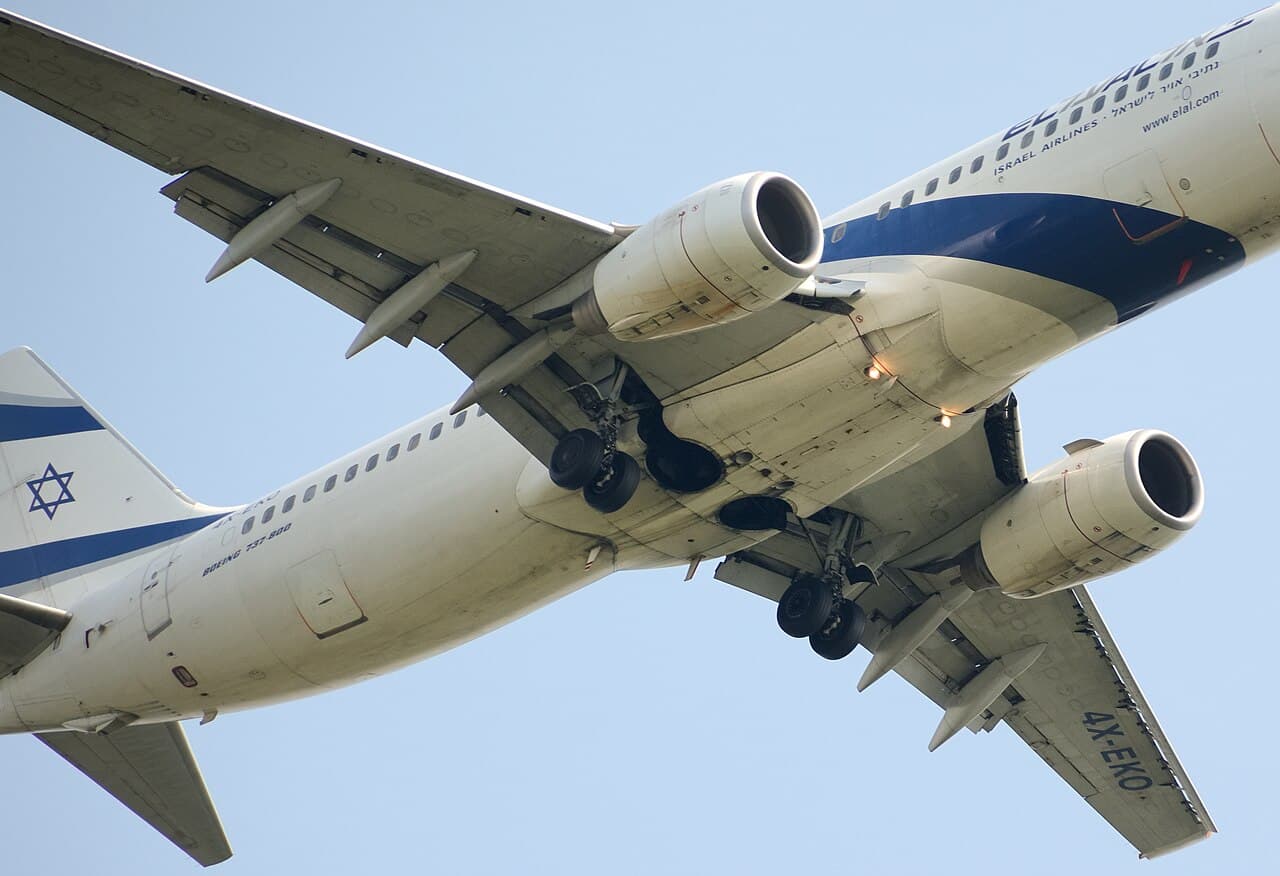
Engine debris caused cabin decompression on Ryanair 737-800, NTSB reveals
A passenger was partially sucked through an open window before being pulled back inside the cabin.

King Air ambulance crashes in New Mexico amid military GPS jamming during night visual approach
Military exercise taking place when descending aircraft struck mountain ridge during visual approach in darkness. US investigators have yet to determine why a Beechcraft C90 King Air ambulance fatally crashed into high terrain during a night visual approach in New Mexico, at a time when military jamming was taking place in the area. The National Transportation Safety Board stresses that it is still probing the 14 May accident, which left no survivors from two pilots and two nurses on board. But the aircraft had been attempting to descend from 12,000ft towards Sierra Blanca regional airport, near Ruidoso, which lies at an elevation of about 6,800ft. Although the aircraft's crew had initially intended an area navigation approach – which requires satellite-based positioning – to runway 24, they opted to switch to an ILS approach owing to the loss of GPS navigation capability. But neither the area navigation nor the ILS approach procedure was authorised if no local altimeter setting had been received, and NOTAM information stated that Sierra Blanca airport's automated weather system was out of service. The aircraft had been directed to fly northwest in preparation for a vectored approach. While about 27nm northeast of Sierra Blanca airport, however, the crew informed the area controller that they had "a visual on Ruidoso" and could "go visual". This meant turning southwest and descending over the Capitan mountains – which rise to some 10,200ft – in darkness and zero moonlight, just after midnight. Nearly 5min after commencing the descent, the aircraft had reached the mountain ridge and – according to its Spidertracks flight-tracking equipment which provided GPS-generated altitude data – was flying at 9,400ft. The aircraft subsequently began climbing but, about 45s later, it collided with terrain at about 9,950ft. Complicating the inquiry is the fact that military GPS jamming activity was taking place near the White Sands missile range, and the Albuquerque area control centre had issued a NOTAM warning that it could interfere with GPS navigation and ADS-B. This has generated speculation in various media channels that the King Air's GPS equipment might have been providing false information to the crew. But amid these suggestions, the National Transportation Safety Board insisted on 5 August that it has "not yet determined the probable cause or any contributing factors". It points out that it validates and analyses "all available evidence" before reaching conclusions. There is evidence that GPS and ADS-B data from the flight was affected. The crew reported losing GPS capability shortly after departure, and requested headings. While Spidertracks GPS-based data was generated for the whole flight, there was only a partial ADS-B record owing to the reporting frequency substantially reducing for much of it. The Spidertracks data typically indicated altitudes 600ft higher than the ADS-B data. As area centre controllers sought to vector the aircraft they requested that the military jamming exercise cease temporarily. ADS-B reporting frequency returned to normal shortly afterwards. Jamming was permitted to resume when the aircraft's pilots confirmed they would make a visual approach to Sierra Blanca airport, and began their descent. Investigators state that at least three other aircraft in the vicinity reported a loss of GPS around the same time as the King Air. Generation Jets had been operating the 47-year old aircraft (N249CP), working with its partner Trans Aero MedEvac which provided the medical support personnel.

Seven perish in Eurocopter EC130 crash on Kenya safari flight near Mount Ololokwe
Five Americans were among seven people killed when a tourist helicopter crashed in a remote area of northern Kenya on August 19, 2026. The Eurocopter EC130 B4, registered 5Y-GYM, was carrying six passengers and one pilot when it crashed near Kirish, close to Mount Ololokwe in Samburu County. The Kenya Civil Aviation Authority (KCAA) said the accident occurred at approximately 09:13 local time while the helicopter was flying from Loisaba Conservancy to the Ewaso Nyiro area. The aircraft was operated by Lady Lori Helicopters and was carrying guests of luxury safari company &Beyond. "We can confirm that on the morning of August 19, an aircraft registered as 5Y-GYM, carrying &Beyond guests, crashed near Kirish, close to Mt. Ololokwe in Samburu County, Kenya," the company said in a statement. The US State Department confirmed that five US citizens were among those killed. "We can confirm the deaths of five US citizens in a helicopter crash in Samburu County, Kenya," a State Department spokesperson said. "The US Embassy is in touch with local authorities and is providing consular assistance." Lady Lori Helicopters identified the aircraft as 5Y-GYM and said it was operating the charter flight from Suyian Conservancy to Ololokwe. "Lady Lori Helicopters is deeply saddened to confirm that one of our aircraft, registered 5Y-GYM, was involved in an accident," the company said. "Our deepest sympathies are with the guests, crew, their families and loved ones, and all those affected by this tragic accident." The six passengers included Michele Sensi-Contugi, director of Ecuador's National Intelligence Center; his wife, Stephany Hollihan Vasconez, a dual US-Ecuadorian citizen; and José Alberto Suárez, a senior Telemundo executive based in Florida. The Kenya Red Cross joined a multiagency response at the crash site. The remote and mountainous terrain complicated efforts to reach the wreckage. Kenya's Air Accident Investigation Department is leading the crash investigation. The EC130 B4 is a seven-seat, single-engine helicopter developed by Eurocopter, now part of Airbus Helicopters. The type is widely used for sightseeing and charter flights because of its large cabin, low external noise and unobstructed views. Mount Ololokwe, also known as Ol Donyo Sabache, rises above the Samburu region and is a popular destination for hiking and wildlife tourism. Loisaba Conservancy and the Ewaso Nyiro River are also part of Kenya's northern safari circuit.
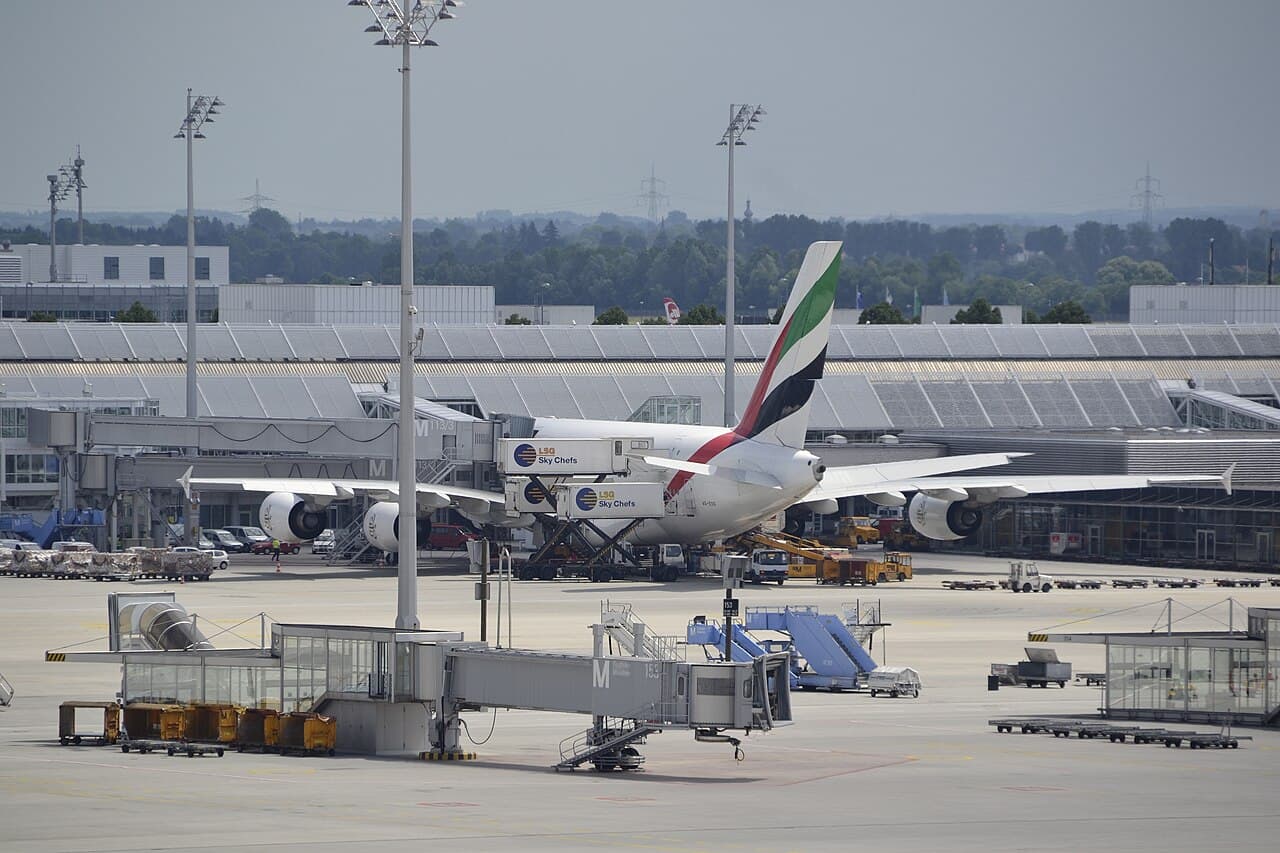
Tail-strike and delayed liftoff mark Vietnam Airlines 787 takeoff in Munich
German investigation authority confirms tail-strike as Hanoi-bound twinjet laboured to become airborne. German investigation authority BFU has confirmed that the Vietnam Airlines Boeing 787-9 involved in a prolonged take-off roll at Munich struck its tail during a late lift-off. The aircraft, operating to Hanoi, was departing from runway 26L at 13:57 on 15 August but returned and landed just over 2h later. "During the rotation phase, the tail of the aircraft touched the ground," says BFU, adding that the aircraft "lifted off late". It states that the flight recorders from the twinjet are being read out at the authority's Braunschweig facilities. "Reading and analysing the data will take some time," it says. BFU also confirms that type marks "that could be attributed to the aircraft" were identified at the far end of the runway. No preliminary conclusions have been drawn by the inquiry, and no details have been released on performance calculations or system functionality. But the presence of the tyre marks – perhaps indicating activation of braking systems – is likely to be a focus of the probe, given that the crew appeared to have committed to becoming airborne. The aircraft carried out a full-length take-off from 26L, which is 4,000m in length, but preliminary information from Vietnamese publications appear to confirm indications that the aircraft struggled to accelerate. Vietnamese outlet VnExpress , citing an initial report from the country's civil aviation authority, says the crew realised – about halfway along the runway – that the aircraft's speed did not increase for a few seconds, before acceleration resumed. Upon reaching the V1 decision speed, it reports, the crew noticed a deceleration but believed there was insufficient runway distance to abort take-off. Normally V1 is defined as a speed which allows take-off to be aborted safely, and this might suggest an unexpected shortfall in the aircraft's acceleration performance and delays in achieving V1. The VnExpress report says the crew increased thrust to maximum and started rotating with about 300ft of runway remaining, generating a tail-strike warning. The crew also received alerts on tyre pressure. After burning fuel to reduce the landing weight, the 787 touched down on Munich's runway 26R. Several main landing-gear tyres were badly damaged. Meteorological data from Munich airport at the time indicates light variable winds and good visibility. Vietnamese and US representatives are participating in the inquiry. "Investigation into the accident is not yet complete," says BFU. "Further facts regarding human and technical factors, as well as organisational influences, still need to be established."
The Daily Touch & Go
The day's best aviation news in your inbox. Free, no spam.