

Illustration: The Touch & Go
airBaltic to cut fleet nearly in half as it shifts focus to financial stability
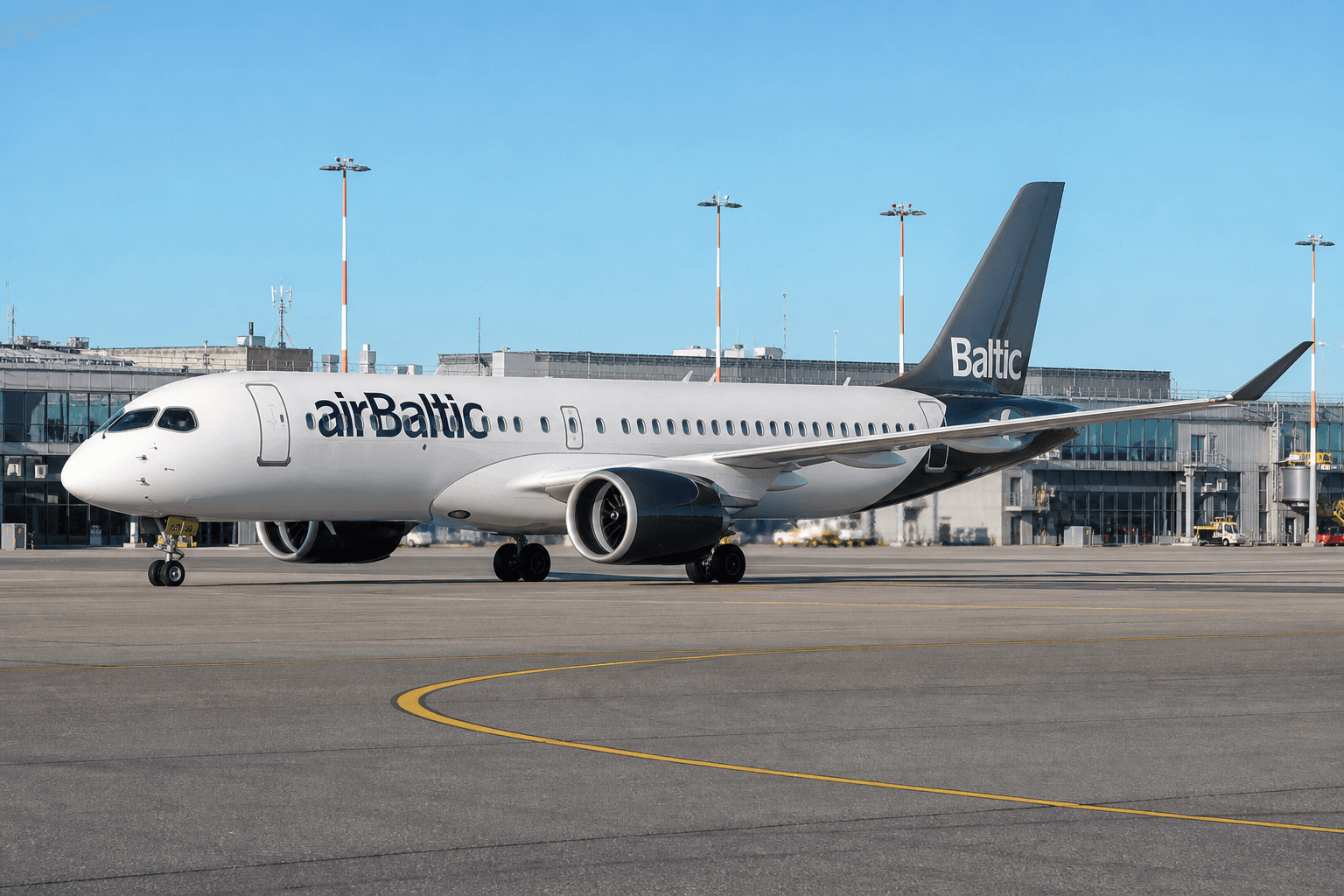
airBaltic has unveiled a new business strategy that will reduce its Airbus A220-300 fleet from 54 to 26 aircraft by year-end, aiming to stabilize finances and optimize operations without state aid.
The gist
airBaltic plans sharp fleet reduction and tighter network focus to ensure long-term financial health and competitiveness.
Continuing coverage
All Fleet Reduction →airBaltic, the Latvian flag carrier, has announced a significant change in its strategic direction, opting for financial stability over rapid expansion. Confirmed on August 11, 2026, the newly approved business plan by a Supervisory Working Group calls for a dramatic reduction of airBaltic’s fleet from 54 Airbus A220-300 aircraft to just 26 by the end of this year. This downsizing reflects a shift away from the previous growth-driven plan that envisioned a fleet of 100 aircraft in preparation for an initial public offering.
The Supervisory Working Group that approved the plan was formed on December 16, 2025, by Latvia’s Ministry of Finance following disappointing financial results announced by airBaltic in November 2025. The government-mandated group required the airline to forge a path to sustainability independently from ongoing state financial support. The airline’s revised business plan concentrates on core routes anchored in its Riga hub, emphasizing depth and frequency where demand and profitability remain highest rather than pursuing broad network expansion.
Under the new strategy, airBaltic will operate an all-Airbus A220-300 fleet optimized for operational efficiency and enhanced year-round aircraft-utilization. Stronger ACMI (Aircraft, Crew, Maintenance, and Insurance) partnerships will complement the smaller fleet, supporting a steadier deployment of aircraft throughout the year and mitigating seasonal fluctuations that have challenged the carrier. Despite halving the fleet size, the airline projects its scheduled capacity to remain stable, leveraged by improved aircraft utilization rates.
The fleet reduction is part of a broader adaptation to challenging external conditions that have affected airBaltic’s operations recently. Factors such as the ongoing conflict in Ukraine, tensions in the Middle East, and Pratt & Whitney engine availability issues have constrained growth prospects. CEO Erno Hildén emphasized that the airline’s new plan is centered on making disciplined choices to secure long-term competitiveness while maintaining reliable connectivity for its customers and partners.
Financially, airBaltic is pursuing approximately €225 million ($259 million) in interim financing alongside a €100 million ($115 million) injection of new equity capital to bridge the gap to long-term stability. The airline has proposed a comprehensive recapitalization plan that includes converting a portion of its 2029 Senior Secured Notes debt into equity and reducing remaining debts to up to €125 million. This restructuring aims to ease the company’s financial burdens and strengthen its balance sheet.
AirBaltic’s revenue projections under the updated business plan indicate a gradual increase, with forecasts of around €0.8 billion in 2027, rising to €0.9 billion in 2029, and reaching €1.0 billion by 2031. To implement these changes, bondholders of the 2029 Senior Secured Notes are scheduled to vote on the recapitalization proposal on August 17, 2026, with further voting rounds expected thereafter. Approval from these stakeholders is critical to moving forward with the financial restructuring.
The airline’s decision to limit fleet growth and focus on operational efficiency marks a notable pivot from its earlier aspiration to expand aggressively and pursue a public listing. This revised course prioritizes profiting from existing markets and leveraging partnerships over network size. As a result, airBaltic positions itself to navigate an uncertain geopolitical environment while safeguarding its future viability as Latvia’s principal carrier.
This new chapter for airBaltic illustrates the necessity for airlines to adapt swiftly to external pressures such as geopolitical instability and supply chain constraints. By reducing fleet size but enhancing aircraft utilization and partnerships, airBaltic aims to balance capacity with demand, reduce seasonal volatility, and deliver sustainable operations without reliance on state subsidies.
What remains clear is that airBaltic’s success will depend on navigating its financial restructuring, securing stakeholder support, and efficiently implementing its streamlined business model. The aviation sector in the Baltic region will be closely watching how this substantial fleet reduction and strategic refocus affect airBaltic’s competitiveness and service offerings in the coming years.
Frequently asked questions
- What is airBaltic's new fleet size target for the end of 2026?
- airBaltic plans to reduce its Airbus A220-300 fleet from 54 to 26 aircraft by the end of 2026.
- Why did airBaltic develop a new business plan focused on financial stability?
- The new plan responds to financial losses, geopolitical challenges, engine availability issues, and a directive from Latvia's Ministry of Finance to ensure sustainability without ongoing state support.
- What financial measures is airBaltic taking alongside the fleet reduction?
- airBaltic is seeking approximately €225 million ($259 million) in interim financing, €100 million ($115 million) in new equity capital, and plans debt-to-equity conversions to strengthen its balance sheet.
Read more
All Sustainability →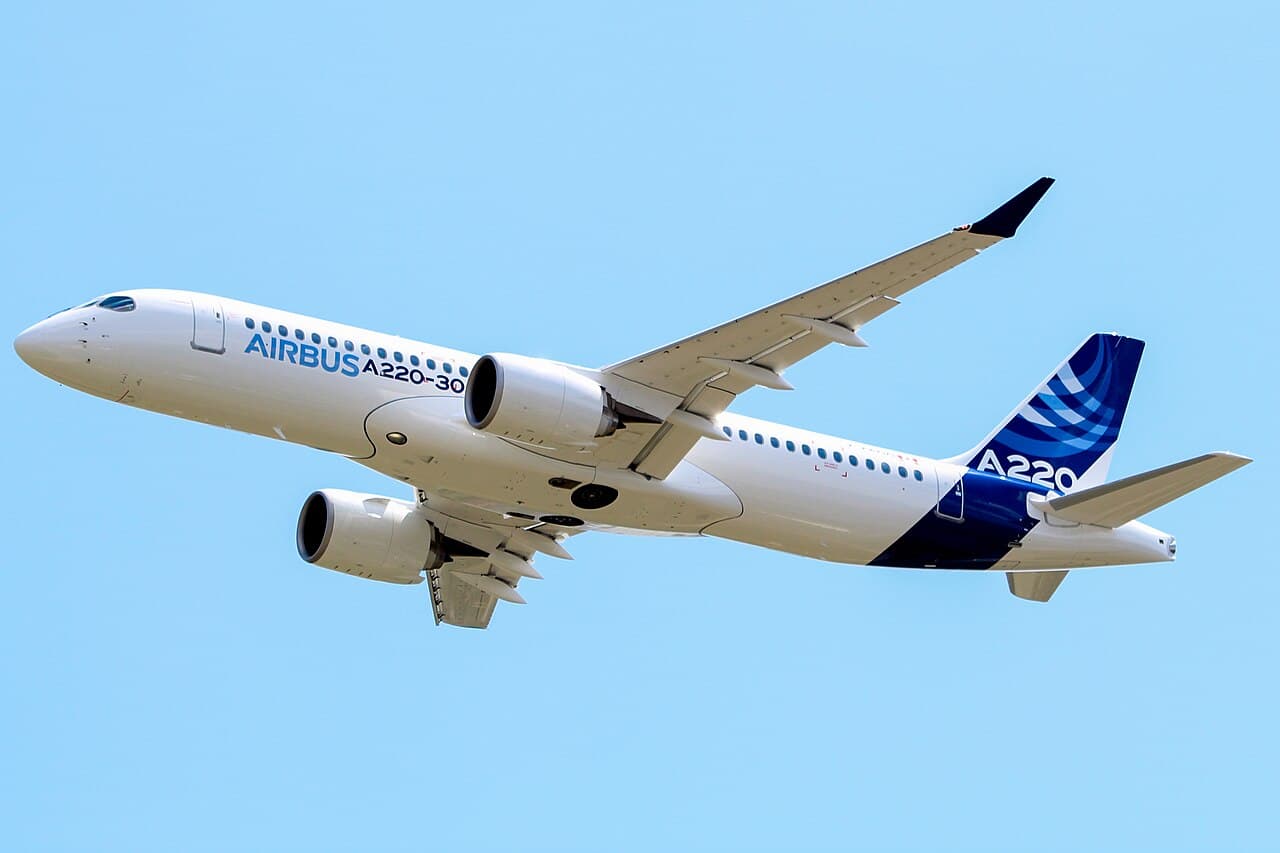
Air Baltic to scale back A220 fleet to around 40 aircraft in strategic overhaul
Latvian carrier envisages a long-term fleet of around 40 A220-300s as it works on €225m interim recapitalisation. Air Baltic is to cut its fleet to around 40 Airbus A220-300s under a new long-term strategic plan, supported by moves for an initial interim €225 million ($260 million) recapitalisation. The Latvian carrier operates a fleet of 54 A220s but, under the plan announced today, expects this to fall to 36 by the end of the year and to stand at 41 by 2031. Under the carrier's previous business plan, developed in line with an anticipated IPO, Air Baltic envisaged expansion towards a 100-strong aircraft fleet off the back of “sustained growth” in passenger volumes and ticket revenue across the Baltic region and wider European markets. "Since then, the operating environment has changed materially," the carrier says, citing moderated demand and revenue growth, geopolitical events in the Ukraine and the Middle East and the Pratt & Whitney GTF engine issues which have restricted the carrier's ability to deploy its full fleet. "The revised business plan responds to these developments with a deliberate shift in priorities: financial stability first, growth second,” the carrier says. “It aligns Air Baltic's network, fleet, cost base and capital structure with current market conditions." Earlier this year Air Baltic secured consent from the country's parliament for a short-term state loan of €30 million to prop up its liquidity. The carrier’s medium-term strategy had centred on an IPO to raise capital, but market conditions and the company's financial position left the timing and feasibility of such a venture uncertain. Air Baltic chief executive Erno Hilden, who took the helm in December last year, says: "Every successful airline must continuously adapt to a changing market. Thus, this business plan is about making disciplined choices that strengthen Air Baltic's long-term competitiveness while preserving what matters most – reliable connectivity and operations, together with financial sustainability." Air Baltic's revamped business plans will focus on its Riga hub, but rather than "pursuing broad expansion”, will add depth and frequency on existing routes where demand and profitability are strongest. This will be supplemented by selected point-to-point services and seasonal flying to improve fleet utilisation. While the carrier envisages scheduled capacity initially falling, it sees this surpassing current levels by 2031, reflecting what it terms "a more focused network strategy". The carrier aims to strengthen its commercial partnerships with ACMI customers as part of efforts to boost its profitability. Air Baltic is targeting €45 million in recurring annual benefits from the measures, predominantly generated through cost savings. The carrier's plan also includes measures to recapitalise. It aims to address its near-term liquidity requirements through €225 million of interim financing. "The interim financing is intended to bridge the company to a permanent financing solution and remains contingent on the required bondholder resolutions and other approvals," it says. The carrier's proposed permanent financing package comprises up to €225 million of new debt financing and €100 million of new equity capital. Air Baltic expects to post revenues of around €800 million this year, rising to €1 billion by 2031. The plan envisages its EBITDAR to reach €192 million next year and €300 million in 2031.
American Airlines completes first US passenger flight powered by non-biobased sustainable aviation fuel
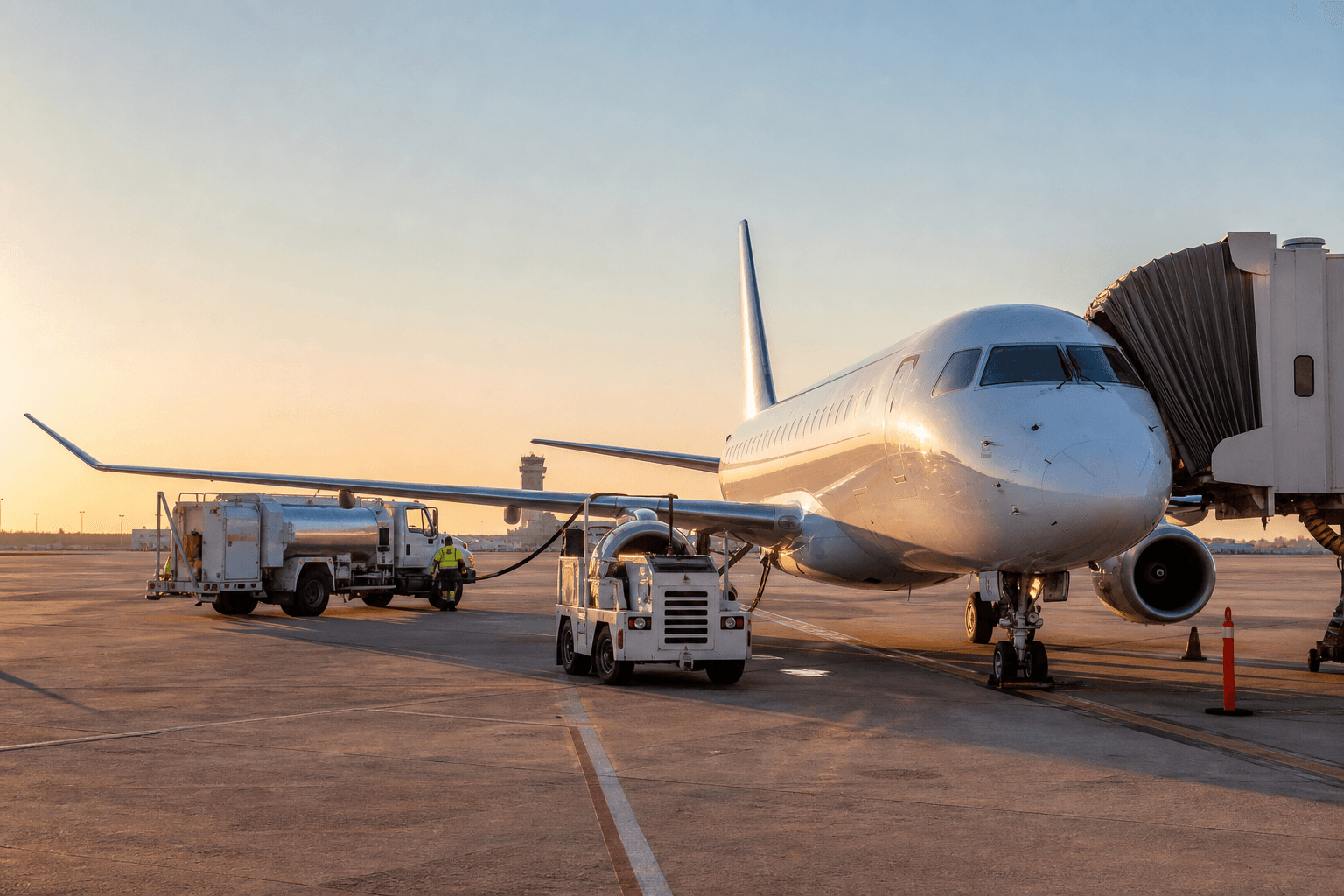
American Airlines flew the first U.S. commercial passenger flight last week using sustainable aviation fuel made without biobased feedstocks. The airline said the flight operated from Corpus Christi to Dallas-Fort Worth. Fuel producer Infinium produced the electro sustainable aviation fuel, or eSAF, at its Pathfinder facility in Corpus Christi. The company makes the fuel using waste carbon dioxide and renewable electricity rather than plant- or animal-derived feedstocks. Although American did not identify the aircraft used for the flight, Envoy Air typically operates Embraer E175s between Corpus Christi and DFW for American Eagle. Fuel Entered Existing Airport System Infinium blended the eSAF with conventional jet fuel before delivering it to the common fuel tanks at Corpus Christi International Airport. The fuel was then allocated to the American flight to Dallas-Fort Worth. American said the process demonstrated that eSAF can move through existing aviation fuel infrastructure. "This flight represents a significant moment for aviation," American Airlines CEO Robert Isom said in a company statement. "Through our partnership with Infinium, we’re demonstrating how next generation technologies like eSAF can move from early investment to real-world application." Larger Production Project Planned Infinium says its Pathfinder facility has produced eFuels since 2023. American has also agreed to purchase commercial volumes of eSAF from Infinium's planned Project Roadrunner facility in West Texas. Infinium expects Project Roadrunner to begin producing and delivering eSAF in 2027. The company says the facility will produce more than 5 million gallons annually once it reaches full capacity.
American Airlines Flies US First with Electro Sustainable Aviation Fuel at Corpus Christi
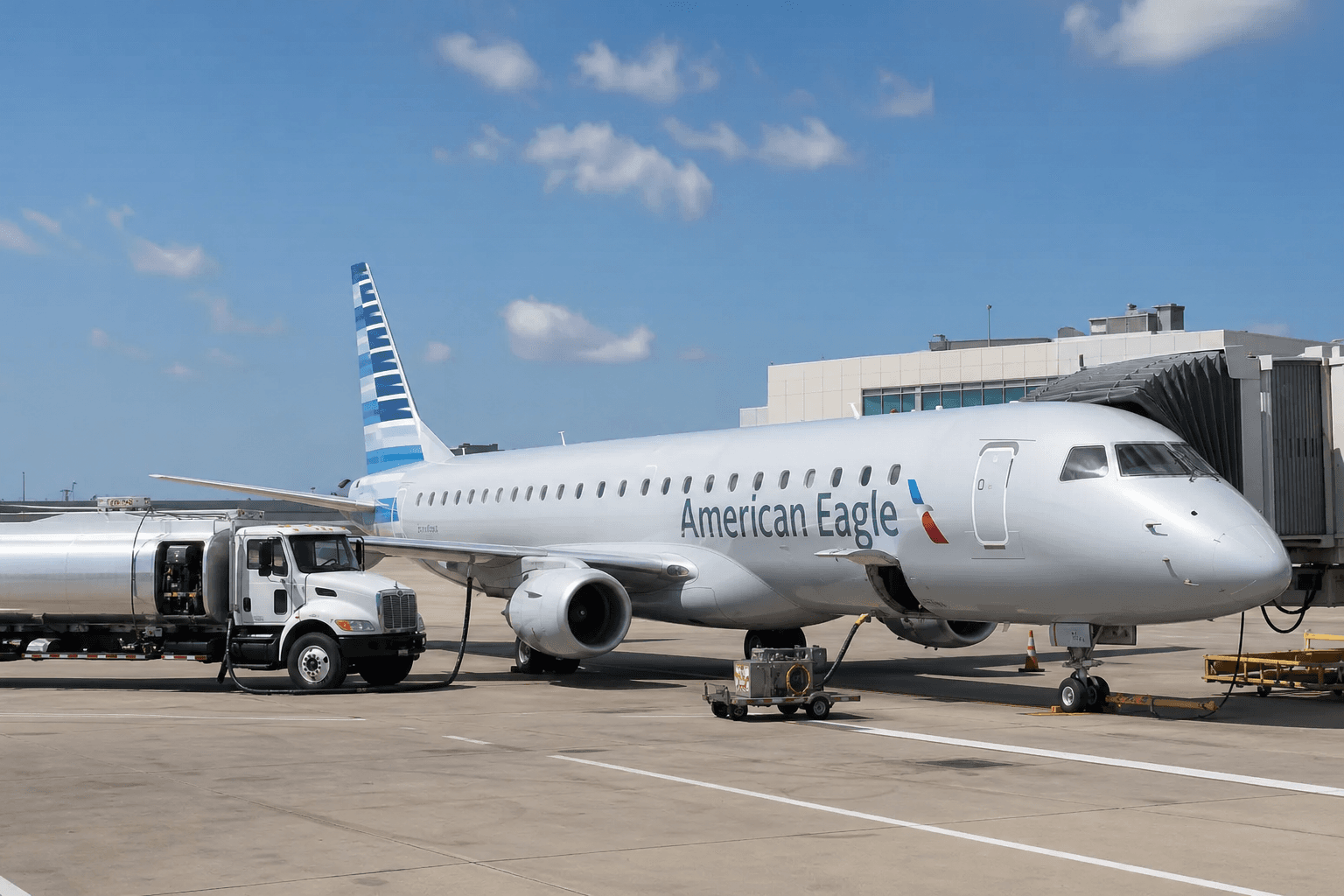
American Airlines has used electro sustainable aviation fuel on a commercial passenger flight following what the carrier says was the first delivery of non-biobased sustainable aviation fuel (SAF) to a US commercial airport. The eSAF was produced by Infinium at its Pathfinder facility in Corpus Christi, Texas, blended with conventional jet fuel and delivered into the common fuel tanks at Corpus Christi International Airport (CRP). It was then used aboard an American flight from Corpus Christi to Dallas Fort Worth International Airport (DFW). American and Infinium said the delivery marked the first time SAF made without biobased feedstocks had been supplied to a commercial airport in the US. The fuel was tested to meet ASTM specifications for Jet A, allowing it to be used in existing aircraft engines and airport fueling systems without modification. The eSAF was used on an American Eagle Embraer E175 for the Corpus Christi to Dallas/Fort Worth flight. The flight was not powered entirely by eSAF. The synthetic fuel was blended with conventional jet fuel before being delivered to the airport's shared fuel system. Infinium produces the fuel using waste carbon dioxide and renewable electricity rather than biological feedstocks such as used cooking oil or plant material. The company says its eSAF can reduce lifecycle greenhouse gas emissions by more than 90% compared with conventional petroleum-based jet fuel. "Adding eSAF to our product slate, and seeing it power a commercial passenger flight, marks another meaningful step forward in bringing practical, low-carbon fuel solutions to industry," Infinium CEO Robert Schuetzle said. KLM had already used synthetic kerosene on a passenger flight in 2021. American and Infinium say this is the first time synthetic SAF has been delivered through the existing fuel system at a US commercial airport for use on a passenger flight. American has signed an agreement to purchase commercial volumes of eSAF from Infinium's Project Roadrunner plant, which is now under construction. It is expected to begin production and deliveries in 2027 and eventually produce more than 5 million gallons of eSAF annually. "This flight represents a significant moment for aviation," American Airlines CEO Robert Isom said. "Through our partnership with Infinium, we're demonstrating how next generation technologies like eSAF can move from early investment to real-world application." Cost remains one of the biggest obstacles to wider use of synthetic aviation fuel. Isom acknowledged the issue, saying lower SAF prices will be necessary for the technology to be broadly adopted by airlines. SAF accounts for less than 1% of global jet fuel consumption, according to American and Infinium. Aviation consumes nearly 100 billion gallons of jet fuel annually.
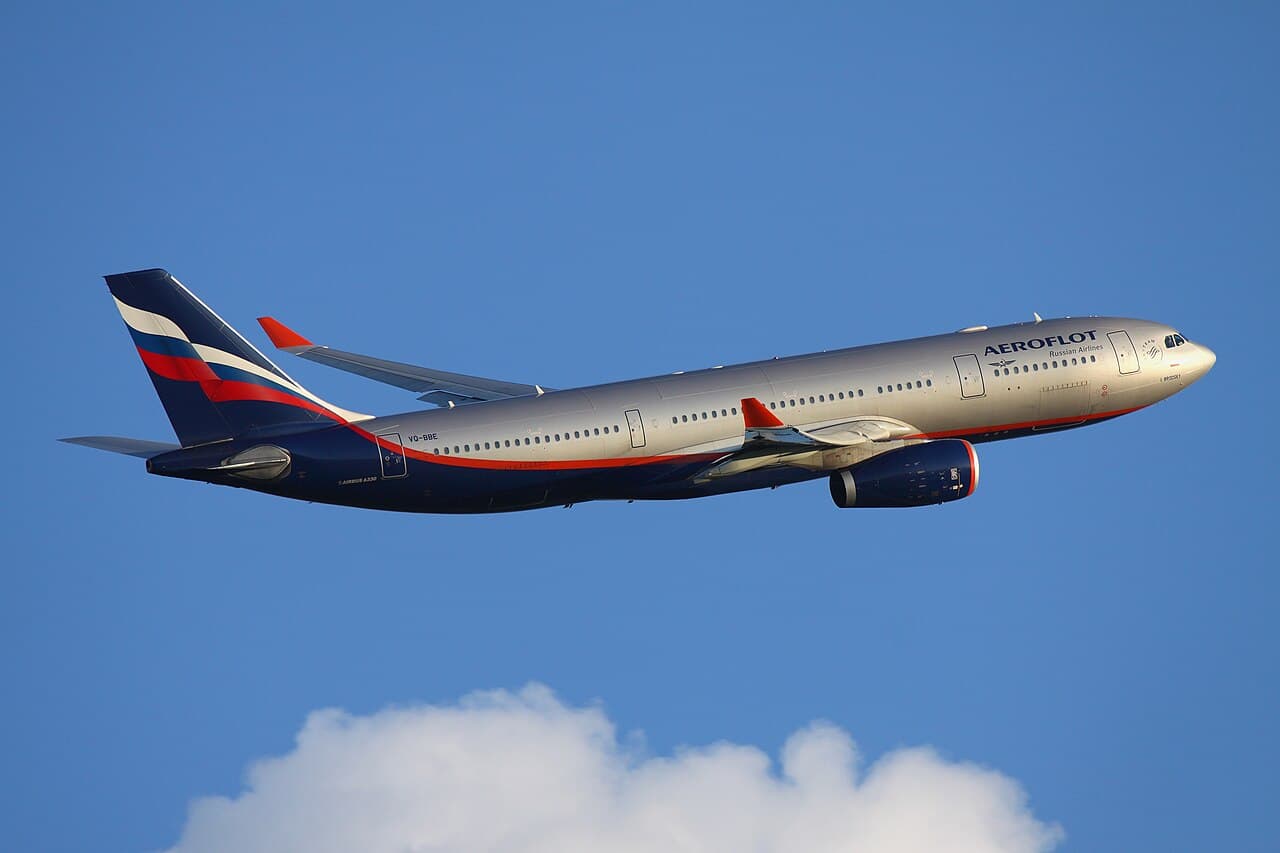
Brussels Airlines Pauses Long-Haul Fleet Growth Citing Profit and Geopolitical Strains
Brussels Airlines has decided to freeze its long-haul fleet expansion plans. The Belgian carrier, part of the Lufthansa Group, will not add two Airbus A330 aircraft in 2027. Its long-haul fleet will stay at 11 Airbus A330s. ezstandalone.cmd.push(function () { ezstandalone.showAds(119); }); The airline cited weaker-than-expected profitability, repeated strikes in Belgium, and ongoing geopolitical uncertainty as the main reasons. Discussions with the Lufthansa Group led to this cautious approach for the coming years. ezstandalone.cmd.push(function () { ezstandalone.showAds(127); }); Financial Pressures Drive the Decision In the first half of 2026, Brussels Airlines reported an adjusted operating loss of €70 million. This marked a 50% decline compared to the same period in 2025. Passenger numbers rose to 4.5 million, up 8%, while revenue grew about 9% to €821 million. Load factors also improved. However, external factors hit hard. Fuel costs jumped by €64 million due to higher oil prices linked to Middle East unrest. An Ebola outbreak in East Africa reduced demand on some routes and complicated crew scheduling. ezstandalone.cmd.push(function () { ezstandalone.showAds(128); }); Strikes at Brussels Airport and by air traffic controllers added further pressure, costing around €3 million. These challenges prompted the airline to scale back growth plans. Previously, Brussels Airlines aimed to expand its long-haul fleet to support stronger connections, especially to Sub-Saharan Africa, where it holds a key position within the Lufthansa Group. ezstandalone.cmd.push(function () { ezstandalone.showAds(129); }); Photo Credit: Brussels Airlines No Wet-Lease Capacity in Summer 2027 The airline will also end its use of wet-leased aircraft for the 2027 summer season. Four airBaltic planes currently operating for Brussels Airlines until the end of October 2026 will not return next year. This removes seasonal extra capacity that helped during peak periods. Despite these adjustments, the carrier continues to invest in passenger experience. New cabins for Business Class, Premium Economy, and Economy on its Airbus A330 fleet remain on track for introduction in 2027. These upgrades aim to improve comfort and competitiveness on intercontinental routes. ezstandalone.cmd.push(function () { ezstandalone.showAds(130); }); Focus on Existing Operations and Recovery Brussels Airlines is shifting emphasis toward optimizing its current fleet rather than rapid expansion. The airline hopes a strong summer 2026 season will help recover results for the full year. Higher production capacity compared to 2025 supports this goal, provided operations remain stable. The decision reflects broader industry pressures. Rising fuel costs, geopolitical risks, and labour disruptions have affected many European carriers. As a Lufthansa Group member, Brussels Airlines benefits from group support but must prioritize sustainable profitability. ezstandalone.cmd.push(function () { ezstandalone.showAds(131); }); Photo Credit: Brussels Airlines Looking Ahead Looking ahead, the freeze does not signal a complete halt to development. Short- and medium-haul fleet renewal with Airbus A320neo aircraft continues. The airline also maintains its role as a European hub for African routes. Leadership changes are underway, with a new CEO set to take over, focusing on integrated hub operations. This measured strategy aims to build resilience. By holding the long-haul fleet steady and ending temporary wet-lease arrangements, Brussels Airlines seeks to strengthen its core business. ezstandalone.cmd.push(function () { ezstandalone.showAds(132); }); Passengers can still expect product improvements through the new cabins. The coming months will show whether the summer recovery materializes and supports longer-term stability.
The Daily Touch & Go
The day's best aviation news in your inbox. Free, no spam.