

Illustration: The Touch & Go
Embraer and Azorra ink deal for up to 30 E-Freighter aircraft
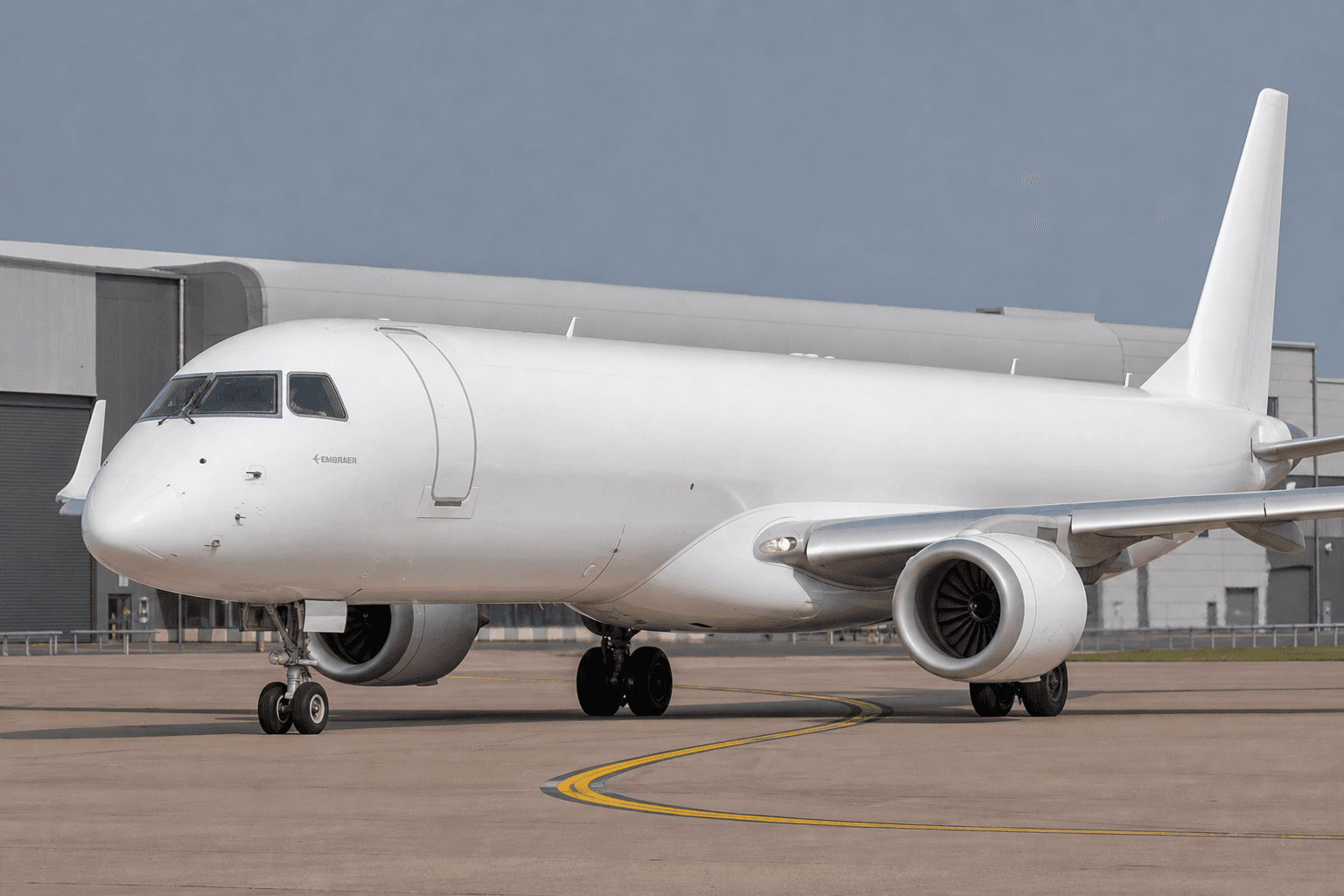
Embraer and lessor Azorra signed a pact for up to 30 E-Freighter conversions to meet increasing demand in express cargo markets.
The gist
Embraer and Azorra agree on up to 30 E-Freighter freighter conversions, targeting efficient, sustainable air cargo growth.
Embraer and global aircraft lessor Azorra have formalized a major agreement for the acquisition of up to 30 E-Freighter aircraft. The contract, secured during the Farnborough International Airshow on July 21, 2026, features 20 firm orders alongside 10 additional purchase rights. This move firmly positions Azorra as an early entrant into Embraer's recently introduced E-Freighter freighter leasing market, underscoring confidence in the converted E-Jet platform for cargo operations.
The signing builds on the successful debut of Embraer's E190F model earlier this year, which has demonstrated reliable performance in express air freight tasks. Azorra's CEO John Evans remarked that the partnership with Embraer reflects a long-standing collaboration rooted in a shared conviction about the E-Jet platform's value and reliability. He further emphasized how the E-Freighter serves as a natural extension to address emerging requirements within the fast-growing express cargo segment.
One of the critical advantages touted for the E-Freighter is its compliance with the stringent Stage 4 noise standards, positioning the aircraft as a practical replacement for aging 737 freighter fleets. Evans also highlighted Azorra's CF34 engine program, which is expected to deliver low operating costs, enhancing the economic viability of these converted freighters on regional and medium-haul routes. This combination is particularly well-suited to the demands of next-generation air cargo carriers focused on efficiency.
Embraer's Commercial Aviation President and CEO Arjan Meijer hailed the agreement as a clear market endorsement for the E-Freighter concept, designed to meet global calls for efficient, right-sized freighter solutions. Carlos Naufel, President and CEO of Embraer Services & Support, added that a comprehensive support network will accompany these aircraft, ensuring operators receive optimized performance from the outset of service.
The E-Freighter is derived from the proven E-Jets family, known for its operational reliability during decades of service worldwide. The E190F variant offers over 100 cubic meters of cargo volume distributed between lower and upper decks, with a maximum payload capacity reaching 13.5 tons. This capacity and design facilitate cost-effective transport of express shipments, especially appealing in competitive markets that demand fast, time-sensitive deliveries.
Industry analysts recognize the E-Freighter as filling a niche between smaller turboprops and larger narrowbody freighters. Compared to classic narrowbody freighters, this model boasts around 30% lower operating costs while maintaining comparable cargo volume and range. Additionally, it delivers 35% more volume and over three times the range of large cargo turboprops, making it the quietest and most environmentally friendly jet freighter in its category.
The aircraft's efficiency and flexibility make it ideal for frequent, time-critical operations and improving regional trade connectivity. Key growth markets such as Latin America, Southeast Asia, the Middle East, and Africa stand to benefit, aligning with Azorra's existing regional expertise. The E-Freighter's introduction could foster new air cargo routes and expand access to emerging commercial hubs in these regions.
This freighter deal follows Azorra's recent expansion in Embraer's passenger E2 jet lineup, including a firm order placed in June 2026 for 15 additional E195-E2 jets with rights for 15 more. These procurements bring Azorra's firm orders to 54 E2 aircraft and help Embraer surpass the milestone of 500 firm E2 orders globally. Azorra's extensive aviation portfolio, exceeding 300 assets, encompasses leasing, financing, and fleet management services that now strategically include the E-Freighter type.
By converting the successful E-Jet platform into a freighter, Embraer and Azorra jointly address the increasing need for sustainable and reliable air cargo transportation. The partnership advances industry efforts to reduce environmental impact while supporting the explosion of global e-commerce and express deliveries. The addition of E-Freighters to the market is poised to enhance operational efficiency and competitiveness for cargo operators worldwide.
Frequently asked questions
- What is the size of the Embraer and Azorra deal for E-Freighters?
- The agreement includes 20 firm orders and 10 purchase rights for the Embraer E-Freighter aircraft, totaling up to 30 units.
- What are the cargo capabilities of the E190F freighter model?
- The E190F offers over 100 cubic meters of cargo volume across lower and upper decks and can carry up to 13.5 tons of payload.
- How does the E-Freighter compare to older freighter aircraft like the Boeing 737?
- The E-Freighter is Stage 4 noise compliant, has about 30% lower operating costs than classic narrowbody freighters, and benefits from modern engine efficiency through Azorra's CF34 program.
Read more
All Cargo →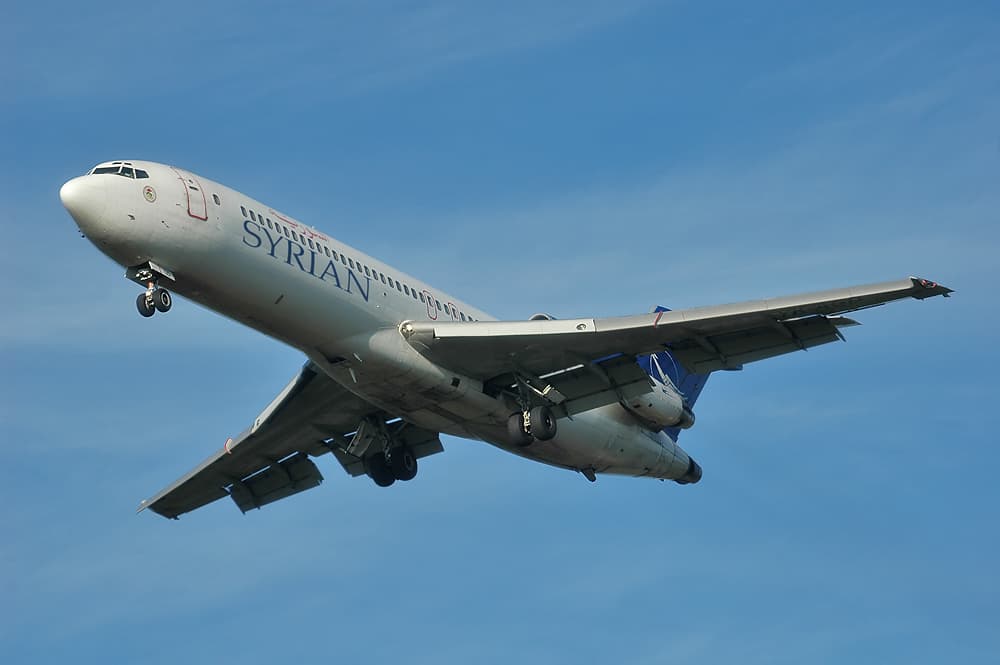
FedEx's Boeing 727 Fleet Retired as Cargo Operations Modernize
For many aviation enthusiasts, the Boeing 727 and FedEx became inseparable. Long after most passenger…
Hawaiian to Replace Aging B717 Fleet with B737-800s for Interisland Service Starting 2028
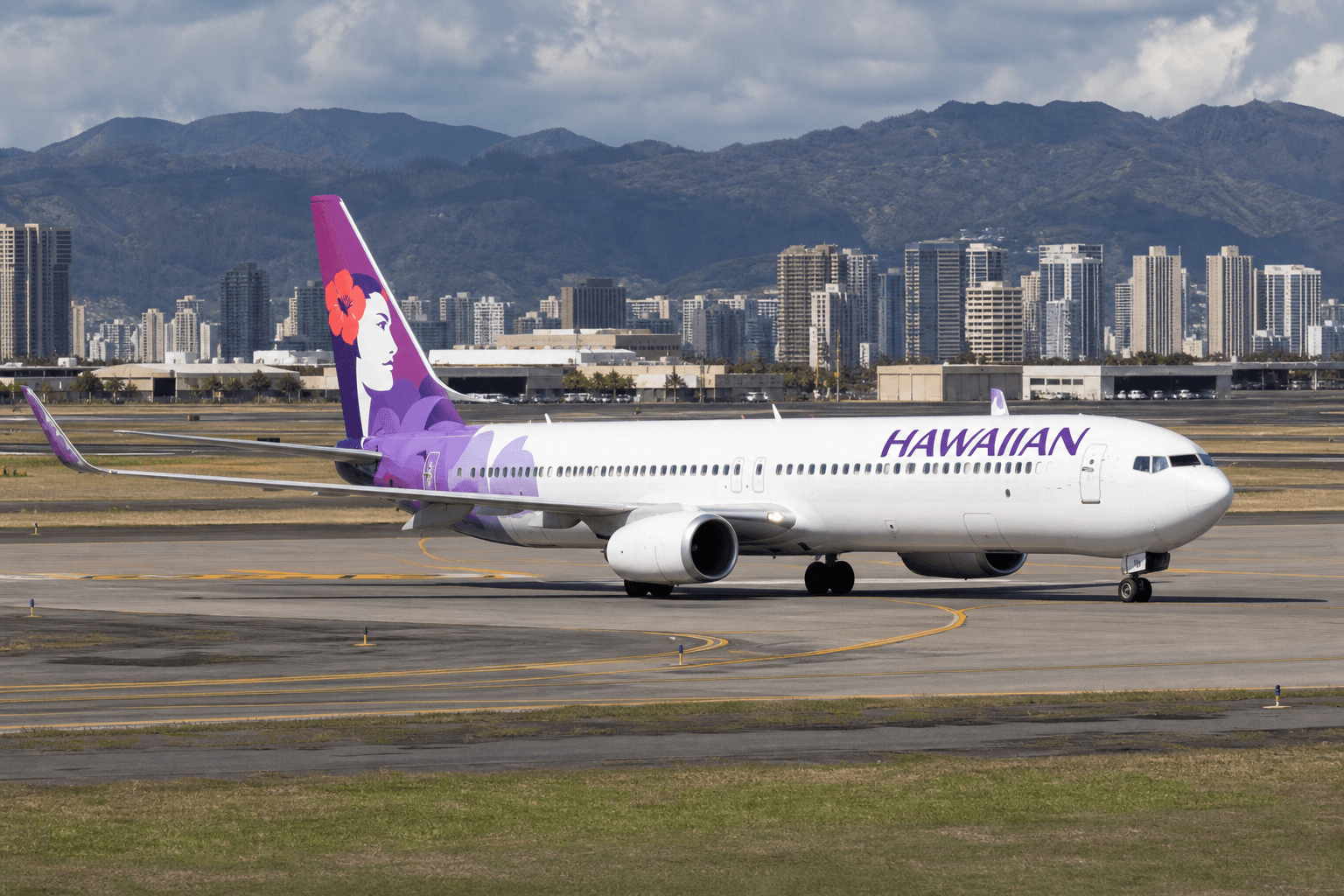
Who’s excited for a special Wednesday post? Actually, all of you who don’t care about Hawaiʻi should be. I was going to just do this on my regular Thursday, but I figured some of you would kill me if I had another entire week dedicated to the islands. So, enjoy today, and then there will be a non-Hawaiʻi post as usual tomorrow. Hawaiian officially announced yesterday that it will replace its B717 fleet with the B737-800 as first reported by The Air Current , and as we discussed on The Air Show podcast . I had the chance to sit with Hawaiian CEO Diana Birkett Rakow and Head of Hawaiʻi Operations Jim Landers on Tuesday to learn more about the plan. Hawaiian has been in a bind. The B717 fleet has aged noticeably over the last couple of years, requiring more downtime and maintenance work. Temporarily expanding that fleet was considered a non-starter, and so the interisland operation has suffered. There have been operational issues, and the only solution was to pull down the schedule to give the existing fleet more of a breather. The problem has become so acute, especially in the middle of the day, that Hawaiian is putting a temporary solution into place. Starting this October, Alaska — not Hawaiian — will fly three daily roundtrips between Honolulu and Kahului (Maui) on a B737 that will rotate back into the mainland fleet. Since this is Alaska-branded, there will be no pog juice or any Hawaiian-style service. This is simply a band-aid until they can bring the real solution into place. That will start in 2028 when the first B737-800 painted in the Hawaiian livery and with Hawaiian-branded service will enter the fleet. The full timeline for the retirement of the B717 has not been determined, but this will not be drawn out. They just don’t have all the answers yet. Rendering via Hawaiian For example, we don’t yet know how many of these airplanes will enter the Hawaiian fleet. They need to figure out exactly how many flights at what time of day they need to operate with these higher-capacity aircraft, so they will back into the exact number later. That’s easy to do when you have a whole fleet of -800s at Alaska today that gives flexibility, but I was assured that this will continue to be a high-frequency operation the same way it is today. And when asked if all interisland routes that operate today would continue to be flown with these bigger airplanes, Diana responded, “I don’t see us pulling out of any of those markets” What will these look like on the inside? If you’ve been on an Alaska -800 today, it will be pretty similar. Those airplanes just had a full refresh, so the configuration will remain the same with 16 First Class, 30 Premium Class (extra legroom), and 115 in coach for a total of 161 onboard. While none of that will change, the color schemes onboard will, including the bulkheads and seat covers. This will look like a Hawaiian-branded airplane. This means the interisland experience will be better in several ways. Most notably, these airplanes will have an extra inch of pitch in coach, a full extra legroom section, and double the number of First Class seats onboard compared to the 128-seat B717. The reality is that with 33 more seats on the airplane, they don’t need to try to squeeze more capacity into the aircraft, so they can make it a little more comfortable. The bigger First Class cabin and new Premium class also means improvement for elites who will have more upgrade opportunity, but it also means more seats are available in general. Diana said, “a lot of guests really do purchase First Class.” First Class is also helpful for paid connectors in First Class, especially those from Japan and Australia who have to funnel via Honolulu before going to another island. Diana and Jim highlighted a lot more about the improved onboard experience including power outlets and Starlink onboard, but who really cares when your longest flight is less than 45 minutes? I suppose it’s still a nice bonus, especially for the local business traveler. But ultimately, this is just something they’re going to milk since it’s already on the fleet at Alaska today. The Decision I was most curious about how they arrived at the -800 as the right airplane, and Jim gave some really helpful context since he was at Hawaiian before the merger. He explained that while “there isn’t another perfect 128-seat tank being built,” it was a previous generation narrowbody which seemed to be the best fit. Pre-merger Hawaiian was circling its efforts on a second-hand fleet of either A319ceo or A320ceo aircraft since it would give more commonality with the Airbus fleet. Now that Hawaiian is part of Alaska, the decision tipped in favor of a B737 fleet instead, but it’s for the same basic reason… engines. New generation Pratt & Whitney GTF or GE LEAP engines just don’t work well for short, frequent hops. I did ask about the Embraer 195 E1 which uses engines from that generation, but the combination of already having the -800s in the fleet and wanting more capacity made the -800 a no-brainer, especially in the middle of the day when they don’t have enough capacity now They would rather have bigger planes with enough capacity during the peak and then fly with more empty seats in off-peak. I did ask if this meant the A321neo was not long for the fleet, Diana said that wasn’t the case. As she explained it, “we are maximally using every airplane we have at our disposal right now, we want all those airplanes.” What to do with the A321neos is something for much further down the line. The Added Bonus These airplanes will be based in Honolulu and will be flown only within the islands… usually. There is an added bonus of having this fleet in the same configuration it is in now, and that is the ability to sub the airplanes on to mainland routes if needed. This isn’t going to be something that’s scheduled, but what if a plane breaks in Honolulu? In my view, they don’t need to have significant spare capacity for the mainland fleet, because they can press a -800 into service if needed and maintain the schedule. They have yet to figure out how training and maintenance and all that will be handled, and that’s going to make some Honolulu-based employees a little anxious. But Diana did point out that Alaska just opened a new global training center in Renton outside Seattle. I would be surprised if that’s not where primary training happens which would obviously be a change from how training is done on the B717 fleet. Maintenance functions will, of course, be significant in Honolulu, but they don’t know what the plan is for heavy checks yet. Or at least, they aren’t ready to talk about it. While this will make some people anxious, Diana did say, “we intend to keep a strong headquarters [in Honolulu] with training and front line resources.” The Cargo Angle Also announced yesterday was that Alaska Air Cargo will expand from five to nine aircraft , and at least some of those airplanes will be branded Hawaiian Air Cargo and will be based in Honolulu to fly between the islands. The exact split isn’t yet ready to be announced, but they will start flying in the first half of 2027. Rendering via Hawaiian Hawaiian hasn’t had a dedicated cargo fleet in nearly a decade. Back then, it leveraged the ATRs that were flying to Molokai and Lānaiʻi to bring in some cargo-only aircraft to fly between the bigger stations. Jim was there for that, and I actually met with him in 2018 to learn more about the operation. But the pandemic brought big issues. With reduced jet flying, the outsourced passenger ATRs had to be grounded to avoid busting the pilot contract. In the end, Hawaiian decided the operation just wasn’t worth it, so it shut the whole thing down. Now, Jim is bullish once again. He
Boeing predicts steady 20-year aircraft demand despite current travel slump
Executive says air travel demand “fundamentals” remain ‘”intact”. Despite an air travel demand slowdown this year, Boeing is maintaining its expectation that airlines over 20 years will require 43,625 additional passenger and cargo jets, a figure largely unchanged from expectations it published in June 2025. The company’s 2026 Commercial Market Update, released on 17 July, estimates the world’s airlines through 2045 will need 33,545 narrowbody, 7,715 widebody, 930 freighter and 1,435 regional aircraft. “We have a pretty stable view on the demand for airplanes, for air travel and the ecosystem that surrounds it,” says Boeing vice-president of commercial marketing Darren Hulst. The company’s forecasted 43,625 aircraft deliveries through 2045 compares to Airbus’s projection, released in recent days, that airlines will need 42,060 aircraft over the same period. Hulst notes the aerospace industry, entering 2026, had expected air travel demand for the year would track or exceed 2025’s 5.3% year-on-year growth, measured in revenue passenger kilometers. But factors like the US-Iran war and resulting elevated fuel prices have brought that expectation down to 2.3% anticipated growth, with Hulst saying, “2026 isn’t going, commercially, from an industry perspective, like a lot of us expected”. At the same time, aerospace companies continue facing shortages of critical components and skilled labour, limiting the pace at which they have been able to ramp production. Hulst estimates those issues have left the global airline industry short some 2,000 aircraft, relative to demand. “However… the fundamentals for air travel and demand for air travel are completely intact,” Hulst says. Boeing expects air travel demand will “rebound” next year to 6-7% year-on-year growth, followed by another 5-6% growth in 2028. Meanwhile, Boeing and other aircraft manufacturers have had recent success increasing output. The 43,625 deliveries Boeing anticipates over 20 years will bring the total fleet to 50,095 aircraft by 2045, up from 27,945 in 2025, Boeing’s outlook says. Of those deliveries, it expects a combined 80% will go to carriers in China, Eurasia, South and Southeast Asia, and North American – split evenly at roughly 20% for each region.
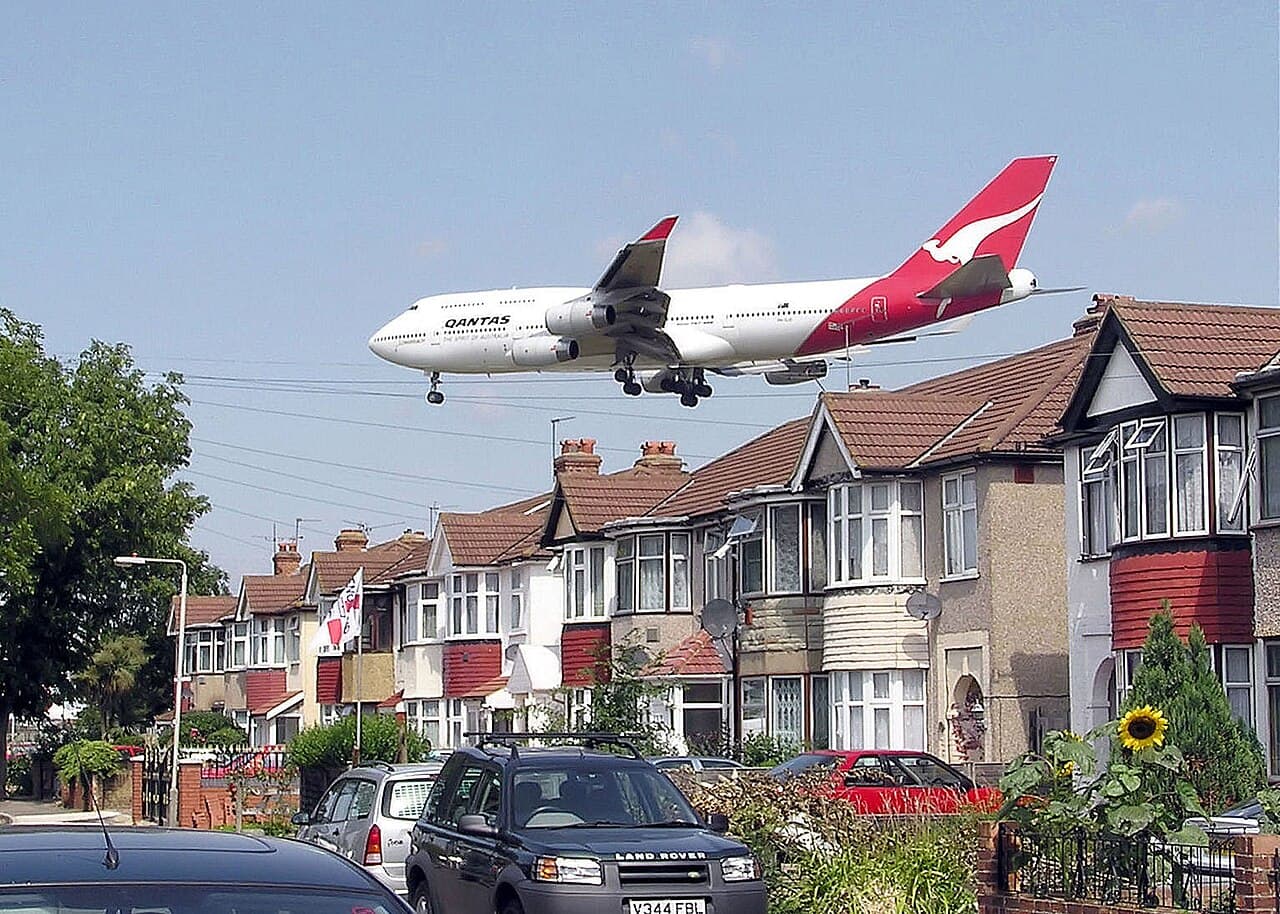
Qantas A321 Freighter First Cargo Plane to Land at Western Sydney International
A Qantas Airbus A321 freighter has become the first cargo aircraft to land at Western Sydney International Airport (WSI), completing a readiness flight ahead of regular freight operations beginning later this month. Flight QF7301 touched down at 14:00 local time on July 13, 2026, at the airport also known as Nancy-Bird Walton Airport. The flight helped validate key operational processes at the airport's new Cargo Precinct, including aircraft handling, ground operations, systems, airside coordination, and cargo transfer procedures. Counting down to launch Regular domestic freighter operations from Western Sydney International will start on July 27, 2026 with the new terminal expected to handle more than 850 tonnes of freight each week. Qantas will operate from a 24,000-square-meter freight terminal at the airport, designed to streamline cargo handling at Sydney's newest gateway. Igor Kwiatkowski, Executive Manager of Qantas Freight, said the test flight was an important step before launching operations. "Western Sydney International Airport is set to become one of Australia's key air freight hubs and today's flight was an important opportunity to test key procedures ahead of starting operations," Kwiatkowski said. "In just a few weeks, this new 24-hour facility will provide greater flexibility for our freight network, helping us meet growing demand for e-commerce and next-day deliveries." Testing before opening day Simon Hickey, Chief Executive Officer of Western Sydney International Airport, said the trial program allows the airport to test its systems ahead of commercial operations. "We've utilised the latest technology and innovations to deliver a highly efficient, sustainable, and future-proofed 24-hour Cargo Precinct," Hickey said. "Our operational readiness program and live aircraft trials present an excellent opportunity to test these capabilities." Hickey also acknowledged the coordination between the airport, Airservices Australia, and Cargo Precinct partners in delivering the trial program. The freight milestone comes ahead of the airport's passenger debut. Jetstar will operate the first commercial passenger flight from Western Sydney International on October 25, 2026, the airport's opening day. Qantas passenger services will follow on March 28, 2027, as part of an agreement between the Qantas Group and the airport covering both passenger and freight operations. RELATED Qantas and Jetstar announce flights from Western Sydney International Airport
The Daily Touch & Go
The day's best aviation news in your inbox. Free, no spam.