

Illustration: The Touch & Go
Developing Sixth-Generation Fighters Takes Decades Even for Superpowers
Creating the next generation of fighter jets involves complex engineering and integration, requiring over 20 years from concept to operational maturity.
The gist
Next-gen fighters like the Tempest and F-47 need decades to develop due to advanced tech and integration demands.
Continuing coverage
All Fighter Jets →- US concerns rise as Canada debates Gripen jets alongside F-35A purchases
- Germany's first Quadriga programme Eurofighter completes maiden flight
- France and Germany pivot defense strategy after joint fighter jet project collapse
- USAF Plans 267 F-15EX Fighters to Complement Growing F-35 Fleet as 'Missile Trucks'
- How the F-22's F119 Engine Overcame Long-Standing Fighter Jet Engine Trade-Offs
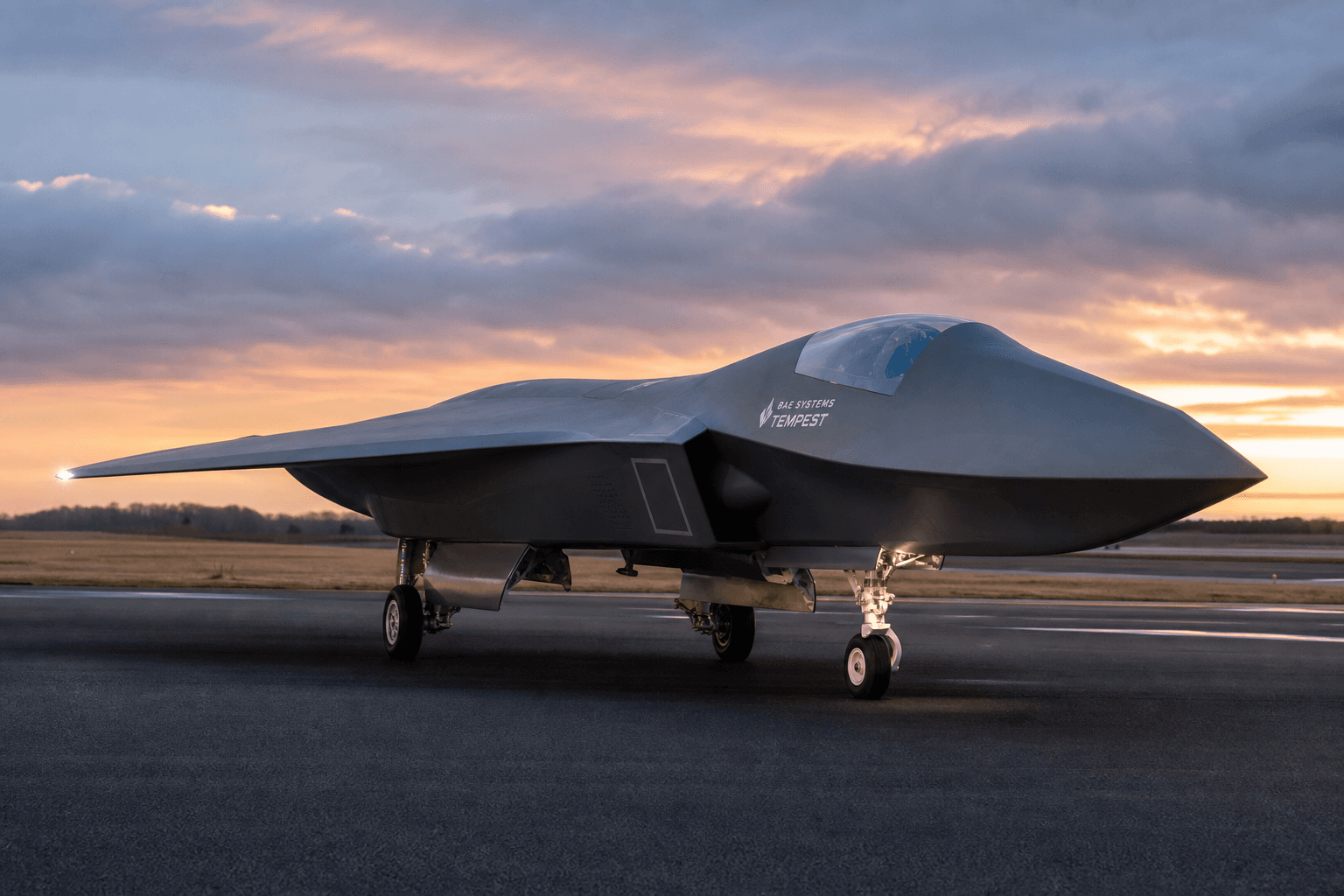
The development of sixth-generation fighter jets is an extraordinarily complex and lengthy process, often spanning decades even for the most advanced aerospace nations. Unlike traditional fighter jets, these new platforms are essentially flying data centers fused with a wide array of power-hungry sensors, avionics, and weapons systems, presenting unprecedented engineering challenges. Britain's BAE Systems, for example, began work on the Tempest/GCAP fighter in 2015, with its demonstrator now 75% complete and set to fly in 2027, yet operational service is not expected until at least 2035.
The immense demands placed on the aerospace industry are reflected in the limited number of countries capable of independently developing true sixth-generation fighters. The United States and China are widely acknowledged as having the necessary budgets, manufacturing expertise, and industrial capabilities. Europe's efforts are more collaborative, with the UK, Italy, and Japan jointly developing the GCAP/Tempest. France is pursuing a more limited effort post-FCAS, and Germany is assessing options, potentially partnering with Sweden. Meanwhile, Russia continues to focus on maturing current platforms rather than fielding wholly new sixth-generation designs.
A key aspect of these programs is the parallel development of new engines tailored to these advanced aircraft. In the UK, BAE Systems designs the airframe while Rolls-Royce is responsible for the powerplant. In the US, engine development is highly competitive, with GE Aerospace and Pratt & Whitney both working on adaptive cycle engines for the F-47 fighter. These engines must deliver both performance and integrate with novel thermal management systems to handle the intense heat generated by onboard electronics.
Thermal management emerges as one of the most difficult engineering challenges, as sixth-generation fighters incorporate powerful computers, electronic warfare systems, and even directed energy weapons like lasers. The need to dissipate large amounts of heat without increasing the aircraft's infrared signature adds complexity to design. Innovations include the use of variable-cycle engines and jet fuel as a coolant medium to maintain systems within operational temperature limits.
It is crucial to view these fighters not merely as isolated aircraft but as vital nodes within a larger integrated combat ecosystem. This system comprises not only manned fighters and their drone wingmen but also next-generation satellites, advanced communications, resilient networks, distributed sensing, and cloud-enabled data sharing. The US F-47 is described as the manned element within the broader Next Generation Air Dominance (NGAD) program, underscoring the holistic nature of modern air combat requirements.
Historical patterns show that such sophisticated programs take extensive time to mature fully. The F-35 started development in 1993 and only began to reach envisioned capabilities around 2030 after multiple upgrade blocks. This scale of effort reflects advances in technology and changing operational priorities but also the complexity of integrating numerous cutting-edge technologies into a single platform and networked system.
More broadly, many sixth-generation projects have extended timelines and uncertain futures. Russia's PAK DP/MiG-41 interceptor project appears stalled with limited public updates, and the European FCAS program has collapsed. The necessity for international cooperation is increasing, as even nations like Italy urge broader partnerships to share the substantial financial and technological burdens.
With flight demonstrators emerging over the coming years—such as the Tempest in 2027 and the US F-47 prototype anticipated by 2028—the next decade will be critical for proving key capabilities. Still, achieving full operational maturity will likely require well into the 2030s, as these jets continue evolving alongside ever-more sophisticated supporting systems and ordnance.
Ultimately, developing sixth-generation fighters is a generational commitment, demanding advanced engineering solutions, complex international collaborations, and integration into expansive battlefield networks. These aircraft transcend traditional designs, fundamentally transforming air combat into a data-centric, highly connected domain that will define military air power for decades to come.
Frequently asked questions
- Why does it take decades to develop a sixth-generation fighter jet?
- Developing sixth-generation fighters involves solving unprecedented engineering challenges, integrating complex avionics, engines, thermal management, and creating an ecosystem of supporting systems, which takes over 20 years from concept to operational maturity.
- Which countries are capable of developing true sixth-generation fighters independently?
- The United States and China possess the industrial base, budget, and technological capabilities necessary to develop and mature true sixth-generation fighter jets independently.
- What role do engines and thermal management play in next-generation fighter development?
- Engines must provide adaptive cycles for performance and work with advanced thermal management systems to dissipate heat from powerful electronics and weapons without raising the aircraft's infrared signature, posing significant design challenges.
Read more
All Military/Defense →
Germany's first Quadriga programme Eurofighter completes maiden flight
New aircraft is one of 58 on order for Berlin. Airbus Defence & Space has flown its first Tranche 4 Eurofighter to have been produced for the German air force as part of Berlin's Project Quadriga acquisition. Conducted from the company's Manching final assembly site near Munich on 14 July, the milestone sortie involved a single-seat example with the service registration 34+02. "During the production flight acceptance test, Airbus test pilot Stefan Auer tested the fighter jet to its limits for more than an hour to evaluate basic flight characteristics, engine performance, flight control system, hydraulics and electrical systems," the company says. "The flight also assessed cockpit instruments and navigation systems; everything worked flawlessly," it adds. Placed in 2020, Germany's initial Quadriga order covers the delivery of 30 single- and eight two-seat Eurofighters. A first delivery will be made later this year, following the receipt of "upcoming type certification", with shipments to run through 2030. Berlin last year also signed a Tranche 5 contract for another 20 Eurofighters, with those jets to be delivered by 2034.
US concerns rise as Canada debates Gripen jets alongside F-35A purchases
Is the United States worried about Canada building Swedish Saab JAS 39 Gripen fighter jets in Canada? Sort of. In this article, we will explain why the Gripen is no competitor to the F-35A and why the US doesn't really care if Canada acquires the Gripen so long as it's in addition to the F-35A. We will also explore why the US cares if Canada significantly reduces its planned purchase of 88 F-35A fighter jets.
France and Germany pivot defense strategy after joint fighter jet project collapse
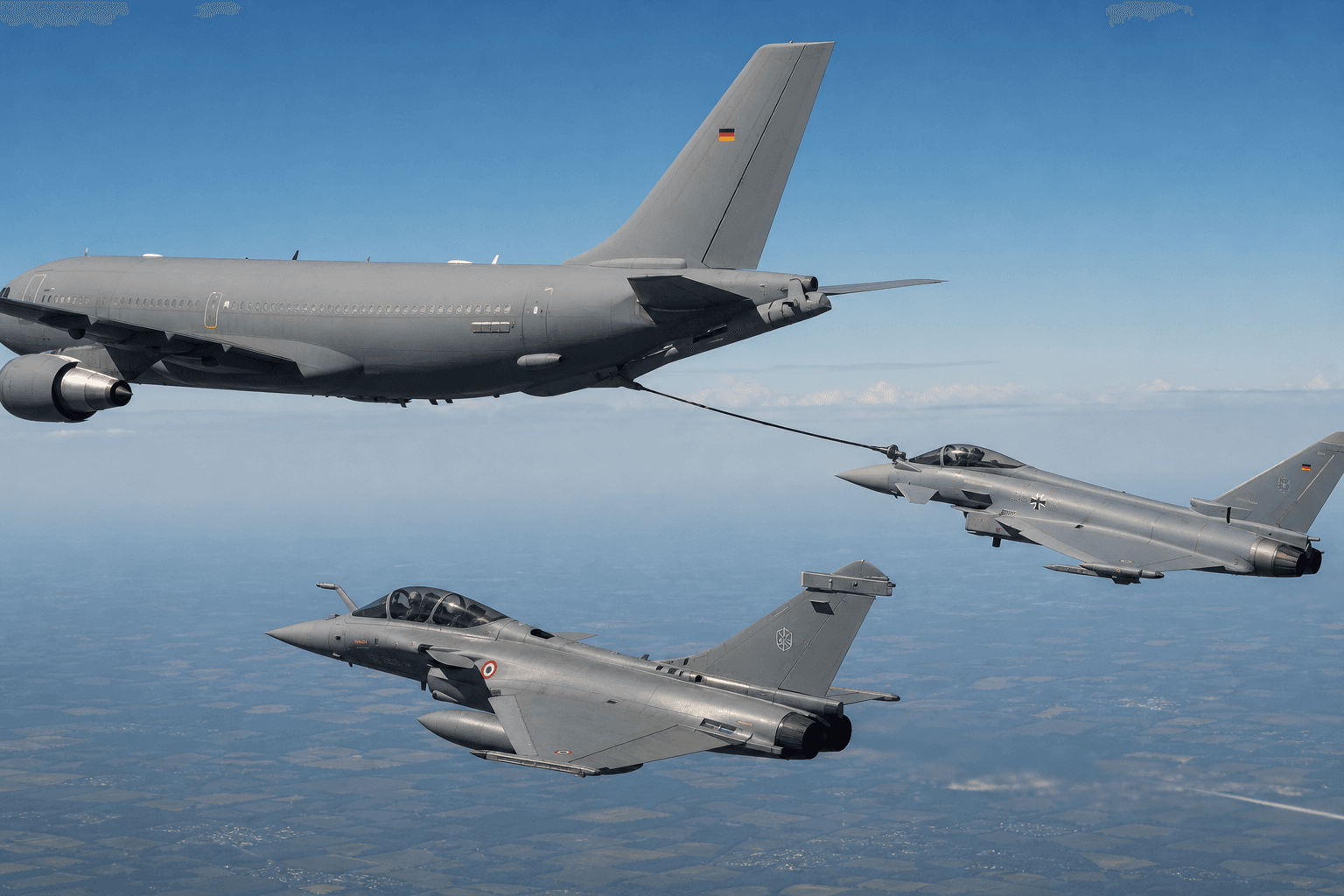
France and Germany have formally shifted their defense relationship away from the wreckage of a failed joint fighter jet program. President Emmanuel Macron and Chancellor Friedrich Merz met near Cologne on July 17, 2026, to move toward new areas of cooperation, including nuclear deterrence. Macron and Merz then chaired the annual Franco-German government consultations at Augustusburg Castle in Bruehl, a site specifically chosen for its history: French President Charles de Gaulle and German Chancellor Konrad Adenauer laid the groundwork for a Franco-German friendship treaty there in 1962. En Allemagne, le Conseil des ministres franco-allemand que nous co-présidons aujourd'hui avec le Chancelier Friedrich Merz doit nous permettre de renforcer notre compétitivité, notre sécurité et notre défense et la résilience de nos démocraties. Le réflexe franco-allemand… https://t.co/9utgniu3Ni — Emmanuel Macron (@EmmanuelMacron) July 17, 2026 A show of force at Noervenich Alongside the government consultations, the two countries will hold a Franco-German Defense and Security Council meeting at the Noervenich Luftwaffe air base, underscoring the push for European rearmament amid concerns over Russia and a less reliable American security commitment. On July 16, 2026, two French Rafale jets, capable of carrying nuclear weapons, were deployed to Noervenich, while a German Eurofighter was refueled mid-air by a French aircraft, a Luftwaffe spokesman told AFP. The French presidency says the goal for the July 17, 2026 talks is to move past symbolism and advance "concrete" projects, an explicit attempt to recover from the collapse of the Future Combat Air System (FCAS), the countries' joint sixth-generation fighter jet program, which ran aground in June 2026. How the fighter jet program began FCAS was launched in 2017 by Macron and then-German Chancellor Angela Merkel. Positioned as Europe's flagship sixth-generation combat air program, it came with an estimated price tag of roughly €100 billion. The project centered on a manned New Generation Fighter, paired with a 'combat cloud' architecture meant to link aircraft, drones and satellites into a single digital system. In October 2019, the two governments met in Toulouse to resolve early friction over how the work would be divided and succeeded in producing an arms export agreement covering jointly developed weapons. Under the deal, one country would automatically approve arms sales if its share of the selling price fell below a threshold rumored at around 20%. Both governments called it proof of mutual trust, a condition for the success of FCAS and the parallel Main Ground Combat System tank program. Where it fell apart The industrial workshare dispute between Airbus, representing Germany and Spain, and France's Dassault, proved to be the program's fatal obstacle. Tensions became public in February 2026, when Merz questioned openly whether a single aircraft platform could meet both countries' requirements, since France needed a nuclear-capable, carrier-compatible jet, whereas Germany did not. A mediation effort launched after a Macron-Merz dinner in Brussels on March 18, 2026, collapsed a month later, after the mediator concluded that a jointly-built crewed fighter was no longer realistic. At an informal EU summit in Cyprus on April 23, 2026, Macron and Merz sent the decision back to their defense ministries, with Macron insisting two days later that the program was "not at all" dead. The core issue never changed. Dassault's Eric Trappier repeatedly demanded the lead role, rejecting equal footing with Airbus, and a reported personal appeal from Merz failed to change his position. Germany's new national aviation strategy, adopted by cabinet on June 10, 2026 and unveiled at the ILA Berlin air show, states that Airbus must co-lead any future German combat aircraft program. Spain, the program's third partner, had already hedged by funding an Airbus-Indra study into its own combat air system. Belgium, an observer since 2024, went further. After Merz's February remarks, Defense Minister Theo Francken declared the program dead, and Brussels announced plans to buy 11 additional F-35A jets instead. Two countries, two fighter jets With the joint fighter program dead, France and Germany are now pursuing separate sixth-generation aircraft. Dassault will develop France's jet independently, backed in part by more than €4 billion allocated to the Rafale F5 standard. Airbus is to lead Germany's program, with Spain expected to remain involved. The company has also opened talks with Sweden's Saab, seen in Berlin as a more cooperative partner. Both programs are expected to produce aircraft during the early 2040s. Despite the split, the two countries plan to keep developing the combat cloud architecture that formed FCAS's other core pillar, with responsibilities for that piece expected to come up for discussion at the July 17, 2026 council. RELATED Germany, France abandon joint FCAS fighter after industry deadlock
Archer unveils Halo, an autonomous hybrid tiltrotor for commercial and parapublic markets
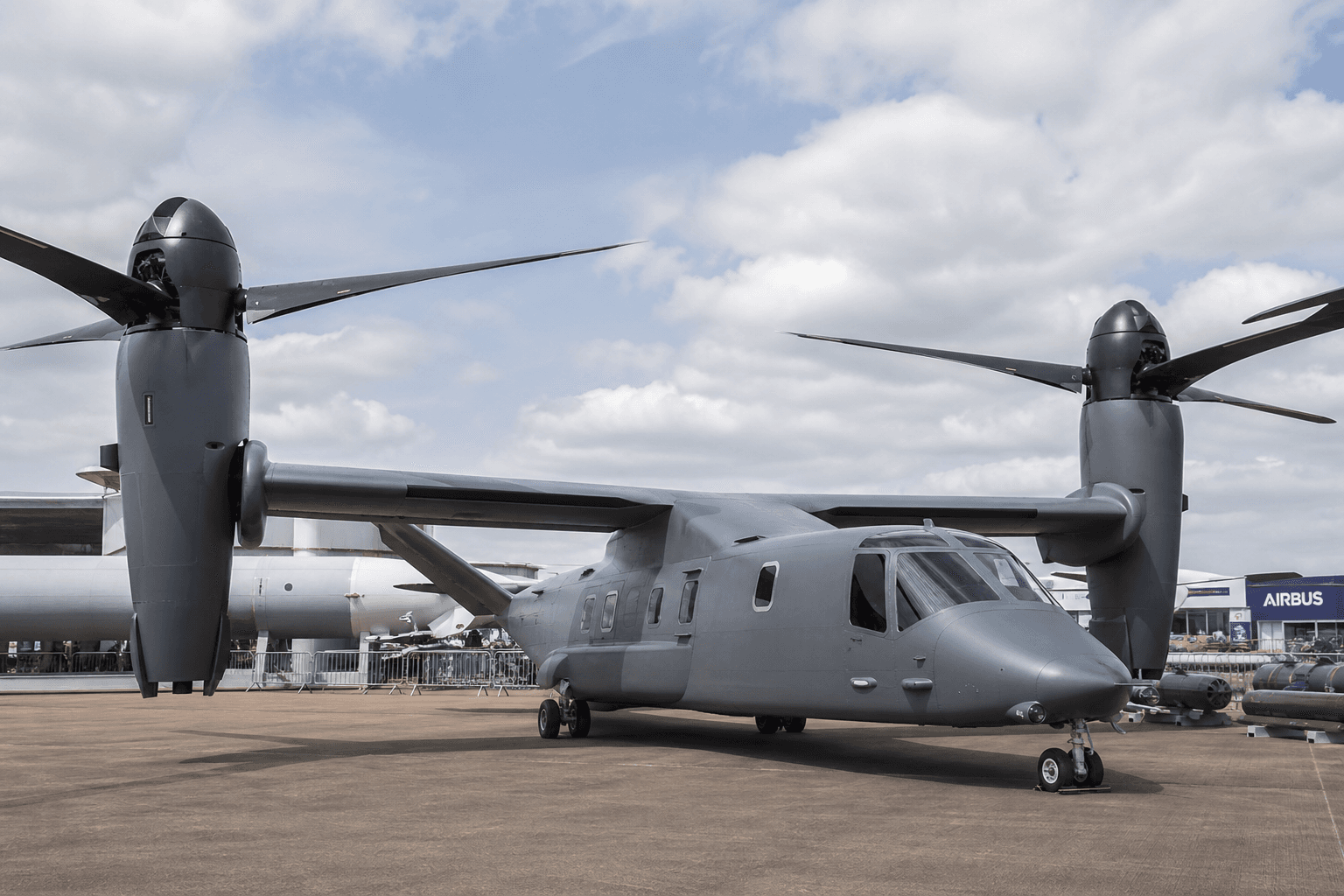
The new uncrewed tiltrotor will target commercial cargo and parapublic customers as a complement to the Midnight passenger aircraft. Electric aircraft developer Archer Aviation has unveiled a new concept for an uncrewed tiltrotor aimed at commercial cargo and parapublic operators. Revealed at the 2026 Farnborough air show, the Halo is a complement to the Thunder armed tiltrotor announced earlier at the Farnborough show by Archer and US defence start-up Anduril Industries. Both rotorcraft will use a common design, structure and drivetrain, all of which will be assembled by Archer. Airframes destined to become Thunder variants will be turned over to Anduril for militarisation, while Archer will handle Halo production entirely in-house. California-based Archer is best known for its developmental Midnight design – a multi-rotor, fully electric vertical take-off and landing (eVTOL) passenger craft that is still in the certification process. Corporate leaders in the eVTOL sector, including Archer, are on the hunt for alternative lines of business to the urban air mobility passenger market, which has been slow to develop. Defence was an early target, but it turned out that militaries had limited use for all-electric aircraft. Enter the pivot to hybrid-electric. “The feedback was there really isn’t a mission for a battery-electric e VTOL that solves a defence problem today,” says Archer’s chief technology officer, Tom Muniz. “I f we could solve some of the sort of range limitations that come with battery electric, there are some really interesting things that we could do.” Other eVTOL competitors, including Beta Technologies and Joby Aviation, have similarly unveiled hybrid-electric derivatives of their original battery-powered designs, partnering with established defence players to court military business. In Archer’s case, Muniz says the company was approached by Anduril to partner on a hybrid VTOL “t o address a very specific defence requirement set”. That co-development agreement generated both the Thunder and Halo. Although the Halo design will be commercially focused like Midnight, Muniz says that’s where the similarities end. “While Midnight [moves] people in and around cities or congested areas, with a pilot on board, t his new aircraft is autonomous, has a hybrid powertrain for very long range and substantially more payload and speed,” Muniz says. Concept renderings show a large fuselage with a roughly similar outer mould shape to the Bell-Boeing V-22 or Bell MV-75 tiltrotors. The Halo will use two wing-mounted nacelle assemblies that pivot up and down for transition between vertical and horizontal flight. However, the design will be far simpler than a conventional tiltrotor, owing to the use of electric motors rather than conventional turboshaft-powered rotors. “If you think about a vehicle like the V-22, there’s multiple gearboxes and power transmission shafts,” Muniz says. “For the Halo platform, it’s replaced by wires because it’s electric.” An onboard turboshaft engine will burn jet fuel, but that engine will be used to charge the electric drivetrain’s batteries, rather than directly powering the rotors. While commercial operations for Halo remain far off, initial flight testing will begin in the near future. Muniz says the design unveiled at Farnborough was finalised about a year ago, with prototyping now underway. “We’re now in the process of building the first flight articles for Halo,” he says. “ We’ll be in flight test next year.” The company sees support to offshore oil and gas operators, organ transplant flights, air cargo, medevac rescue flights, and search and rescue all as possible use cases for the hybrid tiltrotor.
The Daily Touch & Go
The day's best aviation news in your inbox. Free, no spam.