

Illustration: The Touch & Go
Emirates Switches From A380 to 777s on Beijing Route, Boosts Flight Frequency
Starting July, Emirates will replace its Airbus A380 with Boeing 777-300ER aircraft on daily Beijing flights while reintroducing a second daily service for increased capacity.
The gist
Emirates drops A380 from Beijing route, adds second daily 777 flight to enhance frequency and cargo capacity.
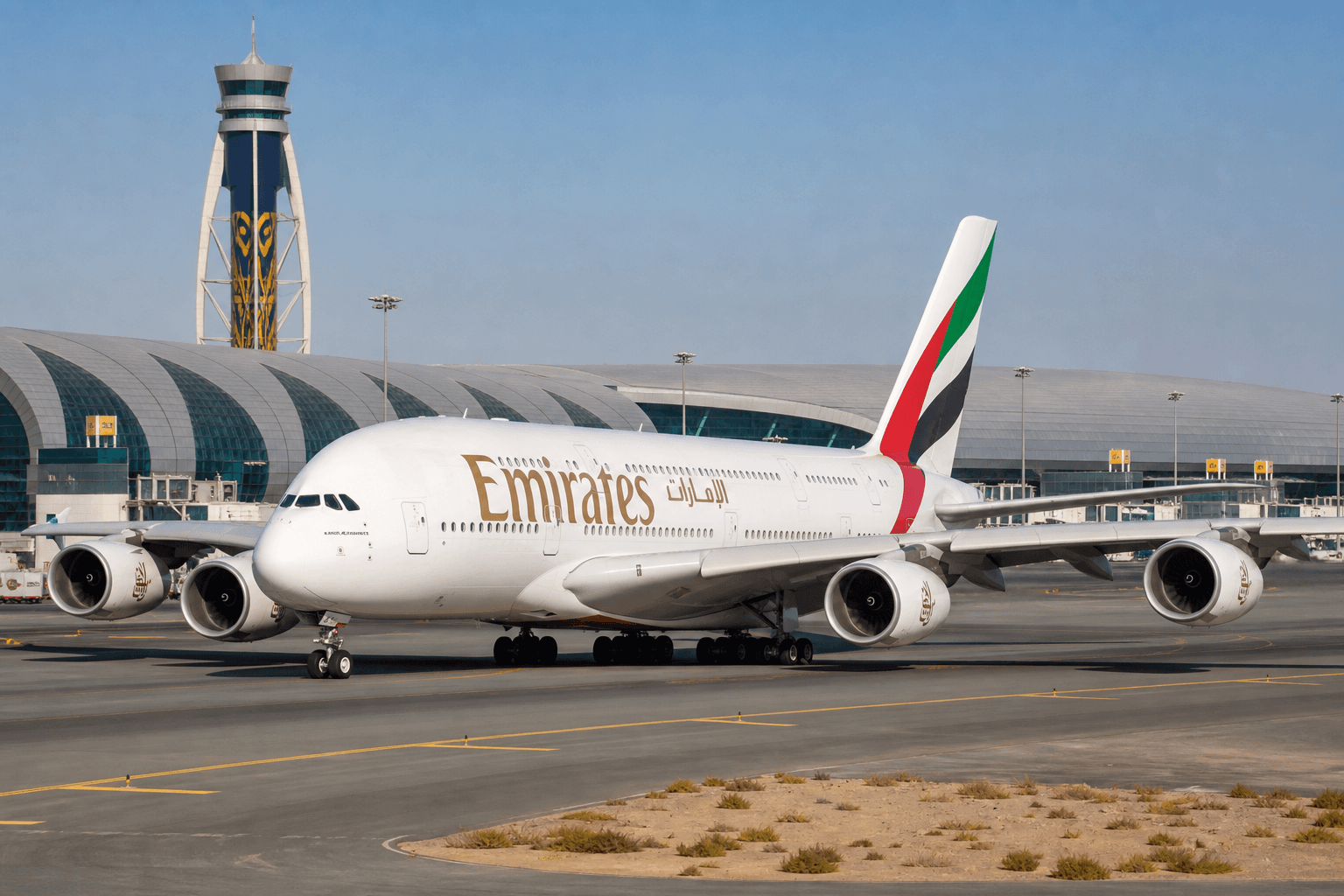
Emirates is set to withdraw its Airbus A380 superjumbo from its Beijing Capital Airport (PEK) route starting July, opting instead for Boeing 777-300ER aircraft on both of its daily services. This shift returns the route to two daily flights after the A380 was last deployed in May and had been operating once daily alongside Boeing 777s. The transition aims to prioritize frequency on this critical China-Dubai sector while maintaining overall capacity within premium cabins.
The two daily Beijing rotations will be operated exclusively by the 777-300ER fleet. The first service, currently flown by a four-class A380 departing Dubai at 3:50 a.m. local time, will switch to a retrofitted four-class 777. The returning second service, last flown on February 28 and operated by a three-class 777, will resume in July with the same aircraft type. This reinstatement brings back a flight that had ceased amid operational adjustments earlier this year.
Although the replacement of an A380 by a 777 could typically indicate a drop in available seats, Emirates maintains that capacity on the Beijing route will not diminish due to the added second daily flight. Cargo capacity is also set to increase as a result. The airline operates dedicated cargo services to China from its Dubai Al Maktoum International Airport hub via Boeing 777 freighters, complementing passenger flights and bolstering freight throughput between the two countries.
Despite removing the A380 from Beijing, Emirates will continue operating daily A380 services to two other major Chinese destinations—Shanghai Pudong International Airport and Guangzhou Baiyun International Airport. Shanghai benefits from a second daily service operated by a 777 alongside the superjumbo, while Guangzhou maintains a single daily A380 rotation. These choices underline China's ongoing importance in Emirates' network strategy.
The Beijing route has been served by Emirates since 2010, with the A380 operating nearly half of the flights before this adjustment. Historic operations often involved a mix of A380 and 777 services. The current fleet switch aligns with Emirates' broader network recovery efforts following disruptions earlier this year due to geopolitical developments in the Middle East. The carrier has since regained much of its pre-crisis schedule and capacity.
Emirates has rapidly restored its global network, progressively increasing services month over month. The July scheduling indicates the A380 will return to four routes overall, contributing to close to 2,000 A380 flights to nearly 50 destinations from its Dubai International Airport hub. The airline's strategy appears focused on balancing frequency, capacity, and aircraft deployment to optimize passenger and cargo demand, rather than a straightforward cutback in operations.
Additionally, Emirates maintains codeshare and interline partnerships within China with Air China, China Eastern Airlines, and China Southern Airlines to supplement its reach in markets including Hangzhou and Shenzhen. This collaborative approach helps sustain its competitive presence in China's diverse aviation markets amidst evolving operational decisions.
Overall, the swap to Boeing 777s and the reinstatement of daily frequencies on the Beijing route reflect Emirates’ adaptive network management to capture passenger demand and cargo opportunities more efficiently. The airline's flexible deployment of aircraft types demonstrates its intent to balance high-yield cabin offerings with frequency to preserve market strength in key Asian corridors.
Read more
All Airlines →
Frequent Flyer Award Loopholes Close as Airlines Tighten Elite Perks
The frequent flyer ecosystem has operated on a silent contract between airlines and their most loyal customers, but now that contract seems to be ending. There was once a period defined by the exploitation of fixed award charts, complex routing rules, and the mathematical beauty of carrier-imposed surcharges. Travelers spent years reverse-engineering award flight availability, viewing the loyalty landscape as a puzzle where deep knowledge of program intricacies provided access to premium cabins for a fraction of their cash value.
Boeing 777-300ER Revolutionized Long-Haul Air Travel with Twin-Engine Efficiency
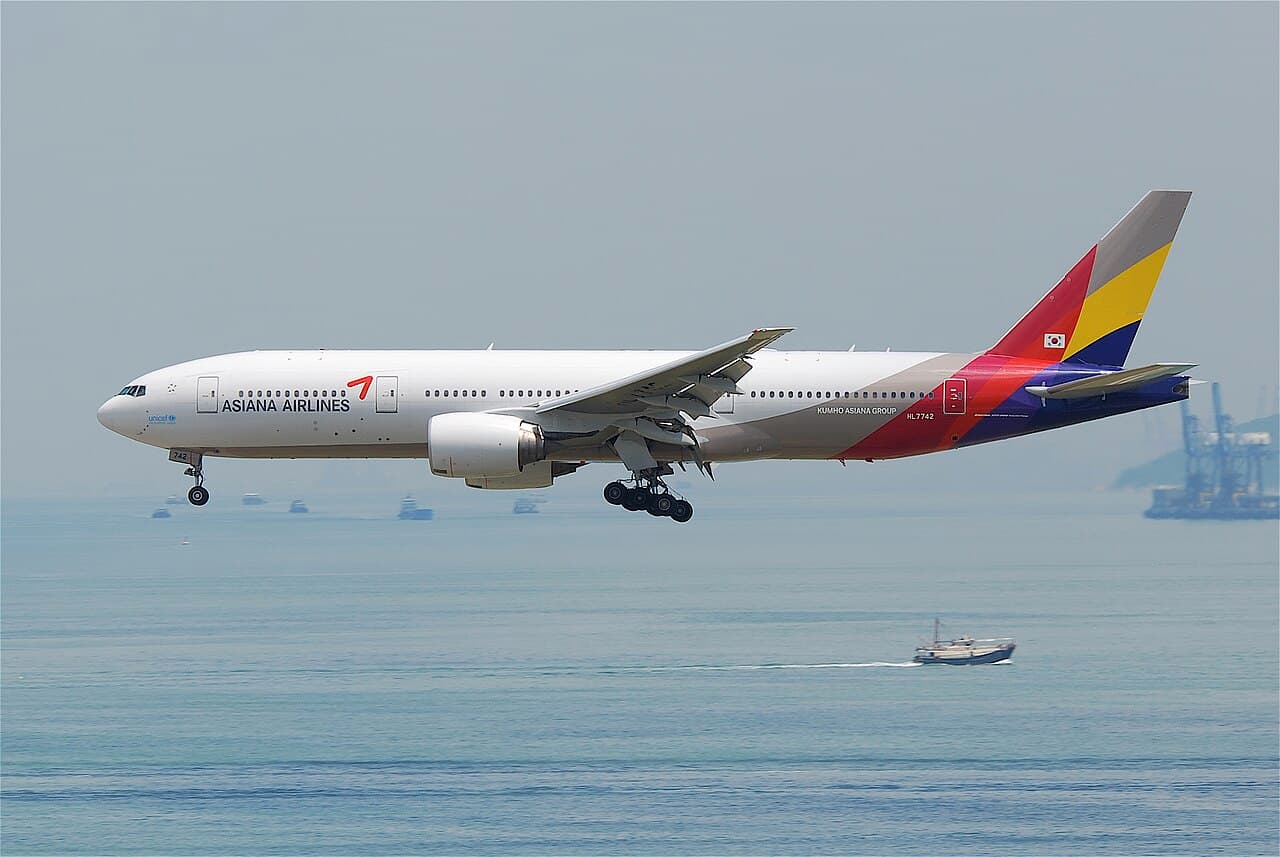
The 777 succeeded Boeing's first widebody twinjet, the 767 , and showed the world just how great the platform could be for both the economics of the notoriously volatile flying business and the satisfaction of flyers. The success of the 777 series directly contributed to the end of its larger quadjet predecessor, the 747.
Air Canada launches new long-haul routes to Tenerife and Sapporo for 2026/27 winter
Air Canada has been steadily expanding its international network in recent years. The airline has added several new destinations so far this year and increased its presence across leisure markets. It is continuing this expansion with more additions for the 2026/27 winter season .
Airbus Surpasses 1,000 Net Orders in 2026 Following Strong July Demand
Airframer nearly halfway to delivery target after handing over 67 aircraft in July. Airbus's net orders for this year have surpassed 1,000 after the airframer added more than 200 to its total during July. It has confirmed China Eastern Airlines' order for 25 A330-900s and Hainan Airlines' agreement for 40 A320neo-family aircraft in the airframer's latest backlog figures. It has listed the Hainan deal as comprising 13 A321neos and 27 A320neos. Airbus's July backlog records the SMBC Aviation Capital order for 65 A321neos and 35 A320neos unveiled at the Farnborough air show . Orders from Saudi Arabian carriers Riyadh Air, for six A350-1000s, and Flynas for five A330-900s and 20 A321neos – both revealed during the show – have also been listed. Airbus's figures for the month show two agreements from undisclosed customers, one for six A321neos, and the other for a single A320neo and A319neo – the first for an A319neo since March 2024. Net orders to the end of July, as a result, reached 1,024. Airbus has also delivered 418 aircraft this year, including 32 A350s, 10 A330s and 326 A320neo-family aircraft, alongside 50 A220s. This total is just under half of the planned full-year target of 870.
The Daily Touch & Go
The day's best aviation news in your inbox. Free, no spam.