

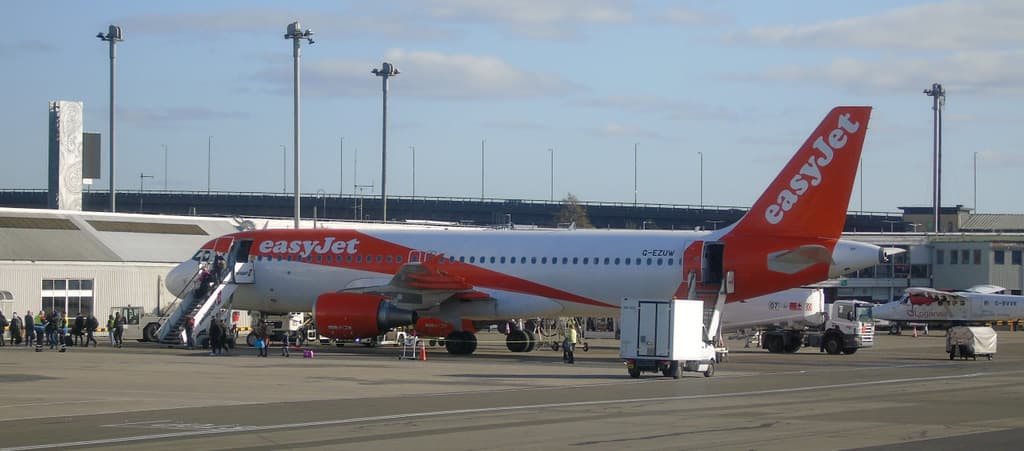
Image: Thomas Nugent · CC BY-SA 2.0 · via Wikimedia Commons
Apollo Global Management Secures £5.7B Takeover of easyJet with No Immediate Job Cuts
US private equity firm Apollo agreed to buy easyJet for £5.7 billion, pledging to keep the airline's brand, staff, and key operations intact for at least a year.
The gist
Apollo to take easyJet private for £5.7B, maintaining brand and staff with plans to build on existing strategies.
Continuing coverage
All Low-Cost Carriers →- Apollo Global Management close to acquiring easyJet for $7.6 billion with growth plans
- EasyJet takeover sparks fleet flexibility debate among European low-cost carriers
- Frontier to Launch Starlink High-Speed WiFi Across Fleet in Early 2027
- Vueling to Launch Boeing 737 MAX 8-200 on Mediterranean and European Routes in December 2026
- Wizz Air Opens New Year-Round London Gatwick Route to Chișinău Enhancing UK Connectivity
EasyJet has officially accepted a £5.7 billion takeover bid from Apollo Global Management, a major US private equity group, marking a significant shift for one of Europe's largest low-cost airlines. Apollo's offer values easyJet at £7.15 per share, representing an 81% premium over the airline's stock price prior to takeover speculation. This deal, which is expected to complete in March 2027, will transition easyJet from a publicly traded company to private ownership, dependent on securing shareholder, regulatory, and court approvals.
Apollo's plan for easyJet involves maintaining the airline's current operational structures, including retaining the brand, headquarters in the UK, and the UK, Austrian, and Swiss air operator certificates. Importantly, Apollo has committed not to implement any material group-wide job cuts during the first 12 months post-acquisition. The private equity firm emphasizes stability and continuity as it assumes control.
The offer came after a competitive process in which Apollo outbid rival US investment firm Castlelake, which had made several proposals valuing easyJet at around £5.5 billion. Apollo's higher bid persuaded easyJet's board to withdraw their support for Castlelake and endorse Apollo's offer. Notably, easyJet's founder Sir Stelios Haji-Ioannou and his family are retaining their stakes by rolling approximately 15.31% of their shares into the new private company structure, expressing confidence in Apollo's resources and vision.
Apollo is a global leader in alternative asset management, overseeing more than $1 trillion in assets. The firm has extensive aviation experience through previous investments in carriers like Sun Country Airlines, Aeromexico, and Atlas Air, as well as aviation financing operations. Apollo views easyJet as a strategically attractive asset with a strong brand, extensive network, and prime airport slots at key European hubs such as London Gatwick, Amsterdam Schiphol, and Geneva airports, which generate premium yields over ultra-low-cost competitors.
The rationale for taking easyJet private is rooted in enabling longer-term strategic planning and increased capital access without the short-term pressures of public markets. Apollo intends to enhance easyJet's profitability by improving revenue management, expanding ancillary services, launching a formal loyalty program, and developing premium services aimed at business travelers. Additionally, there are plans to grow the easyJet Holidays segment and explore partnerships that could extend the airline’s network reach.
Fleet strategy under Apollo will continue easyJet's upgauging approach, growing seat capacity per aircraft and maximizing airport slot efficiency. The private equity firm highlights that maximizing the utility and profitability of existing assets takes precedence over radical restructuring. Operational continuity remains a core priority, with no plans for significant frontline workforce cuts in the near term, though some public company-related functions may be reviewed.
This takeover marks an important juncture for easyJet after over 25 years as a publicly traded company on the London Stock Exchange. Remaining independent in brand and operations while gaining enhanced capital and strategic support from Apollo may position easyJet to better compete in a low-cost airline market increasingly focused on efficiency, revenue diversification, and customer loyalty.
EasyJet stakeholders must still navigate the approval process involving shareholders, courts, and regulatory authorities related to aviation licenses, competition law, and foreign investment. If successful, the move to private ownership will enable Apollo to implement its plan to 'do more' with easyJet’s assets and growth opportunities while maintaining its distinctive low-cost carrier identity.
Frequently asked questions
- What are Apollo's plans for easyJet's workforce after the takeover?
- Apollo has committed not to make any material group-wide job cuts at easyJet for at least the first 12 months following the acquisition.
- Will easyJet's brand and operational bases change after the acquisition?
- No, Apollo plans to keep easyJet's brand intact and maintain its UK headquarters as well as UK, Austrian, and Swiss Air Operator Certificates.
- What strategic benefits does Apollo see in acquiring easyJet?
- Apollo values easyJet's strong brand, extensive airport slots at key European hubs, its growing holiday business, and aims to enhance revenue through loyalty programs and premium services while preserving its low-cost carrier model.
Read more
All Airlines →
Airbus Surpasses 1,000 Net Orders in 2026 Following Strong July Demand
Airframer nearly halfway to delivery target after handing over 67 aircraft in July. Airbus's net orders for this year have surpassed 1,000 after the airframer added more than 200 to its total during July. It has confirmed China Eastern Airlines' order for 25 A330-900s and Hainan Airlines' agreement for 40 A320neo-family aircraft in the airframer's latest backlog figures. It has listed the Hainan deal as comprising 13 A321neos and 27 A320neos. Airbus's July backlog records the SMBC Aviation Capital order for 65 A321neos and 35 A320neos unveiled at the Farnborough air show . Orders from Saudi Arabian carriers Riyadh Air, for six A350-1000s, and Flynas for five A330-900s and 20 A321neos – both revealed during the show – have also been listed. Airbus's figures for the month show two agreements from undisclosed customers, one for six A321neos, and the other for a single A320neo and A319neo – the first for an A319neo since March 2024. Net orders to the end of July, as a result, reached 1,024. Airbus has also delivered 418 aircraft this year, including 32 A350s, 10 A330s and 326 A320neo-family aircraft, alongside 50 A220s. This total is just under half of the planned full-year target of 870.
Riyadh Air and GOL spearhead 2026 long-haul network expansions amid established carriers' route growth
Flying has come a long way since the first scheduled passenger flight. That service carried just one passenger and flew the short distance of around 21 miles, but it marked the beginning of an industry that would eventually transform the way people travel around the world. Today, we can travel from one corner of the world to another with relative ease.
LATAM Airlines posts $227 million Q2 profit amid strong premium demand
Resilient demand for premium seats and from loyalty programme members kept LATAM in the black. LATAM Airlines Group was able to pass to customers much of the increase in fuel prices in the second quarter thanks to strong travel demand, especially for premium seats and from member of its loyalty programme. The company reported an adjusted operating profit of $227 million for an adjusted operating margin of 5.4% during the three months ending in June. Its revenue increased 28% year on year to $4.2 billion, driven by an 18% year-on-year increase in revenue per available seat kilometre, allowing LATAM to recapture much of the additional $700 million fuel expense it paid in the period. LATAM’s second-quarter expenses jumped 39% year on year to $4.0 billion. "The combination of effective execution, commercial flexibility and the resilience of LATAM's diversified business model allowed the group to increase unit revenues this quarter [and] successfully mitigate a substantial portion of that [fuel] impact," said Ricardo Dourado, the chief financial officer of LATAM, during an earnings call on 5 August. Premium-seat sales and demand from loyalty programme members showed "greater resilience" than overall demand in the second quarter, he adds. LATAM is investing in new business-class suites and premium-economy seats for its widebody Boeing 787s. Installations began in 2025 and continue across the fleet. It is also expanding the number of premium-economy seats on its narrowbody fleet of Airbus A320-family aircraft and plans to introduce the seats on Embraer 195-E2s scheduled to enter service in November. LATAM initially plans to fly E195-E2s to four new destinations and on eight new routes in Brazil. The aircraft will allow it to expand and tailor capacity on existing routes to better match demand at various times of day, chief executive Roberto Alvo says. Looking ahead, LATAM reinstated its guidance despite what Alvo says remains a "highly dynamic" market. The company expects to grow capacity, measured in available seat kilometres, 8-9% in 2026 and forecasts a 2026 adjusted operating margin of 12-13%. LATAM is scheduled to take delivery of 15 A320neo-family aircraft, one 787-9 and 12 E195-E2s in the second half of 2026, its latest fleet plan shows. It forecasts adding 27 aircraft to its fleet in 2026, bringing its fleet to 410 aircraft at year-end. LATAM can retire older Airbus A319s if the demand environment weakens, Alvo says.
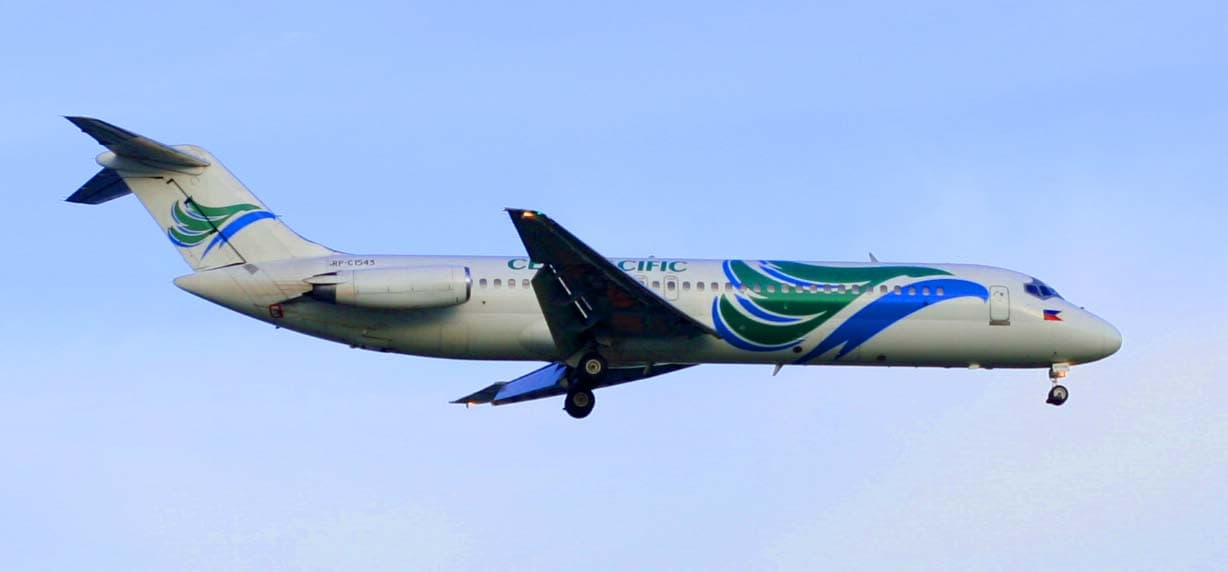
Cebu Pacific posts Q2 loss as fuel costs more than double operating expenses
Airline saw fuel expenses more than double during its second quarter. Cebu Pacific swung to the red in the second-quarter as it took a significant hit from heightened fuel prices in what what it terms the "most challenging operating environment post-pandemic". The low-cost operator posted an operating loss of Ps2.7 billion ($44.3 million) for the three months ended 30 June, a quarter that has traditionally been stronger performing. The loss compares to a Ps6 billion operating profit it reported in the year-ago period. Cebu Pacific operating costs rose 41% year on year to Ps37.9 billion, driven by a doubling in fuel expenses during the quarter. Airline chief Mike Szucs says the “extraordinary” spike in fuel costs – its "single largest cost component" – happened very quickly, "outpacing our ability to recover these costs" through "calibrated fare increases" implemented during the quarter. Szucs, speaking at an earnings call on 6 August, adds that the fuel impact "temporarily disrupted the positive trajectory we had seen earlier in the year". Indeed, the spike in operating expenses significantly outpaced a 7% increase in revenue – to Ps35.2 billion – a sign that underlying demand "still remains resilient", notes Szucs. During the quarter, Cebu Pacific slashed capacity, especially on long-haul routes, in response to the increase in fuel prices. The airline "selectively reduced flights to focus on markets with profitable contribution margin" during the quarter, notes airline chief operating officer Xander Lao. The "deliberate capacity reductions" were behind a 2% decline in system-wide capacity, led by a 13% cut in international ASKs. Still, the airline carried 7 million passengers, roughly similar to the year-ago period. The airline has also warned of continued volatility in fuel prices in the near-term. The July-September period is also a "relatively weaker" and loss-making season for the carrier, which has warned that its losses for this third-quarter period could be steeper given the higher fuel costs. Lao, however, says that forward booking data remains strong, with the third-quarter demand shaping up to be better than previous years. The airline's international travel demand is "doing quite well" in the near-term, with domestic demand "already starting to catch up", Lao adds.
The Daily Touch & Go
The day's best aviation news in your inbox. Free, no spam.