

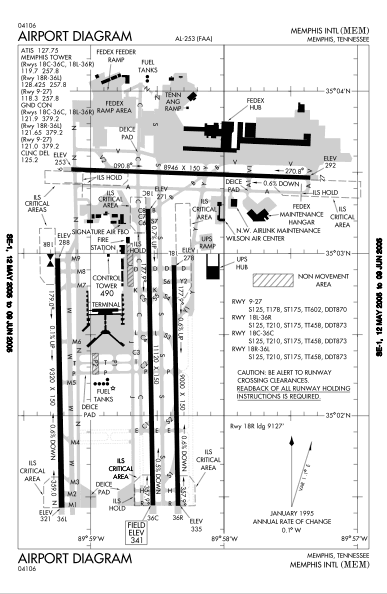
Image: The original uploader was Sekicho at English Wikipedia . · Public domain · via Wikimedia Commons
Memphis International Airport Renamed to Honor FedEx Founder Frederick W. Smith with New Significance
FedEx and Memphis-Shelby County Airport Authority commemorate Frederick W. Smith's legacy by renaming Memphis International Airport and launching an inaugural day of service.
The gist
Memphis International Airport is renamed after FedEx founder Frederick W. Smith, celebrated with a special day of community service and a retrojet flight.
Continuing coverage
All Boeing 777f →On August 11, 2026, Memphis International Airport was officially renamed Frederick W. Smith International Airport in tribute to the late FedEx founder, recognizing his pivotal role in aviation and the city’s economic growth. The renaming event synchronized with the inaugural FedEx FWS Day of Service, expressing the company’s commitment to community engagement inspired by Smith’s values. This dual celebration marked both a physical and cultural embodiment of Smith's legacy in Memphis and the global air cargo industry.
Frederick W. Smith, a U.S. Marine Corps veteran, selected Memphis as Federal Express’s base in 1973, highlighting its strategic location and favorable weather conditions. Over fifty years, Smith cultivated a collaborative partnership between FedEx, the Memphis city government, and the airport authority, fostering the city’s emergence as a vital hub for international commerce. This relationship transformed Memphis into a critical node in worldwide logistics, bolstering both regional economic development and global supply chains.
To honor Smith’s enduring influence, FedEx unveiled a compelling mural along Plough Boulevard featuring his portrait creatively assembled from FedEx’s iconic purple aircraft tails. This art installation serves as a symbolic gateway for travelers, reflecting Smith's vision and commemorating his dedication to fostering Memphis’s connectivity to the world. FedEx’s CEO Raj Subramaniam stated that from this day forward, the presence of Smith’s spirit will be embedded in every operational facet of the airport and its thousands of daily shipments.
The Memphis World Hub, situated at the readedicated airport, plays a central role in FedEx’s operations, handling over 2.4 million packages daily as part of the company’s global throughput exceeding 18 million parcels. The airport’s renaming underscores the facility’s strategic importance to FedEx and the broader air cargo industry, solidifying Memphis’s status as a cornerstone in the company’s worldwide network.
The commemorative event culminated with Flight 1944, a FedEx Boeing 777F bearing its original 1972 purple and orange livery, making the first ceremonial landing on the newly named airport. The flight number honors Smith’s birth year, 1944, while the aircraft itself, known as Rosie, is named for one of Smith’s granddaughters, continuing FedEx’s tradition of naming aircraft after employees’ children. This gesture blends historical homage and familial reverence, silently narrating Smith’s personal and professional legacy.
The FWS Day of Service initiated during the celebration is part of FedEx’s broader Purple Week, a global enterprise event focused on the company’s foundational People-Service-Profit culture. Across more than 120 volunteer and community impact projects worldwide, FedEx employees are engaging in service activities designed to reinforce the values that Smith championed. This day of service is slated to become an annual fixture, perpetuating Smith’s vision of community care and corporate responsibility as intrinsic elements of FedEx’s identity.
Smith’s devotion to Memphis extended beyond business; he actively fostered the city’s prosperity and civic pride. His choice of Memphis was not merely logistical but deeply personal, intertwining his hometown with the trajectory of FedEx. The airport renaming and day of service thus represent a multifaceted homage, integrating Smith’s business acumen, community leadership, and his legacy within the aviation industry.
The enduring impact of Smith’s strategy and foresight can be seen in the global reach FedEx enjoys today and the infrastructure that supports its ambitious operations. Renaming the Memphis International Airport solidifies Smith’s enduring imprint on the city and the cargo aviation sector. It establishes a tangible monument that represents both historical accomplishment and ongoing commitment to innovation and service within aviation logistics.
As FedEx moves ahead under the leadership of CEO Raj Subramaniam, the symbolic weight of the new Frederick W. Smith International Airport calls for sustained dedication to the values and growth path instilled by its founder. The company’s expansive community programs and the operational prowess of its Memphis hub position it well for future challenges and opportunities in global air cargo.
Frequently asked questions
- Why was Memphis International Airport renamed Frederick W. Smith International Airport?
- The renaming honors FedEx founder Frederick W. Smith’s contributions to aviation, the economy, and Memphis, reflecting his role in establishing the city as a global cargo hub.
- What is the significance of Flight 1944 at the renaming event?
- Flight 1944, a FedEx 777F in the original 1972 livery, made the first ceremonial landing at the renamed airport, with its flight number representing Smith’s birth year and the aircraft named after his granddaughter.
- What is the FedEx FWS Day of Service?
- The FWS Day of Service is an inaugural annual community engagement event held during Purple Week, reflecting Smith’s philosophy of community leadership and FedEx’s commitment to social impact.
Read more
All Cargo →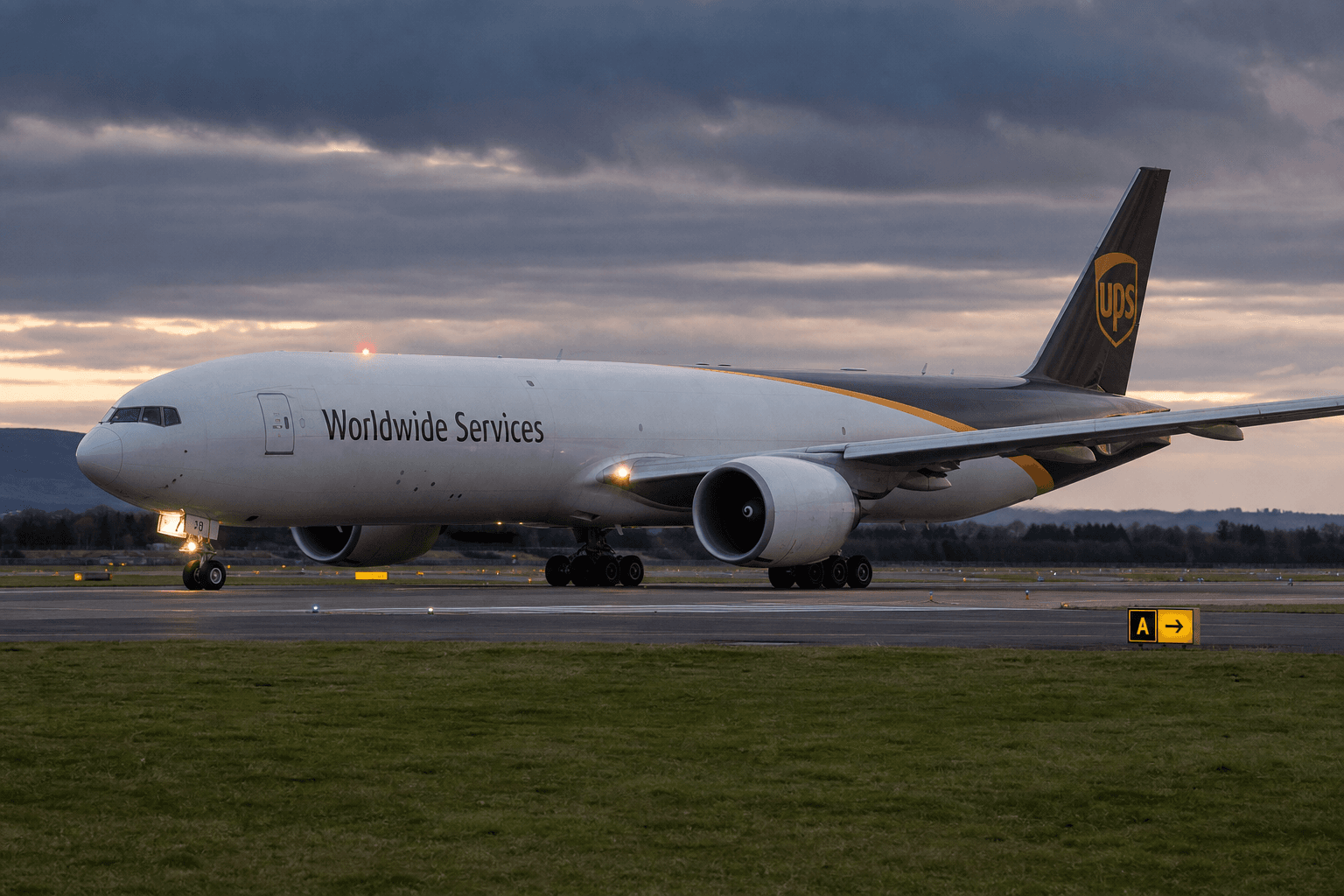
National Airlines Executes Record-Setting 19.5-Hour Nonstop 777F Flight from Scotland to Australia
What do you do when your Boeing 787-8 Dreamliner has been broken for nearly two weeks, and you need a spare part that is currently only in stock from a single facility on the other side of the world? Well, you charter a cargo plane to operate what is believed to be the longest ever flight by a Boeing 777 freighter aircraft. On August 4, that’s exactly what happened when National Airlines, a specialist cargo carrier based in Orlando, operated a 9,849 nautical mile flight from Prestwick in Scotland to Melbourne, Australia, in one non-stop flight that took around 19 and a half hours. The longest ever Boeing 777F flight in the world. The 777F (the suffix stands for Freighter) had only been delivered to National in early June, fresh from the Boeing assembly line in Everett, Washington, when a third-party cargo charter company made a booking for something they needed transported as quickly as possible. The original client is believed to be Australia’s low-cost carrier Jetstar, which has had one of its Boeing 787-8 Dreamliners stranded in Melbourne since July 25. In order to get it back in the air, the plane needs new thrust reversers for its huge GEnx jet engines, but availability for these parts is in short supply. The most reliable source was GE’s own maintenance and overhaul facility, based, of course, in Prestwick, Scotland. Of course, both National Airlines and Golden Aviation are limited to what they can say about this record-breaking flight due to client confidentiality, but in a statement posted to its official X account, National Airlines commented: “We are proud to have achieved what is believed to be the world's longest commercial B777F flight for another airline, operating nonstop from Prestwick to Melbourne.” Rumours has it that it was delivering new thrust reversers for Jetstar B787-8 (VH-VKF) that's been AOG at Melbourne since 25 July! Prestwick hosts a major GE engine overhaul facility for the GEnx engines! https://t.co/mVh7NXvEnG — Analytic Flying (@analyticflying) August 4, 2026 The aircraft (registration: N792CA) departed Prestwick just before 1 am on August 4, heading south across Europe, before threading the needle through Azerbaijan, Turkmenistan, Tajikistan, north Afghanistan, and Pakistan to avoid conflict zones across the Middle East. From there, the brand new 777F continued across India, the Bay of Bengal, Malaysia, Indonesia, and then across Melbourne, where it landed just before 5 am on August 5. The flight would have been operated by at least four pilots who would have taken turns at the controls, with two working and two sleeping in special bunks at any one time. It appears that National Airlines is well-versed in transporting engine parts, given that the plane has already visited Prestwick on several occasions since it has been with the carrier for a short amount of time. Although this is the longest ever flight of a Boeing 777F, this extraordinary flight pales in comparison to the 12,560 nautical mile journey recently completed by Airbus from Melbourne to Toulouse, France, to test the new A350-1000ULR. With a flight time of 24 hours and 24 minutes, the Airbus test pilots were putting the aircraft to the ultimate test ahead of its delivery to Australian flag carrier Qantas. The plane’s remarkable range is possible due to an additional center fuel tank that has been fitted to enable non-stop flights from Sydney to London, Paris, and New York.
National Airlines Expands Fleet with New GE90 and CF6 Engines for Boeing Freighters
GE Aerospace (NYSE: GE) announced on July 23, 2026 that National Airlines has committed to purchase one GE90-110B and six CF6-80C2 engines to power their Boeing 777F/747F cargo airplanes. The GE90 engine family powers all Boeing 777 models and is the exclusive powerplant on the 777-300ER, -200LR, and Freighter. The GE90 engine features several technology […]
DAE Signs Deal to Acquire and Lease Four Boeing 777F Freighters to Saudia
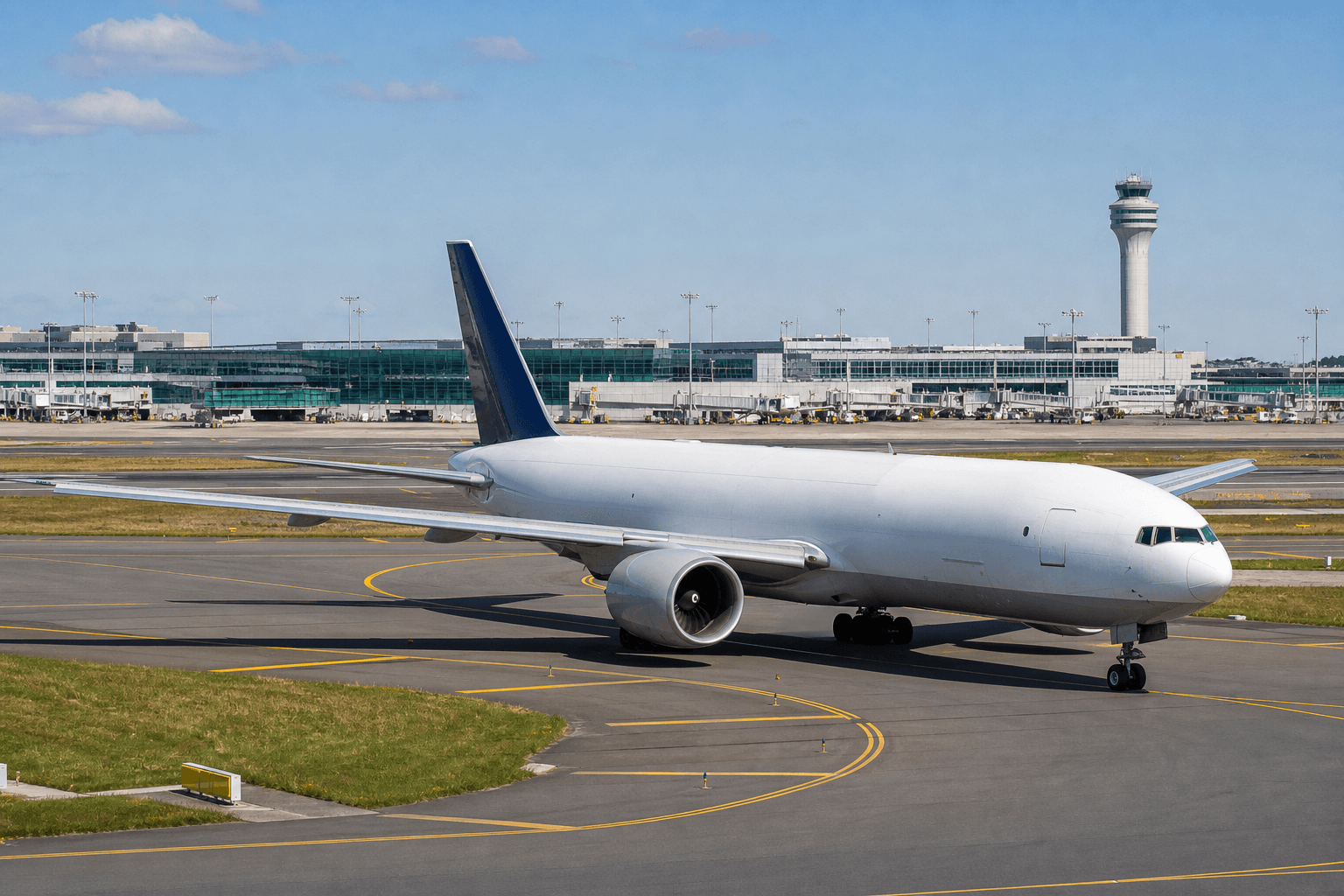
Dubai Aerospace Enterprise has signed a major agreement with Saudia. The deal, announced on 10 August 2026, covers four new Boeing 777F aircraft. It also includes long-term leases for these planes. ezstandalone.cmd.push(function () { ezstandalone.showAds(119); }); Deliveries will run from October 2026 to May 2027.This purchase-and-leaseback deal strengthens Saudia’s cargo operations. It helps the Saudi flag carrier serve more markets worldwide. What the Agreement Involves DAE will purchase the four Boeing 777F freighters. Then it will lease them back to Saudia under long-term contracts. This structure is common in aviation. It gives airlines access to new aircraft while spreading costs. ezstandalone.cmd.push(function () { ezstandalone.showAds(127); }); The Boeing 777F is a long-range, widebody freighter. It offers strong payload capacity of about 102 tonnes. It also delivers good operational efficiency and high reliability. Leading cargo operators around the world already use this aircraft type. Firoz Tarapore, CEO of DAE , commented on the deal. “We are pleased to announce a purchase-leaseback agreement for four Boeing 777F aircraft with Saudia,” he said. ezstandalone.cmd.push(function () { ezstandalone.showAds(128); }); “This transaction reflects our continued commitment to supporting our airline customers with high-quality, in-demand aircraft.” He added that the planes will support Saudia’s growing cargo work. They will also help the airline reach key markets on its global network. Tarapore wished Saudia continued success. ezstandalone.cmd.push(function () { ezstandalone.showAds(129); }); Why This Matters for Saudia Saudia aims to expand its dedicated freighter fleet. The carrier wants to meet rising global demand for air cargo. These four new aircraft will boost capacity. They will improve connectivity between key international destinations. Saudi Arabia continues to position itself as a major logistics hub. Extra freighter capacity supports that national goal. The aircraft can carry a wide range of cargo across long distances. This makes them ideal for expanding routes. Earlier in 2026, Saudia Group announced an order for four Boeing 777Fs with the manufacturer. The DAE agreement aligns with that plan. It ensures the planes arrive on a clear schedule between late 2026 and mid-2027. ezstandalone.cmd.push(function () { ezstandalone.showAds(130); }); About Dubai Aerospace Enterprise DAE is a global aviation services company based in Dubai. It owns, manages, or has commitments for more than 1,000 aircraft. This fleet includes over 250 Boeing planes. The company serves more than 200 airline customers in over 85 countries. DAE plans to grow its portfolio further to meet market demand. Its fleet value stands at around $35 billion. The lessor operates through offices in several cities, including Dubai, Dublin, London, and Singapore. This latest deal shows DAE’s focus on high-demand freighter aircraft. Cargo traffic remains strong in many regions. Lessors that supply modern freighters can support airline growth effectively. ezstandalone.cmd.push(function () { ezstandalone.showAds(131); }); Looking Ahead The first aircraft should arrive in October 2026. The remaining three will follow by May 2027. Once in service, they will join Saudia’s existing freighter fleet. That fleet already includes other 777Fs, 747-400Fs, and converted Airbus models. No financial details of the transaction were released. Still, the strategic value is clear for both parties. Saudia gains modern capacity. DAE expands its portfolio with sought-after assets on long-term leases. The partnership highlights ongoing cooperation between Dubai’s aviation sector and Saudi carriers. Both regions continue to invest heavily in air transport and logistics. This agreement is one more step in that direction. ezstandalone.cmd.push(function () { ezstandalone.showAds(132); }); As deliveries approach, industry watchers will track how quickly the new freighters enter commercial service. They are expected to play a key role in Saudia’s cargo expansion plans over the coming years.

FAA Forecasts 24,600 Advanced Air Mobility Flights in First Year of Service
The FAA is projecting advanced air mobility (AAM) operations could generate 24,600 departures during their first full year of service in the U.S., according to the agency's latest Aerospace Forecast. The forecast covers airport shuttles, commuter air taxis, cargo feeders and medical transport operations. Operations Could Ramp Quickly The FAA estimates the nation’s initial AAM fleet will consist of seven aircraft with operations in two markets. By year three, the forecast ramps up to 80 aircraft across 15 markets, producing 334,800 annual departures. By Year 6, the FAA expects 367 aircraft will fly in 32 markets and will generate about 1.6 million annual departures. That would be roughly 4,400 flights per day. The forecast does not assign a specific calendar year to the start of commercial AAM service. The FAA said the timing remains uncertain and will depend on factors outside the scope of its demand study. Joby Aviation, Archer Aviation and Beta Technologies are among the manufacturers the agency identified as planning operations in the 2026-2027 timeframe. Several companies are beginning limited operations this year under the Department of Transportation’s Electric Vertical Takeoff and Landing and Advanced Air Mobility Integration Pilot Program ( eIPP ). "These partnerships will help us better understand how to safely and efficiently integrate these aircraft into the National Airspace System," FAA Deputy Administrator Chris Rocheleau said when the projects were announced in March. "The program will provide valuable operational experience that will inform the standards needed to enable safe Advanced Air Mobility operations." Airport Shuttles Expected First Airport shuttle service is expected to account for the largest initial share of AAM operations. The FAA also said it anticipates cargo feeder service in sparsely populated western areas and island communities, along with commuter air taxi and medical transportation operations. To determine the fleet required to meet the projected demand, the FAA assumed aircraft used for airport shuttle, cargo and commuter air taxi service would average 28 trips per day, based on two trips per hour during a 14-hour operating day. Medical transport aircraft were projected to average 2.5 trips per day. The FAA said expected production capacity announced by manufacturers indicates aircraft availability should not constrain the projected fleet growth.
The Daily Touch & Go
The day's best aviation news in your inbox. Free, no spam.