

Image: Ninjastrikers · CC BY-SA 4.0 · via Wikimedia Commons
National Airlines Expands Fleet with New GE90 and CF6 Engines for Boeing Freighters
National Airlines has ordered one GE90-110B and six CF6-80C2 engines from GE Aerospace to power its Boeing 777F and 747F cargo aircraft, boosting its freight capabilities.
The gist
National Airlines invests in GE Aerospace engines to equip its Boeing 777F and 747F freighters for enhanced cargo operations.
National Airlines has recently secured a significant engine order from GE Aerospace, confirming the purchase of one GE90-110B and six CF6-80C2 engines. These engines will support the carrier's Boeing 777F and 747F freighter aircraft, underpinning National's strategic expansion in cargo operations. This move reflects the ongoing modernization of the airline's fleet with reliable, proven engine technology.
The GE90 engine family is renowned for powering all Boeing 777 models and remains the exclusive engine for the 777-300ER, -200LR, and notably, the 777 Freighter variant. The specific GE90-110B engine offers powerful thrust capabilities essential for long-haul cargo routes, which are critical to National Airlines' freight logistics network. Its technical design incorporates advanced features, such as carbon fiber composite front fan blades, enhancing efficiency and performance.
Complementing the GE90 acquisition are six CF6-80C2 engines, which are widely used to power Boeing 747 freighters and various other wide-body commercial aircraft. The CF6 series has a strong reputation for durability and a long operational lifespan, making it a favorite among cargo airlines that require dependable engines capable of handling heavy, sustained freight operations.
The GE90 engine set important aviation benchmarks when it was introduced, including the world’s largest front fan measuring 128 inches in diameter. Additionally, during its certification process, a GE90 variant achieved a world-record thrust of 127,900 pounds. These landmarks underscore the engine’s capability to deliver the power necessary for carrying voluminous cargo loads over extended distances.
This arrangement with GE Aerospace strengthens National Airlines' position in the competitive air cargo market, where efficiency, payload capability, and reliability are paramount. By equipping its Boeing 777F and 747F aircraft with these highly regarded engines, National can ensure optimal operational performance for its freight fleet, enabling it to meet growing demand and maintain tight schedules.
National Airlines' investment also aligns with the broader trend among cargo carriers to upgrade their fleets with engines that offer advancements in fuel efficiency, emissions reduction, and maintenance costs. GE Aerospace continues to innovate in these areas, and the selected engine models represent some of their proven and widely adopted solutions within the industry.
The commitment to these engines also suggests National's intent to maintain certain aircraft types as central pillars of its cargo fleet for the foreseeable future. The Boeing 777F and 747F remain popular among freight operators for their balance of payload, range, and operational economics. Equipping these aircraft with new engines is indicative of planned extended service lives and increased cargo throughput.
National Airlines has not disclosed detailed timelines for the delivery of these engines, but such procurement often coincides with fleet expansions or scheduled maintenance cycles. As GE Aerospace supplies engines for one of the most successful cargo aircraft models globally, this order underlines National's confidence in tried-and-tested technology to meet its logistical needs.
This deal marks the continuation of a long-standing partnership pattern between airlines and engine manufacturers in the air cargo sector, reflecting reliance on established engine platforms to optimize cargo operations. By renewing and expanding its engine inventory, National Airlines is poised to enhance its operational capabilities on major global freight routes.
Frequently asked questions
- What engines did National Airlines order for their cargo aircraft?
- National Airlines ordered one GE90-110B engine and six CF6-80C2 engines from GE Aerospace to power their Boeing 777F and 747F cargo airplanes.
- Which aircraft models will use the ordered GE Aerospace engines?
- The ordered engines will power National Airlines’ Boeing 777F and Boeing 747F freighter aircraft.
- What are some key features of the GE90 engine family?
- The GE90 engine family includes the world’s largest front fan at 128 inches diameter, carbon fiber composite front fan blades, and achieved a world-record thrust of 127,900 pounds during certification testing.
Read more
All Cargo →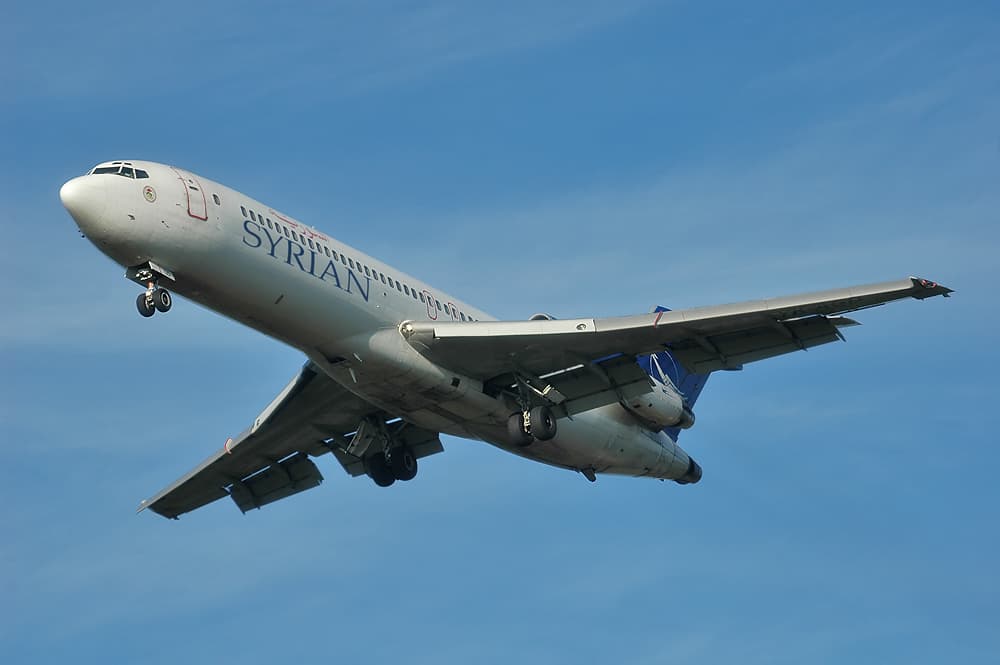
FedEx's Boeing 727 Fleet Retired as Cargo Operations Modernize
For many aviation enthusiasts, the Boeing 727 and FedEx became inseparable. Long after most passenger…
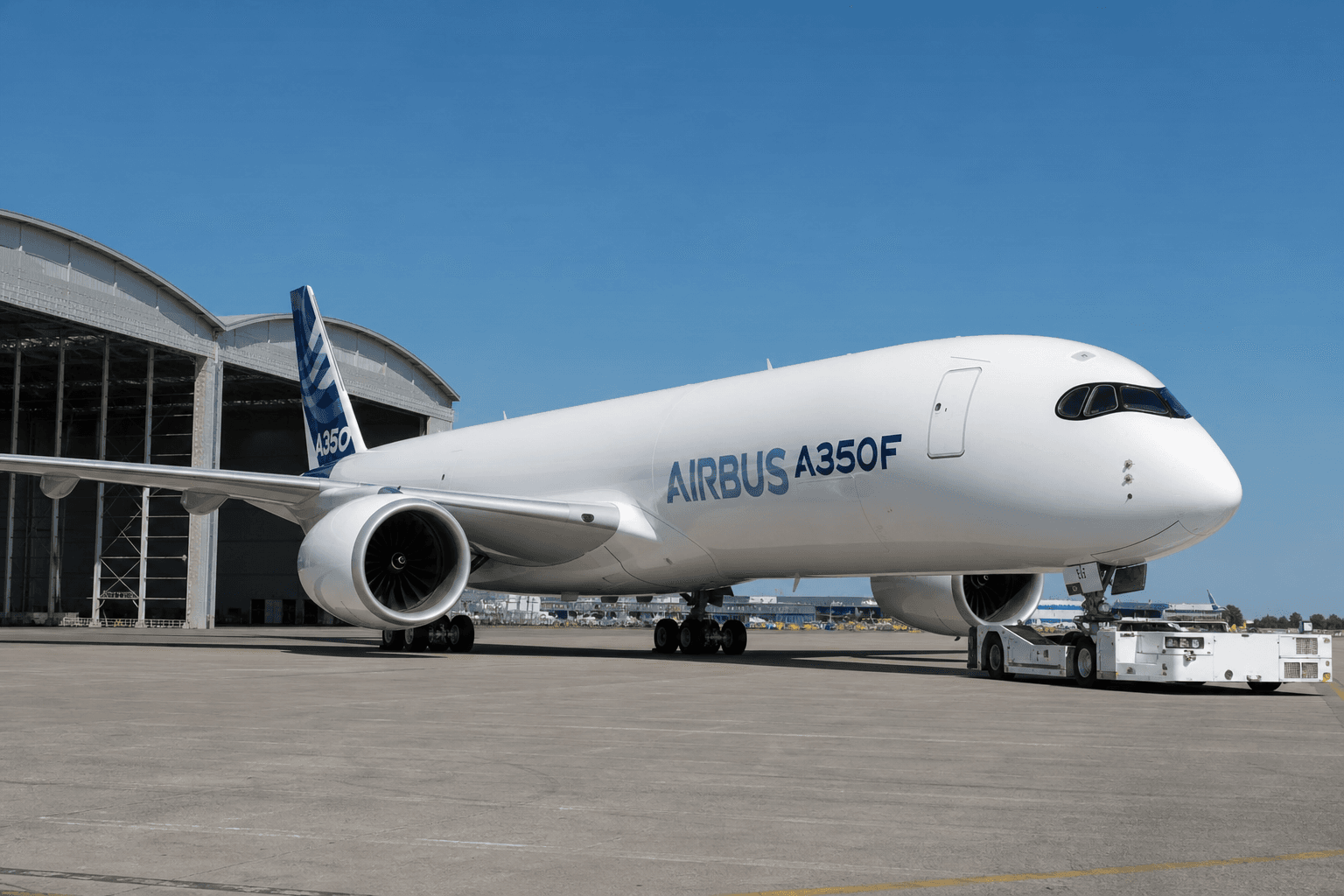
Airbus completes assembly of its first A350F freighter, begins test program
Airbus has just completed assembly of its very first A350F freighter, officially moving the program into its testing phase. The news came from the company's head of Freighter Marketing in late June.
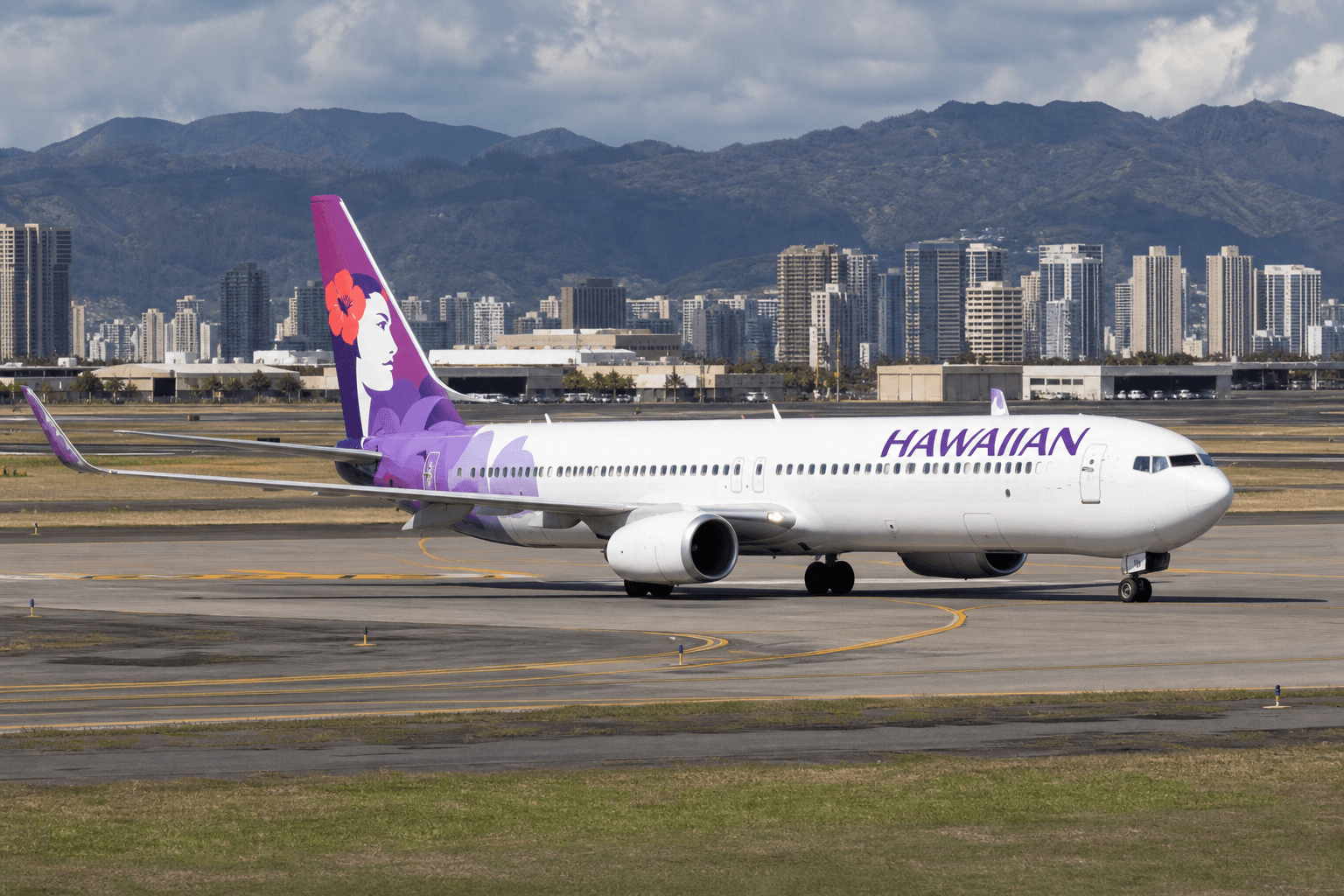
Hawaiian to Replace Aging B717 Fleet with B737-800s for Interisland Service Starting 2028
Who’s excited for a special Wednesday post? Actually, all of you who don’t care about Hawaiʻi should be. I was going to just do this on my regular Thursday, but I figured some of you would kill me if I had another entire week dedicated to the islands. So, enjoy today, and then there will be a non-Hawaiʻi post as usual tomorrow. Hawaiian officially announced yesterday that it will replace its B717 fleet with the B737-800 as first reported by The Air Current , and as we discussed on The Air Show podcast . I had the chance to sit with Hawaiian CEO Diana Birkett Rakow and Head of Hawaiʻi Operations Jim Landers on Tuesday to learn more about the plan. Hawaiian has been in a bind. The B717 fleet has aged noticeably over the last couple of years, requiring more downtime and maintenance work. Temporarily expanding that fleet was considered a non-starter, and so the interisland operation has suffered. There have been operational issues, and the only solution was to pull down the schedule to give the existing fleet more of a breather. The problem has become so acute, especially in the middle of the day, that Hawaiian is putting a temporary solution into place. Starting this October, Alaska — not Hawaiian — will fly three daily roundtrips between Honolulu and Kahului (Maui) on a B737 that will rotate back into the mainland fleet. Since this is Alaska-branded, there will be no pog juice or any Hawaiian-style service. This is simply a band-aid until they can bring the real solution into place. That will start in 2028 when the first B737-800 painted in the Hawaiian livery and with Hawaiian-branded service will enter the fleet. The full timeline for the retirement of the B717 has not been determined, but this will not be drawn out. They just don’t have all the answers yet. Rendering via Hawaiian For example, we don’t yet know how many of these airplanes will enter the Hawaiian fleet. They need to figure out exactly how many flights at what time of day they need to operate with these higher-capacity aircraft, so they will back into the exact number later. That’s easy to do when you have a whole fleet of -800s at Alaska today that gives flexibility, but I was assured that this will continue to be a high-frequency operation the same way it is today. And when asked if all interisland routes that operate today would continue to be flown with these bigger airplanes, Diana responded, “I don’t see us pulling out of any of those markets” What will these look like on the inside? If you’ve been on an Alaska -800 today, it will be pretty similar. Those airplanes just had a full refresh, so the configuration will remain the same with 16 First Class, 30 Premium Class (extra legroom), and 115 in coach for a total of 161 onboard. While none of that will change, the color schemes onboard will, including the bulkheads and seat covers. This will look like a Hawaiian-branded airplane. This means the interisland experience will be better in several ways. Most notably, these airplanes will have an extra inch of pitch in coach, a full extra legroom section, and double the number of First Class seats onboard compared to the 128-seat B717. The reality is that with 33 more seats on the airplane, they don’t need to try to squeeze more capacity into the aircraft, so they can make it a little more comfortable. The bigger First Class cabin and new Premium class also means improvement for elites who will have more upgrade opportunity, but it also means more seats are available in general. Diana said, “a lot of guests really do purchase First Class.” First Class is also helpful for paid connectors in First Class, especially those from Japan and Australia who have to funnel via Honolulu before going to another island. Diana and Jim highlighted a lot more about the improved onboard experience including power outlets and Starlink onboard, but who really cares when your longest flight is less than 45 minutes? I suppose it’s still a nice bonus, especially for the local business traveler. But ultimately, this is just something they’re going to milk since it’s already on the fleet at Alaska today. The Decision I was most curious about how they arrived at the -800 as the right airplane, and Jim gave some really helpful context since he was at Hawaiian before the merger. He explained that while “there isn’t another perfect 128-seat tank being built,” it was a previous generation narrowbody which seemed to be the best fit. Pre-merger Hawaiian was circling its efforts on a second-hand fleet of either A319ceo or A320ceo aircraft since it would give more commonality with the Airbus fleet. Now that Hawaiian is part of Alaska, the decision tipped in favor of a B737 fleet instead, but it’s for the same basic reason… engines. New generation Pratt & Whitney GTF or GE LEAP engines just don’t work well for short, frequent hops. I did ask about the Embraer 195 E1 which uses engines from that generation, but the combination of already having the -800s in the fleet and wanting more capacity made the -800 a no-brainer, especially in the middle of the day when they don’t have enough capacity now They would rather have bigger planes with enough capacity during the peak and then fly with more empty seats in off-peak. I did ask if this meant the A321neo was not long for the fleet, Diana said that wasn’t the case. As she explained it, “we are maximally using every airplane we have at our disposal right now, we want all those airplanes.” What to do with the A321neos is something for much further down the line. The Added Bonus These airplanes will be based in Honolulu and will be flown only within the islands… usually. There is an added bonus of having this fleet in the same configuration it is in now, and that is the ability to sub the airplanes on to mainland routes if needed. This isn’t going to be something that’s scheduled, but what if a plane breaks in Honolulu? In my view, they don’t need to have significant spare capacity for the mainland fleet, because they can press a -800 into service if needed and maintain the schedule. They have yet to figure out how training and maintenance and all that will be handled, and that’s going to make some Honolulu-based employees a little anxious. But Diana did point out that Alaska just opened a new global training center in Renton outside Seattle. I would be surprised if that’s not where primary training happens which would obviously be a change from how training is done on the B717 fleet. Maintenance functions will, of course, be significant in Honolulu, but they don’t know what the plan is for heavy checks yet. Or at least, they aren’t ready to talk about it. While this will make some people anxious, Diana did say, “we intend to keep a strong headquarters [in Honolulu] with training and front line resources.” The Cargo Angle Also announced yesterday was that Alaska Air Cargo will expand from five to nine aircraft , and at least some of those airplanes will be branded Hawaiian Air Cargo and will be based in Honolulu to fly between the islands. The exact split isn’t yet ready to be announced, but they will start flying in the first half of 2027. Rendering via Hawaiian Hawaiian hasn’t had a dedicated cargo fleet in nearly a decade. Back then, it leveraged the ATRs that were flying to Molokai and Lānaiʻi to bring in some cargo-only aircraft to fly between the bigger stations. Jim was there for that, and I actually met with him in 2018 to learn more about the operation. But the pandemic brought big issues. With reduced jet flying, the outsourced passenger ATRs had to be grounded to avoid busting the pilot contract. In the end, Hawaiian decided the operation just wasn’t worth it, so it shut the whole thing down. Now, Jim is bullish once again. He
Boeing predicts steady 20-year aircraft demand despite current travel slump
Executive says air travel demand “fundamentals” remain ‘”intact”. Despite an air travel demand slowdown this year, Boeing is maintaining its expectation that airlines over 20 years will require 43,625 additional passenger and cargo jets, a figure largely unchanged from expectations it published in June 2025. The company’s 2026 Commercial Market Update, released on 17 July, estimates the world’s airlines through 2045 will need 33,545 narrowbody, 7,715 widebody, 930 freighter and 1,435 regional aircraft. “We have a pretty stable view on the demand for airplanes, for air travel and the ecosystem that surrounds it,” says Boeing vice-president of commercial marketing Darren Hulst. The company’s forecasted 43,625 aircraft deliveries through 2045 compares to Airbus’s projection, released in recent days, that airlines will need 42,060 aircraft over the same period. Hulst notes the aerospace industry, entering 2026, had expected air travel demand for the year would track or exceed 2025’s 5.3% year-on-year growth, measured in revenue passenger kilometers. But factors like the US-Iran war and resulting elevated fuel prices have brought that expectation down to 2.3% anticipated growth, with Hulst saying, “2026 isn’t going, commercially, from an industry perspective, like a lot of us expected”. At the same time, aerospace companies continue facing shortages of critical components and skilled labour, limiting the pace at which they have been able to ramp production. Hulst estimates those issues have left the global airline industry short some 2,000 aircraft, relative to demand. “However… the fundamentals for air travel and demand for air travel are completely intact,” Hulst says. Boeing expects air travel demand will “rebound” next year to 6-7% year-on-year growth, followed by another 5-6% growth in 2028. Meanwhile, Boeing and other aircraft manufacturers have had recent success increasing output. The 43,625 deliveries Boeing anticipates over 20 years will bring the total fleet to 50,095 aircraft by 2045, up from 27,945 in 2025, Boeing’s outlook says. Of those deliveries, it expects a combined 80% will go to carriers in China, Eurasia, South and Southeast Asia, and North American – split evenly at roughly 20% for each region.
The Daily Touch & Go
The day's best aviation news in your inbox. Free, no spam.