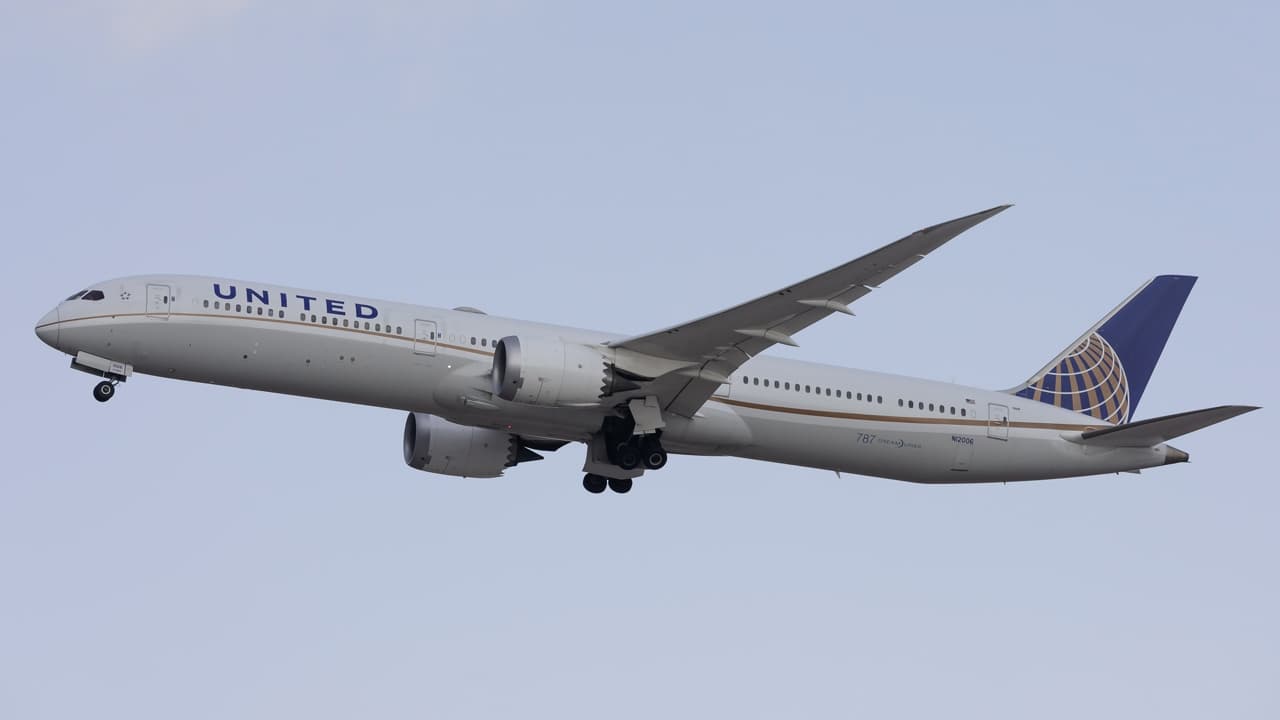
Image: ronen fefer · CC BY-SA 2.0 · via Wikimedia Commons
United Airlines Showcases Polaris Business Class on Transatlantic Newark-London Flight
United's Polaris business class continues to deliver strong amenities, premium seating, and lounge experiences on long-haul flights nearly a decade after debut.
The gist
United's Polaris business class still delivers top-tier comfort and service on transatlantic flights aboard its 767-300ER aircraft.
Continuing coverage
All Newark Airport →In a recent long-haul flight from Newark Liberty International Airport (EWR) to London Heathrow (LHR), United Airlines' Polaris business class product demonstrated its continued appeal and functionality nearly ten years after its initial rollout. Operating on a Boeing 767-300ER outfitted with a premium-heavy layout, this transatlantic service highlighted several aspects of the Polaris experience, including seating comfort, in-flight dining, and lounge amenities.
United was an early mover in redesigning its business class product with a strong focus on passenger privacy and sleep quality, launching Polaris in 2017. Today, the Polaris brand remains United's flagship premium cabin offering, centered around features like direct aisle access for every seat, a consistent cabin experience across the fleet, and upgraded onboard service elements. This particular flight was operated on a 767 configured with all Polaris seats in the forward half, creating a spacious and intimate cabin environment.
Passengers boarding the 767-300ER benefit from a staggered seating layout featuring even and odd row seats offset to allow every traveler direct aisle access, a crucial comfort point on long international flights. Window seats in the odd-numbered rows, positioned closer to the windows and away from the aisle, were notably recommended for solitary travelers seeking a quieter experience. Although the 767 layout lacked the paired center seats available on newer 777 and 787 Polaris cabins, the overall design and finishings still offered a fresh and premium feel some years after launch.
Before departure, the Polaris Lounge at Newark makes a significant impression, often regarded as the highlight of the Polaris service package. United's flagship lounge offers spacious seating, refined decor, and distinctive dining options. Recently upgraded, the lounge now features a full-service dining room with single-occupancy tables overlooking the airport apron, allowing travelers to enjoy views of aircraft activity while sampling a curated multi-course meal. Showers and well-appointed relaxation spaces further complement the pre-flight experience.
Onboard service demonstrated enhancements beyond seating, with an upgraded wine list that includes premium bottle selections, and an inflight menu designed to exceed lowered expectations that had developed around Polaris dining. The steak entrée served during dinner was solid though not especially memorable; however, the famous United ice cream sundae capped off the meal on a positive note. These updates reflect United's ongoing investment in bringing higher quality food and beverage offerings to its premium cabins.
Sleep quality—a focal point for Polaris—is supported by Saks Fifth Avenue branded bedding, including dual pillows and blankets that transform the seat into a fully flat bed with an average-sized footwell, delivering a restful rest during the flight. Entertainment features include large seatback screens and new Meridian headphones, although in-flight audio channels like 'From the Flight Deck' are inconsistently available. Amenity kits provided by Brooks Brothers, featuring Perricone MD skincare products, further enhance passenger comfort.
Despite the aircraft being an older 767, the Polaris cabin layout maximizes space and privacy to provide an upgraded international travel experience. The flight path offered remarkable views during takeoff and climb-out over New York City, and the detailed in-flight map display, while detailed, had minor usability issues with scale and icon size. Arrival at busy Heathrow required a short holding pattern, typical of such peak-time transatlantic ingress.
United's recent changes to Polaris lounge access, including restrictions for some Star Alliance partners and the introduction of a basic business fare excluding lounge entry, aim to manage crowds but risk disappointing some frequent flyer demographics. Nevertheless, the lounge and onboard service remain a cornerstone of the Polaris product, underscoring United's commitment to its premium transatlantic passengers in an increasingly competitive business class market.
Read more
All Airports →
United Airlines Retracts Free Rebooking Policy for Flights Avoiding Donald J. Trump Airport
United Airlines has backtracked on an apparent policy that allowed passengers who no longer wanted to fly to Donald J. Trump International Airport in West Palm Beach to rebook for free on a flight to an alternative nearby airport. A couple of days ago, a leaked internal memo sent to United’s reservation agents suggested that the airline was aware that some passengers were uncomfortable with flying to the newly renamed airport, which was previously known as Palm Beach International Airport (PBI). If passengers contacted United’s reservation line because they no longer wanted to fly to Donald J. Trump Airport due to the name change, agents were instructed to say: “I understand that you'd rather not fly to this airport anymore. We can look at nearby airports like Fort Lauderdale or Miami instead. Is that an acceptable alternative?" The memo added that agents could use their “empowerment to offer acceptable alternatives” without needing to get approval from a manager. Flight changes could be made for free, which, in itself, was an unusual move. After the story was broken by Live and Let’s Fly , it quickly went viral, and it didn’t take long for United to start reviewing the memo. Now, the airline says the “message was poorly worded and not accurate.” That’s right, United isn’t denying the memo was shared with agents, or that anyone who read the message would think that passengers could rebook onto flights to alternative airports to deliberately avoid the DJT airport. Instead, United is simply saying that the meaning of the memo was different than what you or I believed it to mean. United Airlines is, however, making its position very clear: “United customers are able to make changes to a ticket without a fee for many reasons. However, our policy doesn't allow for changes because of an airport's name or three-letter code." The name change from Palm Beach International Airport to Donald J. Trump Airport officially took effect on July 9, just a few months after Florida Governor Ron DeSantis signed a new law that allows the state to name major commercial airports. Before the airport could be renamed, however, Palm Beach County had to enter into a licensing agreement with the President because he had trademarked his name. The board of commissioners approved the licensing agreement 4-3 in a highly contested vote. Public backlash to the renaming has been fierce, and many people have openly vowed to boycott the airport. United's online booking tool still doesn't accurately reflect the name and airport code change. At the time of publication, a dummy booking allowed us to search for flights from PBI, which is now officially known by the airport code DJT. When you click on any given flight for additional information, the flight is shown as operating from West Palm Beach, FL, US (PBI) and not from Donald J. Trump Airport (DJT). For those in the know, customers can search for flights to and from DJT via United's website, with the online booking tool correctly recognizing the airport code, but it then directs users to a results page that shows PBI.
United Airlines Passenger Occupies Entire Boeing 737 Alone After British Airways Incident
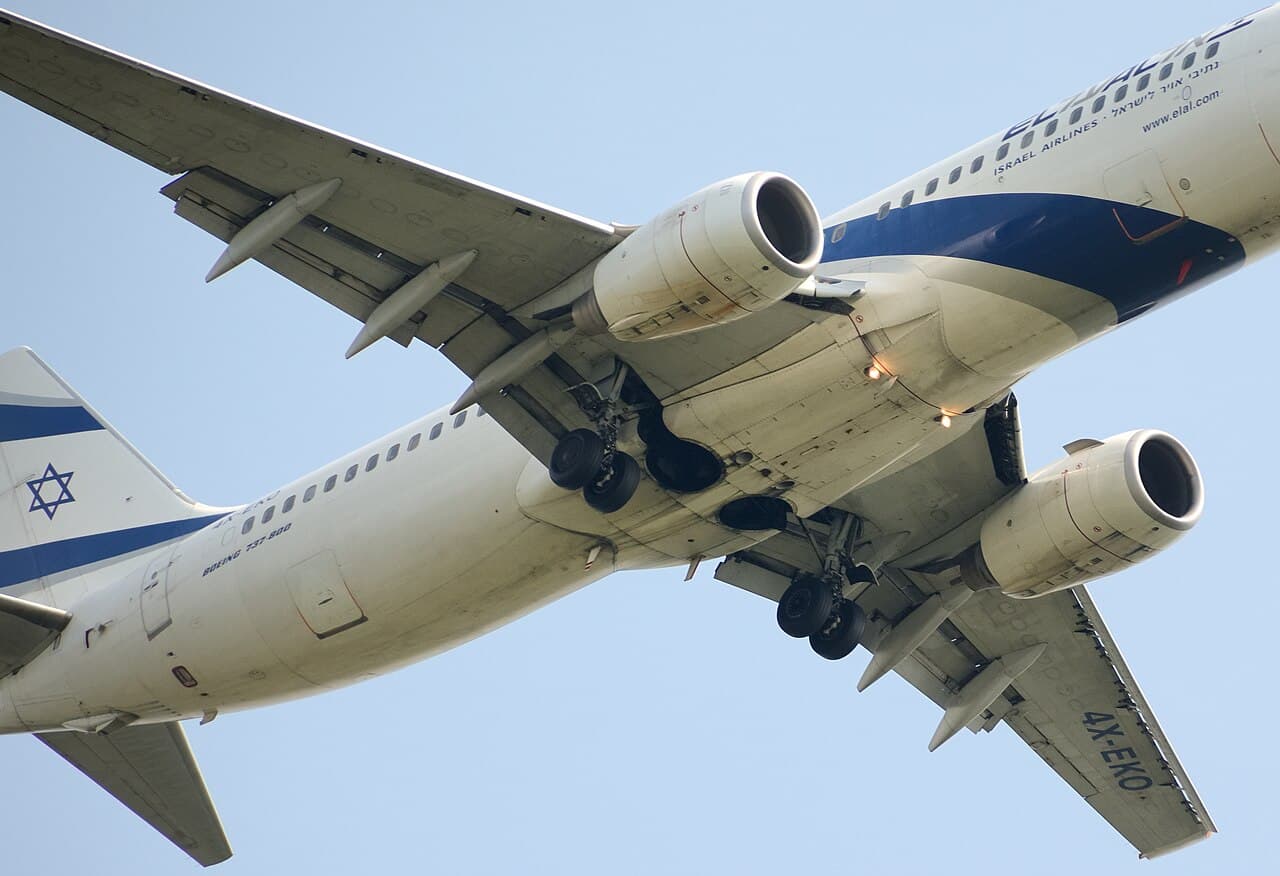
A United Airlines passenger ended up as the sole occupant on board a Boeing 737 after he was reportedly abandoned by British Airways at Cincinnati Northern Kentucky Airport on the 4th of July.
United Airlines Employee Threatens Customer with ICE at San Francisco Airport
A United Airlines employee and customer got into a confrontation, whereby the customer service agent threatened to call ICE on the customer, claiming he doesn't "act like a citizen," as flagged by View from the Wing . Regardless of how either person was acting during this disagreement, that's completely unacceptable, and this employee needs to be held accountable, in my opinion. United employee crosses the line in fight with customer There's an 82-second video posted on Reddit, showing a confrontation between a United Airlines customer service agent at San Francisco International Airport (SFO) and a customer. Here's what the Reddit user who shared the video wrote: This happened yesterday at San Francisco International airport. United employee was rude and dismissive with customer so he asks for her name to report her. The employee pulls out her phone and starts to record the interaction. At that moment she says "Maybe we should call ICE on you. You're not acting like a citizen". Whatever the f*ck that means… Customer is an American citizen. The video starts with the United employee pointing her phone at the passenger (who is pointing his phone at her), saying "maybe we should call ICE on you," later justifying it by saying "cause you don't act like a citizen." As you'd expect, things really escalate from there. The United employee keeps saying "get away" (while not walking away herself), while the guy keeps daring her to call ICE. Another United employee steps in and asks if he wants police to get involved, to which he responds that he wants ICE to get involved. She then keeps telling him to get "out of [her] face," while he repeatedly tells her that she's going to get fired. They then call one another racist, and he says he's going to sue United, and calls her "lazy as hell." United Airlines threatens to call ICE on customer then walks up to him and pushes phone away by u/666TripleSick in unitedairlines This is a really bad look for the United employee Let's assume that this guy was just awful and rude to the United employee. It's entirely possible. Maybe he should even be added to United's no-fly list for recording an employee, in violation of the carrier's contract of carriage. The reason I say that is because even so, there's absolutely nothing that justifies this employee's actions. For one, airline employees should be able to deescalate situations. If she felt like she couldn't resolve this, she should've walked away, called a supervisor, or asked for the authorities to intervene. There's simply no excuse for threatening to call ICE on a customer, claiming he's not "acting like a citizen." Like, is she suggesting that US citizens are consistently well behaved, or what part of his actions aren't that of a US citizen? It's particularly sad to see someone who also appears to belong to a minority group saying such a hurtful and incendiary thing, since you'd think she'd have a bit more understanding for how words have meaning, and can hurt people. For the record, while I have strong feelings about the current state of ICE, this has nothing to do with whether someone is for or against ICE. This woman works in a customer service role. There's no context in which she should be calling ICE on a customer because she doesn't like how they're behaving, let alone when her only logic is that the passenger isn't "acting like a citizen." All that being said, I'm a softie. I hope this woman doesn't lose her job over this, but I do hope she seriously thinks about the importance of her words, is retrained, and apologizes to this guy. I understand that in moments of rage, people might get a fight or flight response, and say things they don't mean. But goodness, threatening to call ICE on someone really rolled off her tongue pretty easily… Bottom line A United Airlines customer service agent at SFO was caught on video threatening to call ICE on a customer, claiming he wasn't "acting like a citizen." He may have very well been poorly behaved. However, this woman needs better deescalation training. Sticking a camera in a customer's face (even when they're doing the same) and telling them to "get away" repeatedly is almost never going to achieve that result. What do you make of this interaction?
United Airlines Offers Free Flight Changes to Avoid Donald J. Trump International Airport in Palm Beach
The newly renamed Donald J. Trump International Airport in Palm Beach, Florida, is proving so unpopular with passengers that United Airlines has decided to give reservation agents carte blanche authority to rebook flyers with existing tickets onto flights to nearby airports at no extra cost. The name change from Palm Beach International Airport to Donald J. Trump Airport officially took effect on July 9, just a few months after Florida Governor Ron DeSantis signed a new law that allows the state to name major commercial airports. Before the airport could be renamed, however, Palm Beach County had to enter into a licensing agreement with the President because he has trademarked his name. The board of commissioners approved the licensing agreement 4-3 in a highly contested vote. Public backlash to the renaming has been fierce, and many people have openly vowed to boycott the airport. Given the prevailing mood then, it appears that United Airlines has decided that it will offer existing customers who have booked flights to Palm Beach “unusual flexibility” to avoid the airport, and instead fly to an alternative nearby airport like Fort Lauderdale or Miami. In an internal memo sent to reservation agents and obtained by Live and Let’s Fly , United tells workers: “If a customer does not want to fly to the airport, use your empowerment to offer acceptable alternatives such as Fort Lauderdale Airport (FLL) or Miami International Airport (MIA)." Should passengers call United’s reservations line to proactively ask about switching flights to an alternative airport, agents have been instructed to say: “I understand that you'd rather not fly to this airport anymore. We can look at nearby airports like Fort Lauderdale or Miami instead. Is that an acceptable alternative?” Flight changes will be processed for free, and agents don’t need to obtain permission from a supervisor before rebooking passengers. United Airlines chief executive Scott Kirby has been regarded as a Trump supporter, aligning himself with the administration, and courting the President in an attempt to win support for a now-abandoned merger with American Airlines. This rebooking policy is not advertised on United’s website, where the airline normally posts flexible rebooking policies, such as the current rules for passengers looking to avoid flights through the Middle East. How long this flexibility will remain in force remains to be seen. Presumably, the policy will apply to all existing customers but won’t be extended to customers who booked flights after the name change came into effect. That being said, United’s online booking tool still doesn’t accurately reflect the name and airport code change. At the time of publication, a dummy booking allowed us to search for flights from PBI, which is now officially known by the airport code DJT. When you click on any given flight for additional information, the flight is shown as operating from West Palm Beach, FL, US (PBI) and not from Donald J. Trump Airport (DJT). For those in the know, customers can search for flights to and from DJT via United’s website, with the online booking tool correctly recognizing the airport code, but it then directs users to a results page that shows PBI.
The Daily Touch & Go
The day's best aviation news in your inbox. Free, no spam.