

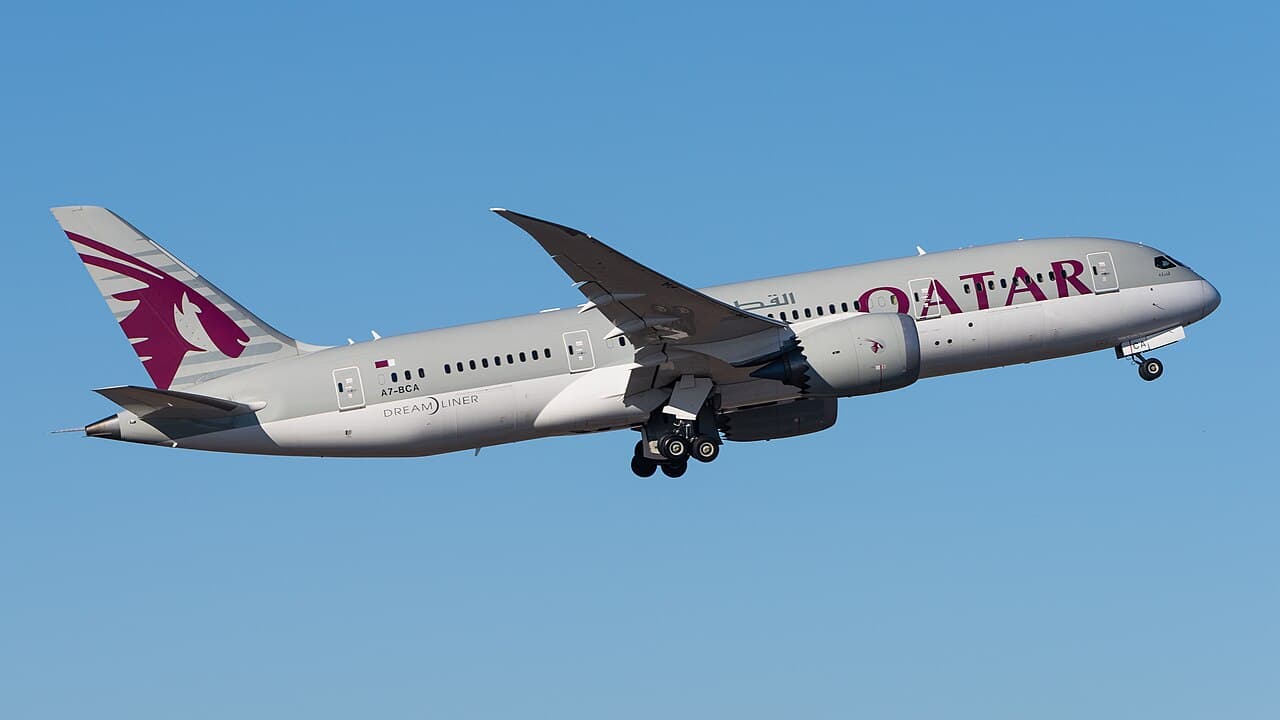
Image: Julian Herzog ( Website ) · CC BY 4.0 · via Wikimedia Commons
Boeing 787 Core Software Updates Must Go Through Manufacturer and FAA Approval
The 787's integrated Common Core System makes its software part of the FAA type certificate, preventing airlines from independently modifying critical code.
The gist
Boeing 787 operators cannot alter core aircraft software themselves due to its certification as part of the aircraft's type design.
The Boeing 787 Dreamliner employs a revolutionary software architecture that significantly differs from previous commercial jetliners, embedding a complex software ecosystem integral to the aircraft’s certification. Unlike earlier models with discrete avionics boxes each running standalone software, the 787 operates largely on a shared computing platform known as the Common Core System (CCS). This system consolidates critical aircraft functions into approximately 300 software components distributed across the airframe, making the software inseparable from the aircraft's FAA type certificate.
This integrated architecture means the 787 software cannot be independently updated by airlines. Any modification to the core software, including flight control laws and critical safety functions, is classified as a type design change that legally must be routed through Boeing's engineering department and undergo FAA scrutiny and approval before being deployed on in-service aircraft. This contrasts sharply with older aircraft like the 767 or 777, where updating an individual avionics system was a modular and isolated task.
On traditional aircraft, avionics functions such as flight management, weather radar, engine instruments, and autopilot run on separate dedicated hardware units. Each unit is certified independently, allowing airlines or third parties to update software components in isolation without affecting others. The 787's CCS replaces this with a smaller number of shared processors hosting multiple interdependent software applications, raising system complexity and tight coupling of functions.
Because these software applications share processing resources and data networks on the CCS, a change in one can impact others, necessitating broader testing and regulatory certification. The FAA thus certifies the entire software package as part of the 787’s aircraft type design rather than discrete software products. This ensures safety and reliability but restricts airlines from applying patches or fixes without Boeing’s direct involvement and regulatory approval.
While airlines are limited in direct software development, Boeing provides a controlled configuration framework called Airplane Software Options. Through this, operators can select configurable settings within a pre-approved scope—such as cabin management features, crew alerting parameters, and display preferences—that tailor software behavior to their needs. Even these adjustments, however, require regulatory acceptance before implementation to ensure compliance with the certified envelope.
The software’s certification as part of the airframe carries practical implications, highlighted by the 2020 FAA airworthiness directive requiring 787 operators to power the aircraft down every 51 days. This mandate arose because laboratory testing showed that a stale data monitoring function within the CCS ceases to operate after 51 days of continuous power, potentially causing incorrect flight instrument displays and loss of certain warning systems. Fixing such issues is beyond airline maintenance scope and depends on Boeing-led design changes approved by regulators.
The 787's software model reflects evolving aviation technology trends favoring integrated digital systems that enhance efficiency and capability but increase certification complexity. For airlines, this approach demands closer collaboration with manufacturers and regulators when updating core systems. The result is an aircraft whose sophisticated software-driven architecture is inseparably tied to its certified design, fundamentally altering how airline operators manage software updates and maintenance.
Frequently asked questions
- Why can't airlines update the Boeing 787's core software themselves?
- Because the 787's software is certified as part of the aircraft's FAA type certificate, any modification to it requires Boeing's engineering involvement and FAA approval, preventing airlines from independently altering critical code.
- What is the Boeing 787 Common Core System (CCS)?
- The CCS is an integrated computing platform hosting multiple aircraft functions as software applications on shared hardware, replacing the independent avionics units found on older aircraft.
- How do airlines customize software settings on the 787 without direct modifications?
- Boeing provides Airplane Software Options allowing operators to select pre-certified configuration settings within a defined envelope, such as cabin and display preferences, which require regulatory approval before use.
Read more
All Regulatory →
Boeing 777-9 Program Hits 4,800 Test Hours as Seventh Plane Begins ETOPS Trials
On July 29, the seventh Boeing 777-9 next-gen airliner took flight and marked the 4,800th hour of the 777X program as it finally nears the completion of certification six years after the originally anticipated launch. The newest addition to the growing fleet is bound for Extended-range Twin-engine Operational Performance Standards, or ETOPS, testing. The landmark test flight marks a major milestone that shows the cutting-edge wide-body jetliners with their folding wingtips will soon be serving customers around the world.

American Airlines Grounds All Departures Nationwide Due to IT System Outage During Northeast Storms
American Airlines briefly halted departures nationwide after a systemwide IT outage took down key operational systems, triggering an FAA ground stop for American and its subsidiaries. The systems came back, but for some flights the damage was done: the outage caused them to miss narrow departure windows between severe weather events, turning a short technology failure into cascading delays.
United Airlines CEO Explored Mergers With Delta and American Airlines, Both Declined
Scott Kirby, the chief executive of United Airlines, floated the idea of a merger with Delta Air Lines and even called the rival carrier’s CEO, Ed Bastian, to discuss the proposal, with the Atlanta-based airline carrying out early due diligence on the potential merger before ultimately ruling it out. The revelations came to light in a new article from the Wall Street Journal. The news comes just months after Kirby reportedly lobbied the Trump administration about a potential merger between United Airlines and American Airlines, with United being the dominant partner. The timing of events, though, is perhaps most interesting. Kirby had floated the idea of a merger with American Airlines in April of this year, but the discussions with Delta took place months before, at some point in 2025, the WSJ reports. American Airlines, Delta Air Lines, and United form the so-called US3 – The three biggest airline groups in the US aviation industry. Together, they command a combined domestic market share of around 52% based on 2025 data. While industry analysts believe further consolidation (read: mergers and acquisitions) in the U.S. airline industry is a foregone conclusion, the idea of two of the US3 merging has long been considered off the table due to antitrust concerns. Now, however, we know that Kirby has approached both of United’s biggest rivals in an attempt to create a mega-airline that would control over a third of the U.S. domestic market. Consolidation in the near future is likely to be driven by rising fuel prices, with smaller airlines either merging or allowing themselves to be acquired by a bigger rival in order to survive. Kirby, however, says he isn’t interested in buying smaller airlines in a piecemeal approach to inorganic growth. Earlier this year, Kirby rejected the idea of acquiring JetBlue because of concerns about the company’s debt levels. He had, instead, set out a public vision to merge with American Airlines to create what he described as “the very best” airline in the world. Unlike Delta, however, American Airlines didn’t even entertain the proposal and “declined to engage" United in discussions before “publicly closing the door,” in a filing to the stock market. Kirby clearly has very big ambitions. The kind of ambitions that would have been unthinkable under the Biden administration, which swiftly moved to block a merger between JetBlue and Spirit Airlines over fears it would harm competition. That court victory ultimately led to the demise of Spirit Airlines. The thinking is that the current administration would be much more amenable to a mega merger between two of the US3, although President Trump said he didn’t like the idea of United and American Airlines merging. Delta has a market capitalization of roughly $48.18 billion, leaving United Airlines trailing behind with a market cap of around $39.32 billion. That would, of course, make United the smaller player in any potential merger between the two carriers. So, what would Kirby have to personally gain from this kind of deal? After all, it certainly feels like Kirby has no plans on retiring any time soon. Perhaps, as the broker of the deal, he would hope to stay on as chief executive of the combined company, sidelining Ed Bastian from the role he has held for nearly a decade. This kind of speculation, however, can remain just that, given that Kirby’s preferred consolidation vision has been rejected by both of his suitors.

United Airlines Considers Buying Up to 20 Early Boeing 777-9 Jets
Boeing’s long-awaited 777-9 aircraft may soon find a new home with United Airlines. Industry reports suggest the U.S. carrier is in talks to acquire as many as 20 of the earliest-built 777-9 jets. ezstandalone.cmd.push(function () { ezstandalone.showAds(119); }); This potential deal could help Boeing clear early production airframes that have waited years for delivery. Why These Early 777-9s Are Still Available The 777X program, which includes the 777-9, faced significant certification delays. As a result, the first airframes rolled out years ago but remained undelivered. During this time, Boeing made numerous engineering updates and improvements. ezstandalone.cmd.push(function () { ezstandalone.showAds(127); }); These early jets now need more extensive modification work compared to newer aircraft rolling off the production line. The extra effort involves bringing them up to the latest standards before they can enter service. Launch customers for the 777-9 reportedly chose to wait for later-production examples. This shift left the early-build jets available for other interested airlines. United’s possible interest offers Boeing a practical way to place these aircraft as the program nears certification and entry into service. ezstandalone.cmd.push(function () { ezstandalone.showAds(128); }); Photo Credit: Boeing What This Means for United Airlines United Airlines already operates one of the world’s largest Boeing 777 fleets. Adding the 777-9 would strengthen its long-haul capabilities with next-generation efficiency and passenger comfort. The 777-9 is the largest variant in the 777X family. It promises better fuel efficiency, longer range, and a more spacious cabin than previous models. For United, these jets could serve high-demand international routes while lowering operating costs. ezstandalone.cmd.push(function () { ezstandalone.showAds(129); }); However, acquiring early-build aircraft comes with challenges. The required modifications may take extra time and resources. Still, securing up to 20 jets could give United a competitive edge in the widebody market without waiting for entirely new production slots. Boeing’s Path Forward with the 777X Boeing has worked hard to resolve certification issues for the 777X. The program represents a major update to the successful 777 family. With improved engines, composite wings, and modern avionics, the Boeing 777-9 aims to set new standards for twin-aisle aircraft. Placing early airframes with United would mark an important milestone. It would demonstrate progress toward final certification and help Boeing regain momentum in the widebody segment. No formal agreement has been announced yet. ezstandalone.cmd.push(function () { ezstandalone.showAds(130); }); Boeing has not confirmed any transaction with United. The reports remain speculative at this stage, but they highlight growing industry optimism about the 777-9’s future. Photo Credit: Boeing Broader Industry Impact The potential deal reflects current trends in aircraft manufacturing. Production delays often create opportunities for flexible operators to acquire aircraft at different stages of the build process. Airlines willing to invest in modifications can sometimes secure favorable terms and earlier delivery timelines. ezstandalone.cmd.push(function () { ezstandalone.showAds(131); }); For passengers, the 777-9 promises a quieter, more comfortable flying experience with larger windows and advanced cabin pressurization. United could use these features to differentiate its premium long-haul offerings. Conclusion As Boeing moves closer to certification, more clarity should emerge about the timeline for these early jets. Industry watchers will monitor developments closely, as any agreement could influence other carriers’ decisions regarding the 777X family. United Airlines has not publicly commented on the reports. The airline continues to modernize its fleet with a mix of new and used aircraft to meet growing global demand. ezstandalone.cmd.push(function () { ezstandalone.showAds(132); }); This possible acquisition of early-build 777-9s shows how delays in major programs can create unexpected opportunities. If the deal proceeds, it could benefit both United and Boeing while bringing advanced widebody aircraft into service sooner than expected.
The Daily Touch & Go
The day's best aviation news in your inbox. Free, no spam.