

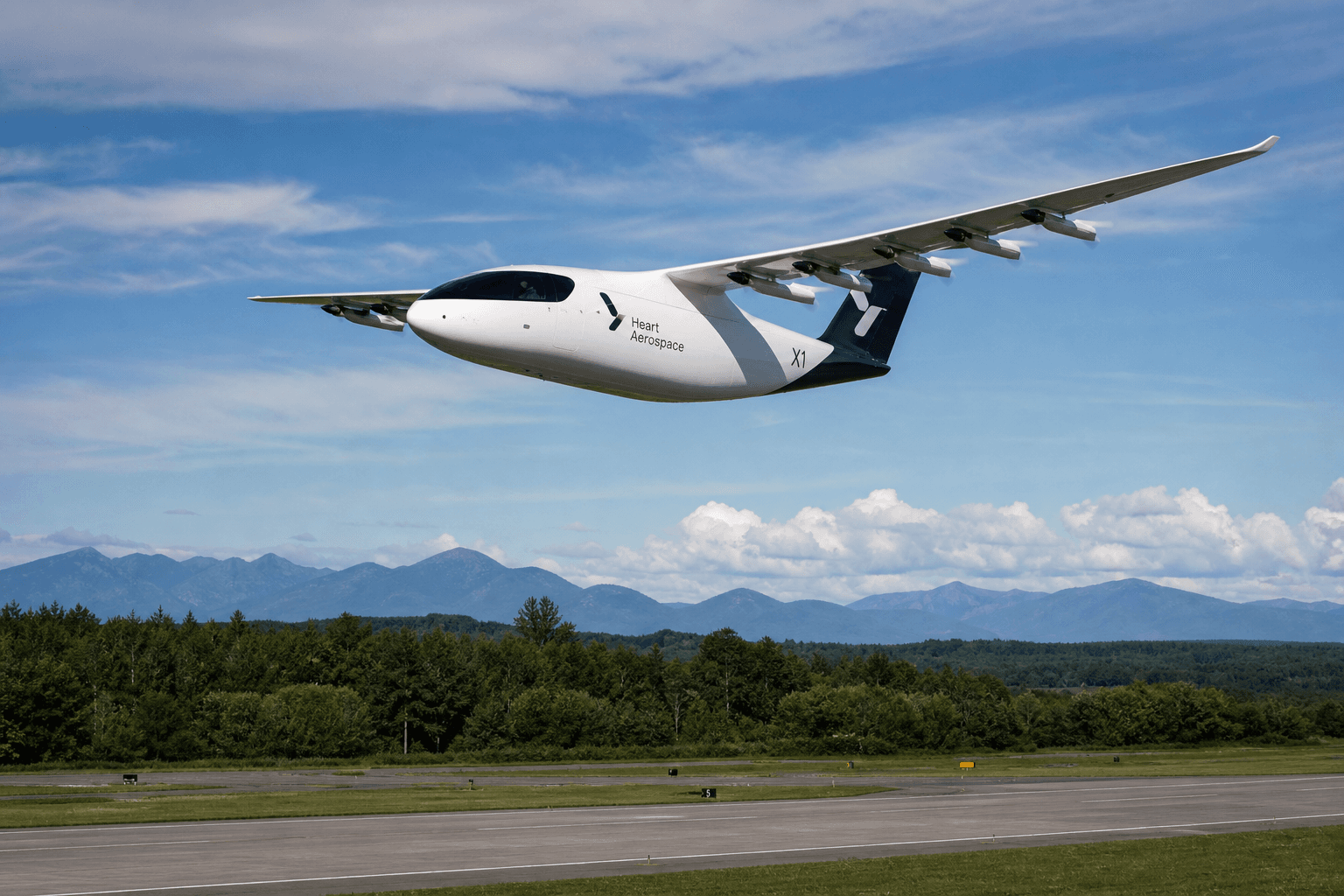
Illustration: The Touch & Go
Heart Aerospace's X1 completes first-ever flight as largest battery-electric airplane
The full-scale Heart X1 demonstrator conducted its inaugural 27-minute flight at Plattsburgh International Airport, marking a milestone for battery-electric commercial aircraft.
The gist
Heart Aerospace’s X1 performed a successful first flight, demonstrating record-setting battery-electric propulsion for a commercial-scale airplane.
Heart Aerospace achieved a significant milestone in electric aviation with the first flight of its full-scale X1 demonstrator on Wednesday at Plattsburgh International Airport in New York. The battery-electric aircraft took to the skies for 27 minutes, reaching an altitude of 1,100 feet above ground level. This flight marked the largest battery-electric airplane ever flown to date, underscoring the company’s advances in heavy electric propulsion for commercial aviation.
The test flight encompassed a comprehensive set of maneuvers including taxiing, takeoff, climb, in-flight maneuvering, and landing, all conducted under the Federal Aviation Administration’s experimental special airworthiness certificate issued to the aircraft. Heart Aerospace reported that during the flight, the X1’s battery-electric propulsion system generated over one megawatt of power, illustrating the substantial energy demands and capabilities of this pioneering design.
Physically, the X1 is a substantial aircraft with a wingspan of 106 feet and a length of 76 feet. It weighed more than 25,000 pounds at takeoff, reflecting the large scale of this electric aircraft demonstrator. The aircraft’s size represents a significant step above previous electric prototypes, which have often been much smaller in scale and capacity.
Prior to this first flight, the X1 underwent rigorous ground testing including structural integrity assessments, propulsion system evaluations, and functional checks of all on-board systems. These evaluations also included taxi tests to ensure the airplane’s operational readiness. The FAA had authorized the experimental certificate in July, signaling regulatory confidence in the safety protocols and testing procedures Heart Aerospace employed.
The X1 demonstrator plays a crucial role in the company’s broader mission to develop the ES-30, a proposed 30-seat regional aircraft with a hybrid-electric propulsion system. Data and operational experience garnered from the X1 flights will directly support the design refinement, certification, and performance validation of the ES-30, which aims to transform regional air travel with lower emissions and noise levels.
Currently, Heart Aerospace is constructing the first preproduction ES-30 aircraft at their manufacturing facility in Los Angeles. The company plans to start flight testing of the ES-30 by 2028, aiming toward full entry into commercial service by 2031. These timelines indicate a steady progression from demonstrator to operational aircraft within the next decade.
The successful flight of the Heart X1 demonstrator not only validates the viability of battery-electric propulsion at a commercial airliner scale but also provides critical insight into system integration, energy management, and aerodynamics at this scale. Electric propulsion systems generating in excess of one megawatt represent a technical advancement that could significantly reduce aviation’s carbon footprint if successfully scaled and certified.
Heart Aerospace’s demonstration fills an important gap in electric aviation development, moving beyond small general aviation aircraft to targets that align with regional transport demands. By bridging the technology to a 30-seat hybrid-electric regional aircraft, the company is positioning itself at the forefront of sustainable aviation solutions for commercial markets.
Frequently asked questions
- What is significant about Heart Aerospace's X1 first flight?
- The X1 is the largest battery-electric airplane flown to date, completing its first 27-minute flight with over 1 megawatt of electric propulsion power.
- How does the X1 flight support Heart Aerospace's ES-30 development?
- Flight data from the X1 demonstrator helps Heart Aerospace refine and validate systems for the ES-30, their planned 30-seat hybrid-electric regional aircraft.
- When is Heart Aerospace planning to begin flight testing and service entry of the ES-30?
- The first preproduction ES-30 is being built now with flight testing expected to start in 2028 and entry into commercial service targeted for 2031.
Read more
All Technology/eVTOL →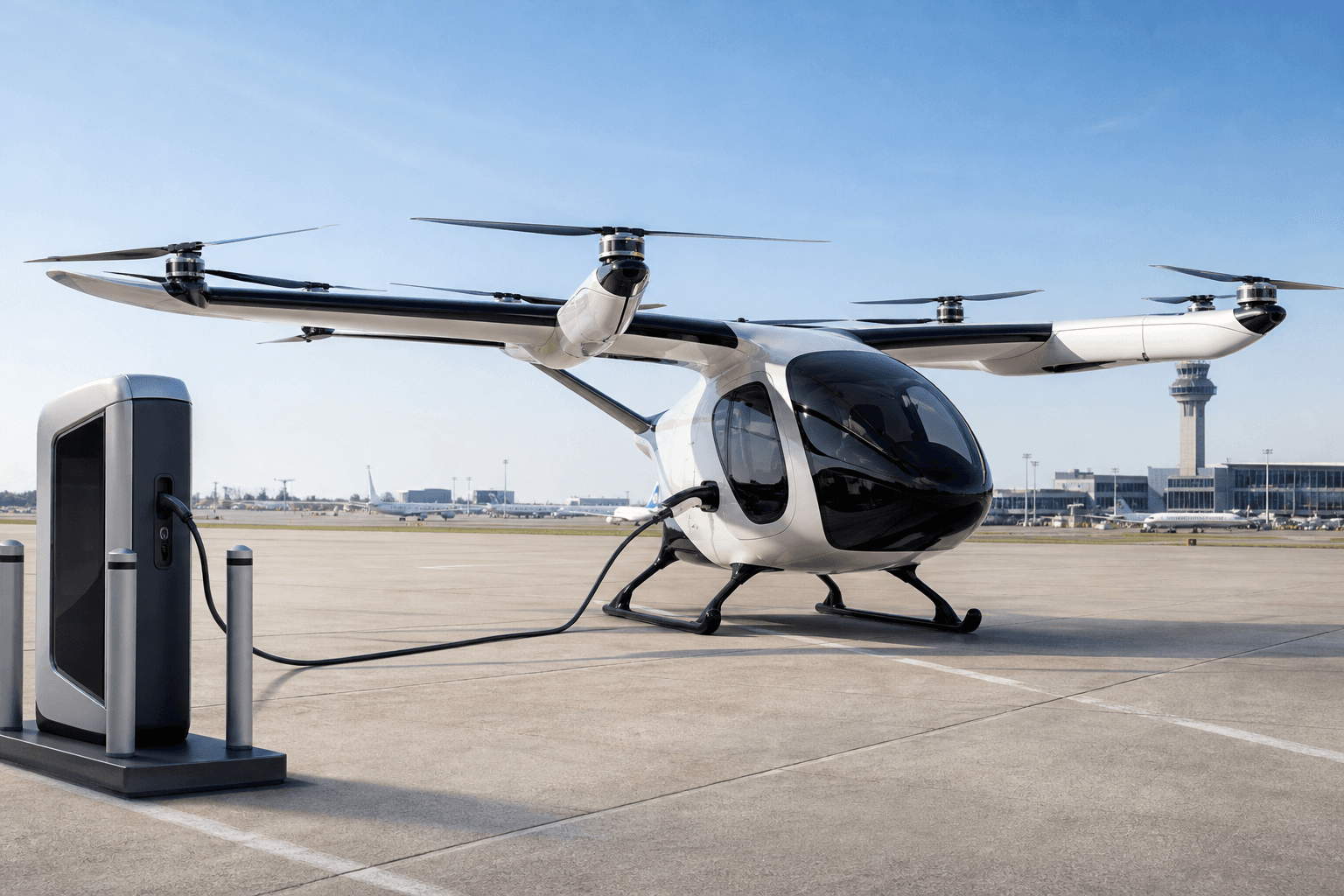
North Central Texas Council Launches $1M Fund for eVTOL Airport Chargers
The North Central Texas Council of Governments has opened a $1 million funding program for electric-aircraft charging equipment at public-use airports in the Dallas-Fort Worth region. Applications are due Aug. 7 at 5 p.m. CDT. The money was initially approved in September 2024 for a potential advanced-air-mobility demonstration connected to the 2026 World Cup. That plan did not proceed as originally envisioned. Arlington dropped expectations for carrying passengers during the tournament because aircraft certification and FAA regulations would not be completed in time, and NCTCOG later redirected the funding toward permanent charging infrastructure and airport readiness. The revised program also supports North Texas' participation in the larger eVTOL Integration Pilot Program ( eIPP ). The state’s participation in the initiative is led by the Texas Department of Transportation and is intended to develop infrastructure, routes and operating procedures for future electric-aircraft demonstrations and service. Airports in the council's 12-county planning area may seek awards of up to $200,000. The program does not require matching funds. Eligible expenses include an eVTOL charger and infrastructure directly required to install and operate it. Stand-alone electrical improvements that do not result in an installed charger are not eligible. The council said applications will be evaluated on airport planning documents, knowledge of advanced-air-mobility infrastructure, partnerships and implementation schedules. Proposed projects must also demonstrate how the equipment could support future aircraft operators, demonstrations or private investment.

Electric Aircraft Start Short Flights Between Hawaiian Islands in Early Trials
Beta Technologies, Surf Air Mobility, and Hawaiian Airlines begin a six-to-eight-week electric aircraft trial.
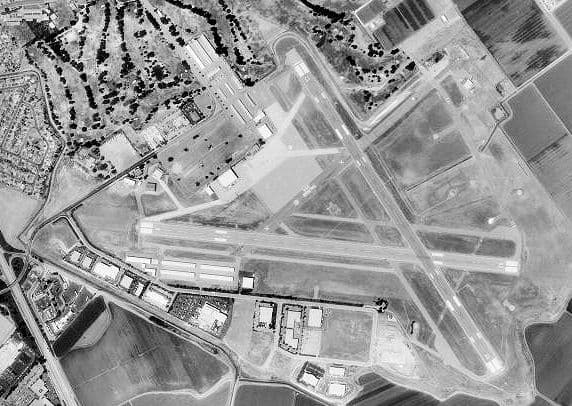
Archer Midnight Electric eVTOL Flies Round Trip Between Salinas and Monterey Airports
Archer Aviation's all-electric Midnight aircraft completed a piloted round trip between Salinas Municipal Airport and Monterey Regional Airport on July 30, according to the company. Archer said it coordinated the flights closely with the FAA. Nine-Minute Flights Each leg between the two California airports took about nine minutes. The company compared that time with a drive of 35 minutes or more between Salinas and Monterey. "This roundtrip journey is exactly the kind of route we plan to fly with Midnight under the eIPP and in LA during the Olympic Games ," Archer founder and CEO Adam Goldstein said. "This mission provides a template for us to replicate with our partners across Texas, Florida and New York as we get ready for eIPP operations later this year." Preparing for eIPP Operations The company said the flight supports its preparations for operations under the White House's eVTOL Integration Pilot Program (eIPP). The company is working with federal, state and local governments on procedures, infrastructure and local operating capabilities for future air taxi flights. The company is also preparing for planned operations in Los Angeles, where Archer is the designated air taxi provider for the 2028 Olympic and Paralympic Games.
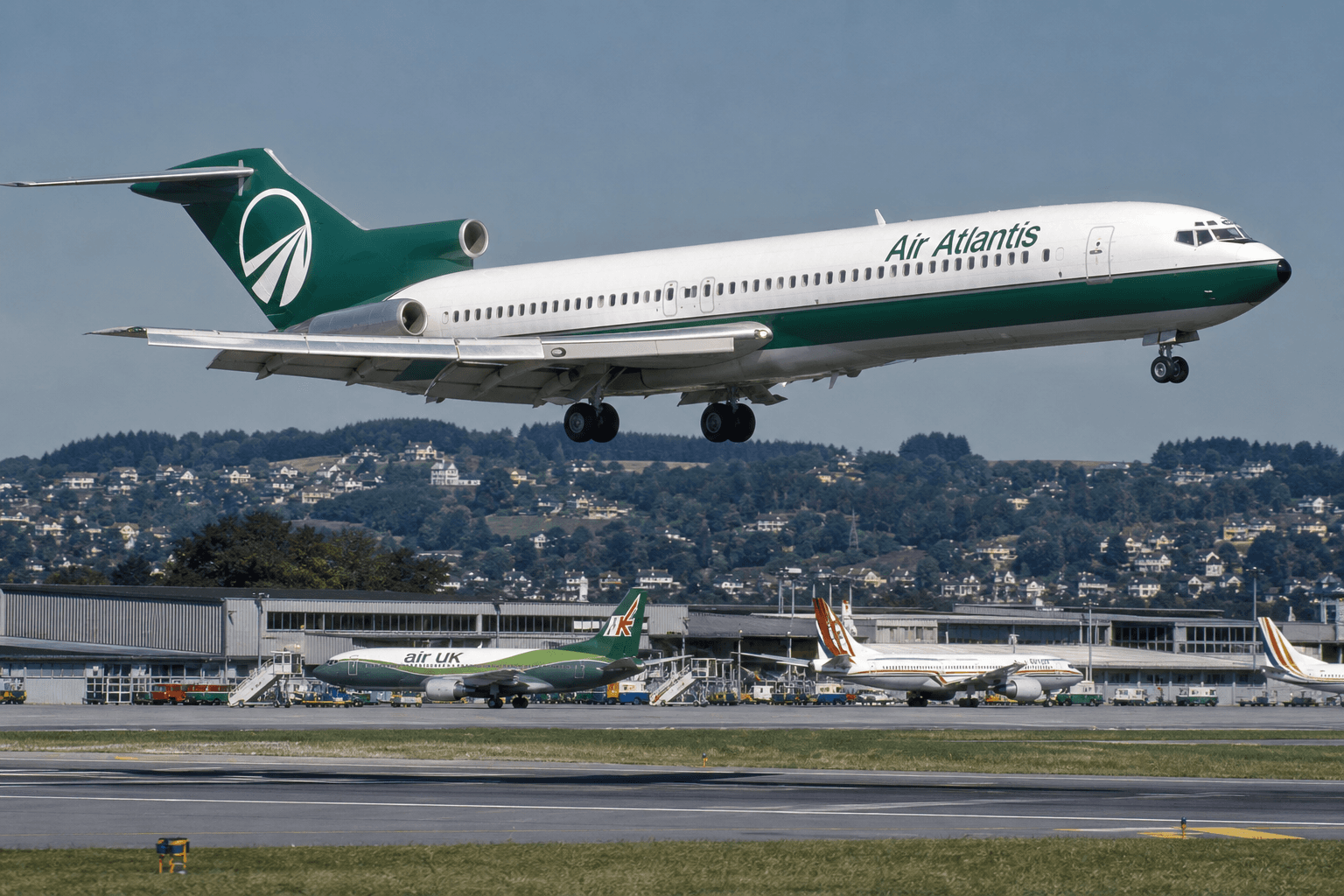
Air Atlantis, Portuguese Charter Airline, Shaped 1980s European Holiday Travel
For many plane spotters who frequented regional airports during the late 1980s and early 1990s, the sight of an Air Atlantis aircraft arriving from Portugal remains a fond memory. Wearing an attractive green-and-white livery and operating a fleet of Boeing 727s and 737s, the airline became a familiar visitor at airports across the UK and Europe during the package holiday boom. Although Air Atlantis existed for less than a decade, it played an important role in Portuguese aviation and helped support the rapid growth of tourism to the Algarve and Madeira before eventually being absorbed back into its parent company. The Birth of Air Atlantis Air Atlantis Boeing 707 at Birmingham. Photo: simon butler Air Atlantis was established in 1985 as a wholly owned subsidiary of Portugal’s flag carrier, TAP Air Portugal. During the 1980s, demand for leisure travel from northern Europe to Portugal was growing rapidly, particularly from the United Kingdom, Germany and Scandinavia. Rather than use its mainline fleet on charter operations, TAP created a dedicated airline that could focus entirely on the booming holiday market while allowing the parent airline to concentrate on scheduled international services. Based at Lisbon Airport, Air Atlantis began operations in 1986 and quickly became a major player in Portugal’s charter sector. Charter Flights Across Europe Air Atlantis 727-200. Photo: Rob Hodgkins The airline’s business centred on flying holidaymakers from across Europe to Portugal’s popular resort destinations. Flights linked cities throughout Britain, Ireland, Germany, France, Belgium, the Netherlands and Scandinavia with Lisbon, Faro, Funchal and Porto, carrying thousands of package holiday passengers every summer. British enthusiasts regularly saw Air Atlantis aircraft at airports including Manchester, Birmingham, Glasgow, Newcastle, East Midlands, Bristol, Bournemouth and many other regional airports. Their flights were often operated on behalf of major tour operators, meaning the airline became a familiar sight despite never operating scheduled services of its own. As well as leisure flights, Air Atlantis occasionally undertook ad hoc charter work and aircraft leasing for other airlines when demand required. The Air Atlantis Fleet Pedro Aragão, CC BY-SA 3.0 GFDL, via Wikimedia Commons Air Atlantis operated a fleet mostly in line with its parent, TAP Air Portugal, through whom it mostly procured its aircraft. In fact, the airline’s livery closely resembled that of the parent carrier through its use of white, green and red, reflecting the Portuguese flag. Air Atlantis began operations with Boeing 707-300, 727-100 and 737-200 aircraft in 1985. It later added Boeing 727-200 and 737-300 types as the fleet grew. In total, 19 aircraft were operated by Air Atlantis between 1985 and 1989. Perhaps the airline’s greatest attraction for enthusiasts was its fleet. The aircraft were configured in high-density seating layouts to maximise passenger capacity. Part of the Golden Age of Charter Flying Air Atlantis arrived at a time when charter airlines were flourishing across Europe. During the late 1980s, airports around the UK welcomed a fascinating variety of leisure carriers every summer. Britannia Airways, Dan-Air, Air Europe, Monarch, TEA, Spantax and many others regularly appeared alongside overseas operators such as Air Atlantis. For plane spotters, this meant regional airports often offered far greater variety than they do today, with unusual airlines and aircraft arriving from across Europe on weekly holiday flights. Why Did Air Atlantis Disappear? After Air Atlantis was closed down some of its fleet merged back into TAP Air Portugal. Photo: Aero Icarus By the early 1990s, the European airline market was changing rapidly. Charter and scheduled operations were becoming increasingly integrated, while deregulation created new opportunities for airlines to operate more flexibly. In 1993, TAP decided to wind up Air Atlantis and bring its charter activities back under the main airline. The fleet was gradually dispersed, with several aircraft finding new homes elsewhere around the world. Although the airline disappeared after only seven years, it left behind fond memories for enthusiasts who photographed its aircraft during the golden age of European package holidays. Do you remember seeing Air Atlantis at your local airport? Did you ever fly on the airline? Leave a comment below! For more articles on historic airlines and aircraft, remember to sign up for our free newsletter below! Title image: Maarten Visser
The Daily Touch & Go
The day's best aviation news in your inbox. Free, no spam.