


AI-generated illustration
House Democrats Say FAA Took AI Traffic Tool SMART Nationwide Before Finishing 90-Day Validation
Twenty-four lawmakers led by Rep. Rick Larsen want answers on safety data, controller training and alleged retaliation after the FAA expanded SMART to all 22 en-route centers three days before a nationwide ground stop.
The gist
Democrats say the FAA rolled out its SMART AI airspace tool nationwide after 50 days instead of the promised 90-day validation, just before a nationwide ground stop.
Continuing coverage
All Faa →- Duffy to Face Senate Panel Over Nov. 13 Nationwide Ground Stop That Canceled 18,000 Flights
- FAA Grants First U.S. Digital Tower System Design Approval to Frequentis
- FAA Collects Reports After Piper Seminole Rolls 60 Degrees in Wings-Level Stall
- FAA Makes Permanent Ban on Visual Separation for Helicopters Crossing Busy Terminal Traffic
- Router Swap at Arkansas Radio Site Suspected in Nationwide US Air Traffic Ground Stop
Twenty-four House Democrats have accused the Federal Aviation Administration of pushing an artificial intelligence traffic management tool across all US airspace before finishing the 90-day validation period the agency had laid out. In a letter sent to FAA Administrator Bryan Bedford on Tuesday, November 24, the lawmakers said the Strategic Management of Airspace, Routes, and Trajectories system, known as SMART, was expanded nationwide while still largely untested. That expansion, to all 22 en-route control centers, took place on November 10. Three days later, a telecommunications failure halted departures across the country. The FAA has denied any link between the two events.
The letter was led by Rick Larsen, ranking member of the House Transportation and Infrastructure Committee. The lawmakers said the FAA gave Congress no advance notice of the nationwide rollout, which came 50 days after SMART first went live at three Washington-area airports on September 21. They wrote that they had yet to receive any substantive information showing the system was properly validated before it was expanded. The letter also cites allegations that FAA employees who raised safety concerns about the accelerated deployment may have faced retaliation.
Objections to SMART began well before the ground stop. Airline industry concerns surfaced on September 18, and in September the National Air Traffic Controllers Association said it had been shut out of the system's development, testing and implementation. On October 9, lawmakers asked the FAA to suspend SMART operations, and later that month Congress requested an independent audit by the Government Accountability Office.
The new letter puts 13 questions to the agency, covering safety assessments, performance metrics, controller training, cybersecurity protections and contingency plans in the event SMART suffers an outage. The lawmakers also asked why the FAA chose to deploy SMART ahead of infrastructure upgrades such as radar replacements. The FAA has until November 30 to respond. According to Reuters, the agency declined to address the allegations publicly and said it would reply directly to lawmakers.
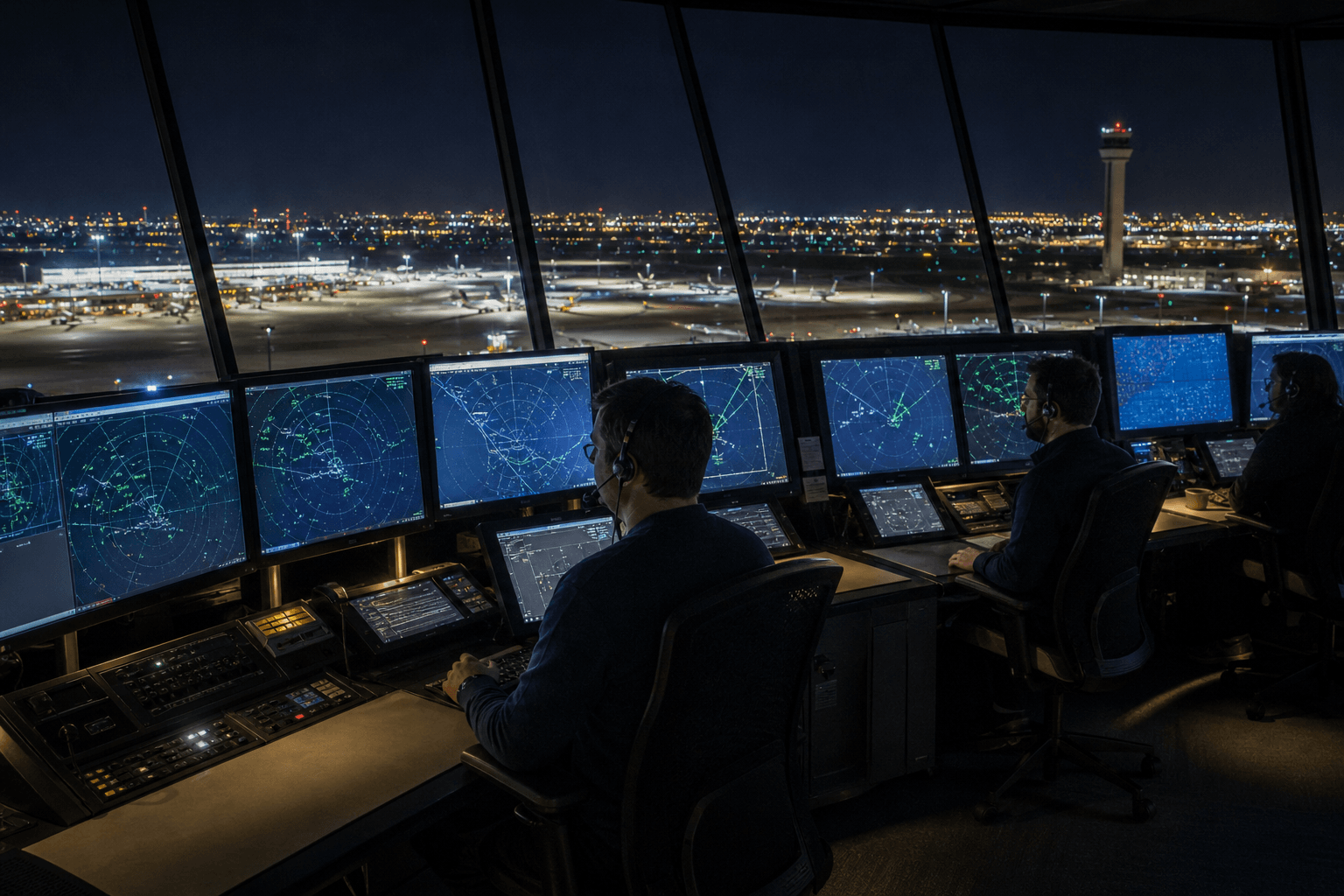
SMART was built by Air Space Intelligence under an $875 million, 12-year contract the FAA awarded in June 2026. The cloud-based system pulls together roughly 200 data streams, including weather forecasts, flight trajectories, airport capacity and controller staffing, to predict bottlenecks and suggest alternative routings before disruptions develop. It does not direct aircraft on its own. FAA specialists at a dedicated center in Washington review its recommendations and pass them to the Air Traffic Control System Command Center in Warrenton, Virginia, with human controllers keeping final authority. The tool resembles Air Space Intelligence's Flyways platform, which Alaska Airlines began using in 2021 to help dispatchers optimize routing.
During the initial Washington-area rollout, SMART rerouted 180 flights, saving an average of 10 minutes and nearly 80 gallons of fuel per rerouted flight, according to FAA figures. United Airlines, Delta Air Lines, American Airlines and Southwest Airlines have all backed the program. The lawmakers counter that efficiency gains are no substitute for full safety validation.
The November 13 ground stop lasted 4 hours and 45 minutes and affected 17 of the 22 en-route centers. About 3,500 airborne aircraft were landed safely, 12,462 flights were canceled that day and more than 18,000 across the wider disruption, affecting an estimated 1.5 million passengers. The FAA's preliminary investigation pointed to a telecommunications failure in which excessive data traffic overwhelmed legacy equipment after routine maintenance, destabilizing communications and radar feeds across much of the country. Both the FAA and Air Space Intelligence have said SMART played no role. It was the first nationwide ground stop since the FAA's NOTAM system failed in January 2023.
The modernization effort was already under scrutiny. A September 2026 GAO report found shortcomings in the FAA's cost estimates and scheduling for modernization, and earlier research found that 105 of the agency's 138 air traffic control systems were unsustainable or potentially unsustainable. Bedford is expected before a House panel on December 1, and Transportation Secretary Sean Duffy is scheduled to testify to the Senate on December 2. Duffy's request for roughly $50 billion in additional aviation infrastructure funding, including $600 million for strategic traffic flow management technologies such as SMART, already faces opposition.
Originally reported by Simple Flying
Read more
All Regulatory →
Modern Skies Coalition Launches ACT NOW Ad Campaign Pressing Congress for ATC Modernization Money
A coalition of more than 50 aviation groups began a national ad push a week after a nearly five-hour nationwide ground stop, as DOT seeks another $50.1 billion for infrastructure.
Senator Moran Presses Duffy to Justify Jump to $50 Billion Air Traffic Control Request
The Kansas Republican who chairs the Senate aviation subcommittee says Transportation Secretary Sean Duffy must explain why his ATC modernisation ask rose from $30 billion to $50 billion after the 13 November ground stop.
FAA Requires Stand-Alone Tower Supervisors for Line Up and Wait as Thanksgiving Rush Begins
A new FAA staffing rule bars towers from using Line Up and Wait unless a dedicated supervisor is on duty, and controllers are already warning pilots of possible departure delays.
Lawmakers Strike Deal to Require ADS-B In on Civil Aircraft After Potomac Midair Collision
Senators announced an agreement in principle to mandate traffic-receiving equipment on civilian aircraft already required to carry ADS-B Out, though rules for military aircraft remain unsettled.
The Daily Touch & Go
Launching soon: the day's best aviation news in your inbox. Join the list, free.