Illustration: The Touch & Go
JetBlue Secures 22 Former Spirit Slots at LaGuardia for $58.5M, Plans Expansion
JetBlue won a $58.5 million bid for 22 Spirit Airlines slots at LaGuardia, boosting daily flights and aiming to operate from Terminal A, pending approvals.
The gist
JetBlue's $58.5M bid for 22 slots at LaGuardia paves way for 12 new daily flights and possible move to Terminal A.
Continuing coverage
All Jetblue →- JetBlue shifts Boston-Amsterdam route to seasonal schedule starting late 2026
- JetBlue to Reward Customers with Bonus Points for Financing Flights at High Interest Rates
- JetBlue Launches Record Flights and New Routes from Fort Lauderdale
- Man Known as Racist Burger King Flew to Jamaica for Facebook Bride, Then Abandoned
- JetBlue Flies Longest Airbus A220 Routes Up to 6.5 Hours, Deploying Smaller Jets Strategically
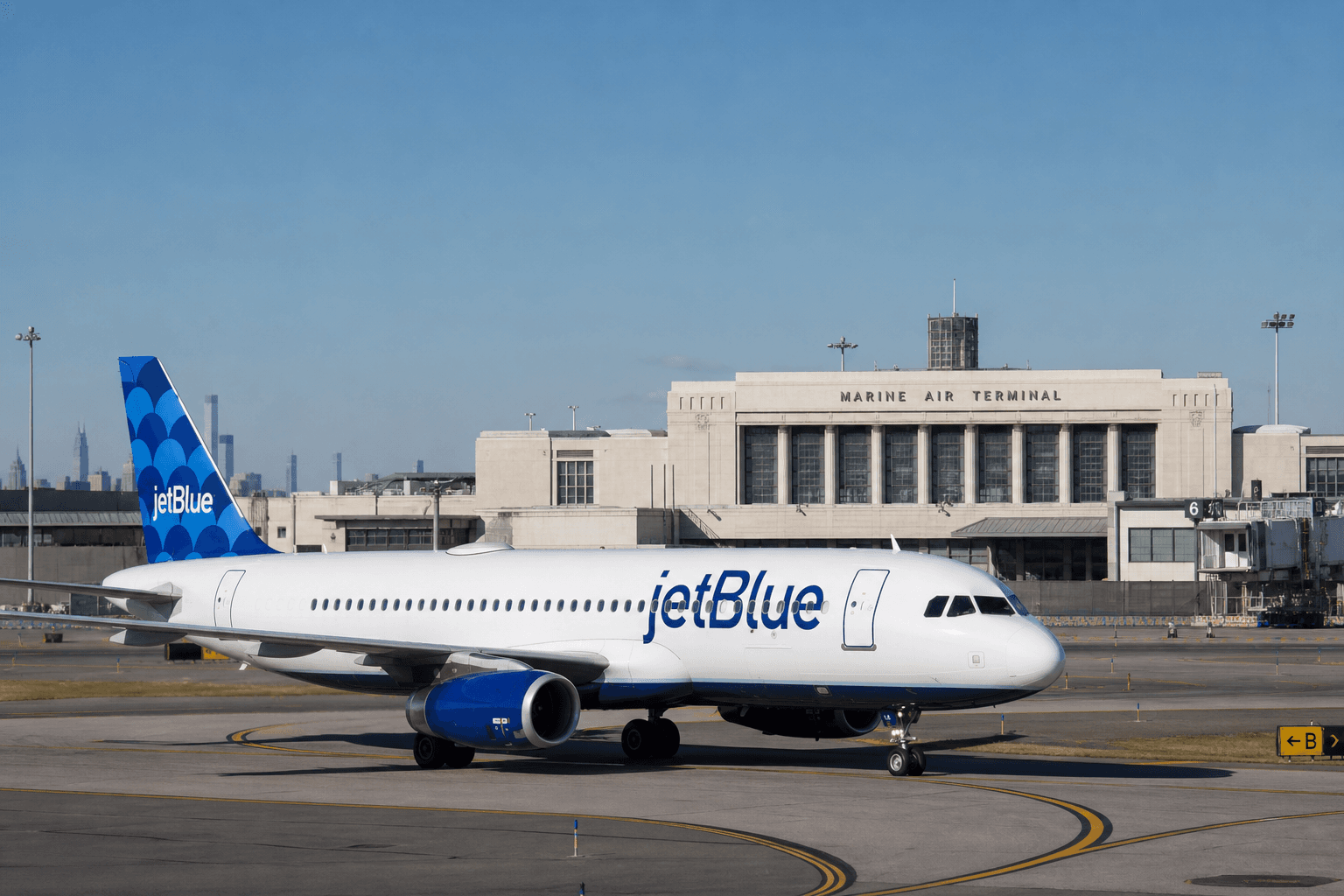
JetBlue Airways has successfully acquired 22 slots at New York’s LaGuardia Airport (LGA) formerly held by Spirit Airlines for $58.5 million. Spirit ceased operations in May, leaving valuable slots at one of the country’s busiest and most congested airports available. The acquisition is expected to allow JetBlue to increase its daily round-trip flights by 12, subject to final court and regulatory approvals. This bid victory represents a strategic push by JetBlue to strengthen its market presence in its New York hometown airport.
The slots JetBlue won come with a stipulation from the airport authority requiring the carrier to take over the lease of the Marine Air Terminal, known as Terminal A at LaGuardia. JetBlue had operated at Terminal A prior to relocating to new terminals several years ago. The historic Art Deco terminal is popular with travelers and expected to offer a more economical service base compared to the current locations JetBlue occupies at LGA. Taking over operations at Terminal A could optimize JetBlue’s costs and network configuration at the airport.
JetBlue’s quick response to the shutdown of Spirit Airlines was also evident at Fort Lauderdale-Hollywood International Airport (FLL), where it expanded quickly into the void left by Spirit. JetBlue is now exploring similar expansion opportunities at LaGuardia and Newark Liberty International Airport (EWR), focusing on growth within Florida and the New York metropolitan area. The airline’s bid surpassed Frontier Airlines’ $57.5 million offer, while other contenders presented lower bids.
The formal approval process for the slot acquisition is expected to conclude by August 5, with the official closing likely by October. Federal Aviation Administration (FAA) approval will also be necessary before the slots can officially transfer. While the $58.5 million bid is approximately one-third of the slots’ appraised value of $86.74 million, JetBlue’s CEO Joanna Geraghty has highlighted challenges operating profitably at LGA due to high operating costs, with the airline currently flying just 13 routes there, most yielding slim margins.
By acquiring these additional slots, JetBlue’s control at LaGuardia will rise from 3.4% to 4.6%. Despite this increase, domestic carriers like Delta Air Lines dominate the market share at LGA with 42.7%, followed by American Airlines at 24.7% and Southwest Airlines at 9.5%. The new slots may allow JetBlue to carve out more competitive positioning at the airport, especially by leveraging the lower cost base reportedly available at Terminal A.
The constrained infrastructure at LaGuardia, coupled with strict slot allocations, a perimeter rule, and curfews, has historically limited expansion opportunities for carriers including JetBlue. The Marine Air Terminal lease and additional slots offer the airline a rare chance to increase capacity and possibly improve operational efficiency through better terminal placement. Whether JetBlue will consolidate all its LGA operations into Terminal A or distribute them remains undecided as the airline plans to evaluate network strategies post-acquisition.
This development follows JetBlue’s patterns of strategic acquisitions to expand in competitive markets. The airport authority’s insistence on taking over Terminal A’s lease with the slots aligns economic incentives with operational practicality, potentially reducing JetBlue’s high costs at LGA. The airline’s approach at Fort Lauderdale exemplifies its capacity to leverage newly acquired slots effectively, which could bode well for its growth ambitions in New York.
As the third busiest airport in the New York metropolitan area and among the top 20 busiest in the U.S., securing a larger footprint at LaGuardia is critical for JetBlue’s competitive future. With Delta and American dominating, JetBlue's expanded slot holdings and lower-cost terminal could help it better meet demand, offer more flights, and improve profitability at a complex, highly regulated airport environment.
Frequently asked questions
- How many slots did JetBlue acquire at LaGuardia Airport and for how much?
- JetBlue acquired 22 slots formerly operated by Spirit Airlines at LaGuardia Airport for $58.5 million.
- What terminal at LaGuardia is JetBlue planning to operate from after acquiring the slots?
- JetBlue plans to move operations to Terminal A, also known as the Marine Air Terminal, formerly used by Spirit Airlines.
- When is the slot acquisition expected to be finalized and approved?
- Final approval for the slot takeover is expected by August 5, with closing considerations lasting until October, pending FAA approval.
Read more
All Airports →
United Airlines Retracts Free Rebooking Policy for Flights Avoiding Donald J. Trump Airport
United Airlines has backtracked on an apparent policy that allowed passengers who no longer wanted to fly to Donald J. Trump International Airport in West Palm Beach to rebook for free on a flight to an alternative nearby airport. A couple of days ago, a leaked internal memo sent to United’s reservation agents suggested that the airline was aware that some passengers were uncomfortable with flying to the newly renamed airport, which was previously known as Palm Beach International Airport (PBI). If passengers contacted United’s reservation line because they no longer wanted to fly to Donald J. Trump Airport due to the name change, agents were instructed to say: “I understand that you'd rather not fly to this airport anymore. We can look at nearby airports like Fort Lauderdale or Miami instead. Is that an acceptable alternative?" The memo added that agents could use their “empowerment to offer acceptable alternatives” without needing to get approval from a manager. Flight changes could be made for free, which, in itself, was an unusual move. After the story was broken by Live and Let’s Fly , it quickly went viral, and it didn’t take long for United to start reviewing the memo. Now, the airline says the “message was poorly worded and not accurate.” That’s right, United isn’t denying the memo was shared with agents, or that anyone who read the message would think that passengers could rebook onto flights to alternative airports to deliberately avoid the DJT airport. Instead, United is simply saying that the meaning of the memo was different than what you or I believed it to mean. United Airlines is, however, making its position very clear: “United customers are able to make changes to a ticket without a fee for many reasons. However, our policy doesn't allow for changes because of an airport's name or three-letter code." The name change from Palm Beach International Airport to Donald J. Trump Airport officially took effect on July 9, just a few months after Florida Governor Ron DeSantis signed a new law that allows the state to name major commercial airports. Before the airport could be renamed, however, Palm Beach County had to enter into a licensing agreement with the President because he had trademarked his name. The board of commissioners approved the licensing agreement 4-3 in a highly contested vote. Public backlash to the renaming has been fierce, and many people have openly vowed to boycott the airport. United's online booking tool still doesn't accurately reflect the name and airport code change. At the time of publication, a dummy booking allowed us to search for flights from PBI, which is now officially known by the airport code DJT. When you click on any given flight for additional information, the flight is shown as operating from West Palm Beach, FL, US (PBI) and not from Donald J. Trump Airport (DJT). For those in the know, customers can search for flights to and from DJT via United's website, with the online booking tool correctly recognizing the airport code, but it then directs users to a results page that shows PBI.
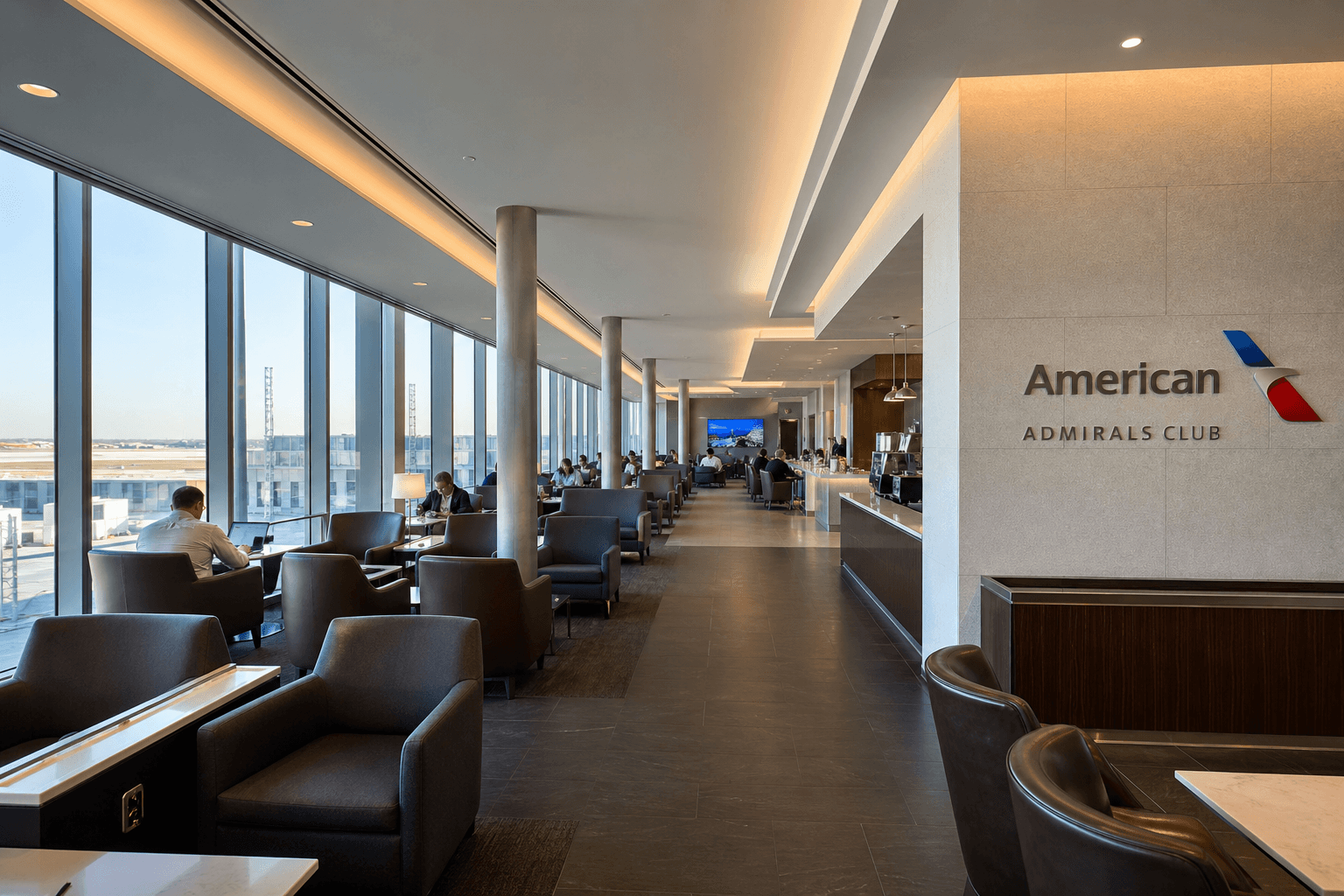
American Airlines Unveils New 37,000 Sq Ft Admirals Club and Grab-and-Go at Dallas-Fort Worth
American Airlines is building a 37,000 square foot Admirals Club lounge (terminal C) and a 'Provisions' grab 'n go (terminal F) at the Dallas – Fort Worth airport.

Smart Strategies to Avoid Fees When Exchanging Foreign Currency Abroad
Figuring out how you should pay for purchases when traveling abroad can be tricky, assuming a foreign currency is involved. There are many considerations, like how widely accepted credit cards are, how much you anticipate spending, how likely you are to return to that country, etc. While I don't think there's an absolute right strategy of how to go about paying for foreign purchases and exchanging money, I do think there's a wrong strategy. In this post, I'd like to share some general tips for paying for purchases abroad, and then I of course welcome tips anyone else may have. Below are some of my top recommendations for making purchases abroad as efficiently as possible. In no particular order… Use credit cards with no foreign transaction fees Whenever possible, I make purchases abroad with credit cards. Admittedly credit card acceptance differs significantly around the globe, though it has come a long way over the years. Why do I pay with credit cards whenever possible? There are all kinds of excellent credit cards with no foreign transaction fees , so they allow you to get a fair exchange rate on your purchase Paying by credit card gives you great purchase protection (in case you need to dispute a charge), minimizes the risk of cash being stolen, allows you to pay exactly what you owe, etc. Credit cards are incredibly rewarding nowadays , especially for purchases that you might make abroad; for example, there are lots of credit cards offering bonus points on dining and travel, which may make up a lot of your spending abroad Just remember that you'll want to avoid dynamic currency conversion when paying by credit card. In other words, when you pay by credit card and are given the option of making a purchase in your home currency or the local currency, always pay in the local currency. If you choose to pay in your home currency, you'll typically be charged a huge fee. Nowadays you can pay with credit cards in so many places Withdraw money from bank ATMs at your destination I always withdraw some cash in local currency at my destination, even if I'm in a country where credit cards are widely accepted. Cash comes in handy on every trip at some point or another. I always get cash in the same way — I find an ATM upon arrival at my destination, ideally from a local bank, and I use the ATM card associated with my US checking account. This is both the most convenient and best value option: There's often a fee of a few dollars per ATM transaction, though that pales in comparison to the fees you'd be charged at currency exchange places Assuming you decline dynamic currency conversion, you should get a rate that's very close to the actual exchange rate between currencies Let me emphasize that lots of banks will reimburse for these ATM fees with certain types of accounts, so if you travel internationally with any frequency, there's value in opening such an account; not only will you find this with accounts that have big minimums (like Chase Private Client and Citigold), but you'll also find this with more basic accounts with some institutions, like with Charles Schwab One challenge can be deciding just how much money you want to convert. After all, you're typically being charged a fee per transaction, so how do you decide at the beginning of a trip how much cash you should get? Since my bank reimburses me for ATM fees, I usually only take out cash in fairly small increments. This way I don't end my trip with lots of extra cash, and minimize the risk of cash being stolen. If you don't have waived ATM fees, you may prefer to just take out more cash at once. Use ATM and avoid dynamic currency conversion Exchange money at your local bank before leaving home Some people feel more comfortable if they can get cash in a foreign currency before even starting their trip. Personally this isn't something I've ever done, and I don't really get the point of it. ATMs are readily available on arrival, and personally I want to minimize the amount of cash I'm traveling with, since it's just another thing that can be stolen. However, if getting cash before your trip puts you at ease, just go to your local bank, and they should be able to get you foreign currency at a reasonable exchange rate. There's typically a small fee to do this, but then you'll get the fair conversion rate, rather than some inflated exchange rate. You'll want to do this well ahead of your departure, because in some cases the cash may need to be shipped to your bank, so won't be available immediately. This is more effort than I'm willing to put in, but to each their own… You can always get foreign currency at your local bank Don't use currency exchange places Broadly speaking, currency exchange places are massive scams, whether we're talking about ones at airports or in cities. You see these all over the place, and they allow you to exchange cash in one currency for cash in another currency. This entire business model essentially relies on consumers not being savvy, since the markup is typically 5-10%, or sometimes even more than that. The marketing around these is also often deceiving. You'll see that they sometimes advertise "no commission," but that doesn't mean you're getting the fair market exchange rate. Only use any sort of currency exchange place as an absolute last resort (in other words, if you immediately need cash in local currency, and literally have no other option). The only exception to this rule is in countries where the official exchange rate is very different than the black market exchange rate. Admittedly that comes with its own risks, but in countries like Argentina or Uzbekistan, you could come out ahead by exchanging money in more traditional ways. Avoid airport currency exchange places How to get rid of foreign currency at the end of your trip What should you do at the end of the trip if you still have some foreign currency remaining? There's no right or wrong answer, though here's my general approach: If the currency is for a destination I travel to often (for example, if I have Euro), I'll just keep the cash in my travel wallet, and save it for the next trip If the currency is for a destination I don't travel to often, I might settle part of my hotel bill or expenses on my last day with cash rather than credit card One other popular option is that you can generally go to a local Starbucks (if there is one at your destination) and load your foreign currency onto an existing gift card in your home denomination, and it will be exchanged at a pretty fair rate Starbucks can be surprisingly useful for getting rid of foreign currency Bottom line I have a pretty simply strategy when it comes to paying for purchases abroad. I use a credit card whenever possible, and decline dynamic currency conversion. Then I use a local bank's ATM to withdraw cash (from my account that waives withdrawal fees), and also decline dynamic currency conversion, if it's offered. To the experienced traveler, I'm sure this advice is pretty obvious. However, it always amazes me how many people I see using foreign currency exchange booths, where you typically get a horrible exchange rate. I'm also surprised by how many people accept dynamic currency conversion, throwing money out the window. What's your strategy for navigating foreign currency exchange?
NBAA Engages Aviation Community with Events at 2026 AirVenture in Oshkosh
NBAA will be front-and-center at the Experimental Aircraft Association's AirVenture, taking place July 20-26 at Wittman Regional Airport (OSH) in Oshkosh, WI - connecting with industry stakeholders and showcasing all that the association has to offer members.
The Daily Touch & Go
The day's best aviation news in your inbox. Free, no spam.