

Illustration: The Touch & Go
Vertical Aerospace nears UK government funding to open first full-scale eVTOL production site
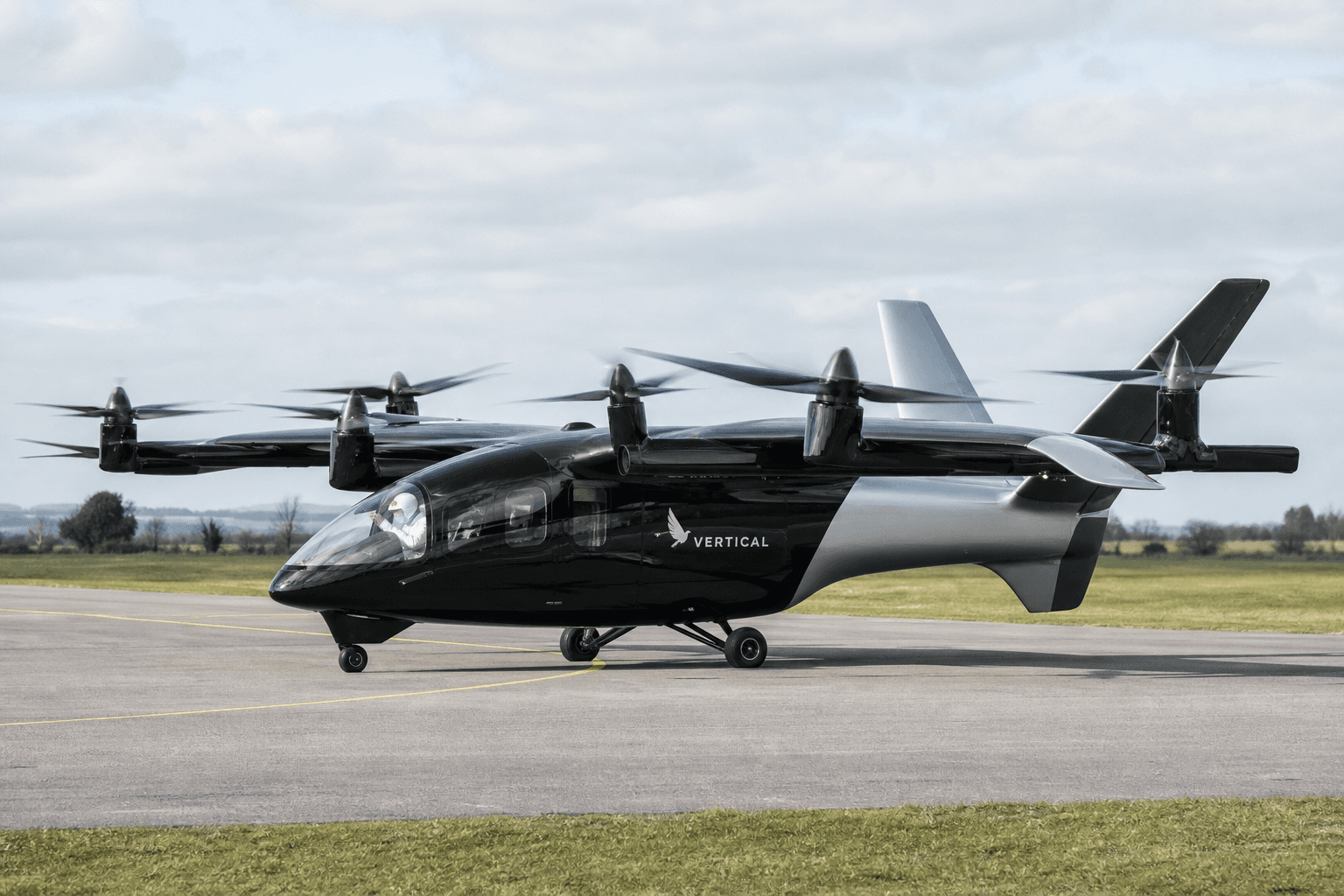
Vertical Aerospace is in advanced talks for a £10 million grant to establish its Valo eVTOL assembly and battery facilities in the UK, aiming to anchor its first global production location by year-end.
The gist
Vertical Aerospace advances UK funding talks to open first full-scale Valo eVTOL factory and battery plant domestically by year's end.
Continuing coverage
All Evtol →Bristol-based Vertical Aerospace is progressing toward securing government backing to establish its first full-scale factory in the UK for producing the Valo electric vertical take-off and landing (eVTOL) aircraft. The company confirmed it is in advanced negotiations with the UK government over a broad funding package that would include a grant of up to £10 million ($13.5 million) from the Department for Business and Trade. This funding aims to anchor Vertical's initial global full-production site firmly within the UK, reinforcing the nation's aerospace ambitions.
Vertical Aerospace is currently evaluating a shortlist of four potential locations for its final assembly facility. This site will support the production of the four-passenger Valo eVTOL aircraft, alongside a battery manufacturing plant. The company anticipates reaching a final decision on the facilities before the end of the year, underscoring urgency and momentum in scaling up production capabilities.
In the early production phase, Vertical plans to use refurbished hangars at its flight-test center located at Kemble airfield for the assembly of the Valo aircraft. Concurrently, battery assembly operations will be established at a new facility adjacent to its existing Vertical Energy Centre near Bristol, enabling close integration between airframe and battery production.
Beyond direct financial support, the government package includes a significant commitment to develop a broad, cross-government program facilitating Vertical's transition from prototype testing to industrial scale operation. This will include a memorandum of understanding (MoU) with UK Export Finance to outline frameworks for export-linked and customer financing facilities. Additionally, the package envisions ongoing support from Innovate UK and captures interest from the Ministry of Defence in leveraging the company’s hybrid-electric and autonomous technology capabilities.
Vertical Aerospace chief executive Stuart Simpson described the government backing as a major vote of confidence in the company, the UK aerospace sector, and the country’s potential to lead next-generation aviation. He emphasized that the UK has supported the program from its inception and that the new funding would establish a clear pathway enabling the move from innovation to industrial scale production.
The grant remains subject to several approvals, including legal, subsidy control, due diligence, and ministerial authorization. The MoU with UK Export Finance, while indicative of support, is not legally binding. Nonetheless, the comprehensive nature of the proposed funding package signals a high level of governmental commitment to fostering Vertical’s growth within the UK aerospace industry.
Vertical’s positive outlook is bolstered by the successful public debut flight demonstration of its Valo eVTOL at the Farnborough Air Show recently. This marked the first time an eVTOL performed a full end-to-end transition—in this case, taking off vertically like a helicopter, transitioning to wingborne flight, and returning to vertical landing. Chief test pilot Simon Davies piloted the nine-minute routine using the program’s second VX4 prototype.
The Farnborough demonstration represents a key milestone validating the Valo’s operational capabilities and programme maturity. It also reinforces the rationale behind the government's readiness to invest in vertical flight technologies that could define future urban air mobility and regional aviation markets.
Securing this UK-based production footprint not only promises to accelerate Vertical Aerospace’s manufacturing scale-up but also positions the UK advantageously in the burgeoning eVTOL market. The alignment of public funding, government support programs, and technological demonstration forms an integrated approach to driving industry leadership at a pivotal time for electric and autonomous aviation.
Frequently asked questions
- What funding is Vertical Aerospace seeking from the UK government?
- Vertical Aerospace is in advanced discussions for a government grant of up to £10 million from the Department for Business and Trade as part of a broader funding package to establish its first full-scale production site in the UK.
- Where will Vertical Aerospace produce its Valo eVTOL aircraft initially?
- Initially, Vertical plans to build the Valo eVTOL aircraft in refurbished hangars at its flight-test centre at Kemble airfield, with batteries assembled at a new facility near its Vertical Energy Centre in Bristol.
- What milestone did Vertical Aerospace achieve recently at the Farnborough Air Show?
- At the Farnborough Air Show, Vertical completed the first-ever public demonstration of a full end-to-end transition flight by an eVTOL aircraft, showcasing takeoff, wingborne flight, and vertical landing with its VX4 prototype.
Read more
All Military/Defense →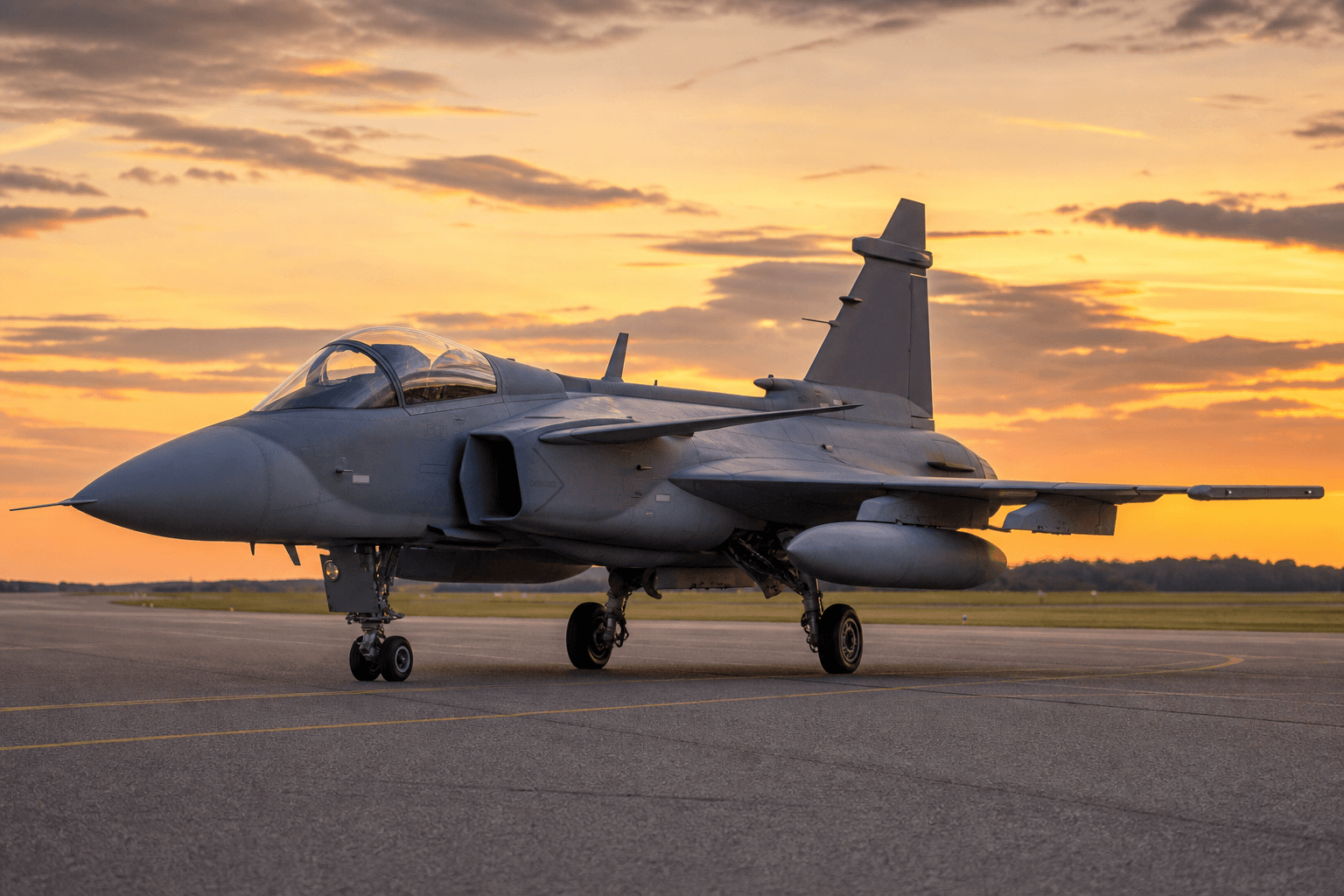
UK commits €300M to equip Ukraine with 16 Saab Gripen E fighters by 2029
The UK has pledged €300 million ($345 million) to help Ukraine field a squadron of 16 Saab Gripen E fighter jets by 2029. British Prime Minister Keir Starmer announced the funding during a visit to Kyiv on July 16, 2026, where he met Ukrainian President Volodymyr Zelenskyy. The UK said it would work with Sweden to help deliver the aircraft as Ukraine continues to defend itself against Russian attacks. The package includes training for Ukrainian pilots and engineers, simulators, spare parts and other equipment needed to operate and support the fighters. "Today's investment will help put advanced Gripen fighter jets in Ukrainian skies, strengthening their ability to defend their country while supporting thousands of skilled jobs here at home," Starmer said. The British government said construction of the Gripen aircraft supports around 5,000 jobs at more than 50 UK-based companies involved in the program, including Saab UK and Leonardo UK. Saab signed a contract with Sweden's Defence Materiel Administration in June 2026 for 16 Gripen E fighters intended for Ukraine. The order is valued at approximately $2.45 billion, with Saab deliveries to Sweden scheduled for 2029 and 2030. Britain's pledge will help support the delivery and fielding of those aircraft. The Gripen E is the latest version of Saab's single-engine fighter. It can conduct air-to-air missions, strike ground targets and carry out reconnaissance. The UK government said the aircraft's low maintenance requirements and ability to operate with small ground crews make it well suited to Ukraine's needs. The fighters are expected to form part of a broader modernization of Ukraine's air force, which operates Soviet-designed aircraft alongside Western fighters including the Lockheed Martin F-16 and Dassault Mirage 2000. Sweden and Ukraine signed a letter of intent covering broader cooperation on air capabilities in October 2025. Ukraine announced in May 2026 that it intended to purchase an initial batch of up to 20 Gripen E/F aircraft, with deliveries of the new fighters expected to begin before 2030. Sweden also plans to donate up to 16 older Gripen C/D aircraft from its existing fleet, provided Ukraine completes an agreement to purchase the newer Gripen E/F. Sweden said training for Ukrainian pilots and other personnel could begin in 2026.
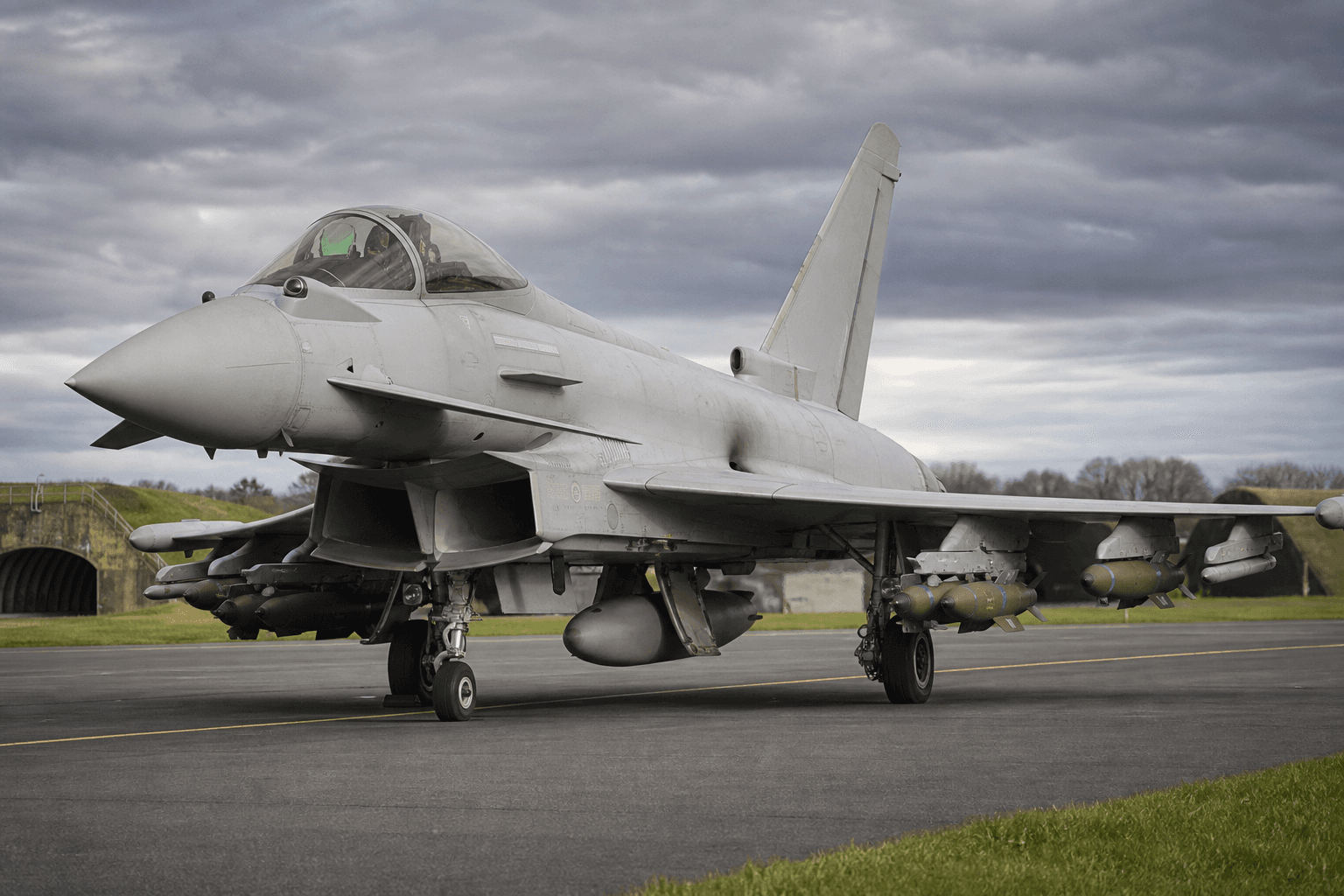
Raytheon UK unveils Red Kite precision-guided bomb to equip RAF Typhoons
Sovereign solution would bolster UK stockpiles. Raytheon UK's Red Kite precision-guided weapon is ready to take flight, with the company targeting its integration with the Royal Air Force's (RAF's) Eurofighter Typhoons. The newly launched, lightweight system is being offered as a "cost-effective, high-volume capability" to boost weapons load-out versus Raytheon's existing Paveway IV precision-guided bomb, and to bolster national stockpiles. To speed its development time, the Red Kite uses the airframe from Raytheon's StormBreaker weapon – also referred to as the Small Diameter Bomb II, or GBU-53: a 92kg (204lb), wingkit-equipped glide bomb. The new product has been "fully designed and digitally engineered in the UK" in co-operation with "a consortium of British defence partners", its developer says. "It weighs the same, looks the same and it talks the same, but from a capability perspective we have replaced almost all the 'smarts' within it," says Rich Gates, Raytheon UK's lead for weapons programmes. That has included replacing its guidance system, seeker, fuze and warhead with UK-developed technologies, sourced from as-yet undisclosed partners. "Red Kite will be a 95% British and European weapon, and that fits into the increased localisation and industrialisation that European nations are looking to achieve in the wake of what's happened in Ukraine," Raytheon UK chief executive James Gray told FlightGlobal at the Farnborough air show. FlightGlobal visited Raytheon UK's Harlow site in Essex ahead of the Farnborough air show to get first details on the medium-range utility strike weapon. It would be employed as part of a "high-low mix", offering a lower-cost capability beneath MBDA's powered Spear 3 air-to-surface missile. "This weapon will be optimised for Typhoon," says Rory Hederman, associate director, requirements and capabilities. It also potentially could be carried by additional UK platforms: namely the Lockheed Martin F-35B and General Atomics Aeronautical Systems MQ-9B Protector. Raytheon UK says its new glide bomb will have four times' the range of the 226kg Paveway IV, and four could fit within each of the F-35's internal weapons bays. The British weapon could be equipped with a US-supplied datalink if required, but that will not be included within the initial offering. "The day one baseline standard is making sure we can keep it cost-effective," Gates notes. "We've delivered tens of thousands of Paveway IVs to our customers, and we've learned a huge amount in that time," he says. He describes the existing weapon as a "super-reliable piece of kit", but adds: "What we are looking for next is… to be more sovereign." The company notes that thanks to its use of "advanced digital modelling technologies, the effector quickly moved from concept to prototype". "On Paveway [IV] it could take six months to make a change – with Red Kite we can design it within a couple of hours," Gates notes. "We have tested this in the real world," he adds, with that work having involved trials of its fuze and warhead, including assessment of penetration and fragmentation performance. "We [also] have flown the guidance system on a drone. We have matured it as far as we can go before an MoD contract. "This would be a weapon to build and fill a stockpile," he says. "We want to get to an always-on [production] capability, while also keeping spiral development." Asked whether the company could also explore creating a containerised capability, Gray says: "There is potential for different launch mechanisms for this. That has influenced some of our design thinking, but there’s nothing concrete at this point." "Ukraine and Iran have demonstrated that campaigns can last for a long time, and there is a need for stockpiles so you can keep going [with supply]," Hederman notes. In addition to its domestic sales campaign, the developer also sees the potential to supply its Red Kite to export customers, including for other Eurofighter operator nations. Additional reporting by Ryan Finnerty.

US Air Force Retires 119 F-15Es as Saudi Arabia Invests $5 Billion to Upgrade F-15SA Fleet
In February of this year, the State Department approved a foreign military sale for the Kingdom of Saudi Arabia that opens up the potential for a $3 billion fighter jet deal . Despite speculation that the Kingdom may be procuring the Lockheed Martin F-35 Lightning II, they are in fact seeking to upgrade the fleet of Boeing F-15SA Eagle air superiority fighter jets. Boeing's multi-billion dollar upgrade program is explicitly designed to close the technology gap and bring the Royal Saudi Air Force F-15SA fleet up to parity with the US Air Force's F-15EX Eagle II.
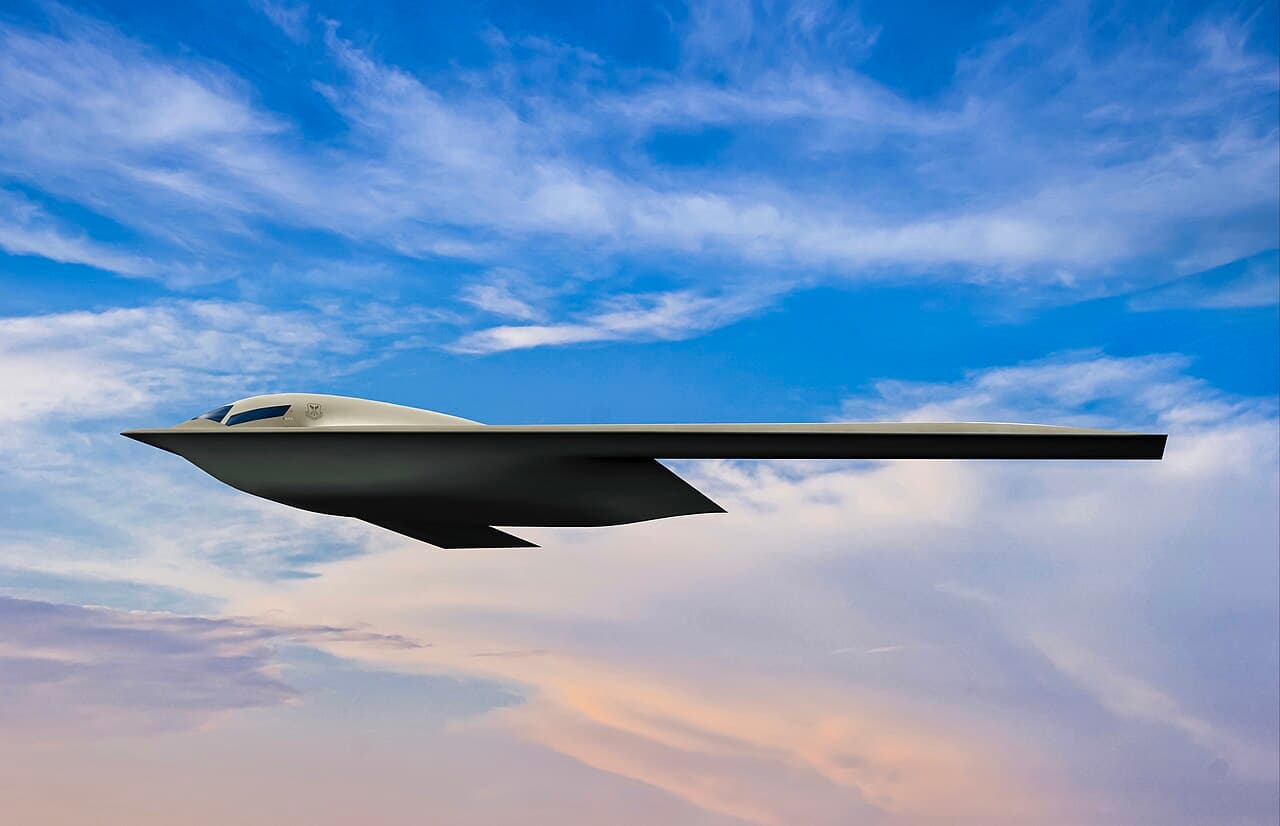
USAF to Convert B-21 Raider Test Jets Directly into Combat Bombers from 2027
The United States Air Force has a couple of test Northrop Grumman B-21 Raiders that are blurring the line between testing and fielding. The B-21 Raider is expected to enter service in 2027, making it the world's first all-new strategic bomber to enter service since the B-2 Spirit entered service in 1997. China is also working to develop its Xi'an H-20 stealthy strategic bomber, but it is unclear when it will enter service.
The Daily Touch & Go
The day's best aviation news in your inbox. Free, no spam.