

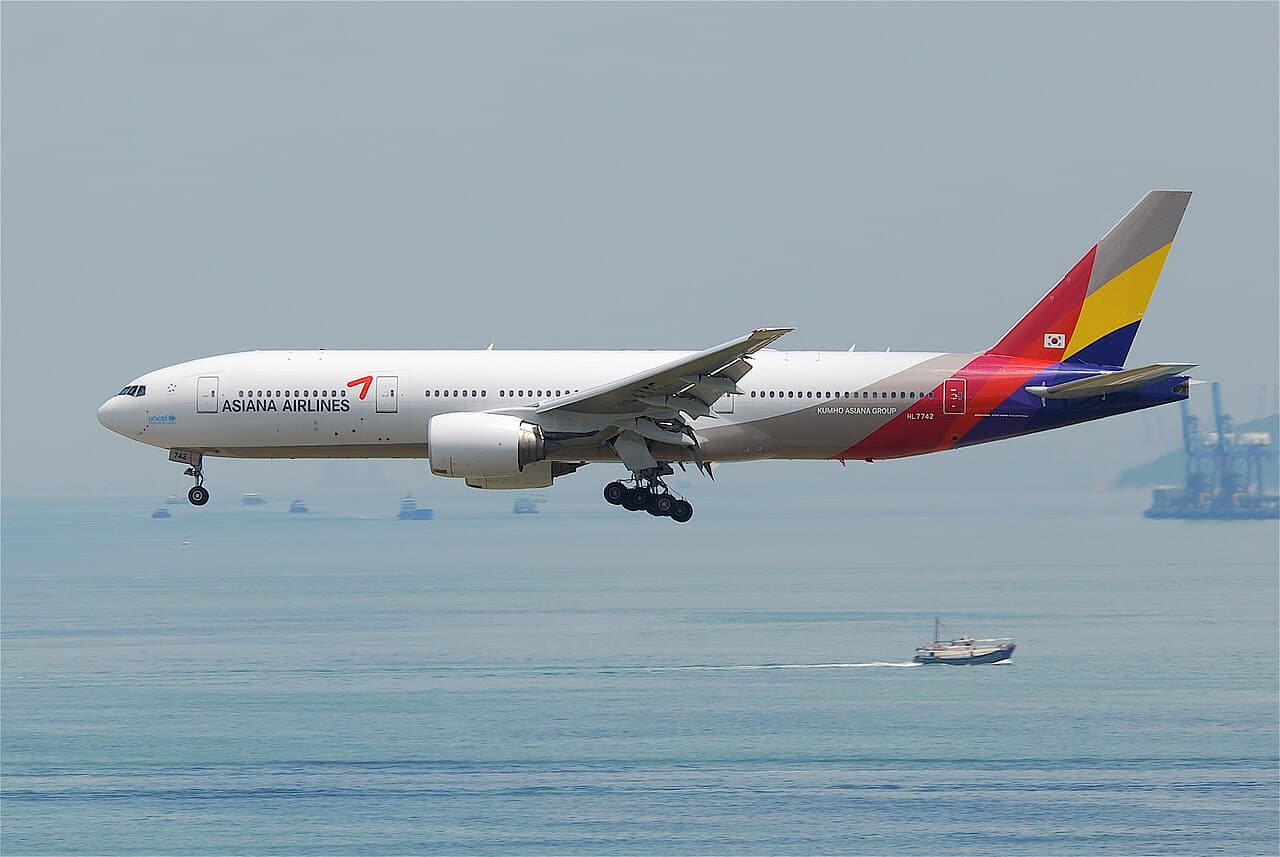
Image: Aero Icarus from Zürich, Switzerland · CC BY-SA 2.0 · via Wikimedia Commons
Turkish Airlines Operates Unique 492-Seat Boeing 777 on Short Domestic Routes
Turkish Airlines utilizes a single Boeing 777-300ER configured with an ultra-dense 492-seat layout, primarily on short domestic flights under an hour, fulfilling high-capacity demand efficiently.
The gist
Turkish Airlines deploys a uniquely configured 492-seat Boeing 777-300ER on sub-hour domestic flights, maximizing passenger volume on key routes.
Continuing coverage
All Domestic Routes →- Air Canada Deploys Airbus A220 on Multiple Nearly Seven-Hour Flights Across North America
- VietJet Plans New Low-Cost Australian Airline with Boeing 737 MAX Fleet
- Ethiopian Airlines Introduces DHC-6 Twin Otters to Enhance Rural Connectivity
- Ethiopian Airlines integrates De Havilland DHC-6 300-G to enhance domestic connectivity
- Porter Airlines Unveils 15 New Domestic Routes, Expands Montreal Hub Operations
Turkish Airlines stands out with one of the industry's rarest Boeing 777-300ER configurations. Registered TC-LKF, this aircraft departs from the standard 777 layout by offering an exceptional 492 seats, far exceeding the typical configurations across its fleet. While the airline's usual 777-300ERs seat between 349 and 400 passengers with a balance of business and economy class, TC-LKF carries just 14 business seats and 478 economy seats, prioritizing volume over premium space.
This unusual seating arrangement places TC-LKF at a capacity level comparable to many Airbus A380s, aircraft known for their superjumbo status. For context, airlines like British Airways and Qantas operate their A380s with 469 and 485 seats respectively. Turkish Airlines' single 777 with 492 seats even surpasses these figures, making it an outlier not only within its own fleet but across 777 operators worldwide. This strategic capacity enables the airline to serve high-demand markets without adopting larger aircraft types like the A380, maintaining fleet simplicity while meeting volume needs.
TC-LKF's history diverges notably from other fleet members. Originally delivered to Emirates in 2007, the aircraft served with a standard long-haul premium cabin before transferring to Russia's Royal Flight as a high-density charter jet. Unlike scheduled airlines, Royal Flight operated the aircraft seasonally, focusing heavily on volume rather than cabin comfort. Market upheavals and disruptions in the Russian aviation sector led to extended periods of storage in Spain and Turkey before Turkish Airlines acquired the plane in 2024. The airline chose to retain the high-capacity cabin, operating the aircraft mainly unchanged with its distinctive all-white fuselage, adding operational complexity but unique capacity.
In service with Turkish Airlines, TC-LKF has been primarily deployed on short-haul domestic routes where passenger volume is paramount. Flight tracking data from early June 2026 shows the aircraft operating frequently between Istanbul Airport (IST) and Izmir Adnan Menderes Airport (ADB), with flight durations averaging just 44 to 49 minutes despite the aircraft’s large seating capacity. Similarly, the aircraft serves Istanbul to Antalya (AYT) routes, often completing sectors within 50 to 57 minutes. These quick turnarounds on sub-hour flights are unusual for such a large widebody aircraft, reflecting Turkish Airlines’ drive to efficiently absorb heavy passenger loads on domestic trunk routes.
The use of TC-LKF on these short, high-demand routes aligns with Turkish Airlines' broader hub-and-spoke network strategy. Istanbul Airport functions as a major international hub connecting Europe, Asia, Africa, and the Americas. Operating a high-density aircraft on nearby domestic flights helps ferry large numbers of passengers to and from international connections without requiring multiple lower-capacity flights. This approach amplifies efficiency, boosting boarding and throughput during tight schedules inherent in connecting flights.
Beyond domestic routes, TC-LKF has been deployed on flights to key regional destinations including Jeddah King Abdulaziz International Airport and Medina Prince Mohammad bin Abdulaziz International Airport. These routes also experience substantial travel volumes influenced by religious pilgrimage and tourism. Thus, the aircraft’s large seating complements demand spikes, particularly during peak periods, reinforcing Turkish Airlines’ flexible capacity management.
While operating an outlier aircraft with such a dense cabin presents challenges in terms of crew training, maintenance, and passenger experience, Turkish Airlines benefits from possessing a unique high-capacity asset without adding fleet complexity associated with larger types like the Airbus A380. The legacy of the aircraft’s unusual operational journey from Emirates to Royal Flight before joining Turkish Airlines ultimately gifted the carrier a distinct tool to master select markets.
The presence of TC-LKF highlights a rare strategy to maximize passenger throughput on short segments usually served by smaller narrow-body jets. Its use demonstrates how airlines may creatively repurpose inherited aircraft with specialized configurations to meet niche operational needs. This practice can influence future fleet utilization discussions, especially for carriers balancing capacity spikes with operational simplicity.
Read more
All Airlines →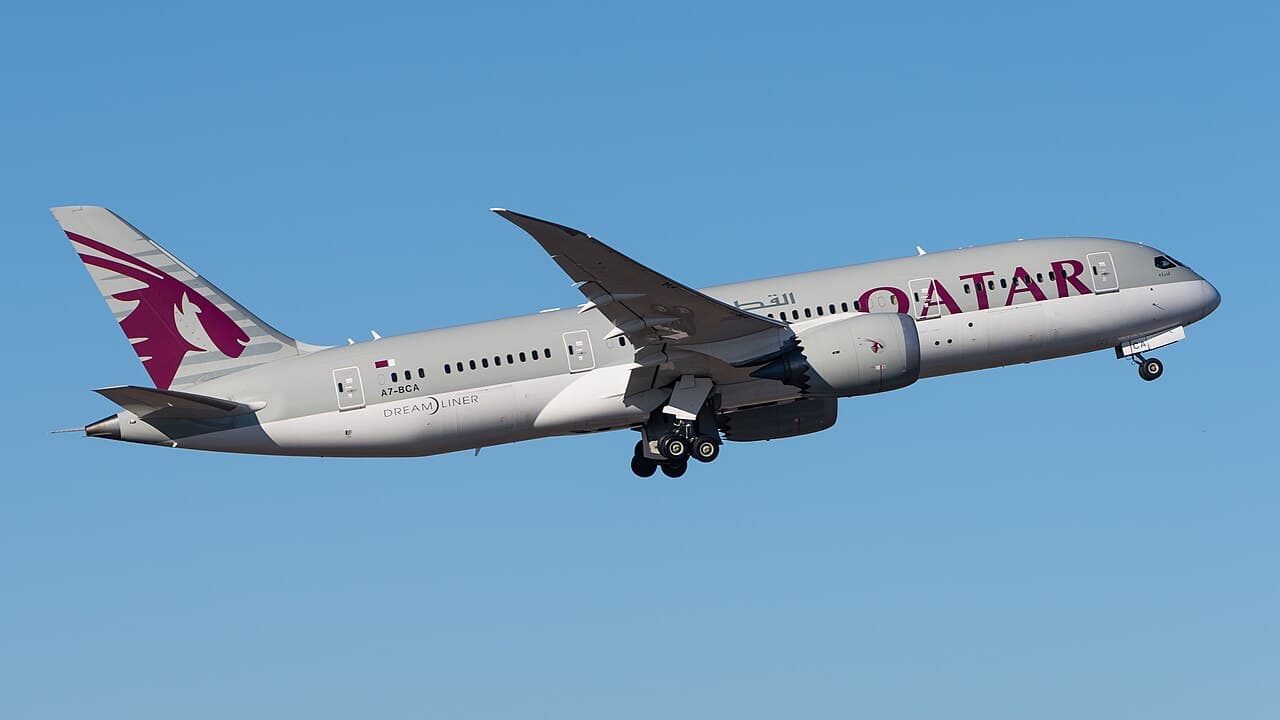
Norse Atlantic Eyes Sale or Merger After IndiGo Leasing Deal Ends
All-Boeing 787 airline Norse Atlantic Airways is pursuing a sale, merger, or partnership, as the airline has otherwise run out of viable options, after India's IndiGo pulled the plug on its aircraft leasing agreement. To Norse Atlantic's credit, the airline sure is putting a positive spin on this . Is there any chance this will work out well for the airline, or is this overoptimism? Norse Atlantic gets back 787s, has nowhere to fly them The airline industry can be a funny business, and there's no clearer example of that than Norse Atlantic Airways. The airline launched in 2022 , with the goal of operating long haul, low cost flights, particularly across the Atlantic. That wasn't exactly a unique business model, because this was exactly what Norwegian did, before it discontinued long haul flights in 2021 . Not only was the idea sort of copied, but Norse Atlantic had some executives from Norwegian, and even picked up the planes that Norwegian previously flew. But as is all too common in the airline industry, clearly they thought it would be different this time around… it wasn't. So in 2024 we saw the airline update its business model , making the focus less about operating regularly scheduled commercial flights, and more about leasing out aircraft, all while reducing its fleet. The company got a lifeline when IndiGo decided to lease some Norse Atlantic 787s to dabble in long haul flying, ahead of the airline taking delivery of its own Airbus A350s . However, between all the airspace closures, high oil costs, and generally declining performance at IndiGo as the airline increasingly moves away from its core strengths, the airline has now decided to scrap that experiment. These planes will be returning to Norse Atlantic as of November 1, 2026. This means Norse Atlantic will be getting back five Dreamliners (beyond the one that has already been returned), just in time for the winter season… which isn't exactly the ideal time of year for a long haul, low cost airline to get more planes! So what's the plan? Norse Atlantic's IndiGo leases are coming to an end Norse Atlantic now open to basically any opportunity What does Norse Atlantic plan to do with these planes that are being returned? Well, let me just quote the airline. Here's what it had to say about fleet deployment: Norse is already engaged in discussions with several airlines regarding ACMI opportunities for up to five aircraft and expects to provide further updates in due course. Moreover, the Company intends to deploy part of the returning fleet within its own network for increased production on selected profitable routes during the upcoming winter season, such as flights from Europe to Orlando and New York. And here's the more interesting point, about a strategic update: The transition provides Norse Atlantic with greater fleet flexibility as the Company advances its strategic review. Given the level of interest received to date as part of the strategic review, the Board has decided to move forward with a formal process, which may result in a sale, merger or partnership. Further information will be provided as and when appropriate. I also can't help but point out this quote from Norse Atlantic CEO Eivind Roald: "The return of these six aircraft opens up strategic opportunities that were not available to us before. We are seeing strong demand for modern, fuel-efficient long-haul aircraft, and we also see attractive opportunities to deploy additional capacity within our own network. Our priority is to use this increased flexibility to improve profitability and create long-term value for our shareholders." Correct, when you run out of business opportunities, that does indeed open up strategic opportunities that were not available before! Now, I'm struggling to see where there's much upside here. Norse Atlantic leases its fleet of planes, so it's not like an "acquisition" of a company that barely has scheduled flights and that is struggling to lease out aircraft adds much value. If Norse Atlantic's own scheduled operations were anywhere close to profitable on a year-round basis, the airline wouldn't be in this situation. If someone wanted the planes, well… they could just do what Norse Atlantic did to Norwegian. Wait until the company goes out of business and the planes are returned to the leasing company, and then pick them up there. I'm not trying to be so flippant, I feel bad for the people who would be losing their jobs here. But we also have to be realistic that basically replicating a failed business model with the same planes and similar routes isn't a recipe for success. We've seen this over and over… just look at what we saw in Iceland with WOW Air and then PLAY Airlines. Norse Atlantic's top cabin is premium economy Bottom line Norse Atlantic is once again finding itself in a tough situation — well, even tougher situation, since I don't think it was ever in a good situation. For the past 18 months or so, the airline has been leasing out a majority of its active fleet to IndiGo, but those planes will be returned as of late 2026. While the airline claims it will try to redeploy the planes on profitable routes, that's easier said than done. It's also reportedly in talks to lease the planes to other airlines. The company is pursuing "strategic opportunities," which could include a sale, merger, or partnership, but the upside seems pretty limited when your planes are leased in the first place. How do you see this situation playing out for Norse Atlantic?
Frequent Flyer Award Loopholes Close as Airlines Tighten Elite Perks
The frequent flyer ecosystem has operated on a silent contract between airlines and their most loyal customers, but now that contract seems to be ending. There was once a period defined by the exploitation of fixed award charts, complex routing rules, and the mathematical beauty of carrier-imposed surcharges. Travelers spent years reverse-engineering award flight availability, viewing the loyalty landscape as a puzzle where deep knowledge of program intricacies provided access to premium cabins for a fraction of their cash value.
Boeing 777-300ER Revolutionized Long-Haul Air Travel with Twin-Engine Efficiency
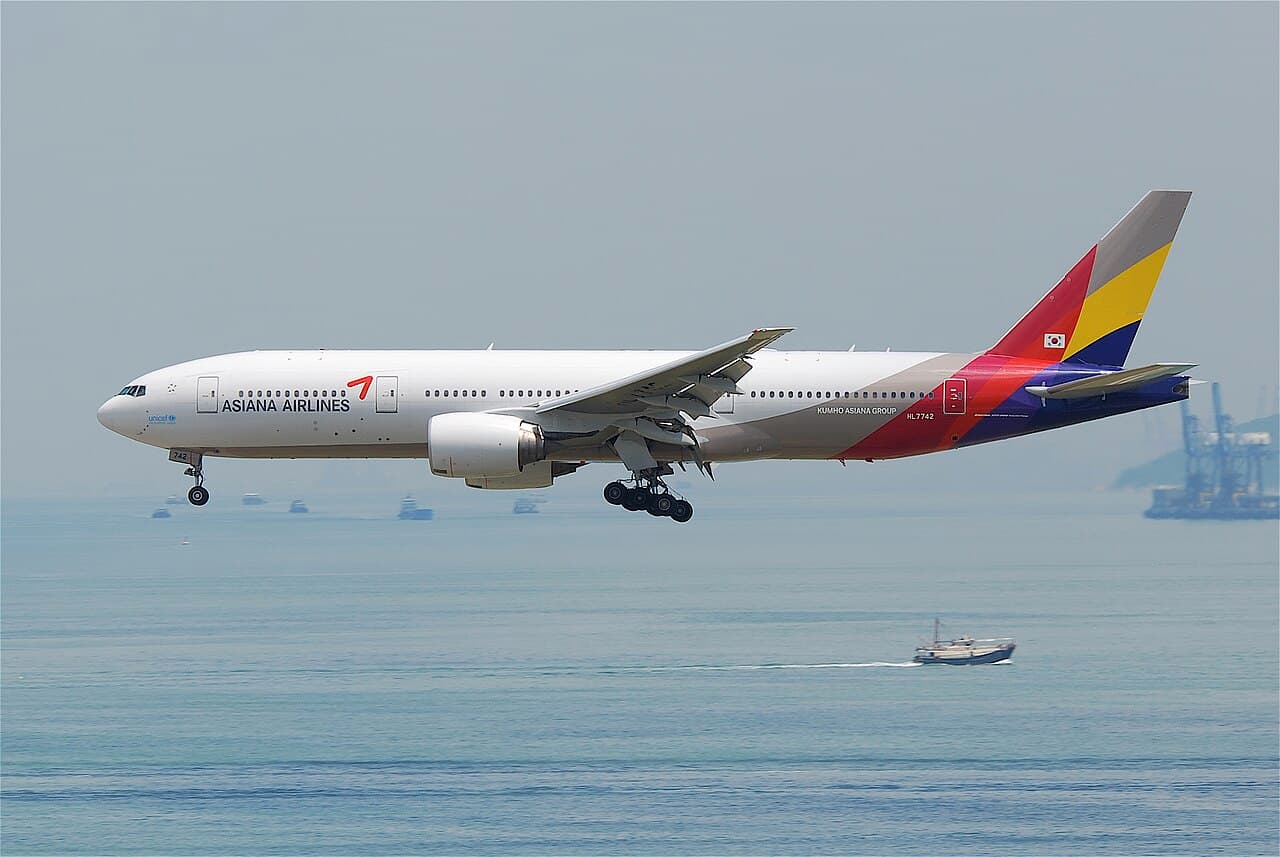
The 777 succeeded Boeing's first widebody twinjet, the 767 , and showed the world just how great the platform could be for both the economics of the notoriously volatile flying business and the satisfaction of flyers. The success of the 777 series directly contributed to the end of its larger quadjet predecessor, the 747.
Air Canada launches new long-haul routes to Tenerife and Sapporo for 2026/27 winter
Air Canada has been steadily expanding its international network in recent years. The airline has added several new destinations so far this year and increased its presence across leisure markets. It is continuing this expansion with more additions for the 2026/27 winter season .
The Daily Touch & Go
The day's best aviation news in your inbox. Free, no spam.