


Image: Aeroprints.com · CC BY-SA 3.0 · via Wikimedia Commons
Marriott Bonvoy and Japan Airlines Form Preferred Partnership with Elite Status Perks
Marriott Bonvoy and Japan Airlines Mileage Bank have established a preferred partnership offering reciprocal elite status benefits and limited points transfer options.
The gist
Marriott Bonvoy and Japan Airlines team up to offer reciprocal elite status benefits and new status matching opportunities.
Continuing coverage
All Oneworld →Marriott Bonvoy and Japan Airlines Mileage Bank recently announced a new preferred partnership that enhances ties between the hotel loyalty program and the Japanese airline's frequent flyer scheme. This collaboration introduces opportunities for members to earn points and convert elite status benefits across the two programs. The focus, however, extends beyond points to include innovative status match and challenge possibilities designed to appeal to loyalty program elites.
Specifically, members of Japan Airlines Mileage Bank can leverage their standing to receive complimentary or accelerated Marriott Bonvoy status, contingent on completing a challenge to maintain it long term. Conversely, Marriott Bonvoy members may earn FLY ON points, Japan Airlines’ status qualification currency, based on their Bonvoy tier level. These FLY ON points contribute toward Japan Airlines Mileage Bank elite status but require actual flying on Japan Airlines to validate the status.
When it comes to points, the transfer ratios between the two programs are relatively modest. Japan Airlines Mileage Bank miles convert to Marriott Bonvoy points at a 4:3 rate, while Marriott Bonvoy points transfer to Japan Airlines miles at the standard 3:1 ratio. Despite these options, the partnership's points exchange is not expected to offer substantial value for members since Japanese airline miles tend to be worth more than Marriott points and Marriott Bonvoy points provide more flexibility when earned directly.
The status match benefits, however, are more compelling. Marriott Bonvoy's elite tiers—from Silver to Ambassador—correspond to different allotments of FLY ON points, ranging between 2,000 to 40,000 points. Accumulating enough points is essential for reaching Japan Airlines Mileage Bank status levels such as Crystal, Sapphire, or Diamond. For instance, oneworld Sapphire status, which requires 50,000 FLY ON points, entitles members to premium lounge access including American Airlines Flagship lounges for domestic travel.
That said, the partnership's applicability hinges on the ability of members to amass a minimum threshold of FLY ON points through actual travel on Japan Airlines or partner airlines within the oneworld alliance. credits earned from flights on oneworld carriers other than Japan Airlines do not count towards the Japan Airlines minimum flight segment requirement for elite status. This limitation restricts the usefulness of status conversions to those with planned travel involving Japan Airlines specifically.
Japan Airlines Mileage Bank has established tiered status levels that require varying numbers of FLY ON points. The opportunity for Marriott Bonvoy elites to obtain accelerated status underscores a more integrated loyalty strategy between hospitality and aviation sectors. Nonetheless, it is most beneficial for travelers who frequently fly Japan Airlines and value oneworld elite privileges such as enhanced check-in, boarding priority, and lounge access.
This partnership comes amid a broader trend where airlines and hotel loyalty programs cooperate to enhance customer engagement through cross-industry benefits. Marriott Bonvoy’s previous strategic collaborations with carriers like Emirates, Singapore Airlines, and United Airlines demonstrate its commitment to expanding global loyalty integration. The addition of Japan Airlines strengthens Marriott's position in the Asia-Pacific market, offering reciprocal value for frequent flyers and hotel guests alike.
Despite its focused appeal, the partnership is unlikely to attract a mass audience given the requirement for Japan Airlines flight activity to achieve elite status. The reciprocal benefits primarily cater to established travelers with high tier Marriott status and existing or planned Japan Airlines travel. Marriott Bonvoy’s willingness to offer status match pathways indicates an effort to deepen loyalty ties with elite customers in key markets.
Overall, the Marriott Bonvoy and Japan Airlines alliance enriches the experience for frequent travelers aligned with both brands. The arrangement offers a transparent path to oneworld elite status with Japan Airlines Mileage Bank through Marriott Bonvoy tier recognition, though the need for qualifying flights maintains a baseline travel commitment. Members who travel often on Japan Airlines or aspire to enhanced elite privileges stand to gain most from this partnership.
Frequently asked questions
- What benefits does the Marriott Bonvoy and Japan Airlines partnership offer?
- The partnership offers reciprocal points transfer options and elite status match and challenge opportunities between Marriott Bonvoy and Japan Airlines Mileage Bank.
- Can Marriott Bonvoy members earn Japan Airlines elite status through this partnership without flying?
- No, while Marriott Bonvoy members can earn FLY ON points toward Japan Airlines status, they must also meet minimum flight requirements on Japan Airlines to qualify for status.
- Are the points transfer ratios between Marriott Bonvoy and Japan Airlines favorable?
- The points transfer ratios are 4:3 from Japan Airlines miles to Marriott points and 3:1 from Marriott points to Japan Airlines miles but are generally considered of limited value compared to earning points directly.
Read more
All Airlines →
Air Canada and Hyatt launch partnership enabling faster Hyatt Globalist status through Aeroplan
Hyatt and Air Canada have launched reciprocal earning, redemption and elite-status benefits, including a 90-day challenge that awards Hyatt Globalist after just 20 nights instead of the usual 60. The partnership is Canadian-focused, but U.S. Aeroplan cardholders—and potentially Marriott elites—may also have a path to participate.

United Airlines Allows Flight Attendants to Drink Alcohol While Deadheading Under Strict Conditions
United Airlines flight attendants can drink while on duty in one narrow situation: when they are deadheading as passengers, out of uniform, and not expected to work another flight that day.

How Crews and Aircraft Separation Amplify Flight Delays Even After Weather Clears
Airlines often blame weather even after skies clear because the disruption has scattered aircraft, pilots and flight attendants across the network. After a storm delayed my American Airlines flight at Washington National, a missing crewmember exposed how separating planes and crews can turn one late arrival into delays across multiple flights.
Airbus to upgrade A321neo with A321XLR wing design and single-slotted flaps
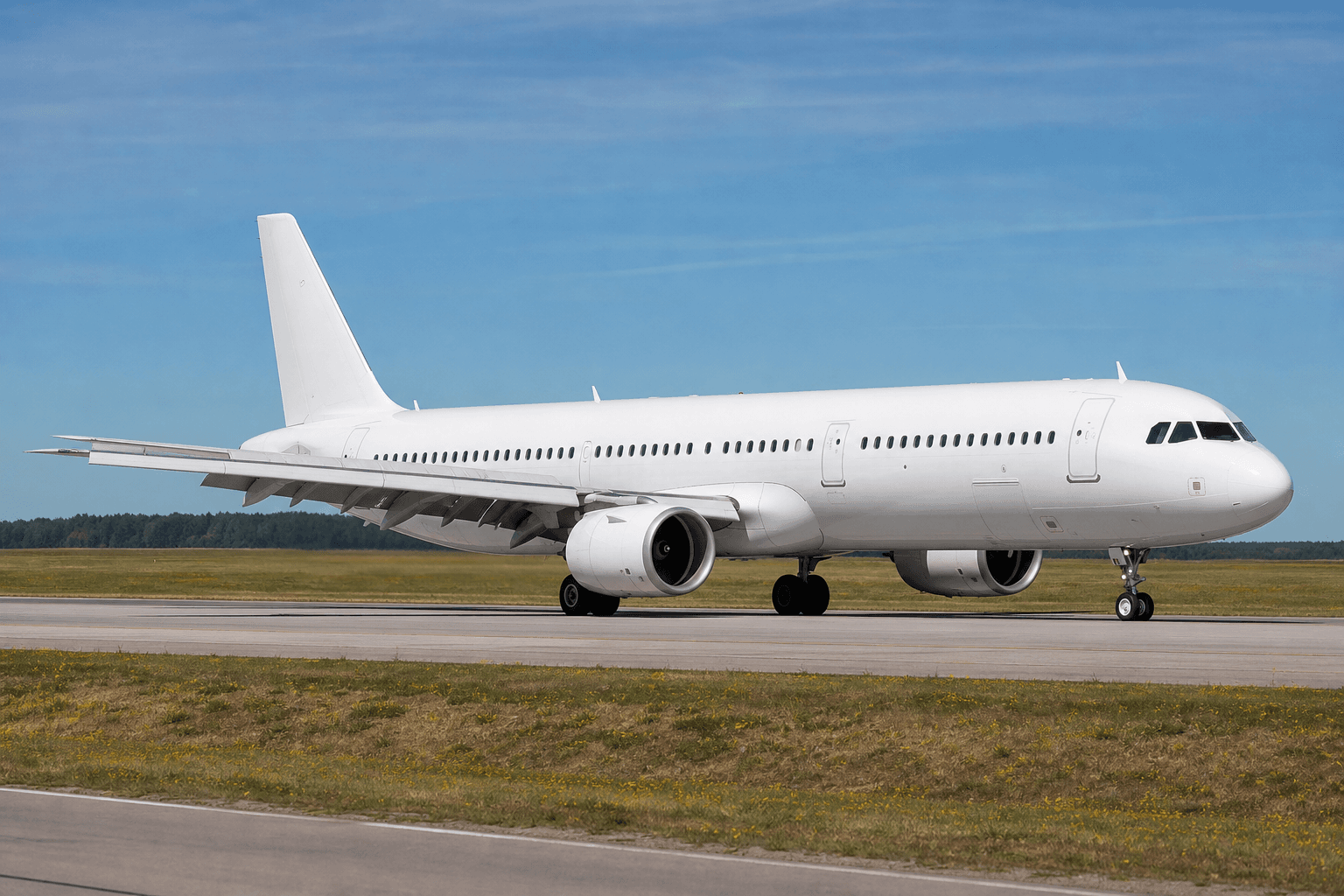
Airbus to incorporate batch of improvements on popular single-aisle model, and test production maturity of some on A320neo line. Airbus is to migrate A321XLR technology – including its revised wing design – to the A321neo, while other enhancements for the single-aisle family will initially be applied to the A320neo before being transferred up to the larger variants. The long-range XLR includes a lighter wing with a single-slotted inboard flap, and this will be incorporated into the regular A321neo, which currently uses a double-slotted design. A321neos will take advantage of a take-off performance improvement system which introduces intermediate flap positions, and works in conjunction with the single-slotted flap arrangement. The changes are part of a package of incremental improvements known as STEP4. A321neos will also benefit from new flight-control laws, the lighter electronic ‘e-rudder’, forward cabin temperature zones, and updated multi-functional runway lights. Head of A320-family development Torsten Hartung says the airframer is putting the "good ingredients" from the XLR onto the popular A321neo platform – the A321neo had a backlog of over 5,600 orders at the end of June. But the STEP4 enhancement will also entail new modifications which Airbus is to apply initially to the A320neo, as a low-risk measure to ensure production maturity before transferring them to the higher-rate A321neo, including the XLR variant. The A320neo will notably receive a new 'cobra' duct for the auxiliary power unit – mounted in the top of the fuselage, and aimed at enhancing cabin air quality – and corrosion-prevention measures such as titanium cabin rails. "The baseline A320neo is the first model to incorporate and prove the new modifications," says STEP leader for A320 family programme development Martin Schnoor. “Where we physically change the aircraft we decided to apply it first on A320neo in order to learn and see how well things are going." Once integration on the A320neo line is smooth, the new modifications will be made to the A321neo and XLR. Schnoor says deliveries of initial STEP4 A320neos are beginning, with the first A321neos and XLRs set to follow after a year. The A320neo has a different wing to the A321neo, but Airbus is ultimately aiming to migrate as many XLR innovations, outside of wing-related changes, to the A320neo as it can. Airbus says STEP4 will also eventually deliver further enhancements across the family, such as cabin-floor reinforcement, to account for changing standards in the weight of passengers and baggage, and a standardised flight data interface and management unit.
The Daily Touch & Go
The day's best aviation news in your inbox. Free, no spam.