

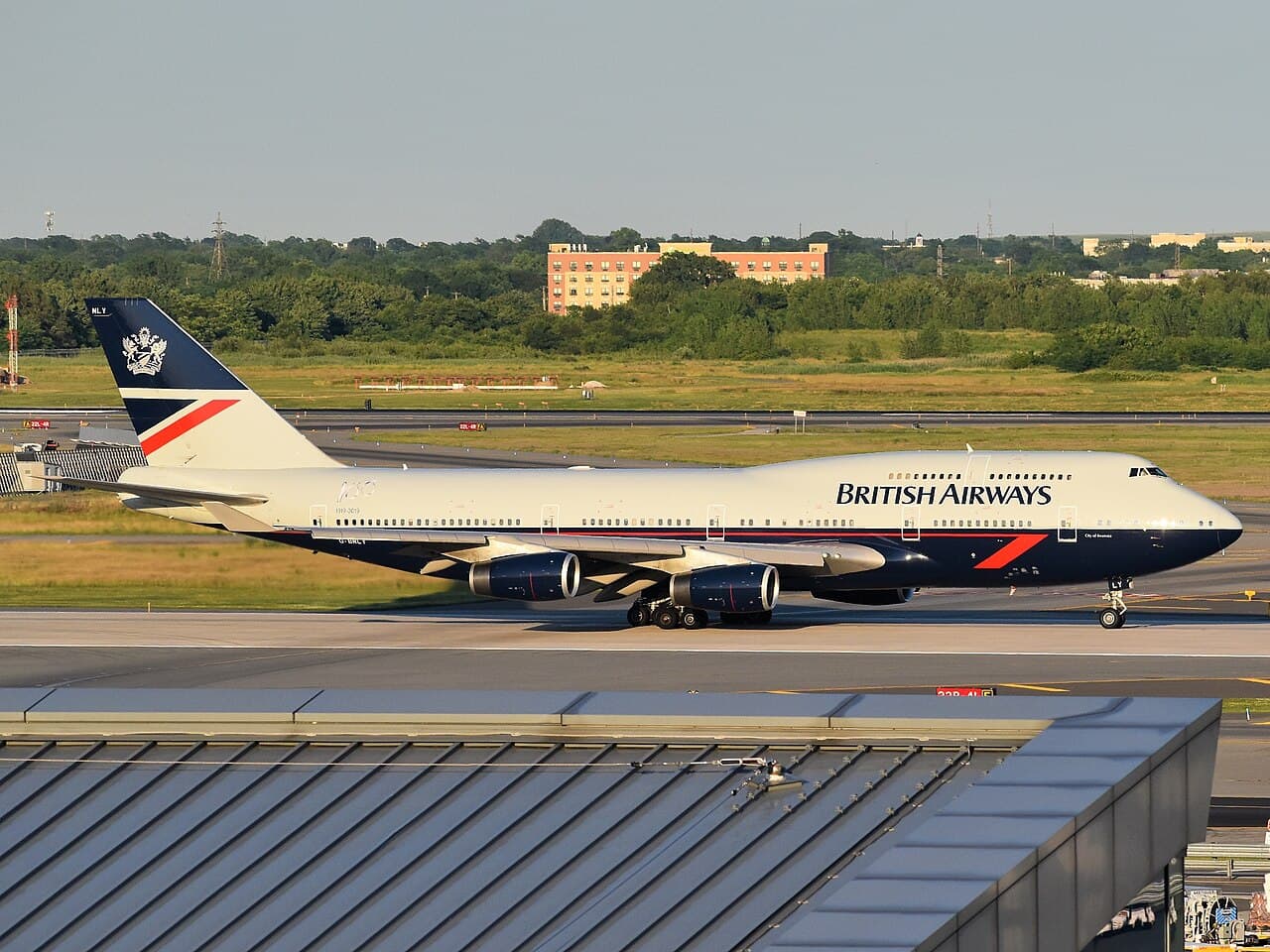
Image: Adam Moreira (AEMoreira042281) · CC BY-SA 4.0 · via Wikimedia Commons
British Airways Ends 36 Long-Haul Routes From London Over Past Two Decades
British Airways has ceased operations on 36 long-haul routes from London airports in the last 20 years, reflecting a dynamic shift in its global network.
The gist
Over 20 years, British Airways dropped 36 long-haul London routes, reshaping its international network amid evolving market demands.
Continuing coverage
All Long-Haul Routes →- Alaska Airlines Debuts Boeing 787-9 Without Premium Economy Cabin Despite CEO's Admission
- SAS Evolves With New SkyTeam Alliance And Modern Airbus Fleet
- British Airways Leverages Airbus A380 to Maximize Capacity at Slot-Limited Heathrow
- Starlux Airlines adds striking silver-liveried A350-1000 to fleet
- Emirates to Relaunch Airbus A380 on 11 Key Long-Haul Routes from Late June to August
British Airways (BA), a core member of the oneworld alliance, has streamlined its long-haul route network from London over the last two decades by discontinuing service to 36 destinations. All these routes involved flights covering at least 2,650 nautical miles, an established cutoff for long-haul operations. This strategic adjustment shows how BA continually adapts its route map to shifting passenger demand and competitive factors.
These withdrawn destinations are spread across multiple regions including Africa, Asia, the Caribbean, the Middle East, North America, and South America, highlighting BA’s global reach and the broad scope of its route realignments. Some of these routes operated non-stop, while others involved one-stop service via BA itself or through the now-defunct British Mediterranean Airways (BMED), a BA franchise. Notably, Melbourne, Australia, excluded from the list, is a long-haul city that BA plans to resume service to in 2027.
Focusing on the Americas and the Caribbean, BA has withdrawn from numerous airports serving Canadian, US, and Latin American markets. Key long-haul routes from London Heathrow and Gatwick airports include the early retirement of Detroit Metropolitan Wayne County Airport (DTW) service nearly two decades ago, once operated with BA's Boeing 767-300ER fleet. Other notable discontinued routes include those to San Juan, Calgary, and Fort Lauderdale-Hollywood, as well as a strategic consolidation of Miami service at Heathrow as competing carriers reshaped their offerings.
These route cessations often correspond with competitive pressures or alliance realignments. For example, BA’s withdrawal from LGW to Fort Lauderdale and Oakland followed Norwegian Air’s similar moves, reflecting BA's preference to focus on higher-yield routes, as Norwegian shifted to Miami for improved revenue potential. BA's withdrawal from these lower-yield markets has been offset by consolidating more lucrative services such as the Heathrow to San Francisco route.
In Asia and the Middle East, BA has discontinued service to 14 airports over the same period. This includes cities in Central and South Asia, where BMED or BA once operated stopover flights. Despite entering newer markets like Lahore and Islamabad in 2020 to fill gaps left by Pakistan International Airlines bans, these routes have since been moved from Heathrow to Gatwick operating Boeing 777-200ER aircraft to better match demand and profitability.
The contrasting market dynamics are evident in comparisons of destinations like Kolkata (CCU) and Dhaka (DAC). Kolkata, with a lower passenger volume and demand for premium traffic, led BA to withdraw service despite proximity to Dhaka, which commands higher average fares and continues to be served by BA. Market yields and ethnic diaspora connections influence which cities remain viable within BA’s portfolio.
In Africa, numerous destinations have been dropped at Heathrow over the years, including flights to Addis Ababa, Dakar, Dar es Salaam, Durban, Entebbe, and others. Many of these cities continue to receive London flights from other carriers or through different London airports such as Gatwick. African airlines like Ethiopian Airlines operate services to both LHR and LGW, while charter and leisure operators maintain a presence on some routes BA has exited.
Some African destinations await renewed service by carriers with franchise or wet-lease arrangements. For instance, Air Zimbabwe is poised to return to Gatwick using wet-leased aircraft, while Air Tanzania has expressed ongoing interest in launching UK services. However, operational challenges persist, such as Air Sierra Leone suspending flights due to the cessation of its lessor Ascend Airways.
This pattern of route termination underlines British Airways' ongoing strategic refinement of its long-haul network, focusing resources on routes with the highest yield and demand while withdrawing from lesser-performing markets. These decisions reflect global aviation trends, competition, and evolving passenger preferences, illustrating the dynamic nature of international airline network planning.
Frequently asked questions
- How many long-haul routes has British Airways ceased from London in the past 20 years?
- British Airways has ended service to 36 long-haul destinations from London airports in the last 20 years, covering flights over 2,650 nautical miles.
- Which regions have seen the most British Airways route withdrawals?
- Route withdrawals cover destinations across Africa, Asia, the Caribbean, Middle East, North America, and South America, reflecting BA's broad international adjustments.
- Why did British Airways consolidate or stop service to some US airports like Fort Lauderdale and Oakland?
- British Airways ended some US routes as competitors like Norwegian shifted their services to more profitable hubs like Miami, prompting BA to focus on higher-yield, consolidated markets such as Heathrow to Miami and San Francisco.
Read more
All Airports →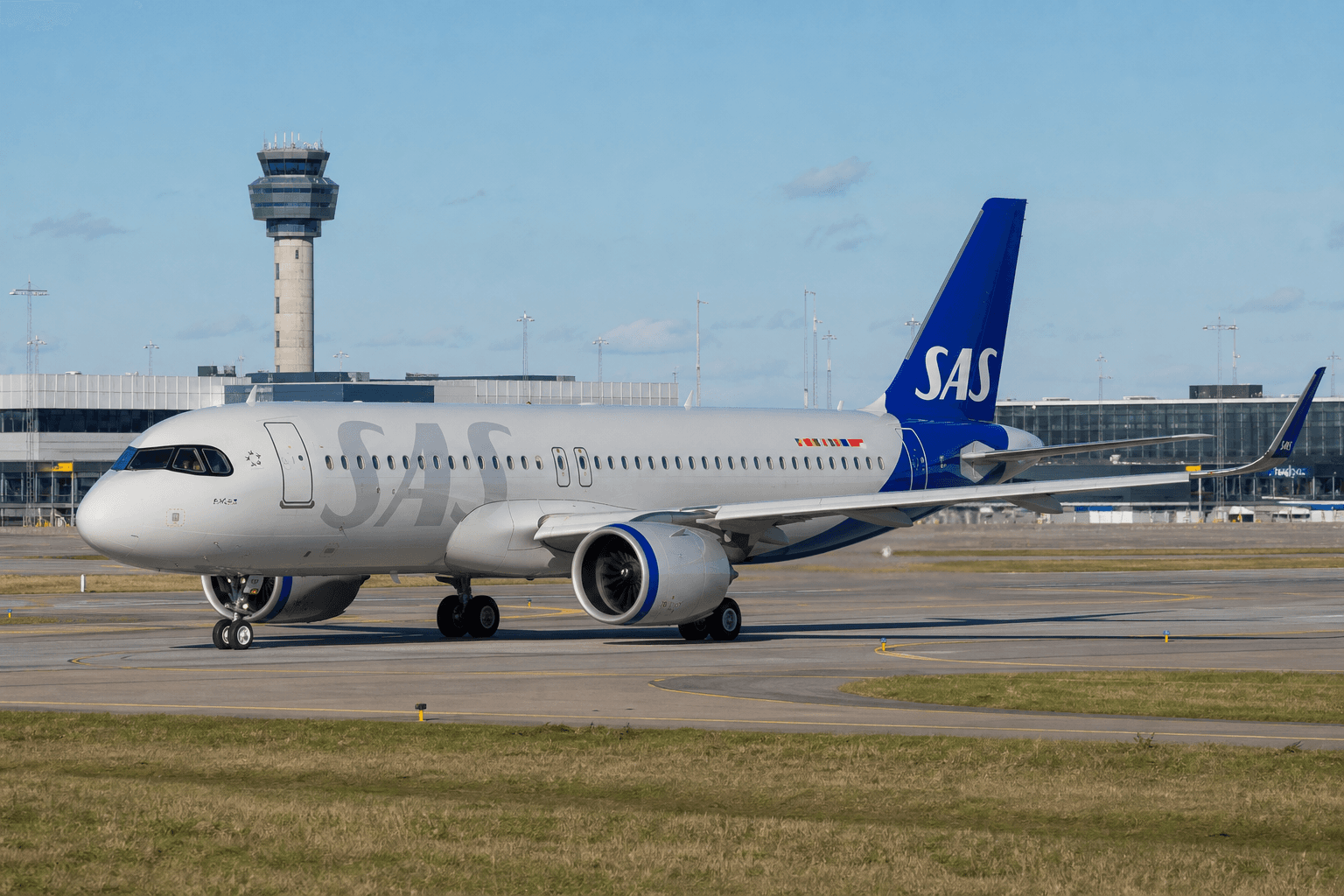
SAS Evolves With New SkyTeam Alliance And Modern Airbus Fleet
Scandinavian Airlines, better known simply as SAS , is the flag carrier of Denmark, Norway and Sweden. Founded shortly after the Second World War, it has grown into one of Europe’s longest-established airlines and remains one of the most recognisable carriers in Northern Europe. Following a major restructuring in the mid-2020s, SAS entered a new chapter in its history by joining the SkyTeam alliance and strengthening ties with Air France-KLM. Today the airline operates an almost all-Airbus jet fleet alongside regional turboprops, connecting Scandinavia with destinations across Europe, North America and Asia. Brief History of Scandinavian Airlines A historic photo of Bromma Airport. Credit SAS Museet. Scandinavian Airlines System (SAS) was officially founded on 1 August 1946 , when the national airlines of Denmark, Norway and Sweden combined their international operations into a single airline. The partnership allowed the three countries to compete more effectively on long-haul routes in the post-war era. During the 1950s and 1960s SAS became one of Europe’s most innovative airlines. It pioneered transpolar flights between Europe and North America via Greenland, helping reduce journey times, and later became one of the launch customers for the Douglas DC-8. The airline has operated many classic aircraft over the decades, including the Douglas DC-6, DC-7, DC-8, Caravelle, Douglas DC-9, Boeing 747, Boeing 767, McDonnell Douglas MD-80 and Boeing 737 Classic and Next Generation families. In more recent years SAS has become an almost entirely Airbus operator. Like many airlines, SAS faced severe financial difficulties during the COVID-19 pandemic. After entering Chapter 11 bankruptcy protection in the United States in 2022, the airline completed a major restructuring in 2024. This brought new investment from Air France-KLM, Castlelake, Lind Invest and the Danish government, while also ending SAS’ long membership of Star Alliance. On 1 September 2024 , SAS officially joined SkyTeam , marking one of the biggest alliance changes in recent aviation history. Current Bases and Operations Photo (c) SAS AB SAS operates from three primary Scandinavian hubs: Copenhagen (CPH) Stockholm Arlanda (ARN) Oslo Gardermoen (OSL) Among these, Copenhagen has become the airline’s principal international hub and continues to receive significant investment as SAS expands its long-haul network. The airline serves well over 100 destinations throughout Europe, together with intercontinental services to North America and Asia. Regional services are also operated through partner airlines and wet-leased aircraft, particularly within Sweden and Norway. Important and Notable Routes SAS has always been strongest on routes linking Scandinavia with the rest of Europe, but several long-haul services have become particularly significant. Among its busiest and best-known intercontinental routes are: Copenhagen – New York (JFK) Copenhagen – Chicago O’Hare Copenhagen – San Francisco Copenhagen – Seattle Copenhagen – Boston Oslo – New York Stockholm – Newark The airline also operates services to destinations including Tokyo and Shanghai, while Copenhagen remains the centre of almost all long-haul operations. Historically, SAS became famous for pioneering transpolar services over Greenland, establishing one of the fastest links between Europe and North America during the early jet age. Fleet Overview SAS A319 OY-KBT SAS has modernised its fleet considerably over the past decade and today operates one of Europe’s youngest Airbus fleets. Current Fleet (Last Update: July 2026) Aircraft Type In Service Airbus A319-100 4 Airbus A320neo 66 Airbus A321LR 3 Airbus A330-300 8 Airbus A350-900 4 ATR 72-600 6 Regional services are also operated by partner airlines using ATR 72s, CRJ900s and Embraer E195 aircraft under the SAS brand. Aircraft on Order 18 × Airbus A330-900neo (firm order) Additional long-haul aircraft remain under consideration as part of SAS’ fleet renewal programme. Airline Livery SAS introduced its current corporate identity in 2019 , replacing the classic dark blue cheatline that had been a familiar sight for decades. The new livery features a pale silver-grey fuselage with large dark blue SAS titles across the forward fuselage. The tail remains deep blue but now carries a simplified white SAS logo, while the engines are painted in matching blue. The overall design gives the airline a clean, modern Scandinavian appearance. However, enthusiasts should note that not every aircraft has yet been repainted . Several Airbus A320neo family aircraft continue to fly in the previous livery, making it possible to see both generations of SAS branding in service today. Special Liveries Unlike many airlines, SAS has generally preferred a consistent fleet appearance, although a handful of aircraft have carried promotional designs over the years. Occasionally, alliance branding and promotional decals also appear on individual aircraft. For example, this year Airbus A330 LN-RKR is wearing this special scheme marking the airline’s 80th anniversary. Airbus A319 OY-KBO is also in a special retro livery. Have you ever flown SAS? What do you think of the airline and its livery? Leave a comment below!
Frankfurt Airport Opens New Terminal 3 With Mixed Passenger Reviews
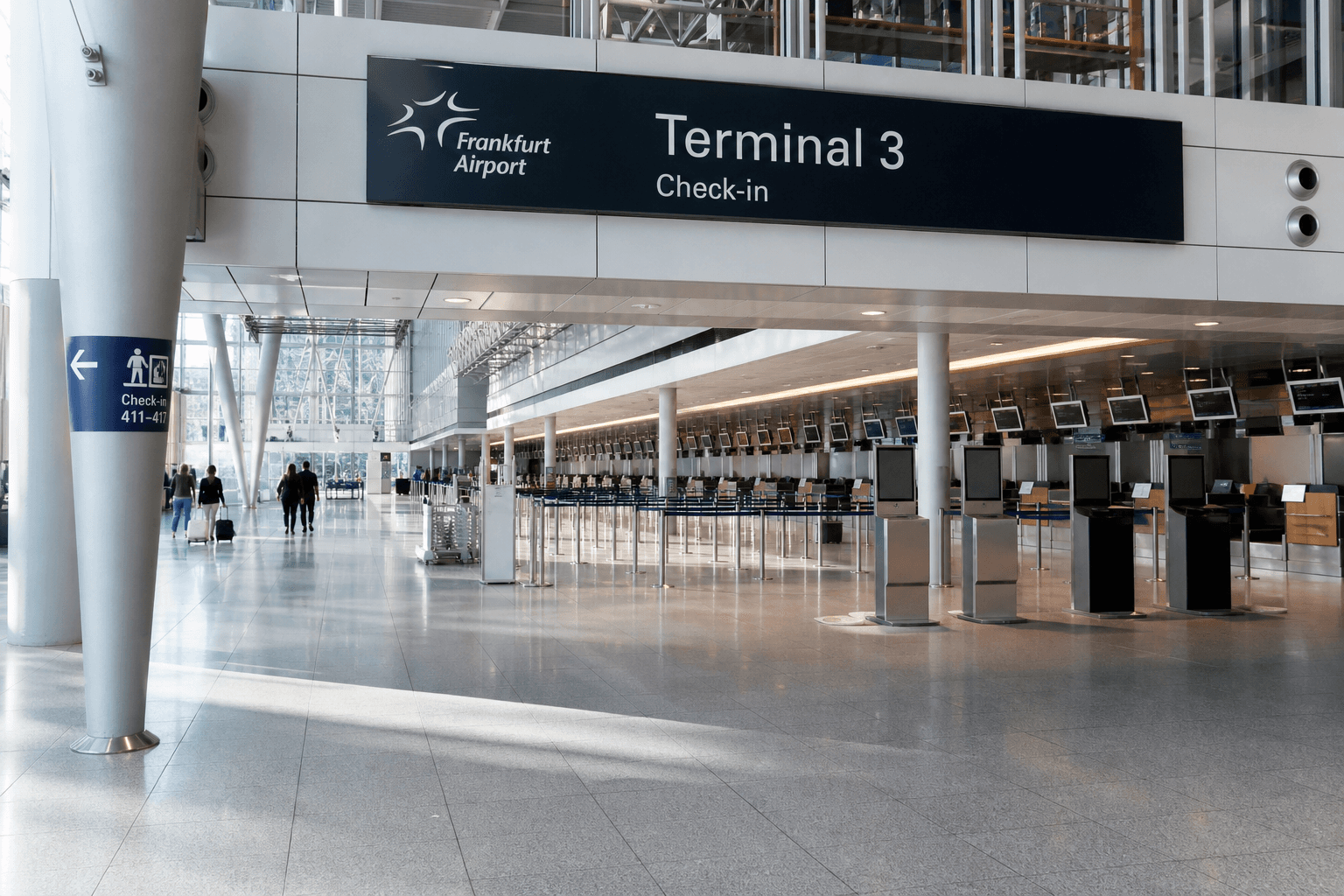
Frankfurt Airport (FRA) recently saw the opening of the new Terminal 3 . This is something I was excited about — Frankfurt is my most frequented international airport, since my family is from the area, so it's an airport I have a love-hate relationship with. I mean, Frankfurt Airport is kind of terrible, except the Lufthansa First Class Terminal , but there's a certain charm to all of it, maybe partly because of the extent to which it reminds me of my childhood . So I was pleased to see the recent opening of the airport's first new terminal since I was a toddler. During my current trip , I had the chance to fly out of Terminal 3, prior to my Turkmenistan Airlines flight to Ashgabat (ASB). While it was the flight I was most looking forward to (who wouldn't?!), getting to experience the new terminal was also cool to me. I've gotta say, among new terminals at global airports, this has to be one of the more unmemorable ones we've seen in quite some time. Ultimately it's modern (in a very sterile and minimalist way), but at least it's better than the old one? Will, minus the location… Frankfurt Airport Terminal 3: at least it's not Terminal 2? About the best thing I can say about the new Terminal 3 is that it's at least better than the old Terminal 2, which it replaces. In fairness, Terminal 2 was awful, so that's not saying a whole lot. The first thing you'll notice about Terminal 3 is what a pain it is to get to. It's located on the opposite side of the airport of Terminal 1. So if you arrive at the airport via train, you first have to take an additional roughly 10-minute SkyLine ride just to arrive at the terminal. While minor, can I just point out how "bumpy" and fast that little train thing moves? I can't imagine how many people are going to fall in this thing, given how much it bounces and how abruptly it accelerates, with everyone standing and holding onto their luggage. Frankfurt Airport Terminal 3 SkyLine directions Once I actually arrived in the terminal, I found the design to be… well, a mixed bag. On the plus side, the terminal has high ceilings and feels rather "grand" in some areas. At the same time, the design is very minimalist. Like, most of the terminal has an exposed view into wiring and all the equipment above the ceiling. Frankfurt Airport Terminal 3 design Frankfurt Airport Terminal 3 arrivals area The check-in area is one, large rectangular hall, and then the security checkpoints are just beyond that. Frankfurt Airport Terminal 3 check-in hall Frankfurt Airport Terminal 3 check-in hall Once airside, the central area that connects the piers has nice aesthetics, though also lacks natural light (probably a blessing in Frankfurt, so that you can not be reminded of how bad the weather is). Frankfurt Airport Terminal 3 airside Frankfurt Airport Terminal 3 airside Gates then extend out to a few different piers, each of which are just long, straight halls. Admittedly I departed from the last possible gate, but it was quite a long walk to get there. While there are moving sidewalks, there are big gaps between them. To be clear, I love walking and don't mind getting steps, but for those who have any sort of mobility challenges, getting to your gate is quite the adventure, especially if you were originating at the train station. I suppose that's true in Terminal 1 as well, though. 😉 Frankfurt Airport Terminal 3 airside gates Frankfurt Airport Terminal 3 airside gates Frankfurt Airport Terminal 3 airside gates The actual central walkway to gates lacks natural light and is fairly narrow, and that's because there are businesses and other facilities on each side. Then the actual gate seating is past that, and it's where you'll find floor-to-ceiling windows. Frankfurt Airport Terminal 3 gate seating What's also worth pointing out is that Lufthansa doesn't use this terminal, so there's very little connecting traffic here. As a result, the passenger flows are very different than in Terminal 1, since most travelers are moving in one direction. The Frankfurt Airport Terminal 3 lounge situation is decent Perhaps the best part of the new Frankfurt Terminal 3 is the lounge situation. I was only able to visit the Priority Lounge, which is the non-Schengen contract and Priority Pass lounge. It's nothing earth shattering, but it's much better than in the old Terminal 2. Frankfurt Airport Terminal 3 Priority Lounge seating The lounge has incredible views, and is quite large, with a whole room in the back that nobody seems to know exists. Frankfurt Airport Terminal 3 Priority Lounge seating Frankfurt Airport Terminal 3 Priority Lounge views Then Emirates also debuted its new lounge concept at the airport, and Qatar Airways is expected to soon open two lounges in the terminal, which will be fantastic for oneworld flyers. So from a passenger experience standpoint, I think that's the most exciting aspect of this new terminal. The Terminal 2 lounge situation was getting to be pretty dire. Bottom line Frankfurt Airport's new Terminal 3 is finally open, and I had the chance to check it out. The new terminal is an improvement over the old Terminal 2 in terms of design, capacity, and facilities. The catch is that it's inconvenient to get to (for most), and it's also rather unremarkable in terms of design. Ultimately there's nothing wrong with that. Heck, for Germany, I guess it's kind of predictable, as my impression of the new (at the time) Berlin Brandenburg Airport (BER) was largely similar. It's just that we see so many airports go for a "wow" factor with their new terminals — just take Portland Airport (PDX) as an example — so this is quite unexciting, by comparison. What do you make of the new FRA Terminal 3?
Kalshi Shelves Airport Flight Cancellation Betting Amid Insider Trading Concerns
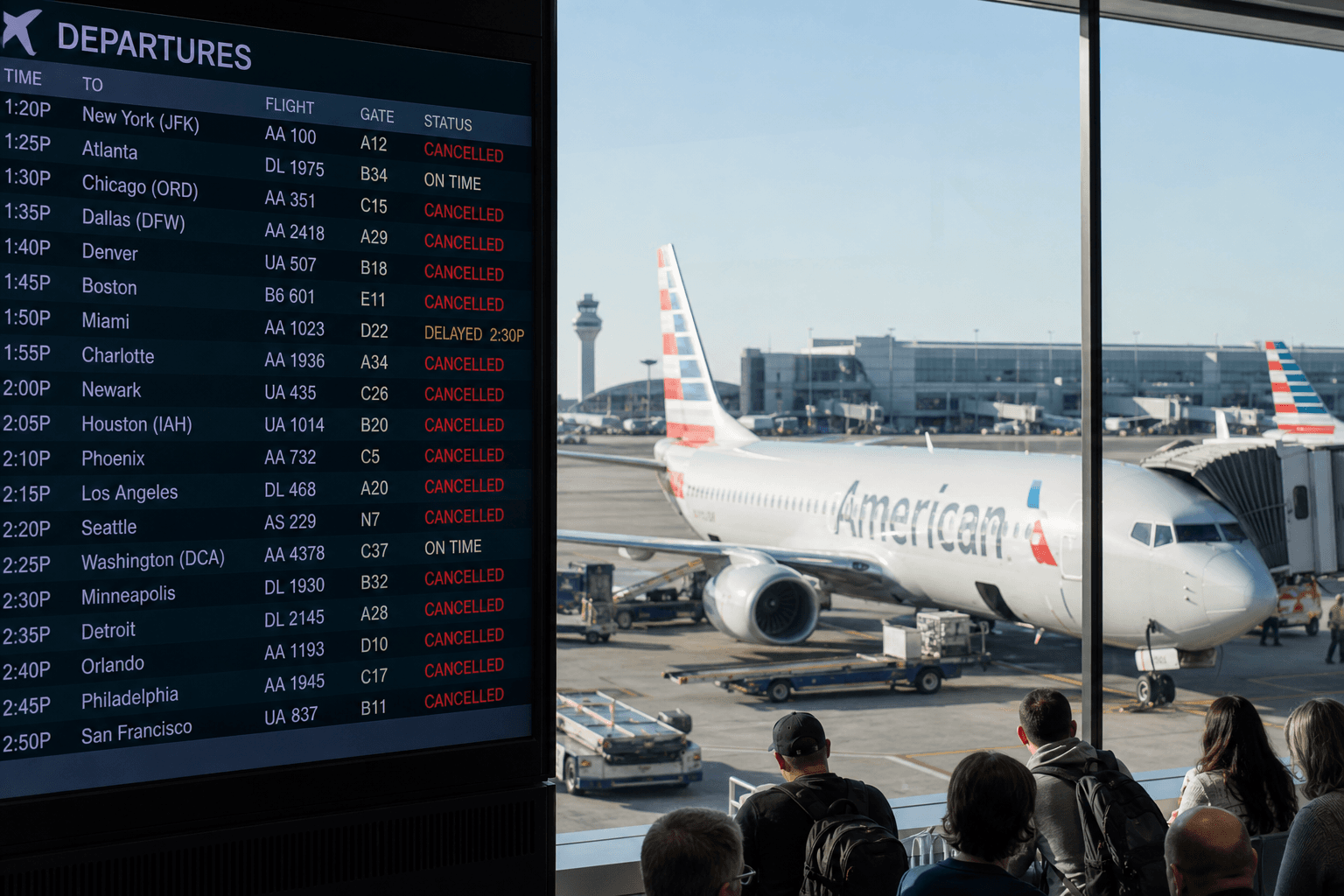
Kalshi backed away from airport-specific flight-cancellation markets after concerns that airline employees could possess inside information or influence the outcome. But Coinbase already offers these bets, raising questions about manipulation, data integrity and what happens when insiders can wager on operational decisions they help make.
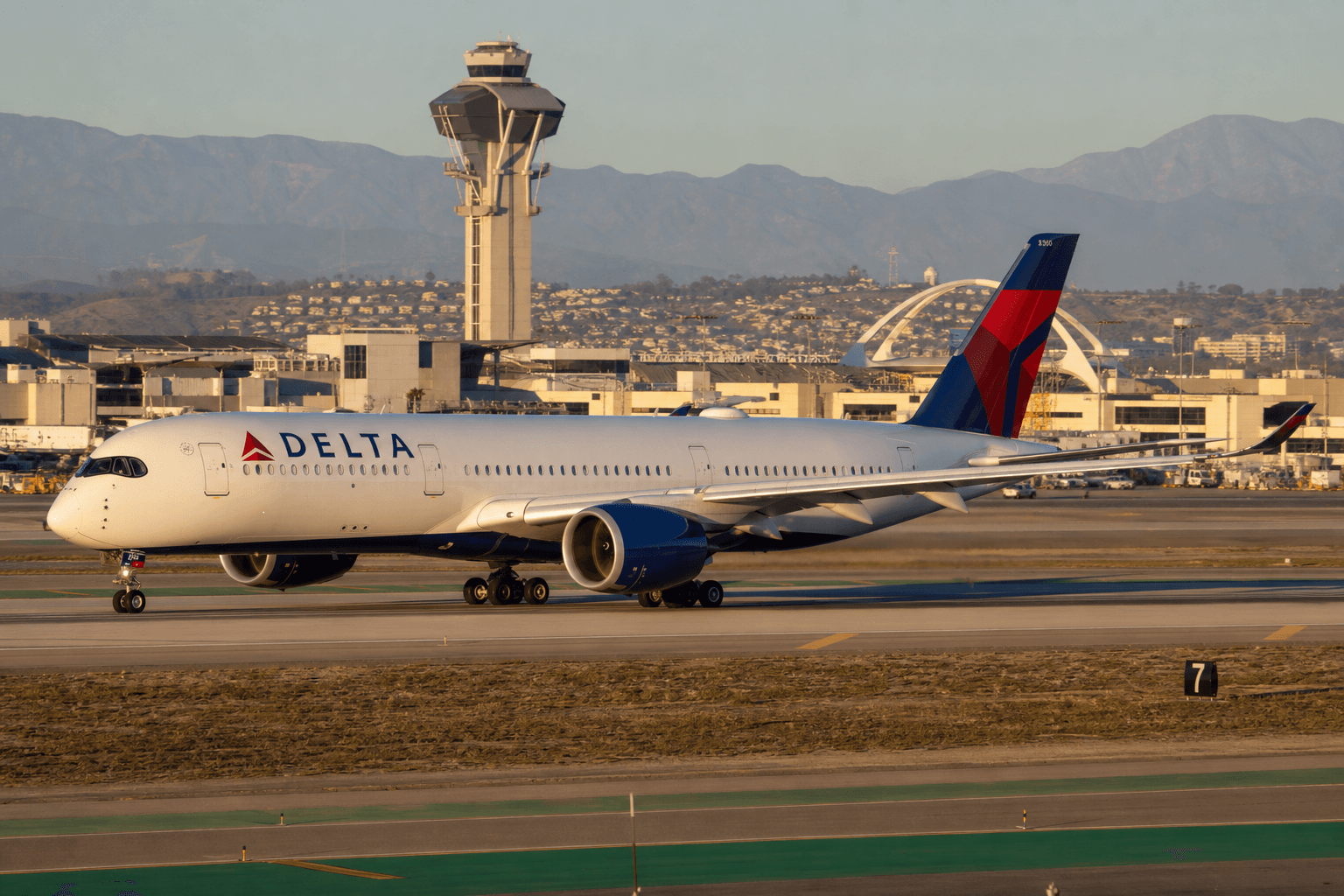
Delta Air Lines Launches First US Nonstop Flights Between Los Angeles and Manila in 2027
Atlanta-based Delta Air Lines is doubling down on its Los Angeles stronghold even further with a new long-haul route. The legacy airline announced on Friday that it will launch new nonstop flights to the Philippines next year – a journey that has never before been operated by a US-based carrier.
The Daily Touch & Go
The day's best aviation news in your inbox. Free, no spam.