

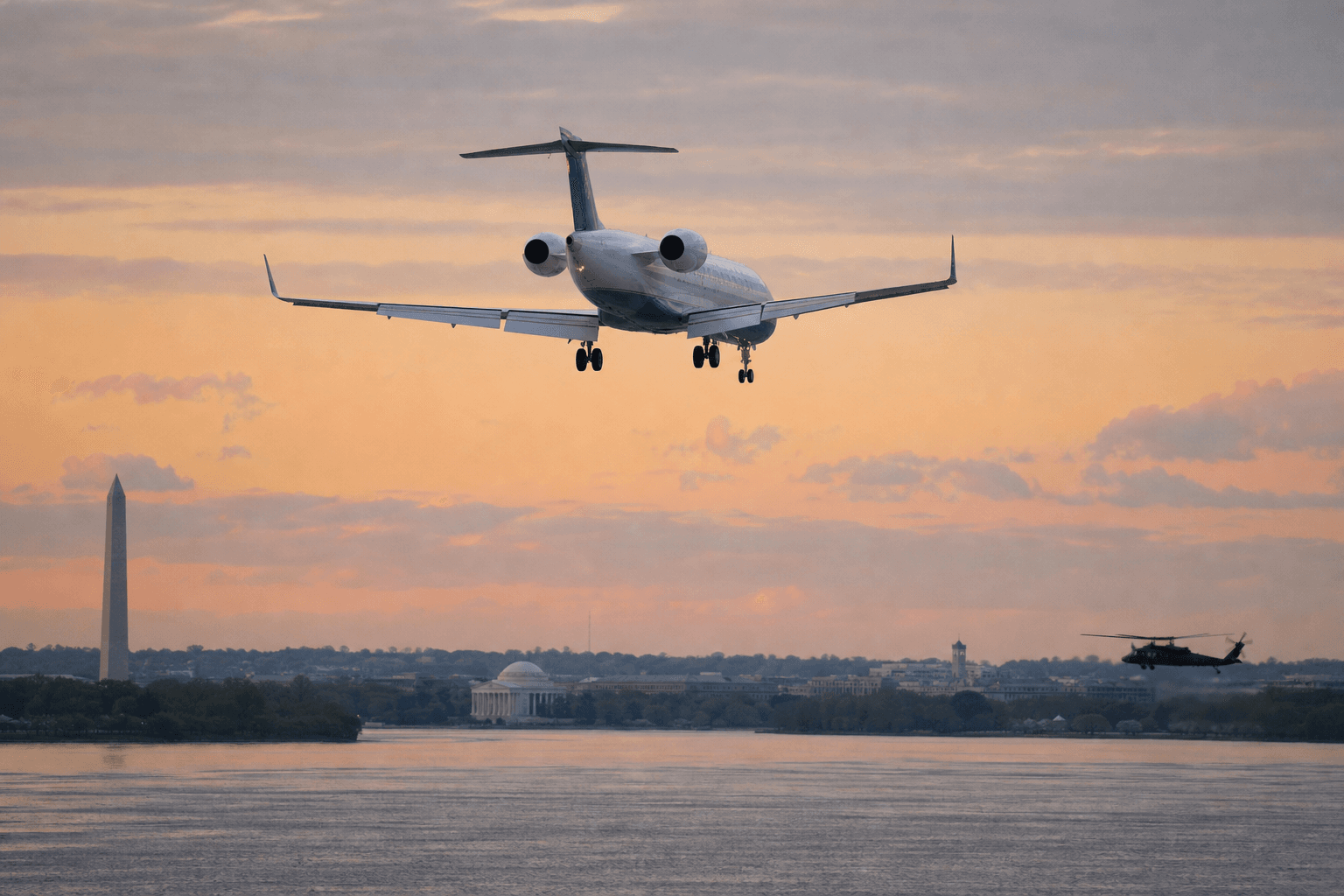
AI-generated illustration
Safety Gaps Persist at Reagan National Nearly Two Years After Midair Collision, Academies Find
A congressionally requested National Academies report says the FAA and Army still fall short on spotting and managing collision risk at KDCA and urges a safety review before any more flights are added.
The gist
National Academies says FAA and Army fixes after the 67-fatality DCA collision are not enough and calls for a safety cap review before adding flights.
Continuing coverage
All Faa →- Paragon Flight Training Wins First FAA Authorization to Give Check Rides to Outside Students
- American Airlines 737 Carrying Senator Ashley Moody Shuts Down Engine, Diverts to Orlando
- Lawmakers Strike Deal to Require ADS-B In on Civil Aircraft After Potomac Midair Collision
- UPS 767 and Copa 737 Collide on Intersecting Taxiways at Miami International
- United's Kirby Calls ATC Meltdown a Call to Action as JetBlue and American Absorb the Most Cancellations
Some of the hazards that the FAA and U.S. Army failed to properly assess before the January 2025 midair collision near Ronald Reagan Washington National Airport (KDCA) are still present almost two years later, the National Academies of Sciences, Engineering, and Medicine (NASEM) said in a report released Wednesday. The collision involved an Army Black Hawk helicopter and American Airlines Flight 5342, which was on approach to Runway 33 when its path crossed the airport's helicopter Route 4. Sixty-seven people died. Congress asked NASEM to examine the persistent safety gaps that preceded the crash, and the U.S. Transportation Department sponsored the work. The report carries recommendations for both the FAA and the Army.
The committee concluded that the changes made or proposed since the accident, covering helicopter operations, separation procedures, traffic management, training and safety-information sharing, do not go far enough. In its view, the open question is whether the FAA and the Army can spot emerging risks, act on safety concerns that span more than one organization, and prove that their measures actually lower risk. James P. Bagian, who chaired the committee, said in a news release that the collision exposed weaknesses in how risks were identified, assessed and managed both before and after the accident. He said safety management cannot work in isolated silos that lean mainly on compliance audits without asking why a problem arose or could arise. The report also asks Congress to require a safety and capacity assessment before any further increase in flights allowed at KDCA.
NASEM faulted the FAA for a reactive approach at National. The agency concentrated on correcting procedural noncompliance rather than understanding the conditions that let hazards build, the report said. It pointed to a 2013 near midair collision at the same location and involving similar aircraft types as the fatal 2025 crash. According to the committee, that event should have prompted a lasting, system-level causal analysis of why it happened and whether it could happen again.
After the 2013 near miss, an informal helicopter working group recommended moving Route 4 away from the Runway 33 approach. Pilots and controllers also raised concerns at the time about the risk of collisions between helicopters and fixed-wing aircraft. The FAA did not eliminate Route 4 until after the 2025 accident. The report said the Air Traffic Organization's Safety and Technical Training team held data that would have shown how often close calls occurred where Route 4 met the circling approach to Runway 33. The NTSB has identified 85 close calls between helicopters and airplanes near the airport from October 2021 through December 2024.
The FAA relied on a range of controls to manage midair collision risk around the airport, but NASEM said none of them removed the basic geometric conflict: Route 4 intersected the paths flown by aircraft landing on Runway 33. The committee recommended stronger safety management practices along with clearer helicopter guidance and air traffic control procedures. It also urged the FAA to set sub-hourly scheduling limits at KDCA based on the maximum concentration of arrivals and departures that the runway, terminal airspace and controller workforce can safely and reliably handle. According to the report, existing safety assessments have not accounted for the combined effects of shifting airline schedules, aircraft fleets and traffic patterns on controller and pilot workload.
The Army drew its own set of recommendations. NASEM said the service did not list a midair collision with civilian aircraft as a preflight hazard for the accident helicopter. The committee said the Army should improve preflight risk assessments and pilot training for flying in the National Capital Region. It also called for closer coordination between the Army and the FAA on potential safety risks.
The report examined the limits of current collision-avoidance systems and the shortage of helicopters equipped to warn pilots of an impending collision. The NTSB has said wider ADS-B equipage could have given the crews enough warning to avoid the 2025 crash. This week, Senate Commerce Committee Chairman Ted Cruz, a Texas Republican, said Congress is very close to finalizing legislation that would expand the use of ADS-B. NASEM is also preparing a second report covering close-call records involving military aircraft, civil-military coordination and aviation safety management practices, among other topics.
Originally reported by Aviation Safety Magazine
Read more
All Aviation Safety →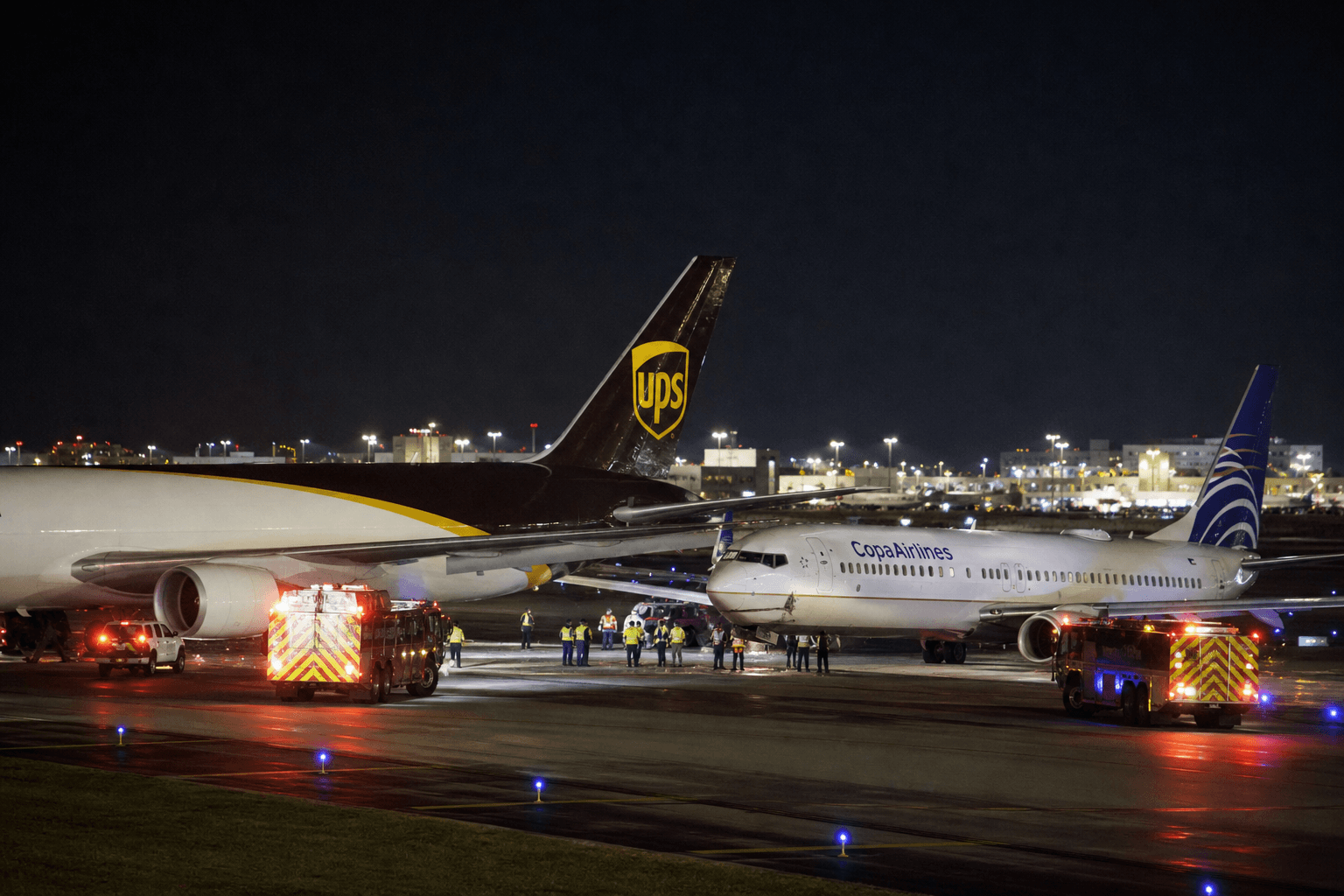
UPS 767 and Copa 737 Collide on Intersecting Taxiways at Miami International
A Copa Airlines 737-800 arriving from Panama City clipped the nose of a departing UPS 767 with its left wing Saturday night, leaving two people with minor injuries.
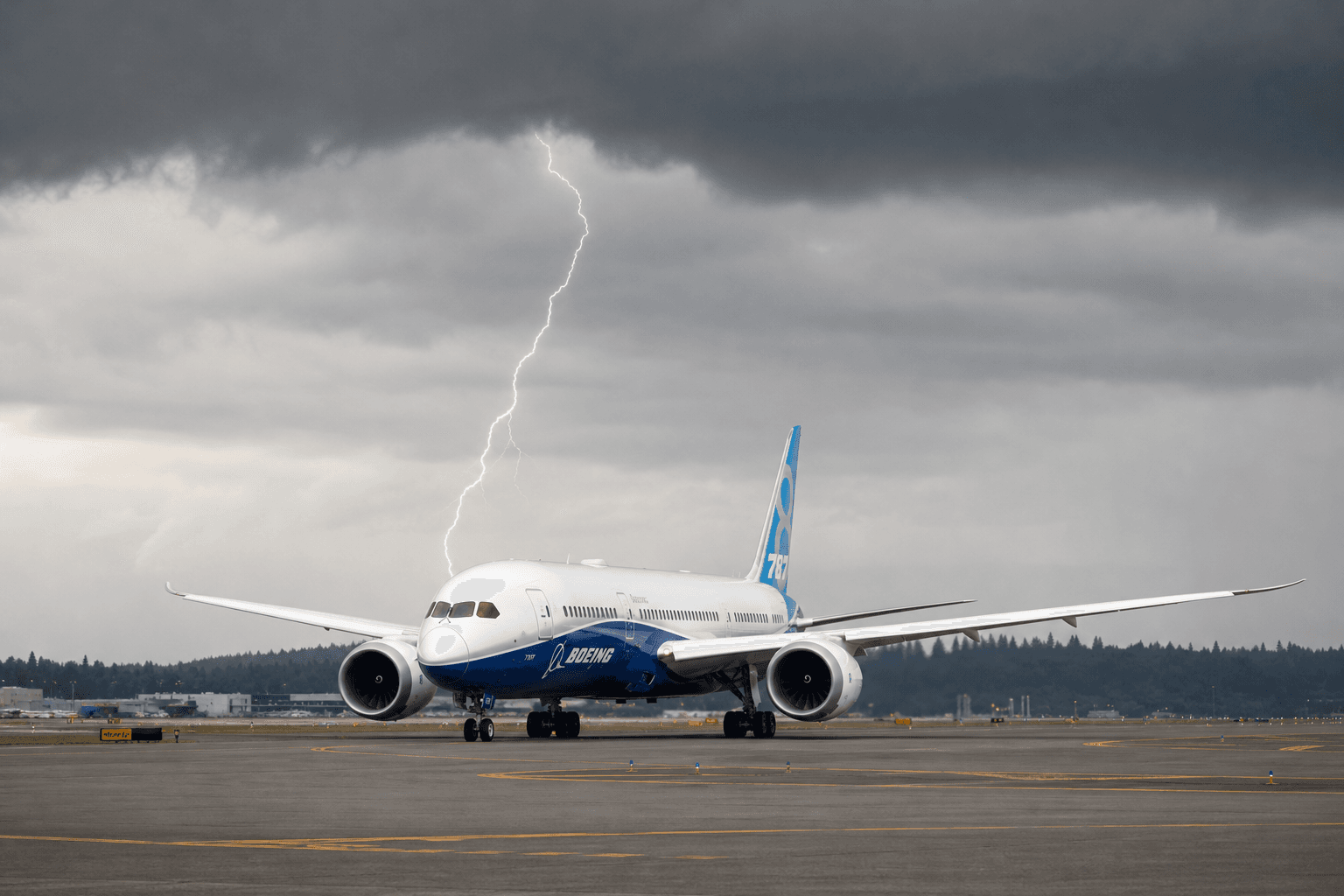
FAA Orders Inspections of 60 US Boeing 787s Over Fuel Tank Sealant Defects Linked to Lightning Risk
A new airworthiness directive targets specific 787-8, 787-9 and 787-10 Dreamliners whose fuel tank sealant flaws could let a lightning strike produce an ignition spark.

FAA Issues Second Ever Nationwide Ground Stop After ARTCC Communication Failure
FAA halts departures at all U.S. airports due to communication issues affecting Air Route Traffic Control Centers, with technicians investigating the cause.
UK Tells Travellers to Dubai and Gulf to Keep Departure Plans Under Review After Iranian Drone Strikes
The Foreign Office reissued its Middle East warning after Iranian drones targeted U.S. bases in Kuwait and Bahrain, telling Britons, including transit passengers at Dubai, to expect cancellations and airspace closures.
The Daily Touch & Go
The day's best aviation news in your inbox. Free, no spam.