


Image: San Diego Air & Space Museum · Public domain · via Wikimedia Commons
Federal Judge Approves Class Action for Delta Pilots Denied Paid Military Leave
A federal judge has allowed a class action lawsuit against Delta Air Lines to proceed, alleging the airline denied paid leave to pilots during short-term military deployments.
The gist
Delta pilots can now pursue a class action claiming unpaid leave for short military service, escalating a longstanding legal dispute.
Continuing coverage
All Delta Air Lines →- Delta Pilots End Scheduling Talks, Complicating Efforts to Fix Rising Flight Cancellations
- US Citizen Detained by ICE at Delta Gate Due to Mistaken Identity
- Delta to Launch Nonstop Austin-Paris Flight in Summer 2027 Alongside Austin-San Diego Service
- Delta Flight from Las Vegas Faces Inflight Wi-Fi Scam After DEF CON
- Delta Flight 2204 Returns to Atlanta After Cockpit Fumes, Evacuates Passengers Safely
A federal judge in Georgia has authorized a class action lawsuit brought by current and former Delta Air Lines pilots who claim the carrier denied them paid leave for short-term military deployments. The ruling, issued August 7 by Judge Sarah Geraghty of the Northern District of Georgia, paves the way for thousands of Delta pilots who have served in the US military or reserves over the last 20 years to collectively pursue claims. This legal development centers on whether Delta violated the Uniformed Services Employment and Reemployment Rights Act (USERRA), which protects the civilian job rights of military service members.
The lawsuit, initially filed in 2021 by pilots Patrick Haley, Randal Reep, and Benjamin Best, alleges that Delta discriminated against pilots for their military service by requiring unpaid leave for deployments of under 30 days. Delta’s policy contrasts with its paid leave provisions for other short-term absences such as bereavement, sick leave, or jury duty. Under the Pilot Working Agreement (PWA), a collective bargaining contract between Delta and its pilots’ union, various short-term absences receive compensation — but short-term military leave does not.
Delta Air Lines has opposed the certification of the class action, arguing that calculating damages for individual pilots would be administratively impractical given the variability of their military leave. Judge Geraghty rejected this argument, emphasizing that the key legal question is whether Delta’s uniform leave policy violates federal law. She noted that a jury can use common evidence to compare short-term military leave to other forms of paid leave, examining factors such as the leave’s purpose, employee control, and typical duration.
Delta employs nearly 18,000 active pilots, making this lawsuit potentially significant for the airline and its workforce. The Air Line Pilots Association (ALPA) estimates the number at 17,281 pilots. Delta operates over 5,000 daily flights to around 300 destinations worldwide, with its largest hub at Hartsfield-Jackson Atlanta International Airport where it commands nearly 80% market share. The longstanding relationship between Delta and its pilots dates back to 1934, reinforcing the importance of the Pilot Working Agreement.
USERRA, enforced by the U.S. Department of Labor, aims to prevent employment discrimination against those who leave civilian jobs for military service and guarantees reemployment rights. The lawsuit’s claim is that Delta’s differential treatment of short-term military leave compared to other paid leaves contravenes this federal law. If the jury finds in favor of the pilots, it could have widespread implications for military leave policies within Delta and possibly the broader airline industry.
The court’s class certification decision means that individual pilots no longer need to file separate lawsuits; instead, they can pursue their claims jointly, expanding the scope and potential financial impact. No trial date has yet been set, and the case could move toward a trial or out-of-court settlement. The ruling does not establish guilt but clears a major procedural hurdle for the plaintiffs.
Delta, one of the United States’ largest airlines and a founding member of the SkyTeam alliance, faces a pivotal moment in resolving this dispute. The outcome will determine if the current leave policy changes or if compensation is owed to pilots who performed military service without paid leave. This lawsuit highlights the interaction between federal labor protections and airline employment policies, areas frequently subject to complex negotiations and legal scrutiny.
Frequently asked questions
- What is the main legal issue in the lawsuit against Delta Air Lines?
- The lawsuit alleges Delta violated the Uniformed Services Employment and Reemployment Rights Act by denying paid leave for short-term military deployments under 30 days, while providing paid leave for other short personal absences.
- How many pilots could be affected by the class action lawsuit?
- Nearly 18,000 active Delta pilots could be affected, as the lawsuit includes thousands of current and former pilots who have performed US military or reserve service over the past two decades.
- What did the judge decide about Delta's argument on calculating damages?
- The federal judge rejected Delta's claim that calculating individual damages for each pilot is impractical, allowing the class action to proceed based on common evidence comparing military leave to other paid leave types.
Read more
All Military/Defense →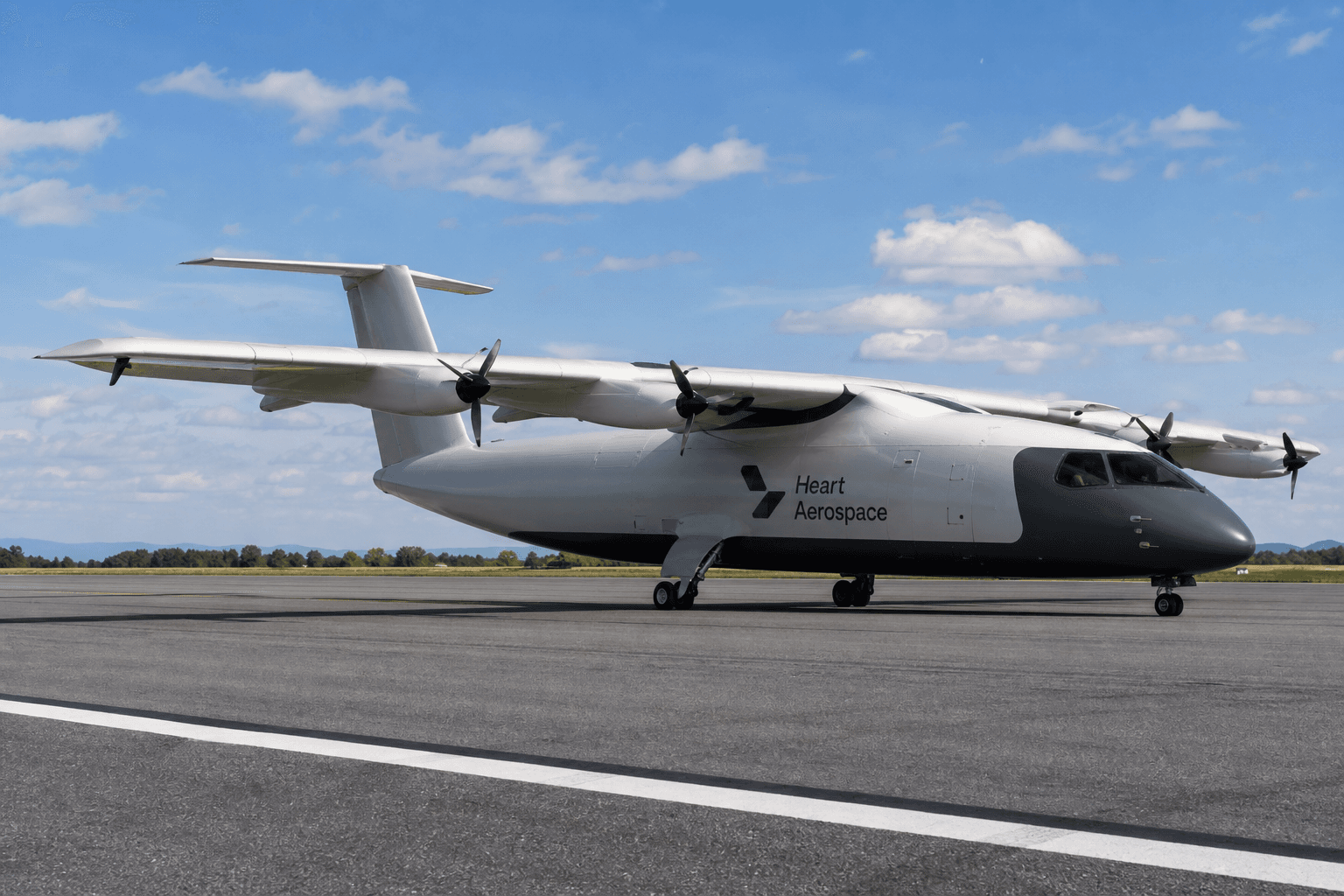
Heart Aerospace's X1 Achieves Historic First Flight as Largest Battery-Electric Plane
The largest battery-electric, fixed-wing aircraft in history made its debut flight this week, marking the start of a test campaign to validate a planned, 30-seat, hybrid-electric airliner. Los Angeles-based Heart Aerospace said Thursday that its X1 demonstrator, a precursor to its flagship ES-30, flew out of Plattsburgh International Airport (KPBG)—the company's flight testing base in upstate New York—on all-electric battery propulsion. Heart said the X1 is the largest aircraft of its kind, by both wingspan and takeoff weight, to achieve first flight. The X1 weighs more than 25,000 pounds at takeoff and has a 106-foot wingspan, with a nose-to-tail length of 76 feet. FLYING could not verify any battery-electric aircraft that have flown with a heavier takeoff weight or longer wingspan. Heart believes the X1 may also be the largest battery-electric model to fly by volume, but it could not say so definitively. The Swedish Solar Impulse project's all-electric Solar Impulse II had a wingspan longer than 200 feet, but it derived power from a combination of batteries and solar energy. Eviation's Alice demonstrator, which completed a nine-minute test flight in 2022, appears to be the next-largest in the all-electric category. Alice had a 63-foot wingspan and maximum takeoff weight (MTOW) of about 16,500 pounds, powered by MagniX's Magni650 electric engines. After minimal flight activity over the following years, Alice in 2024 underwent a redesign, and Eviation in early 2025 laid off most of its staff , placing the project on an indefinite hold. MagniX itself has flown an all-electric Cessna 208B Caravan powered by its Magni500 engine, which it is no longer developing. The company's Magni650 has a dry weight of 317 pounds, which combined with the Caravan's MTOW would give the retrofit a total MTOW of 8,317 pounds. Heart originally planned to fly the X1 by mid-2025, but delays have pushed the company's certification target for the ES-30 from 2028 to 2031 . Most developers of all-electric aircraft are targeting between four and nine seats or are designing models for cargo rather than passenger operations. A cockpit mock-up was installed aboard Heart Aerospace's X1 demonstrator aircraft for its rollout. [Credit: Heart Aerospace] Due to lengthy development and certification timelines, several firms originally focused on fielding all-electric passenger airliners have switched to hybrid propulsion systems, pivoted to defense applications, scaled back their workforces, or even gone bankrupt. SkyWest took a hit in June with the bankruptcy of Maeve Aerospace . The carrier was the exclusive launch customer for the manufacturer's hybrid-electric, 76-100-passenger Maeve Jet, and it invested in Maeve as part of its fleet replacement strategy. However, some airlines continue to bet on all-electric aviation. United Airlines is Heart's largest customer, having placed an order for 100 of the manufacturer's earlier ES-19 model that it later converted to the ES-30. Michael Leskinen, United's chief financial officer, reiterated the company's commitment this week. "Electric commercial aircraft have real potential to deliver a better travel experience for passengers while strengthening our business, and we look forward to Heart's continued development of the ES-30 and its potential future role in United's network," Leskinen said in a statement accompanying Heart's announcement . Other ES-30 customers include Mesa Air Group, Air Canada, JSX, Loganair, and Scandinavian Airlines, though many have only signed letters of intent to place orders. New York, one of the 26 states chosen for the FAA's eVTOL (electric vertical takeoff and landing) Integration Pilot Program (eIPP), is soon expected to host more flights of electric, autonomous, and other novel aircraft. All-Electric Debut Leaders in the nascent electric and hybrid-electric aircraft industries echoed Leskinen's bullishness on the ES-30 following the X1's debut. "A fantastic milestone for electric regional aviation," Evio, which is developing a hybrid-electric airliner for up to 100 passengers, wrote in response to Heart's post on LinkedIn . "Congratulations to the Heart Aerospace team on your first flight! Looking forward to seeing the continued progress across our industry." Rob Wolleswinkel, co-CEO of Elysian Aircraft—a Dutch company developing a larger, all-electric regional airliner—wrote, "Congratulations! Really impressive! A big step for Heart and the whole industry." The flight received similar praise from leaders of competitors Noemi and Vaeridion. Plattsburgh International Airport's 11,750-foot runway—one of the largest in the U.S. Northeast—made it an ideal locale for the debut of a novel aircraft. Heart Aerospace's X1 demonstrator aircraft lines up on Plattsburgh International's Runway 35. [Credit: Heart Aerospace] The X1 took off from the runway and soared over nearby Lake Champlain, reaching a top altitude of 1,100 feet agl. The sortie lasted about 27 minutes and was conducted under an FAA Special Airworthiness Certificate in the Experimental Category (SAC-EC) awarded in July. Heart said the test profile was intended to demonstrate "scale relevant to commercial airline operations." "Electric commercial aircraft have the potential to fundamentally reshape airline economics and, ultimately, lower the cost of air travel for passengers," said Anders Forslund, founder and CEO of Heart. The ES-30 is designed to reduce operating costs by more than 40 percent. Heart said Thursday that the X1's debut flight used only $5 worth of energy during a period where the average price for a gallon of jet fuel is north of $3.80, per the Argus U.S. Jet Fuel Index . That figure was closer to $2 in August 2025. For comparison, Beta Technologies—which also conducts testing in Plattsburgh—said its 45-minute flight into John F. Kennedy International Airport (KJFK) last year cost about $7. The X1 is designed for a single pilot to fly up to 140 knots and 2,000 feet agl. It integrates electric propulsion, batteries, power electronics, flight controls, and avionics systems, as well as a 30-seat cabin mockup. Propulsion comes from four wing-mounted motors. The demonstrator uses a provisional version of the "independent hybrid" propulsion system intended to power the ES-30, comprising a pair of commercial turboprops installed on the wing and two inboard electric motors. It intends to demonstrate the full system using the X2, a planned preproduction prototype. The X1 is designed to be representative of Heart's fixed-wing, 30-seat, Part 25 hybrid-electric airliner. The ES-30 will use simpler, lower-cost electric propulsion and flight systems, as well as an integrated electronics and software architecture designed to improve uptime. "Heart foresees this cost advantage widening over time through advances in battery technology, technology-enabled gains in crew efficiency, and the ES-30's low exposure to a growing range of emissions-related aviation taxes and fees worldwide," the company wrote in its announcement. The ES-30 has a projected range of 125 miles in all-electric mode or 500 miles in hybrid configuration, with charge time estimated at 30 minutes.
World's Stealth Fighter Landscape in 2026 Divided Between F-35 Allies and Sino-Russian Blocks
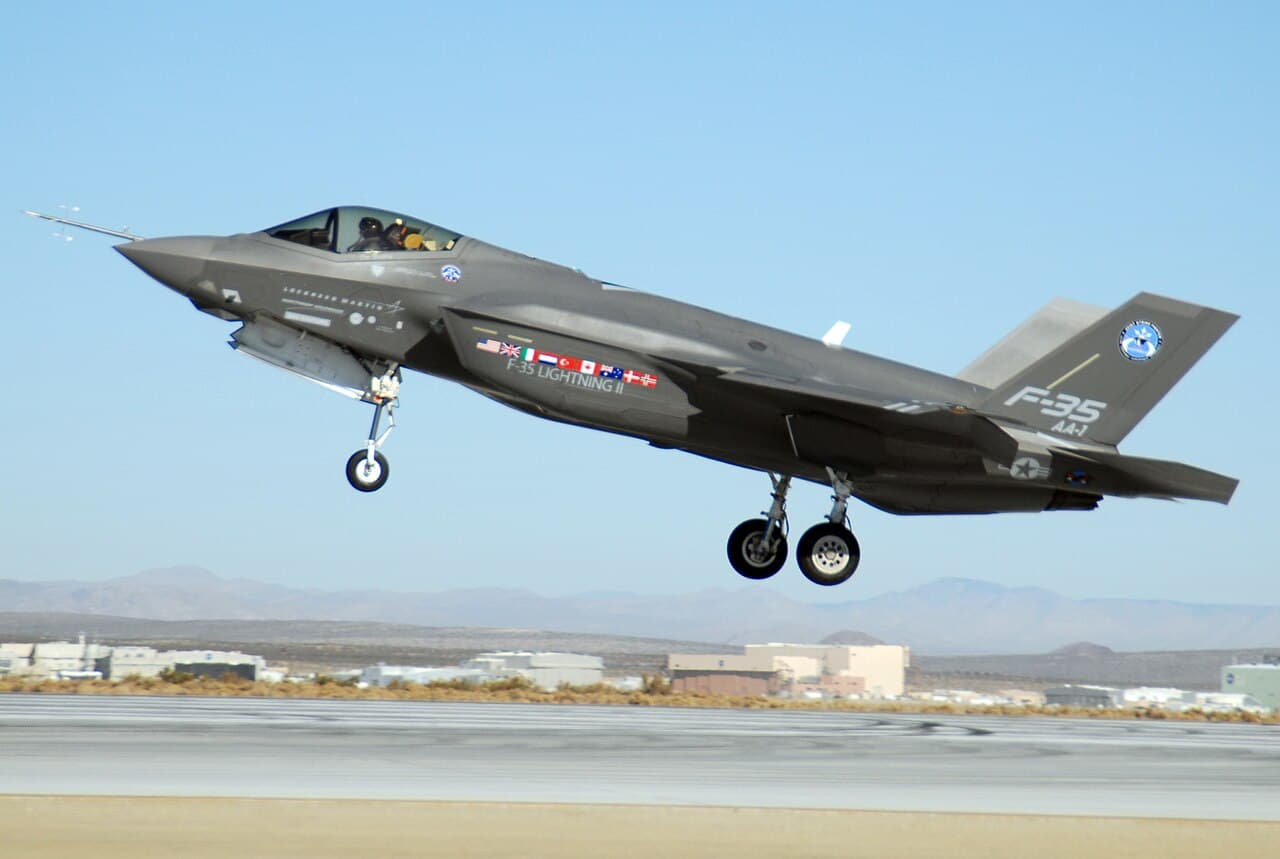
According to TheWorldData's 2026 F-35 statistics roundup , the global Lockheed Martin F-35 fleet has already passed 1,300 aircraft delivered across 17 or more nations, dwarfing every other stealth fighter program combined. Everyone else on Earth flying stealth fighter jets in 2026, such as China, Russia, and their allies, is flying something else entirely, built by a different country, sold under different rules, and answering to a different set of allies.
Northrop Grumman opens Florida engineering hub for Navy's next-gen carrier fighter
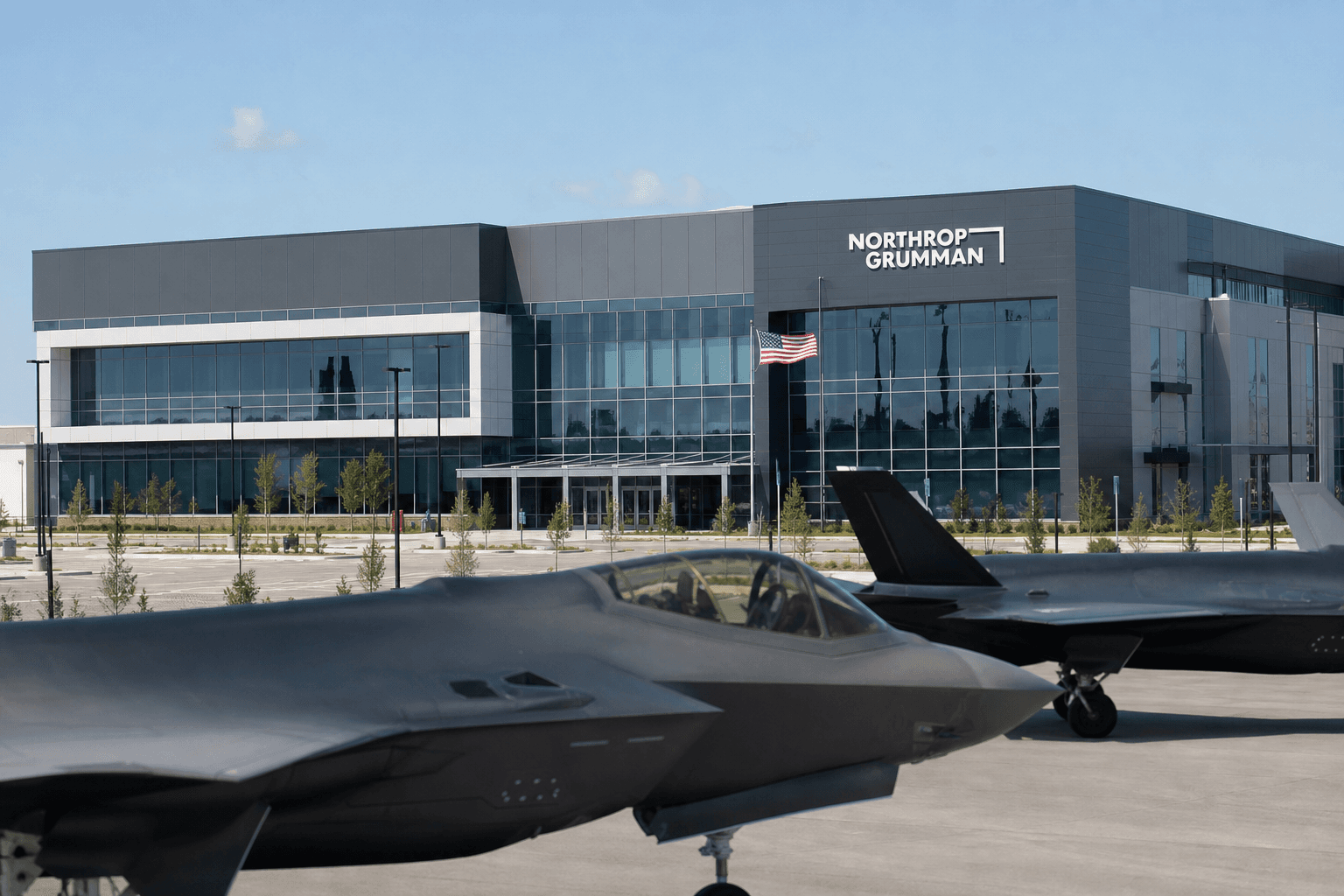
The defence contractor is vying to build the US Navy’s sixth-generation F/A-XX carrier-based fighter. Northrop Grumman has opened a new factory in Florida aimed at supporting the design and production of a sixth-generation aircraft. The defence manufacturer’s 27,870sq m (300,000sq ft) engineering facility is situated within Northrop’s broader hub in Melbourne, Florida. It will house space for 1,200 engineers and 17 secure laboratories dedicated to advanced aircraft design, Northrop says. Northrop unveiled the new site in early August. “This facility reinforces Melbourne as the epicentre of sixth-generation aircraft,” says Tom Jones, president of Northrop Grumman’s aeronautics division. “Between these walls in just a few months, we will have cutting-edge labs and hundreds of skilled engineers coming together in a world-class facility,” he adds. “This is what momentum looks like.” Northrop is one of two aircraft manufacturers still competing to build the US Navy’s future carrier-based sixth-generation fighter jet. Officially called the Next Generation Fighter, the programme is colloquially known as F/A-XX and is intended to deliver a successor to the more than 470 Boeing F/A-18E/F Super Hornets in the US Navy inventory. In April, Northrop shared a rendering of what an F/A-XX fighter might look like, including a tailless design and low-profile recessed air intakes located dorsally on either side of the fuselage centreline – similar in position to the air intakes featured on Northrop's B-2 and B-21 stealth bombers. Northrop Grumman released a rendering of a potential carrier-based sixth-generation fighter earlier this year. Credit: Northrop Grumman Boeing is the other finalist competing against Northrop for the secretive contract after a proposal from Lockheed Martin was rejected by the Navy in 2025. Both companies have a strong position. Boeing is hard at work on the US Air Force’s F-47 sixth-generation fighter, with flight testing scheduled to begin in 2028. Meanwhile, Northrop is actively assembling B-21 stealth bombers for the air force, with at least two early models already flying and delivery of operational aircraft expected in 2027. Industrial capacity is a major consideration in the respective programmes and was likely a driver behind Northrop’s build-out of the new sixth-generation engineering facility. Boeing successfully gambled that investing in a new factory built to assemble highly classified advanced combat aircraft would help it secure the F-47 contract. The company spent nearly $2 billion to develop such a facility at its St. Louis, Missouri fighter production campus, even before it had secured the F-47 win in March 2025. Construction on that 102,000sq m facility began in 2024 and remains ongoing. During a 2024 FlightGlobal visit to the headquarters of Boeing Defense, Space & Security in St Louis, company executives described the plant as a "bet" on the company's future. Northrop appears to be taking a similar approach with its own investment in sixth-generation industrial capacity, describing the move as a commitment to the “workforce, technology and infrastructure required to deliver next-generation airpower”. However, the future of the F/A-XX remains uncertain. The Navy has been inching toward a decision on a vendor for the new fighter, with a decision promised sometime in the second half of 2026. However, political support for the programme has repeatedly oscillated. The Trump administration previously sought to cut the budget for the Next Generation Fighter programme, with the White House and Pentagon instead prioritising development and fielding of the F-47. "The administration strongly supports re-evaluating the F/A-XX programme due to industrial base concerns of two sixth-generation programmes occurring simultaneously,” the White House said in a 2025 memo. "Awarding the F/A-XX contract as written is likely to delay the higher-priority F-47 programme, with low likelihood of improving the timeline to field a Navy sixth-generation fighter." Northrop Grumman is already flying two test examples of the new B-21 stealth bomber, with operational aircraft expected to reach frontline units in 2027. Credit: US Air Force Pentagon chief Pete Hegseth came out in support of the F/A-XX earlier this year, although he left some room for doubt as to the timeline for production and fielding of the new jet. "It's not a matter of if; it's a matter of when," Hegseth said during congressional testimony in April. "It's a critical capability that we need to fund for the future of naval aviation." An F/A-XX vendor decision has previously been teased as happening in August, with an initial engineering and manufacturing design contract going to either Northrop or Boeing. If Northrop prevails, it would mark the first fighter aircraft the company has delivered since the venerable F-14 Tomcat. Northrop also built the YF-23 demonstrator that ultimately lost out to Lockheed Martin’s YF-22 to become the US Air Force’s F-22 Raptor air dominance fighter.
Multiple Drones Breach Restricted Airspace Over Australia's RAAF Base Williamtown
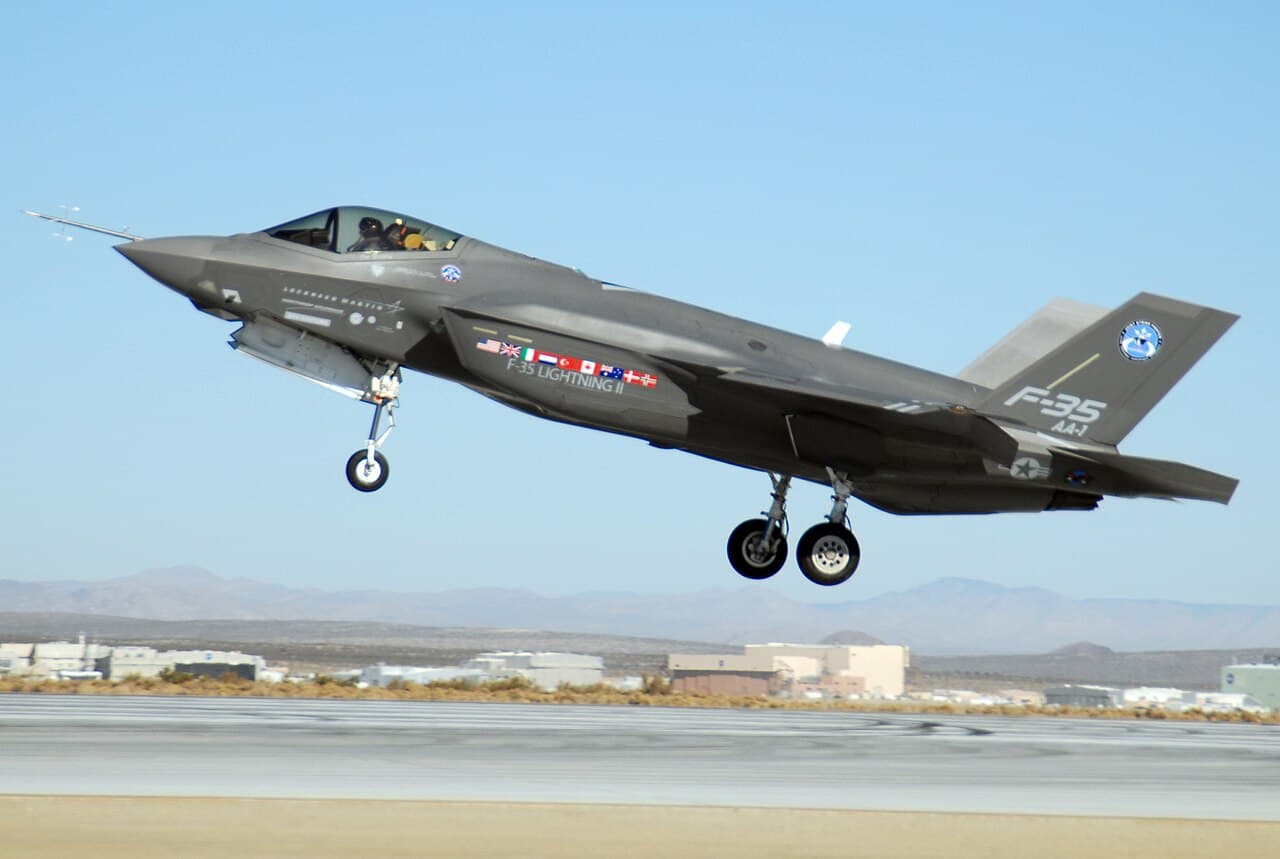
Multiple unidentified drones repeatedly entered restricted airspace around one of Australia's most sensitive military air bases recently, raising questions about how well the country can protect its F-35 fighters and other high-value aircraft from small unmanned aircraft. The drones were reported over RAAF Base Williamtown and neighboring Newcastle Airport in New South Wales between July 11 and 13, 2026, according to Australian media reports. Australia's Department of Defence has acknowledged the incidents, while Defence Industry Minister Pat Conroy said the broad reporting about the number of drones and the days they appeared was accurate. Authorities have not identified the operators or indicated why the drones were there. Williamtown, about 20 miles north of Newcastle, is Australia's main fighter training base and houses most of the Royal Australian Air Force's Lockheed Martin F-35A Lightning II fleet. The base also operates Boeing E-7A Wedgetail airborne early warning and control aircraft, Hawk 127 trainers and Pilatus PC-21 trainers. Newcastle Airport operates from the same airfield under an agreement with the Australian Department of Defence. The Daily Telegraph, which first reported the incursions, said multiple drones were confirmed in restricted airspace during the three-day period. Personnel at Williamtown were reportedly instructed to close window blinds to prevent sensitive information from being viewed or photographed. None of the drones was reported recovered or publicly identified. The incidents were referred to the New South Wales Police Counter-UAS Unit. Conroy said on August 10 that the police investigation has since been completed, but he did not disclose its findings. He also declined to say whether the drone activity disrupted military or civilian flight operations or what, if any, counter-drone measures were used. "We have robust layered security measures to protect our personnel, our bases and our capabilities," Conroy told ABC Newcastle. Australia changed its Defence Regulations last year to give military personnel authority to seize, disable or destroy drones. Conroy said the government is also investing heavily in technology intended to detect and defeat unmanned aircraft. The unexplained flights have prompted concern from Australian defense experts because small commercial drones can be used for surveillance as well as attacks against aircraft and infrastructure. There is no public evidence linking the incursions to a foreign government or establishing that the drones were conducting surveillance.
The Daily Touch & Go
The day's best aviation news in your inbox. Free, no spam.