

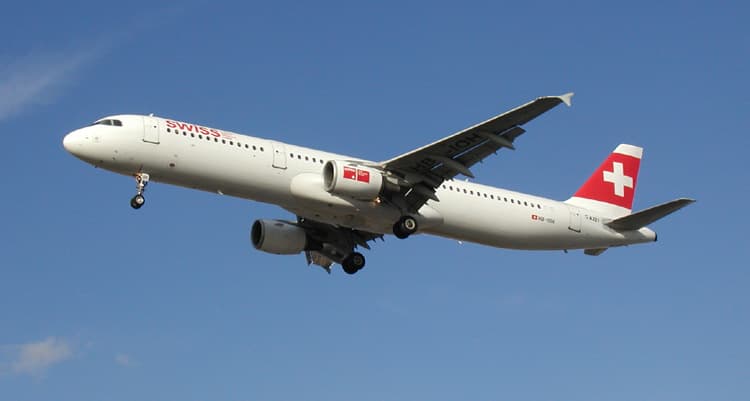
Image: Adrian Pingstone · Public domain · via Wikimedia Commons
Swiss startup PeakJet launches semi-private flights connecting Zurich to Mallorca
PeakJet debuts with a semi-private service offering premium, short-haul flights from Zurich to Mallorca using VistaJet aircraft, aiming to fill Europe's niche in accessible executive travel.
The gist
PeakJet’s first Zurich-Mallorca flight marks Europe’s new semi-private aviation option with premium service at business class prices.
A new player has entered the European aviation market with the launch of PeakJet, a Swiss startup offering semi-private flights designed to bridge the gap between commercial and executive travel. On August 1, 2026, PeakJet completed its inaugural flight from Zurich Airport to Palma de Mallorca, inaugurating a service model that seeks to combine the exclusivity of private jets with pricing closer to traditional business class tickets. The flight was operated by VistaJet GmbH using an Embraer 650 Legacy, highlighting PeakJet’s partnership approach since it does not hold its own air operator certificate (AOC).
PeakJet was founded by industry veterans, led by Gianni Tronza, who brings decades of airline experience from leadership roles at Etihad Airways, American Airlines, British Airways, and Crossair. Alongside him is Peter Baumgartner, former CEO of Etihad Airways and an active entrepreneur in Switzerland. Together, they have established PeakJet as an asset-light platform that leverages existing executive aviation assets to serve routes with latent premium travel demand without owning aircraft directly. This flexible business model enables rapid scalability and dynamic allocation of capacity where needed.
The company is targeting short-haul flights under 2.5 hours, focusing initially on Zurich’s connections to popular leisure destinations like Palma de Mallorca, Nice, and Malaga. These routes cater especially to second home owners and premium leisure travelers looking for private aviation benefits without the full cost of chartering a jet. Tronza emphasizes the intention to offer a travel experience closer to private flying, with advantages such as shorter wait times and more personalized service, at fares comparable to, or slightly above, conventional business class prices ranging from 990 to 1,400 CHF (around 1,100 to 1,700 US dollars).
A critical differentiator in PeakJet’s concept is the use of technology to connect underutilized private jet capacity with demand on fixed, scheduled routes. Tronza notes that typical private jets operate only 40% of the time, leaving significant available capacity. By building proprietary tech, PeakJet aims to optimize pricing dynamically and make semi-private flights accessible to a broader audience, something that others in Europe have struggled to achieve due to regulatory and market challenges.
The US market served as inspiration, with companies like Aero and JSX demonstrating the appeal of semi-private aviation on leisure routes. However, earlier attempts to establish similar services in Europe by US operators such as Surf Air and Aero did not succeed. Tronza attributes those setbacks partly to external challenges like Brexit and the pandemic but also to a strategic pivot by those companies to focus on the US. PeakJet’s approach differs by integrating multiple operators on its platform and cultivating a broader network, potentially including eVTOLs and helicopters for last-mile connectivity.
Despite Europe's traditionally strong full-service airline presence, the founders see an opportunity as some airlines have reduced premium offerings in short-haul business class cabins. They believe there is untapped demand among premium travelers seeking enhanced comfort and convenience without the expense of traditional private aviation. To support this, PeakJet plans to expand its service offerings beyond flights to packages, ancillary services, and a loyalty program leveraging its technology platform.
The partnership with VistaJet GmbH underscores PeakJet’s asset-light strategy, allowing it to scale without the operational burdens of owning and managing an AOC. The plan is to onboard additional operators as part of a diversified portfolio, enhancing route options and service flexibility. Including alternative transport modes such as eVTOLs and helicopters also indicates a forward-thinking vision to integrate multimodal premium travel solutions in urban and leisure markets.
PeakJet's entrance into the semi-private segment positions it uniquely in European aviation, addressing a gap for premium travelers desiring more than commercial business class but less than bespoke private jet charters. With industry heavyweights at the helm and a technology-driven model, PeakJet sets the stage for an innovative approach to short-haul leisure routes. The pilot Zurich-Palma de Mallorca route serves as a testbed for a concept that could reshape premium travel options across Europe if it meets market expectations.
Frequently asked questions
- What is PeakJet's business model for semi-private flights?
- PeakJet operates as an asset-light platform without its own air operator certificate, partnering with companies like VistaJet to provide scheduled semi-private flights using existing executive aircraft capacity.
- Which routes does PeakJet initially serve and why?
- PeakJet started with the Zurich to Palma de Mallorca route targeting short-haul flights under 2.5 hours, focusing on premium leisure travelers such as second home owners who seek a private flying experience at reasonable prices.
- How does PeakJet’s offering compare to traditional business class and private jets?
- PeakJet aims to offer a premium experience closer to private flying but at fares comparable to business class, combining convenience and exclusivity with more accessible pricing to attract customers not served by existing options.
Read more
All Regulatory →
United Engine begins serial delivery of PD-8 engines for Yakovlev SJ-100
Powerplant secured approval in June but import-substituted twinjet yet to receive certification. Russia's United Engine has started delivering serially-produced Aviadvigatel PD-8 powerplants to the Yakovlev SJ-100 programme. United Engine's Saturn division chief, Ilya Konyukhov, confirmed that the first two engines for the SJ-100 – an import-substituted version of the Superjet 100 – have been handed over. "This success is the result of people," he says. "It is, first and foremost, the result of the painstaking work of thousands of designers, technologists at [United Engine] enterprises, scientific organisations, and representatives of related industries." Konyukhov disclosed the PD-8's progress during a meeting on technical sovereignty attended by figures including first deputy prime minister Denis Manturov. The PD-8 secured its type certificate in June, and work is continuing on certificating the SJ-100. United Engine says development of the powerplant has involved reducing its weight and fuel consumption. "The PD-8 project has become a true challenge for our entire industry," says Konyukhov, adding that it has been "successfully met". Manturov says the creation of a modern civil aviation fleet – including the Ilyushin Il-114-300, Yakovlev MC-21, and Tupolev Tu-214 – is "crucial" to Russian ambitions for technological sovereignty. "This programme is moving into practical action," he says. "We are beginning the first deliveries of the Il-114-300. "Serial production of the updated Tu-214 is ramping up. Certification testing of the MC-21 and [SJ-100] is in the final stages. "This line of aircraft will allow for flexible route planning of any length and expand regional air service."
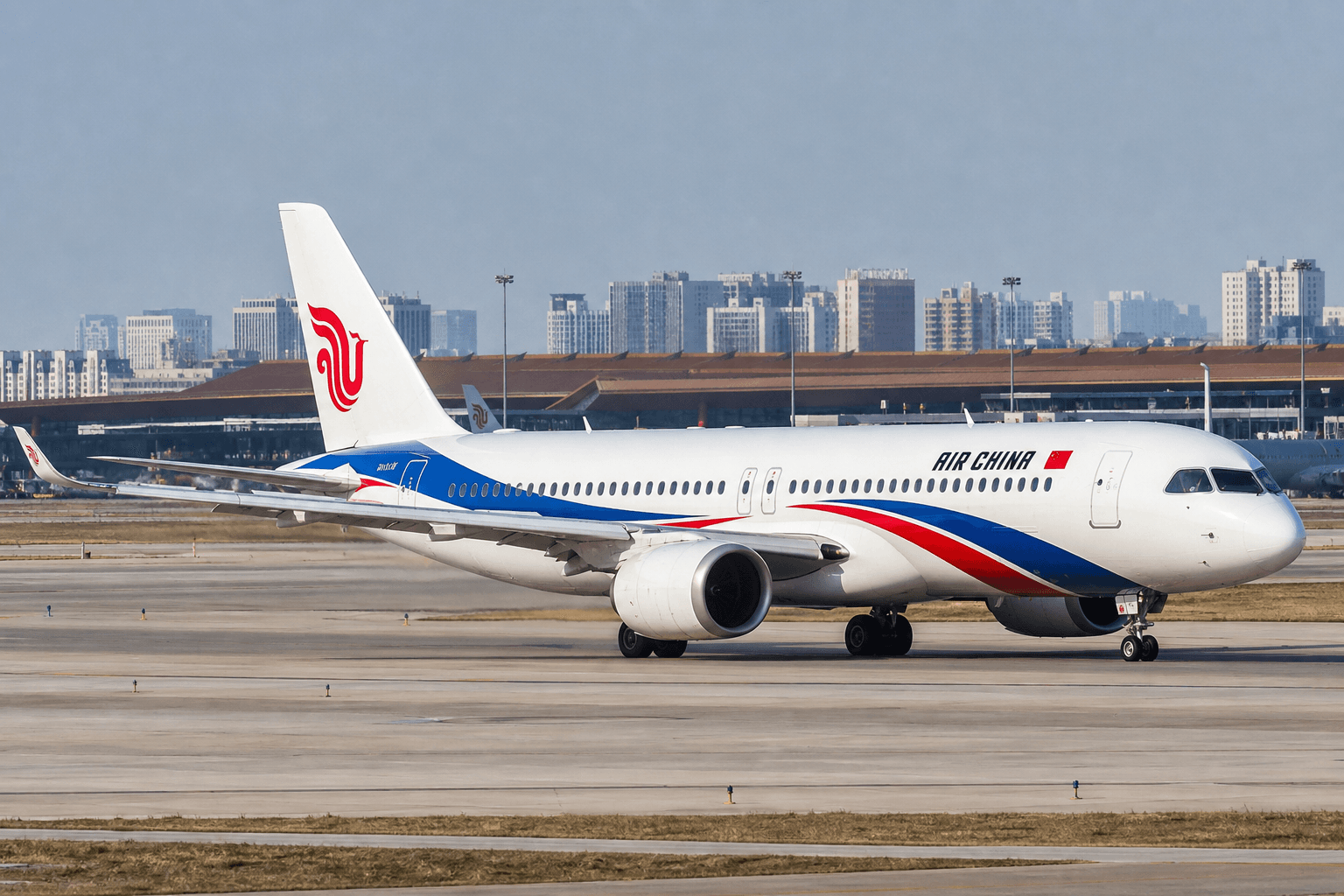
Air China's C919 Begins First Scheduled International Service to Ulaanbaatar
An Air China C919 completed a landmark flight on August 12, 2026. The Chinese narrowbody jet flew from Beijing to Ulaanbaatar. This marked the aircraft’s first scheduled commercial operation outside China. ezstandalone.cmd.push(function () { ezstandalone.showAds(119); }); Flight CA723 took off from Beijing Capital International Airport around 3 p.m. local time. It landed at Chinggis Khaan International Airport around 4:58 p.m. local time. The crew and passengers received a water cannon salute. Airlines reserve this honour for special occasions. Air China now flies the Beijing-Ulaanbaatar route daily with the C919. The service uses flight numbers CA723 and CA724. It operates seven days a week. The airline previously flew Boeing 737s on the same route. ezstandalone.cmd.push(function () { ezstandalone.showAds(127); }); Why This Flight Matters The C919 is China’s first self-developed mainline passenger jet. COMAC, or Commercial Aircraft Corporation of China, builds the plane. It seats 158 to 192 passengers and offers a range of 4,075 to 5,555 kilometres. The jet follows international airworthiness standards. China Eastern Airlines operated the C919’s first commercial flight in May 2023. Air China, China Eastern, and China Southern now fly the type. Air China received its first C919 in August 2024 and currently operates 12 aircraft. ezstandalone.cmd.push(function () { ezstandalone.showAds(128); }); The three carriers have opened more than 57 routes. They have served about 26 cities and carried over 7.5 million passengers. Until this week, the C919 mostly stayed inside China. It had visited air shows abroad and flown demonstration trips in Southeast Asia. ezstandalone.cmd.push(function () { ezstandalone.showAds(129); }); Scheduled services also connected mainland cities with Hong Kong. However, the Mongolia route is the first regular international passenger service beyond Chinese territory. Photo Credit: YuDiao1118, CC BY-SA 4.0, via Wikimedia Commons A Practical First Step Ulaanbaatar lies roughly 1,200 kilometres from Beijing . The short distance allows same-day round trips. Ground support teams can respond quickly if needed. Experts call this a careful and practical choice for the debut international service. In addition, Chinese-built C909 aircraft already serve the Hohhot-Ulaanbaatar route. The C919’s arrival means two domestically produced passenger jets now operate at the same overseas airport. This development strengthens China’s aviation presence in the region. ezstandalone.cmd.push(function () { ezstandalone.showAds(130); }); Moving Toward Global Competition COMAC designs the C919 to compete with the Airbus A320 family and Boeing 737 series. These Western aircraft dominate the narrowbody market today. China wants to reduce dependence on foreign planes and expand its own industry. The C919 still lacks full approval from American and European regulators. This limits sales outside certain markets for now. Production volumes also remain lower than those of Airbus and Boeing. Nevertheless, the successful Mongolia flight proves the jet can meet international operating standards with a neighbouring country. ezstandalone.cmd.push(function () { ezstandalone.showAds(131); }); Passengers on the first flight expressed pride in traveling on a Chinese-built aircraft abroad. For COMAC and the airlines, the day opens a new chapter. The C919 has moved from domestic routes into regular international service. This first step is measured and deliberate. Future growth will depend on continued reliability, additional certifications, and customer demand. Still, the Beijing-Ulaanbaatar flights represent clear progress. China’s homegrown narrowbody has officially begun operations beyond its home market and taken an important step toward competing on the global stage. ezstandalone.cmd.push(function () { ezstandalone.showAds(132); });

New Radar at Newark Debuts as DOT Seeks $10B More for Air Traffic Control Upgrades
U.S. Transportation Secretary Sean Duffy and FAA Administrator Bryan Bedford on Monday inaugurated a new surface movement radar (SMR) at Newark Liberty International Airport (KEWR). But the officials are seeking at least $10 billion more for further air traffic control (ATC) upgrades. Duffy has previously requested $19 billion in addition to the $12.5 billion allocated by Congress to the effort in 2025. In July, the Modern Skies Coalition, a group of aviation stakeholders led by the Aircraft Owners and Pilots Association (AOPA), called on Congress to allocate another $20 billion. On Monday, though, Duffy said the Transportation Department (DOT) "would love $20 [billion], but we'll take $10 [billion]." "Hopefully, by the end of this year we'll get it," he told a crowd of reporters at the airport's remote control tower. Duffy and Bedford reiterated that the multibillion-dollar ATC modernization effort should be complete by the end of 2028. The former said that the effort is "actually saving money" that has allowed DOT to begin developing Strategic Management of Airspace, Routes, and Trajectories (SMART)—an AI-powered software that could predict airspace conditions months in advance. The DOT plans to begin testing a "portion" of SMART in September and fully deploy the system by the spring, Duffy said. The goal is for it to come online with infrastructure upgrades such as the new surface movement radar at Newark Airport. Duffy said the $10 billion that he requested Monday will cover the software's development. But he said a "second $10 billion" would be required for building the "actual bricks and mortar" for new ATC towers and facilities, such as terminal radar approach control (TRACON) sites. "[President Donald Trump] has leaned in and has been a great advocate for getting us the money," Duffy said. "He wants updates on how we're doing and how quickly we can go." Bedford was also adamant about securing additional funding. In tandem with infrastructure upgrades and controller hiring, he said SMART will be indispensable in meeting future demand on the National Airspace System (NAS). He said the FAA projects the annual number of passengers flying through the NAS will double from 1 to 2 billion over the next two decades. "We have to have a modern, cloud-based, cybersecure, infinite data capacity system, with modern software," Bedford said. However, it is unclear if $10 billion will be enough to cover that. In July, the Modern Skies Coalition estimated that a new common automation platform (CAP)—designed to combine en route and terminal data—would alone cost $10 billion. ATC Modernization Continues Apace Duffy said the new SMR at Newark Airport replaces a system that is about 30 years old. Bedford said replacement parts are no longer made for the old system. The SMR tracks vehicles on airport runways, taxiways, and ramps and is designed to give controllers better visibility of the ground and aircraft on final approach. "If they can't see out of the tower and see what's happening on the tarmac, they can actually use this radar to actually see on the screens where everything is," Duffy said. Added Kathryn Garcia, executive director of the Port Authority of New York and New Jersey, "this technology will help the controllers who operate this airspace manage their work more efficiently." Bedford said the SMR, built by Saab in upstate New York, was the fifth of 53 planned deployments to the nation's 44 busiest airports. Four more, he said, are deployed at three other sites. Garcia said new SMRs will also be installed at LaGuardia Airport (KLGA) and John F. Kennedy International Airport (KJFK) in 2027 or '28. Duffy said radar outages at Newark last year were influential in Congress' decision to allocate the initial $12.5 billion for ATC upgrades. Two 90-second outages left controllers without radar and communications, prompting several to take mental health leave. The DOT replaced copper wiring that carried telecommunications data from a facility on Long Island, New York, to the Philadelphia TRACON—where ATCs oversee Newark airspace—to help prevent future outages. Bedford on Monday said the airport has seen a "great recovery of reliable operations" since last year but that there is "more to do for sure." That work continues apace. For example, Duffy said that about 60 percent of copper telecommunications wiring has been upgraded to newer systems. That figure was about 50 percent in April. Out of 220 planned surface awareness initiative (SAI) installations, Duffy said that 96 are complete versus 54 in April. Of more than 1,500 radio site conversions, 363 are complete compared to about 250 in April. In addition, Duffy said the agency has installed 151 out of 450 new voice switches and converted from paper to electronic flight strips at 19 of 89 planned towers. He said the effort spans all 50 states and is "one of the largest projects in America right now." At the same time, Bedford said the FAA has hired 4,000 new controllers since the ATC modernization push began. About 1,000 of them are "close to being certified," about 1,500 are training at facilities, and another 600 are at the FAA Academy in Oklahoma City. "It's no secret that the FAA is understaffed at its critical terminal facilities and towers," Bedford said. "So we are moving with urgency to clog the staffing gaps." Getting SMARTer Duffy and Bedford praised the speed of the modernization effort thus far. But Bedford said the program will "not be successful" unless SMART is rolled out in tandem. Duffy said the DOT will "slow-roll different aspects" of SMART rather than introduce the whole system at once. He said the agency has demonstrated it to Congress and plans to do so for Trump. "If there's paths through the weather that we can safely take, we can deploy those for our airlines and increase the through capacity," Duffy said. The secretary said the idea of SMART is not to "outsource" airspace management to AI but rather to give controllers another tool in their toolkit. "We can't control the weather, but we can control the decisions that we make to keep airspace open, or only close airspace when we absolutely have to," said Bedford. "The primary mission of the air traffic organization is to keep things separated. None of that's changing…It's going to create more safe capacity to stop the traffic jams on the airports and get flights moving." FLYING readers can track progress on ATC modernization using the FAA's Modern Skies portal .
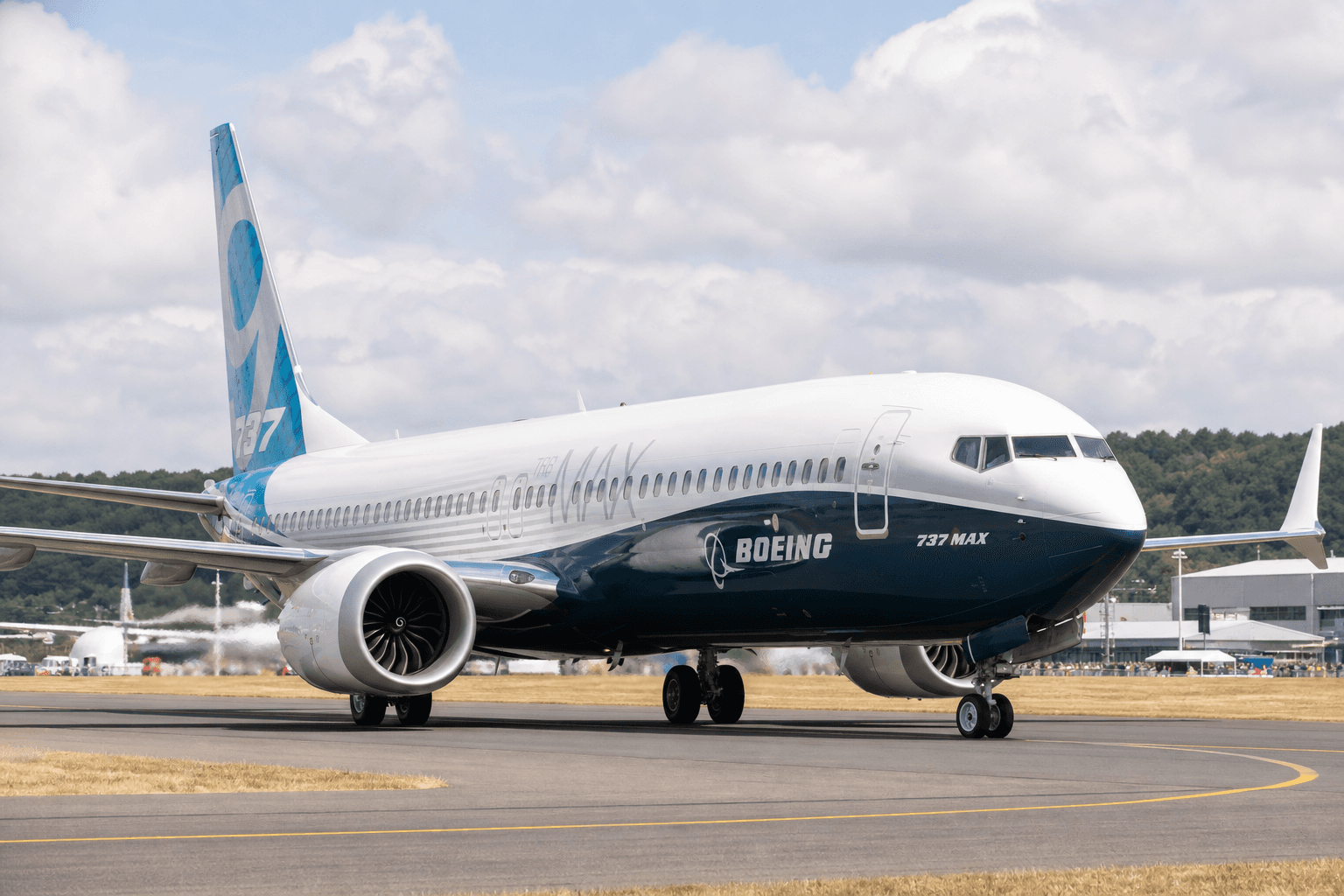
Boeing's July Orders Highlight Significant Deals with Uganda and AerCap
Both deals among those unveiled during Farnborough air show. Uganda Airlines' agreement for four Boeing 787 and four 737 Max jets, plus a batch of 15 787s for lessor AerCap, featured among 38 Boeing aircraft ordered during July. Both deals, and a 737 Max pair for Luxair, were revealed during the Farnborough air show. Boeing's order total for the month also included a single 777X for an unidentified customer, and agreements for 12 further Max aircraft. The airframer has recorded strong activity for the 737 Max 10 – still to secure certification – with more than 130 orders for the variant so far this year. Boeing has taken more than 1,500 orders for the Max 10, and it represents over 30% of the Max backlog of 4,345. Eight 737 Max jets were cancelled in July, leaving the airframer with overall net orders for 438 aircraft over the first seven months of this year. Boeing delivered 53 aircraft in the month, comprising 10 787s, three 767s – including two KC-46 tanker airframes – and a 777F, along with 39 737s.
The Daily Touch & Go
The day's best aviation news in your inbox. Free, no spam.