

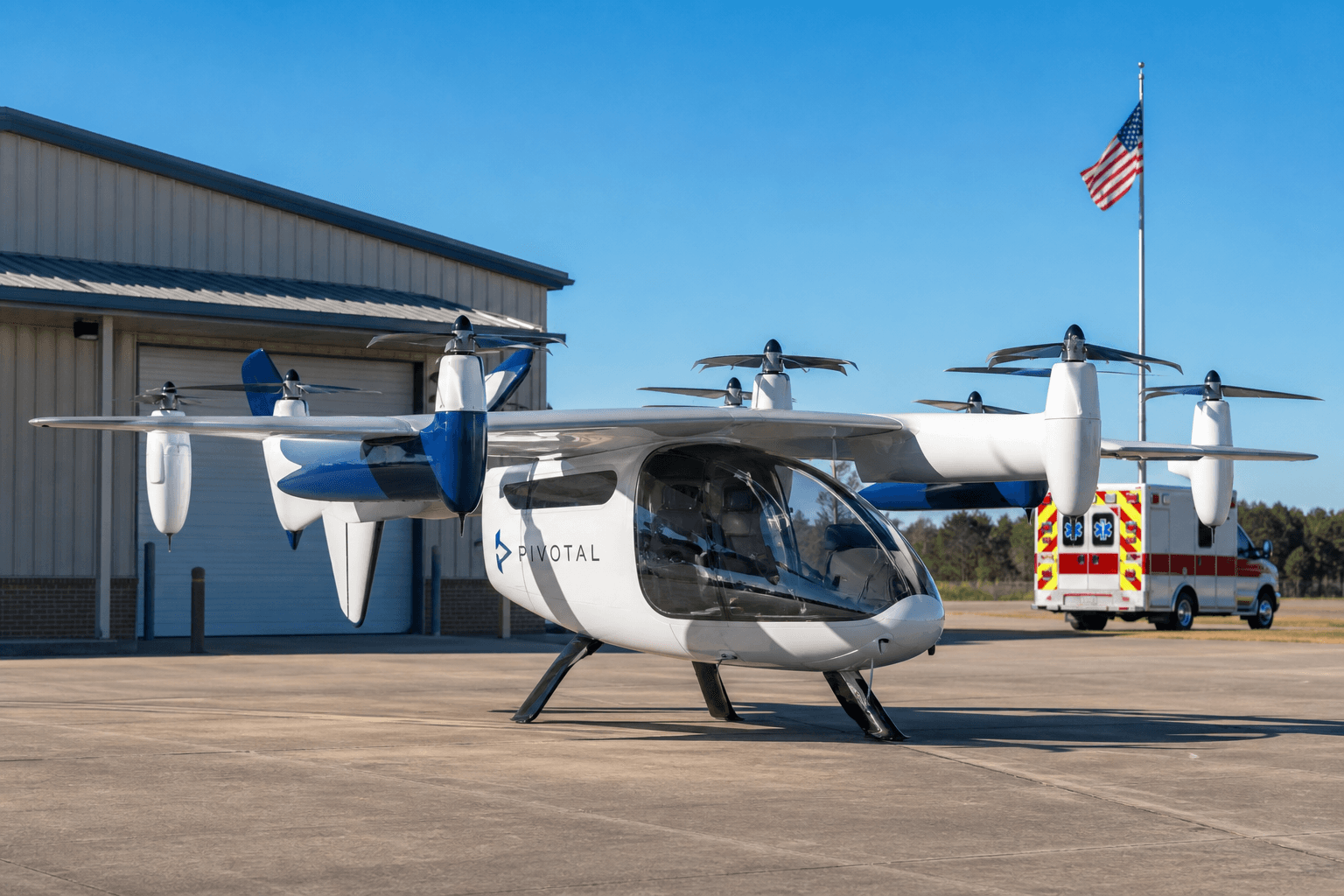
Illustration: The Touch & Go
North Carolina Launches First US ALS Emergency Response Using eVTOL Aircraft
Paramedic Quinn Reece flew the inaugural US advanced life support flight via electric vertical takeoff and landing aircraft in Hyde County, cutting response times by 20 minutes.
The gist
North Carolina paramedic made US history flying the first eVTOL-powered ALS emergency response, reaching patients 20 minutes faster than ground crews.
Continuing coverage
All Evtol →- Vertical Aerospace secures tentative $100m funding to advance Valo eVTOL certification and production
- FAA and DOT Launch Multi-State Trials for Electric and Autonomous Aircraft Integration
- Electric Aircraft Start Short Flights Between Hawaiian Islands in Early Trials
- DOT and FAA launch $8.3M Oklahoma facility to advance eVTOL research and integration
North Carolina marked a significant milestone in emergency medical services (EMS) on June 27, when paramedic Quinn Reece conducted the nation's first advanced life support (ALS) response using an electric vertical takeoff and landing (eVTOL) aircraft. Operating out of Hyde County, Reece flew a battery-powered multirotor aircraft weighing 348 pounds directly to a patient's GPS location, shaving around 20 minutes off typical ground ambulance response times. Reece completed a second such flight days later, confirming the practical viability of this innovative EMS response model.
The breakthrough came after months of planning and extensive training, integrating Pivotal's eVTOL technology with local EMS operations. Hyde County Emergency Services partnered with Code Blue Resources, Akute Networks, and Pivotal to create the United States’ first eVTOL emergency medical response concept of operations (CONOPS) under a public aircraft operation authorization. The initiative aims to leverage personal eVTOL aircraft to deliver advanced medical care on scene faster than traditional ground units, particularly in critical cases where every minute affects patient survival.
Quinn Reece, the pilot-paramedic who flew these historic missions, brought a unique blend of skills. She combined advanced paramedic training with flight qualifications necessary to operate the specialized aircraft. Standing five-foot-three and weighing approximately 100 pounds, Reece met strict physical and piloting criteria established for safe operation of the compact aircraft. She noted the challenge of balancing dual roles, focusing on piloting during flight and switching to paramedic duties only once safely landed.
To fulfill ALS care within the aircraft's tight payload constraints, Reece's medical equipment was carefully chosen. Essential tools included a Philips Tempus ALS cardiac monitor and defibrillator—a lightweight unit optimized for mobility—and a compact medical bag containing airway management tools, bleeding control supplies, suction equipment, medications, and oxygen, totaling about 30 pounds. This setup enabled her to provide critical interventions in time-sensitive emergencies such as cardiac arrests, where prompt ALS care is linked to increased survival rates.
This program followed over 300 extensive training flights aimed at preparing paramedics for the integration of flight operations and emergency medical response. EMS training scenarios developed by paramedic and BlackFly eVTOL owner Tim Lum helped build confidence in handling challenging landing environments. Organizational support from Akute Networks facilitated FAA approvals and program management, while Code Blue Resources contributed to medical protocol development and paramedic recruitment.
Reece recalled that atmospheric conditions during the first missions were ideal, with favorable winds easing flight decisions. Her background in EMS management and field experience enriched her ability to adapt aeronautical decision-making principles to this novel context. She contrasted piloting with ground EMS logistics, recognizing that safe landing and operational flying took precedence before transitioning to patient care tasks on scene.
Despite currently being the sole paramedic pilot flying under Hyde County’s eVTOL PAO, the project initially trained four paramedics. The program is positioned as an augmentation rather than a replacement of existing emergency resources such as ambulances and helicopters. Reece emphasized that the eVTOL capability expands the EMS toolbox, providing rapid first response and potentially supporting missions like search and rescue that demand swift access to remote or congested areas.
The success of these flights, occurring exactly 54 years after the debut of Emergency!, an iconic television series that inspired many paramedics, marks a new chapter in aeromedical history. For Reece, the personal and community impact, especially the inspiration it offers to women and girls in aviation and EMS, has been profoundly meaningful. Sharing this experience with family and witnessing public enthusiasm reinforces the potential of eVTOL technology to transform emergency care delivery.
Frequently asked questions
- Who conducted the first advanced life support response using an eVTOL in the US?
- Quinn Reece, a paramedic trained as a pilot, performed the first US ALS response utilizing an eVTOL aircraft operating from Hyde County, North Carolina.
- How much faster was the eVTOL response compared to traditional ground EMS?
- The eVTOL aircraft reached the patient approximately 20 minutes faster than ground ambulance crews, potentially improving outcomes in time-critical emergencies.
- What equipment did the paramedic carry onboard to provide ALS care?
- The paramedic carried a lightweight Philips Tempus ALS cardiac monitor and defibrillator, a bag of essential airway, bleeding control tools, medications, suction device, and oxygen, totaling around 30 pounds.
Read more
All Flight Training →
2007 Diamond DA40-FP Offers Reliable Composite Flight Training and Cross-Country Capability
Every day, the team at Aircraft For Sale chooses an airplane that catches our attention because it is unique, a good deal, or has other qualities we find interesting. You can read Aircraft For Sale: Today's Top Pick at FLYINGMag.com daily. Today's Top Pick is a 2007 Diamond DA40. Standing out in the aviation landscape with its aerodynamically efficient composite construction, the Diamond DA40 has cultivated a stellar reputation as a highly capable and forgiving platform. This 2007 Diamond DA40-FP Diamond Star presents an exceptional opportunity for first-time aircraft owners or flight schools looking to acquire a reliable, economical cross-country machine. The airframe boasts 5,870 hours total time since new (TTSN) and a clean pedigree with no known damage history and completely intact logbooks. Sitting in the pilot's seat reveals an advanced instrument layout centered around a fully integrated Garmin G1000 flight deck, offering phenomenal situational awareness for IFR operations. The dual 10-inch primary and multi-function displays are supported by dual Garmin GIA 63 integrated radio modules, a GRS 77 solid-state AHRS, and a GTX 335R transponder. While configured as a non-WAAS setup without an autopilot, the panel provides an exceptional environment for building genuine stick-and-rudder instrument proficiency. The cockpit is outfitted with several thoughtful utilitarian touches designed for comfort and practicality. The installation of a larger factory-style bubble canopy provides significantly increased headroom, making it ideal for taller pilots or demanding flight school operations. Further cabin refinements include a four-way baggage compartment system, canopy vent window scoops, dual USB power ports, and a convenience package featuring integral cupholders and large-capacity side pockets. 2007 Diamond DA40 [Credit: Aerista] Moving beyond the sleek composite lines, the nose section houses a proven and dependable Lycoming IO-360 powerplant that consistently delivers economical operation and predictable performance. Providing a respectable 829-pound useful load, this aircraft is further enhanced by several valuable upgrades, including a Power Flow tuned exhaust system that maximizes efficiency and a Plane-Power heavy-duty alternator. A pre-installed EZ Heat engine pre-heater ensures the powerplant is protected during cold-weather operations. Underscoring its readiness for immediate flightline duty, the aircraft is backed by a fresh annual inspection recently completed in January 2026. This thorough checkup guarantees mechanical integrity and dispatch reliability right out of the gate, with the ELT inspection not due until May 2027. Listed at $224,900 , this Colorado-based 2007 Diamond DA40-FP Diamond Star provides an affordable and highly attractive pathway into modern composite aircraft ownership. If you're exploring ownership options, FLYING Finance can help get you airborne. Use our airplane loan calculator to estimate your monthly payments, or connect with an aviation finance expert at flyingfinance.com . FLYING Magazine: Diamond's DA40 NG Just Might Be What the General Aviation Market Is Clamoring For FLYING Magazine: Diamond Offers a Year's 'Free Flying' for DA40 Buyers FLYING Magazine: UNSW School of Aviation Expands Diamond Fleet Plane + Pilot : Rediscovering the Diamond DA40 Plane + Pilot : Diamond DA40 XL: Polishing the Diamond Star Plane + Pilot : Diamond Aircraft to Build Electric DA40 Model The Aviation Consumer: Used Aircraft Guide: Diamond DA40 Star The Aviation Consumer : Diamond DA40 Star

From Build Nights to Solo Flight: Cadet Carter Froehlich's Aviation Journey
By Josh Manring, EAA 1387901 For Cadet 2nd Lt. Carter Froehlich, Civil Air Patrol, aviation started with a trip to EAA AirVenture Oshkosh. In 2015, Carter attended AirVenture with his father at just 5 years old. They camped for the entire week, surrounded by airplanes, air shows, and aviation enthusiasts from around the world. "It […]

Pilots urged to secure renters insurance amid limited owner policy coverage
Many pilots who rent or borrow aircraft assume that the FBO, flight school, or aircraft owner's insurance will protect them if something goes wrong. Unfortunately, that is not always the case.
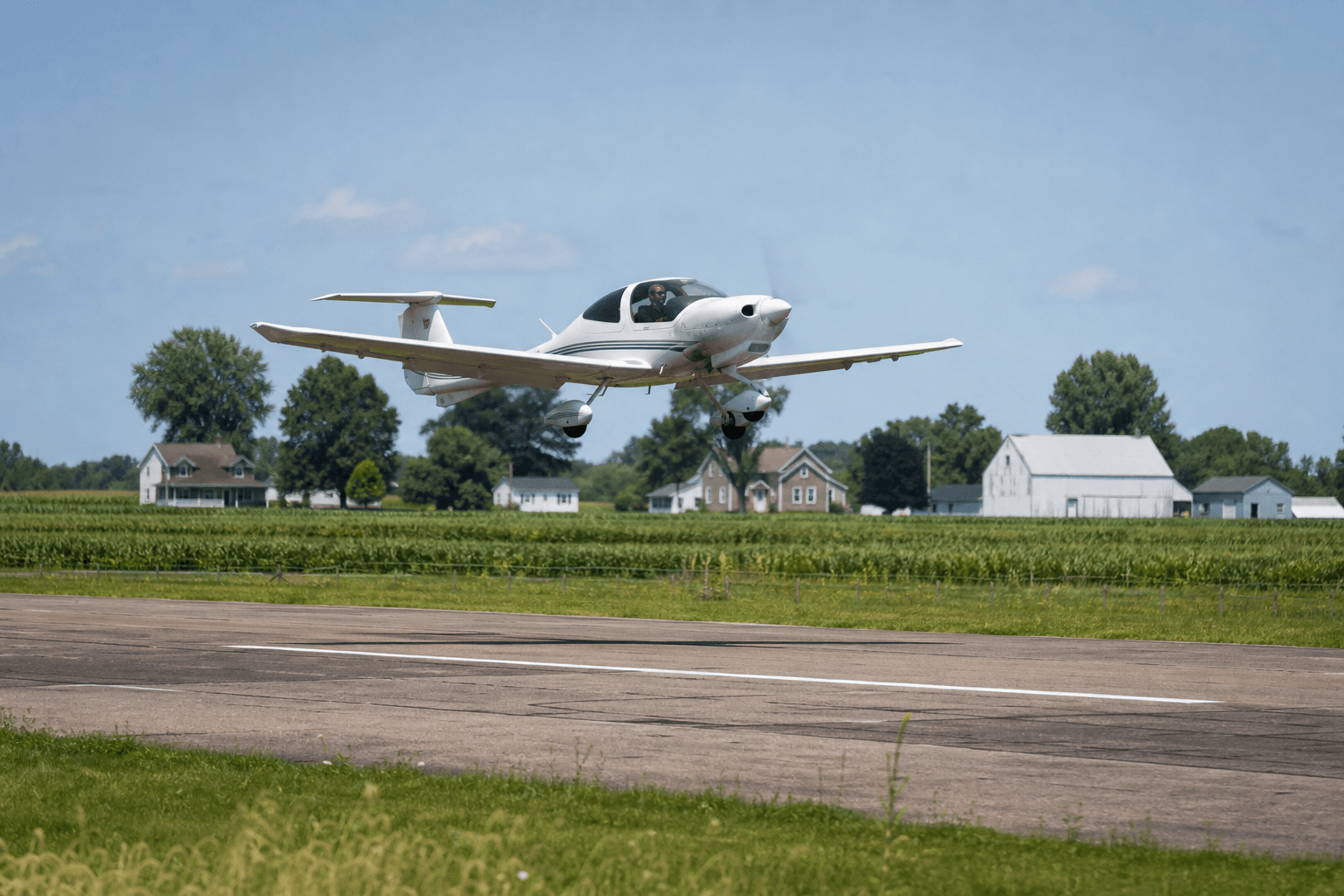
Embry-Riddle's Proposed Flight Training Facility at Deep Woods Ranch Faces Local Opposition
Residents have voiced concerns about noise, traffic, and environmental impact as the proposal moves through local review.
The Daily Touch & Go
The day's best aviation news in your inbox. Free, no spam.