

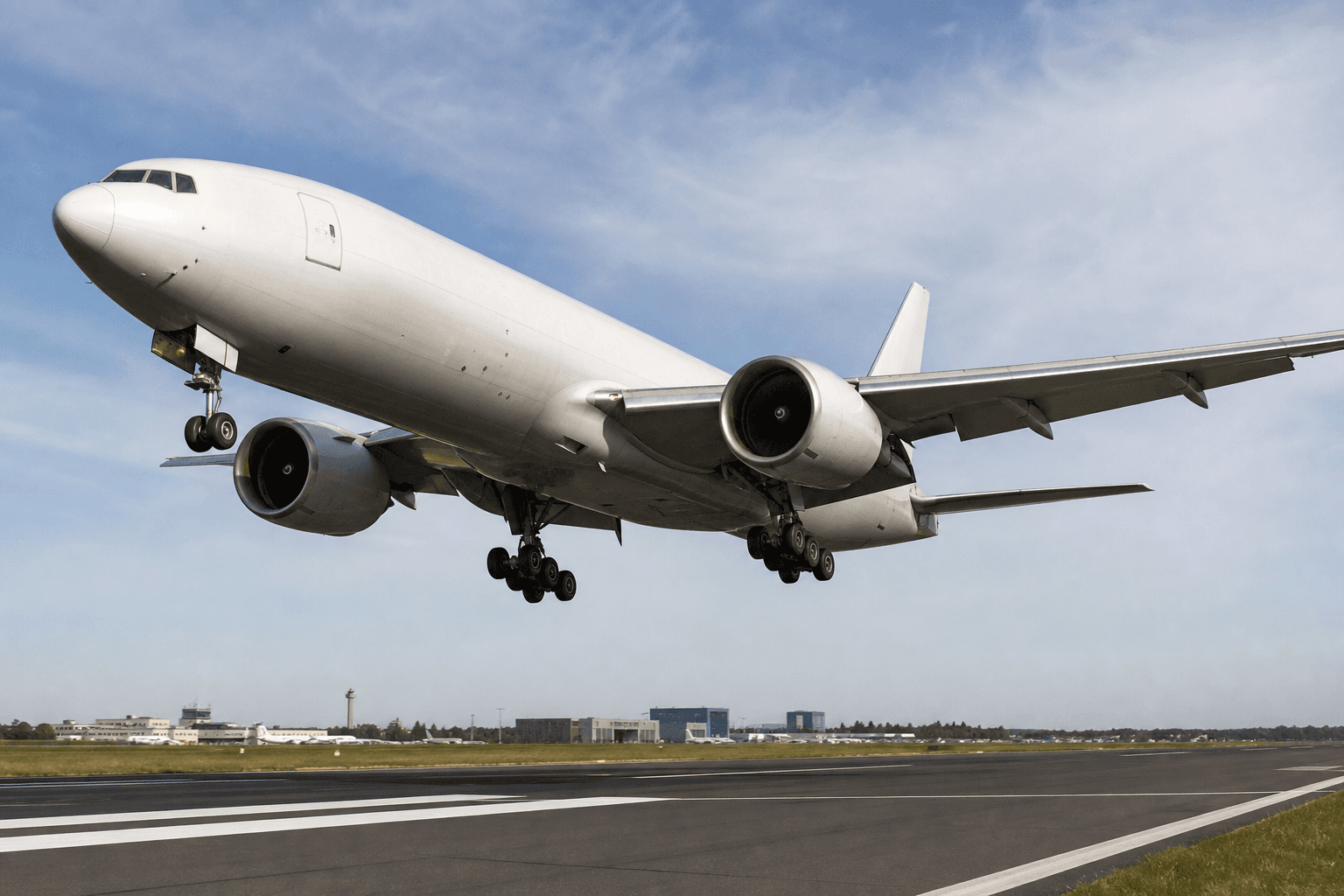
Illustration: The Touch & Go
Boeing 777-200LRF Performs Perilously Close Low Pass, Sparking Safety Concerns
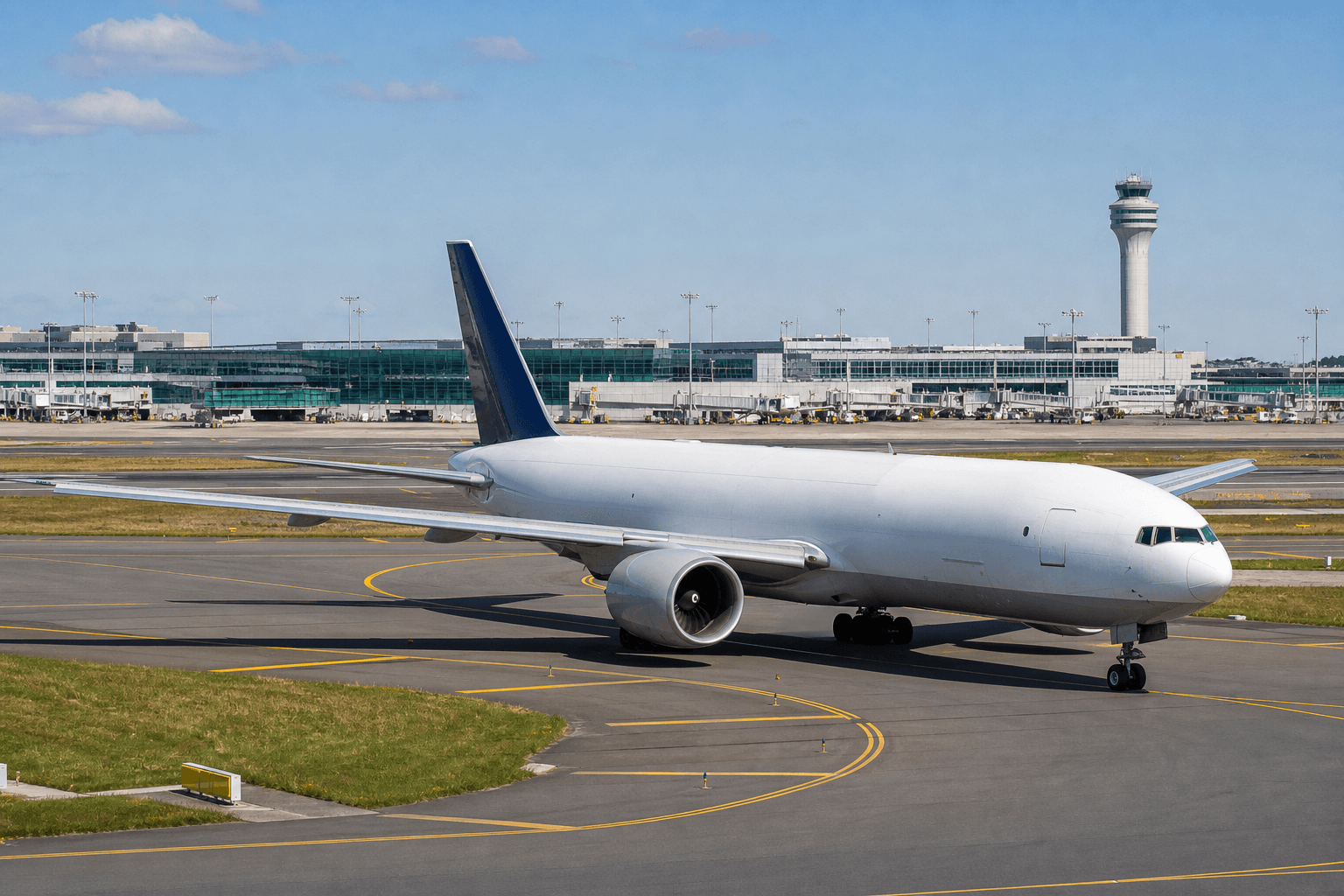
Video captures a Boeing 777-200LR converted freighter executing an extremely close low pass, raising alarm among aviation experts for its inherent risks.
The gist
A captured video of a Boeing 777 freighter's risky low pass highlights significant safety concerns in cargo flight operations.
In a rare and troubling incident, a Boeing 777-200LR converted freighter was recorded conducting a dangerously close low pass maneuver, startling observers within the aviation community. The footage, which is authentic and not computer-generated, shows the large freighter flying just inches above the ground, an action known to carry considerable risk due to the proximity to terrain and obstacles. Such a maneuver is not typical for large cargo aircraft, which generally adhere to strictly controlled flight paths, especially at low altitudes, to ensure safety for the crew, aircraft, and ground assets.
The aircraft in question is a Boeing 777-200LR that has been modified for cargo operations—commonly referred to as a 777F. This wide-body freighter is designed for long-haul transport of goods and is capable of carrying substantial payloads across intercontinental distances. While 777Fs are renowned for their reliability and efficiency, the decision to execute a low pass at such minimal altitude deviates from standard operational procedures and introduces heightened risk factors.
Low passes and flybys are sometimes performed for routine purposes such as inspection, training, or ceremonial events, but they are typically executed with extensive safety margins and careful planning. In this incident, the near-ground clearance was unexpectedly narrow, prompting concerns about the pilot's situational awareness and the justification for such a maneuver at that particular location and moment. Aviation safety experts emphasize that unintended low passes can lead to catastrophic outcomes, including collision with obstacles or loss of control due to aerodynamic factors.
The exact location, timing, and intent behind this risky approach have not been publicly disclosed, leaving industry commentators to speculate on the circumstances. What is clear is that the video provides a sobering real-world reminder of the dangers inherent in low-altitude operations with large freighters. For regulatory bodies and airline operators alike, incidents like this raise questions about adherence to safety protocols and pilot decision-making processes in high-pressure or observational scenarios.
Historically, low passes by heavy aircraft have been restricted and regulated, with flight crews receiving detailed training on managing the aerodynamics, speed, and altitude to mitigate threats. The 777-200LRF's powerful engines and size make precise control critical, especially when flying close to the surface. Any miscalculation during a low pass can quickly escalate into disaster due to the limited margin for error and reaction time.
Following the release of the video footage, both industry watchdogs and cargo carriers are expected to review the circumstances around such maneuvers. While the 777 freighter fleet operates worldwide with excellent safety records, isolated events of this nature generate calls for reinforced operational guidelines and enhanced pilot training to prevent recurrence. Safety remains paramount in cargo aviation, where heavy aircraft operate not only in congested airspace but also near populated areas and complex terrain.
This incident also spotlights the evolving role of video documentation in aviation oversight. Drone and camera technology increasingly capture rare or non-compliant maneuvers, providing regulators and the public with unfiltered views of aviation practices. Such transparency can expedite investigations and promote accountability but also highlights the necessity for stringent operational discipline.
As global air freight demand continues to grow, ensuring safe flight operations in all phases—particularly low-altitude flight—remains a critical challenge. The risky low pass by a Boeing 777-200LRF underlines the importance of constant vigilance and adherence to established safety margins to protect lives and assets in the cargo aviation sector. Stakeholders will likely monitor developments closely as more information about this event emerges.
Read more
All Cargo →
National Airlines sets longest nonstop B777F flight from Scotland to Australia
National Airlines has completed what appears to be the longest B777F flight ever to have been operated on behalf of another carrier. On August 4, 2026, the Florida-based cargo and charter operator flew the Boeing 777 freighter, registered N795CA, between Prestwick Airport (PIK), in Scotland, and Melbourne (MEL), Australia. The flight covered 9,849 nautical miles (18,240 km), without any intermediate stops, in 19 hours and 23 minutes. This B777F completed the mission at the limit of its range envelope, which, with a full payload, is officially 4,970 nautical miles (9,200 km). The B777F range, however, can be extended to around 9,750 nautical miles (18,000 km) if the aircraft is flown with a reduced payload, as it appears to have been the case. While National Airlines have not disclosed what type of cargo was flown to Australia (the cargo carrier only posted a vague reference to UK-based aviation services firm Golden Aviation as its customer), some online comments have pointed out that the aircraft may have been carrying urgently needed spare parts for grounded aircraft. Remarkably, this record-setting flight follows the completion of a much-anticipated Airbus A350-1000ULR test flight between Toulouse (TLS) and Melbourne of just 11 days earlier, on July 24, 2026. The aircraft is specifically designed to complete ultra-long-haul missions, such as Europe to Australia. The same aircraft achieved another record on its return leg, from Melbourne to Toulouse, when it stayed airborne for 24 hours and 24 minutes, covering 12,460 nautical miles (23,076 km), the longest flight ever completed by this type of airliner. National Airlines operates a fleet of nine Boeing 747-400 and four B777-200 freighters. The company, which is based in Orlando, Florida and works regularly as a contractor for the United States government, operates also a passenger charter and ACMI business with A330-300 and A330-200 aircraft. AeroTime has reached out to National Airlines for comment.
Mammoth Freighters Launches Boeing 777 Conversion Line in Qingdao to Meet Asia-Pacific Cargo Demand
Mammoth Freighters LLC today announced it will expand its 777 freighter conversion operations to Qingdao, China, and has selected STAECO as its newest conversion MRO provider following a Request for Proposal process. The expansion comes in response to growing demand for widebody freighter capacity in China and across the Asia-Pacific region. Mammoth plans to open […]
Memphis International Airport Renamed to Honor FedEx Founder Frederick W. Smith with New Significance
FedEx announced: On August 11, 2026, the Memphis community and FedEx team members worldwide came together to honor the legacy of the late FedEx founder Frederick W. Smith. In a dual tribute, the Memphis-Shelby County Airport Authority celebrated the renaming of the Memphis International Airport in his honor, coinciding with the inaugural FedEx FWS Day […]
DAE Signs Deal to Acquire and Lease Four Boeing 777F Freighters to Saudia
Dubai Aerospace Enterprise has signed a major agreement with Saudia. The deal, announced on 10 August 2026, covers four new Boeing 777F aircraft. It also includes long-term leases for these planes. ezstandalone.cmd.push(function () { ezstandalone.showAds(119); }); Deliveries will run from October 2026 to May 2027.This purchase-and-leaseback deal strengthens Saudia’s cargo operations. It helps the Saudi flag carrier serve more markets worldwide. What the Agreement Involves DAE will purchase the four Boeing 777F freighters. Then it will lease them back to Saudia under long-term contracts. This structure is common in aviation. It gives airlines access to new aircraft while spreading costs. ezstandalone.cmd.push(function () { ezstandalone.showAds(127); }); The Boeing 777F is a long-range, widebody freighter. It offers strong payload capacity of about 102 tonnes. It also delivers good operational efficiency and high reliability. Leading cargo operators around the world already use this aircraft type. Firoz Tarapore, CEO of DAE , commented on the deal. “We are pleased to announce a purchase-leaseback agreement for four Boeing 777F aircraft with Saudia,” he said. ezstandalone.cmd.push(function () { ezstandalone.showAds(128); }); “This transaction reflects our continued commitment to supporting our airline customers with high-quality, in-demand aircraft.” He added that the planes will support Saudia’s growing cargo work. They will also help the airline reach key markets on its global network. Tarapore wished Saudia continued success. ezstandalone.cmd.push(function () { ezstandalone.showAds(129); }); Why This Matters for Saudia Saudia aims to expand its dedicated freighter fleet. The carrier wants to meet rising global demand for air cargo. These four new aircraft will boost capacity. They will improve connectivity between key international destinations. Saudi Arabia continues to position itself as a major logistics hub. Extra freighter capacity supports that national goal. The aircraft can carry a wide range of cargo across long distances. This makes them ideal for expanding routes. Earlier in 2026, Saudia Group announced an order for four Boeing 777Fs with the manufacturer. The DAE agreement aligns with that plan. It ensures the planes arrive on a clear schedule between late 2026 and mid-2027. ezstandalone.cmd.push(function () { ezstandalone.showAds(130); }); About Dubai Aerospace Enterprise DAE is a global aviation services company based in Dubai. It owns, manages, or has commitments for more than 1,000 aircraft. This fleet includes over 250 Boeing planes. The company serves more than 200 airline customers in over 85 countries. DAE plans to grow its portfolio further to meet market demand. Its fleet value stands at around $35 billion. The lessor operates through offices in several cities, including Dubai, Dublin, London, and Singapore. This latest deal shows DAE’s focus on high-demand freighter aircraft. Cargo traffic remains strong in many regions. Lessors that supply modern freighters can support airline growth effectively. ezstandalone.cmd.push(function () { ezstandalone.showAds(131); }); Looking Ahead The first aircraft should arrive in October 2026. The remaining three will follow by May 2027. Once in service, they will join Saudia’s existing freighter fleet. That fleet already includes other 777Fs, 747-400Fs, and converted Airbus models. No financial details of the transaction were released. Still, the strategic value is clear for both parties. Saudia gains modern capacity. DAE expands its portfolio with sought-after assets on long-term leases. The partnership highlights ongoing cooperation between Dubai’s aviation sector and Saudi carriers. Both regions continue to invest heavily in air transport and logistics. This agreement is one more step in that direction. ezstandalone.cmd.push(function () { ezstandalone.showAds(132); }); As deliveries approach, industry watchers will track how quickly the new freighters enter commercial service. They are expected to play a key role in Saudia’s cargo expansion plans over the coming years.
The Daily Touch & Go
The day's best aviation news in your inbox. Free, no spam.