


Image: PJSC "UAC" · CC BY-SA 4.0 · via Wikimedia Commons
Russia starts serial production of Aviadvigatel PD-8 engines after certification
United Engine has begun serial assembly of PD-8 engines for the Yakovlev SJ-100 following certification by Rosaviatsia in June.
The gist
Russia's PD-8 engine enters serial production to power the Yakovlev SJ-100 after official certification this June.
After receiving certification from Russia's civil aviation regulator Rosaviatsia earlier this month, United Engine has initiated serial production of the Aviadvigatel PD-8 turbofan engines intended for the Yakovlev SJ-100 regional jet. The certification marks a major milestone enabling the transition from prototype testing to mass production. United Engine's Saturn division, responsible for the assembly, confirmed that production preparations are well underway.
Ilya Konyukhov, head of the Saturn division, stated that initial engine kits have been completed and will soon be delivered to the United Aircraft factory. These engines are to be integrated onto the wings of the SJ-100 as part of its ongoing flight test and certification program. The engine's official approval unlocks the path for scaling up manufacturing to meet the needs of the new aircraft.
To boost production capacity, United Engine has invested in nearly 100 new machining and inspection tools to modernize and accelerate its engine assembly operations. This modernization effort reflects the company's intent to maintain a high work rate to stay on schedule for deliveries. The facilities are reportedly prepared for the increased output required to support the SJ-100 program.
The PD-8 engine is designed to power Russia’s Yakovlev SJ-100, a regional jet intended to compete in the 75-100 seat market segment. The engine's certification clears a critical regulatory hurdle, allowing further progress toward the SJ-100’s entry into commercial service. Certification processes for the SJ-100 itself are still ongoing, with the engine approval being a vital checkpoint.
United Engine anticipates delivering the first batch of serial production PD-8s to the aircraft manufacturer in the coming months. These deliveries will support the completion of SJ-100 flight testing and eventual induction into airline fleets. Establishing serial engine production is crucial for ramping up aircraft deliveries and fulfilling commercial commitments.
The PD-8 represents a domestically produced turbofan tailored to modern regional jet requirements, focusing on fuel efficiency and reliability. Its successful certification signifies Russia's ongoing efforts to develop and field indigenous aero engines, reducing reliance on foreign suppliers in the civil aviation sector.
This development follows years of design, testing, and refinement of the PD-8 engine, which is a derivative of established powerplants with upgrades to meet stringent noise and emission standards. United Engine’s commitment to modern production techniques showcases the ambition to compete technologically in the global regional jet market.
The move into serial production with full tooling and assembly lines exemplifies the growing maturity of the Russian aerospace engine industry. It positions the SJ-100 project for a more robust future given the availability of certified, locally made propulsion units. The timeline for first deliveries aligns with the broader goal of completing the aircraft’s type certification.
With the engine now certified and serial production underway, the focus will shift to integrating the PD-8 units into the SJ-100 fleet to continue flight validation. Delivering these engines on schedule is a key factor in ensuring the program meets its deadlines for entering commercial service and gaining market traction.
Read more
All Regulatory →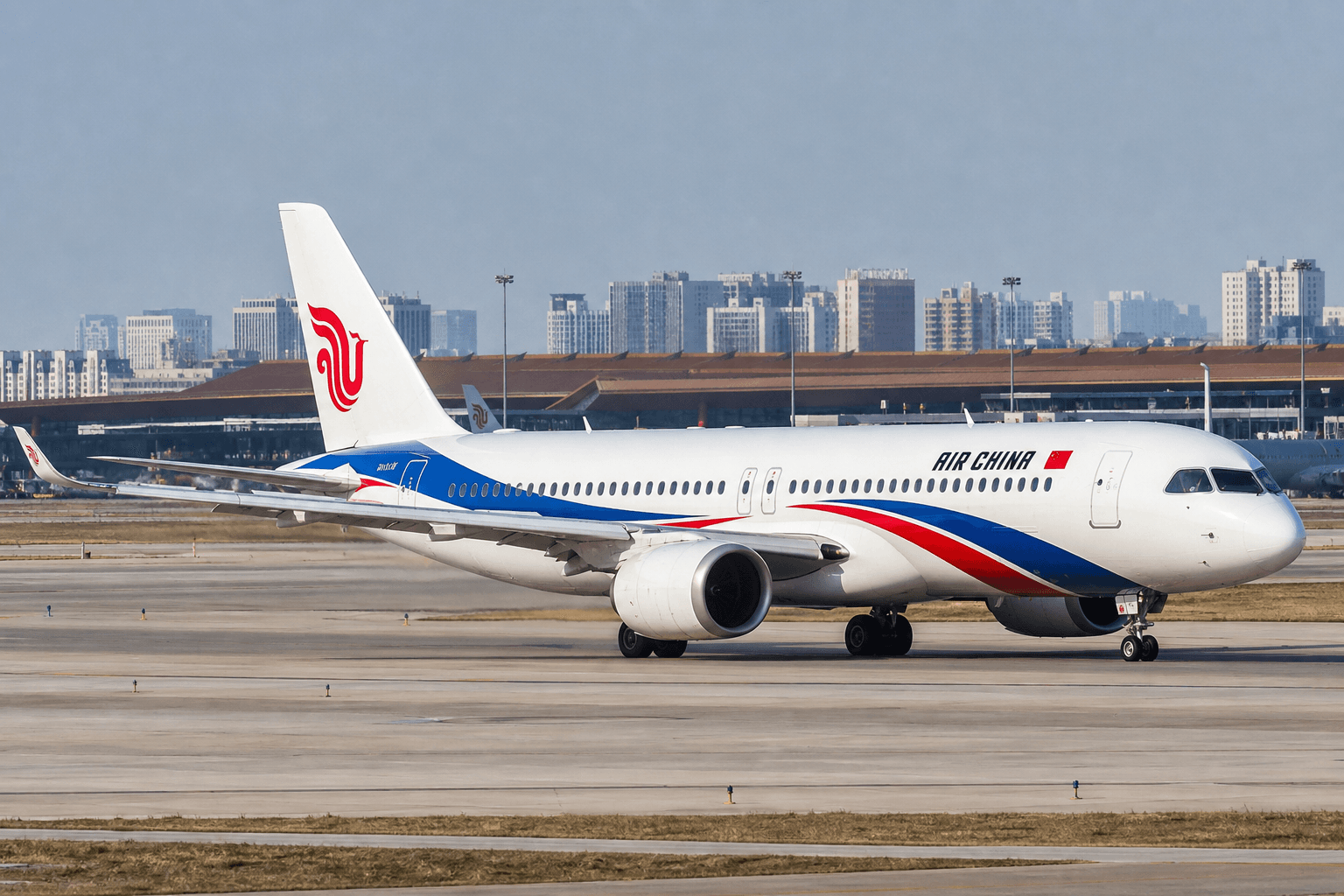
Air China's C919 Begins First Scheduled International Service to Ulaanbaatar
An Air China C919 completed a landmark flight on August 12, 2026. The Chinese narrowbody jet flew from Beijing to Ulaanbaatar. This marked the aircraft’s first scheduled commercial operation outside China. ezstandalone.cmd.push(function () { ezstandalone.showAds(119); }); Flight CA723 took off from Beijing Capital International Airport around 3 p.m. local time. It landed at Chinggis Khaan International Airport around 4:58 p.m. local time. The crew and passengers received a water cannon salute. Airlines reserve this honour for special occasions. Air China now flies the Beijing-Ulaanbaatar route daily with the C919. The service uses flight numbers CA723 and CA724. It operates seven days a week. The airline previously flew Boeing 737s on the same route. ezstandalone.cmd.push(function () { ezstandalone.showAds(127); }); Why This Flight Matters The C919 is China’s first self-developed mainline passenger jet. COMAC, or Commercial Aircraft Corporation of China, builds the plane. It seats 158 to 192 passengers and offers a range of 4,075 to 5,555 kilometres. The jet follows international airworthiness standards. China Eastern Airlines operated the C919’s first commercial flight in May 2023. Air China, China Eastern, and China Southern now fly the type. Air China received its first C919 in August 2024 and currently operates 12 aircraft. ezstandalone.cmd.push(function () { ezstandalone.showAds(128); }); The three carriers have opened more than 57 routes. They have served about 26 cities and carried over 7.5 million passengers. Until this week, the C919 mostly stayed inside China. It had visited air shows abroad and flown demonstration trips in Southeast Asia. ezstandalone.cmd.push(function () { ezstandalone.showAds(129); }); Scheduled services also connected mainland cities with Hong Kong. However, the Mongolia route is the first regular international passenger service beyond Chinese territory. Photo Credit: YuDiao1118, CC BY-SA 4.0, via Wikimedia Commons A Practical First Step Ulaanbaatar lies roughly 1,200 kilometres from Beijing . The short distance allows same-day round trips. Ground support teams can respond quickly if needed. Experts call this a careful and practical choice for the debut international service. In addition, Chinese-built C909 aircraft already serve the Hohhot-Ulaanbaatar route. The C919’s arrival means two domestically produced passenger jets now operate at the same overseas airport. This development strengthens China’s aviation presence in the region. ezstandalone.cmd.push(function () { ezstandalone.showAds(130); }); Moving Toward Global Competition COMAC designs the C919 to compete with the Airbus A320 family and Boeing 737 series. These Western aircraft dominate the narrowbody market today. China wants to reduce dependence on foreign planes and expand its own industry. The C919 still lacks full approval from American and European regulators. This limits sales outside certain markets for now. Production volumes also remain lower than those of Airbus and Boeing. Nevertheless, the successful Mongolia flight proves the jet can meet international operating standards with a neighbouring country. ezstandalone.cmd.push(function () { ezstandalone.showAds(131); }); Passengers on the first flight expressed pride in traveling on a Chinese-built aircraft abroad. For COMAC and the airlines, the day opens a new chapter. The C919 has moved from domestic routes into regular international service. This first step is measured and deliberate. Future growth will depend on continued reliability, additional certifications, and customer demand. Still, the Beijing-Ulaanbaatar flights represent clear progress. China’s homegrown narrowbody has officially begun operations beyond its home market and taken an important step toward competing on the global stage. ezstandalone.cmd.push(function () { ezstandalone.showAds(132); });

New Radar at Newark Debuts as DOT Seeks $10B More for Air Traffic Control Upgrades
U.S. Transportation Secretary Sean Duffy and FAA Administrator Bryan Bedford on Monday inaugurated a new surface movement radar (SMR) at Newark Liberty International Airport (KEWR). But the officials are seeking at least $10 billion more for further air traffic control (ATC) upgrades. Duffy has previously requested $19 billion in addition to the $12.5 billion allocated by Congress to the effort in 2025. In July, the Modern Skies Coalition, a group of aviation stakeholders led by the Aircraft Owners and Pilots Association (AOPA), called on Congress to allocate another $20 billion. On Monday, though, Duffy said the Transportation Department (DOT) "would love $20 [billion], but we'll take $10 [billion]." "Hopefully, by the end of this year we'll get it," he told a crowd of reporters at the airport's remote control tower. Duffy and Bedford reiterated that the multibillion-dollar ATC modernization effort should be complete by the end of 2028. The former said that the effort is "actually saving money" that has allowed DOT to begin developing Strategic Management of Airspace, Routes, and Trajectories (SMART)—an AI-powered software that could predict airspace conditions months in advance. The DOT plans to begin testing a "portion" of SMART in September and fully deploy the system by the spring, Duffy said. The goal is for it to come online with infrastructure upgrades such as the new surface movement radar at Newark Airport. Duffy said the $10 billion that he requested Monday will cover the software's development. But he said a "second $10 billion" would be required for building the "actual bricks and mortar" for new ATC towers and facilities, such as terminal radar approach control (TRACON) sites. "[President Donald Trump] has leaned in and has been a great advocate for getting us the money," Duffy said. "He wants updates on how we're doing and how quickly we can go." Bedford was also adamant about securing additional funding. In tandem with infrastructure upgrades and controller hiring, he said SMART will be indispensable in meeting future demand on the National Airspace System (NAS). He said the FAA projects the annual number of passengers flying through the NAS will double from 1 to 2 billion over the next two decades. "We have to have a modern, cloud-based, cybersecure, infinite data capacity system, with modern software," Bedford said. However, it is unclear if $10 billion will be enough to cover that. In July, the Modern Skies Coalition estimated that a new common automation platform (CAP)—designed to combine en route and terminal data—would alone cost $10 billion. ATC Modernization Continues Apace Duffy said the new SMR at Newark Airport replaces a system that is about 30 years old. Bedford said replacement parts are no longer made for the old system. The SMR tracks vehicles on airport runways, taxiways, and ramps and is designed to give controllers better visibility of the ground and aircraft on final approach. "If they can't see out of the tower and see what's happening on the tarmac, they can actually use this radar to actually see on the screens where everything is," Duffy said. Added Kathryn Garcia, executive director of the Port Authority of New York and New Jersey, "this technology will help the controllers who operate this airspace manage their work more efficiently." Bedford said the SMR, built by Saab in upstate New York, was the fifth of 53 planned deployments to the nation's 44 busiest airports. Four more, he said, are deployed at three other sites. Garcia said new SMRs will also be installed at LaGuardia Airport (KLGA) and John F. Kennedy International Airport (KJFK) in 2027 or '28. Duffy said radar outages at Newark last year were influential in Congress' decision to allocate the initial $12.5 billion for ATC upgrades. Two 90-second outages left controllers without radar and communications, prompting several to take mental health leave. The DOT replaced copper wiring that carried telecommunications data from a facility on Long Island, New York, to the Philadelphia TRACON—where ATCs oversee Newark airspace—to help prevent future outages. Bedford on Monday said the airport has seen a "great recovery of reliable operations" since last year but that there is "more to do for sure." That work continues apace. For example, Duffy said that about 60 percent of copper telecommunications wiring has been upgraded to newer systems. That figure was about 50 percent in April. Out of 220 planned surface awareness initiative (SAI) installations, Duffy said that 96 are complete versus 54 in April. Of more than 1,500 radio site conversions, 363 are complete compared to about 250 in April. In addition, Duffy said the agency has installed 151 out of 450 new voice switches and converted from paper to electronic flight strips at 19 of 89 planned towers. He said the effort spans all 50 states and is "one of the largest projects in America right now." At the same time, Bedford said the FAA has hired 4,000 new controllers since the ATC modernization push began. About 1,000 of them are "close to being certified," about 1,500 are training at facilities, and another 600 are at the FAA Academy in Oklahoma City. "It's no secret that the FAA is understaffed at its critical terminal facilities and towers," Bedford said. "So we are moving with urgency to clog the staffing gaps." Getting SMARTer Duffy and Bedford praised the speed of the modernization effort thus far. But Bedford said the program will "not be successful" unless SMART is rolled out in tandem. Duffy said the DOT will "slow-roll different aspects" of SMART rather than introduce the whole system at once. He said the agency has demonstrated it to Congress and plans to do so for Trump. "If there's paths through the weather that we can safely take, we can deploy those for our airlines and increase the through capacity," Duffy said. The secretary said the idea of SMART is not to "outsource" airspace management to AI but rather to give controllers another tool in their toolkit. "We can't control the weather, but we can control the decisions that we make to keep airspace open, or only close airspace when we absolutely have to," said Bedford. "The primary mission of the air traffic organization is to keep things separated. None of that's changing…It's going to create more safe capacity to stop the traffic jams on the airports and get flights moving." FLYING readers can track progress on ATC modernization using the FAA's Modern Skies portal .
Boeing's July Orders Highlight Significant Deals with Uganda and AerCap
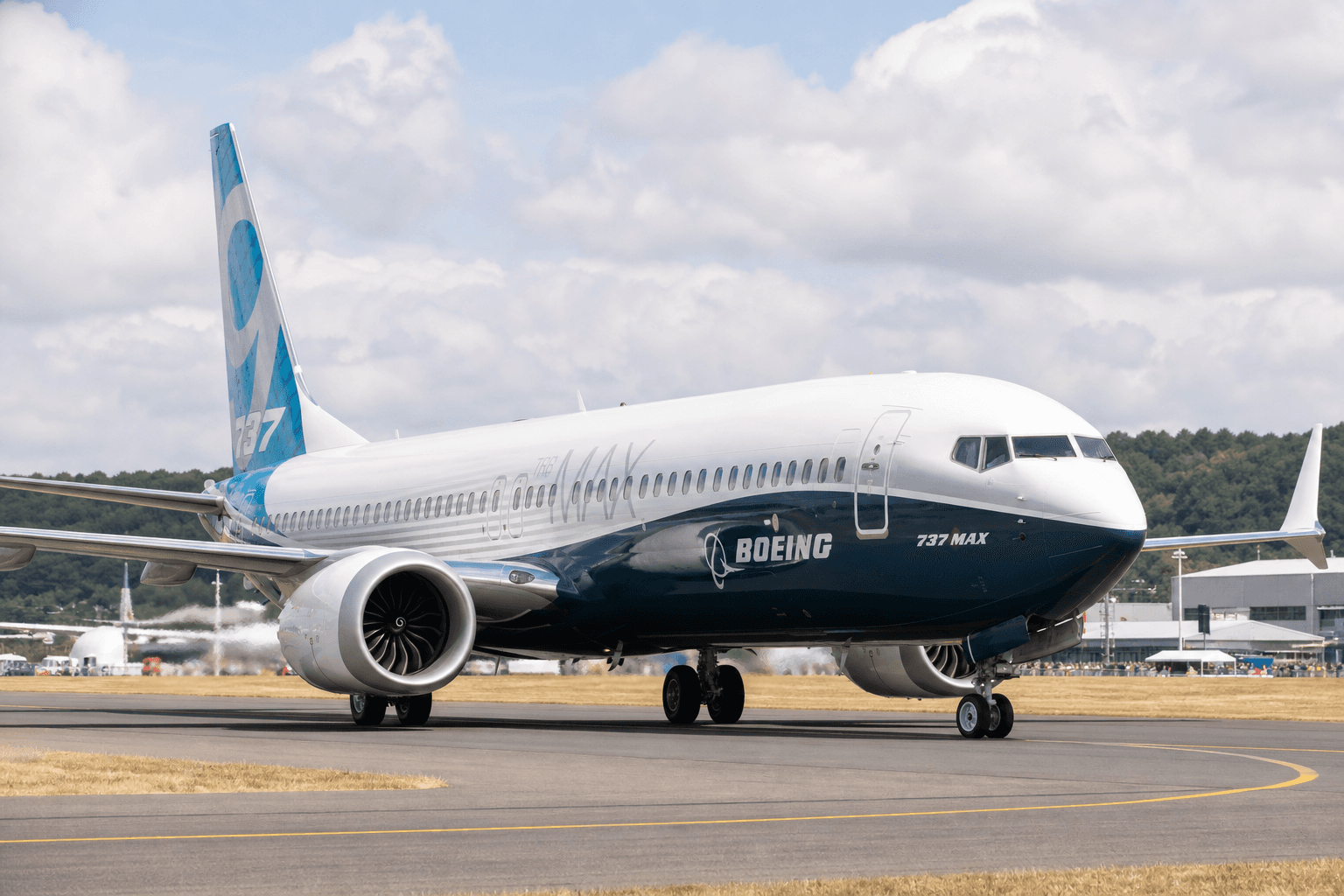
Both deals among those unveiled during Farnborough air show. Uganda Airlines' agreement for four Boeing 787 and four 737 Max jets, plus a batch of 15 787s for lessor AerCap, featured among 38 Boeing aircraft ordered during July. Both deals, and a 737 Max pair for Luxair, were revealed during the Farnborough air show. Boeing's order total for the month also included a single 777X for an unidentified customer, and agreements for 12 further Max aircraft. The airframer has recorded strong activity for the 737 Max 10 – still to secure certification – with more than 130 orders for the variant so far this year. Boeing has taken more than 1,500 orders for the Max 10, and it represents over 30% of the Max backlog of 4,345. Eight 737 Max jets were cancelled in July, leaving the airframer with overall net orders for 438 aircraft over the first seven months of this year. Boeing delivered 53 aircraft in the month, comprising 10 787s, three 767s – including two KC-46 tanker airframes – and a 777F, along with 39 737s.

FlightAware sues Kalshi over unauthorized use of flight cancellation data in betting markets
Flight-tracking company FlightAware has sued prediction-market operator Kalshi, accusing the service of using its data and trademark without permission to settle wagers on US flight cancellations. The lawsuit, filed in US District Court for the Southern District of New York, alleges Kalshi used FlightAware data in prediction markets that allow users to wager money on how many flights will be canceled in a given period of time. FlightAware is seeking a temporary restraining order and permanent injunction to stop Kalshi from using its data and brand in connection with the markets. The dispute flared up in July 2026, when Kalshi disclosed plans for contracts tied to the percentage of flights canceled at airports during specified periods. Kalshi said in a filing with the Commodity Futures Trading Commission (CFTC) that FlightAware data would be used to determine the outcome of the contracts, with US Department of Transportation data serving as a backup. FlightAware immediately objected to the plan. RTX, FlightAware's parent company, said at the time that FlightAware was not involved with any prediction markets and that no company was authorized to use data collected through its network for that purpose. Kalshi initially paused plans for the flight-cancellation contracts following the objections, but later offered cancellation markets using FlightAware information, according to the lawsuit and published reports. FlightAware alleges it repeatedly sent cease-and-desist demands to Kalshi but that the company continued using its data and referring to FlightAware on its website. Kalshi later added a disclaimer stating that FlightAware was not affiliated with or endorsing the markets. The lawsuit also raises a broader concern about allowing people to profit from disruptions to air travel. FlightAware argues that markets tied to flight cancellations could create incentives for people to interfere with airline or airport operations to influence the outcome of a contract. The issue surfaced after Kalshi first proposed the contracts in July, when critics questioned whether someone could deliberately cause disruptions at an airport and then profit from cancellation bets. Kalshi operates a federally regulated prediction market where users trade contracts based on whether future events will occur. The company has expanded rapidly into areas including politics, economics and sports. Prediction markets are overseen in the US at the federal level by the CFTC, but Kalshi has also faced challenges from states that argue some of its contracts amount to gambling that should be regulated under state law.
The Daily Touch & Go
The day's best aviation news in your inbox. Free, no spam.