

Image: William Suter from Bluffton, OH, USA · Public domain · via Wikimedia Commons
Ohio Pilot Mike McCoy Turns Passion Into Ownership and Aviation Career
At 31, Mike McCoy from Mentor, Ohio, bridges the gap between everyday pilots and aircraft owners through determination and community support.
The gist
Mike McCoy’s journey from aviation enthusiast to airplane owner and FBO line service worker exemplifies how passion and perseverance can unlock flying careers for ordinary people.
Continuing coverage
All Flight Training →- 1966 Cessna 150G Offers Affordable Time-Building with Modern Avionics Upgrade
- 2007 Diamond DA40-FP Offers Reliable Composite Flight Training and Cross-Country Capability
- Part 141 Flight Schools Require Approved Airports for Cross-Country Flights to Count
- Texas Cadet Sebastian Vargas Becomes 200th Private Pilot Funded by Ray Foundation Through CAP
- Cirrus Launches TRAC10 Training Aircraft for Professional Flight Schools
Mike McCoy’s story starts with an early fascination for flight sparked during his childhood near a Marine air station in Parris Island, South Carolina. Surrounded by military jets and inspired by proximity to the skies, McCoy nurtured a dream to fly that took shape on a 12th birthday flight in a J–3 Cub arranged by his father. His family later relocated to Ohio, settling near the airport where McCoy now works, embedding aviation into his daily life from an early age.
The airport, Lake County Executive Airport, formerly known as Willoughby Lost Nation Municipal Airport, experienced threats of closure for nearly a decade until 2014 when the city reversed its decision. This turnaround, aided by advocacy from groups like AOPA, underscored the vital economic role general aviation airports play in their communities. For McCoy, this timing was pivotal: attending a flight school open house that year introduced him to formal flight training amidst a supportive local aviation environment.
By late 2014, as a high school senior, McCoy shifted his career path after deciding a job scrubbing car wheels wasn’t his future. He pursued introductory flight lessons with Vector Aviation and quickly sought work at the airport’s FBO, Classic Jet Center. His willingness to work line service secured him a job that he has held for over a decade, blending on-the-ground aviation operations with personal flight progression.
Funding remains a common hurdle for student pilots, and McCoy was no exception. His training progressed intermittently as finances allowed, a challenge familiar to many. Yet persistent dedication resulted in earning his private pilot certificate in November 2024, nearly a decade after his first flights. This milestone launched a new phase focused on ownership and deeper community ties.
Hands-on mentorship helped shape McCoy’s practical skills beyond flying. Learning aircraft maintenance from A&P mechanic Joe Mattz provided invaluable mechanical insights, while Classic Jet Center manager Mike Toman guided him toward a leadership role within the FBO and facilitated McCoy’s transition into aircraft ownership.
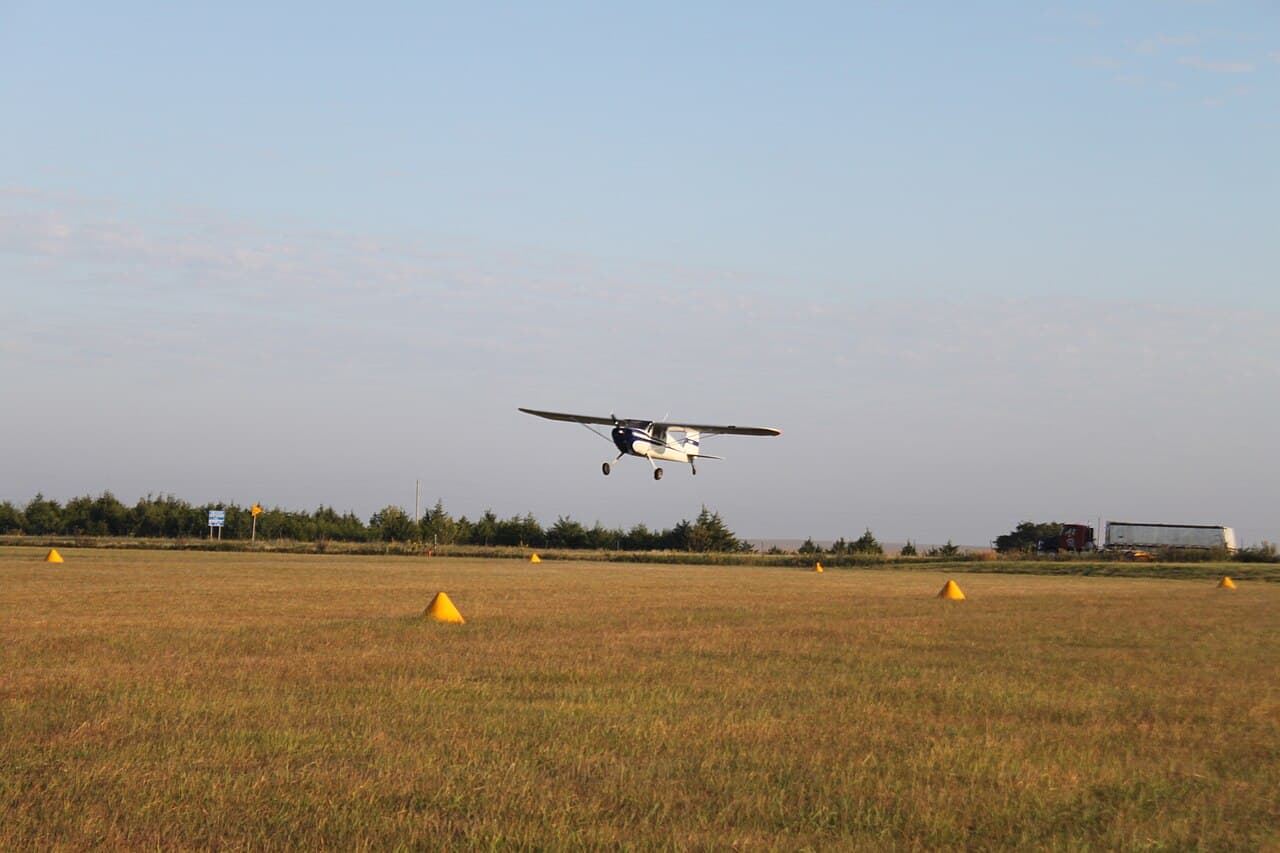
Aircraft ownership became a reality in April 2025 when McCoy purchased a Cessna 140, a deal enabled through connections within the local aviation community. This step marked a significant achievement for a relatively young pilot with roughly 150 flight hours. Ownership offers new responsibilities and a deeper appreciation for aircraft care, critical traits for someone servicing other owners’ airplanes at an FBO.
McCoy views working line service as a foundational step toward broader ambitions. His future goals include flying charter flights and potentially working as a ferry pilot to build flight hours and expand professional opportunities. The ongoing support from fellow aviators and mentors remains a vital asset in navigating the aviation industry’s challenges and costs.
His journey embodies how commitment, community advocacy, and mentorship can open pathways into aviation once thought limited to affluent individuals. McCoy’s progression from a child entranced by military jets to a private pilot and aircraft owner working at a busy FBO highlights the enduring accessibility of flight for determined individuals.
Frequently asked questions
- How did Mike McCoy first become interested in aviation?
- McCoy’s interest began as a child living near a Marine air station with military jets flying overhead, and a birthday flight in a J–3 Cub solidified his passion to fly.
- What were the challenges Mike McCoy faced during his flight training?
- The primary challenge was funding, requiring pauses and restarts in training due to financial constraints, a common issue for many student pilots.
- How did Mike McCoy acquire his first airplane?
- With mentorship and connections through his employer at Classic Jet Center, McCoy purchased a Cessna 140 from a local contract pilot in Ohio in April 2025.
Read more
All Flight Training →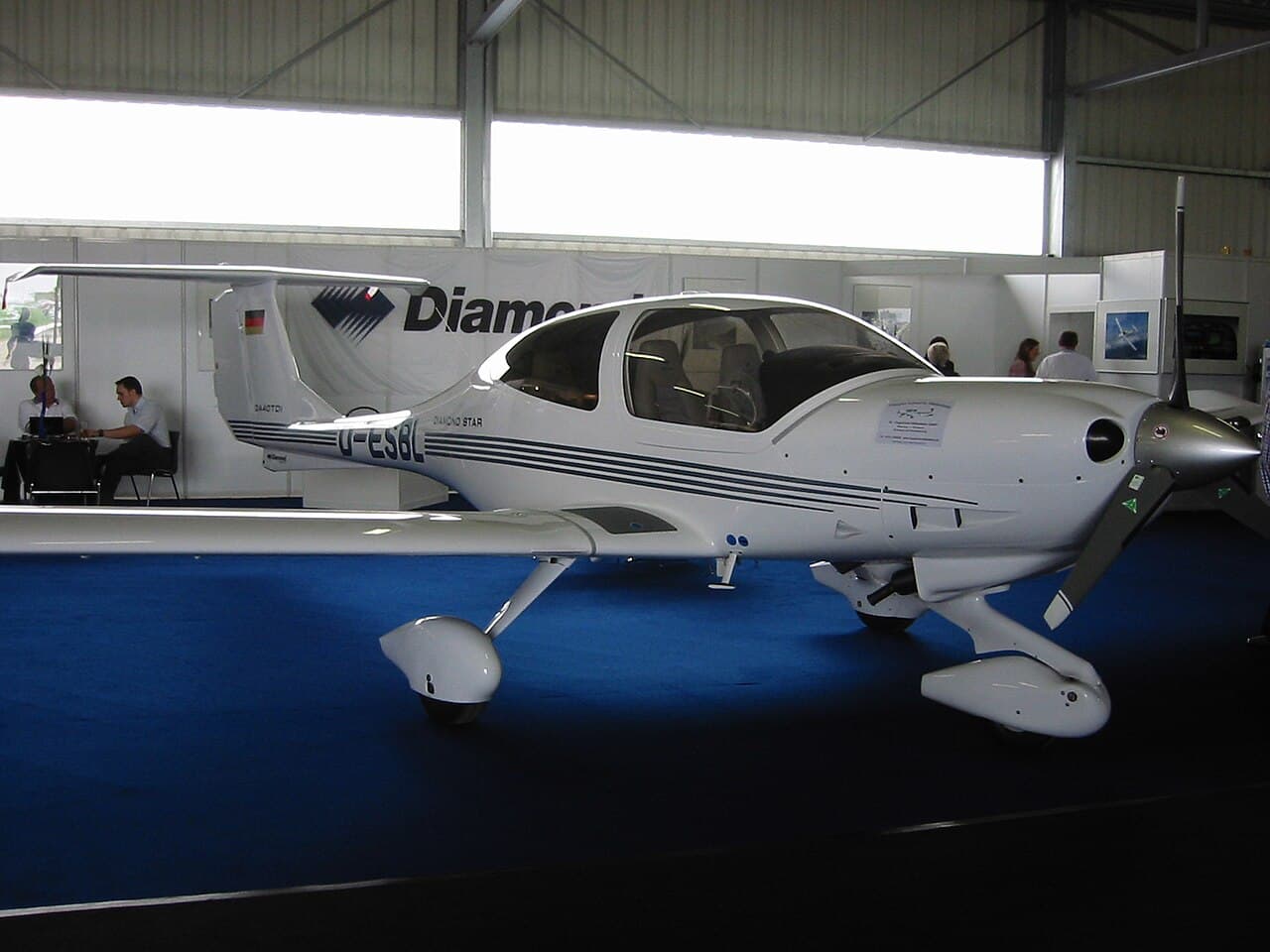
2007 Diamond DA40-FP Offers Reliable Composite Flight Training and Cross-Country Capability
Every day, the team at Aircraft For Sale chooses an airplane that catches our attention because it is unique, a good deal, or has other qualities we find interesting. You can read Aircraft For Sale: Today's Top Pick at FLYINGMag.com daily. Today's Top Pick is a 2007 Diamond DA40. Standing out in the aviation landscape with its aerodynamically efficient composite construction, the Diamond DA40 has cultivated a stellar reputation as a highly capable and forgiving platform. This 2007 Diamond DA40-FP Diamond Star presents an exceptional opportunity for first-time aircraft owners or flight schools looking to acquire a reliable, economical cross-country machine. The airframe boasts 5,870 hours total time since new (TTSN) and a clean pedigree with no known damage history and completely intact logbooks. Sitting in the pilot's seat reveals an advanced instrument layout centered around a fully integrated Garmin G1000 flight deck, offering phenomenal situational awareness for IFR operations. The dual 10-inch primary and multi-function displays are supported by dual Garmin GIA 63 integrated radio modules, a GRS 77 solid-state AHRS, and a GTX 335R transponder. While configured as a non-WAAS setup without an autopilot, the panel provides an exceptional environment for building genuine stick-and-rudder instrument proficiency. The cockpit is outfitted with several thoughtful utilitarian touches designed for comfort and practicality. The installation of a larger factory-style bubble canopy provides significantly increased headroom, making it ideal for taller pilots or demanding flight school operations. Further cabin refinements include a four-way baggage compartment system, canopy vent window scoops, dual USB power ports, and a convenience package featuring integral cupholders and large-capacity side pockets. 2007 Diamond DA40 [Credit: Aerista] Moving beyond the sleek composite lines, the nose section houses a proven and dependable Lycoming IO-360 powerplant that consistently delivers economical operation and predictable performance. Providing a respectable 829-pound useful load, this aircraft is further enhanced by several valuable upgrades, including a Power Flow tuned exhaust system that maximizes efficiency and a Plane-Power heavy-duty alternator. A pre-installed EZ Heat engine pre-heater ensures the powerplant is protected during cold-weather operations. Underscoring its readiness for immediate flightline duty, the aircraft is backed by a fresh annual inspection recently completed in January 2026. This thorough checkup guarantees mechanical integrity and dispatch reliability right out of the gate, with the ELT inspection not due until May 2027. Listed at $224,900 , this Colorado-based 2007 Diamond DA40-FP Diamond Star provides an affordable and highly attractive pathway into modern composite aircraft ownership. If you're exploring ownership options, FLYING Finance can help get you airborne. Use our airplane loan calculator to estimate your monthly payments, or connect with an aviation finance expert at flyingfinance.com . FLYING Magazine: Diamond's DA40 NG Just Might Be What the General Aviation Market Is Clamoring For FLYING Magazine: Diamond Offers a Year's 'Free Flying' for DA40 Buyers FLYING Magazine: UNSW School of Aviation Expands Diamond Fleet Plane + Pilot : Rediscovering the Diamond DA40 Plane + Pilot : Diamond DA40 XL: Polishing the Diamond Star Plane + Pilot : Diamond Aircraft to Build Electric DA40 Model The Aviation Consumer: Used Aircraft Guide: Diamond DA40 Star The Aviation Consumer : Diamond DA40 Star

From Build Nights to Solo Flight: Cadet Carter Froehlich's Aviation Journey
By Josh Manring, EAA 1387901 For Cadet 2nd Lt. Carter Froehlich, Civil Air Patrol, aviation started with a trip to EAA AirVenture Oshkosh. In 2015, Carter attended AirVenture with his father at just 5 years old. They camped for the entire week, surrounded by airplanes, air shows, and aviation enthusiasts from around the world. "It […]

Embry-Riddle's Proposed Flight Training Facility at Deep Woods Ranch Faces Local Opposition
Residents have voiced concerns about noise, traffic, and environmental impact as the proposal moves through local review.
United Flight Attendants Can Now Use Secret Crew Bunks During Non-Rev Travel
A few weeks ago, it emerged that flight attendants at United Airlines who are using their ‘non-rev’ staff travel privileges might soon be able to occupy one of the most comfortable flat beds on board the Chicago-based carrier’s international widebody aircraft fleet. And, no, we don’t mean a Polaris Business Class seat. We’re referring to something far more comfortable and spacious… the secret crew bunks, or what is officially called the ‘Overhead Flight Attendant Rest’ or OFAR on Boeing 777s and 787 Dreamliners. The idea behind the policy is that non-rev flight attendants who have been left with a jumpseat because every seat is otherwise occupied by a fare-paying passenger will now be able to get some rest during a long-haul flight – something that is almost otherwise impossible if you’re stuck on a pull-down jumpseat. While some other U.S. airlines, including non-unionized Delta Air Lines, have allowed their non-rev jumpseating flight attendants to use crew bunks for several years, the opportunity has only now been opened up to United Airlines flight attendants following an agreement between the carrier and the Association of Flight Attendants (AFA-CWA) as part of the successful conclusion of very lengthy contract negotiations. But there was a delay in actually implementing the benefit because the union needed to lock down a policy to make it as fair as possible. Thankfully, that policy has now been agreed. Here’s how it will work: The crew bunks (or crew rest seats on aircraft without bunks) will only be offered to flight attendants who have been assigned a jumpseat. If a non-rev passenger has been assigned any type of passenger seat, that’s where they have to stay. The bunks will only be available for use by United Airlines flight attendants. If a flight attendant for another airline is jumpseating, then they can’t use the crew bunks, even if they are trained on that aircraft type. Dependent on the aircraft type and the number of crew actually working the flight, there may or may not be a spare bunk that can be used. And no, flight attendants can’t share bunks. If there is more than one non-rev jumpseater, then use of the bunks will go in seniority order. The bunks can only be occupied when the aircraft is at an altitude of at least 15,000 feet on Boeing 787s and 25,000 feet on Boeing 777s. For taxi, takeoff, ascent, descent, and landing, non-rev crew have to be in their jumpseat. Non-rev flight attendants need to be careful not to disturb the working crew when they are taking their assigned breaks. United Airlines managers, even those who have gone through flight attendant training, aren’t allowed to occupy the bunks as part of this policy. Even when there aren’t enough crew rest seats or bunks available for non-rev flight attendants when the working crew is taking their breaks, that doesn’t mean they can’t still be used. A non-rev traveler could use the bunks during the first and second meal service, and then sit on their jumpseat during the assigned crew breaks. Every flight attendant who works on widebody aircraft will have their favorite bunk, so you can probably imagine there being some type of coordination with the international purser over which bunks the non-rev travelers are allowed to occupy, so as not to annoy the working crew. The bunks of the Boeing 777-300 are generally regarded as one of the best OFAR facilities, with every bunk being equal in the amount of space available and the threat of noise disturbance from the cabin. In contrast, the Boeing 787 has some bunks that are slightly more private, and one bunk that is slightly roomier… but additional space comes at the expense of peace as it is located right above the galley area. While not a concern for United’s flight attendants, one of the most hated crew bunks are one the Airbus A380, and, specifically, a module that was built in the cabin on the main deck. These bunks are not only pretty cramped, but they also carry every bit of sound from within the cabin.
The Daily Touch & Go
The day's best aviation news in your inbox. Free, no spam.