


Illustration: The Touch & Go
Swiss electric propulsion firm H55 cuts workforce nearly in half after certification milestone
H55, a Swiss electric aviation propulsion developer, has reduced its staff significantly following a critical certification achievement.
The gist
H55 downsizes workforce drastically after hitting a major certification milestone in electric propulsion.
Continuing coverage
All Electric Aviation →Swiss-based electric propulsion company H55 has announced a substantial reduction in its workforce, cutting nearly half of its employees shortly after reaching a crucial certification milestone. This move marks a significant shift for the company, which has been focused on delivering electric propulsion systems for aviation. The timing suggests a strategic pivot following validation of key product standards.
The certification milestone indicates that H55 has met stringent regulatory requirements confirming the safety and performance of its electric propulsion technology. This achievement is a critical step toward broader adoption of cleaner, quieter, and more efficient aircraft propulsion solutions in the general aviation and possibly light commercial sectors.
Prior to this reduction, H55 had been expanding its team to accelerate development and commercialization efforts amidst growing industry interest in electric and hybrid propulsion. The downsizing aligns with the company’s transition from the development and certification phase to a more streamlined operational and production mode, potentially reflecting cost management priorities or shifts in market demand.
H55's technology targets a niche within electric aviation focused on delivering propulsive power with reduced environmental impact. Achieving certification helps pave the way for incorporation of their systems in more aircraft models, contributing to sustainability goals in aviation. However, the workforce cuts underscore the challenges electric aviation companies face in balancing innovation with economic realities.
The company’s future will depend on leveraging its certified propulsion system to secure partnerships and customer orders while managing resources efficiently. This downsizing could allow H55 to sharpen focus on delivering production-ready systems and supporting early adopters in the electric aviation market.
As electric propulsion continues to emerge, industry observers will watch how firms like H55 navigate the path from prototypes and certifications to viable commercial products. The company’s recent actions reflect the often difficult transition phase between development success and sustainable business operations in this rapidly evolving sector.
Read more
All Technology/eVTOL →
FAA Proposes Noise-Based Rules to Enable Supersonic Flight Over US Land
The agency has launched rulemaking aimed at allowing next-generation supersonic aircraft to operate over land under new noise standards.
Archer Midnight Electric eVTOL Flies Round Trip Between Salinas and Monterey Airports
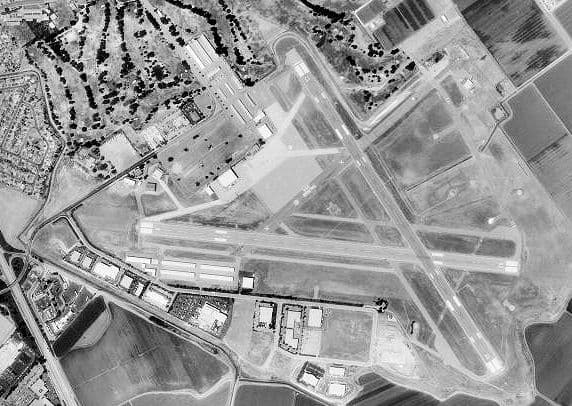
Archer Aviation's all-electric Midnight aircraft completed a piloted round trip between Salinas Municipal Airport and Monterey Regional Airport on July 30, according to the company. Archer said it coordinated the flights closely with the FAA. Nine-Minute Flights Each leg between the two California airports took about nine minutes. The company compared that time with a drive of 35 minutes or more between Salinas and Monterey. "This roundtrip journey is exactly the kind of route we plan to fly with Midnight under the eIPP and in LA during the Olympic Games ," Archer founder and CEO Adam Goldstein said. "This mission provides a template for us to replicate with our partners across Texas, Florida and New York as we get ready for eIPP operations later this year." Preparing for eIPP Operations The company said the flight supports its preparations for operations under the White House's eVTOL Integration Pilot Program (eIPP). The company is working with federal, state and local governments on procedures, infrastructure and local operating capabilities for future air taxi flights. The company is also preparing for planned operations in Los Angeles, where Archer is the designated air taxi provider for the 2028 Olympic and Paralympic Games.

Orlando International Airport to Build US's First eVTOL Vertistop with Flights Expected This Year
In an exciting move, the Greater Orlando Aviation Authority will proceed with approved plans to develop the United States first vertistop . Located on the grounds of Orlando International Airport (MCO), this is the first step in bringing electric vertical takeoff and landing to the Central Florida region.
Air Atlantis, Portuguese Charter Airline, Shaped 1980s European Holiday Travel
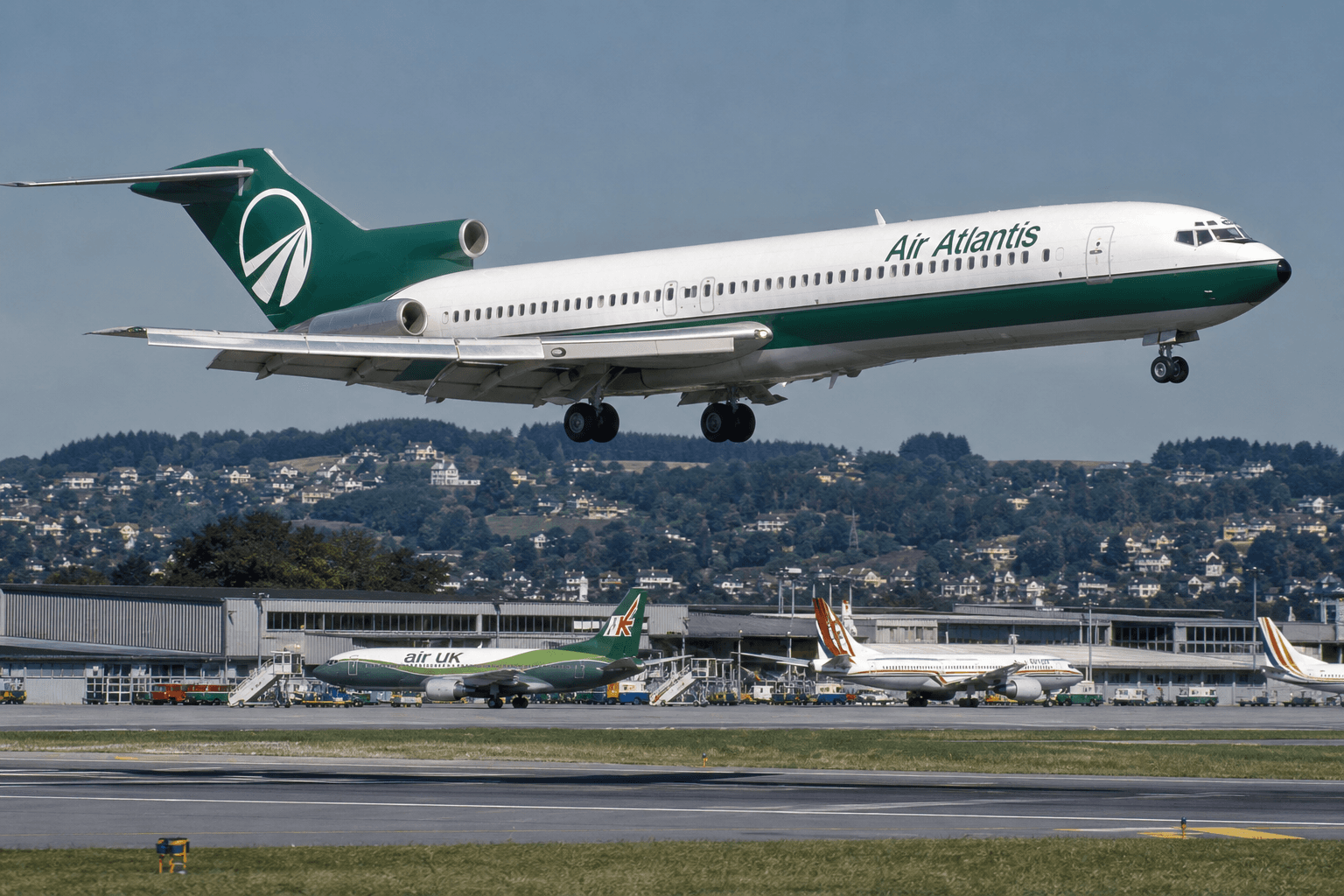
For many plane spotters who frequented regional airports during the late 1980s and early 1990s, the sight of an Air Atlantis aircraft arriving from Portugal remains a fond memory. Wearing an attractive green-and-white livery and operating a fleet of Boeing 727s and 737s, the airline became a familiar visitor at airports across the UK and Europe during the package holiday boom. Although Air Atlantis existed for less than a decade, it played an important role in Portuguese aviation and helped support the rapid growth of tourism to the Algarve and Madeira before eventually being absorbed back into its parent company. The Birth of Air Atlantis Air Atlantis Boeing 707 at Birmingham. Photo: simon butler Air Atlantis was established in 1985 as a wholly owned subsidiary of Portugal’s flag carrier, TAP Air Portugal. During the 1980s, demand for leisure travel from northern Europe to Portugal was growing rapidly, particularly from the United Kingdom, Germany and Scandinavia. Rather than use its mainline fleet on charter operations, TAP created a dedicated airline that could focus entirely on the booming holiday market while allowing the parent airline to concentrate on scheduled international services. Based at Lisbon Airport, Air Atlantis began operations in 1986 and quickly became a major player in Portugal’s charter sector. Charter Flights Across Europe Air Atlantis 727-200. Photo: Rob Hodgkins The airline’s business centred on flying holidaymakers from across Europe to Portugal’s popular resort destinations. Flights linked cities throughout Britain, Ireland, Germany, France, Belgium, the Netherlands and Scandinavia with Lisbon, Faro, Funchal and Porto, carrying thousands of package holiday passengers every summer. British enthusiasts regularly saw Air Atlantis aircraft at airports including Manchester, Birmingham, Glasgow, Newcastle, East Midlands, Bristol, Bournemouth and many other regional airports. Their flights were often operated on behalf of major tour operators, meaning the airline became a familiar sight despite never operating scheduled services of its own. As well as leisure flights, Air Atlantis occasionally undertook ad hoc charter work and aircraft leasing for other airlines when demand required. The Air Atlantis Fleet Pedro Aragão, CC BY-SA 3.0 GFDL, via Wikimedia Commons Air Atlantis operated a fleet mostly in line with its parent, TAP Air Portugal, through whom it mostly procured its aircraft. In fact, the airline’s livery closely resembled that of the parent carrier through its use of white, green and red, reflecting the Portuguese flag. Air Atlantis began operations with Boeing 707-300, 727-100 and 737-200 aircraft in 1985. It later added Boeing 727-200 and 737-300 types as the fleet grew. In total, 19 aircraft were operated by Air Atlantis between 1985 and 1989. Perhaps the airline’s greatest attraction for enthusiasts was its fleet. The aircraft were configured in high-density seating layouts to maximise passenger capacity. Part of the Golden Age of Charter Flying Air Atlantis arrived at a time when charter airlines were flourishing across Europe. During the late 1980s, airports around the UK welcomed a fascinating variety of leisure carriers every summer. Britannia Airways, Dan-Air, Air Europe, Monarch, TEA, Spantax and many others regularly appeared alongside overseas operators such as Air Atlantis. For plane spotters, this meant regional airports often offered far greater variety than they do today, with unusual airlines and aircraft arriving from across Europe on weekly holiday flights. Why Did Air Atlantis Disappear? After Air Atlantis was closed down some of its fleet merged back into TAP Air Portugal. Photo: Aero Icarus By the early 1990s, the European airline market was changing rapidly. Charter and scheduled operations were becoming increasingly integrated, while deregulation created new opportunities for airlines to operate more flexibly. In 1993, TAP decided to wind up Air Atlantis and bring its charter activities back under the main airline. The fleet was gradually dispersed, with several aircraft finding new homes elsewhere around the world. Although the airline disappeared after only seven years, it left behind fond memories for enthusiasts who photographed its aircraft during the golden age of European package holidays. Do you remember seeing Air Atlantis at your local airport? Did you ever fly on the airline? Leave a comment below! For more articles on historic airlines and aircraft, remember to sign up for our free newsletter below! Title image: Maarten Visser
The Daily Touch & Go
The day's best aviation news in your inbox. Free, no spam.