

Illustration: The Touch & Go
Air Force T-7A Red Hawk Completes First Joint Development and Operational Test Flight
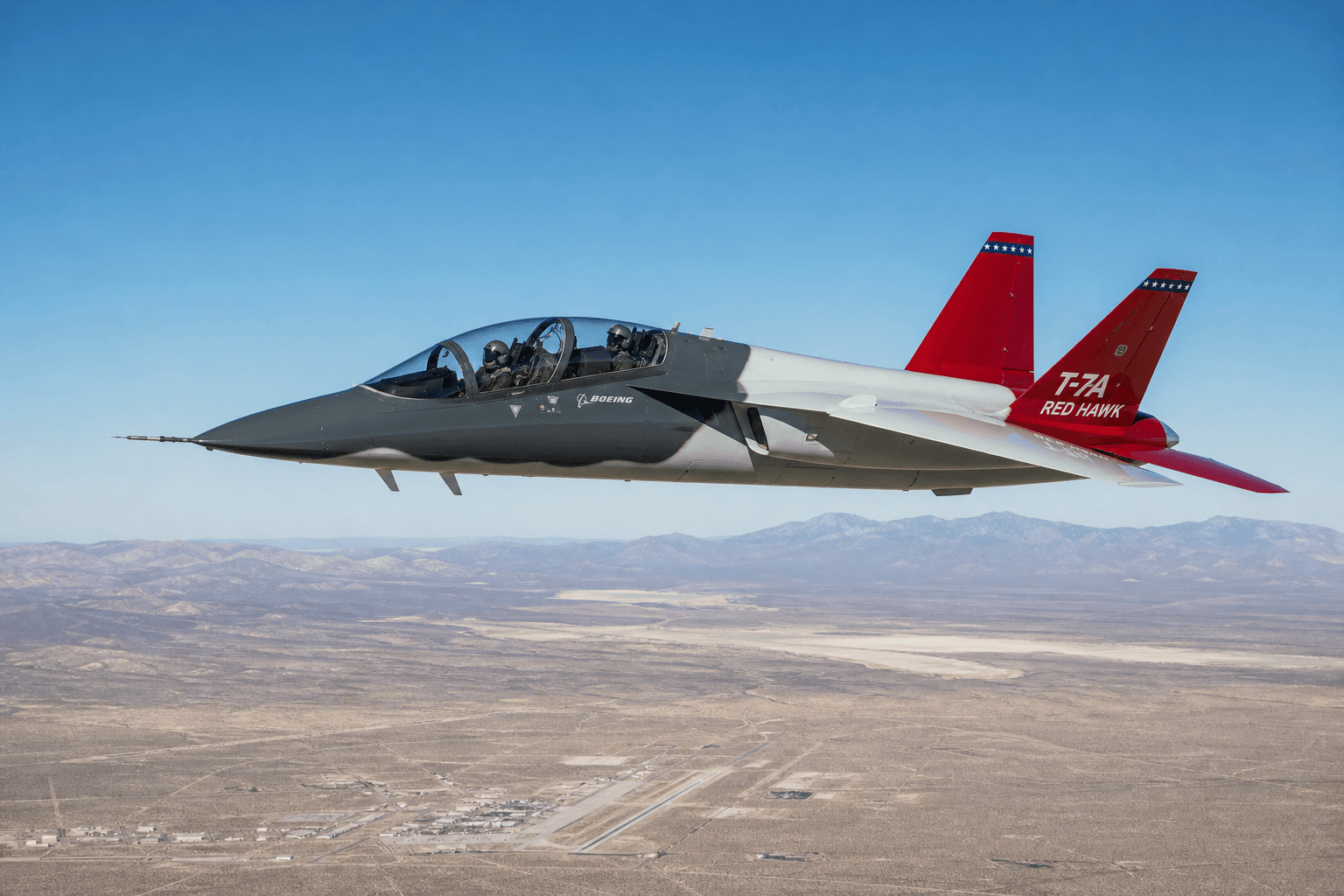
The U.S. Air Force completed the T-7A Red Hawk's first sortie with both developmental and operational test crew at Edwards AFB, a milestone toward operational readiness.
The gist
T-7A Red Hawk flies first combined developmental and operational test mission, advancing its entry into service by 2027.
The U.S. Air Force has completed a significant milestone in the T-7A Red Hawk advanced jet trainer program with the first flight combining both developmental and operational test personnel. This event took place on June 25 at Edwards Air Force Base in California, marking an important step toward preparing the aircraft for operational use. The joint test flight represents a key transition toward integrated evaluation of the T-7A's capabilities in real-world training scenarios.
During the sortie, the cockpit was crewed by a developmental test pilot from the 412th Test Wing and an operational weapon systems officer from the Air Force Operational Test and Evaluation Center (AFOTEC) Detachment 5. Developmental testing focuses on verifying the aircraft meets technical specifications, while operational testing assesses performance related to the training missions the aircraft will fulfill. Combining these roles in a single flight helps streamline the test program and accelerates the process of validating the T-7A for operational deployment.
Maj. Kevin Ueunten, the AFOTEC T-7A test director and a former F-15E Strike Eagle weapon systems officer, flew as the operational test officer during the mission. He collected crucial operational test data to assess the T-7A's functionality and effectiveness from a weapons officer’s perspective. This joint effort between developmental and operational testers is intended to ensure the aircraft is both technically sound and suitable for actual use by training squadrons.
The Air Force approved the T-7A Red Hawk for initial production in April, progressing the program into its next phase. A $219 million contract was awarded for the first 14 aircraft, covering not only the airframes but also spare parts, support equipment, and training resources needed to sustain initial operations. This production contract represents confidence that the T-7A is ready to move beyond developmental milestones toward delivering operational trainers to the pilot pipeline.
The procurement strategy includes evaluating the first three low-rate production lots separately, allowing feedback from ongoing testing to be incorporated before committing to further acquisitions. This approach provides flexibility and quality assurance as the Air Force transitions from development to widespread fielding of the new trainer. The phased purchase safeguards against premature mass production without thorough validation of the aircraft's operational readiness and performance.
The T-7A Red Hawk is designed to replace the aging T-38 Talon in preparing Air Force pilots for advanced fighter and bomber aircraft. The program anticipates 351 aircraft and 46 ground-based simulators to be distributed across five Air Education and Training Command bases. This infrastructure will support the next generation of combat readiness by providing modern training aligned with future air combat requirements.
Initial operational capability (IOC) for the T-7A is targeted for August 2027. Reaching IOC means the Air Force will have a sufficient number of aircraft and trained personnel to begin standard operational use within training units. This joint developmental and operational test flight is a vital step on the timeline toward that goal, validating the integrated systems and training capabilities essential to the program's success.
The combined test flight conducted on June 25 highlights the Air Force’s deliberate approach to transitioning from development into operational service with the T-7A Red Hawk. By uniting developmental and operational test teams, the Air Force ensures that technical performance and real-world mission requirements are evaluated concurrently, aligning the aircraft closely with pilot training needs for the upcoming generation of combat aircraft.
Frequently asked questions
- What was the significance of the T-7A Red Hawk joint test sortie completed in June 2026?
- It was the first flight combining developmental and operational test crews, marking a key milestone in validating the trainer for operational use.
- Who participated in the T-7A joint test flight and what were their roles?
- A developmental test pilot from the 412th Test Wing and an operational weapon systems officer from AFOTEC Detachment 5 flew together, combining technical and operational evaluations.
- What is the production plan for the T-7A Red Hawk following the testing phase?
- The Air Force approved initial production with a $219 million contract for 14 aircraft and plans to evaluate the first three low-rate production lots separately before further purchases. Initial operational capability is scheduled for August 2027.
Read more
All Military/Defense →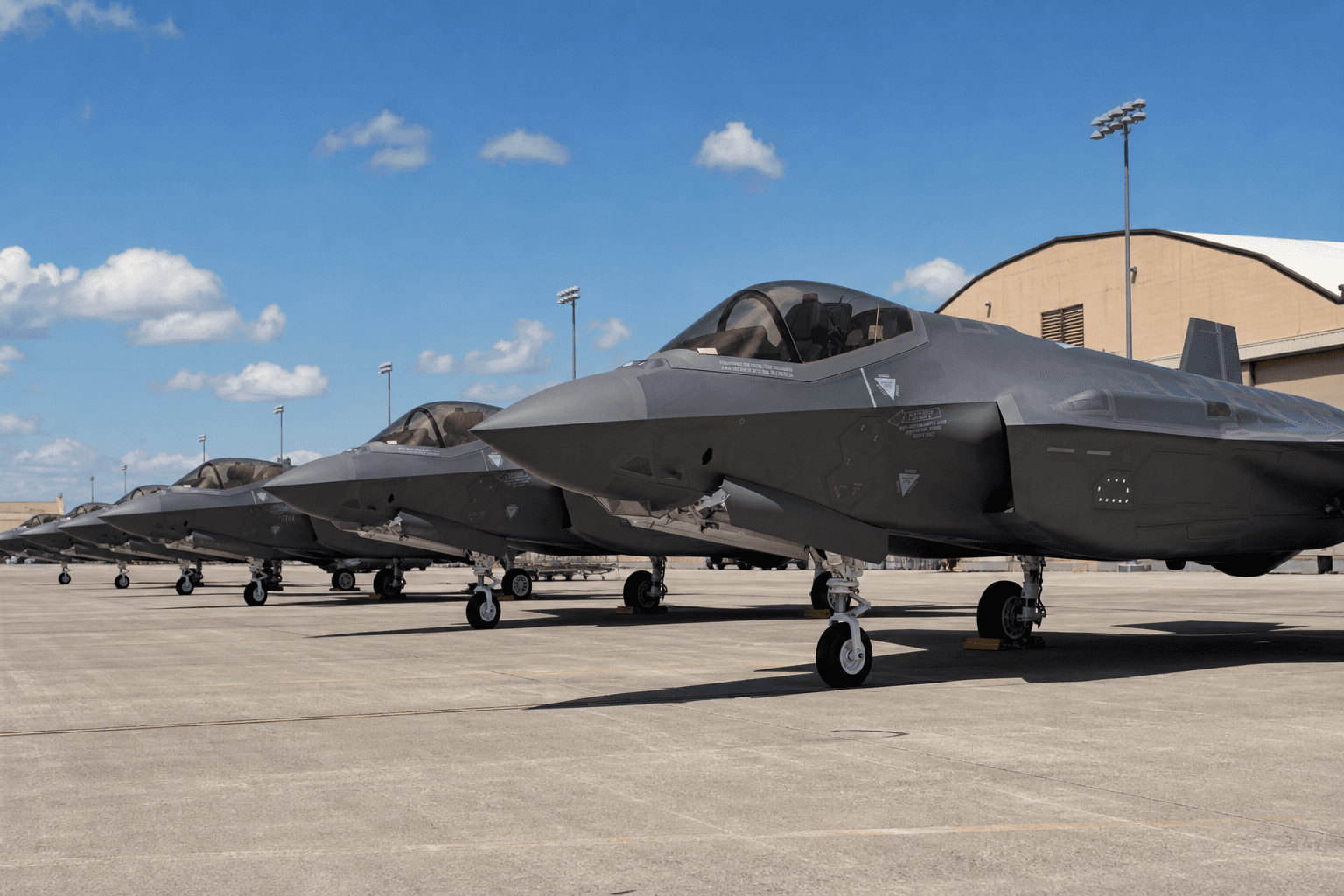
At Least 15 F-35s Delivered Without Required Equipment Since May 2025
Pictured is a U.S. Air Force photo of F-35A fighters at Jacksonville Air National Guard Base, Fla. on July 9, 2025. At least 15 F-35s built in the last year have lacked required equipment, according to a Defense Contract Management Agency (DCMA) list sent to sister publication Defense Daily after a Freedom of Information Act (FOIA) request. On Feb. 7, Defense Daily requested from DCMA a list of all Department of Defense Form DD-250s–Material Inspection and Receiving Reports–filed with the agency since May 2025, for all Lockheed Martin F-35 fighters delivered to the U.S. Air Force, U.S. Navy, and U.S. Marine Corps between May 1, 2025, and Feb. 6, 2026. When a military service accepts a system but does not mark it as delivered because of material shortfalls, that system is "DD-250ed" and is in a not operationally ready-supply (NORS) status until the gaps are filled. The signing of the "receipt"–the DD-250–marks a transfer in ownership from the contractor to the federal government. Nine "DD-250ed" F-35s are on the list provided by DCMA on July 13 in response to the FOIA request–one Marine F-35B to be delivered/ferried to VMFA-533 at Marine Corps Air Station Beaufort, S.C., three Navy F-35Cs to be delivered/ferried to VFA-125, a fleet replacement squadron at Naval Air Station Lemoore, Calif., one F-35A to be delivered/ferried to the 325 th Fighter Wing, a training wing at Tyndall AFB, Fla., and four F-35As to be delivered/ferried to the 125 th Fighter Wing, an Air National Guard domestic air defense wing. Asked why each of the above nine aircraft were "DD-250ed," the F-35 Joint Program Office (JPO) wrote in a July 14 email that "we cannot detail the specific equipment shortfalls, resolution timelines, or variant mix of these aircraft." "Due to program security reasons, we are protecting any additional information with enhanced security measures," according to the JPO. In addition to the above nine aircraft, six Marine Corps F-35s are in NORS status as "DD-250ed." Marine Lt. Gen. Gregory Masiello, the director of the F-35 Joint Program Office (JPO), testified last month that "we have accepted six aircraft for the Marine Corps that do not have a radar installed" because the Marine Corps is awaiting the installation of the Northrop Grumman [NOC] APG-85 radar, which the Pentagon expects to field in the first half of 2028. The APG-85 is critical to the 55 upgrades in the Block 4 program–22 of which have fielded so far, including seven last year, and six on target for this year, according to Masiello. For full functionality, the APG-85 and Block 4 require 62 kilowatts to 80 kilowatts (kW) of cooling versus the 32 kW on the plane now. The current mission capable rate of the F-35 is 56 percent, and the full mission capable rate is 25 percent. Radar mountings in the F-35's nose are different for the current APG-81, also by Northrop Grumman, and the APG-85–a difference which has helped complicate fielding of the new radar that was to deliver with F-35 Lot 17. The Air Force has been considering an APG-81/APG-85 dual-mount bulkhead, though the latter may take two years to field. The service's fiscal 2027 future years defense plan (FYDP) contains $133 million in fiscal 2031 for retrofitting 14 F-35As with APG-85s–a unit cost of $9.5 million per radar, and outside the FYDP the service said it plans to spend about $1.6 billion to retrofit another 167 jets with the APG-85. The first signed DD-250 for an F-35 in Lot 17 was on July 8, 2025, for an F-35A delivered/ferried the next day to the 125th Fighter Wing in Jacksonville, according to the list provided by DCMA in response to the FOIA request. Radar-less F-35s must fly with nose ballast to balance the fighter during flight. Temporarily radar-less fighters are not unprecedented. For example, in the late 1960s, McDonnell Douglas, now part of Boeing, put lead in the nose of the F-4J for the Navy/Marine Corps due to late deliveries of the fighter's government furnished equipment radar by Westinghouse, now part of Northrop Grumman, and in the 1980s, the Panavia Tornado F2 interceptor had so-called "Blue Circle" concrete in the nose due to delays in the development of the fighter's Foxhunter radar by GEC-Marconi, now part of BAE Systems. British Aerospace, Germany's MBB, and Aeritalia built the Panavia Tornado. Those companies are now part of BAE Systems, Airbus, and Leonardo, respectively. A version of this story originally appeared in sister publication Defense Daily .
USAF Requests $1.7B to Upgrade B-1 and B-2 as B-21 Raider Production Ramps Up
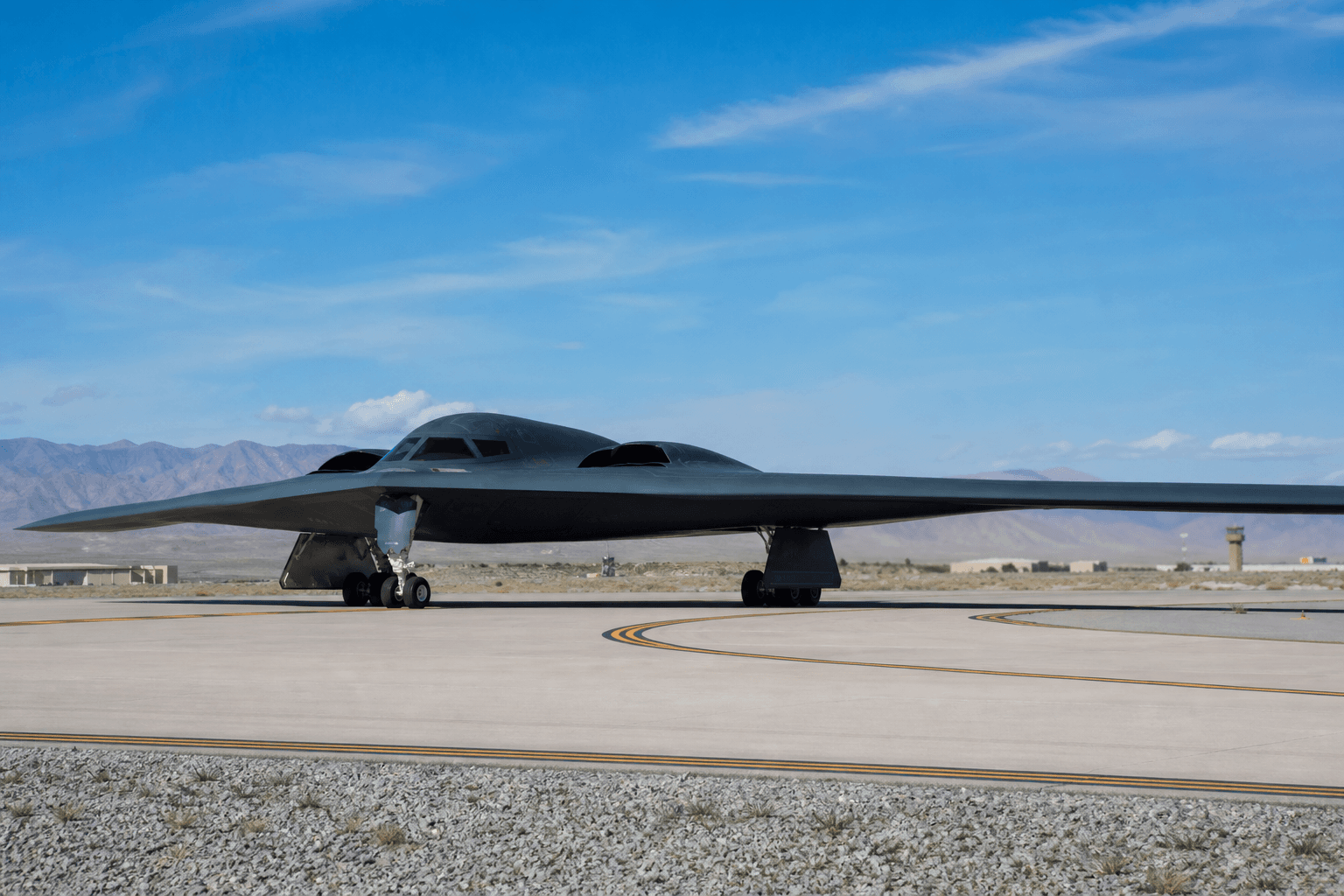
The Northrop Grumman B-21 Raider program is already underway, and the aircraft is the future of the US military's long-range strike capability. The Raider is set to replace legacy aircraft , such as the B-2 Spirit and the Rockwell International B-1B Lancer. While the B-21 is set for operational service as soon as 2027, it will take time for the United States Air Force (USAF) to receive enough of the aircraft to finally and permanently retire both older bombers.
USAF Plans 267 F-15EX Fighters to Complement Growing F-35 Fleet as 'Missile Trucks'
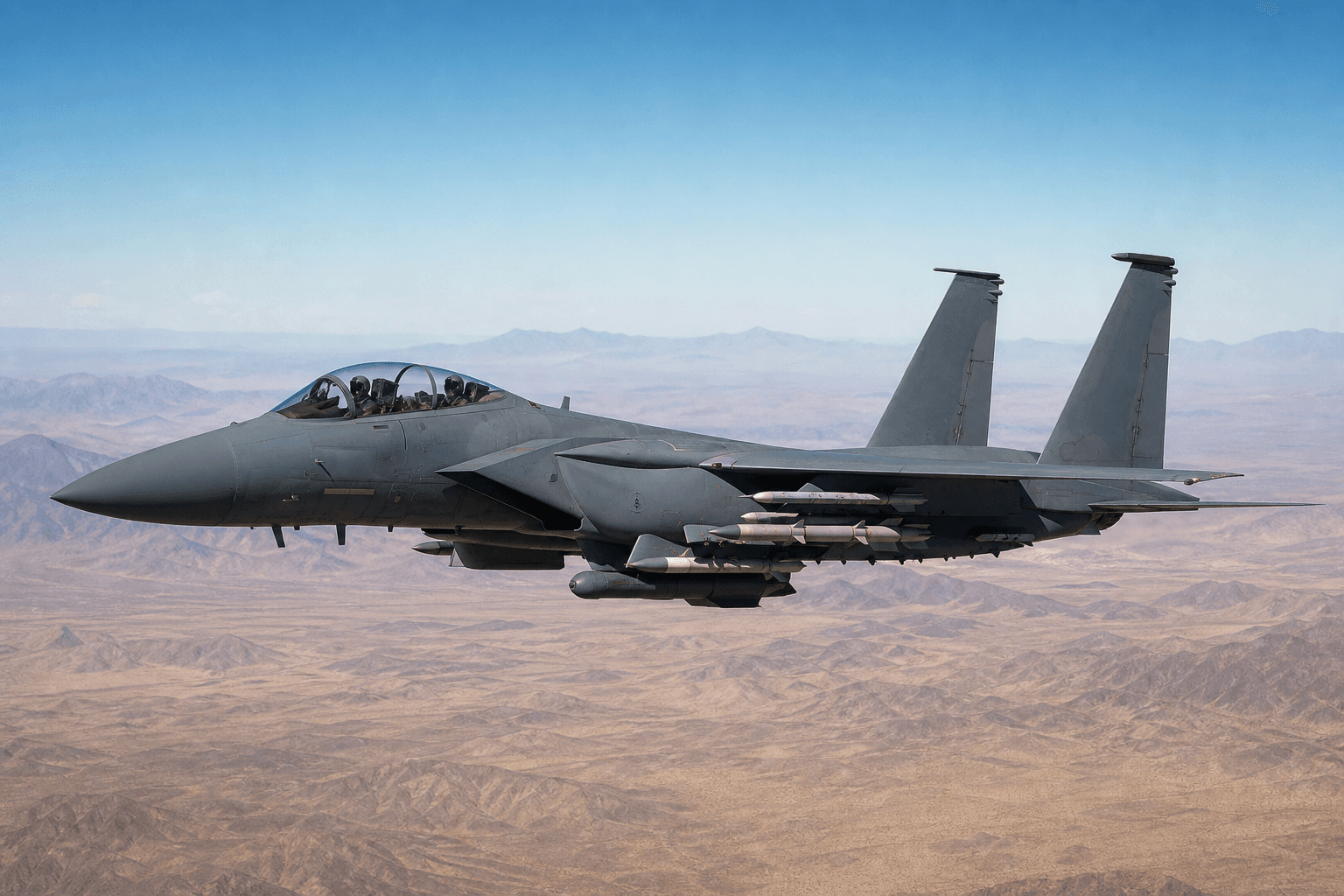
The Lockheed Martin Lightning II fighter jet is the world's most advanced fighter and is taking its place as the second-most in-service fighter jet in the world (depending on how the numbers are counted). At the same time, the Air Force is planning to double the number of F-15EXs it is procuring to 267. Importantly, this is not so much increasing its F-15 fleet as it is intended to recapitalize the aging F-15E fleet as they age out and retire .
Australia's Top End hosts 19 nations and 100 aircraft for Exercise Pitch Black 26
Australia's Northern Territory will serve as a hub of international air power from July 20 to August 7, 2026, as 19 partner nations take part in Exercise Pitch Black 26, a three-week air combat training exercise. The exercise officially launched on July 16, 2026, when Royal Australian Air Force (RAAF) Air Commodore Matthew McCormack, who is commanding this year's edition, joined detachment commanders from participating countries at RAAF Base Darwin. In total, the exercise has brought 100 aircraft and 2,500 personnel from around the world into RAAF Bases Darwin and Tindal, turning both installations into temporary centers of multinational air operations. As #PitchBlack26 heats up, we're shining a spotlight on the combat support teams who keep the mission moving. No. 23 Squadron at RAAF Base Amberley is supporting international tanker aircraft and ensuring safe, efficient airfield operations pic.twitter.com/06Q5MF0z0l — Royal Australian Air Force (@AusAirForce) July 17, 2026 Why the Northern Territory is an ideal training ground #image_title The location is far from incidental. Northern Australia is home to one of the largest military training areas in the world, offering vast, largely unrestricted airspace that few other regions can match. This degree of space matters for an exercise built around modern fighter aircraft, many of which need significant room to operate at full capability. McCormack pointed to that airspace directly, noting that some of the world's most advanced fighters require exactly the kind of operating room that the Top End provides. As #PitchBlack26 heats up, we're shining a spotlight on the combat support teams who keep the mission moving. No. 23 Squadron at RAAF Base Amberley is supporting international tanker aircraft and ensuring safe, efficient airfield operations pic.twitter.com/06Q5MF0z0l — Royal Australian Air Force (@AusAirForce) July 17, 2026 What Exercise Pitch Black training involves At its core, Pitch Black is built around large-force employment missions, exercises that bring together fighter aircraft, intelligence, surveillance, and reconnaissance platforms, air mobility assets, and command-and-control elements in scenarios meant to mirror real-world combat conditions. McCormack described the exercise as war fighter-focused, designed to expose both Australian aviators and their international counterparts to complex, high-end air combat scenarios. The goal, he said, is to sharpen decision-making and tactical skill while preparing participating forces to operate effectively in contested environments. Building relationships that extend beyond the flightline While the flying is the centerpiece, McCormack suggested the exercise carries value that extends well beyond the aircraft themselves. With so many nations training side by side, Pitch Black gives participants a chance to understand how other air forces operate, something that he feels would pay dividends if those same nations should ever need to work together in real conflict. That collaboration isn't limited to pilots. Aircrew, mission planners, engineers and support personnel from across the participating nations are all working together throughout the exercise, building the kind of professional familiarity that underpins effective coalition operations when it matters most. Staged every two years, Pitch Black has become one of the Royal Australian Air Force's signature international exercises, combining demanding air combat training with a rare opportunity for allied air forces to train, coordinate and build trust together at scale. RELATED Royal Australian Air Force announces Exercise Pitch Black for July-August 2026
The Daily Touch & Go
The day's best aviation news in your inbox. Free, no spam.