Image: Michael Barera · CC BY-SA 4.0 · via Wikimedia Commons
FAA Probes Separation Breach After Marine One and Envoy Air Jet Departured One Minute Apart at DCA
The FAA is investigating how a Marine One presidential helicopter took off just one minute before an Envoy Air regional jet from Reagan National, breaching new airspace separation rules introduced after a deadly 2025 crash.
The gist
Marine One's departure at Reagan National overlapped an Envoy Air jet's takeoff by one minute, triggering FAA probes despite no immediate danger.
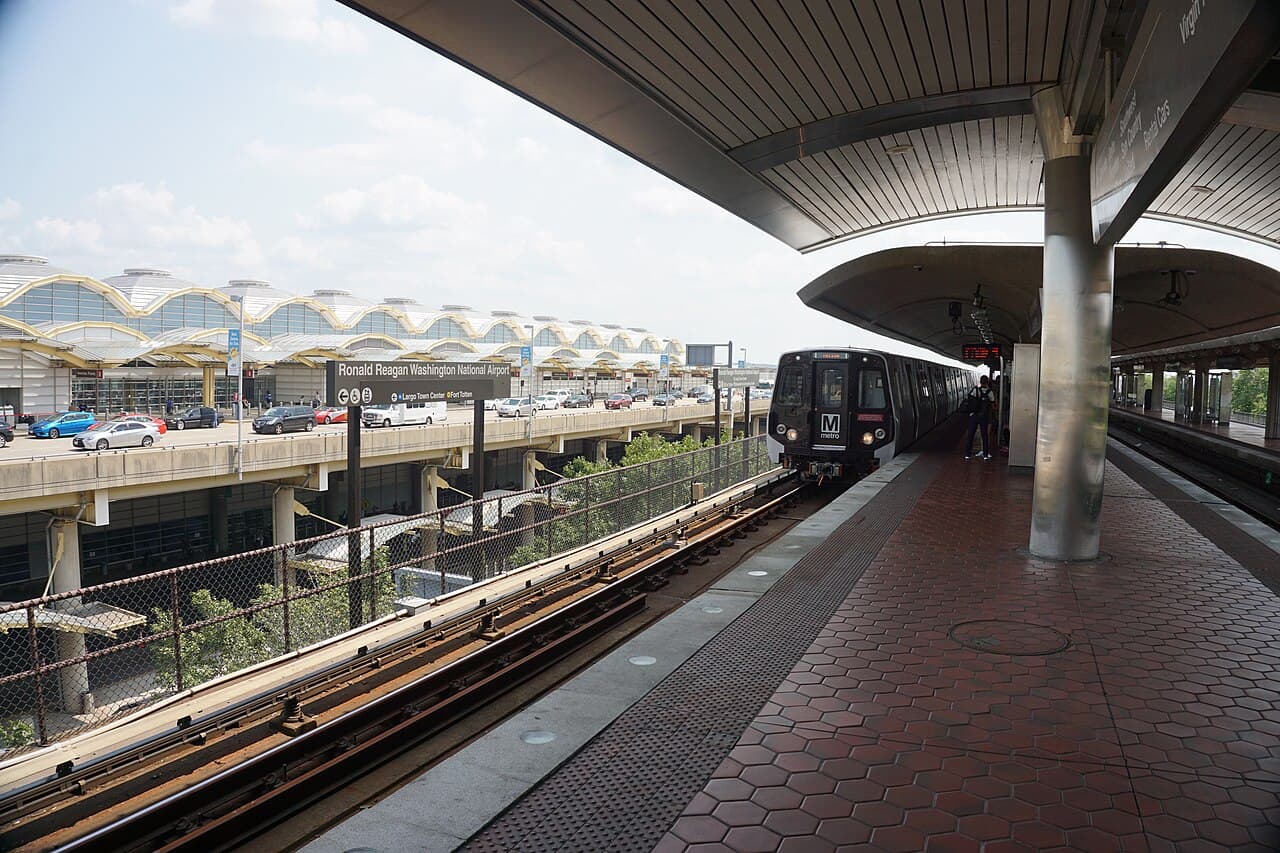
The Federal Aviation Administration has launched an inquiry into a recent airspace separation incident at Ronald Reagan Washington National Airport (DCA) involving Marine One, the presidential helicopter, and an Envoy Air Embraer E170 regional jet. The helicopter carrying President Donald Trump departed the White House vicinity at approximately 2:33 p.m. local time, with the Envoy Air regional jet following just one minute later. This sequence contravened newly implemented regulations designed to prevent commercial aircraft operations near Marine One flights at DCA.
These updated operational constraints came into effect following the January 2025 crash of American Airlines Flight 5342, which struck a U.S. Army helicopter during approach to DCA, resulting in 67 fatalities. The FAA had established strict airspace separation protocols between commercial jets and helicopters transporting the president or other essential missions to avoid such accidents.
According to FAA sources, both aircraft did not violate minimum safe distance thresholds in a manner that constituted a dangerous near miss. However, they acknowledge the insufficient spacing breached prescribed separation criteria of at least 1.5 miles horizontally and 500 feet vertically for aircraft operating in close proximity near DCA. The FAA emphasized that Marine One and the Envoy flight did not converge dangerously but did breach procedural protocols.
The FAA is investigating why air traffic controllers at DCA allowed the Envoy Air flight to depart shortly after Marine One was airborne, despite rules mandating a hold on commercial operations during active presidential helicopter movements. To address this lapse, the agency is forming a dedicated Safety Review Team to analyze air traffic control decisions and recommend corrective actions to reinforce separation enforcement.
Marine One flights, operated by highly trained military aviators, safely transported the president to Joint Base Andrews in advance of a visit to Los Angeles. A White House spokesperson stated President Trump was never at risk during the incident, underscoring the robustness of the pilots’ handling and operational procedures despite the regulatory breach.
DCA's airspace is among the most complex and congested in the United States, characterized by numerous restricted zones covering central Washington, D.C., and the busy Potomac helicopter corridor. The area is shared extensively by military, law enforcement, medical, and presidential helicopters alongside commercial airline traffic. Between 2011 and 2024, investigators recorded at least one close-proximity occurrence monthly between commercial jets and helicopters in this region.
In response to safety concerns, the FAA has revised airspace usage at DCA, including closure of Washington Helicopter Route 4 and prohibiting controllers from relying on visual separation for helicopter operations. Non-essential helicopter flights around DCA are now restricted except for vital missions, such as presidential transport, which require freezing commercial flights temporarily to maintain safe separation.
The airport faces operational strains from increasing passenger traffic, handling approximately 25 million passengers annually—10 million over its intended capacity—with three relatively short runways. Runway 1/19 at DCA is notably the busiest runway in the nation, accommodating more than 800 movements daily. Staffing shortages compound challenges, as a significant portion of air traffic controller positions remain vacant.
These operational complexities contribute context to the incident, highlighting the challenges of managing mixed, high-density air traffic within constrained airspace. The FAA’s forthcoming review aims to understand and rectify the procedural lapses to prevent recurrence, maintaining the safety of presidents, commercial flights, and all aircraft operating near Washington’s most sensitive airspace.
Frequently asked questions
- What were the minimum separation rules breached by Marine One and the Envoy Air jet?
- The aircraft operated within less than the required minimum separation of 1.5 miles horizontally and 500 feet vertically near Ronald Reagan Washington National Airport as per FAA rules for mixed helicopter and commercial traffic.
- What are the new FAA procedures for Air Traffic Control regarding Marine One operations at DCA?
- After a fatal 2025 crash, FAA rules were established to halt commercial flights around Marine One operations near DCA to maintain safe separation, including restricting airspace and prohibiting non-essential helicopter flights while Marine One is active.
Read more
All Aviation Safety →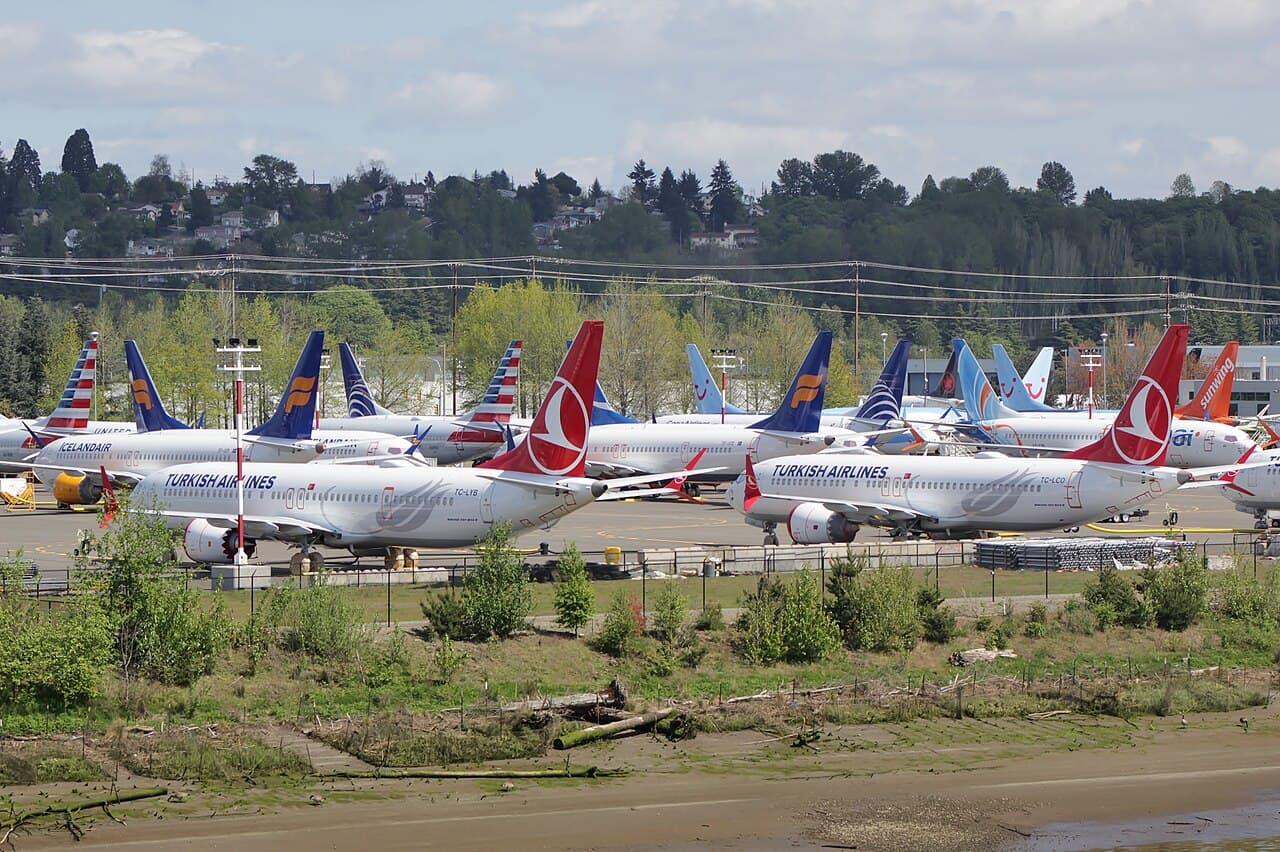
Boeing 737 MAX 7 Secures FAA Certification After Lengthy Development Delay
Just over 13 years ago, Boeing and Southwest Airlines came together to launch the 737 MAX 7, the third and smallest member of the 737 MAX family. In May 2013, Boeing was riding high and, alongside its launch customer Southwest , predicted that the Dallas carrier would receive its first 737-7 delivery in 2019. In the following years, the dynamics shifted significantly for Boeing with two fatal Boeing 737 MAX 8 crashes between 2018 and 2019. The worldwide Boeing MAX fleet was grounded, and confidence in the company's manufacturing and quality controls diminished. In November 2020, the Federal Aviation Administration (FAA) finally gave Boeing 's 737 MAX the go-ahead to fly commercially again, but the impact on the 737-7 development had been significant. Original artwork from 2013 (Boeing) Plans for the 737-7's entry into service were rescheduled and even when Boeing thought they were nearly there, further complications arose during the certification process. However, on August 3, 2026, Boeing finally announced the news it had been waiting to deliver for several years, confirming that the MAX 7 had secured type certification from the FAA. "This important certification validates the rigor of our airplane's design and recognizes the determination and resilience of our 737 MAX development team," Stephanie Pope, President and CEO of Boeing Commercial Airplanes, said. Since the test program began in 2018, the 737-7 has completed more than 1,000 hours of flight and ground evaluation and conducted extensive system safety analysis and human factors reviews. During the program Boeing also updated the engine anti-ice system to address a potential condition that was discovered during flight testing. The Federal Aviation Administration has certified the 737-7! This milestone for the longest-range 737 MAX validates the rigor of the design and testing and recognizes #TeamBoeing 's determination and resilience. Certification includes more than 1,000 hours of flight and ground… pic.twitter.com/0S45IjqL3u — Boeing Airplanes (@BoeingAirplanes) August 3, 2026 Boeing said that the regulatory approval "caps a multi-year certification effort" in which the company "demonstrated through comprehensive testing and analysis that the airplane meets all commercial aviation regulations". "Our team of dedicated engineers and test experts worked through challenges, an extended pandemic, and the transition to new certification processes," Pope added. "Through it all, our team stayed focused on completing all requirements and delivering a safe and more capable airplane to our customers." The FAA on 737-7 certification process The FAA issued Boeing an amended type certificate for the new 737-7 and a Production Limitation Record (PLR). In a statement explaining the aircraft's certification process, the FAA said the approval followed almost a "decade of extensive review". The FAA said its work involved resolving complex technical issues and completing a thorough review of the aircraft's design and supporting safety analyses. "Throughout the process, the FAA performed or directly reviewed significant work involving flight controls, system safety assessments, human factors, flightcrew alerting, and other novel, complex, or safety-critical areas, while also requiring testing, design changes, and additional analysis where necessary," the FAA stated. The FAA required Boeing to "incorporate key improvements" that address requirements in the Aircraft Certification, Safety, and Accountability Act and recommendations from the National Transportation Safety Board (NTSB). Anna Zvereva / Creative Commons These included updates to the flight-control software, flightcrew alerting system, and a redesigned engine anti-ice system. "These changes provide pilots with clearer information and warnings and prevent the engine inlet from overheating and potentially weakening the surrounding structure," the FAA said. FAA safety inspectors will remain present at Boeing sites across the US to oversee the manufacturing process and assess the planemaker's Safety Management System (SMS) and safety culture. "Our Boeing team held regular and detailed discussions with the FAA to ensure Boeing understood the requirements and provided transparency of our progress," said Mike Sinnett, Senior Vice President of Product Strategy, Product Development and Development Programs. "With this certification program, Boeing has developed a clearer understanding of the latest regulatory requirements, which is expected to accelerate future airplane development with a renewed emphasis on human factors, safety and quality." Focus moves to Boeing's 737-7 airline customers Focus will now begin to move to Boeing's airline customers that ordered 737-7 aircraft, namely Southwest Airlines, which has purchased around 250 jets. In response to news of the latest certification, Southwest said it was "pleased with the FAA's certification of the Boeing 737-7 aircraft, and we look forward to the plane entering service in the coming months." "Certification is an important step toward continuing to modernize our all-Boeing 737 fleet with upgraded interiors and more fuel-efficient aircraft to fit our customers' preferences and demand patterns," Southwest Airlines added. According to ch-aviation data, there are around 28 assembled 737-7s destined for Southwest currently in storage. The US carrier plans to introduce the aircraft in 2027. Boeing In the most up to date ch-aviation data available, China's Ruili Airlines has ordered two 737-7s, as had Ukraine's SkyUp Airlines. There in an order on the database for a single 737-7 from Indonesia's Jhonlin Air Transport. Luxair, the European launch customer, also ordered four 737-7s at Paris Air Show 2023. WestJet canceled its orders for Boeing's smallest MAX jet as did the now defunct Canada Jetlines. Turkmenistan Airlines also canceled an order for three 737-7s. With MAX 7 type certification now secure it remains to be seen whether more customers will be willing to purchase the aircraft. RELATED Little and large: Boeing rounds off 737-7 and 737-10 certification flight tests
Malaysia probes airport security after pilot caught smuggling drugs on Malaysia Airlines flight
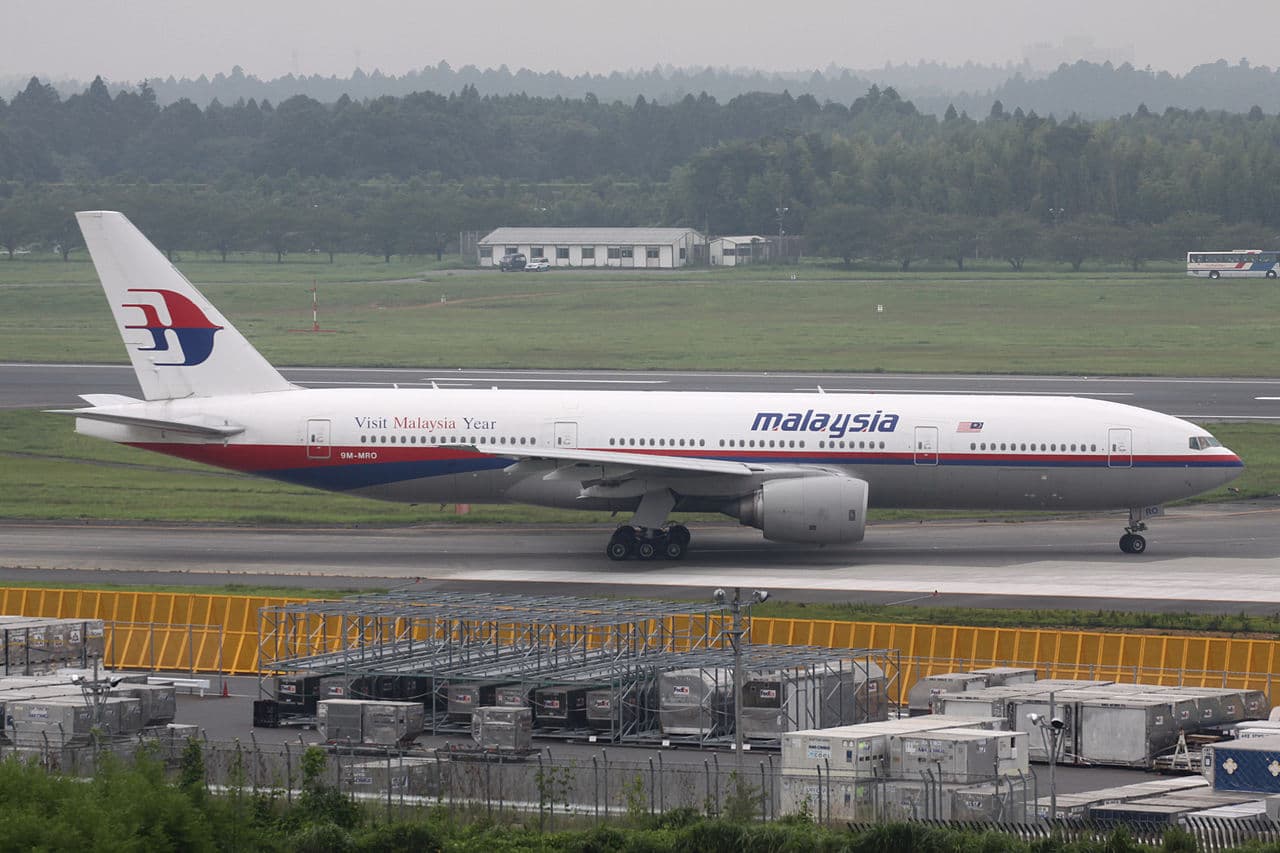
Malaysia's Civil Aviation Authority (CAAM) has opened a regulatory investigation into airport security procedures following the arrest of a Malaysia Airlines pilot in Indonesia on alleged drug smuggling charges, marking the latest development in a case that has prompted parallel investigations in both countries. The regulator announced the probe on August 2, saying it will examine whether all aviation security requirements were fully complied with before the pilot departed Kuala Lumpur International Airport (KLIA). The review will assess airline compliance with aviation security regulations as well as airport screening procedures carried out before the flight leaves Malaysia. The investigation follows an incident that began on July 28, 2026, when Indonesian customs officers detained a Malaysia Airlines pilot after the arrival of flight MH727 from Kuala Lumpur (KUL) at Jakarta's Soekarno-Hatta International Airport (CGK). Authorities allege they discovered approximately 25 kilograms of ecstasy pills and methamphetamine, equivalent to more than 70,000 capsules, concealed in the pilot's luggage. Indonesian officials estimate the seized drugs have a street value of around $10.5 million. On August 1, Malaysian police confirmed they had launched a parallel criminal investigation, reviewing CCTV footage and baggage screening records at KLIA while cooperating with Indonesian authorities. Investigators are also examining whether the case is linked to a wider cross-border drug trafficking syndicate and whether aviation routes were exploited for smuggling operations. CAAM Chief Executive Datuk Captain Norazman Mahmud said the regulator's review will determine whether all applicable security measures were followed before the aircraft's departure. He stressed that flight crew are not exempt from airport security screening and must undergo the same screening procedures as other individuals entering security-restricted areas, including X-ray inspection of cabin baggage and personal belongings, in accordance with Malaysia's Civil Aviation Security Regulations 2019 and the National Civil Aviation Security Program. The authority added that it is collecting evidence and will take enforcement action within its jurisdiction should any breaches of aviation regulations or security requirements be identified. Malaysia Airlines has said it is fully cooperating with the Indonesian investigation while conducting its own internal review.
Malaysia Airlines Pilot Arrested in Indonesia with 70,000 Ecstasy Pills and Multiple Drugs
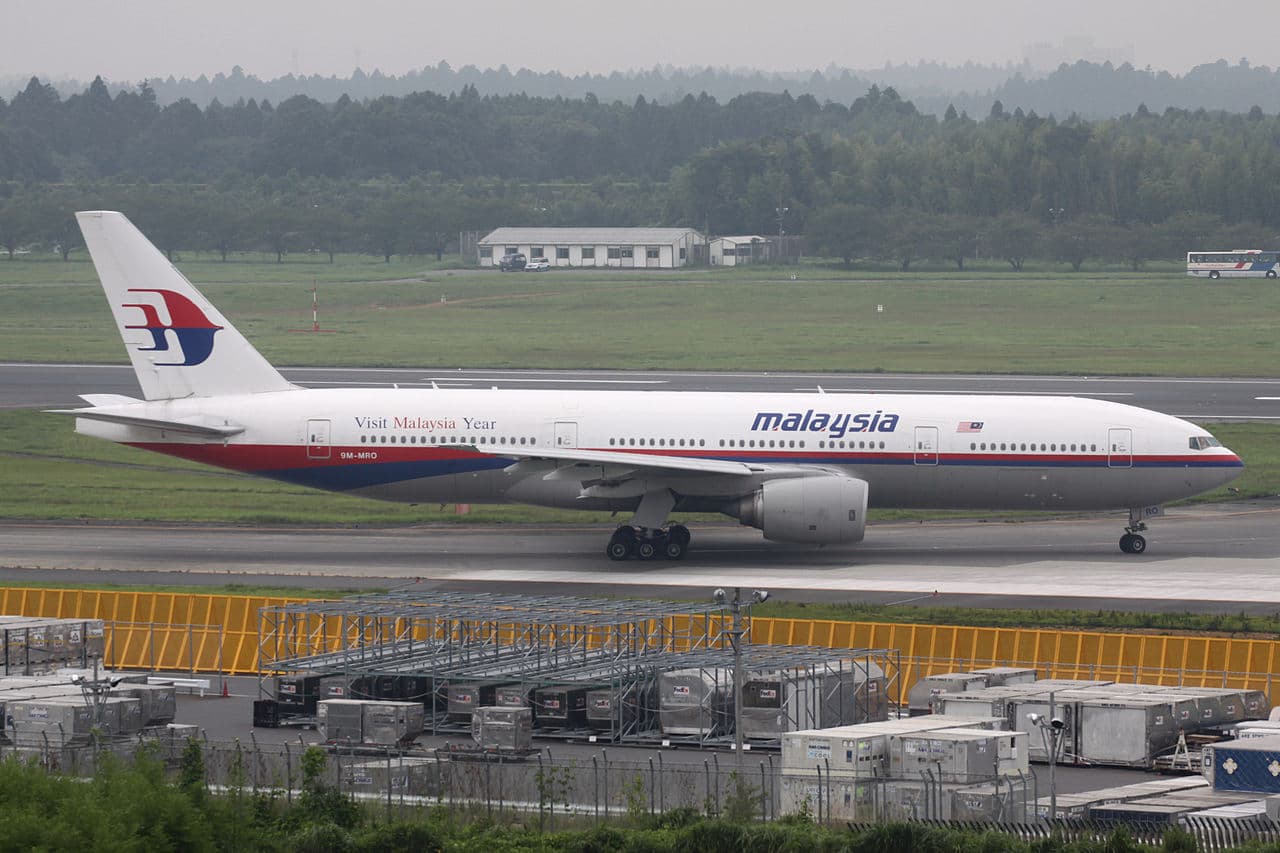
A lot of drug smuggling happens by airplane, and it's not totally uncommon to see pilots and flight attendants involved, given how much they travel, plus the special privileges they have at some airports. Well, here's one of the most extreme stories I've ever heard — a Malaysia Airlines pilot was caught in Indonesia transporting 57 pounds of ecstasy. Not only that, but he even tested positive for methamphetamine, ecstasy, and cocaine. Malaysia Airlines pilot caught smuggling drugs into Indonesia This incident happened on the night of Tuesday, July 28, 2026, at Jakarta Soekarno-Hatta Airport (CGK). Customs officers at the airport were inspecting baggage at the international arrivals hall via x-ray, and noticed a bag that looked suspicious. The bag was later collected by a 39-year-old Malaysia Airlines pilot who had just completed flight MH727 from Kuala Lumpur Airport (KUL). At that point, customs officers approached the pilot, and took him and the suitcase to a customs inspection room for further examination. It was there that authorities discovered 14 large packages containing more than 70,000 ecstasy pillows, weighing a total of 26 kilograms (57 pounds). There was also a separate package of methamphetamine. As you'd expect, the pilot was detained, and authorities are still trying to figure out the network he was involved in. During questioning, the pilot stated that he had been instructed by another person to transport the drugs to Jakarta, and that they would be picked up from his hotel. He was offered 50,000 MRY (11,700 USD) for doing the job. The pilot also admitted that he had previously transported drugs on two occasions. In addition to once previously transporting seven kilograms (15 pounds) of methamphetamine to Jakarta, he had also once transported methamphetamine to Sabahh, Malaysia. Unfortunately for this pilot, Indonesia has some of the strictest anti-drug laws of anywhere in the world, and drug trafficking charges can carry a life sentence, or even the death penalty (though the country has maintained a moratorium on executions for the last decade). This Malaysia Airlines pilot was caught at Jakarta Airport The pilot also tested positive for three different drugs Here's what makes this story even more shocking. When this all happened, the pilot also had a drug test administered on him, and that showed positive results for methamphetamine, ecstasy, and cocaine. I'm not an expert on this stuff, but I'd interpret that to mean that the results were positive for this being in his system, rather than him just coming in contact with these drugs? Because if so… wow! One would certainly hope that he hadn't consumed these drugs shortly before flying, and that they were just in his system from days earlier. Of course that still completely violates rules and is unacceptable, but there's a difference between doing these drugs days before a flight, vs. an hour before a flight. Sometimes we'll see airline employees get caught drug smuggling because they need (or want) the money, even if they wouldn't consume any of these drugs themselves. However, in this case it seems the pilot both consumed and smuggled drugs. This Malaysia Airlines pilot also tested positive for drugs Bottom line A Malaysia Airlines pilot was caught smuggling a huge quantity of drugs at Jakarta Airport, including 57,000 ecstasy pills. He admitted he had done something like this twice before, and that someone was supposed to pick up the drugs at his hotel. Unfortunately for him, this is going to come with quite the punishment, given Indonesia's strict anti-drug laws. What makes this even wilder is that a drug test was performed on him, and he tested positive for methamphetamine, ecstasy, and cocaine. What do you make of this Malaysia Airlines pilot drug bust?
JetBlue Offers $5,000 Bonuses to Flight Attendants Amid Severe Staffing Crisis
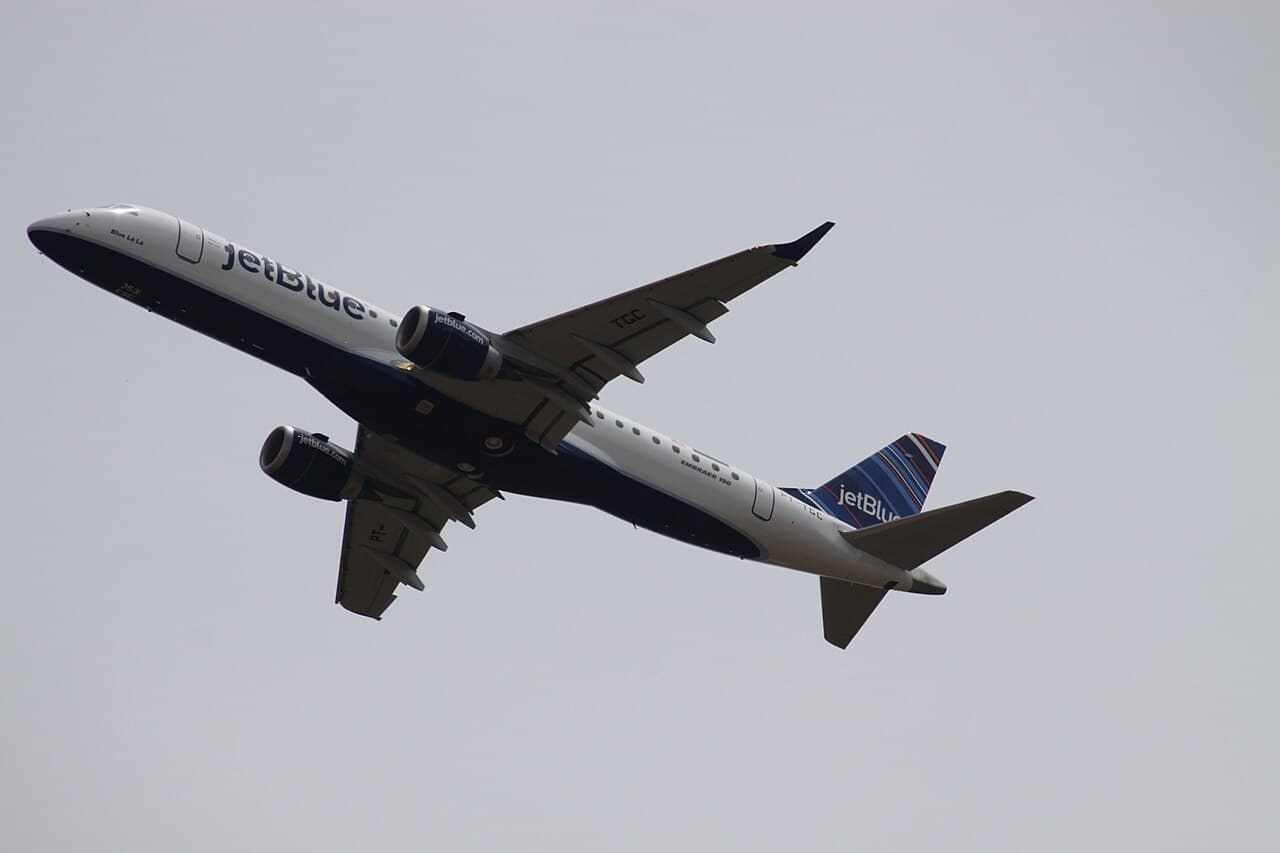
The beleaguered New York-based airline JetBlue is reportedly offering flight attendants bonuses of $5,000 to pick up additional flying on their scheduled days off as the carrier seeks to recover from days of disruption that have resulted in hundreds of flights being canceled, and many more being delayed. On one night last week, JetBlue was forced to ground all flights due to arrive at New York JFK as widespread thunderstorms caused havoc across the Northeast, leading to FAA-mandated ground stops in Baltimore, Boston, Newark, New York, and Washington Dulles and Washington National airports. Jetblue unconfirmed "Emergency meeting today. Inflight Management today sent every inflight crew in a Special Assignment (SPA or our version of TDY in another temporary role) back to the line to fly. Only exception is those on Special Assignment as Inflight Supervisors. Every… — JonNYC (@xJonNYC) July 31, 2026 To give another indication of the kinds of disruption that JetBlue has been battling, on July 22, the airline was forced to cancel 257 flights, representing a quarter of the airline’s planned flights, and an additional 373 flights were delayed. The continued disruption has led to a situation in which flight crews have been left ‘out of position’ or, in other words, in a different destination than where they were meant to be to work their next flight. This has resulted in a shortage of flight attendants to operate flights. To add to JetBlue’s woes, sources cited by trusted aviation insider JonNYC on X claim that the number of fatigue and sickness calls has been on the rise, further adding to the airline’s attempts to staff its flights. In an attempt to ‘reset the system,’ JeBlue has reportedly called on flight attendants who have been on ‘special assignment,’ such as taking on office-based roles, to return to flying on a temporary basis to fix the staffing shortage. This will include flight attendants who work as instructors at JetBlue’s training center in Florida. A flying bonus is also being offered to all flight attendants for August, with the ability to earn between 2,000 and 4,000 Crewbucks – an internal currency that can be exchanged for confirmed flights or even cash. 2,000 Crewbucks is worth $2,000, and 4,000 Crewbucks are worth $4,000. The airline has also been offering ‘holiday pay’ on many days in July, which is worth around double the normal flying pay for flight attendants who picked up work on their scheduled days off.
The Daily Touch & Go
The day's best aviation news in your inbox. Free, no spam.